All on 4 Vietnam offers a clinically advanced, cost-effective solution for full-arch tooth replacement. By strategically placing four titanium implants per jaw, patients receive a permanent, fixed prosthesis. This technique restores chewing function and aesthetics without the need for extensive bone grafting, making it highly efficient.
Clinical Summary:
The All-on-4 dental implant protocol is a transformative surgical technique designed for patients suffering from complete edentulism or terminal dentition. By utilizing four strategically positioned titanium implants—two placed vertically in the anterior region and two tilted up to 45 degrees in the posterior—this method maximizes the use of available bone, often eliminating the need for complex bone grafting procedures. In Vietnam, top-tier dental facilities combine international surgical standards, advanced 3D CBCT diagnostics, and premium materials to deliver predictable, high-quality outcomes. Patients benefit from immediate functional loading, meaning a provisional fixed prosthesis is attached on the day of surgery. The combination of clinical excellence and significant cost efficiency has established Vietnam as a leading destination for full-arch implant rehabilitation.
Key Takeaways:
- Utilizes only four implants per arch to support a complete, fixed dental prosthesis.
- Tilted posterior implants bypass anatomical structures, frequently avoiding sinus lifts and bone grafts.
- Allows for immediate functional loading, providing patients with fixed provisional teeth on the day of surgery.
- Final restorations can be crafted from highly durable materials like monolithic zirconia or premium acrylic.
- Offers significant cost advantages in Vietnam while maintaining rigorous international clinical standards.
What is the All-on-4 Dental Implant Technique?
The All-on-4 concept is a full-arch rehabilitation protocol utilizing four strategically placed implants to support a permanent, fixed prosthesis.
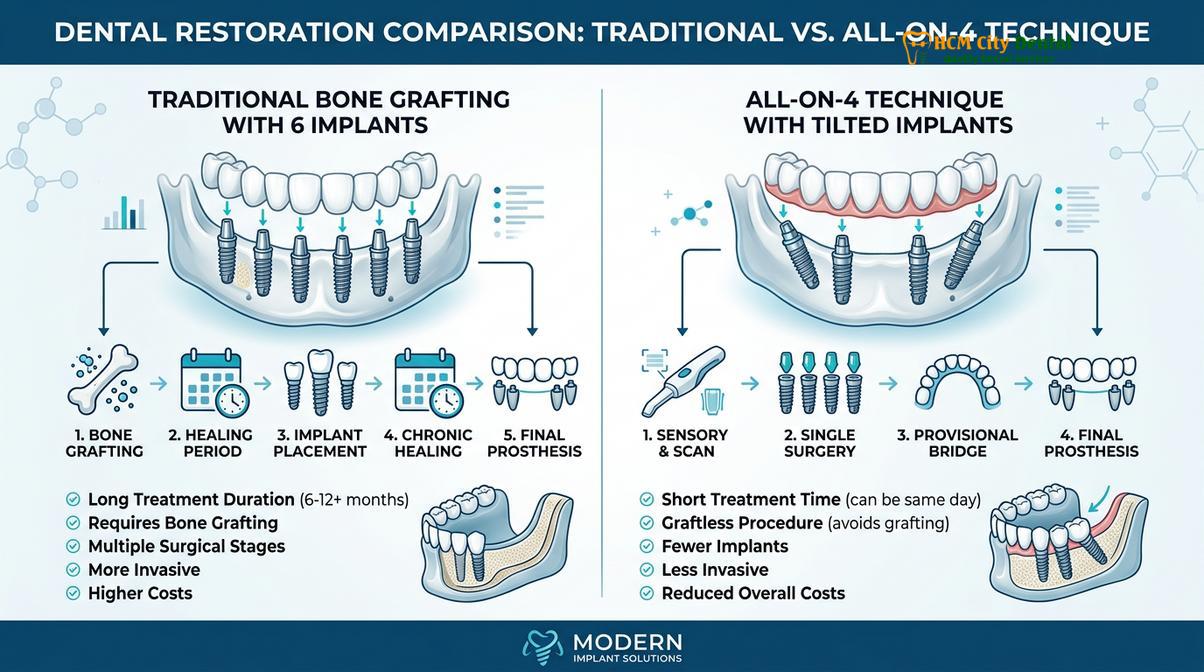
The All-on-4 treatment concept represents a paradigm shift in implant dentistry. Historically, restoring a completely edentulous (toothless) jaw required the placement of six to eight individual implants. This traditional approach often necessitated extensive bone grafting, prolonged healing times, and multiple surgical interventions. The All-on-4 protocol streamlines this process by maximizing the biomechanical utilization of the patient’s existing bone volume. By anchoring a full arch fixed bridge onto just four implants, the system provides a stable, long-lasting foundation for artificial teeth.
The biomechanical genius of this technique lies in the concept of the anterior-posterior (A-P) spread. The two anterior implants are placed axially (straight down) in the front of the jaw, where bone density is typically the highest. The two posterior implants are placed further back and tilted at an angle of 30 to 45 degrees. This angulation allows the implants to emerge further back in the mouth, reducing the length of the cantilever (the portion of the bridge that extends beyond the last implant) and distributing chewing forces more evenly across the jawbone [1].
“The strategic angulation of posterior implants in the All-on-4 protocol not only circumvents anatomical limitations but also significantly enhances the biomechanical distribution of occlusal forces, providing a highly stable foundation for immediate loading.”
From a clinical perspective, Dr. Nguyen Van Cuong emphasizes that the success of this technique relies heavily on achieving high primary stability during the surgical phase. When the implants are anchored firmly into dense cortical bone, they can safely support a provisional prosthesis immediately. This immediate loading protocol is a massive psychological and functional benefit for patients, as they do not have to endure months of wearing a removable, uncomfortable traditional denture while waiting for the implants to integrate.
Anatomical Advantages: Angled Implants Bypass Bone Deficiencies
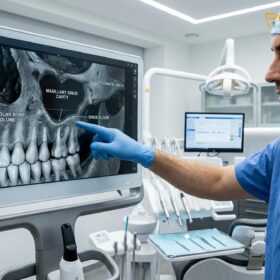
By tilting the posterior implants up to 45 degrees, surgeons can utilize dense anterior bone and avoid critical anatomical structures like the maxillary sinus.
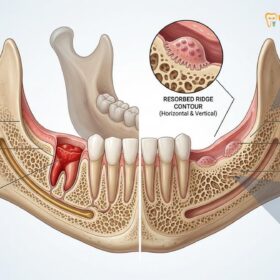
One of the most significant hurdles in traditional dental implantology is the lack of sufficient bone volume in the posterior regions of the upper and lower jaws. When teeth are lost, the surrounding alveolar bone begins to resorb (shrink) due to the lack of stimulation from chewing forces. In the upper jaw (maxilla), this resorption is often accompanied by the pneumatization (expansion) of the maxillary sinuses. In the lower jaw (mandible), severe bone loss brings the inferior alveolar nerve closer to the crest of the ridge, increasing the risk of nerve damage during implant placement.
The use of angled posterior implants elegantly solves these anatomical challenges. By tilting the implants distally (towards the back of the mouth), the surgeon can anchor the apex of the implant in the dense bone of the anterior region while the head of the implant emerges in the posterior region. This technique effectively bypasses the maxillary sinuses in the upper jaw and the mental foramen (where the nerve exits) in the lower jaw [2].
Avoiding sinus lifts and vertical bone augmentation procedures offers several profound benefits for the patient:
- Reduced Surgical Morbidity: Fewer surgical sites mean less post-operative swelling, bruising, and discomfort.
- Shorter Treatment Timeline: Bone grafting procedures typically require 4 to 6 months of healing before implants can be placed. The All-on-4 technique often eliminates this waiting period entirely.
- Lower Overall Cost: By avoiding complex grafting surgeries and the associated biomaterials, the total cost of rehabilitation is significantly reduced.
- Higher Case Acceptance: Patients who were previously told they were not candidates for implants due to severe bone loss can often be successfully treated with this protocol.
It is important to note that while the All-on-4 technique minimizes the need for grafting, it does not eliminate it entirely in every single case. Extremely severe atrophy may still require localized bone contouring or minor grafting to ensure an optimal aesthetic emergence profile for the final prosthesis.
The Clinical Protocol: From Extractions to Temporary Fixed Bridge
The treatment workflow involves 3D CBCT diagnostics, precise surgical placement, and the immediate attachment of a provisional prosthesis on the same day.
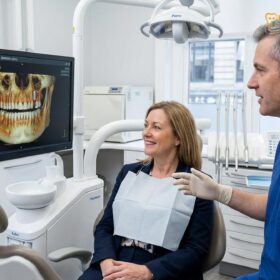
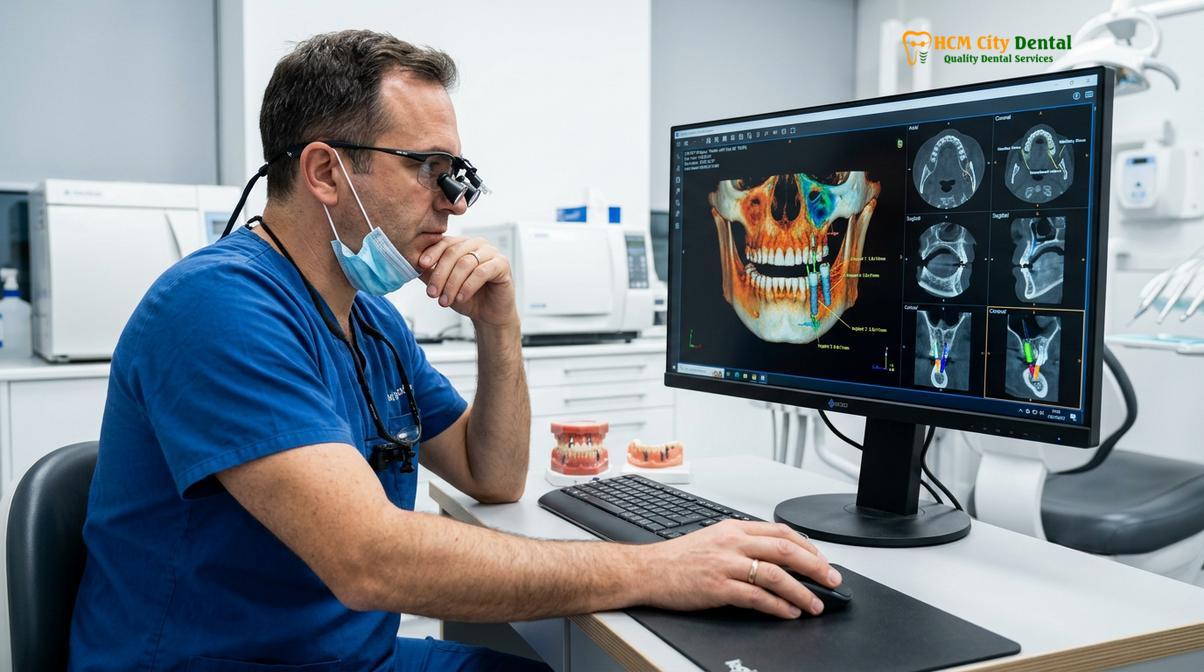
The execution of an All-on-4 procedure requires meticulous planning and a highly coordinated clinical workflow. The process begins long before the actual day of surgery. Comprehensive diagnostics are the cornerstone of predictable implantology. At modern facilities, this involves taking a 3D Cone Beam Computed Tomography (CBCT) scan. This scan provides a three-dimensional view of the patient’s craniofacial anatomy, allowing the implantologist to assess bone volume, density, and the exact location of vital structures.
Using specialized implant planning software, the surgeon performs a “virtual surgery,” selecting the optimal size, length, and angulation for each of the four implants. This digital plan is often used to fabricate a surgical guide—a custom-made template that fits over the patient’s gums and directs the drill to the exact predetermined position and depth.
The Surgical Phase
On the day of surgery, the patient is typically administered local anesthesia, often in conjunction with conscious IV sedation to ensure complete comfort. The surgical steps generally proceed as follows:
- Extractions and Bone Leveling: Any remaining failing teeth are carefully extracted. The surgeon then performs an alveolectomy (bone leveling) to create a flat, even foundation for the implants and to ensure the transition line between the artificial gums of the prosthesis and the patient’s natural gums is hidden beneath the smile line.
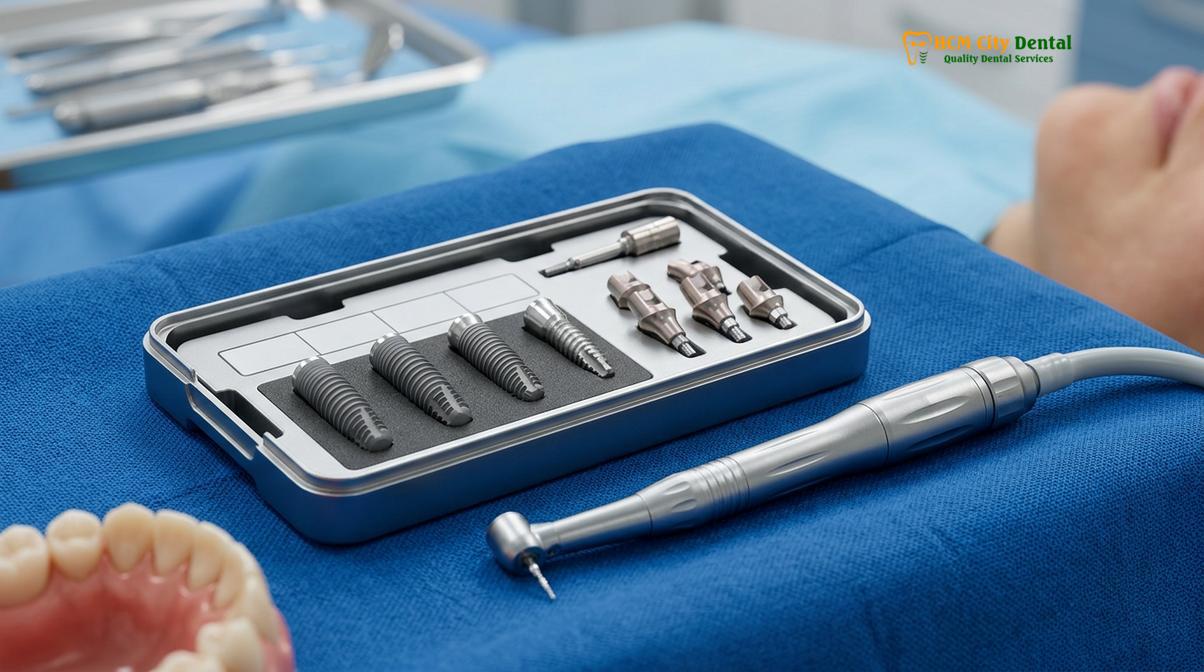
- Implant Placement: The four titanium implants are placed according to the 3D surgical plan. The surgeon meticulously monitors the insertion torque. To qualify for immediate loading, the implants must achieve a high degree of primary stability (typically an insertion torque of 35 Ncm or greater) [3].
- Abutment Connection: Multi-unit abutments are attached to the implants. These specialized connectors correct the angulation of the tilted posterior implants, providing a parallel platform for the prosthesis to sit on.
The Prosthetic Phase
Once the implants and abutments are secured, the restorative phase begins. Impressions (either traditional or digital intraoral scans) are taken of the implant positions. The in-house dental laboratory rapidly fabricates a provisional (temporary) acrylic bridge. This bridge is then screwed directly onto the implants. These immediate loaded teeth restore the patient’s smile and basic chewing function on the very same day.
Clinical Warning: The provisional bridge is designed for a soft diet. During the critical 3 to 6 month osseointegration phase (where the bone fuses to the titanium), patients must strictly avoid chewing hard, crunchy, or tough foods. Excessive occlusal forces during this period can lead to micro-movement of the implants, resulting in integration failure.
Choosing Acrylic vs. Zirconia/Porcelain for Your Final Arch
Selecting the final prosthetic material depends on bite force, aesthetic demands, and budget, with zirconia offering superior durability and stain resistance.
After the osseointegration period is complete (usually 4 to 6 months), the patient returns to the clinic to begin the fabrication of the definitive (final) prosthesis. The temporary acrylic bridge has served its purpose by splinting the implants together during healing and allowing the patient to test drive the aesthetics and phonetics of their new teeth. The final prosthesis must be constructed from materials capable of withstanding the long-term forces of mastication.
There are two primary material choices for the final full-arch restoration: an acrylic denture over a titanium framework, or a monolithic zirconia hybrid denture.
| Material Characteristic | Acrylic with Titanium Bar | Monolithic Zirconia |
|---|---|---|
| Durability & Wear | Moderate. Acrylic teeth can wear down over 5-7 years and may require replacement. | Exceptional. Highly resistant to wear, chipping, and fracture. |
| Aesthetics | Good. Natural appearance, but acrylic can stain over time from coffee/tea. | Excellent. Translucent, highly customizable, and completely stain-resistant. |
| Weight & Feel | Lighter weight, softer impact when chewing. | Heavier, very rigid. Provides a solid, tooth-like feel. |
| Maintenance | Easier to repair if a tooth chips. Requires professional polishing. | Difficult to repair if fractured, but fractures are exceedingly rare. |
| Cost Profile | More economical. Often the standard choice for the final arch. | Premium investment. Higher initial cost but greater longevity. |
Acrylic over a milled titanium bar is the traditional standard for All-on-4 restorations. It is cost-effective, easy to repair, and provides a softer impact against the opposing teeth. However, acrylic is porous and will eventually absorb stains and odors, requiring more frequent professional maintenance and eventual replacement of the acrylic teeth [4].
Conversely, a monolithic zirconia hybrid denture represents the pinnacle of modern prosthetic engineering. Zirconia is a biocompatible ceramic that is milled from a single solid block using CAD/CAM technology. It is incredibly strong, completely non-porous (meaning it will never stain or absorb odors), and can be characterized to mimic the exact translucency and color gradients of natural enamel. For patients seeking the ultimate in longevity and aesthetics, zirconia is the superior choice.
Why Saigon is a Premium Destination for All-on-4 Restorations
Combining world-class clinical expertise, advanced digital dentistry, and significant cost savings, Ho Chi Minh City has become a global hub for full-arch implantology.
In recent years, the landscape of global healthcare has shifted, with Southeast Asia emerging as a powerhouse for specialized medical treatments. Specifically, dental tourism Saigon has seen exponential growth, driven by the exceptional quality of care available at a fraction of Western prices. Patients from Australia, the United States, and Europe are increasingly choosing Vietnam for complex procedures like full-arch implant rehabilitation.
The appeal of Ho Chi Minh City goes far beyond mere cost savings. Top-tier clinics in the city, such as HCMC Dental Clinic, operate at a level of technological sophistication that rivals or exceeds many practices in developed nations. These facilities are equipped with in-house 3D CBCT scanners, intraoral digital impression systems (like 3Shape or iTero), and fully integrated CAD/CAM dental laboratories. This vertical integration allows for precise surgical planning, rapid fabrication of prosthetics, and stringent quality control.
Clinical Case Example: A 62-year-old international patient presented to HCMC Dental Clinic in Ho Chi Minh City with severe periodontal disease and failing dentition in both arches. After a comprehensive CBCT evaluation, a dual-arch All-on-4 treatment plan was formulated. Utilizing computer-guided surgery, the failing teeth were extracted, bone was leveled, and implants were placed with high primary stability. The patient received fixed provisional bridges on the same day. Six months later, the patient returned for the final fitting of custom-milled monolithic zirconia prostheses, restoring full masticatory function and achieving an outstanding aesthetic result, all at approximately 60% less than the quoted cost in their home country.
Furthermore, the clinical expertise available in Vietnam is world-class. Many leading implantologists have undergone extensive post-graduate training internationally, holding certifications from prestigious organizations and utilizing globally recognized implant systems such as Nobel Biocare, Straumann, and Dentium. This commitment to continuing education ensures that patients receive evidence-based, state-of-the-art care.
“The integration of digital workflows in modern Vietnamese dental clinics has revolutionized full-arch implantology, allowing for unparalleled precision in surgical execution and prosthetic design, ultimately delivering superior patient outcomes.”
When to Consult a Clinical Implantologist
A comprehensive clinical evaluation is mandatory to assess bone density, systemic health, and periodontal status before proceeding with full-arch surgery.
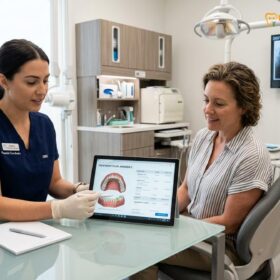
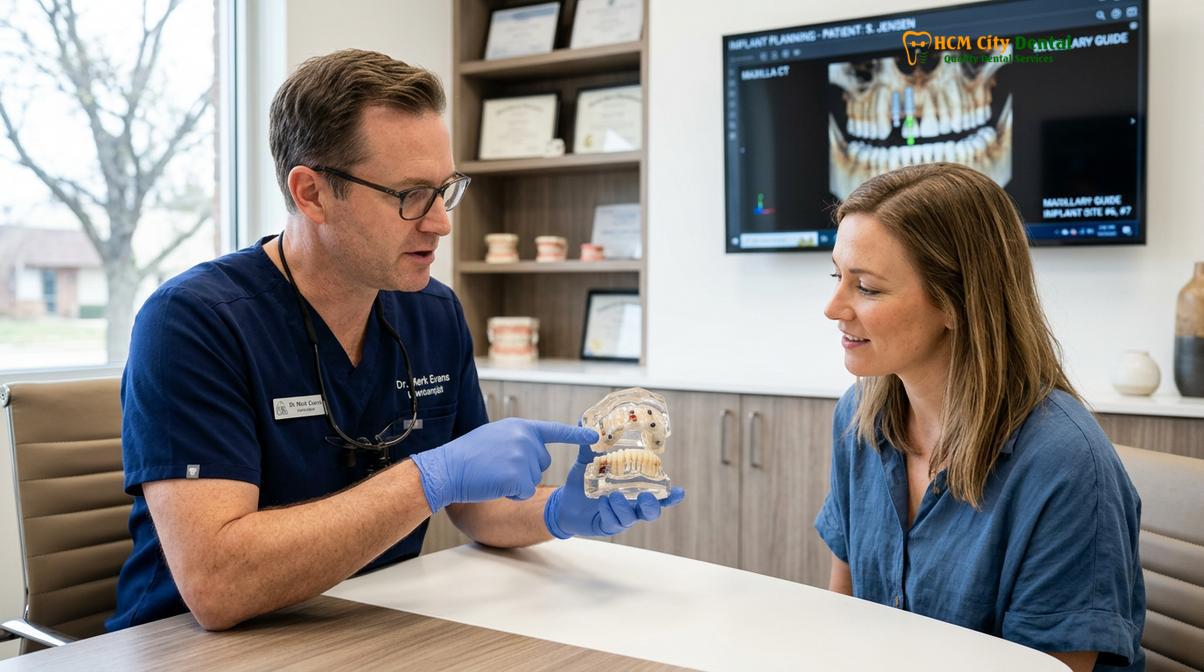
While the All-on-4 technique is highly versatile, it is a major surgical intervention that requires careful patient selection. Not every individual is an immediate candidate for full-arch implant surgery. A thorough consultation with a qualified implantologist is essential to determine candidacy and mitigate potential risks.
Dr. Cuong advises that several systemic and local factors must be evaluated prior to surgery. Patients with uncontrolled diabetes (elevated HbA1c levels) face a significantly higher risk of delayed wound healing and implant failure due to compromised microcirculation. Similarly, heavy tobacco use severely impairs blood flow to the oral tissues, drastically increasing the risk of post-operative complications and long-term peri-implantitis (bone loss around the implants) [5].
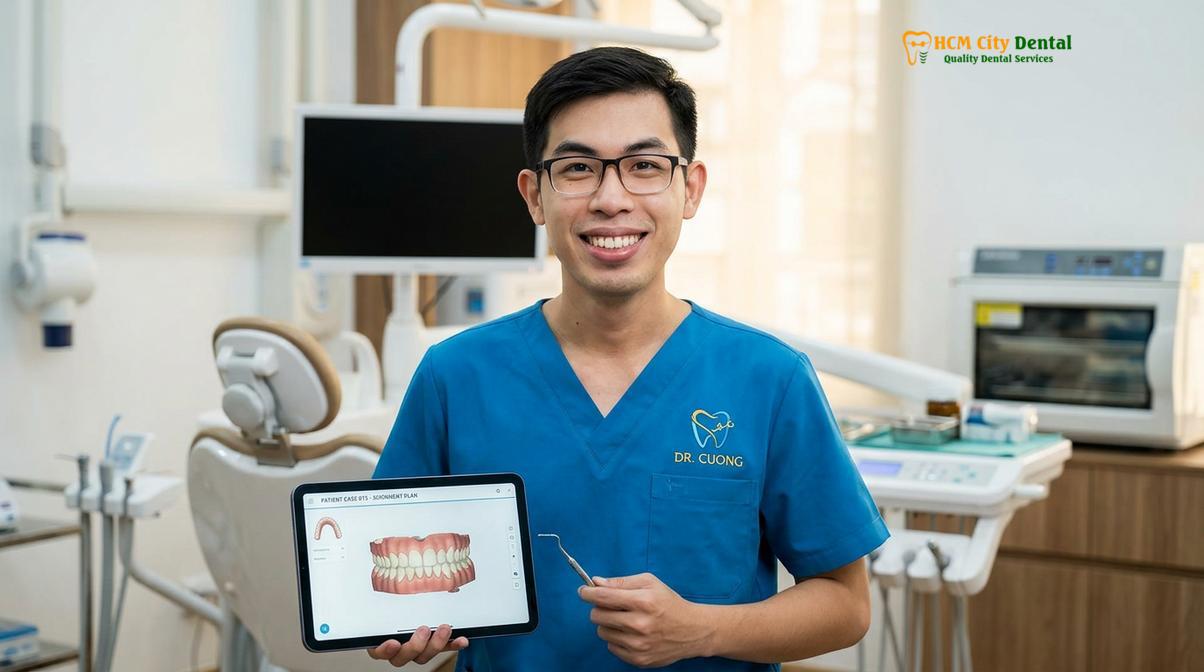
Additionally, patients who have a history of intravenous bisphosphonate therapy for osteoporosis or cancer treatment must be carefully evaluated due to the risk of medication-related osteonecrosis of the jaw (MRONJ). During your consultation, your doctor will review your complete medical history, perform a 3D radiographic analysis, and discuss whether dental implants are right for you. If contraindications exist, alternative treatment modalities or preparatory medical management will be recommended to ensure your safety and the longevity of the restoration.
If you are struggling with failing teeth, severe periodontal disease, or the discomfort of traditional dentures, a comprehensive assessment is the first step toward reclaiming your oral health. Contact the specialized team at HCMC Dental Clinic to schedule a detailed clinical evaluation and discover how advanced implant protocols can transform your quality of life.
Frequently Asked Questions
How long does the All-on-4 surgery take?
The All-on-4 surgery typically takes between two to four hours per dental arch. This timeframe includes any necessary tooth extractions, bone contouring, the precise placement of the four titanium implants, and the initial steps for attaching the provisional prosthesis. Complex cases requiring minor grafting may extend this duration slightly.
Do I walk out with teeth on the same day?
Yes, in the vast majority of clinical cases, patients receive a fixed provisional prosthesis on the same day as surgery. Provided the implants achieve sufficient primary stability (adequate insertion torque), these immediate loaded teeth allow you to leave the clinic with a fully functional, aesthetic smile while the bone heals.
What is the success rate of All-on-4 in Vietnam?
The clinical success rate for All-on-4 implants in Vietnam mirrors global standards, generally exceeding 95% over a 10-year period. Success depends heavily on the patient’s bone quality, strict adherence to post-operative care (especially the soft diet phase), and the surgical expertise of the implantologist performing the procedure.
Is the All-on-4 procedure painful?
The surgical procedure itself is virtually painless as it is performed under local anesthesia, often combined with conscious sedation. Post-operative discomfort is typical but usually manageable with prescribed anti-inflammatory medications and analgesics during the first few days of healing. Swelling and minor bruising are normal biological responses to the surgery.
How do I clean my All-on-4 implants?
Daily maintenance requires brushing with a soft-bristled toothbrush and using a water flosser to clean beneath the fixed bridge where it meets the gums. Additionally, you must visit your dental clinic bi-annually for professional cleaning, removal of the prosthesis for deep maintenance if necessary, and radiographic monitoring to ensure the long-term health of the peri-implant tissues.
References
- Journal of Oral and Maxillofacial Surgery. Biomechanical principles and tissue response in full-arch implant prosthetics. (2021).
- International Journal of Oral Implantology. Clinical outcomes of tilted posterior implants in the atrophic maxilla. (2020).
- Clinical Implant Dentistry and Related Research. Immediate loading protocols for edentulous mandibles: A systematic review. (2019).
- Journal of Prosthetic Dentistry. Wear resistance and aesthetic outcomes of monolithic zirconia vs. acrylic hybrid dentures. (2022).
- Journal of the American Dental Association. Systemic risk factors and contraindications in full-arch implantology. (2018).