Comparing the dental implant cost Vietnam vs UK reveals a significant financial advantage without compromising clinical quality or safety. While UK private clinics charge premium fees driven by high operational overhead, patients traveling to Vietnam can access advanced implantology, CE-certified materials, and fully digital workflows at a fraction of the price.
Clinical Summary:
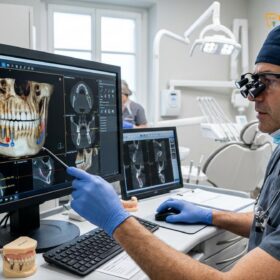
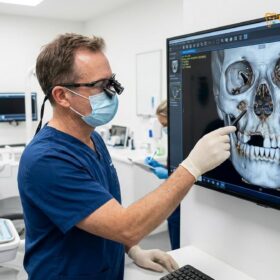
The disparity between dental implant costs in the UK and Vietnam is primarily rooted in localized economic factors rather than clinical efficacy. In the UK, restricted NHS funding for implantology forces most patients into the private sector, where overhead costs inflate treatment fees. Conversely, Vietnam has emerged as a premier destination for medical travel, offering globally recognized implant systems (such as Straumann and Nobel Biocare) administered by highly credentialed specialists. By leveraging advanced diagnostics like 3D CBCT imaging and guided surgery, clinics in Ho Chi Minh City deliver predictable, long-lasting functional restorations while allowing international patients to achieve substantial cost savings.
Key Takeaways:
- UK patients can save significantly on comprehensive implant treatments by choosing specialized clinics in Vietnam.
- Premium, CE-certified titanium fixtures and zirconia crowns are standard in top-tier Vietnamese dental centers.
- Thorough 3D CBCT diagnostics ensure precise surgical planning and high long-term success rates.
- Proper clinical documentation allows for potential reimbursement through select UK private insurance policies.
- Treatment timelines must be carefully structured to accommodate biological healing and osseointegration.
The Long Waiting Lists: NHS Limitations and Private Fees in the UK
NHS dental services rarely cover dental implants, pushing patients toward expensive private care or long waiting lists, which can exacerbate jawbone resorption and complicate future surgeries.
For patients residing in the United Kingdom, navigating the landscape of restorative dentistry can be highly complex. The National Health Service (NHS) operates under strict funding parameters, prioritizing basic functional treatments and disease control over advanced prosthodontics. Consequently, dental implants are generally excluded from NHS coverage unless the patient presents with exceptional clinical circumstances, such as severe facial trauma, congenital defects like cleft palate, or oral cancer resections[1]. For the vast majority of individuals suffering from standard tooth loss due to caries or periodontal disease, the NHS offers only conventional removable dentures or tooth-supported bridges.
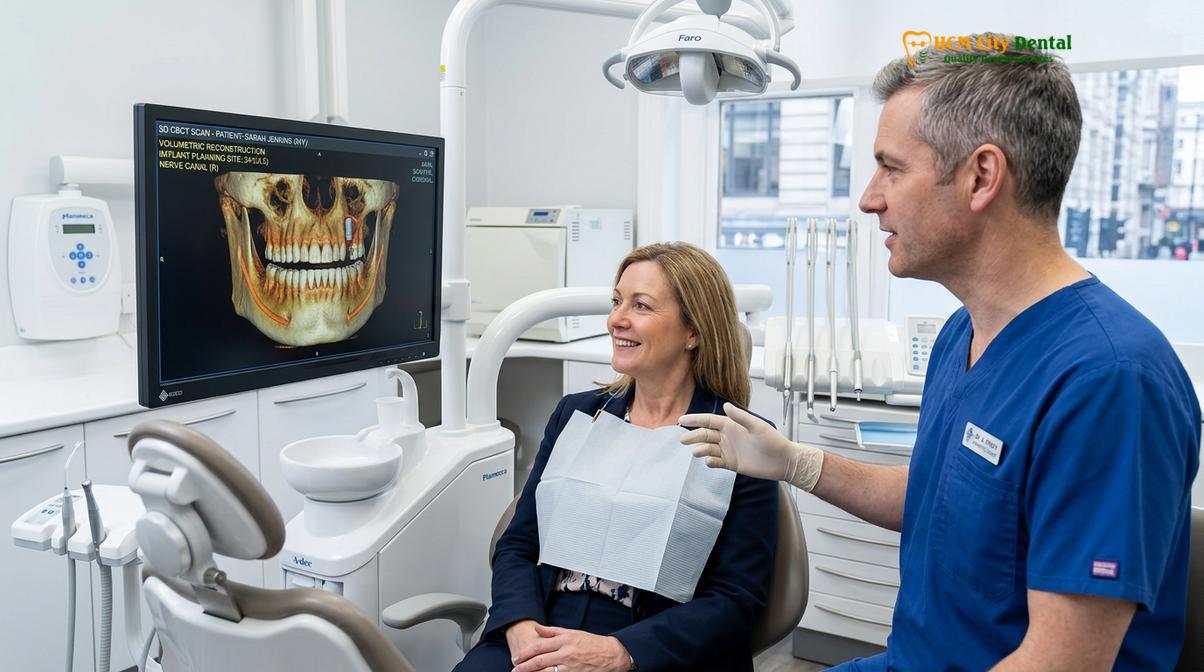
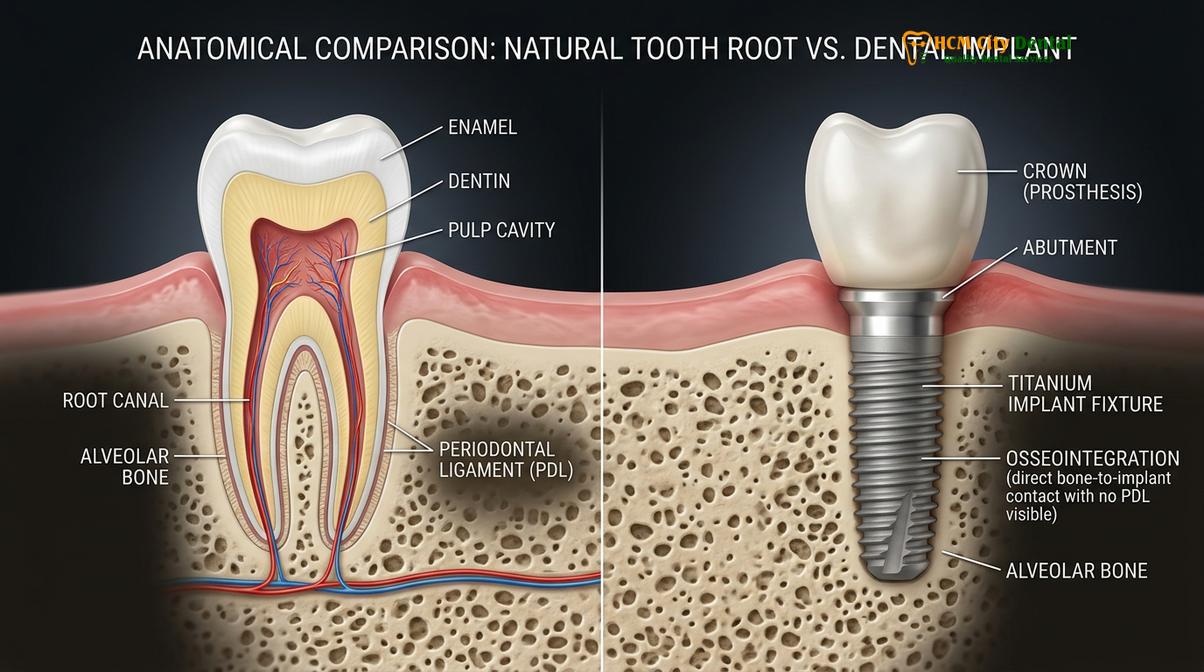
This systemic limitation forces patients to seek care in the private sector. However, the transition to private dentistry introduces a new set of challenges. High operational overheads, stringent regulatory compliance costs, and expensive laboratory fees drive up the cost of private implantology in the UK. Furthermore, patients attempting to access subsidized care often find themselves trapped on a prolonged nhs private waiting list. From a clinical perspective, delaying implant placement is highly detrimental. Following tooth extraction, the alveolar bone undergoes rapid remodeling and resorption due to the lack of mechanical stimulation from the periodontal ligament. Over time, this bone atrophy can become so severe that standard implant placement is no longer viable without extensive pre-prosthetic surgeries, such as a bone graft or sinus augmentation.
“The biological cost of delayed tooth replacement extends beyond aesthetics; progressive alveolar bone resorption significantly increases the complexity, surgical risk, and financial burden of future implant rehabilitation.”
By the time a patient navigates the waiting periods or saves enough capital for UK private fees, their clinical presentation may have deteriorated, requiring more invasive and costly interventions. This reality has driven a surge in cross-border healthcare, with patients seeking timely, high-quality interventions in specialized international hubs.
Cost Analysis Table: London Private Clinics vs. HCMC Dental
A comprehensive cost analysis demonstrates that patients can save substantially on premium titanium fixtures, custom abutments, and porcelain crowns when choosing HCMC Dental Clinic over London providers.
To understand the true value proposition of traveling for dental care, one must deconstruct the dental implant cost Vietnam vs UK into its core clinical components. A complete dental implant restoration is not a single product; it is a multi-stage medical procedure comprising the surgical placement of the titanium fixture, the attachment of a custom abutment, and the fabrication of the final prosthetic crown. When comparing london dental prices to those in Ho Chi Minh City, the disparity becomes evident across every phase of treatment.
The following table provides an estimated comparative breakdown of the clinical fees associated with a single-tooth implant restoration, utilizing premium global brands (e.g., Straumann, Nobel Biocare) in both regions.
| Clinical Procedure / Component | Estimated Cost: London Private Clinic (UK) | Estimated Cost: HCMC Dental Clinic (Vietnam) |
|---|---|---|
| Comprehensive Consultation & 3D CBCT Scan | £150 – £300 | Often Complimentary / £30 – £50 |
| Surgical Placement (Premium Titanium Fixture) | £1,200 – £1,800 | £500 – £900 |
| Custom Titanium/Zirconia Abutment | £300 – £500 | £150 – £250 |
| Final Restoration (Porcelain/Zirconia Crown) | £600 – £900 | £200 – £350 |
| Total Estimated Cost (Single Tooth) | £2,250 – £3,500 | £850 – £1,500 |
| Adjunctive: Sinus Lift (if required) | £800 – £1,500 | £300 – £600 |
It is crucial to emphasize that the lower costs in Vietnam are not achieved by compromising on material quality. Reputable centers like HCMC Dental Clinic utilize the exact same CE-certified and FDA-approved implant systems as top-tier clinics in Harley Street. The cost reduction is entirely a function of regional economic factors, including lower facility leasing costs, reduced administrative overhead, and highly efficient in-house digital dental laboratories.
Dr. Nguyen Van Cuong, a leading implantologist, frequently notes that the integration of digital workflows—such as intraoral scanning and CAD/CAM milling—has further optimized the cost-to-quality ratio. By reducing reliance on external third-party laboratories, clinics can maintain strict quality control over the final prosthesis while passing the financial savings directly to the patient[2]. This efficiency is particularly beneficial for complex full-arch rehabilitations, where the cumulative savings can amount to tens of thousands of pounds.
NHS Reimbursement and Private Insurance Claims Post-Op
While NHS reimbursement for overseas implantology is highly restricted, many UK private dental insurance policies allow claims for treatments performed in Vietnam if proper clinical documentation is provided.
A common concern for international patients is the management of medical travel expenses and the potential for insurance reimbursement. As previously established, the NHS does not generally fund dental implants, and attempting to claim NHS reimbursement for elective cross-border implant surgery is almost universally unsuccessful. However, the landscape is markedly different for patients holding private dental insurance policies in the UK (such as Bupa, Denplan, or Cigna).
Many premium private insurance tiers offer global coverage or specific allowances for major restorative work, regardless of the geographic location of the provider, provided the clinic meets international licensing standards. To successfully process a claim for treatment received in Ho Chi Minh City, meticulous clinical documentation is mandatory. Insurance adjudicators require objective evidence of the diagnosis, the medical necessity of the procedure, and the exact materials utilized.
Insurance Pre-Authorization Warning: Always contact your UK private insurance provider prior to traveling. Request a detailed list of required documentation, as retrospective claims without pre-authorization or proper clinical coding are frequently denied.
When preparing your claim, you must request the following from your Vietnamese dental provider:
- Itemized Clinical Invoice: A detailed breakdown of each procedure using internationally recognized dental codes (or clear English descriptions), separating the surgical phase from the prosthetic phase.
- Radiographic Evidence: Pre-operative 3D CBCT scans demonstrating the bone defect or missing tooth, and post-operative periapical X-rays confirming the successful integration of the implant fixture.
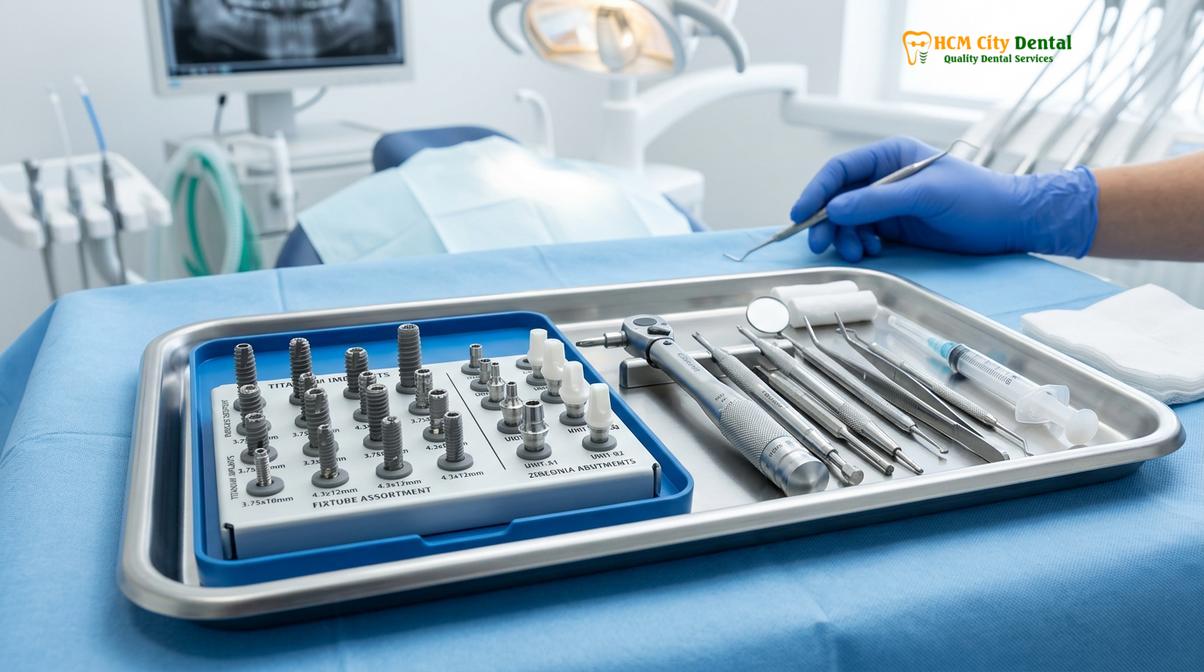
- Implant Passport: A globally recognized document containing the lot numbers, reference codes, and CE-certification marks of the specific titanium fixture and abutment placed in your jaw.
By proactively managing this documentation, patients can effectively offset their medical travel expenses, making the decision to undergo treatment in Vietnam even more economically advantageous.
Scheduling the Treatment for Short Stay Travel Itineraries
Optimizing your travel itinerary for dental implants requires understanding the clinical timeline, which typically involves a surgical placement phase followed by a prosthetic loading phase months later.
Successful implantology is dictated by biology. Unlike conventional crowns or bridges that can be completed in a single short visit, dental implants require a precise orchestration of surgical intervention and physiological healing. For international patients, travel itinerary optimization is paramount to ensure clinical success without unnecessary extended stays.
The standard protocol for dental implants is divided into two distinct geographical visits:
Stage 1: The Surgical Phase (5 to 7 Days)
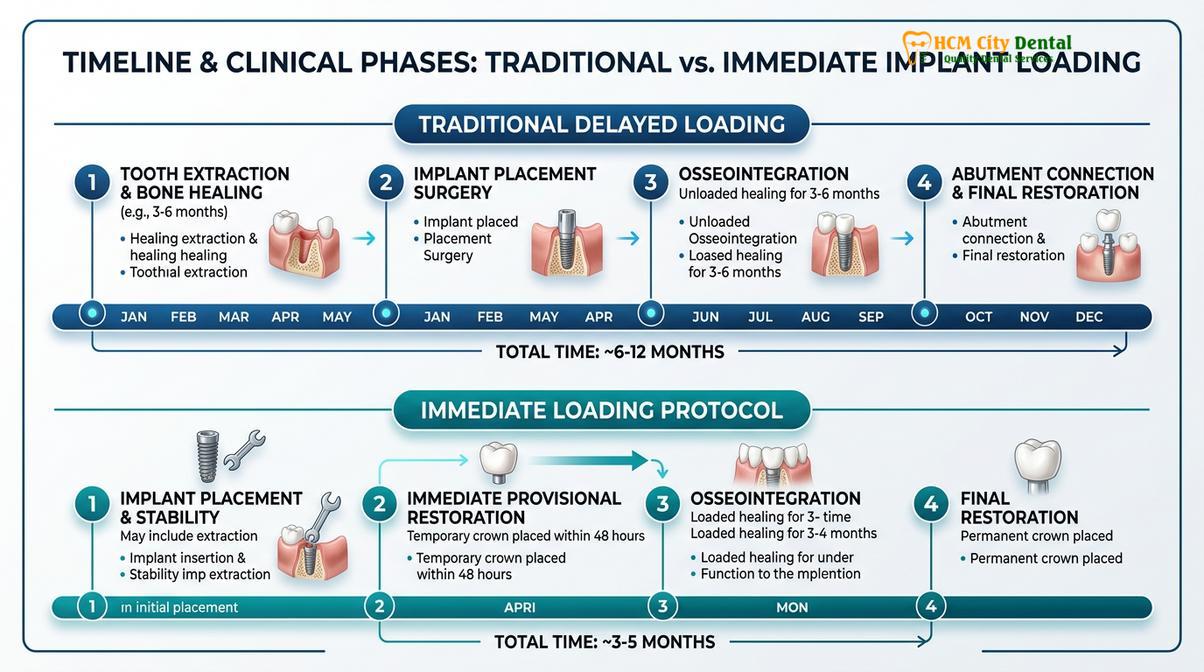
During the initial visit to Ho Chi Minh City, the primary objective is the surgical placement of the titanium fixture into the alveolar bone. The process begins with a comprehensive clinical examination and a 3D CBCT scan to assess bone volume and proximity to vital structures (such as the inferior alveolar nerve or the maxillary sinus). If the bone density is sufficient, the surgeon will place the implant. Advanced techniques, such as Piezotome ultrasonic surgery, may be utilized to minimize trauma to surrounding soft tissues and accelerate initial healing. If pre-prosthetic surgery like a sinus lift is required, it is often performed concurrently. After the surgery, a healing period of 3 to 6 months is mandatory. During this time, a biological process called osseointegration occurs, wherein the osteoblasts (bone-forming cells) fuse directly to the micro-roughened surface of the titanium implant[3].
Stage 2: The Prosthetic Phase (7 to 10 Days)
Once osseointegration is radiographically confirmed, the patient returns for the restorative phase. The implant is uncovered, and a digital intraoral scan is taken to capture the precise emergence profile of the gums. The laboratory then fabricates the custom abutment and the final ceramic crown. The crown is meticulously adjusted for optimal occlusal harmony (bite alignment) and aesthetics before being permanently torqued into place.
Clinical Case Example: A 45-year-old patient from London traveled to HCMC Dental Clinic for the replacement of a fractured lower molar. By coordinating with the clinic’s international patient coordinators, the patient optimized their itinerary: a 6-day initial trip for the extraction and immediate implant placement, followed by a 4-month healing period back in the UK, and a final 7-day return trip to Saigon for the delivery of the monolithic zirconia crown. The total cost, including flights, remained 40% lower than their local UK quote.
In highly specific clinical scenarios where primary stability is exceptionally high, Dr. Nguyen Van Cuong may evaluate the patient for same-day dental implants (immediate loading). However, this protocol is strictly case-dependent and requires rigorous diagnostic clearance to prevent micro-movement and subsequent implant failure.
Value Added: Combining Dental Work with a Vacation in HCMC
Integrating advanced dental implant surgery with a recovery period in Ho Chi Minh City offers psychological and physiological benefits, reducing post-operative stress and promoting optimal healing.
Beyond the direct financial benefits, the concept of dental tourism offers distinct physiological advantages. The period immediately following oral surgery is critical for the initial stages of wound healing and the prevention of infection. High systemic stress levels—often experienced when patients rush back to demanding work environments in the UK immediately after surgery—can elevate cortisol levels, which in turn suppresses the immune response and delays tissue regeneration.
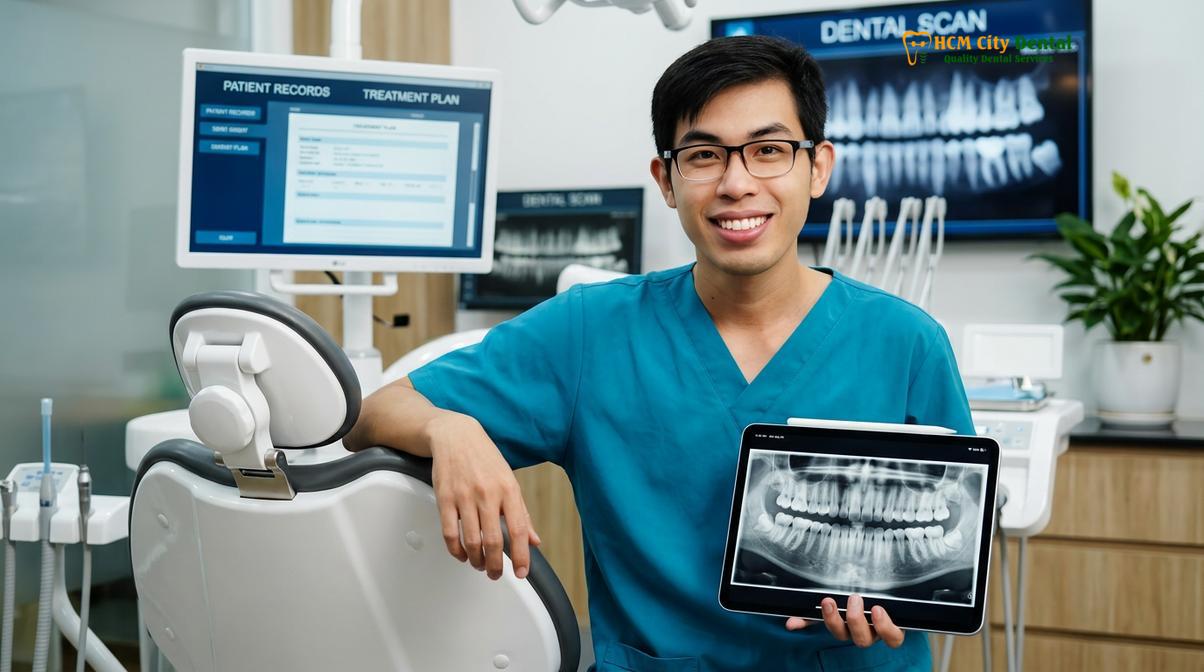
Choosing to recover in Ho Chi Minh City allows patients to enter a state of rest and relaxation, which is highly conducive to healing. The city offers a wealth of comfortable, affordable accommodations where patients can adhere to their post-operative protocols in peace. Following implant surgery, patients are strictly advised to maintain a soft-food diet, avoid strenuous cardiovascular activities, and refrain from creating negative pressure in the mouth (such as using straws), particularly if a sinus augmentation was performed.
The vibrant yet accommodating environment of Saigon provides ample opportunity for low-impact recovery. Patients can enjoy nutrient-dense, soft Vietnamese cuisine—such as traditional Pho broths or soft rice dishes—which align perfectly with post-surgical dietary restrictions. Furthermore, remaining in the city for a few days post-op allows the clinical team at HCMC Dental Clinic to conduct thorough follow-up examinations, remove any non-resorbable sutures, and ensure that the soft tissues are healing optimally before the patient boards a long-haul flight back to the UK.
Important Clinical Considerations: When to See a Doctor
While the prospect of affordable, high-quality dental care abroad is highly appealing, cross-border medical treatments require careful clinical consideration. Dental implant surgery is an invasive procedure, and not every patient is an ideal candidate. Prior to booking any travel, it is imperative to undergo a preliminary evaluation, either through a local UK dentist or via a comprehensive virtual consultation utilizing recent radiographic imaging.
Absolute contraindications for implant surgery include recent myocardial infarction, active treatments with intravenous bisphosphonates (due to the risk of osteonecrosis of the jaw), and severely uncontrolled diabetes mellitus, which drastically impairs wound healing and increases the risk of peri-implantitis[4]. Heavy smoking is a significant relative contraindication, as the vasoconstrictive effects of nicotine severely compromise blood flow to the surgical site, drastically increasing the rate of implant failure.
“Patient selection is the cornerstone of implant success. Systemic health factors, meticulous oral hygiene, and adequate bone volume must be objectively verified prior to initiating any surgical protocol.”
Furthermore, patients must have a contingency plan for post-operative care once they return to the UK. While premium clinics provide international warranties and detailed implant passports, minor complications such as a loosened healing abutment or localized soft tissue inflammation require prompt attention. Establishing a relationship with a local UK dentist who is willing to perform routine maintenance and hygiene on overseas implants is a critical component of long-term clinical success[5]. If you experience severe, throbbing pain, persistent swelling beyond the first week, or a foul taste in the mouth after returning home, you must seek immediate clinical evaluation to rule out infection.
Frequently Asked Questions
Can I claim my Vietnam dental work on my UK private insurance?
Yes, many UK private dental insurance policies allow claims for overseas treatment, provided you submit detailed clinical documentation. You must request an itemized invoice, pre- and post-operative radiographs, and the CE-certified material passport from your Vietnamese clinic to process the reimbursement. Always secure pre-authorization from your provider before traveling to ensure your specific policy tier covers international restorative procedures.
How many days do I need for a single crown in Saigon?
For a standard single implant crown restoration (Stage 2), you typically need 5 to 7 days in Saigon. This allows time for digital impressions, laboratory fabrication of the custom abutment and crown, the final fitting, and a follow-up bite adjustment. Complex cases involving multiple units or full-arch bridges may require 10 to 14 days to ensure precise occlusal calibration.
Are dental materials in Vietnam CE certified for Europe?
Yes, reputable dental centers in Vietnam utilize globally recognized, CE-certified implant systems such as Straumann, Nobel Biocare, and Dentium. These materials meet strict European safety standards, ensuring that any future maintenance can be seamlessly handled by your local UK dentist. The clinic will provide you with an official implant passport detailing the exact specifications of your components.
What happens if an implant fails after I return to the UK?
While implant failure is statistically rare, premium clinics provide international warranties on the titanium fixture. If a complication arises, your UK dentist can coordinate with your Vietnamese provider, utilizing the globally standardized implant passport to identify the exact components needed for revision. Depending on the warranty terms, the replacement fixture may be provided at no additional cost upon your return to the clinic.
Is bone grafting always necessary for dental implants?
No, bone grafting is only required when clinical diagnostics reveal insufficient alveolar bone volume or density to support the titanium fixture. A comprehensive 3D CBCT scan will determine your specific anatomical needs prior to any surgical intervention. If tooth loss has been recent and bone architecture is preserved, standard placement can proceed without adjunctive grafting procedures.
References
- British Dental Journal. The economic impact of delayed restorative dentistry in the UK. (2021).
- Journal of Clinical Periodontology. Long-term survival rates of titanium dental implants. (2020).
- International Journal of Oral and Maxillofacial Implants. Immediate versus delayed loading protocols. (2019).
- Journal of Prosthetic Dentistry. Biomechanical considerations in implant-supported prostheses. (2022).
- Clinical Implant Dentistry and Related Research. Cross-border dental care: clinical outcomes and patient satisfaction. (2018).