When comparing Osstem vs Dentium, patients are evaluating two of the most globally recognized South Korean dental implant systems. Both brands offer exceptional clinical outcomes, utilizing advanced surface treatments and robust titanium alloys to ensure reliable osseointegration. While Osstem is celebrated for its extensive clinical history and versatile prosthetic ecosystem, Dentium is highly regarded for its aggressive thread design that maximizes primary stability in softer bone.
Clinical Summary:
The clinical decision between Osstem and Dentium implants hinges on specific anatomical requirements and surgical protocols. Osstem utilizes a Sandblasted and Acid-etched (SA) surface with a 1.5-degree taper, making it highly versatile for standard implant placements and offering a vast array of prosthetic components. Conversely, Dentium employs an SLA surface technology combined with a double-thread macro-design and a deep internal hex connection. This specific architecture allows Dentium to achieve superior primary stability, particularly in compromised or soft bone densities, making it highly advantageous for immediate loading protocols. Both systems represent highly cost-effective solutions with long-term survival rates that closely rival premium European brands, provided they are placed by an experienced implantologist following rigorous diagnostic protocols.
Key Takeaways:
- Market Position: Both are top-tier South Korean brands dominating the mid-range global implant market.
- Surface Technology: Osstem uses an SA surface, while Dentium utilizes an SLA surface; both promote rapid and predictable bone integration.
- Thread Design: Dentium features a double-thread design for faster insertion, whereas Osstem typically uses a single-thread, tapered body.
- Primary Stability: Dentium often holds a slight edge in achieving high initial torque in soft maxillary bone.
- Cost-Effectiveness: Both systems provide high-quality restorations at a significantly lower price point compared to traditional Swiss or American brands.
The Rise of South Korean Implant Systems in Modern Dentistry
South Korean implant systems have transformed global dentistry by offering advanced surface technologies and high clinical success rates at highly accessible price points.
For decades, the dental implant market was predominantly controlled by premium European and American manufacturers. Brands from Switzerland, Sweden, and the United States established the foundational research for osseointegration and implant biomechanics. However, over the past two decades, the landscape of implantology has experienced a massive paradigm shift. The emergence of top-tier korean implant brands has democratized access to high-quality tooth replacement solutions worldwide. By heavily investing in research, development, and state-of-the-art manufacturing facilities, South Korean companies have successfully engineered implant systems that meet the rigorous standards of international regulatory bodies, including the FDA and CE.
The global success of these systems is not merely a result of aggressive pricing; it is deeply rooted in clinical efficacy. South Korean manufacturers have meticulously studied the biological principles of bone healing and applied these insights to their proprietary designs. They have adopted and refined the concept of micro-roughened titanium surfaces, which are essential for stimulating osteoblast activity and accelerating the healing phase. Furthermore, the robust domestic competition within South Korea has driven continuous innovation, resulting in implant systems that are highly intuitive for surgeons and highly reliable for patients. [1]
Today, when patients inquire about the cost of dental implants in Vietnam, they are often pleasantly surprised to learn that they can receive world-class titanium fixtures without the premium markup associated with Western brands. These budget friendly implants do not compromise on safety or longevity. Instead, they leverage economies of scale, highly automated manufacturing processes, and efficient global distribution networks to reduce overhead costs. This economic advantage allows clinics to offer comprehensive rehabilitation—from single tooth replacements to full-arch restorations—to a much broader demographic of patients who might otherwise be unable to afford implant therapy.
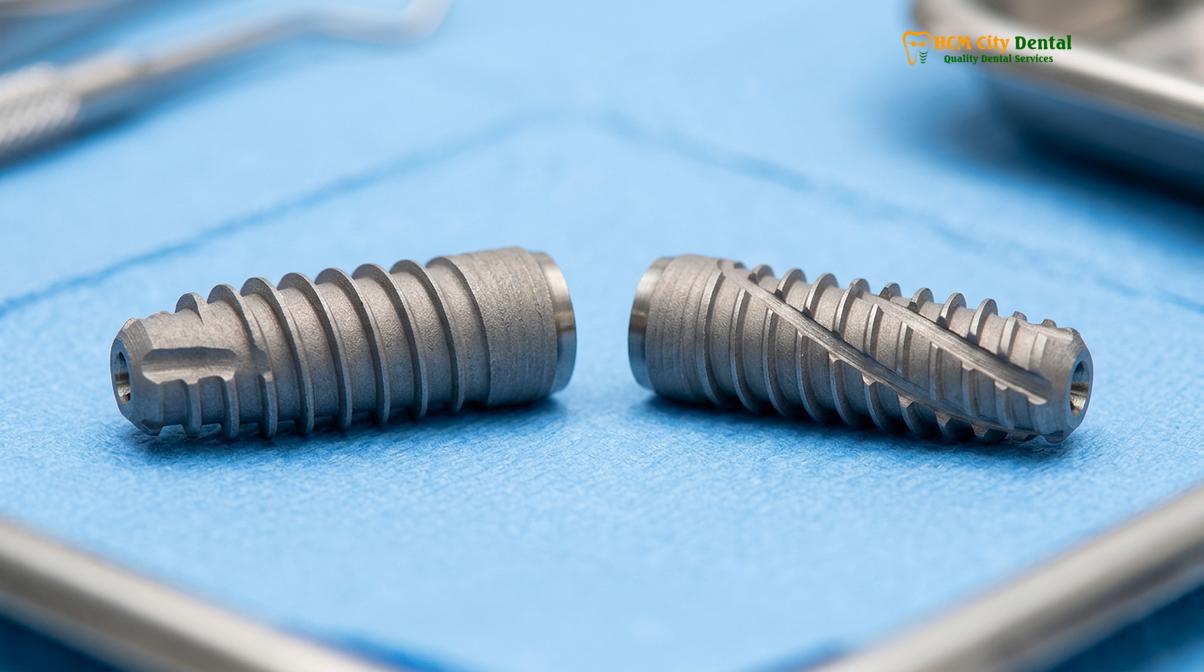
The clinical literature extensively supports the viability of these systems. Retrospective studies tracking the long-term survival rates of South Korean implants demonstrate outcomes that are statistically comparable to those of legacy brands. [3] The integration of these systems into daily clinical practice has allowed implantologists to standardize their workflows, utilizing predictable surgical protocols that yield consistent, aesthetically pleasing, and functionally robust results. As the technology continues to evolve, the distinction between “premium” and “mid-tier” implants is becoming increasingly blurred, with clinical success relying more heavily on the surgeon’s skill and the patient’s biological response than on the brand name stamped on the titanium fixture.
Osstem Implant: Clinical Specifications vs Competitors
Osstem Implant Features: SLA Surface and Clinical History
Osstem implants utilize a specialized SA surface and a tapered macro-design to promote rapid osseointegration and provide a highly versatile prosthetic ecosystem.
Founded in 1997, Osstem Implant has grown to become the largest dental implant manufacturer in the Asia-Pacific region and a dominant force globally. The cornerstone of Osstem’s clinical success is its flagship TS system, particularly the TS III fixture. This system was meticulously designed to address a wide spectrum of clinical indications, offering a harmonious balance between surgical ease of use and long-term biological stability. The design philosophy behind Osstem focuses on mimicking the natural anatomy of a tooth root, utilizing a subtle 1.5-degree taper that allows for smooth insertion while gradually compressing the surrounding bone to achieve adequate primary stability.
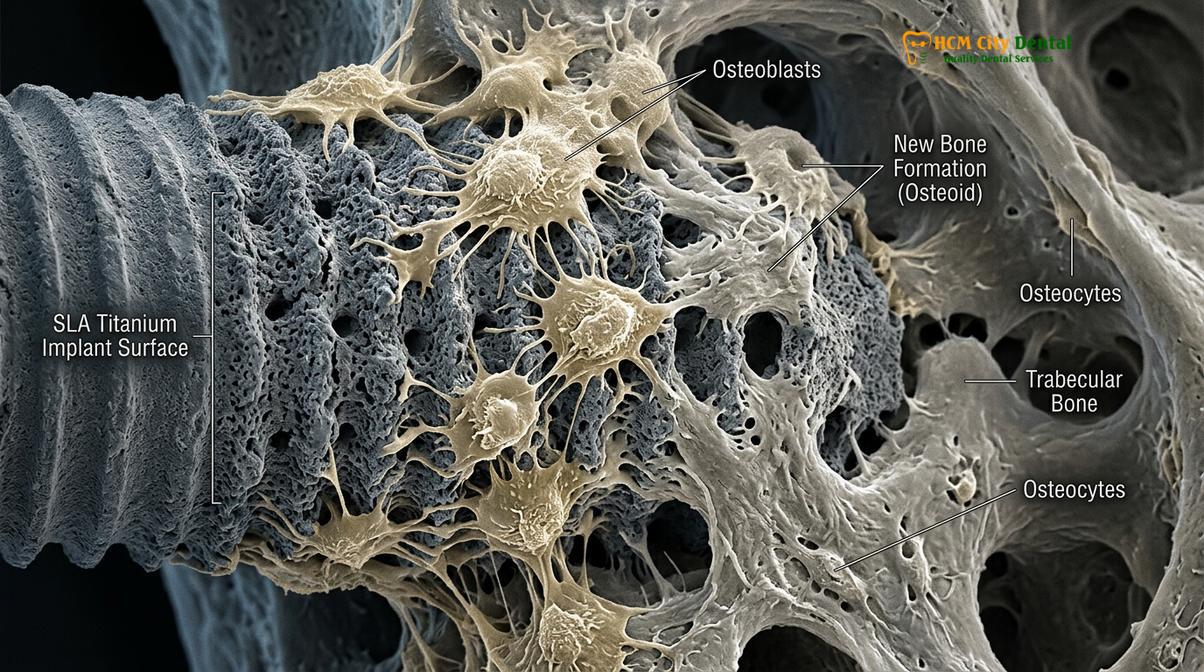
A critical component of Osstem’s efficacy is its proprietary surface treatment. While the industry standard is often referred to broadly as SLA surface technology (Sandblasted, Large-grit, Acid-etched), Osstem designates its specific process as SA (Sandblasted with Alumina and Acid-etched). This highly controlled manufacturing process involves blasting the commercially pure titanium or titanium alloy with alumina particles to create macroscopic craters, followed by a dual acid-etching process to generate a network of microscopic micropores. [1]
“The micro-topography created by advanced sandblasting and acid-etching techniques increases the functional surface area of the implant by up to 45%, significantly enhancing the mechanical interlocking between the titanium fixture and the newly formed woven bone.”
This increased surface area is biologically crucial. When the implant is placed into the osteotomy, the roughened SA surface acts as a highly attractive scaffold for blood clot formation and subsequent protein adsorption. Osteoprogenitor cells migrate to this surface, differentiate into mature osteoblasts, and begin depositing the mineralized bone matrix directly onto the titanium—a process known as contact osteogenesis. Clinical studies have shown that the SA surface can reduce the required healing time by several weeks compared to older, machined-surface implants, allowing for earlier prosthetic loading in favorable cases.
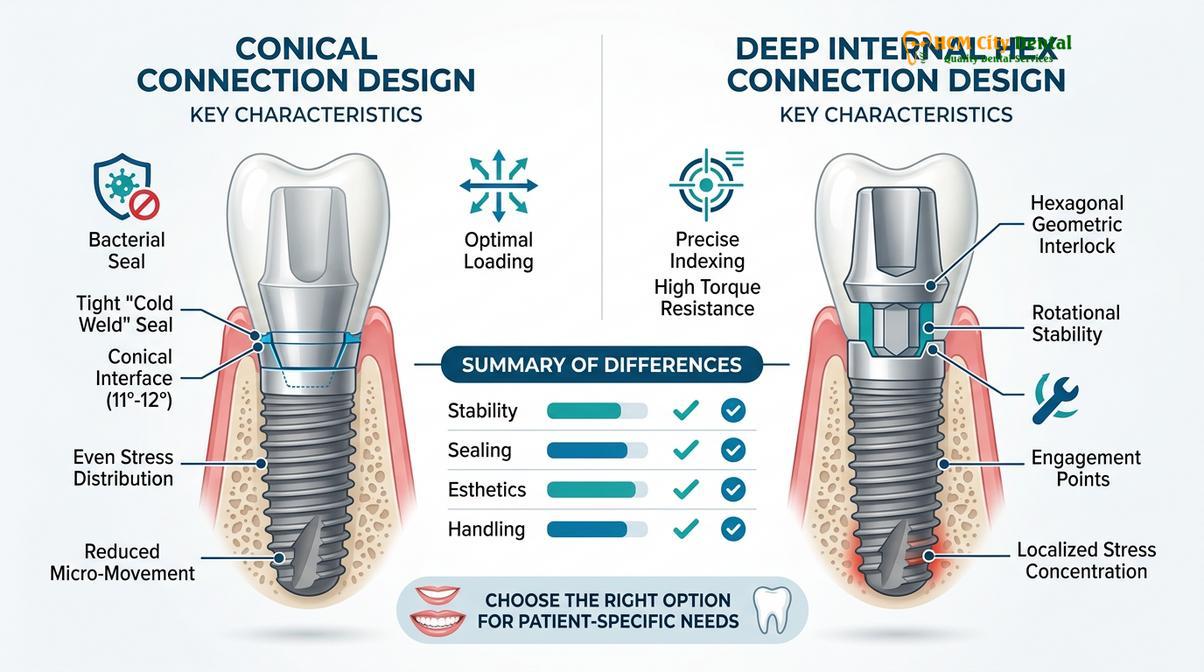
Beyond the surface chemistry, the internal connection of the Osstem TS system plays a vital role in its long-term success. Osstem utilizes an 11-degree internal conical connection combined with a hex index. This specific geometric configuration creates a “cold weld” effect between the implant fixture and the prosthetic abutment. When the abutment screw is tightened to the recommended torque, the conical interfaces wedge together, virtually eliminating micro-movement during mastication. [4] This tight seal prevents the pumping effect that can draw oral bacteria into the internal cavity of the implant, thereby significantly reducing the risk of crestal bone loss and peri-implantitis over the patient’s lifetime.
Dentium Implant Features: Stability and Connection Design
Dentium implants feature a double-thread design and a deep internal hex connection, optimizing primary stability and stress distribution, particularly in softer bone.
Established in the year 2000, Dentium has rapidly ascended the ranks to become a formidable competitor in the global implant market. Dentium’s engineering philosophy places a profound emphasis on achieving maximum primary stability—the mechanical friction between the implant and the bone immediately upon placement. This focus is most evident in their highly acclaimed SuperLine system. The SuperLine fixture is characterized by a more aggressive, tapered body and a unique thread architecture designed to engage bone effectively, even in anatomically challenging scenarios such as the posterior maxilla, where bone density is naturally lower.
The hallmark of the Dentium SuperLine is its double-thread macro-design. Unlike traditional single-thread implants that require numerous rotations to be fully seated, the double-thread configuration allows the implant to advance more rapidly into the osteotomy with fewer turns. [2] This design not only reduces surgical chair time but also minimizes the frictional heat generated during insertion, which is critical for preventing thermal necrosis of the surrounding bone cells. Furthermore, the threads are designed to be self-tapping, meaning they cut their own path into the bone, condensing the trabecular bone outward and significantly enhancing the initial mechanical grip.
| Clinical Feature | Osstem TS III | Dentium SuperLine |
|---|---|---|
| Surface Technology | SA (Alumina Blasted & Acid Etched) | SLA (Sandblasted, Large-grit, Acid-etched) |
| Thread Design | Single thread, corkscrew design | Double thread, higher pitch |
| Body Shape | 1.5-degree subtle taper | Aggressive taper for bone expansion |
| Abutment Connection | 11-degree internal conical + hex | Deep internal hex + conical seal |
| Primary Clinical Advantage | Extensive prosthetic versatility | Superior initial stability in soft bone |
Dentium also employs a highly refined SLA surface technology. By subjecting the titanium to a rigorous blasting and etching protocol, Dentium achieves a highly uniform micro-porosity that is exceptionally hydrophilic. When blood comes into contact with the Dentium SLA surface, it rapidly spreads and wicks up the threads, facilitating a robust biological response. This rapid blood wetting is the first critical step in the cascade of events leading to successful osseointegration.
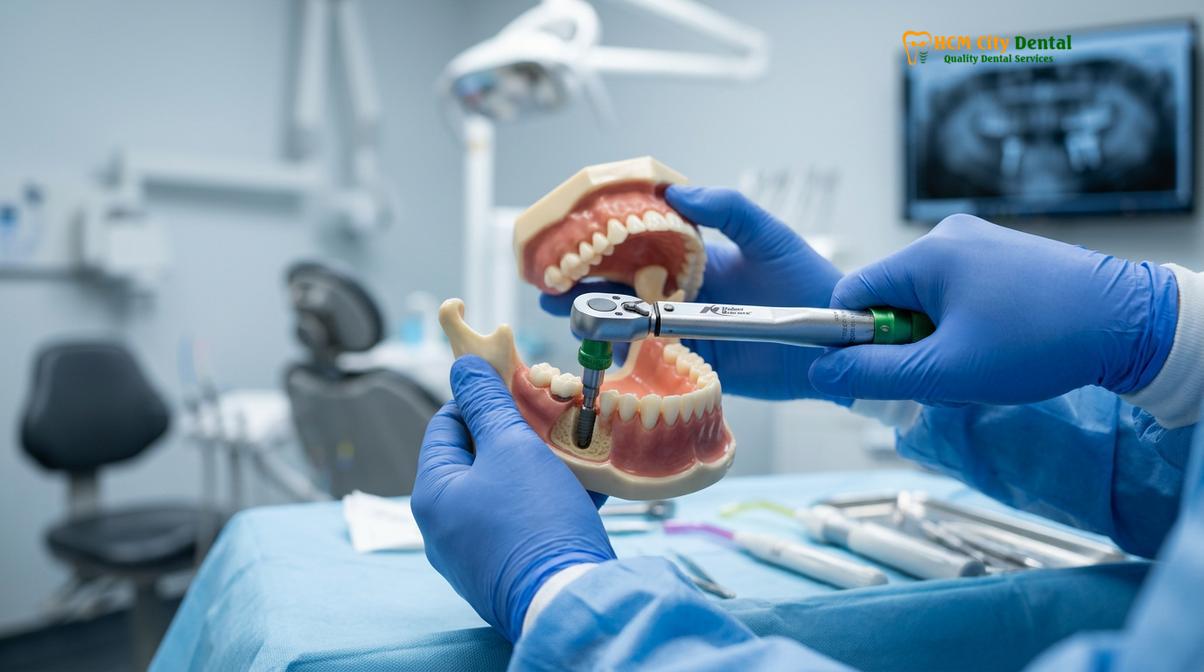
Another defining characteristic of Dentium implants is their deep internal hex connection. While Osstem relies heavily on the conical wedge, Dentium’s connection extends deeper into the body of the implant fixture. This deep internal engagement distributes lateral occlusal forces—the side-to-side chewing forces—deep within the implant body rather than concentrating them at the crest of the bone. By transferring stress away from the delicate marginal bone, the Dentium design helps preserve the bone levels around the neck of the implant, which is essential for maintaining the aesthetic contours of the overlying gingival tissues. [4]
Cost-Effectiveness: Quality Restorations at an Affordable Price
Both Osstem and Dentium provide highly cost-effective tooth replacement solutions, delivering clinical success rates comparable to premium brands without the prohibitive expense.
One of the most compelling reasons patients and clinicians gravitate toward South Korean implant systems is their exceptional value proposition. Historically, the high cost of implant components was a significant barrier to entry for many patients suffering from edentulism. Premium European systems, while backed by decades of longitudinal data, often carry a price tag that reflects their extensive legacy research, heavy marketing, and higher manufacturing costs in Western countries. In contrast, Osstem and Dentium have optimized their production pipelines, allowing them to offer a highly cost effective tooth replacement without sacrificing the metallurgical purity or the precision engineering required for medical devices.
The economic advantage of these systems extends beyond the initial purchase price of the titanium fixture. Because both Osstem and Dentium have developed comprehensive and highly standardized surgical kits, dental clinics can streamline their inventory and reduce overhead. Furthermore, the prosthetic components—such as healing abutments, impression copings, and final titanium or zirconia abutments—are also priced more competitively. This cumulative reduction in material costs allows clinics to pass the savings directly to the patient, making comprehensive treatments like full-mouth rehabilitations financially viable for a larger segment of the population. [5]
Clinical Warning: While mid-tier brands like Osstem and Dentium offer excellent value, patients should be extremely cautious of “ultra-cheap” or unbranded implants. Uncertified implants may utilize inferior titanium alloys, lack proper surface decontamination, or feature imprecise abutment connections, leading to a high risk of bacterial leakage, bone loss, and catastrophic implant failure.
When evaluating premium European implant systems versus South Korean alternatives, the decision often comes down to specific clinical nuances rather than a stark difference in overall success rates. For the vast majority of standard implant cases—such as replacing a single missing molar or supporting a lower overdenture—Osstem and Dentium perform exceptionally well, boasting survival rates that exceed 95% over a ten-year period. The premium brands may still hold a slight advantage in highly complex scenarios, such as severely irradiated bone or patients with compromised healing capacities, due to their proprietary hydrophilic surface coatings that actively draw blood into the micropores.
However, for the average healthy patient, the biological response to the SA or SLA surfaces of Korean implants is more than sufficient to achieve rock-solid integration. By choosing a reputable mid-tier brand, patients can allocate their dental budget more effectively, perhaps investing the savings into higher-quality prosthetic materials, such as custom-milled zirconia crowns, which significantly enhance the final aesthetic and functional outcome of the restoration.
Choosing the Right System for Your Clinical Needs
Selecting between Osstem and Dentium depends on a thorough clinical evaluation of bone density, the need for immediate loading, and the planned prosthetic outcome.
The decision to utilize Osstem or Dentium is rarely based on one system being universally “better” than the other; rather, it is a highly individualized choice dictated by the patient’s unique anatomical presentation and the surgeon’s specific treatment plan. At HCMC Dental Clinic in Ho Chi Minh City, our approach to implant selection is entirely evidence-based, relying on high-resolution 3D Cone Beam Computed Tomography (CBCT) scans to evaluate the precise volume, density, and architecture of the patient’s jawbone before any surgical intervention is scheduled.
If a patient presents with dense, highly mineralized bone (Type I or Type II bone), such as that typically found in the anterior mandible, the Osstem TS system is often an excellent choice. Its subtle taper and single-thread design allow for a smooth, controlled insertion without generating excessive compressive forces that could compromise the blood supply to the dense cortical bone. Furthermore, Osstem’s incredibly vast catalog of prosthetic abutments provides the restorative dentist with unparalleled flexibility when designing complex, multi-unit bridges or navigating challenging angulations.
Clinical Case Example: A 55-year-old patient visited HCMC Dental Clinic requiring the extraction of a failing upper premolar and immediate implant placement. Because the maxillary bone in this region is naturally softer and more porous, Dr. Nguyen Van Cuong selected the Dentium SuperLine system. The aggressive double-thread design allowed the implant to achieve an exceptionally high insertion torque of 45 Ncm, providing the necessary primary stability to support a temporary crown on the very same day of surgery, resulting in a highly successful aesthetic outcome.
Conversely, when dealing with softer bone (Type III or Type IV bone), commonly encountered in the posterior maxilla or in areas requiring simultaneous sinus floor elevation, Dentium frequently becomes the system of choice. The aggressive thread pitch and tapered core of the Dentium SuperLine act as an osteotome, gently expanding and condensing the soft trabecular bone as the implant is seated. This bone-condensing effect dramatically increases the primary stability, which is the absolute prerequisite for considering any immediate loading protocols or when providing implant solutions for older adults who may have decreased bone density.
“The ultimate success of a dental implant is not solely determined by the brand of the titanium fixture, but by the meticulous execution of the surgical protocol, the precise management of the soft tissues, and the biomechanical accuracy of the final prosthetic restoration.”
Ultimately, both systems are highly capable of supporting a wide range of restorations, serving as excellent alternatives to traditional dentures. The expertise of the implantologist in understanding the subtle biomechanical differences between the thread designs and connection types is what ensures a predictable, long-lasting result. Patients are encouraged to discuss these technical nuances with their surgeon to understand exactly why a specific system is being recommended for their unique case.
When to Consult a Dental Implant Specialist
A comprehensive clinical evaluation by an implant specialist is essential to determine your candidacy and select the most appropriate implant system for your anatomy.
While dental implants offer a highly predictable and durable solution for tooth loss, they are medical devices that require a precise surgical procedure. Not every patient is an immediate candidate for implant surgery. It is crucial to schedule a thorough consultation with a qualified implantologist to assess your overall systemic health and oral condition. Conditions such as uncontrolled diabetes, active periodontal disease, or a history of heavy smoking can significantly impair the body’s ability to heal and may compromise the osseointegration process, regardless of whether an Osstem or Dentium implant is used.
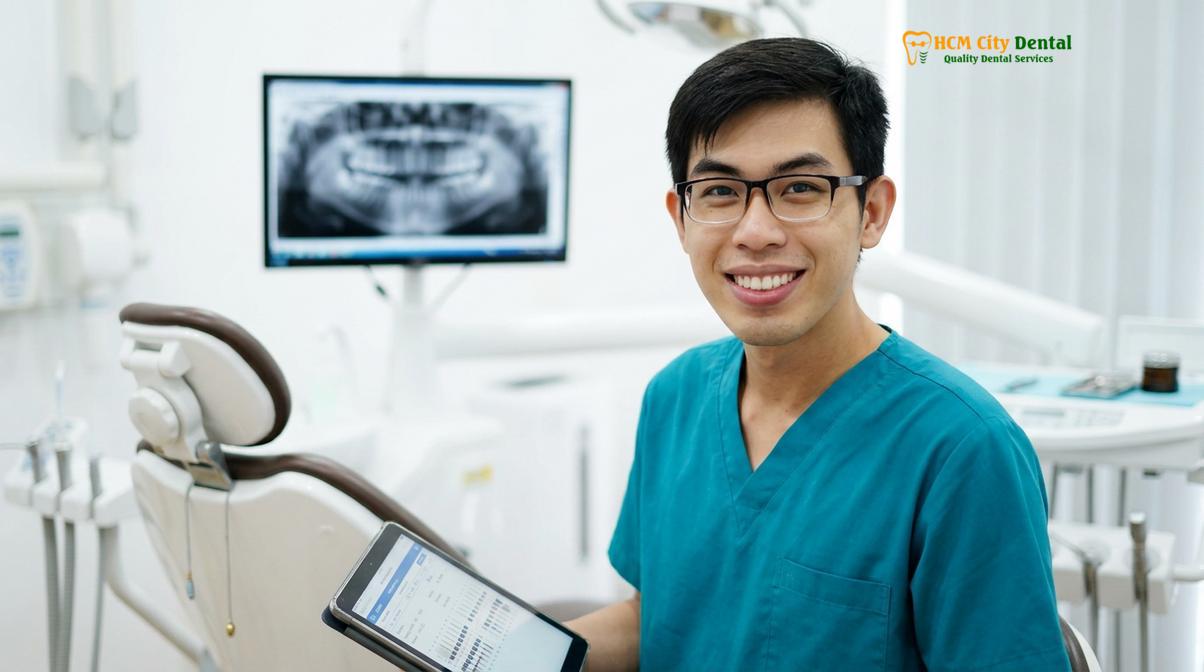
During your consultation, the specialist will utilize advanced 3D imaging to map the vital structures of your jaw, such as the inferior alveolar nerve and the maxillary sinus cavities. This diagnostic phase is critical for determining if adjunctive procedures, such as bone grafting or sinus lifts, are required to create a stable foundation for the implant. Dr. Nguyen Van Cuong emphasizes that a personalized approach is paramount; the surgical plan must be tailored to the specific biological realities of each patient to ensure a high success rate and minimize the risk of complications.
If you are experiencing the functional limitations of missing teeth or struggling with ill-fitting removable prosthetics, seeking professional advice is the first step toward restoring your oral health. A specialist can help you navigate the evaluating the pros and cons of implant surgery, explaining the specific benefits of different implant systems in the context of your individual needs. For a detailed assessment and to explore your options for a comprehensive implant consultation, reaching out to a dedicated dental implant center is highly recommended.
Frequently Asked Questions
Are Korean implants as good as Swiss implants?
Yes, top-tier Korean implants offer clinical success rates highly comparable to premium Swiss brands. While Swiss systems like Straumann possess decades of long-term longitudinal data and proprietary hydrophilic surfaces, Korean brands utilize proven SLA technologies that deliver excellent osseointegration and durability for the vast majority of clinical cases. The choice often depends on the complexity of the case and the patient’s budget.
What is the warranty period for Osstem implants at HCMC Dental?
The warranty period for Osstem implants typically spans up to 10 years, depending on the specific treatment plan and patient compliance. At HCMC Dental Clinic, we provide comprehensive post-operative care guidelines, and maintaining this warranty requires adhering to scheduled professional cleanings and routine radiographic evaluations to ensure the peri-implant tissues remain healthy.
Is Dentium suitable for bone grafting cases?
Yes, Dentium is highly suitable for cases requiring simultaneous bone grafting. Its aggressive double-thread macro-design and tapered body provide exceptional primary stability, which is a critical requirement when placing implants into newly grafted or naturally soft maxillary bone. This stability protects the graft material from micro-movements during the initial healing phase.
How long does the osseointegration process take for these brands?
The osseointegration process generally takes between three to six months for both Osstem and Dentium systems. The exact timeline depends on the patient’s individual bone density, systemic health, and whether adjunctive procedures like sinus lifts or guided bone regeneration were performed during the surgery. Advanced surface treatments on both brands help optimize this healing window.
Can I get a full mouth restoration using Osstem or Dentium?
Absolutely, both Osstem and Dentium are frequently utilized for full-arch restorations, including All-on-4 and All-on-6 protocols. Their robust connection designs and versatile prosthetic components allow implantologists to securely anchor full-mouth fixed bridges or overdentures with high predictability, providing patients with a fully functional and aesthetic smile rehabilitation.
References
- Journal of Oral Implantology. Comparative analysis of osseointegration between SA and SLA surface treatments in titanium implants. (2020).
- International Journal of Oral and Maxillofacial Implants. Primary stability and insertion torque of double-thread vs single-thread implant designs. (2019).
- Clinical Implant Dentistry and Related Research. Long-term survival rates of South Korean dental implant systems: A retrospective study. (2021).
- Journal of Prosthetic Dentistry. Biomechanical evaluation of internal hex versus conical implant-abutment connections. (2018).
- Periodontology 2000. The economics of implant dentistry: Global market trends and cost-effectiveness of mid-tier systems. (2022).
For personalized pricing, booking, and a free digital 3D CBCT scan, visit our Dental Implants service page or check our comprehensive Dental Implant Cost in Vietnam guide.
Osstem Implant Review: Clinical Performance & Cost
An objective Osstem implant review highlights its high clinical success rate, particularly in the posterior mandible where bone density is often lower. Osstem implants utilize a micro-threaded design and a Sandblasted and Acid-Etched (SA) surface treatment, which accelerates osseointegration. This makes them a highly reliable choice for patients seeking long-term structural stability. In terms of cost, Osstem implants in Vietnam provide a highly cost-effective alternative to premium Swiss or American systems, offering top-tier quality at a fraction of the cost.