How many days should you stay in Vietnam for dental work? For minor treatments like fillings or teeth whitening, a 2 to 3-day stay is sufficient. However, complex procedures such as dental implants, veneers, or full-mouth restorations typically require 7 to 14 days to ensure proper clinical fabrication and healing.
Clinical Summary:
Planning the ideal duration for your dental trip to Vietnam depends entirely on the clinical complexity of your required procedures. While simple cosmetic enhancements can be completed in a long weekend, restorative treatments demand a structured timeline to accommodate biological healing and precise laboratory fabrication. Coordinating your itinerary with a specialized clinical team ensures that post-operative evaluations are completed before your departure, minimizing the risk of complications and securing long-term functional success.
Key Takeaways:
- Simple procedures like whitening or single fillings require only 2 to 3 days in Vietnam.
- Custom prosthetics such as porcelain crowns and veneers generally necessitate a 5 to 7-day stay.
- Dental implant surgeries often require two separate trips, each lasting 7 to 10 days, spaced months apart.
- Allowing an extra 48 hours before your return flight ensures adequate time for final bite adjustments and post-op safety.
- Pre-trip digital consultations can accurately predict your required stay duration before you book flights.
Why Treatment Timelines Vary: Biological Healing vs. Lab Work
The duration of your dental stay is dictated by two distinct phases: the biological time required for your oral tissues to heal and the technical time needed for a dental laboratory to fabricate custom prosthetics.
When international patients begin planning their journey for comprehensive dental tourism services, the most common point of confusion is understanding why certain procedures take a few days while others require weeks. The answer lies in the fundamental difference between biological processes and technological workflows. A successful dental treatment timeline is never arbitrary; it is a carefully calculated schedule designed to respect the human body’s natural healing capacity while accommodating the intricate manufacturing processes of modern dental prosthetics.
Biological healing is the most variable factor in any dental procedure. When a tooth is extracted or a titanium implant is surgically placed into the jawbone, the body initiates a complex cascade of cellular events. For extractions, the formation of a stable blood clot and the subsequent epithelialization of the gum tissue take several days. For dental implants, the process of osseointegration—where osteoblasts build new bone cells directly onto the surface of the titanium post—requires several months[1]. You cannot rush biology. If a clinic attempts to place a final permanent crown on an implant before the bone has fully integrated, the mechanical stress of chewing will almost certainly cause the implant to fail, leading to severe pain, bone loss, and the need for complex revision surgery.
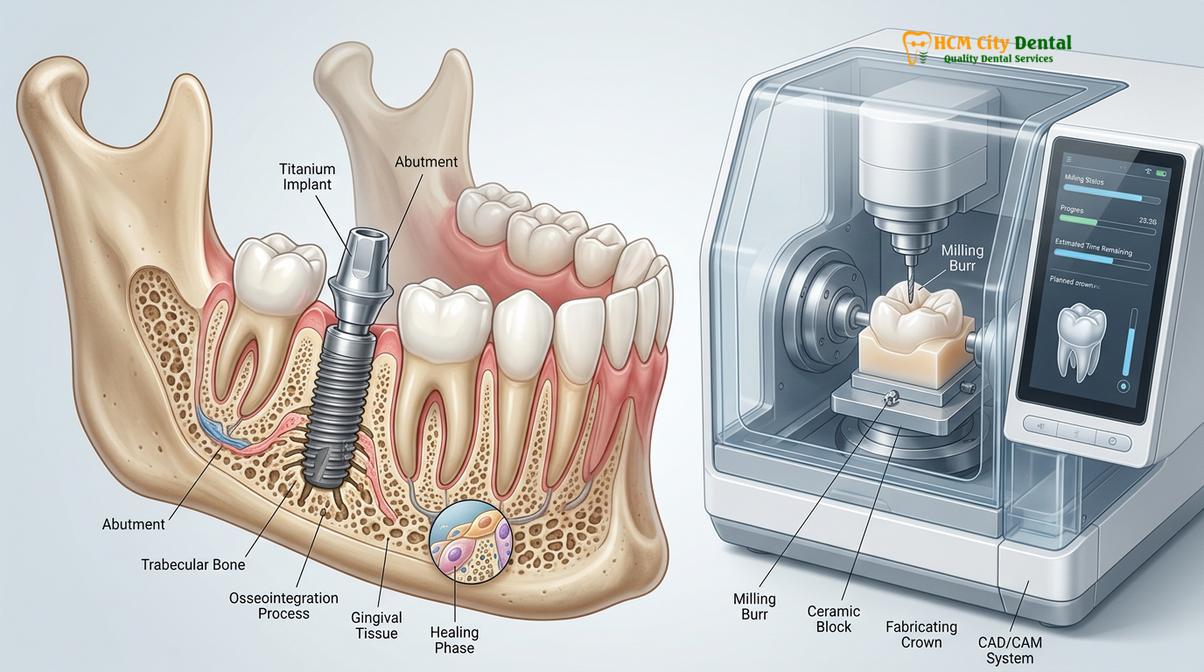
Conversely, the fabrication of custom prosthetics—such as porcelain veneers, crowns, and implant-supported bridges—relies on the efficiency of the dental laboratory. The saigon dental lab turnaround has improved dramatically in recent years thanks to the integration of CAD/CAM (Computer-Aided Design and Computer-Aided Manufacturing) technology. In the past, physical impressions had to be poured into stone models, and crowns were built by hand over many days. Today, digital intraoral scanners capture the exact topography of your teeth in minutes. This data is transmitted instantly to the laboratory, where technicians design the restoration digitally and mill it from a solid block of high-strength zirconia or lithium disilicate.
“The integration of digital intraoral scanning and in-house CAD/CAM milling has revolutionized the restorative timeline, allowing for the precise fabrication of custom ceramics in a fraction of the time previously required, without compromising marginal integrity.”
Despite these technological advancements, high-quality aesthetics still require time. While a machine can mill a crown in a few hours, achieving a natural, lifelike appearance requires a master ceramist to manually layer translucent porcelains, add custom stains, and fire the restoration in a specialized kiln. This artistic phase is crucial for ensuring that your new teeth blend seamlessly with your natural dentition. Therefore, when calculating how many days stay in Vietnam for dental work, you must account for both the clinical chair time and the laboratory’s fabrication schedule. Rushing the lab process often results in monochromatic, artificial-looking teeth or restorations with poor marginal fit, which can lead to recurrent decay and periodontal inflammation.
Stay Duration Matrix by Dental Procedure
Different clinical treatments require specific timeframes to ensure safety and precision. The matrix below outlines the estimated days you need to remain in the city based on your specific dental procedure.
To assist you in planning your itinerary, we have categorized the most common dental procedures into a comprehensive stay duration matrix. It is important to note that these timelines represent the minimum recommended stay. Patients with complex medical histories, compromised immune systems, or those requiring extensive full-mouth rehabilitations may require additional time. Always consult with your clinical team to receive a personalized dental treatment timeline based on your specific diagnostic records.
| Dental Procedure | Estimated Stay Duration | Number of Visits Required | Clinical Rationale |
|---|---|---|---|
| Professional Cleaning & Whitening | 1 to 2 Days | 1 Visit | Immediate results; no laboratory fabrication or extended healing required. |
| Direct Composite Fillings | 2 to 3 Days | 1 to 2 Visits | Completed chairside. Extra day recommended for minor bite adjustments if needed. |
| Simple Tooth Extractions | 3 to 5 Days | 2 Visits | Allows time for initial blood clot stabilization and a follow-up check before flying. |
| Porcelain Crowns & Veneers (1-4 units) | 5 to 7 Days | 2 to 3 Visits | Requires tooth preparation, lab fabrication, try-in, and final cementation. |
| Full Smile Makeover (8+ Veneers/Crowns) | 7 to 10 Days | 3 to 4 Visits | Extensive lab work, aesthetic try-ins, and precise occlusal balancing required. |
| Root Canal Therapy | 5 to 8 Days | 2 to 3 Visits | Infection clearance, canal obturation, and placement of a final protective crown. |
| Dental Implant Surgery (Phase 1: Placement) | 7 to 10 Days | 2 to 3 Visits | Surgical placement, post-op monitoring, and suture removal before departure. |
| Dental Implant Restoration (Phase 2: Crowns) | 7 to 14 Days | 3 to 4 Visits | Impression of healed implants, custom abutment design, and final crown delivery. |
| All-on-4 / Full Arch Implants (Phase 1) | 10 to 14 Days | 3 to 5 Visits | Complex surgery, fabrication of immediate temporary prosthesis, and bite alignment. |
When comparing regional implant options, it becomes evident that the standard of care dictates these timelines. For instance, a single porcelain crown generally requires a 5 to 7-day stay. On day one, the dentist prepares the tooth, takes digital impressions, and places a temporary crown to protect the sensitive dentin. Over the next few days, the laboratory crafts the permanent restoration. On day four or five, you return to the clinic for the try-in phase. The dentist evaluates the fit, color, and margins. If adjustments are needed, the crown is sent back to the lab. Once perfect, it is permanently cemented. An additional day is highly recommended to ensure the bite feels natural after the local anesthesia has completely worn off.
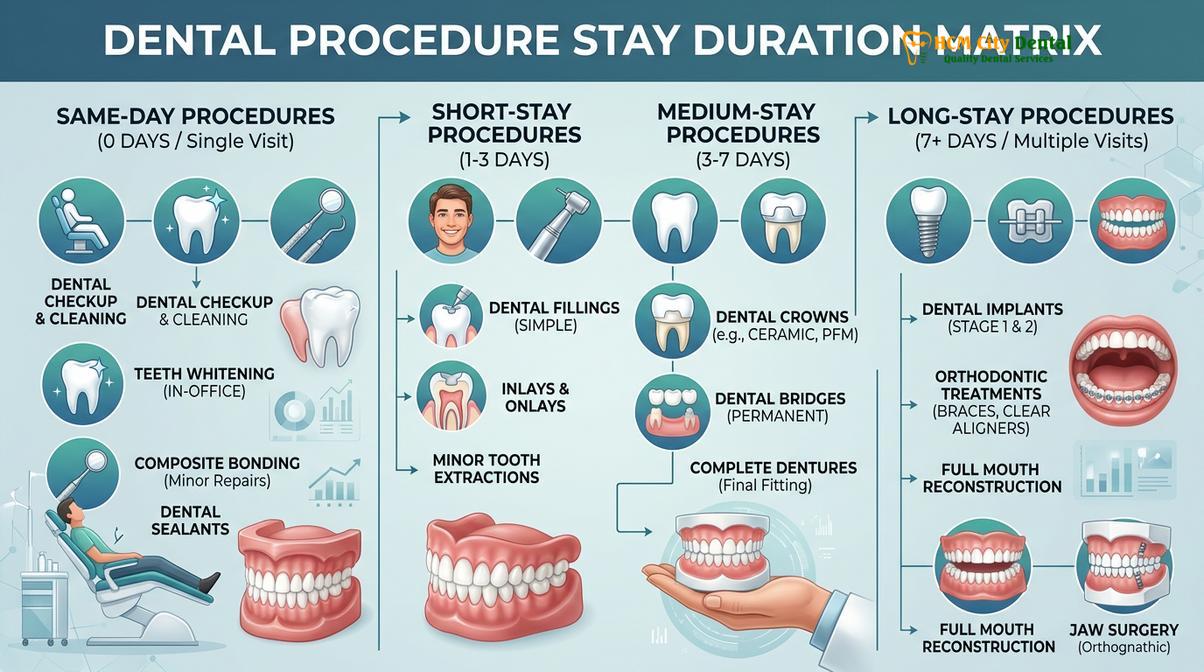
For surgical procedures like dental implants, the timeline is divided into distinct phases separated by a healing period of three to six months. Phase 1 involves the surgical placement of the titanium fixture into the jawbone. A stay of 7 to 10 days is crucial here. This allows the surgical site to begin primary healing, enables the clinical team to monitor for any early signs of infection, and permits the safe removal of non-resorbable sutures before you travel home. Phase 2, the restorative phase, requires another trip of 7 to 14 days to fabricate and attach the final custom abutments and ceramic crowns. Understanding this phased approach is essential for managing your expectations and ensuring a successful outcome.
Why Rushing Your Dental Work Can Lead to Clinical Failures
Attempting to compress complex dental procedures into an inadequate timeframe severely compromises clinical outcomes, increasing the risk of infection, prosthetic failure, and long-term bite misalignment.
One of the most significant risks in dental tourism is the temptation to prioritize a tight vacation schedule over sound medical protocols. Patients often ask if a two-week full-mouth rehabilitation can be completed in just five days. While some clinics may promise ultra-fast results to secure a booking, reputable practitioners will refuse to compromise on clinical standards. Rushing dental work bypasses critical quality control steps, leading to complications that are not only painful but also expensive to correct once you return to your home country.
Dr. Nguyen Van Cuong, a leading specialist at HCMC Dental Clinic, frequently emphasizes the dangers of accelerated treatment plans. “When we rush the fabrication of a prosthetic, we lose the opportunity for meticulous try-ins,” Dr. Cuong explains. “A crown or veneer must fit with microscopic precision. If the margins are even slightly open because the lab was forced to skip a refinement step, bacteria will infiltrate the gap, leading to rapid decay beneath the new restoration.” Furthermore, rushing the cementation process without allowing the patient to test the temporary restorations can result in severe occlusal (bite) discrepancies.
If a dental restoration is placed hastily and the bite is not perfectly balanced, it can cause premature contacts—meaning certain teeth hit together before others. Over time, this occlusal trauma can lead to severe temporomandibular joint (TMJ) disorders, chronic headaches, fracturing of the new porcelain, and even the loosening of underlying dental implants. Proper bite adjustment requires time and multiple evaluations.
In the context of surgical procedures, ignoring the required biological healing time is even more perilous. For patients planning implant procedures during a holiday, it is vital to understand that the initial stability of an implant is mechanical, but long-term success relies on biological osseointegration. If a patient insists on flying home immediately after a complex extraction and bone grafting procedure, they miss the critical 48-hour post-operative window where complications like excessive bleeding, hematoma formation, or acute localized infections are most likely to present[2]. Managing these issues in a foreign airport or mid-flight is a scenario that must be avoided at all costs.
Moreover, the psychological stress of a rushed medical procedure can negatively impact your body’s immune response and healing capacity. A well-planned itinerary allows you to rest, recover, and attend follow-up appointments without the anxiety of a looming departure flight. High-quality dentistry is an investment in your long-term health; allowing adequate time for the procedure ensures that this investment yields durable, aesthetically pleasing, and functionally sound results.
Factoring in Post-Op Checkups Before Your Flight Home
Scheduling a mandatory post-operative evaluation 24 to 48 hours before your departure is critical for verifying prosthetic fit, assessing tissue healing, and ensuring safe air travel.
When calculating your total stay, the most frequently overlooked component is the final post-operative checkup. Many patients assume that once the final crown is cemented or the last suture is placed, they can head straight to the airport. However, clinical best practices dictate a mandatory observation period. This buffer time is essential for addressing minor adjustments that only become apparent after you have used your new teeth in a real-world setting, such as eating a meal or speaking extensively.
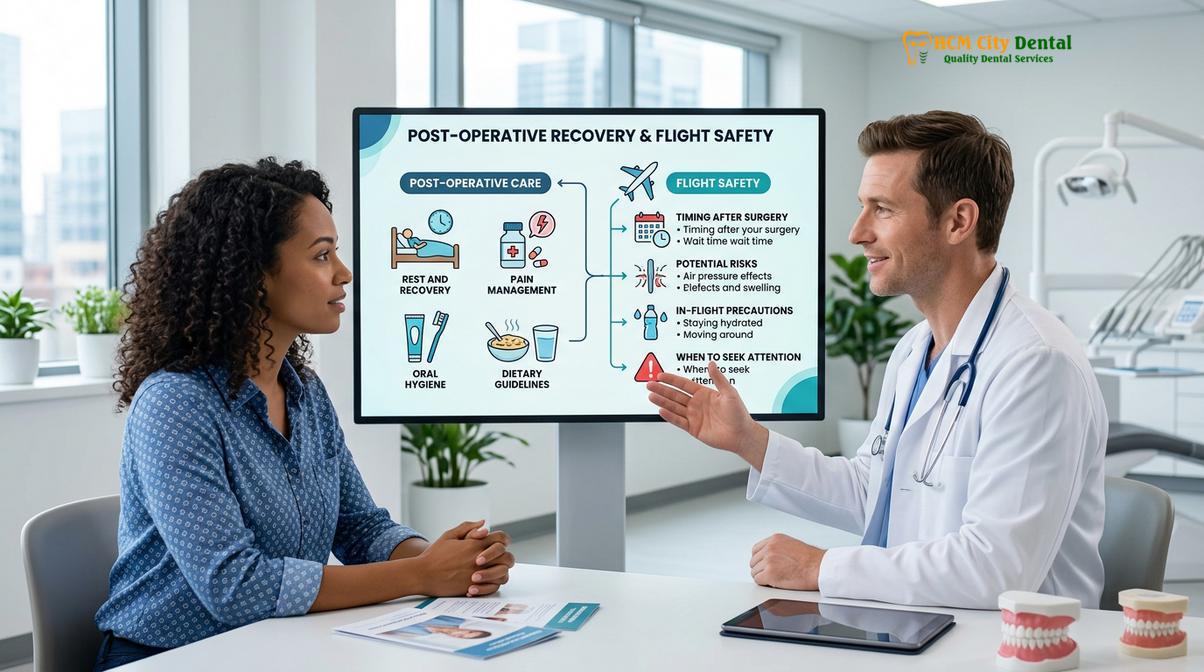
Post op recovery flight safety is a major consideration, particularly following oral surgery. The cabin of a commercial airliner is pressurized to an equivalent altitude of 6,000 to 8,000 feet. This change in barometric pressure can cause gases trapped in body cavities to expand—a phenomenon known in aviation medicine as aerodontalgia. If you fly too soon after a surgical extraction or sinus lift, the pressure changes can dislodge the protective blood clot, leading to a painful condition called alveolar osteitis (dry socket), or trigger secondary hemorrhage[3]. By scheduling your flight at least 48 to 72 hours post-surgery, you significantly mitigate these aviation-related risks.
A patient from Australia visited Ho Chi Minh City for a full upper arch of porcelain veneers. The final cementation was completed on a Thursday morning. During the mandatory Friday follow-up, the patient reported a slight lisp and minor sensitivity when biting down on their left side. Because the patient had scheduled their return flight for Saturday evening, the clinical team had ample time to perform micro-adjustments to the palatal contours of the veneers and polish the occlusal contacts. The patient flew home comfortably, avoiding what would have been months of functional frustration.
For restorative work, the post-op checkup focuses on occlusal harmony and soft tissue response. When a tooth is numbed with local anesthesia, your proprioception—the ability to sense the position of your jaw—is temporarily altered. You may bite down and feel that the new crown fits perfectly, only to realize the next day that it feels slightly “high.” A high restoration bears the brunt of your chewing force, which can cause acute inflammation of the periodontal ligament (the tissue suspending the tooth in the bone). A quick 15-minute adjustment during a final checkup resolves this issue instantly, ensuring your step-by-step travel preparation concludes with a perfectly comfortable smile.
How to Coordinate with HCMC Dental on WhatsApp Before Booking Flights
Initiating a remote consultation via messaging platforms allows our clinical team to evaluate your diagnostic records and provide a precise treatment timeline before you finalize your travel arrangements.
The key to a stress-free medical journey is meticulous pre-trip planning. Before you purchase non-refundable airline tickets or book accommodation, it is imperative to establish a clear line of communication with your chosen clinic. At HCMC Dental Clinic, we utilize secure whatsapp dental coordination to bridge the geographical gap between our specialists and international patients. This digital triage process ensures that you know exactly how many days you need to stay in Ho Chi Minh City before you make any financial commitments.
The process begins by sending a panoramic X-ray (OPG) or a recent 3D CBCT scan, along with clear photographs of your teeth, to our dedicated international patient coordination team. Dr. Nguyen Van Cuong and his team of specialists will review your diagnostic records to assess bone density, root health, and anatomical structures. Based on this clinical evaluation, we will draft a comprehensive, personalized treatment plan. This plan will detail the recommended procedures, the exact number of appointments required, the necessary healing intervals, and a highly accurate estimate of your required dental vacation duration.
Coordinating directly with the clinic also unlocks significant logistical and financial benefits. Patients who book their treatments in advance through our digital channels are eligible for a 40% online booking discount on select restorative and cosmetic procedures. Furthermore, our patient care coordinators can assist you in selecting a reputable dental provider experience by recommending comfortable, conveniently located hotels in District 1, ensuring you are just a short walk or a quick taxi ride away from the clinic. We also arrange complimentary airport pickup services, so you are greeted by a trusted driver the moment you arrive in Saigon, eliminating the stress of navigating a new city after a long flight.
When discussing your treatment plan, our English-speaking dental professionals will also clarify all financial aspects. HCMC Dental Clinic offers a transparent fee structure with no hidden costs. For your convenience, we accept a wide variety of payment options, including Visa/Mastercard, international bank transfers, cash (in both USD and VND), PayPal, popular e-wallets, and major cryptocurrencies (Crypto). Knowing your exact timeline and financial commitment in advance allows you to relax and focus entirely on your health and recovery.
When to See a Doctor (Clinical Considerations)
While proper planning minimizes risks, it is crucial to recognize when post-operative symptoms deviate from the normal healing spectrum. If you experience any of the following red flags during your stay in Vietnam, you must contact the clinic immediately for an urgent clinical evaluation rather than waiting for your scheduled follow-up appointment:
- Uncontrolled Hemorrhage: While slight blood-tinged saliva is normal for 24 hours after an extraction or implant placement, active, continuous bleeding that does not stop after applying firm pressure with sterile gauze for 45 minutes requires immediate attention.
- Progressive Swelling: Post-surgical edema (swelling) typically peaks at 48 to 72 hours and then gradually subsides. If swelling continues to increase dramatically after the third day, or if it begins to compromise your airway or ability to swallow, seek emergency care.
- Signs of Acute Infection: The presence of purulent exudate (pus) around a surgical site, accompanied by a throbbing, radiating pain that is unresponsive to prescribed analgesics, or a systemic fever exceeding 38.5°C (101.3°F), indicates a developing infection that requires antibiotic intervention[4].
- Persistent Paresthesia: If you experience prolonged numbness, tingling, or a “pins and needles” sensation in your lips, chin, or tongue that lasts well beyond the expected duration of the local anesthetic (typically 6 to 8 hours), it may indicate nerve irritation or compression.
“Patient safety is paramount. We instruct all international patients to remain in close proximity to the clinic during the initial 48-hour post-operative window. Rapid clinical intervention is the most effective way to manage and resolve unexpected complications.”
It is also important to note that certain systemic health conditions may serve as contraindications for accelerated treatment timelines. Patients with poorly controlled diabetes mellitus, autoimmune disorders, or those undergoing bisphosphonate therapy for osteoporosis have compromised healing capacities. In such cases, the clinical team at HCMC Dental Clinic will mandate extended recovery periods between surgical phases to ensure safety. Furthermore, all procedures are performed under strict infection control protocols, utilizing Class-B autoclave sterilization (European standard) to guarantee a sterile environment and protect your overall well-being[5]. Always provide a complete and honest medical history during your initial consultation to allow the clinical team to tailor the timeline to your specific physiological needs.
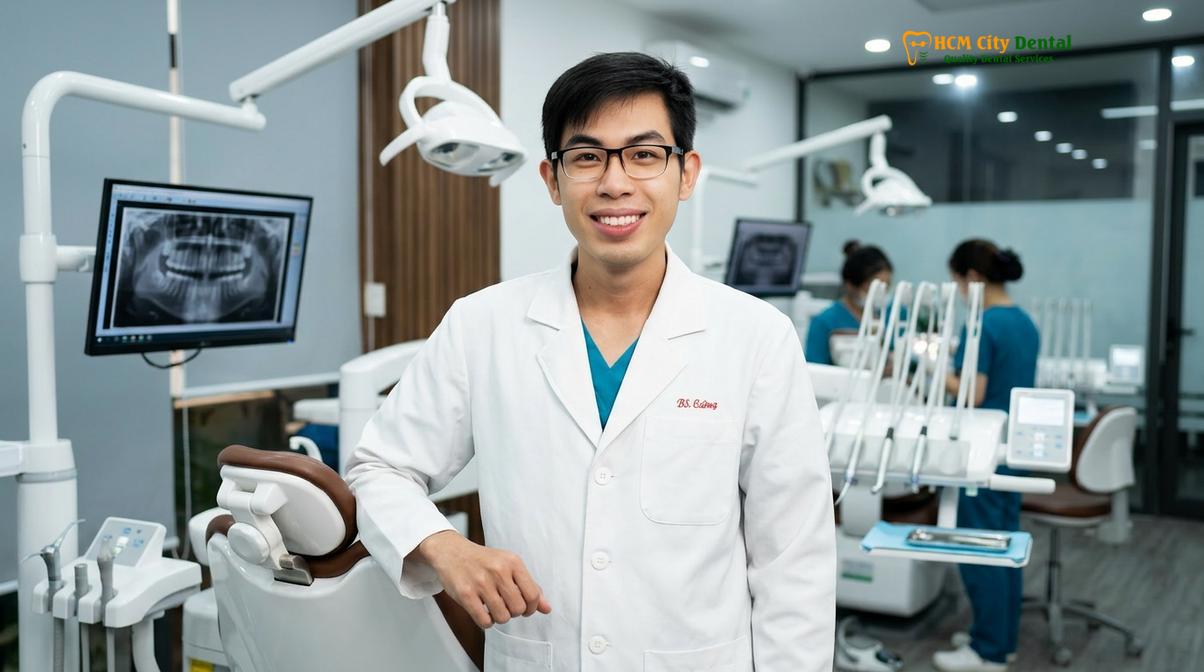
If you are ready to begin planning your medical journey, contact HCMC Dental Clinic today via WhatsApp to schedule a comprehensive digital consultation with Dr. Cuong and receive your personalized treatment timeline.
Frequently Asked Questions
What is the absolute minimum stay for a dental crown?
The absolute minimum stay for a single dental crown is typically 3 to 4 days. This timeframe allows for the initial tooth preparation and digital impressions on day one, followed by laboratory fabrication, and concludes with the final cementation and bite adjustment before your departure. However, extending your stay to 5 days is highly recommended to accommodate any necessary aesthetic or functional refinements.
Can I split my dental implant treatment into two short trips?
Yes, splitting dental implant treatment into two trips is the standard clinical protocol. The first trip (5 to 7 days) involves the surgical placement of the titanium post, while the second trip (7 to 10 days), scheduled several months later, focuses on attaching the final custom crown. This phased approach respects the biological requirement for osseointegration, ensuring the implant fuses securely with your jawbone before bearing any chewing forces.
What happens if my healing takes longer than expected?
If your biological healing requires more time, your clinical team will adjust your treatment plan to prioritize your safety. Temporary restorations can be placed to protect your teeth, allowing you to return home safely and complete the final restorative phase during a subsequent visit. Reputable clinics will never force a final prosthetic onto an unhealed surgical site simply to meet a travel deadline.
Is it safe to fly immediately after a tooth extraction?
It is generally not recommended to fly within 24 to 48 hours following a surgical tooth extraction. Changes in cabin pressure can disrupt the formation of the blood clot in the extraction site, potentially leading to a painful condition known as dry socket or causing secondary bleeding. Allowing a few days of ground-level recovery ensures the surgical site is stable enough for air travel.
How do I manage my dental vacation duration if I need multiple treatments?
Managing your dental vacation duration for complex cases requires comprehensive pre-trip planning via digital consultation. By sharing your X-rays in advance, the clinical team can sequence your treatments—combining surgeries and restorative work efficiently—to provide a highly accurate estimate of the total days required in the city. This coordination ensures all procedures and necessary follow-ups are completed within your booked travel dates.
References
- Journal of Prosthetic Dentistry. Clinical protocols for accelerated restorative workflows. (2022).
- International Journal of Oral & Maxillofacial Implants. Healing times and osseointegration protocols. (2021).
- World Health Organization (WHO). Global guidelines for patient safety in surgical care. (2020).
- Aerospace Medical Association. Medical guidelines for airline travel and post-operative care. (2023).
- FDI World Dental Federation. Infection control and sterilization standards in dental practice. (2022).