Achieving optimal results with clear aligners requires strict adherence to a 22-hour daily wear schedule. Invisalign active wear time compliance ensures continuous biomechanical force on the periodontal ligament, facilitating predictable tooth movement. Falling below this threshold risks tracking failure, prolonged treatment, and the need for clinical refinements.
Clinical Summary:
Invisalign treatment relies on the fundamental orthodontic principle of continuous, gentle force to remodel alveolar bone. Active wear time compliance—clinically defined as wearing the aligners for 20 to 22 hours per day—is the most critical patient-controlled variable determining treatment success. When aligners are removed for extended periods, the periodontal ligament begins to stabilize the tooth in its current position, halting the osteoclastic and osteoblastic cellular activity necessary for movement. This disruption not only delays the projected timeline but can also cause the physical teeth to lose synchronization with the digital aligner trays, a complication known as tracking failure. Orthodontic specialists emphasize that maintaining consistent aligner wear minimizes inflammatory discomfort, prevents root resorption risks associated with intermittent forces, and ensures the predictable realization of the digital treatment plan.
Key Takeaways:
- Optimal clinical outcomes require a strict commitment of 20 to 22 hours of continuous aligner wear daily.
- Cellular bone remodeling (osteoclast and osteoblast activity) pauses and begins to reverse when aligners are removed.
- Teeth tracking failure occurs when the physical tooth position lags behind the digital ClinCheck treatment plan.
- Intermittent wear causes cyclic “jiggling” forces that increase patient discomfort and elevate the risk of root resorption.
- Blue dot compliance indicators provide objective wear-time tracking, which is particularly beneficial for adolescent patients.
The Biology of Movement: Why Constant Pressure is Necessary
Orthodontic tooth movement relies on continuous, sustained biomechanical pressure to stimulate cellular bone remodeling within the periodontal ligament, allowing teeth to shift safely.
To truly understand the importance of Invisalign active wear time compliance, one must first examine the microscopic biological processes that occur beneath the gum line. Orthodontic tooth movement is not merely a mechanical shifting of hard objects; it is a complex, biologically mediated inflammatory response. The roots of your teeth are not rigidly fused to the jawbone. Instead, they are suspended in the alveolar socket by a hammock-like network of collagen fibers known as the periodontal ligament (PDL) [1]. This highly vascularized tissue acts as a shock absorber and a sensory organ, but most importantly, it is the biological engine of orthodontic movement.
When a clear aligner is seated over the teeth, the thermoplastic material exerts a calculated, continuous force. This constant aligner pressure compresses the PDL on the side toward which the tooth is moving (the pressure side) and stretches the PDL on the opposite side (the tension side). This mechanical stress triggers a cascade of cellular events. On the pressure side, localized hypoxia (reduced oxygen) stimulates the differentiation of osteoclasts—specialized cells that resorb, or break down, the adjacent alveolar bone. Simultaneously, on the tension side, osteoblasts are recruited to deposit new bone matrix, filling in the space left behind as the tooth migrates [2].
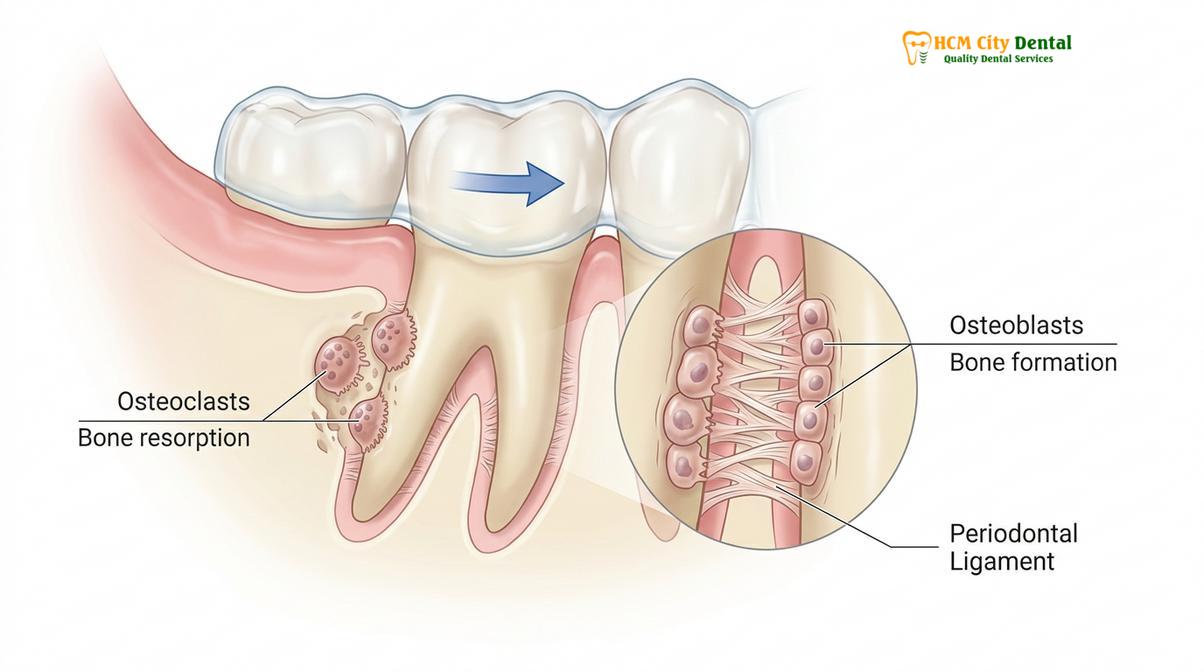
This intricate balance of bone resorption and deposition is heavily dependent on the duration and consistency of the applied force. The biological signaling pathways, particularly the RANK/RANKL/OPG system, require sustained mechanical strain to remain active. If the aligner is removed, the pressure drops to zero. Within a surprisingly short period, the osteoclastic activity halts, and the PDL fibers attempt to pull the tooth back to its original, stable position—a phenomenon known as orthodontic relapse.
“Orthodontic tooth movement is a continuous biological dialogue between mechanical force and cellular response. Interrupting that force by removing aligners for prolonged periods silences the dialogue, stalling bone remodeling and compromising the predictability of the entire treatment plan.”
Furthermore, the initial phase of tooth movement involves a process called hyalinization. When pressure is first applied, a localized area of the PDL temporarily loses its blood supply and becomes cell-free (hyalinized). The surrounding healthy tissues must recruit macrophages and osteoclasts to clear this necrotic tissue before actual bone remodeling can proceed. This “lag phase” can take several days. If a patient exhibits poor aligner daily wear time, constantly removing and replacing the trays, the tissues are subjected to intermittent trauma. This prevents the efficient clearing of the hyalinized zone, drastically slowing down the rate of tooth movement and increasing the inflammatory pain experienced by the patient.
Therefore, the requirement for constant pressure is not an arbitrary rule set by your dentist; it is a strict biological prerequisite. The sophisticated SmartTrack material used in modern clear aligners is engineered to deliver a highly specific, continuous force profile. However, this advanced material science is entirely rendered useless if the appliance is sitting in its case rather than actively engaging the dentition.
The 22-Hour Daily Rule: What Happens When Trays Are Left Out
Removing aligners for more than two hours daily disrupts the cellular remodeling process, causing teeth to relapse toward their original positions and extending treatment timelines.
The cornerstone of successful clear aligner therapy is the widely cited 22-hour rule orthodontics. This guideline dictates that patients must wear their aligners for a minimum of 20 to 22 hours every single day, removing them only for eating, drinking anything other than plain water, and performing oral hygiene routines. While two hours of “off-time” may seem restrictive, it is a carefully calculated buffer designed to balance the biological requirements of tooth movement with the practical realities of daily life.
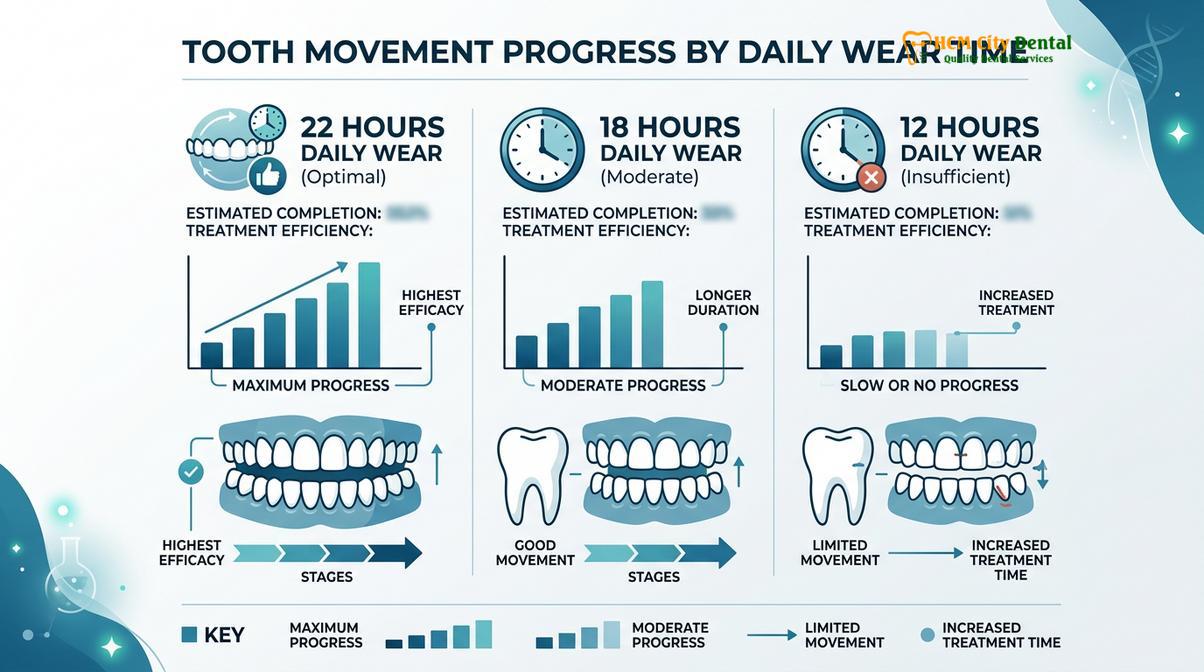
When a patient adheres to the 22-hour rule, the teeth are held in their new, prescribed positions long enough for the osteoid (newly formed, unmineralized bone) to begin stabilizing around the root. However, when compliance slips and trays are left out for extended periods—dropping to 18, 16, or even 12 hours a day—the clinical consequences become severe. The most immediate effect is a cessation of forward progress. Because the PDL fibers have a strong elastic memory, they will immediately begin pulling the tooth back to its starting position the moment the aligner is removed [3].
Consistently wearing aligners for less than the prescribed time creates a cycle of movement and relapse known as “jiggling forces.” The tooth is pushed forward while the aligner is in, and drifts backward when it is out. This back-and-forth trauma not only halts treatment progress but significantly increases the risk of orthodontically induced inflammatory root resorption (OIIRR), which can permanently shorten and weaken the tooth roots.
Consider the mathematics of non-compliance. If a patient wears their aligners for only 16 hours a day, the teeth are subjected to 8 hours of relapse forces. Over a standard two-week wear cycle for a single tray, that equates to 112 hours of backward movement. By the time the patient attempts to switch to the next sequential tray, the teeth are not physically in the position the digital software expects them to be. The new tray will feel excruciatingly tight, may not seat fully over the attachments, and will apply incorrect, unprescribed forces to the misaligned teeth.
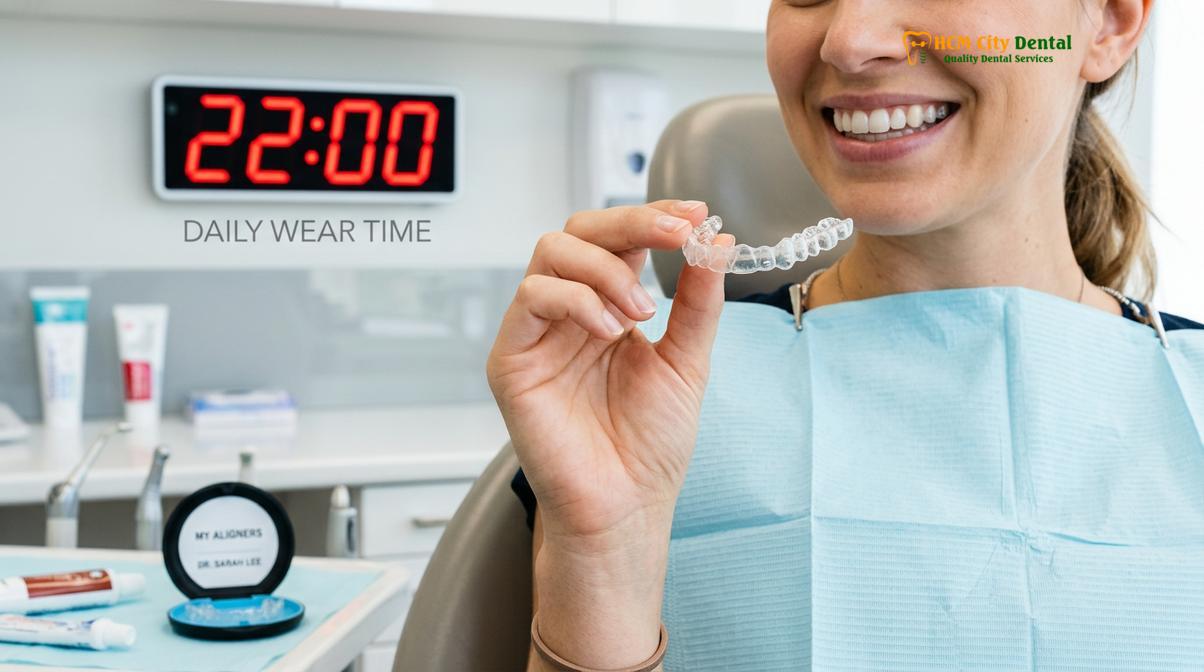
Beyond the mechanical failure, poor compliance drastically affects patient comfort. The initial discomfort experienced when switching to a new tray typically subsides within 48 to 72 hours as the PDL adapts to the new force vector. However, patients who frequently remove their aligners never allow their tissues to adapt. Every time they reinsert the tray, they re-trigger the acute inflammatory response, effectively trapping themselves in a perpetual state of initial orthodontic soreness.
To manage the 2-hour buffer effectively, patients must adopt a highly disciplined approach to meals. A common clinical recommendation is to allocate 30 minutes for breakfast, 45 minutes for lunch, and 45 minutes for dinner, which includes the time required to brush and floss before reinsertion. Grazing, sipping sugary coffees over several hours, or leaving the aligners out for an entire evening social event are behaviors that directly sabotage the treatment timeline. For patients seeking comprehensive orthodontic treatment, understanding that the aligners only work when they are actively seated on the teeth is the most vital step toward a successful outcome.
Tracking Failure: What ‘Off-Track’ Teeth Look and Feel Like
Tracking failure manifests as visible air gaps between the aligner plastic and the incisal edges of the teeth, indicating that the tooth has not moved as digitally prescribed.
One of the most common and frustrating complications of poor Invisalign active wear time compliance is teeth tracking failure. In the context of clear aligner therapy, “tracking” refers to how accurately the physical movement of the patient’s teeth matches the digital simulation (ClinCheck) designed by the orthodontist. When a tooth stops moving in sync with the aligner trays, it is considered “off-track.” If left unaddressed, tracking failure compounds with each subsequent tray, eventually rendering the aligners completely ineffective.
Clinically, tracking failure is most easily identified by visual inspection. When an aligner is fully seated, the thermoplastic material should intimately hug the incisal edges (the biting surfaces) and the contours of the teeth. If a tooth is off-track, a visible air gap—often referred to as a “halo”—will appear between the edge of the tooth and the bottom of the aligner tray. This gap indicates that the aligner is trying to pull or push the tooth into a space, but the tooth has lagged behind [4].
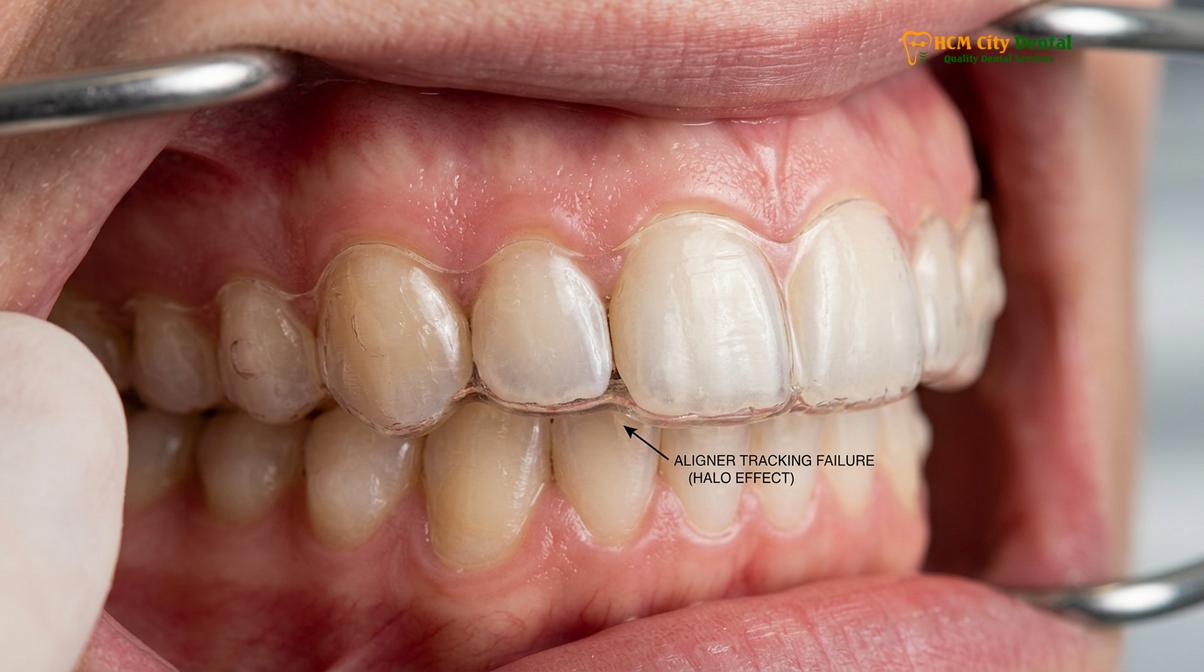
Patients may also feel tracking failure before they see it. An off-track aligner will often feel excessively “bouncy” or spongy when biting down. Furthermore, the composite resin attachments (small tooth-colored bumps bonded to the teeth to provide grip) may no longer fit perfectly into their corresponding dimples in the aligner plastic. Instead of engaging the attachment to apply a specific directional force, the misaligned plastic may push against the attachment incorrectly, forcing the tooth in an unintended direction.
| Clinical Indicator | On-Track (Healthy Compliance) | Off-Track (Tracking Failure) |
|---|---|---|
| Incisal Fit | Plastic sits flush against the biting edge of the tooth. | Visible air gap or “halo” between tooth and plastic. |
| Attachment Engagement | Aligner dimples snap securely over composite attachments. | Aligner rests awkwardly on top of or beside attachments. |
| Seating Sensation | Firm, stable fit; clicks into place securely. | Spongy, bouncy feel; tray easily dislodges from the posterior. |
| Discomfort Level | Mild pressure for 2-3 days after a tray change, then subsides. | Persistent, sharp pain or pressure that does not resolve. |
While poor aligner daily wear time is the primary culprit, tracking failure can also be exacerbated by the complexity of the prescribed movements. Certain biomechanical movements, such as the extrusion of lateral incisors or the rotation of rounded premolars, are notoriously difficult for clear aligners to achieve. If a patient’s compliance wavers even slightly during these critical stages, the tooth will almost certainly fall behind.
When tracking failure is identified, immediate clinical intervention is required. The first line of defense is the use of “chewies”—small, cylindrical silicone cushions that the patient bites down on to force the aligner to seat more deeply over the teeth. If chewies and increased wear time do not resolve the issue, the orthodontist may instruct the patient to backtrack, wearing a previous tray that still fits perfectly, to recapture the lost movement. In severe cases of tracking failure, the current treatment plan must be aborted. The doctor will remove the existing attachments, take a new digital scan, and order a mid-course correction or refinement, which significantly extends the overall treatment duration and may impact international orthodontic retention costs if timelines are drastically altered.
Teen Compliance: Leveraging Blue Dot Indicator Trays
Blue compliance indicators utilize food-safe dyes that fade based on saliva contact and temperature, providing an objective measurement of a teenager’s daily wear time.
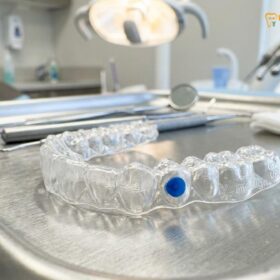
Orthodontic treatment during adolescence presents unique behavioral challenges. While teenagers are often highly motivated by the aesthetic benefits of clear aligners compared to traditional metal braces, they are also more susceptible to lapses in discipline. Forgetfulness, busy school schedules, and social pressures can easily lead to suboptimal Invisalign active wear time compliance. To address this specific demographic, Invisalign introduced compliance indicators—small blue dots embedded in the posterior region of the aligner trays.
These blue dots are not merely decorative; they are sophisticated, objective measurement tools. The indicator is formulated with a food-safe, non-toxic dye that is sensitive to both the ambient temperature of the oral cavity (approximately 37°C or 98.6°F) and the presence of moisture from saliva. When the aligner is worn consistently for the prescribed 20 to 22 hours a day, the blue dye gradually fades over the standard one-to-two-week wear period, eventually becoming clear. If the dot remains dark blue or only partially fades by the end of the cycle, it provides undeniable clinical evidence that the patient has not met the required wear time [5].
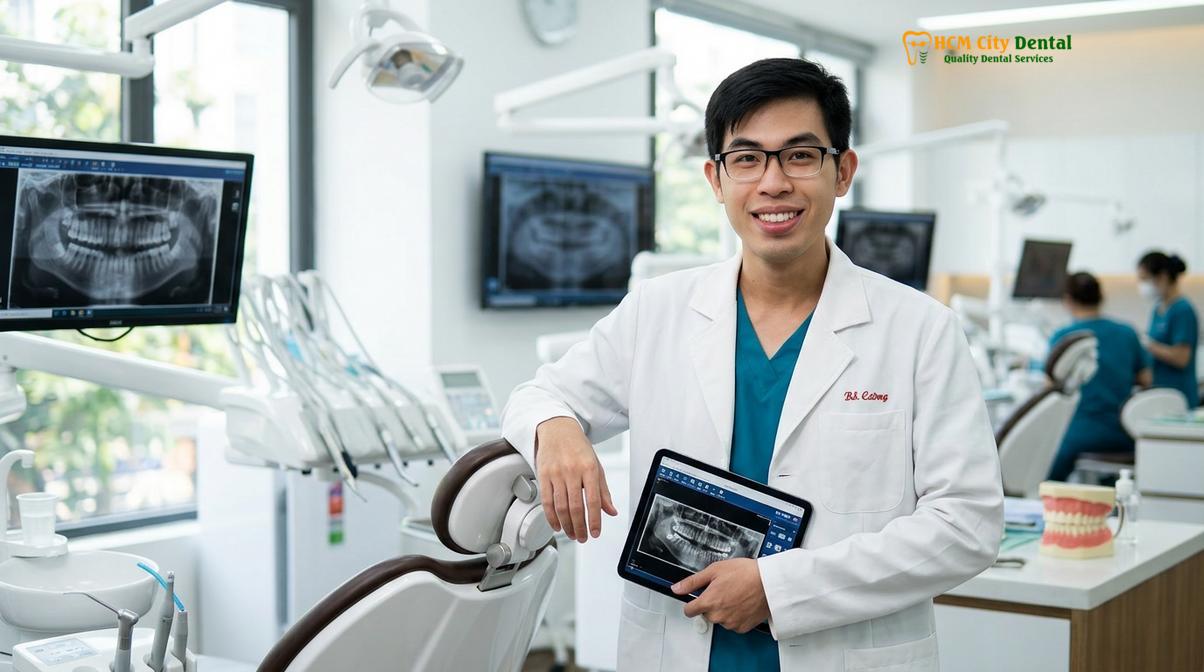
A 15-year-old patient presented to HCMC Dental Clinic in Ho Chi Minh City with moderate anterior crowding. During the first two months of clear aligner therapy, the patient reported excellent compliance, yet clinical examination revealed significant tracking failure on the upper lateral incisors. Dr. Nguyen Van Cuong inspected the aligner trays and noted that the blue compliance indicators were still vividly dark, contradicting the patient’s self-reported wear time. By utilizing this objective data, Dr. Cuong was able to have a constructive, evidence-based discussion with the patient and parents. The treatment was paused, the patient was educated on the biological necessity of continuous wear, and a tracking app was introduced. Following this intervention, subsequent trays showed fully faded indicators, and the teeth tracked perfectly through the remainder of the treatment.
The presence of the blue dot serves a dual purpose. First, it acts as a vital diagnostic tool for the orthodontist, eliminating the guesswork and potential friction of relying solely on self-reported patient data. Second, it functions as a powerful psychological deterrent and motivational tool for the teenager. Knowing that their compliance is being objectively monitored encourages accountability. Parents also benefit from this Invisalign compliance tracking feature, as they can easily check the trays at home to ensure their investment in their child’s dental health is being respected.
Dr. Nguyen Van Cuong frequently notes that the success of teen aligner therapy hinges on this transparency. When adolescents understand that the blue dot is a direct reflection of their commitment, they are far more likely to integrate the aligners into their daily routine, ensuring that the biological forces required for bone remodeling are consistently applied.
Tips for Building Aligner Wear Habits While Traveling
Maintaining strict aligner schedules during travel requires proactive planning, including the use of travel cases, timer applications, and modified oral hygiene routines.
Maintaining the 22-hour rule orthodontics is relatively straightforward when adhering to a predictable daily routine at home or work. However, travel—whether for business or leisure—introduces significant disruptions to meal times, hygiene access, and sleep schedules, making it one of the highest-risk periods for compliance failure. A comprehensive patient compliance guide must address the practical challenges of managing clear aligners on the go.
The most common pitfall during travel is the “loss of the buffer.” When exploring a new city, dining out becomes a prolonged, multi-hour experience rather than a quick 30-minute meal. Patients often leave their aligners in their hotel room to avoid the hassle of removing them in public, instantly violating the daily wear requirement. To combat this, the golden rule of aligner travel is: Never separate from your case. The aligner case must be kept on your person at all times. If the aligners are not in your mouth, they must be in the case; they should never be wrapped in a napkin, as this is the leading cause of lost trays.
“Travel disrupts routine, but it cannot disrupt biomechanics. Your teeth do not know you are on vacation. Failing to wear your aligners during a two-week trip can undo months of clinical progress and necessitate a complete restart of your treatment plan.”
Time zone changes and long-haul flights also complicate the wear schedule. During a 15-hour flight, patients may be served multiple meals and snacks. It is crucial to utilize the airplane lavatory to rinse the mouth and the aligners after eating. If brushing is impossible due to turbulence or lack of potable water, vigorously rinsing with bottled water and chewing sugar-free xylitol gum for five minutes (before reinserting the aligners) can help clear food debris and neutralize plaque acids. The aligners should then be reinserted immediately.
Technology plays a vital role in maintaining discipline while traveling. Utilizing a dedicated aligner tracking application on a smartphone allows patients to log their “out time” accurately. These apps feature timers that send push notifications reminding the patient to reinsert their trays after a meal. This external accountability is essential when the distractions of travel cause time to slip away.
Finally, patients should always travel with their previous tray, their current tray, and their next sequential tray. If a tray is lost or damaged while abroad, the patient can immediately fall back to the previous tray to hold the teeth in place, preventing catastrophic relapse. Proper planning ensures that the journey toward a perfect smile continues uninterrupted, regardless of the destination. For patients who frequently travel between countries, understanding post-treatment retention planning and having a robust travel protocol is essential for long-term success.
When to See a Doctor (Clinical Considerations)
Patients experiencing severe aligner misfit, persistent pain, or visible tracking gaps should seek immediate clinical evaluation to prevent further treatment deviation.
While clear aligner therapy is designed to be highly independent, it is still a complex medical procedure that requires professional oversight. Patients must be vigilant in monitoring their own progress and recognizing the clinical signs that necessitate an immediate visit to the orthodontist. Waiting until a scheduled check-up to address a problem can result in weeks of wasted treatment time and irreversible tracking failure.
You should schedule an immediate clinical evaluation if you observe a visible air gap (halo) between the incisal edge of your tooth and the aligner that does not resolve after 48 hours of using chewies. Additionally, if an aligner feels impossibly tight, causes severe, throbbing pain that radiates into the jaw, or refuses to seat fully over the composite attachments, do not force it. Forcing an ill-fitting aligner can apply excessive, unprescribed forces that may damage the periodontal ligament or cause the attachments to debond.
At HCMC Dental Clinic in Ho Chi Minh City, our orthodontic team emphasizes proactive communication. If you lose an aligner, experience a broken attachment, or realize that your compliance has slipped significantly due to illness or travel, contacting your provider immediately is crucial. Dr. Nguyen Van Cuong and the clinical team can assess whether you should move forward to the next tray, backtrack to a previous one, or come in for a mid-course refinement scan. Early intervention is the key to keeping your treatment on track and ensuring the biological safety of your teeth and gums. Patients who have completed their active treatment phase should also be aware of the protocols for fixed retainer repair and replacing lost retainers to protect their investment.
Frequently Asked Questions
Can I wear my Invisalign aligners only at night?
No, wearing Invisalign aligners only at night is clinically insufficient for active tooth movement. Nighttime wear provides only 8 to 10 hours of pressure, which leads to a cycle of movement and relapse, ultimately causing tracking failure and potential root damage. The biological process of bone remodeling requires a minimum of 20 to 22 hours of continuous, sustained pressure to safely and predictably shift teeth into their new positions.
What should I do if my aligners start feeling loose?
If your aligners feel loose but your teeth are tracking perfectly without visible gaps, it typically indicates that the current stage of bone remodeling is complete. Continue wearing them for the prescribed duration until your scheduled tray change date. The looseness means the periodontal ligament has adapted and the tooth has settled into the position dictated by that specific tray. Do not switch to the next tray early without clinical approval, as the bone needs time to mineralize and stabilize.
How long can I leave aligners out for a special occasion?
You can safely leave your aligners out for a maximum of two to three continuous hours for a special event. However, this should be a rare exception, and you must compensate by strictly adhering to the 22-hour rule in the following days. Prolonged removal halts the osteoclastic activity necessary for tooth movement. If you leave them out for an entire evening, you may experience significant tightness and discomfort upon reinsertion, and you may need to extend the wear time of that specific tray by an extra day.
Does chewing gum with aligners affect my compliance?
Yes, chewing gum while wearing aligners is strictly contraindicated as it damages the thermoplastic material and disrupts compliance. Gum adheres to the plastic, distorts the tray’s biomechanical shape, and alters the precise forces required for your treatment plan. Furthermore, the repetitive chewing motion can cause micro-fractures in the aligner. If you wish to chew gum, you must remove the aligners, which cuts into your valuable 2-hour daily buffer.
Will my treatment fail if I miss one full day of wearing my aligners?
Missing a single day will not cause complete treatment failure, but it will initiate orthodontic relapse. You will likely experience significant tightness and discomfort upon reinsertion, and you may need to wear that specific tray for an additional two days. The periodontal ligament fibers are highly elastic and will immediately begin pulling the teeth back toward their original positions when the aligners are absent. Consistent daily wear is mandatory to prevent this relapse and keep the treatment timeline accurate. For those utilizing protective dental appliances post-treatment, similar compliance rules apply to maintain alignment.
References
- American Journal of Orthodontics and Dentofacial Orthopedics. Biomechanics of clear aligners and periodontal tissue response. (2021).
- Journal of Clinical Orthodontics. The impact of patient compliance on clear aligner therapy outcomes. (2020).
- European Journal of Orthodontics. Histological evaluation of orthodontic tooth movement under continuous vs intermittent forces. (2019).
- Angle Orthodontist. Root resorption risks associated with jiggling forces in removable orthodontics. (2022).
- International Journal of Dentistry. Efficacy of compliance indicators in adolescent clear aligner treatment. (2018).