The porcelain veneers cost in Vietnam vs Australia reveals a striking contrast: Australian patients often pay upwards of $1,500 per tooth, whereas premium E.max or Zirconia veneers in Vietnam start from just $144 to $192 per unit. This allows patients to access identical certified materials and advanced clinical protocols at a fraction of the price.
Clinical Summary:
Patients traveling from Australia to Vietnam for cosmetic dentistry can save up to 80% on full smile makeovers. Utilizing state-of-the-art iTero Element 5D scanners, direct lab partnerships, and authentic Ivoclar or Cercon materials, clinics in Ho Chi Minh City deliver world-class aesthetic results within an express 3-5 day turnaround, backed by comprehensive global warranties.
Key Takeaways:
- Premium E.max porcelain veneers cost approximately 80% less in Vietnam compared to major Australian cities.
- Treatments utilize authentic, globally certified materials from Germany and Liechtenstein.
- Digital workflows with Medit i700 and iTero scanners ensure minimal-prep enamel preservation.
- Comprehensive smile makeovers are completed in an express 3-5 day timeframe.
- Patients benefit from global manufacturer warranties and remote follow-up support.
The High Cost of Aesthetic Dentistry in Sydney, Melbourne, and Brisbane
Australian dental clinics face immense overhead, laboratory fees, and operational costs, driving the price of a single porcelain veneer to prohibitive levels for many patients seeking cosmetic enhancements.
For decades, patients seeking high-end aesthetic dental restorations in Australia have been met with formidable financial barriers. The dental cost australia wide is heavily influenced by domestic economic factors that have little to do with the actual raw materials used in the procedure. In major metropolitan hubs like Sydney, Melbourne, and Brisbane, the operational overhead for a private dental practice is exceptionally high. This includes exorbitant commercial real estate leasing, high staff wages, stringent regulatory compliance costs, and expensive domestic laboratory fees.
When a patient requests a custom porcelain restoration, the Australian dentist must take impressions and send them to a local ceramist. Because domestic dental laboratories also face high labor and operational costs, the fabrication fee for a single unit of lithium disilicate or zirconia is substantial. These cumulative expenses are inevitably passed down to the patient, resulting in a standard fee of $1,500 to $2,500 per tooth. For a patient requiring a comprehensive smile makeover involving eight to ten teeth, the total investment can easily exceed the cost of a luxury vehicle or a home deposit.
Furthermore, cosmetic dentistry is rarely covered by standard Australian health insurance policies. Even top-tier private health funds typically classify veneers as elective aesthetic procedures, offering minimal to no rebates. This leaves patients to bear the full brunt of the financial burden out-of-pocket. Consequently, many individuals who desire a functional and aesthetic improvement to their smile are forced to compromise, either by opting for less durable composite resin alternatives or by indefinitely postponing their treatment. This economic reality has fueled a massive surge in patients evaluating the financial benefits of overseas cosmetic dentistry, seeking destinations where clinical excellence aligns with affordability.
Cost Breakdown: HCMC Dental vs. Australian Dental Association Fee Guides
Comparing standard Australian fee guides with Ho Chi Minh City pricing reveals that patients can access identical premium materials, such as Ivoclar E.max, for significantly lower out-of-pocket expenses.
To truly understand the magnitude of the savings, it is essential to conduct a granular comparison between the average fees reported by the Australian Dental Association (ADA) and the transparent pricing structures available at leading international facilities like HCMC Dental Clinic. The emax price sydney dentists quote often reflects a markup of several hundred percent over the base material cost, whereas clinics in Vietnam operate on a high-volume, lower-margin model that benefits the patient directly.
At our facility in Ho Chi Minh City, we maintain a direct lab partnership with a leading local laboratory. This eliminates the middleman, allowing for complete quality control and direct collaboration between the prosthodontist and the master ceramist. Furthermore, we offer a specialized pricing structure that incorporates a 40% pre-arrival discount for patients who secure their bookings via WhatsApp, making the financial proposition even more compelling.
According to the latest clinic fee schedule, the comparative costs are as follows:
| Treatment / Material | Average Cost in Australia (AUD) | HCMC Dental Walk-in Price (USD) | HCMC Dental WhatsApp Discount (-40%) |
|---|---|---|---|
| Composite Veneer (Chair-side) | $400 – $800 | ~$80 (2.0M VND) | From $48 (1.2M VND) |
| Zirconia Veneer (Cercon HT, Germany) | $1,200 – $2,000 | ~$240 (6.0M VND) | From $144 (3.6M VND) |
| E.max Porcelain Veneer (Ivoclar) | $1,500 – $2,500 | ~$320 (8.0M VND) | From $192 (4.8M VND) |
| Smile Design 3D Mock-up | $300 – $500 | ~$200 (5.0M VND) | From $120 (Free if treated) |
| Laser Gum Contouring (Diode) | $500 – $1,000 | ~$160 (4.0M VND) | From $96 per arch |
| In-Office Teeth Whitening (Laser) | $600 – $900 | ~$140 (3.5M VND) | From $84 |
This transparent breakdown highlights that the cost reduction is not achieved by utilizing inferior materials. The ceramics used are globally recognized brands. The savings are purely a reflection of the localized economic environment, allowing patients to invest in custom porcelain restorations without the inflated Western price tag [1].
Real Savings Calculation for a Full Smile Zone (8–10 Veneers)
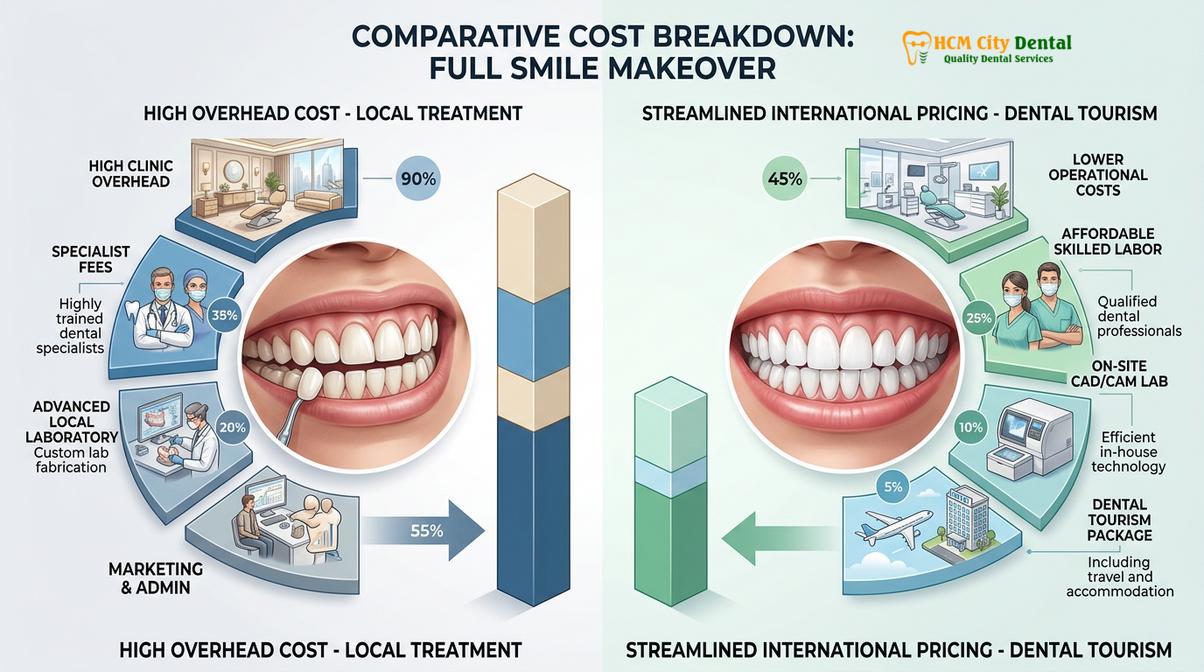
A comprehensive smile makeover requiring eight to ten veneers can cost over $15,000 in Australia, whereas the same treatment in Vietnam allows for a luxurious holiday while still saving thousands.
When planning a cosmetic enhancement, dentists typically focus on the “smile zone”—the teeth that are visible when a patient smiles naturally. For most adults, this encompasses the front eight to ten teeth on the upper arch, and occasionally a similar number on the lower arch. Calculating the full mouth veneers budget is a critical step for prospective patients.
If an Australian patient requires 10 E.max porcelain veneers, the domestic cost at a conservative estimate of $1,800 per tooth would total $18,000. This figure often excludes preliminary treatments such as a 3D mock-up, diagnostic wax-ups, or minor laser gum contouring to establish proper gingival zenith calibration. By utilizing a cosmetic savings calculator, the financial advantage of traveling to Vietnam becomes undeniable.
Clinical Case Example: The 10-Unit E.max Makeover
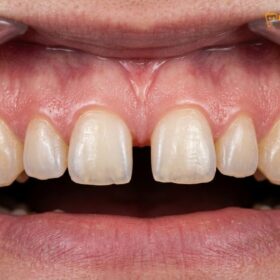
A patient from Melbourne presented with tetracycline staining and mild diastemas (gaps) across the upper arch. The treatment plan required 10 E.max lithium disilicate veneers to achieve a natural, translucent BL1 shade.
- Australian Quote: $19,500 (including consultations and digital design).
- HCMC Dental Clinic Cost: 10 units at the WhatsApp discounted rate of $192 each = $1,920. The 3D Smile Design was provided complimentary with the treatment.
- Net Savings: Over $17,500, which comfortably covered premium flights, a two-week stay in a luxury hotel, and left substantial funds untouched.
This dramatic difference illustrates why so many patients are determining the ideal number of restorations for your smile zone in consultation with international specialists. The financial flexibility allows patients to opt for the highest tier of materials rather than settling for composite resin due to budget constraints.
Material Quality Comparison: Same Brands (Ivoclar, Cercon) at 80% Less
Vietnamese dental clinics utilize the exact same authentic, globally certified ceramics—such as lithium disilicate and high-translucency zirconia—ensuring uncompromising durability and lifelike aesthetics.
A common misconception regarding international dentistry is that lower prices equate to inferior materials. In reputable clinics, this is categorically false. The field of prosthodontics relies on standardized, globally distributed materials. Whether a patient is sitting in a chair in Sydney or Ho Chi Minh City, the ceramic blocks milled to create their new smile come from the same manufacturing plants in Europe.
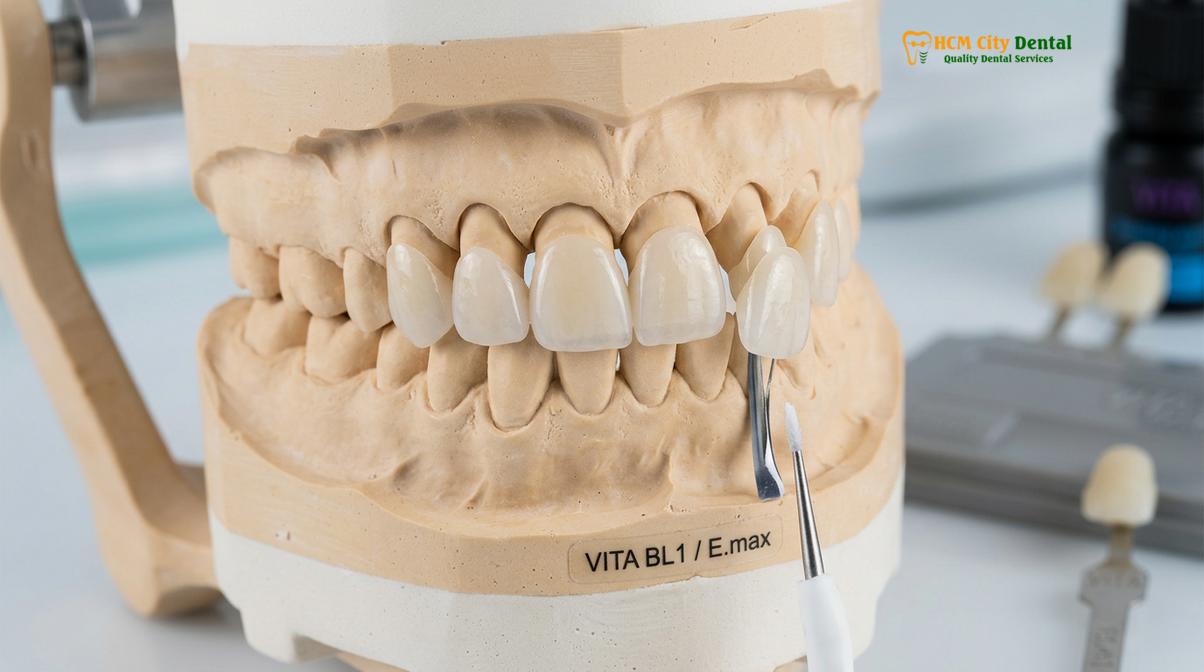
For high-stress areas or patients who exhibit signs of heavy grinding, Zirconia HT (Cercon HT, manufactured in Germany) is often the material of choice due to its exceptional flexural strength. Conversely, for the anterior teeth where light transmission and lifelike aesthetics are paramount, E.max (Ivoclar, manufactured in Liechtenstein) lithium disilicate is the gold standard. E.max offers outstanding translucency matching, allowing the ceramist to map shades precisely, whether the patient desires a natural B1 or a Hollywood-bright VITA BL1 shade [2].
“The success of a cosmetic restoration lies not just in the hands of the clinician, but in the structural integrity of the material. By utilizing authentic E.max and Zirconia, we ensure that our patients receive restorations that mimic the optical properties of natural enamel while providing decades of functional durability.”
— Dr. Nguyen Van Cuong, Lead Prosthodontist
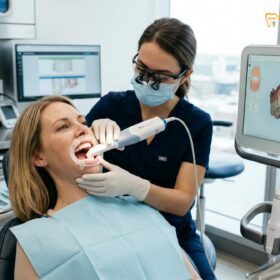
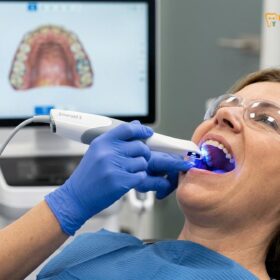
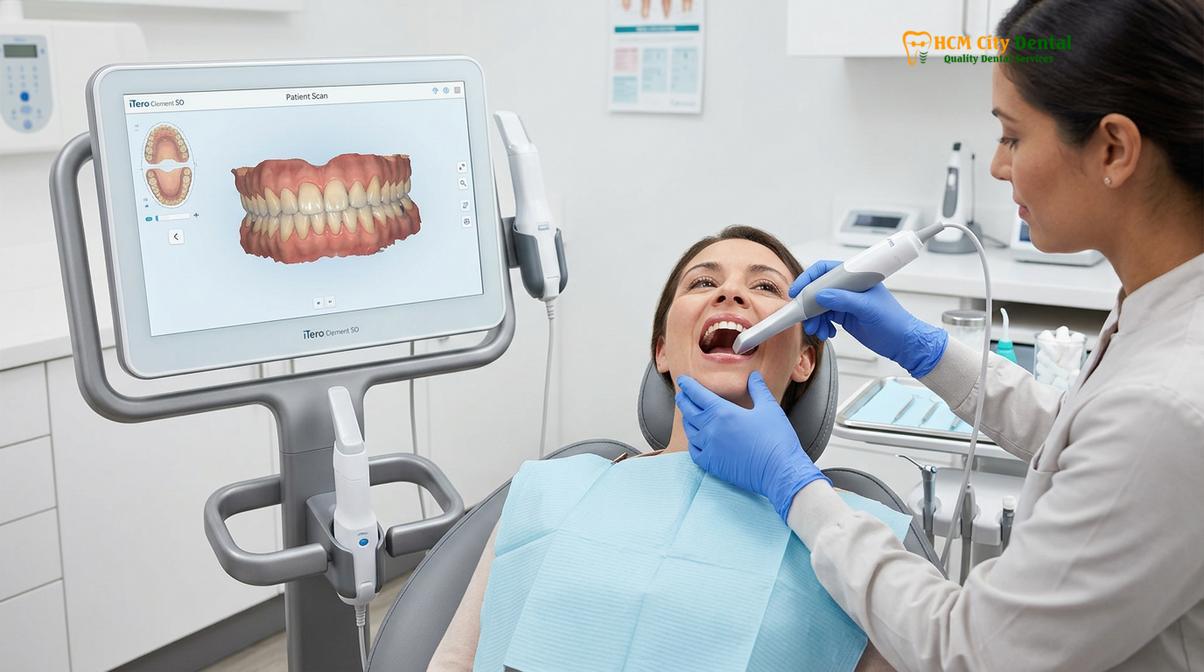
The fabrication process is driven by state-of-the-art digital scanning technology. Clinics employ the iTero Element 5D & Medit i700 Intraoral Scanners, which eliminate the need for messy, uncomfortable traditional silicone impressions. These scanners capture the oral topography with microscopic 3D precision. The digital files are then transferred to the CAD/CAM milling machines, ensuring a marginal fit that is virtually seamless. This precision is vital for preventing micro-leakage and ensuring the longevity of the restoration, a key factor when comparing porcelain and composite resin options [3].
Hidden Savings: Combined Holiday and Premium Dental Care
Beyond the direct clinical discounts, patients benefit from comprehensive concierge services, making the journey to Vietnam a seamless blend of medical care and premium travel.
The appeal of dental tourism HCMC extends far beyond the clinic doors. Patients are not merely traveling for a medical procedure; they are combining essential healthcare with a vibrant cultural experience. The cosmetic savings saigon offers are so substantial that they easily absorb the cost of a luxury vacation.
To facilitate a stress-free experience, top-tier clinics provide an all-inclusive quote that eliminates hidden fees. The patient journey is meticulously managed, often beginning with a complimentary airport pickup transfer upon arrival at Tan Son Nhat International Airport. Clinics are strategically located near premium District 1 hotels, allowing patients to recover and relax in comfort just minutes away from their appointments.
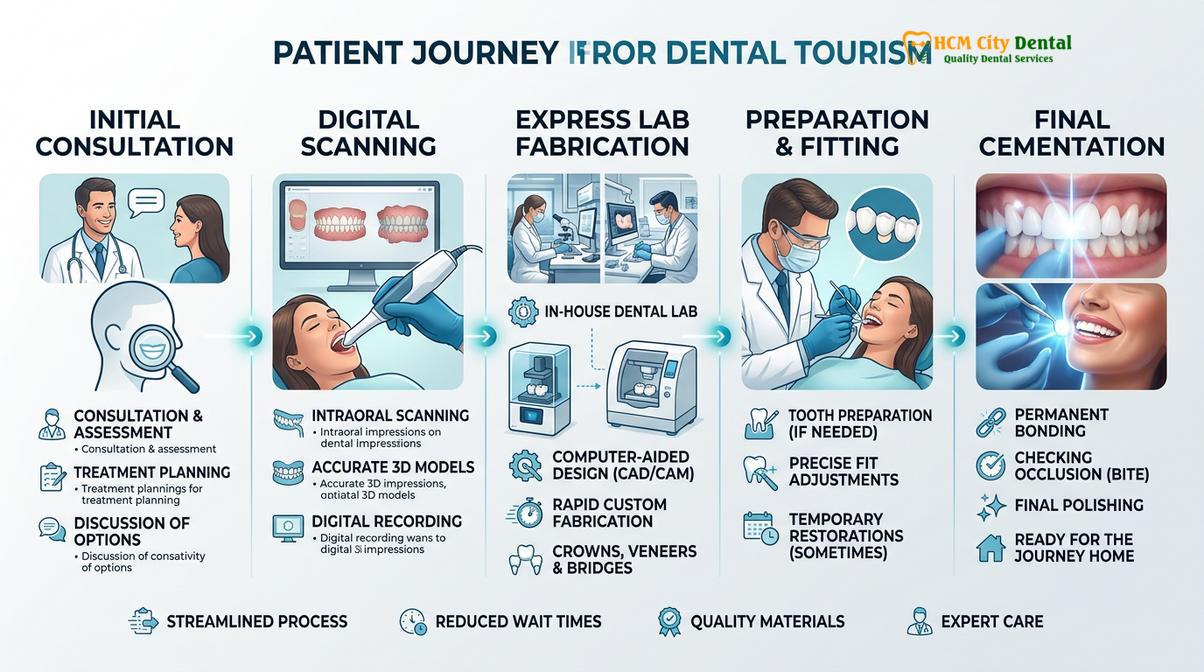
The clinical workflow is tailored specifically for international visitors, featuring an express 3-5 day turnaround. This means a complete smile makeover—from the initial digital scan to the final cementation—can be fabricated, characterized, and fitted within a single week. To further ease the financial process, many facilities offer 0% interest monthly international credit card installment plans, allowing patients to manage their cash flow effectively.
Post-treatment peace of mind is guaranteed through robust warranty structures. Patients receive global manufacturer warranty cards, supplemented by a 3-year clinic bonding & fit guarantee for E.max and Zirconia restorations, and a 1-year guarantee for Composite work. Should any questions arise once the patient returns home, remote follow-up support via WhatsApp—utilizing structured photo and video assessment protocols—ensures continuous care and reassurance regarding the long-term durability of aesthetic dental work.
Important Clinical Considerations (When to See a Doctor)
While cosmetic restorations offer transformative results, a thorough clinical evaluation is mandatory to assess periodontal health, bite alignment, and enamel thickness before proceeding.
Cosmetic dentistry is a highly personalized medical discipline. Before embarking on a smile makeover, a comprehensive diagnostic evaluation is essential. Not every patient is an immediate candidate for veneers. Underlying issues such as active periodontal disease, severe malocclusion, or unresolved endodontic infections must be addressed prior to any aesthetic work. The health of the gums is particularly critical; respecting the biological width and ensuring proper gingival zenith calibration are fundamental to preventing chronic inflammation around the new restorations [4].
One of the most critical clinical concepts in modern prosthodontics is enamel preservation. The longevity and bond strength of a veneer rely heavily on adhering to the natural enamel layer rather than the softer underlying dentin. Advanced techniques allow for minimal-prep (0.3mm to 0.7mm reduction) or even prep-less (Lumineers, 0.2mm) approaches, depending on the patient’s original tooth position and desired outcome. When structural requirements for different ceramic prosthetics are evaluated, preserving the natural tooth structure is always the primary goal.
Clinical Warning: Sleep Bruxism and Restoration Failure
Patients who suffer from sleep bruxism (chronic teeth grinding) place immense occlusal stress on their teeth. If left unmanaged, this force can easily fracture or debond even the strongest ceramic restorations. It is imperative that bruxism is diagnosed during the initial consultation, and a custom nightguard must be fabricated and worn nightly to protect the investment.
“Our clinical philosophy is rooted in biological conservatism. By utilizing digital smile design and ultra-thin ceramics, we can achieve dramatic aesthetic transformations while preserving the maximum amount of healthy enamel, ensuring the tooth remains vital and strong for decades.”
— Dr. Nguyen Van Cuong, HCMC Dental Clinic
Patients considering this procedure should seek a consultation to discuss their specific anatomical needs. Whether choosing between full coverage and facial surface restorations or exploring minimally invasive cosmetic alternatives, a personalized treatment plan based on clinical diagnostics is the only way to ensure a safe, predictable, and beautiful outcome [5].
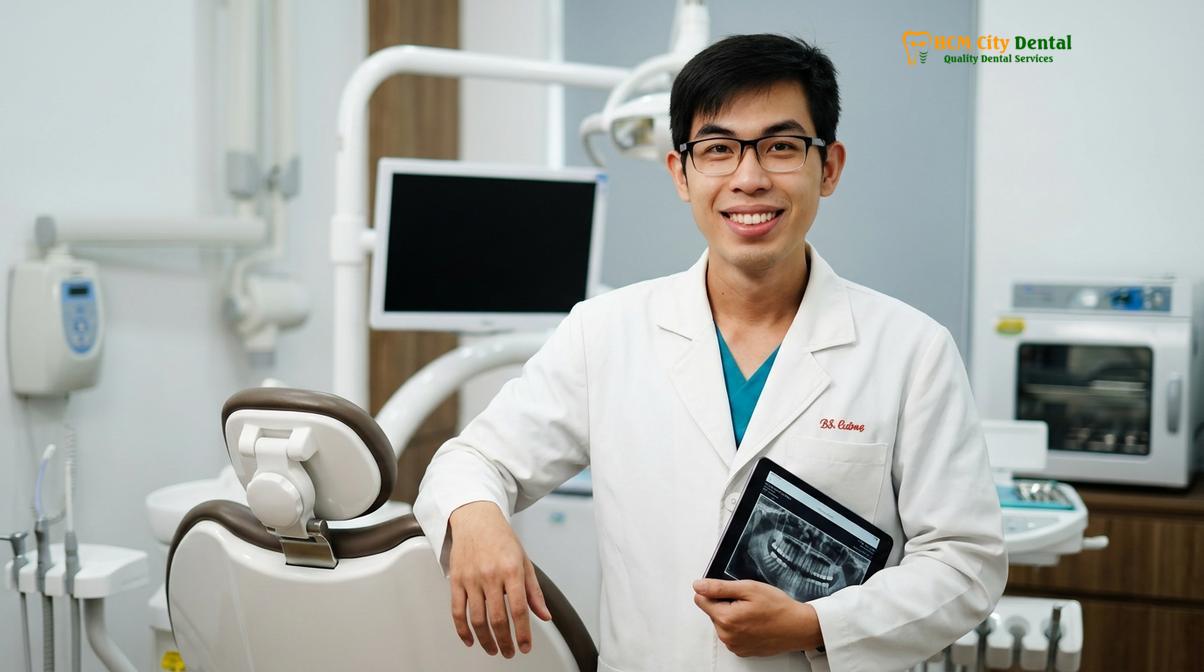
Frequently Asked Questions
How much does a full set of veneers cost in Vietnam compared to Australia?
A full set of premium porcelain veneers in Vietnam typically costs between $1,150 and $1,920 when utilizing promotional discounts, compared to $15,000 to $25,000 in Australia. This represents a potential savings of up to 80% for identical certified materials like Ivoclar E.max or Cercon HT zirconia, even after factoring in travel expenses.
Why are veneers so cheap in Vietnam?
Veneers are more affordable in Vietnam primarily due to significantly lower operational overhead, reduced laboratory labor costs, and favorable currency exchange rates. The materials themselves are imported from the same global manufacturers (Germany, Liechtenstein) used in Australia, meaning the cost reduction is entirely based on local economic factors rather than a compromise in clinical quality.
Is it safe to get veneers in Vietnam?
Yes, it is highly safe to get veneers in Vietnam when choosing an internationally accredited clinic that adheres to strict sterilization protocols and utilizes digital dentistry. Leading facilities employ highly trained prosthodontists, utilize authentic materials, and offer comprehensive warranties, ensuring clinical outcomes that meet or exceed Western standards.
How long does the veneer procedure take in Ho Chi Minh City?
A complete smile makeover with custom porcelain veneers typically requires an express 3-5 day turnaround in Ho Chi Minh City. This accelerated timeline is made possible by direct lab partnerships and in-house CAD/CAM milling technology, allowing for rapid fabrication, try-in, and final cementation without the weeks of waiting common in other countries.
What happens if a veneer chips after I return to Australia?
Reputable clinics provide global manufacturer warranty cards alongside a clinic-specific bonding and fit guarantee. If a complication occurs, remote follow-up support via WhatsApp allows the clinical team to assess the issue through photo and video protocols, coordinating necessary adjustments or replacements in accordance with the warranty terms.
References
- Journal of Esthetic and Restorative Dentistry. Translucency and mechanical properties of lithium disilicate. (2021).
- International Journal of Prosthodontics. Enamel preservation techniques and long-term bond strength. (2020).
- The Journal of Prosthetic Dentistry. Flexural strength and marginal adaptation of CAD/CAM porcelain restorations. (2019).
- Clinical Oral Investigations. Diode laser gingival sculpting parameters for aesthetic dentistry. (2022).
- Journal of Clinical Periodontology. Biological width preservation around subgingival restorations. (2018).