The cost of a tooth extraction in Vietnam is significantly lower than in the UK and Canada, offering savings of up to 80% without compromising clinical quality. International patients traveling to Ho Chi Minh City can access immediate, world-class oral surgery while bypassing long domestic wait times.
Clinical Summary:
International patients frequently face exorbitant out-of-pocket expenses and extended waiting periods for dental extractions in North America and Britain. By choosing specialized oral surgery centers in Vietnam, patients receive prompt diagnostic imaging, safe surgical removal, and comprehensive post-operative care utilizing internationally recognized sterilization protocols. This approach not only alleviates acute dental pain rapidly but also provides a highly cost-effective alternative to domestic private dental care, ensuring optimal clinical outcomes through advanced atraumatic extraction techniques.
Key Takeaways:
- Surgical extractions in Vietnam cost a fraction of UK private fees and Canadian out-of-pocket expenses.
- Patients bypass extensive domestic waiting lists for immediate, same-day surgical intervention.
- Top-tier clinics in Saigon strictly adhere to WHO and ISO sterilization standards for maximum safety.
- Advanced diagnostic tools, including 3D CBCT imaging, ensure precise and safe root removal.
- Comprehensive post-operative care protocols minimize infection risks before international flights.
Bypassing the UK NHS Dental Crisis for Extractions
British patients facing severe NHS backlogs can access immediate, high-quality surgical extractions in Vietnam, avoiding the exorbitant costs of UK private dental care.
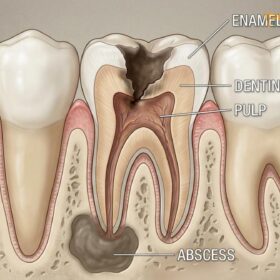
The current landscape of public dentistry in the United Kingdom presents significant challenges for patients requiring urgent oral surgery. An NHS waiting list extraction can often delay necessary treatment for months, leaving patients to manage chronic pain, recurrent infections, and the psychological burden of deteriorating oral health. When a tooth becomes severely decayed, fractured below the gum line, or impacted, delayed removal can lead to severe clinical complications, including pericoronitis, localized abscess formation, and the spread of infection to adjacent anatomical spaces.
Faced with these unacceptable delays, many patients turn to the private sector. However, the UK private tooth removal cost can be prohibitively expensive, particularly when the procedure requires surgical intervention, bone removal, or the expertise of a specialist oral surgeon. The financial burden is further compounded if multiple teeth, such as all four wisdom teeth, require simultaneous extraction under conscious sedation. This stark reality has driven a significant increase in dental tourism, with British citizens seeking reliable, immediate care abroad.
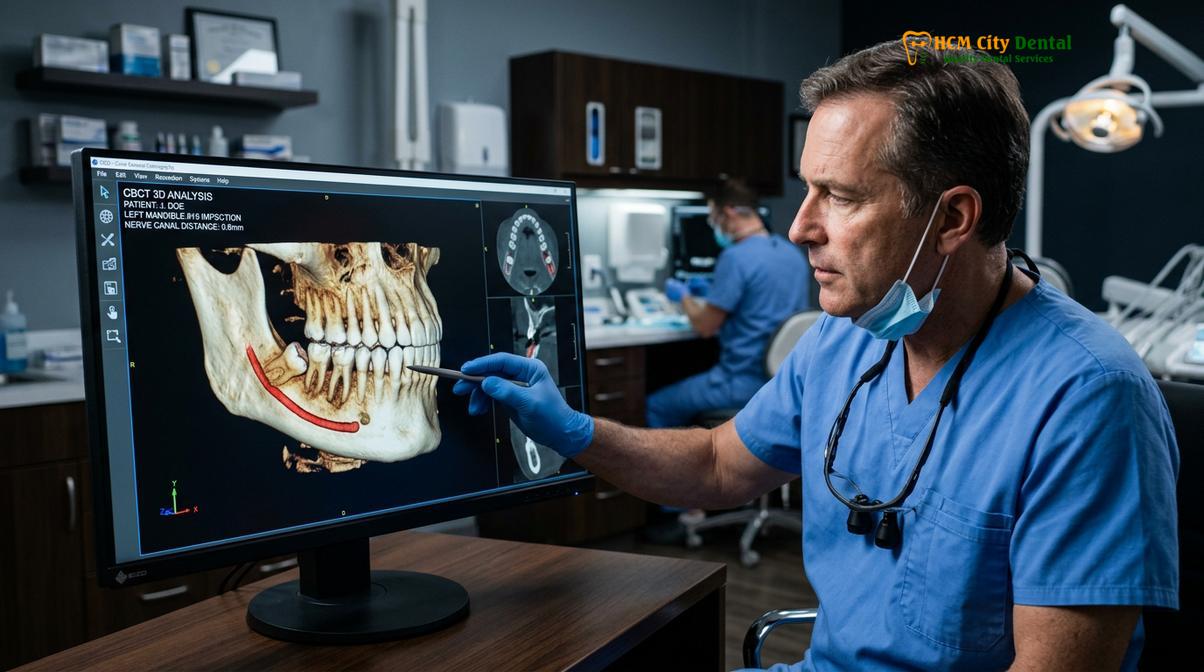
From a clinical perspective, the timely removal of a compromised tooth is critical to preserving the integrity of the surrounding alveolar bone and preventing systemic bacteremia. When a patient presents with acute pulpitis or a non-restorable tooth, the standard of care dictates prompt intervention. In Vietnam, leading dental facilities are equipped to provide immediate diagnostic evaluations and execute extractions without the bureaucratic delays inherent in overburdened public health systems.[1]
“Prolonged retention of a non-restorable, infected tooth not only exacerbates localized tissue destruction but significantly elevates the risk of systemic inflammatory responses, making immediate surgical intervention a clinical necessity rather than an elective choice.”
By choosing to travel for dental care, patients effectively bypass the systemic bottlenecks of their home country. They gain access to modern facilities where comprehensive treatment plans are executed swiftly. This proactive approach not only resolves the immediate source of pain and infection but also prepares the oral cavity for future restorative work, such as dental implants or fixed prosthetics, in a timely and biologically sound manner.
Canadian Out-of-Pocket Dental Costs for Oral Surgery
Without comprehensive dental insurance, Canadians face steep out-of-pocket fees for oral surgery, making dental tourism to Vietnam a highly cost-effective clinical alternative.
In Canada, dental care is largely excluded from the universal healthcare system, meaning that unless a patient has robust private insurance, they are responsible for the entirety of their dental expenses. Canada surgical dental fees are among the highest globally, reflecting the high overhead costs of running a clinical practice in North America. For procedures like the surgical extraction of impacted mandibular third molars, the costs can quickly escalate into the thousands of dollars, especially when factoring in mandatory pre-operative consultations, 3D Cone Beam Computed Tomography (CBCT) scans, and the administration of intravenous sedation.
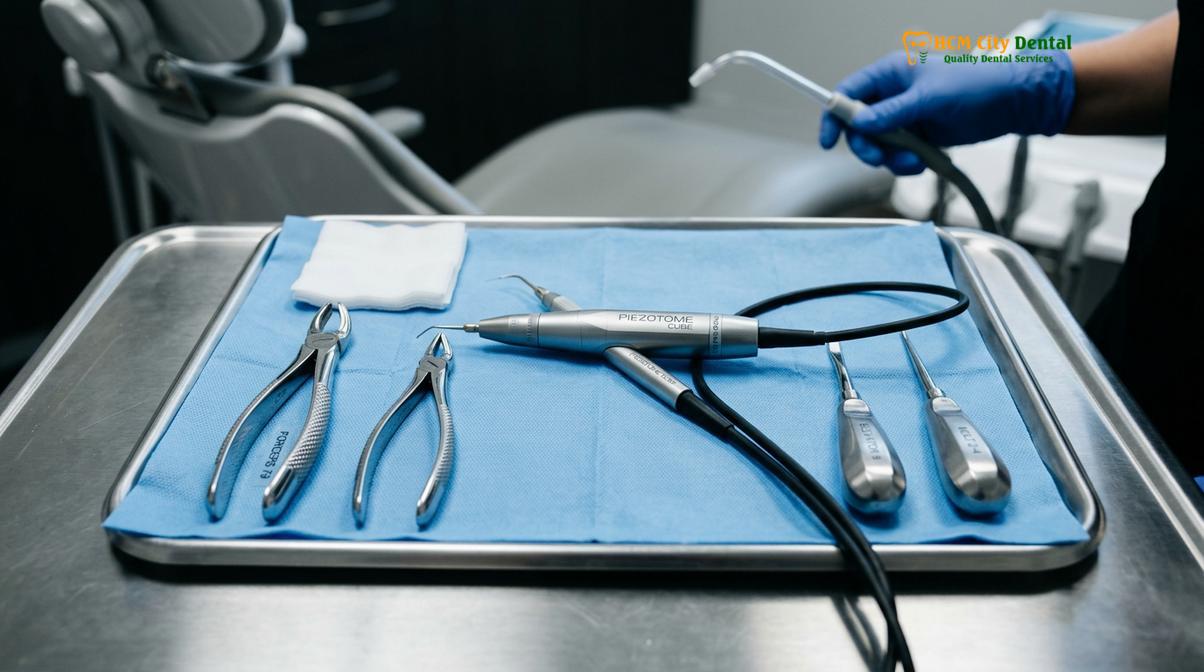
The clinical complexity of an extraction heavily influences the final fee. A simple extraction of an erupted, single-rooted tooth is relatively straightforward. However, a surgical extraction—often required for teeth that are broken at the gum line, possess curved or dilacerated roots, or are fully encased in bone (bony impaction)—demands a higher level of surgical skill and specialized instrumentation. The surgeon must carefully elevate a mucoperiosteal flap, selectively remove surrounding crestal bone, and often section the tooth into smaller fragments to facilitate removal without damaging adjacent structures, such as the inferior alveolar nerve or the maxillary sinus.[2]
For many uninsured or underinsured Canadians, these high costs create a significant barrier to accessing necessary care. Patients may delay treatment, relying on repeated courses of antibiotics to manage flare-ups—a practice that contributes to antimicrobial resistance and fails to address the underlying pathology. The financial strain forces patients to seek viable alternatives that do not compromise on the quality of medical care.
Vietnam has emerged as a premier destination for these patients. The economic disparity between the two nations allows Canadian patients to receive the exact same standard of clinical care—utilizing identical materials, anesthetics, and surgical protocols—at a fraction of the domestic price. This cost efficiency extends beyond the extraction itself, encompassing comprehensive pre-operative diagnostics and meticulous post-operative follow-up, ensuring a holistic and safe treatment experience.
Extraction Cost Comparison: UK & Canada vs District 1 Saigon
Comparing extraction fees reveals that patients can save up to 80% in District 1, Saigon, covering both simple removals and complex surgical impactions.
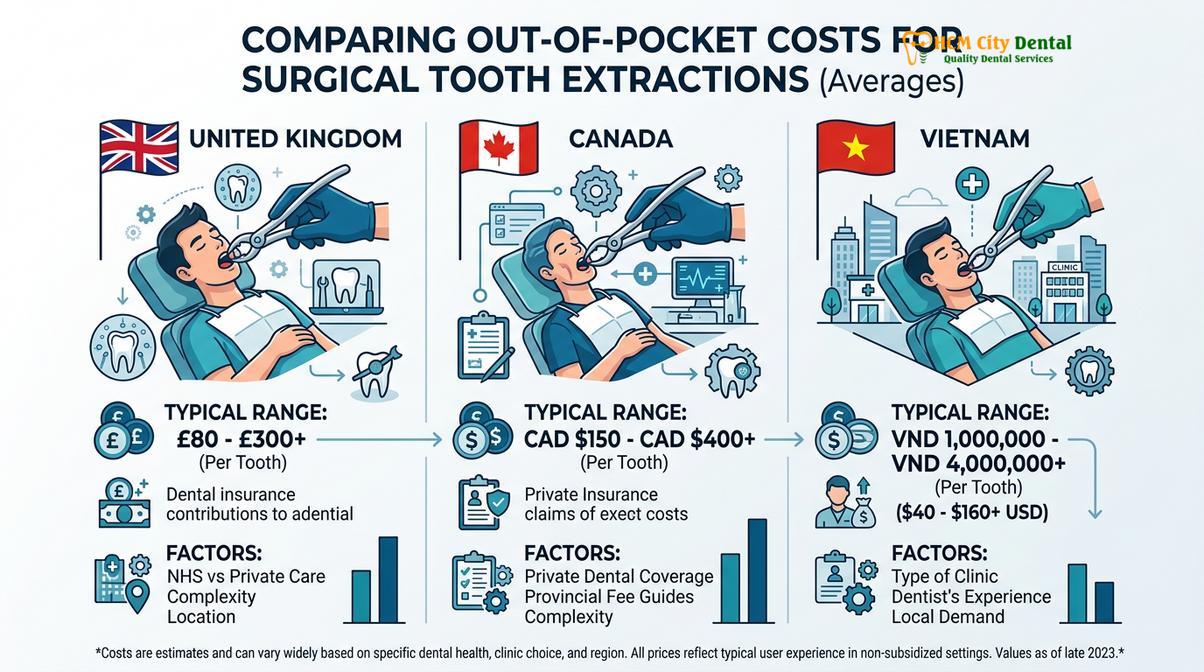
Understanding the precise financial advantages of dental tourism requires a direct comparison of procedural costs. While prices fluctuate based on the specific clinic and the anatomical complexity of the tooth in question, the overarching trend demonstrates massive savings for international patients seeking care in Vietnam. The following table outlines the estimated out-of-pocket expenses for various extraction procedures across the three regions.
| Procedure Type | Estimated Cost (UK Private) | Estimated Cost (Canada) | Estimated Cost (Vietnam – Saigon) |
|---|---|---|---|
| Simple Extraction (Erupted Tooth) | £150 – £300 | $200 – $400 CAD | $30 – $80 USD |
| Surgical Extraction (Soft Tissue Impaction) | £350 – £600 | $450 – $800 CAD | $80 – $150 USD |
| Complex Surgical (Partial/Full Bony Impaction) | £600 – £1,000+ | $800 – $1,500+ CAD | $150 – $300 USD |
| 3D CBCT Diagnostic Scan | £100 – £250 | $150 – $350 CAD | $20 – $50 USD (Often Included) |
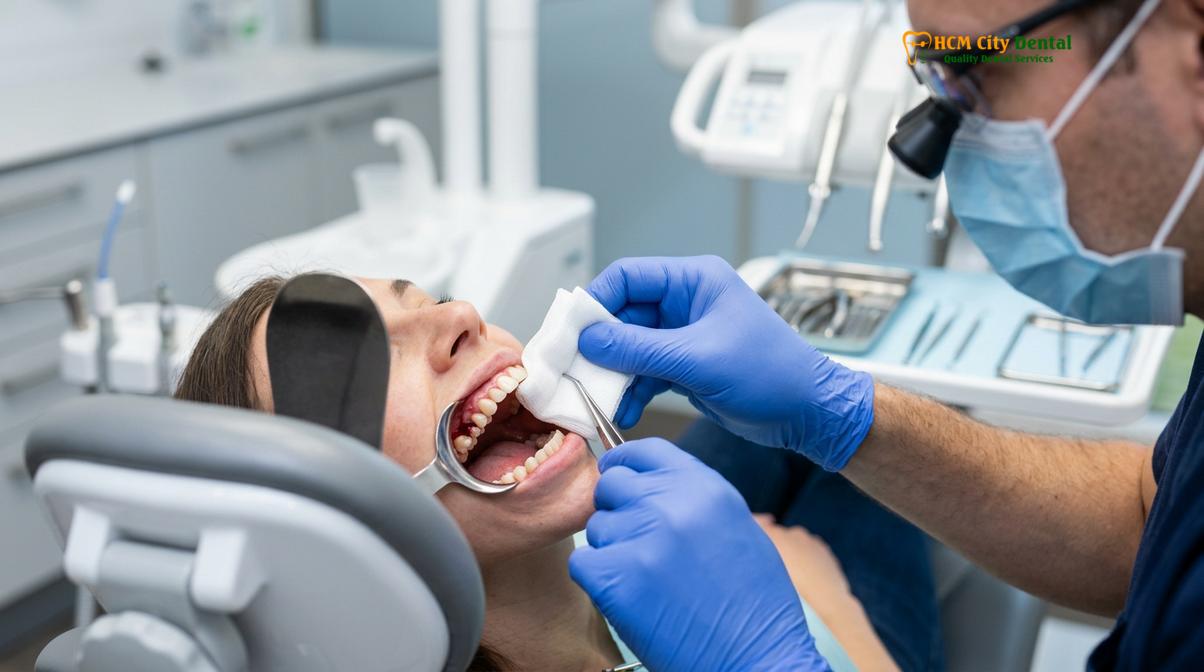
It is crucial to note that the lower fees in Vietnam are a reflection of the local economy, lower operational overhead, and favorable exchange rates, rather than a reduction in clinical standards. When a patient requires a same-day emergency extraction, top-tier clinics in District 1, Saigon, provide a seamless workflow. This includes immediate clinical assessment, digital radiography to assess root morphology, profound local anesthesia using agents like Articaine, and the surgical procedure itself, all completed within a single visit.
Furthermore, the transparent pricing models adopted by reputable clinics ensure that international patients are not subjected to hidden fees. The quoted price typically encompasses the entirety of the surgical episode, including the necessary sutures, hemostatic agents, and standard post-operative medications such as analgesics and prophylactic antibiotics, if clinically indicated. This financial predictability is a major factor driving the popularity of dental tourism in Southeast Asia.
Material and Facility Quality: WHO Sterilization Standards in Saigon
Leading dental facilities in Saigon utilize state-of-the-art diagnostic imaging and strict WHO-compliant sterilization protocols to guarantee patient safety during oral surgery.
A common and entirely valid concern among international patients is the standard of hygiene and the quality of medical infrastructure abroad. However, the reality of modern oral surgery Saigon is that premium dental hospitals operate at a level that often meets or exceeds Western standards. To cater to a discerning international clientele, these facilities invest heavily in advanced dental technology and rigorous infection control protocols.
Sterilization is the cornerstone of safe surgical practice. Reputable clinics strictly adhere to guidelines established by the World Health Organization (WHO) and the International Organization for Standardization (ISO). The sterilization workflow involves multiple stages: initial decontamination in ultrasonic baths using enzymatic cleaners, packaging in sterile pouches with chemical indicators, and final sterilization in Class B vacuum autoclaves. These autoclaves use pressurized steam to eradicate all microbial life, including highly resistant bacterial endospores. Biological monitoring is conducted regularly to validate the efficacy of the sterilization cycle.[3]
Clinical Warning: Never compromise on sterilization standards to save money. Always verify that your chosen dental clinic utilizes Class B autoclaving and opens sterile instrument pouches directly in front of you prior to commencing any surgical procedure.
Beyond infection control, the surgical techniques employed are highly advanced. For instance, many clinics now utilize Piezotome ultrasonic surgery for complex extractions. Unlike traditional rotary burs that can inadvertently damage soft tissue, the Piezotome uses modulated ultrasonic vibrations to selectively cut bone while preserving adjacent nerves, blood vessels, and the periodontal ligament. This atraumatic approach minimizes post-operative swelling, reduces pain, and accelerates the biological healing of the extraction socket.[4]
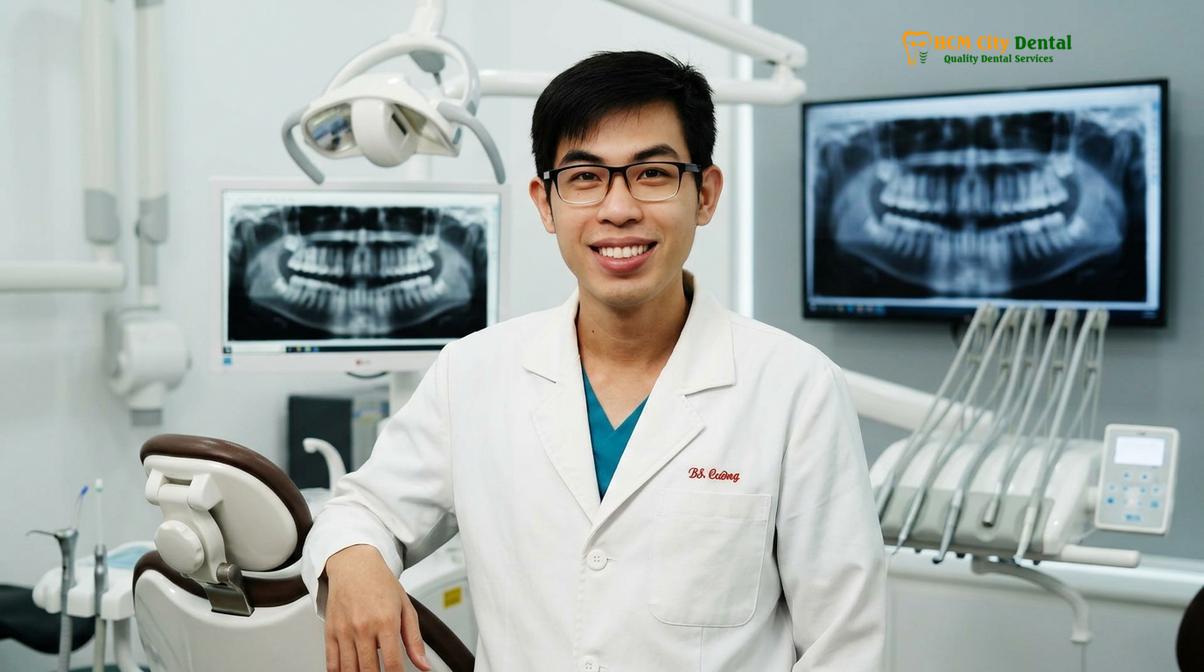
The expertise of the clinical team is equally paramount. Finding an English dentist Saigon is straightforward, as many leading practitioners have completed advanced training or fellowships internationally. For example, Dr. Nguyen Van Cuong is renowned for his meticulous approach to oral surgery. Dr. Cuong emphasizes the importance of comprehensive pre-operative planning, utilizing 3D CBCT scans to precisely map the trajectory of the inferior alveolar nerve and the proximity of the maxillary sinus, thereby mitigating the risk of intraoperative complications such as paresthesia or oroantral communication.
Planning Your Dental Trip: From Booking to Post-Op Flight
Coordinating a dental trip involves scheduling pre-operative consultations, allowing adequate recovery time, and following strict post-flight clinical guidelines.
Successfully combining international travel with medical treatment requires careful logistical planning. The process typically begins long before the patient boards a flight. Reputable clinics offer comprehensive virtual consultations, allowing patients to submit their panoramic X-rays or CBCT scans securely online. The dental team reviews these diagnostics to formulate a preliminary treatment plan, providing a clear outline of the required procedures, estimated costs, and the necessary duration of stay in Vietnam.
Upon arrival at HCMC Dental Clinic, the patient undergoes a thorough in-person clinical examination. This includes a review of their medical history, assessment of vital signs, and confirmation of the surgical plan. For patients undergoing extractions, the procedure is usually scheduled early in the trip. This strategic timing is crucial, as it allows the clinical team to monitor the initial phases of healing—specifically, the stabilization of the blood clot within the alveolar socket and the onset of mucosal epithelialization.
Patient Case Study: A 55-year-old Canadian patient traveled to HCMC Dental Clinic in Ho Chi Minh City for the surgical removal of two impacted lower wisdom teeth. By utilizing a virtual pre-consultation, the surgical appointment was secured for the day after arrival. Following an atraumatic extraction using ultrasonic technology, the patient experienced minimal swelling and was cleared for international travel after a mandatory 4-day post-operative review, saving over $2,000 CAD compared to domestic quotes.
Post-operative care is a critical component of the treatment workflow. Patients are provided with detailed, written instructions regarding oral hygiene, dietary restrictions (favoring soft, cool foods), and the management of mild edema using cold compresses. Dr. Nguyen Van Cuong strongly advises international patients to adhere strictly to the recommended recovery window before flying. The ambient pressure changes experienced in commercial aircraft cabins can disrupt the fragile blood clot, leading to alveolar osteitis (dry socket)—a highly painful condition that exposes the underlying bone and nerve endings.[5]
“The success of an oral surgery procedure is not solely determined in the operating chair; it is equally dependent on the patient’s strict adherence to post-operative protocols and allowing sufficient biological healing time before subjecting the body to the physiological stresses of international air travel.”
By allocating a minimum of 3 to 5 days for recovery in Ho Chi Minh City, patients ensure they are medically fit to fly. This period also allows for a final post-operative evaluation, where the surgeon can verify hemostasis, assess tissue healing, and safely remove any non-resorbable sutures if they were utilized.
When to See a Doctor
While surgical tooth extractions performed under strict clinical protocols have a high success rate, patients must remain vigilant during the post-operative period. It is essential to distinguish between normal physiological healing (such as mild swelling, slight oozing of blood for the first 24 hours, and manageable discomfort) and signs of potential complications. You should seek immediate clinical evaluation if you experience any of the following symptoms:
- Severe, Throbbing Pain: Pain that worsens after 3 to 4 days, radiating to the ear or neck, which is unresponsive to prescribed analgesics, strongly indicating alveolar osteitis (dry socket).
- Prolonged Hemorrhage: Active, bright red bleeding that does not subside after applying firm, continuous pressure with a sterile gauze pad for 45 minutes.
- Signs of Systemic Infection: The development of a fever, chills, or significant swelling that extends beneath the jawline or towards the eye, potentially indicating a spreading fascial space infection.
- Paresthesia: Persistent numbness, tingling, or loss of sensation in the lips, tongue, or chin lasting beyond the expected duration of the local anesthetic, which requires prompt neurological assessment.
If you experience any of these warning signs, contact your dental provider immediately for a comprehensive diagnostic review and targeted intervention.
Frequently Asked Questions
How much can I save on surgical tooth extraction in HCMC vs UK?
Patients can typically save between 60% to 80% on surgical tooth extractions in Ho Chi Minh City compared to UK private dental fees. These savings apply to both simple removals and complex surgical impactions, even when factoring in the cost of advanced 3D CBCT diagnostic imaging and premium local anesthesia. The reduced cost is due to lower operational overhead in Vietnam, not a compromise in the quality of surgical instruments or clinical expertise.
Is oral surgery in Saigon safe for British and Canadian senior citizens?
Yes, oral surgery in Saigon is highly safe for international senior citizens when performed at accredited dental hospitals. Leading clinics strictly adhere to World Health Organization (WHO) sterilization protocols, utilize comprehensive pre-operative health screenings, and monitor cardiovascular vitals continuously during surgical procedures to ensure optimal patient safety. Furthermore, experienced surgeons tailor anesthetic dosages and surgical techniques to accommodate the specific physiological needs of older adults.
How long do I need to stay in Saigon after an extraction?
Clinical guidelines recommend staying in Saigon for at least 3 to 5 days following a surgical tooth extraction. This mandatory recovery window allows the surgical site to form a stable blood clot, permits the dental team to conduct a post-operative evaluation, and significantly reduces the risk of aviation-induced alveolar osteitis. Complex cases, such as the simultaneous removal of multiple impacted teeth, may require a slightly longer observation period.
Can I fly immediately after a surgical tooth extraction?
Flying immediately after an extraction is strongly contraindicated due to fluctuations in cabin pressure. Changes in atmospheric pressure can dislodge the newly formed blood clot, leading to a painful condition known as dry socket, and may exacerbate post-operative bleeding and facial swelling during the flight. Patients must wait for clinical clearance from their oral surgeon before undertaking any international air travel.
What type of anesthesia is used for extractions in Vietnam?
Top dental clinics in Vietnam utilize premium, internationally approved local anesthetics, such as Articaine or Lidocaine with epinephrine, to ensure profound numbness. For patients with severe dental anxiety or complex surgical needs, conscious sedation or intravenous (IV) sedation administered by a licensed anesthesiologist is also available. The choice of anesthesia is determined based on a thorough review of the patient’s medical history and the complexity of the planned extraction.
References
- British Dental Journal. The impact of delayed surgical extractions on patient morbidity and systemic health. (2021).
- Journal of Oral and Maxillofacial Surgery. Comparative analysis of out-of-pocket oral surgery costs in North America. (2020).
- World Health Organization. Global guidelines for the prevention of surgical site infection in dental settings. (2022).
- International Journal of Dentistry. Efficacy of Piezosurgery versus conventional rotary instruments in impacted mandibular third molar extraction. (2019).
- Aviation, Space, and Environmental Medicine. Barometric pressure changes and the incidence of alveolar osteitis in post-extraction patients. (2018).
For a personalized clinical assessment and to discuss your specific oral surgery needs, please contact our team to schedule a comprehensive consultation at HCMC Dental Clinic. Our dedicated specialists are committed to providing safe, effective, and highly advanced dental care tailored to our international patients.
For pricing, booking, and a free clinical assessment, visit our Tooth Extraction service page at HCMC Dental Clinic in Ho Chi Minh City.