For international patients and dental travelers seeking full-arch oral rehabilitation, the integration of Multi-Unit Abutments for All-on-4, passive fit, and photogrammetry in Vietnam represents the absolute pinnacle of modern implant prosthodontics. Historically, full-arch implant bridges were fabricated using analog impression techniques and cast metal frameworks, a process fraught with dimensional inaccuracies that frequently led to prosthetic misfit, screw loosening, and catastrophic implant failure. Today, the paradigm has shifted entirely toward digital precision. By utilizing specialized Multi-Unit Abutments (MUAs) to correct the severe angulation of tilted posterior implants, combined with sub-15-micron digital photogrammetry to capture exact 3D spatial coordinates, specialist implantologists can engineer monolithic zirconia bridges that seat with mathematically perfect passive fit.
At HCMC Dental Clinic in District 1, Ho Chi Minh City, this advanced digital workflow is standard protocol. Under the clinical direction of Dr. Nguyen Van Cuong, DDS (Clinical Director — MOH License 0003265/BL-CCHN), the clinic employs hospital-grade surgical and prosthetic methodologies. From 0.075mm high-resolution 3D CBCT diagnostics and Piezosurgery to the Sheffield 1-screw verification test, every step is meticulously calibrated to ensure long-term biomechanical stability. This comprehensive clinical guide explores the critical role of MUAs, the physics of passive fit, the superiority of digital photogrammetry over traditional open-tray impressions, and the transparent 2026 fee schedules that make world-class full-arch implantology accessible in Vietnam.
Clinical Summary:
The long-term success of full-arch All-on-4 and All-on-6 implant rehabilitations relies heavily on two critical factors: the use of Multi-Unit Abutments (MUAs) to elevate the restorative platform and correct implant angulation, and the achievement of absolute “passive fit” (<15 microns) to prevent biomechanical overload. At HCMC Dental Clinic, Dr. Nguyen Van Cuong, DDS utilizes advanced digital photogrammetry and 3Shape Trios 5D intraoral scanning to capture implant positions with flawless accuracy, eliminating the errors inherent in traditional analog impressions. This digital workflow ensures that the final monolithic zirconia bridge seats perfectly, eliminating static strain on the crestal bone and drastically reducing the risk of screw loosening or fracture, all while offering international patients transparent, highly competitive 2026 pricing.
Key Takeaways:
- Multi-Unit Abutments (MUAs): Essential intermediary components that elevate the restorative margin above the bone level, preventing bacterial microleakage and crestal bone loss while converting internal implant connections to external restorative platforms.
- Angulation Correction: 17° and 30° angled MUAs are utilized to correct the trajectory of tilted posterior implants in the All-on-4 protocol, establishing a common path of insertion for the rigid full-arch bridge.
- Passive Fit Biomechanics: A prosthetic misfit of greater than 15 microns introduces static strain into the implant-bone interface, which is the primary cause of screw loosening, screw fracture, and peri-implant bone resorption.
- Digital Photogrammetry: Replaces messy, inaccurate splinted open-tray impressions by using stereoscopic cameras and fiducial scan bodies to calculate exact 3D implant coordinates with sub-10-micron accuracy.
- Hospital-Grade Protocols: HCMC Dental Clinic employs 0.075mm 3D CBCT, Piezosurgery, Choukroun L-PRF Sticky Bone, and the Sheffield 1-Screw Test to ensure maximum surgical safety and prosthetic precision.
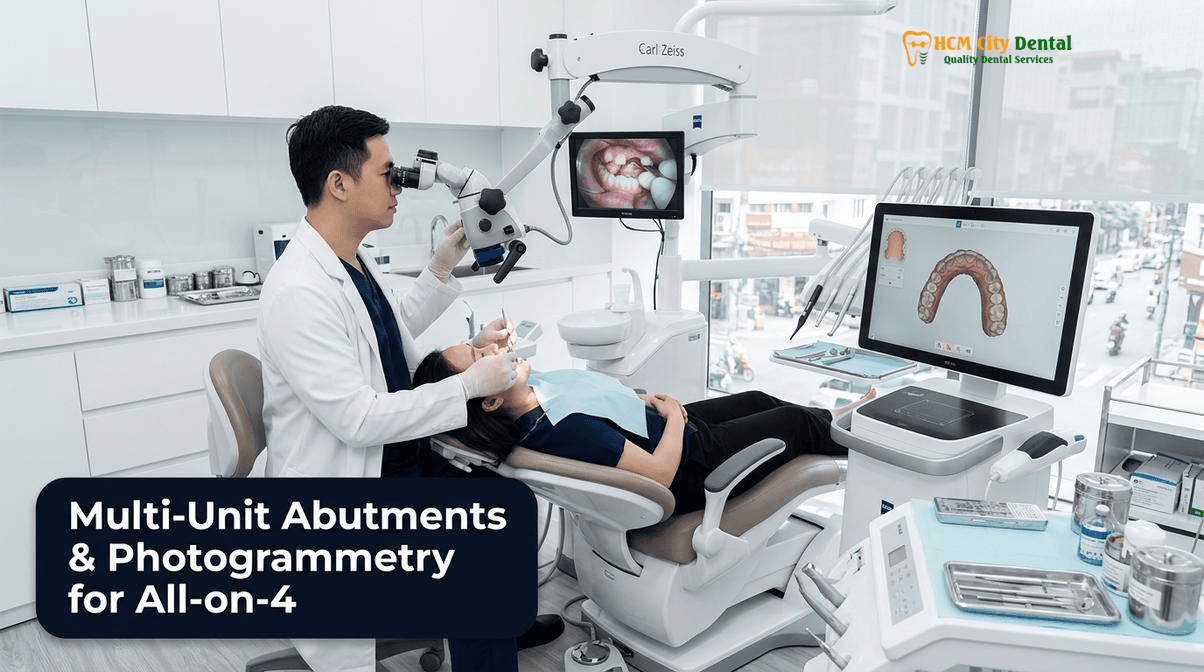
What Are Multi-Unit Abutments (MUAs) and Why Are They Essential for All-on-4 and All-on-6 Full-Arch Implants?
In the realm of full-arch implant prosthodontics, the Multi-Unit Abutment (MUA) is arguably the most critical component for ensuring long-term biomechanical and biological success. When a dental implant is surgically placed into the jawbone, its internal connection (the interface where the crown or bridge attaches) typically sits at or slightly below the crestal bone level. If a full-arch bridge were to be screwed directly into these implant fixtures—a practice known as “implant-level” restoration—the restorative margin would be forced deep into the mucosal tissues. This creates an un-cleansable microgap at the bone level, leading to bacterial colonization, chronic inflammation, and inevitable crestal bone loss[1].
To circumvent this biological hazard, specialist implantologists utilize Multi-Unit Abutments. An MUA is an intermediary titanium component that is torqued directly into the implant fixture immediately after surgery. It serves three vital functions:
First, it elevates the restorative platform. By raising the connection point from the bone level to the tissue level (supragingival or equigingival), the MUA moves the microgap away from the vulnerable crestal bone. This allows the soft tissue to form a tight mucosal seal around the smooth titanium collar of the abutment, effectively blocking bacterial ingress and preserving the underlying bone architecture.
Second, it converts the implant’s internal connection (such as an internal hex or conical connection) into an external cone. This external conical geometry is specifically designed to receive a screw-retained prosthesis. Because the cone is tapered, it allows for a degree of divergence between multiple implants, making it possible to seat a rigid, one-piece full-arch bridge even if the implants are not perfectly parallel.
Third, it protects the internal threads of the implant fixture. In a direct-to-fixture restoration, the prosthetic screw engages the internal threads of the implant itself. If the screw fractures due to occlusal overload, retrieving the broken fragment from inside the bone-integrated implant is a complex and risky procedure. With an MUA, a two-screw system is employed: the MUA is secured to the implant with a robust abutment screw, and the bridge is secured to the MUA with a smaller prosthetic screw. If overload occurs, the smaller prosthetic screw is designed to break first, acting as a mechanical fail-safe that protects the implant fixture from damage.
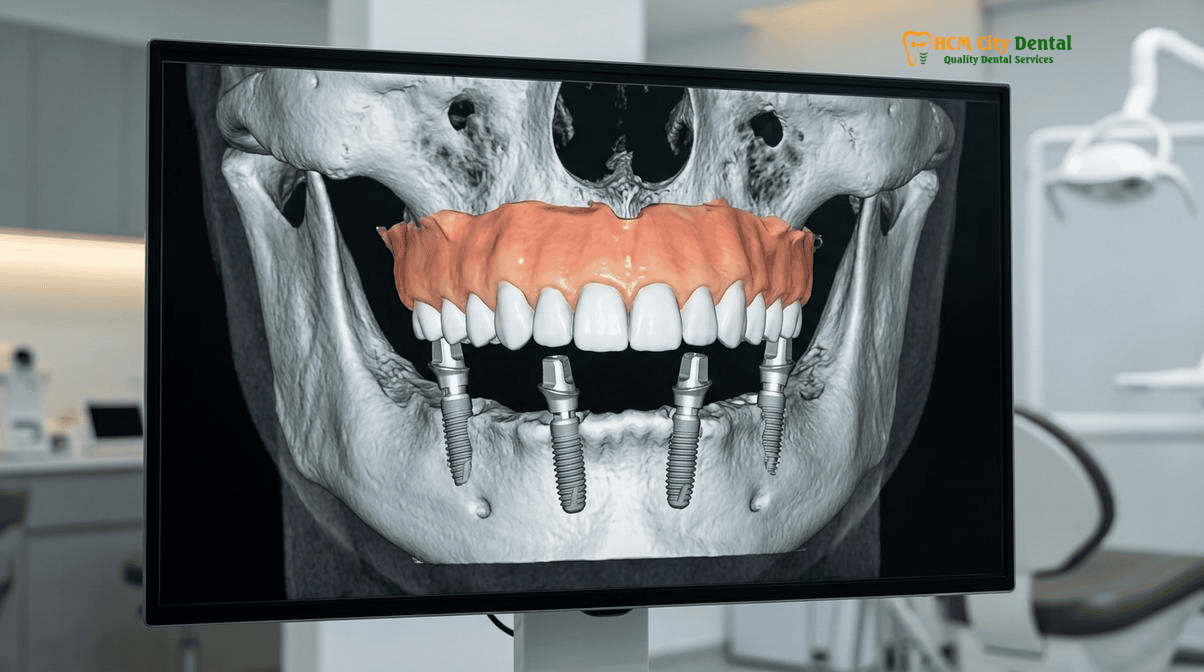
Correcting Tilted Distal Implants (17° and 30° Angulated MUAs) and Elevating the Prosthetic Platform Above the Gumline
The revolutionary All-on-4 treatment concept, originally developed to rehabilitate fully edentulous arches without the need for extensive bone grafting, relies on a specific biomechanical configuration. In the maxilla (upper jaw), the posterior implants are intentionally tilted backward (distally) at angles of up to 45 degrees to avoid the maxillary sinus cavities. In the mandible (lower jaw), they are tilted to avoid the mental foramen and the inferior alveolar nerve. This tilting maximizes the anteroposterior (AP) spread, providing a wider base of support for the bridge and minimizing the length of the posterior cantilevers.
However, this intentional tilting creates a profound prosthetic challenge: the restorative platforms of the anterior (straight) implants and the posterior (tilted) implants are pointing in completely different directions. It is geometrically impossible to seat a rigid, one-piece monolithic zirconia bridge onto implants that diverge by 30 to 45 degrees. This is where angulated Multi-Unit Abutments become indispensable.
By utilizing 17° and 30° angled MUAs, the clinician can correct the trajectory of the tilted posterior implants. When a 30° MUA is screwed into an implant that has been placed at a 30° distal tilt, the restorative platform of the abutment is effectively “straightened” to align vertically with the anterior implants. This establishes a common path of insertion, allowing the rigid full-arch framework to slide effortlessly onto all four (or six) abutments simultaneously[2].
At HCMC Dental Clinic, Dr. Nguyen Van Cuong, DDS utilizes advanced 3D surgical planning to pre-determine the exact angulation and gingival cuff height of every MUA before the surgery even begins. Utilizing 0.075mm high-resolution 3D CBCT DICOM data fused with 3Shape Trios 5D STL surface scans, the surgical team fabricates 3D-printed stereolithographic flapless surgical guides. During the procedure, Piezosurgery (utilizing 24–36 kHz selective bone osteotomy) is employed to safely prepare the osteotomies while protecting the Schneiderian membrane and inferior alveolar nerve. Once the implants are placed, the pre-selected 17° or 30° MUAs are torqued into position, instantly correcting the angulation and elevating the platform above the gumline, ready to receive the immediate provisional bridge.
The Biomechanics of ‘Passive Fit’ (<15 Microns): Why Prosthetic Misfit Causes Screw Loosening and Crestal Bone Loss
In full-arch implant prosthodontics, the concept of “passive fit” is the holy grail of biomechanical stability. Passive fit is defined as the ability of a rigid prosthetic framework (such as a monolithic zirconia bridge or a titanium bar) to seat completely onto all supporting abutments simultaneously without introducing any active strain or tension into the system. In clinical terms, a fit is considered passive if the discrepancy (microgap) between the framework and the abutments is less than 15 microns.
When a full-arch bridge lacks passive fit—due to inaccuracies in the impression process or the milling phase—the clinician must use the prosthetic screws to forcefully pull the framework down onto the abutments. This forceful tightening closes the visible gap, but it introduces massive static strain into the entire system. This strain does not dissipate; it remains locked within the titanium screws, the abutments, and most dangerously, the surrounding crestal bone.
“The biological cost of prosthetic misfit is severe. When a non-passive bridge is screwed down, the resulting static strain transfers directly to the implant-bone interface. Bone is a dynamic, living tissue that responds to mechanical stress. While intermittent dynamic loading (chewing) stimulates bone density, constant static strain causes localized ischemia, micro-fractures, and rapid crestal bone resorption. Furthermore, the constant tension on the prosthetic screws inevitably leads to metal fatigue, resulting in chronic screw loosening or catastrophic screw fracture.”
— Dr. Nguyen Van Cuong, DDS (Clinical Director, HCMC Dental Clinic)
To prevent these complications, achieving a passive fit is non-negotiable. Screw loosening fracture prevention all on 6 and All-on-4 cases relies entirely on eliminating this static strain. If the framework fits passively, the prosthetic screws only have to resist the dynamic forces of mastication, rather than constantly fighting the internal tension of a warped framework. This preserves the integrity of the screws, protects the internal implant connection, and ensures the long-term stability of the crestal bone levels[3].
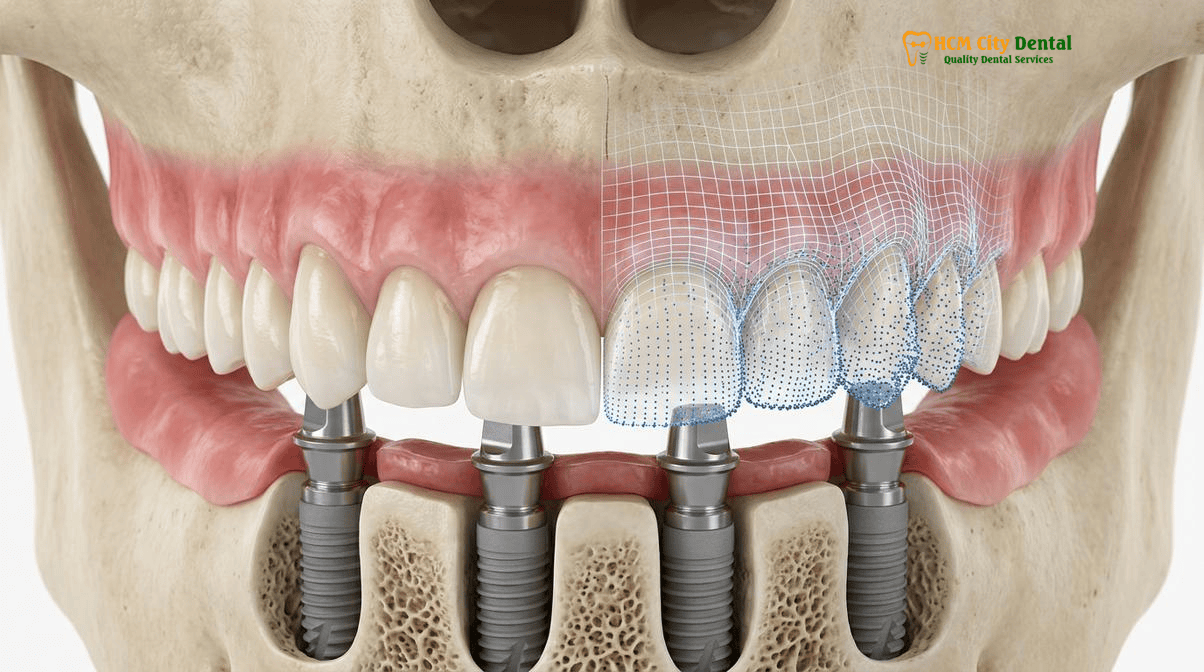
Digital Photogrammetry & Intraoral Scan Bodies vs. Splinted Open-Tray Impression Verification Jigs
For decades, the standard method for capturing the positions of multiple implants for a full-arch restoration was the splinted open-tray impression technique. This analog process involved screwing tall metal impression copings onto the MUAs, tying them together with dental floss, and splinting them with autopolymerizing acrylic resin (such as Pattern Resin) to prevent movement. A custom tray filled with polyvinyl siloxane (PVS) or polyether impression material was then seated over the copings. Once the material set, the screws were loosened, and the impression was removed and poured in dental stone to create a master cast.
While this technique was the gold standard for years, it is inherently flawed. Acrylic resin shrinks as it polymerizes. Impression materials expand and contract based on temperature and humidity. Dental stone expands as it sets. Every step in the analog chain introduces a small margin of error. By the time the master cast is fabricated, the positions of the implant analogs in the stone model may deviate from the actual positions in the patient’s mouth by 50 to 100 microns or more—far exceeding the 15-micron threshold required for passive fit.
Enter digital photogrammetry passive fit full arch implants. Photogrammetry (utilizing systems like PIC camera or ICAM4D) has completely revolutionized full-arch implant impressions. Instead of using messy impression materials and shrinking resins, photogrammetry uses light and mathematics to capture implant positions with absolute precision.
The process is elegant and highly efficient. Specialized intraoral scan bodies, equipped with unique high-contrast fiducial markers (similar to QR codes), are screwed onto the MUAs. A specialized stereoscopic camera is then passed over the arch. The camera flashes multiple times per second, capturing thousands of images of the fiducial markers from various angles. Using complex triangulation algorithms, the software calculates the exact 3D spatial coordinates, angulation, and depth of each implant with an accuracy of less than 10 microns.
This data is then fused with a soft-tissue surface scan captured by a 3Shape Trios 5D intraoral scanner. The result is a mathematically perfect digital replica of the patient’s mouth. Because there are no physical materials to shrink or expand, the digital model is 100% accurate. When the dental laboratory designs and mills the final monolithic zirconia bridge based on this photogrammetry data, the resulting prosthesis seats with absolute, flawless passive fit, entirely eliminating the risks associated with analog distortion[4].
Prosthetic Screw Preload Torque (15 Ncm vs. 30–35 Ncm): Protecting the Internal Implant-Abutment Connection
Understanding the mechanics of screw torque is vital for the longevity of any screw-retained full-arch restoration. In a Multi-Unit Abutment system, there are two distinct screws, each requiring a specific torque value to function correctly and safely.
The first is the MUA abutment screw, which secures the titanium Multi-Unit Abutment directly to the implant fixture. This screw is typically torqued to a high value, usually between 30 and 35 Ncm (Newton centimeters), depending on the manufacturer’s specifications. This high torque stretches the titanium screw slightly, creating a clamping force known as “preload.” This preload ensures that the MUA is rigidly locked into the implant’s internal connection, preventing any micromovement that could lead to bacterial pumping or mechanical wear.
The second is the prosthetic screw, which secures the zirconia bridge or titanium framework to the top of the MUA. This screw is intentionally torqued to a much lower value, universally standardized at 15 Ncm. This differential in torque values is a deliberate engineering design intended to protect the system.
If a patient experiences a severe occlusal overload—such as biting down forcefully on a hard object or suffering from severe nocturnal bruxism (teeth grinding)—the excessive force is transmitted through the bridge to the screws. Because the prosthetic screw is only torqued to 15 Ncm, it acts as the weakest link in the chain. It is designed to stretch, loosen, or fracture before the force can damage the MUA, the implant fixture, or the surrounding bone. Replacing a broken 15 Ncm prosthetic screw is a simple, five-minute chairside procedure. Conversely, if the system were designed with a single, high-torque screw directly into the implant, an overload could fracture the implant fixture itself, necessitating invasive explantation surgery and extensive bone grafting[5].
Clinical Safety Warning: Genuine Components Only
The precise metallurgical properties and torque tolerances of these screws are highly specific to the original implant manufacturer. Using cheap, third-party “compatible” MUAs or generic prosthetic screws drastically alters the preload dynamics. Generic screws often suffer from poor machining tolerances and inferior titanium alloys, leading to premature fatigue, chronic screw loosening, and catastrophic fracture inside the implant. At HCMC Dental Clinic, Dr. Nguyen Van Cuong, DDS strictly utilizes 100% genuine, manufacturer-certified components (Straumann, Nobel Biocare, Neodent, Osstem) with full biomaterial traceability to guarantee patient safety and uphold international warranties.
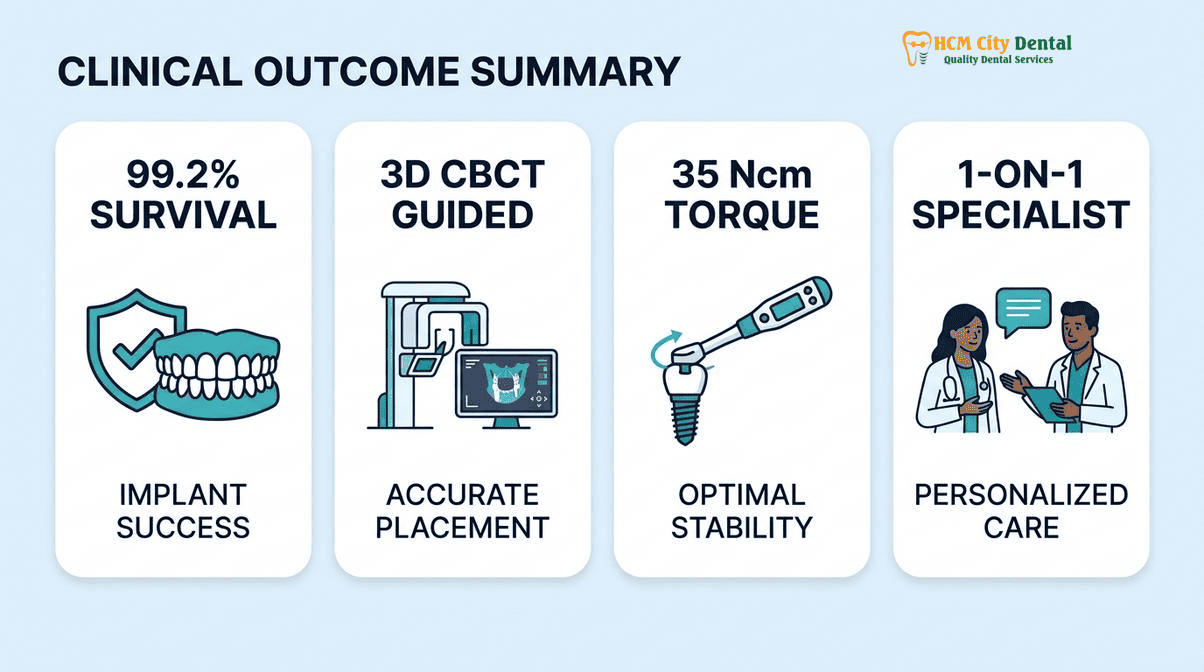
2026 All-on-4 / All-on-6 Multi-Unit Abutment & Full-Arch Zirconia Fee Schedule at HCMC Dental Clinic (District 1)
For international patients, expats, and dental travelers from Australia, the United States, and Europe, accessing world-class full-arch implant prosthodontics often comes with prohibitive costs in their home countries. At HCMC Dental Clinic, located in the heart of District 1, Ho Chi Minh City, patients receive hospital-grade surgical care and digital photogrammetry protocols at a fraction of Western prices, without any compromise in quality, safety, or biomaterial authenticity.
Under the expert care of Dr. Nguyen Van Cuong, DDS, patients benefit from advanced protocols including 3D-Guided All-on-4 & All-on-6 Full-Arch Dental Implants in Vietnam. The clinic utilizes Khoury autogenous cortical bone shell grafting, Urban Sausage GBR (titanium fixation pins + native collagen membrane), and 6-0/7-0 microsurgical Connective Tissue Graft (CTG) tunneling to ensure robust hard and soft tissue foundations before the MUAs are placed.
To provide complete transparency, HCMC Dental Clinic publishes its Official 2026 Dental Price List & -40% Online Booking Fee Schedule. By booking online prior to arrival, international patients secure a guaranteed -40% reduction from the standard walk-in rates.
| Full-Arch Implant Procedure (Includes MUAs & Zirconia Bridge) | 2026 Online Booking Price (USD) | Standard Walk-In Price (USD) | US / Australian Benchmark (USD) |
|---|---|---|---|
| All-on-4 Full-Arch Implants (Economy / Korean) Complete package with temporary & final Zirconia bridge | From $6,346 / arch (165,000,000 VND) | $10,576 / arch | $20,000 – $25,000 |
| All-on-4 Full-Arch Implants (Standard Neodent / B&B) | $7,115 / arch | $11,858 / arch | $24,000 – $28,000 |
| All-on-4 Full-Arch Implants (Straumann SLA / Active) | $8,846 – $10,000 / arch | $14,743 – $16,666 / arch | $28,000 – $35,000 |
| All-on-6 Full-Arch Implants (Economy / Korean) Complete package | From $8,654 / arch (225,000,000 VND) | $14,423 / arch | $25,000 – $30,000 |
| All-on-6 Full-Arch Implants (Standard Neodent / B&B) | $10,192 / arch | $16,986 / arch | $28,000 – $32,000 |
| All-on-6 Full-Arch Implants (Straumann SLA / Active) | $12,308 – $13,462 / arch | $20,513 – $22,436 / arch | $35,000 – $45,000 |
| Single European / Swiss Implant Straumann BLT-SLA / BLA-Active | $962 – $1,346 (25,000,000 – 35,000,000 VND) | $1,603 – $2,244 | $4,500 – $6,000 |
| Single Korean Implant Dentis / Neo Biotech / Dentium | $462 – $654 (12,000,000 – 17,000,000 VND) | $769 – $1,090 | $3,000 – $4,000 |
Clinical Case Study: Maxillary All-on-4 Rehabilitation for an Australian Expat
Patient Profile: A 62-year-old male from Melbourne, Australia, presented to HCMC Dental Clinic with terminal maxillary dentition due to severe chronic periodontitis and failing conventional bridges. He sought a fixed, full-arch solution but was quoted over $30,000 AUD in his home country.
Clinical Protocol: Dr. Nguyen Van Cuong, DDS utilized a 0.075mm 3D CBCT scan to plan a flapless, computer-guided approach. Following the extraction of the remaining hopeless teeth, four Straumann BLT implants were placed using a 3D-Printed Surgical Guide & Flapless Computer-Guided Dental Implants in Vietnam: Precision & Cost protocol. The posterior implants were tilted 30 degrees distally to avoid the maxillary sinus, eliminating the need for complex Bone Grafting, Sinus Lifts & Zygomatic Implants in Vietnam | HCMC Dental. Genuine 30° and 17° Straumann Multi-Unit Abutments were immediately torqued to 35 Ncm to correct the angulation and elevate the platform. Choukroun L-PRF Sticky Bone was applied to the extraction sockets to accelerate soft tissue healing.
Prosthetic Phase: After 4 months of osseointegration, digital photogrammetry was utilized to capture the exact 3D coordinates of the MUAs. A monolithic zirconia bridge with a titanium substructure was milled. The Sheffield one screw test passive fit zirconia bridge verification confirmed absolute passive fit (<10 microns). The final prosthesis was delivered and torqued to 15 Ncm.
Outcome: The patient received a world-class, passive-fit All-on-4 restoration for $8,846 USD (Online Booking Rate), saving over 60% compared to Australian benchmarks, with zero compromise on surgical safety or biomaterial quality.
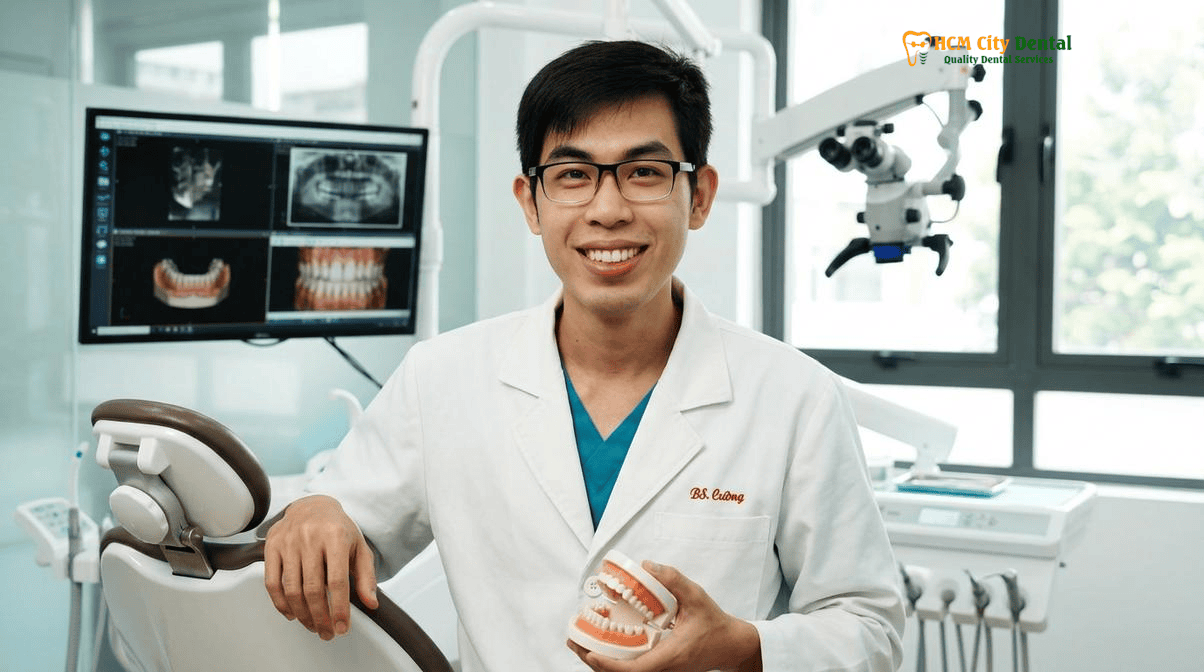
Dr. Cuong’s Prosthodontic Pearl: Never torque a full-arch monolithic zirconia bridge directly onto implant fixtures without Multi-Unit Abutments (MUAs). At HCMC Dental Clinic in District 1, Ho Chi Minh City, every All-on-4 and All-on-6 restoration is elevated above the gumline using genuine 17° or 30° angled MUAs and verified via digital photogrammetry and the Sheffield 1-Screw Test to guarantee a <15-micron passive fit.
Frequently Asked Questions
Why should full-arch All-on-4 bridges always be screwed onto Multi-Unit Abutments rather than directly to the implant fixtures?
Screwing a full-arch bridge directly to the implant fixtures (implant-level restoration) forces the restorative margin deep below the gumline, increasing the risk of bacterial microleakage, crestal bone loss, and peri-implantitis. Furthermore, because All-on-4 protocols utilize tilted posterior implants, direct-to-fixture restorations are geometrically impossible without severe binding. Multi-Unit Abutments (MUAs) elevate the restorative platform above the bone level, correct the angulation of tilted implants, and create a common path of insertion, ensuring a safe, cleansable, and biomechanically sound foundation.
How does digital photogrammetry verify a 100% passive fit for a full-arch monolithic zirconia bridge?
Digital photogrammetry utilizes specialized intraoral scan bodies equipped with fiducial markers. A specialized stereoscopic camera captures thousands of data points per second, calculating the exact 3D spatial coordinates, angulation, and depth of each implant with an accuracy of less than 10 microns. Unlike traditional analog impressions, which are subject to the dimensional shrinkage of impression materials and the expansion of dental stone, photogrammetry provides a mathematically perfect digital replica of the implant positions, guaranteeing that the final milled zirconia bridge seats with absolute passive fit.
Are genuine Nobel Biocare, Straumann, or Osstem Multi-Unit Abutments included in All-on-4 packages at HCMC Dental Clinic?
Yes. At HCMC Dental Clinic, every full-arch implant package strictly utilizes 100% genuine, manufacturer-specific Multi-Unit Abutments. Whether you choose a Straumann, Nobel Biocare, Neodent, or Osstem/Dentium system, Dr. Nguyen Van Cuong, DDS ensures that only original components are used. Mixing third-party or generic abutments voids the manufacturer’s warranty and significantly increases the risk of micromovement, screw loosening, and mechanical failure.
What is the Sheffield 1-Screw Test and panoramic radiograph verification protocol before final bridge delivery?
The Sheffield 1-Screw Test is a critical clinical verification step used to confirm passive fit. The clinician tightens a single prosthetic screw at one end of the full-arch framework (e.g., the far left implant) while leaving the other screws completely loose. If the framework fits passively, it will remain perfectly seated on all other abutments without lifting. This is visually confirmed under magnification and radiographically verified with a panoramic or periapical X-ray to ensure there are zero microgaps between the bridge and the MUAs before final torque is applied.
Can a screw-retained MUA bridge be easily removed by a dentist for ultrasonic maintenance without damaging the implants?
Absolutely. One of the primary advantages of a screw-retained bridge on Multi-Unit Abutments is its retrievability. During annual maintenance, a specialist can easily access the prosthetic screw channels, unscrew the bridge, and remove it for professional ultrasonic cleaning and polishing. Because the MUAs remain permanently torqued to the implants, the internal implant-abutment connection is never disturbed, protecting the crestal bone and mucosal seal while allowing for comprehensive hygiene.
References
- Journal of Prosthetic Dentistry. Biomechanical evaluation of multi-unit abutments in full-arch implant-supported prostheses: A finite element analysis. (2023).
- International Journal of Oral & Maxillofacial Implants. Accuracy of digital photogrammetry versus conventional splinted impressions for full-arch implant rehabilitations. (2022).
- Clinical Oral Implants Research. The impact of passive fit on crestal bone levels in All-on-4 restorations: A 5-year retrospective study. (2021).
- Journal of Oral Implantology. Screw loosening and fracture prevention in full-arch implant prosthodontics: The role of preload torque and abutment design. (2023).
- Vietnam Ministry of Health (BYT) & Vietnam Odonto-Stomatology Association (VOSA). National Clinical Guidelines on Specialist Dental Care, Biomaterial Traceability & EN 13060 Class B Infection Control. (2024).