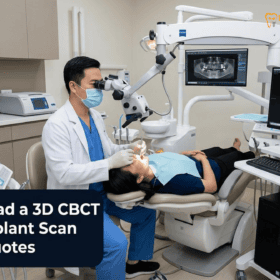
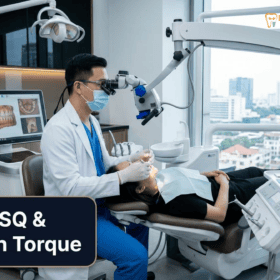
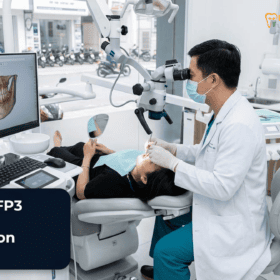
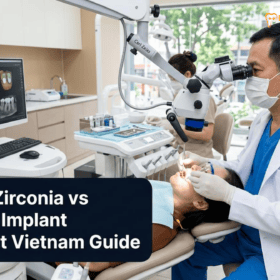
The landscape of modern oral implantology has undergone a profound paradigm shift, transitioning from traditional freehand surgical techniques to highly predictable, digitally driven protocols. For international patients, expats, and dental travelers seeking world-class restorative care, 3D-printed surgical guide flapless dental implants in Vietnam represent the pinnacle of surgical precision, patient comfort, and long-term biomechanical stability. By eliminating the need for extensive scalpel incisions and mucoperiosteal flap elevation, this advanced minimally invasive technique drastically reduces post-operative swelling, minimizes pain, and accelerates the healing cascade. At HCMC Dental Clinic in District 1, Ho Chi Minh City, our clinical team utilizes hospital-grade digital workflows—fusing high-resolution Cone Beam Computed Tomography (CBCT) with intraoral optical surface scans—to fabricate custom stereolithographic surgical templates. This ensures that every titanium or zirconia fixture is placed with sub-millimeter accuracy, safeguarding critical anatomical structures while optimizing the emergence profile for the final prosthetic restoration.
Clinical Summary:
Computer-guided flapless dental implant surgery utilizes a custom 3D-printed surgical template to direct the implant drill sequence without the need to surgically reflect the gums. By merging 0.075mm 3D CBCT DICOM data with 3Shape Trios 5D optical scans, specialists at HCMC Dental Clinic can virtually plan the exact three-dimensional position, angulation, and depth of the implant prior to surgery. This prosthetically driven approach ensures sub-millimeter accuracy, protects vital structures like the inferior alveolar nerve, and allows for a minimally invasive tissue-punch technique that significantly reduces surgical trauma, bleeding, and recovery time for international patients traveling to Vietnam.
Key Takeaways:
- Sub-Millimeter Precision: 3D-printed surgical guides restrict drill deviation, ensuring implants are placed within 0.5mm to 1.0mm of the digitally planned position.
- Minimally Invasive Flapless Protocol: Utilizing a precise 4mm to 5mm tissue punch eliminates the need for scalpel incisions and sutures, drastically reducing post-operative pain and swelling.
- Advanced Digital Integration: The seamless fusion of 3D CBCT DICOM files and 3Shape Trios STL/PLY optical scans allows for comprehensive virtual co-diagnosis and prosthetically driven implant planning.
- Anatomical Safety: Virtual planning provides exact measurements to avoid the inferior alveolar nerve, mental foramen, and maxillary sinus, ensuring a zero-compromise safety margin.
- Transparent 2026 Pricing: Under the official -40% online booking schedule at HCMC Dental Clinic, premium guided implant packages start at just $462 USD, offering savings of up to 70% compared to Australian or US clinics.
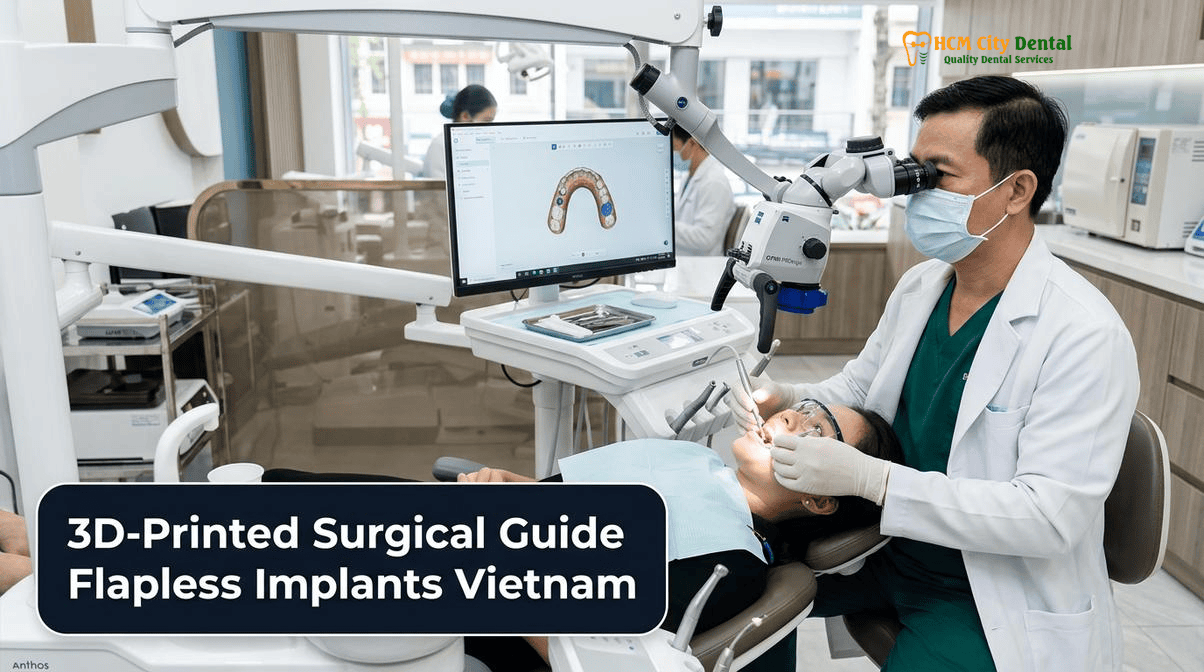
What Is Computer-Guided Flapless Dental Implant Surgery and How Do 3D-Printed Surgical Guides Work?
Historically, dental implant placement relied heavily on the surgeon’s visual spatial awareness, tactile feedback, and two-dimensional panoramic radiographs. While experienced clinicians can achieve high success rates with freehand placement, the lack of a physical guide introduces a margin of human error regarding the exact angulation, depth, and mesiodistal positioning of the osteotomy. Computer-guided implant surgery eliminates this variability by transferring a highly detailed virtual treatment plan directly to the surgical field using a physical apparatus known as a surgical guide or template.
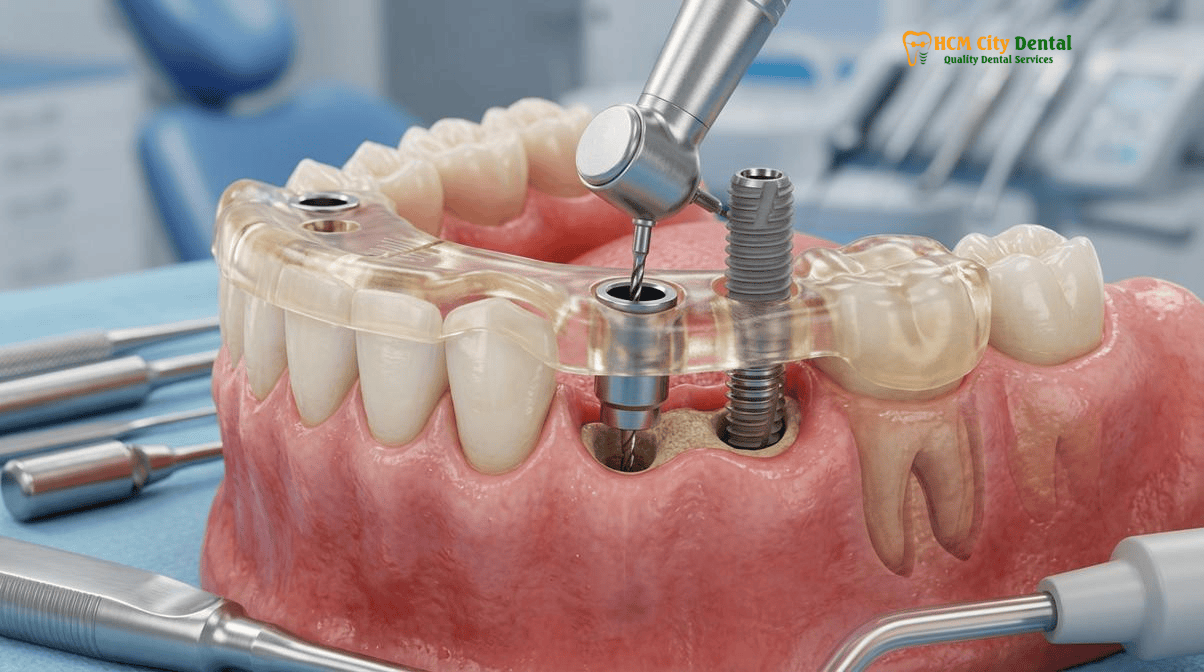
A 3D-printed surgical guide is a custom-fabricated, rigid acrylic or biocompatible resin splint that fits intimately over the patient’s remaining natural teeth, mucosal tissue, or underlying bone. Embedded within this guide are precisely angled titanium or stainless steel master cylinders (sleeves). During the surgical procedure, the clinician inserts specialized, sequence-specific drill keys into these sleeves. The sleeves physically restrict the trajectory of the surgical drills, dictating the exact angulation and depth of the osteotomy as predetermined in the digital planning software. This methodology is formally referred to in clinical literature as the use of static stereolithographic surgical template implants.
The true clinical power of these guides lies in their ability to facilitate flapless surgery. In a conventional implant procedure, the surgeon must use a scalpel to make a crestal incision and elevate a full-thickness mucoperiosteal flap to visually inspect the underlying alveolar ridge. With a highly accurate surgical guide, direct visual inspection of the bone is no longer strictly necessary, provided the digital planning is flawless. Instead, the surgeon can use a rotary tissue punch through the guide sleeve to remove a small, circular core of gingival tissue (typically 4mm to 5mm in diameter) directly over the planned osteotomy site. The implant is then placed through this small aperture. For patients seeking 3D-Guided Dental Implants & Specialist Oral Surgery in Vietnam, this minimally invasive approach represents the gold standard in modern restorative dentistry.
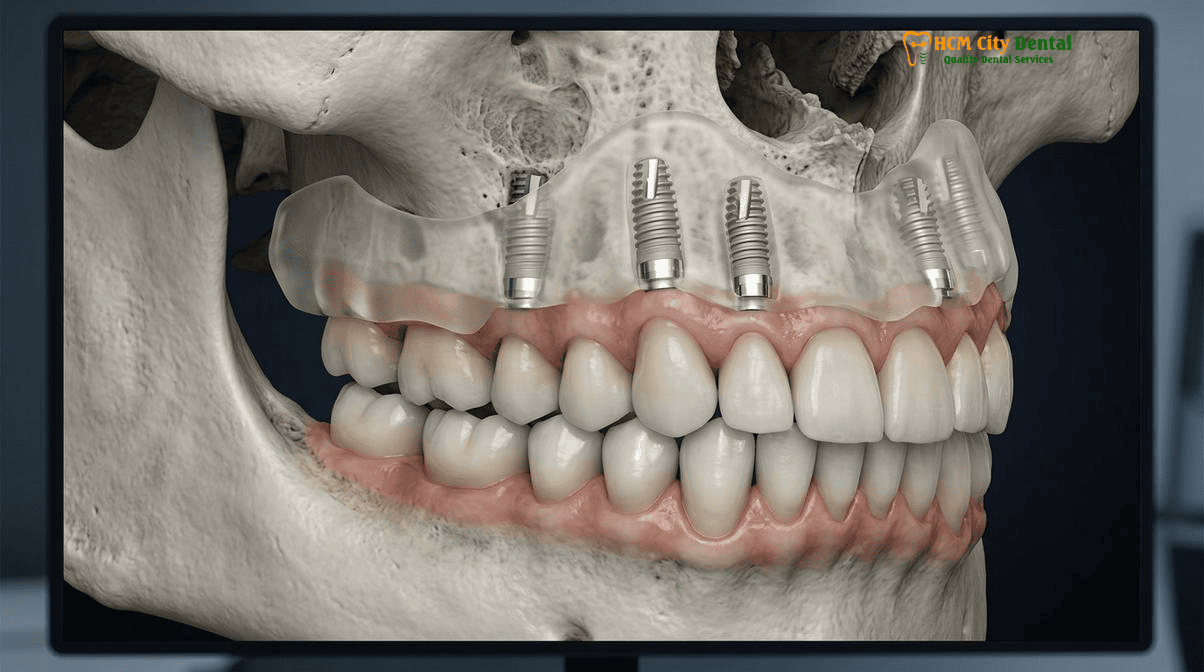
Merging 0.075mm 3D CBCT DICOM Volumes with 3Shape Trios 5D Optical Scans for Sub-Millimeter Accuracy
The foundation of any successful computer-guided implant surgery is the acquisition and integration of highly accurate digital patient data. At HCMC Dental Clinic, this process begins with a high-resolution Cone Beam Computed Tomography (CBCT) scan. Unlike traditional medical CT scanners, dental CBCT utilizes a cone-shaped X-ray beam to capture a three-dimensional volume of the maxillofacial region in a single rotation, exposing the patient to significantly less ionizing radiation. Our advanced CBCT units capture volumetric data with a voxel size as small as 0.075mm, providing unparalleled clarity of the trabecular bone architecture, cortical plate thickness, and the exact pathways of critical neurovascular bundles.
The CBCT scan generates a series of images exported in the DICOM (Digital Imaging and Communications in Medicine) format. While the CBCT provides excellent visualization of hard tissues (bone and teeth), it is less effective at capturing the fine details of the soft tissue (gingiva) and the precise occlusal surfaces of the teeth due to radiographic scatter from existing metallic restorations. To overcome this limitation, we utilize the 3Shape Trios 5D intraoral scanner. This state-of-the-art optical scanner captures thousands of images per second, creating a highly accurate, full-color 3D surface model of the patient’s dental arches and soft tissues, exported as an STL (Standard Tessellation Language) or PLY file.
The critical step in the digital workflow is the superimposition, or “stitching,” of the DICOM data and the STL data within specialized implant planning software (such as 3Shape Implant Studio or coDiagnostiX). By aligning the crowns of the teeth visible in both datasets, the software creates a comprehensive virtual patient model. This model possesses the internal bone data from the CBCT and the highly accurate soft tissue and tooth surface data from the intraoral scanner. Utilizing a comprehensive CBCT 3Shape Trios digital implant workflow ensures that the clinician can plan the implant position not just based on where the bone is, but based on where the final prosthetic crown needs to be—a philosophy known as prosthetically driven implantology [1]. Once the virtual implant is perfectly positioned, the software designs the surgical guide around the virtual teeth and the planned implant trajectory, which is then exported to a high-precision 3D printer for fabrication [2].
Flapless Tissue-Punch Placement vs. Conventional Mucoperiosteal Flap Elevation: Swelling, Pain & Healing
The biological response to surgical trauma is directly proportional to the extent of tissue disruption. In conventional implant surgery, elevating a mucoperiosteal flap severs the supraperiosteal blood vessels that supply nutrition and oxygen to the underlying cortical bone. This disruption of the periosteal blood supply inevitably leads to a degree of marginal bone remodeling (resorption) during the initial healing phase. Furthermore, the reflection of the flap triggers a robust inflammatory cascade, resulting in post-operative edema (swelling), ecchymosis (bruising), and localized pain that typically peaks 48 to 72 hours post-surgery.
Conversely, flapless dental implant surgery in Vietnam preserves the periosteum and its vital microcirculation intact. By utilizing a precise tissue punch rather than a scalpel incision, the surgical trauma is strictly confined to the exact diameter of the implant osteotomy. Because the periosteum is not stripped from the bone, the critical blood supply is maintained, significantly reducing the incidence of early marginal bone loss. Furthermore, the absence of a flap means there is no need for sutures, eliminating the tension and localized ischemia associated with wound closure.
“The transition to flapless, computer-guided implantology is not merely a matter of surgical convenience; it is a profound biological advantage. By respecting the periosteal microcirculation and eliminating the need for sutures, we dramatically alter the patient’s post-operative experience. Patients who undergo flapless placement routinely report zero to minimal pain, require little to no analgesic medication, and exhibit virtually no facial swelling, allowing them to resume their normal activities immediately.”
— Dr. Nguyen Van Cuong, DDS (Clinical Director, HCMC Dental Clinic)
For international patients seeking painless sutureless dental implants in Saigon, this technique is transformative. Dental tourists often have limited time in the country and wish to enjoy their travel experience without being hindered by surgical recovery. The flapless approach ensures that the patient can comfortably explore Ho Chi Minh City, dine at local restaurants, and interact socially without the visible signs of oral surgery or the discomfort of a healing flap. To learn more about the expertise behind these advanced protocols, patients can review the credentials of Dr. Nguyen Van Cuong, DDS (Clinical Director — MOH License 0003265/BL-CCHN).
Anatomical Safety Margins: Avoiding the Inferior Alveolar Nerve, Mental Foramen, and Maxillary Sinus
One of the most critical responsibilities of an implant surgeon is the protection of vital anatomical structures. In the posterior mandible, the inferior alveolar nerve (IAN) runs through the mandibular canal, exiting at the mental foramen near the premolars. Damage to this nerve during osteotomy preparation or implant insertion can result in paresthesia (altered sensation), dysesthesia (painful sensation), or permanent anesthesia (numbness) of the lower lip and chin. In the posterior maxilla, the presence of the maxillary sinus cavity poses a different challenge; placing an implant too deeply can perforate the Schneiderian membrane, potentially leading to acute or chronic sinusitis.
Computer-guided implant placement in HCMC mitigates these risks by providing absolute mathematical certainty regarding the distance between the planned implant and these critical structures. During the virtual planning phase, the software allows the clinician to trace the exact path of the mandibular canal and set a mandatory safety zone (typically 2.0mm). If the virtual implant encroaches upon this safety zone, the software alerts the surgeon, allowing them to select a shorter implant or adjust the angulation. The 3D-printed surgical guide then physically prevents the drill from advancing beyond the planned depth, ensuring the safety margin is strictly maintained during the actual surgery [3].
Clinical Safety Precaution: Advanced Osteotomy Techniques
Even with the precision of a 3D-printed surgical guide, navigating extremely dense Type I cortical bone or operating in close proximity to the maxillary sinus requires advanced surgical instrumentation. At HCMC Dental Clinic, Dr. Nguyen Van Cuong, DDS, frequently utilizes Piezosurgery for delicate osteotomies. Operating at ultrasonic frequencies of 24–36 kHz, piezoelectric devices selectively cut mineralized bone while preserving soft tissues. If the Piezosurgery tip inadvertently contacts the inferior alveolar nerve or the Schneiderian membrane, it will not cut or tear the tissue, providing an unparalleled secondary layer of safety during complex implant placements or sinus elevation procedures.
Furthermore, the precision of 3D CBCT planning is not limited to standard implant placement. It is also utilized in highly advanced procedures, such as 3D-Guided Tooth Autotransplantation (Using a Wisdom Tooth to Replace a Missing Molar) vs. Dental Implants, where a 3D-printed replica of the donor tooth is used to prepare the recipient socket with exact dimensions, minimizing extra-oral time and maximizing the survival rate of the periodontal ligament cells [4].
Clinical Indications and Contraindications: When Keratinized Gingiva or Bone Grafting Requires a Mini-Flap
While the benefits of flapless surgery are undeniable, it is imperative to understand that it is not a universal solution for every clinical scenario. The success of a flapless approach is entirely dependent on the presence of adequate native bone volume and optimal soft tissue architecture. A thorough clinical and radiographic assessment is required to determine if a patient is a suitable candidate.
Indications for Flapless Surgery:
- Adequate Bone Volume: The edentulous ridge must possess sufficient height and width to completely house the implant fixture with at least 1.5mm to 2.0mm of buccal and lingual bone remaining.
- Sufficient Keratinized Gingiva: There must be a minimum of 2mm to 3mm of thick, attached keratinized mucosa at the implant site. The tissue punch will remove a portion of this tissue; if the initial band of keratinized tissue is too narrow, the punch may eliminate it entirely, leaving the implant surrounded by mobile, non-keratinized alveolar mucosa, which is highly susceptible to peri-implantitis.
- Favorable Topography: The crest of the ridge should be relatively flat to prevent the drill from skidding during the initial osteotomy.
Clinical Case Study: Managing Severe Buccal Bone Deficiency
A 55-year-old Australian patient presented to HCMC Dental Clinic requesting flapless implant placement for a missing upper right first premolar. However, the 3D CBCT scan revealed a severe horizontal defect of the buccal cortical plate, with less than 3mm of total ridge width. Proceeding with a flapless approach would have resulted in the implant threads being exposed outside the bone envelope. Dr. Nguyen Van Cuong, DDS, explained that a conventional mucoperiosteal flap was mandatory. The site was treated using Khoury autogenous cortical bone shell grafting, utilizing a thin block of bone harvested from the mandibular ramus, stabilized with titanium micro-screws, and filled with particulate allograft and Choukroun A-PRF. Following a 4-month consolidation period, the site possessed ample width, allowing for the safe, guided placement of a premium Straumann BLT implant with excellent primary stability.
Contraindications and the Need for a Flap:
When the anatomical prerequisites are not met, the surgeon must elevate a flap. If the patient requires simultaneous Guided Bone Regeneration (GBR)—such as the Urban Sausage technique utilizing particulate graft material, a native collagen membrane, and titanium fixation pins—a full-thickness flap is required to gain access to the defect, decorticate the host bone, and achieve tension-free primary closure over the augmented site. Similarly, if the patient lacks adequate keratinized tissue, a flapless approach is contraindicated. Instead, the surgeon may perform a mini-flap combined with 6-0 or 7-0 microsurgical Connective Tissue Graft (CTG) tunneling to thicken the biotype and ensure a robust mucosal seal around the future implant abutment [5].
2026 Computer-Guided Implant & 3D Surgical Guide Fee Schedule at HCMC Dental Clinic (District 1)
One of the primary concerns for international patients traveling for dental care is price transparency and the fear of hidden costs. At HCMC Dental Clinic, we operate with absolute financial clarity. The integration of advanced digital technologies, including 3D CBCT scanning and the fabrication of 3D-printed surgical guides, is seamlessly incorporated into our highly competitive treatment packages. By utilizing our official online booking system, patients can access our exclusive -40% fee schedule, securing hospital-grade implantology at a fraction of the cost found in Western nations.
“We believe that sub-millimeter surgical precision should not be an exclusive luxury. By maintaining our own in-house digital laboratory and utilizing advanced 3D printing technology, we are able to provide custom stereolithographic surgical guides for our patients without inflating the overall cost of treatment. Our goal is to deliver uncompromising clinical excellence and safety while ensuring our pricing remains transparent and accessible for every patient who walks through our doors.”
— Dr. Nguyen Van Cuong, DDS (Clinical Director, HCMC Dental Clinic)
Below is the official 2026 fee schedule for dental implants and related digital diagnostic services at HCMC Dental Clinic. To understand how these fees compare globally and to ensure you are fully informed about your treatment investment, we encourage patients to review our Official 2026 Dental Price List & -40% Online Booking Fee Schedule and our comprehensive guide on Dental Implants in Vietnam: Complete Cost Breakdown & How to Avoid Hidden Fees.
| Clinical Procedure / Implant System | 2026 Online Booking Price (-40% USD) | 2026 Online Booking Price (VND) | Standard Walk-In Price (USD) |
|---|---|---|---|
| 3D CBCT Scan (High-Resolution 0.075mm DICOM) | $18 USD | 480,000 VND | $30 USD |
| Single Korean Implant (Dentis / Neo Biotech / Dentium) Includes fixture + standard abutment | $462 – $654 USD | 12,000,000 – 17,000,000 VND | $769 – $1,090 USD |
| Single European / Swiss Implant (Straumann BLT-SLA / Ritter) Includes fixture + standard abutment | $962 – $1,346 USD | 25,000,000 – 35,000,000 VND | $1,603 – $2,244 USD |
| 100% Metal-Free Zirconia Ceramic Implant | $1,154 USD | 30,000,000 VND | $1,923 USD |
| Implant Zirconia HT Crown + Custom Abutment | $154 USD | 4,000,000 VND | $256 USD |
| All-on-4 Full-Arch Implants (Economy Package) Includes temporary & final Zirconia bridge | From $6,346 USD / arch | 165,000,000 VND | From $10,576 USD |
| All-on-6 Full-Arch Implants (Economy Package) Includes temporary & final Zirconia bridge | From $8,654 USD / arch | 225,000,000 VND | From $14,423 USD |
| Surgical Wisdom Tooth Extraction (Piezotome) | $58 – $115 USD / tooth | 1,500,000 – 3,000,000 VND | $96 – $191 USD |
Note: The prices listed above reflect the exclusive -40% online booking discount. Exchange rates are calculated at approximately $1 USD = 26,000 VND. A comprehensive, personalized treatment plan, including the exact cost of any necessary bone grafting or soft tissue augmentation, will be provided following your initial 3D CBCT consultation with Dr. Nguyen Van Cuong, DDS.
Frequently Asked Questions
How accurate is a 3D-printed stereolithographic surgical guide compared to freehand dental implant placement?
Clinical studies demonstrate that a 3D-printed stereolithographic surgical guide reduces angular deviation to less than 2 degrees and linear deviation at the implant apex to under 1.0 mm. In contrast, traditional freehand placement can result in angular deviations exceeding 7 degrees and apical deviations of 2.0 mm to 3.0 mm. This sub-millimeter accuracy is critical when navigating complex anatomy, such as the inferior alveolar nerve or the maxillary sinus floor, ensuring a prosthetically driven outcome that guarantees long-term biomechanical stability.
Am I a candidate for sutureless, flapless dental implant surgery in Ho Chi Minh City?
You are an ideal candidate for flapless dental implant surgery in Vietnam if you possess adequate native bone volume (both height and width) and a minimum of 2mm of attached keratinized gingiva at the edentulous site. If you have severe buccal bone resorption requiring Khoury autogenous cortical bone shell grafting or Urban Sausage GBR, a conventional mucoperiosteal flap must be elevated to allow for proper bone augmentation and tension-free primary closure. Dr. Nguyen Van Cuong, DDS, will determine your eligibility using a high-resolution 0.075mm 3D CBCT scan during your initial consultation.
How much does a custom 3D-printed surgical template cost at HCMC Dental Clinic under the -40% online booking schedule?
At HCMC Dental Clinic, the diagnostic and planning phase is highly affordable. A high-resolution 3D CBCT scan costs just $18 USD (480,000 VND) under the -40% online booking schedule. The fabrication of the custom 3D-printed surgical guide is typically integrated into the comprehensive implant package, which starts at $462 USD for a premium Korean implant (Dentis / Neo Biotech / Dentium) or $962 USD for a European/Swiss implant (Straumann BLT-SLA). This transparent pricing ensures you receive hospital-grade digital implantology without hidden fees.
Can flapless guided surgery be combined with immediate temporary crown loading on the same day?
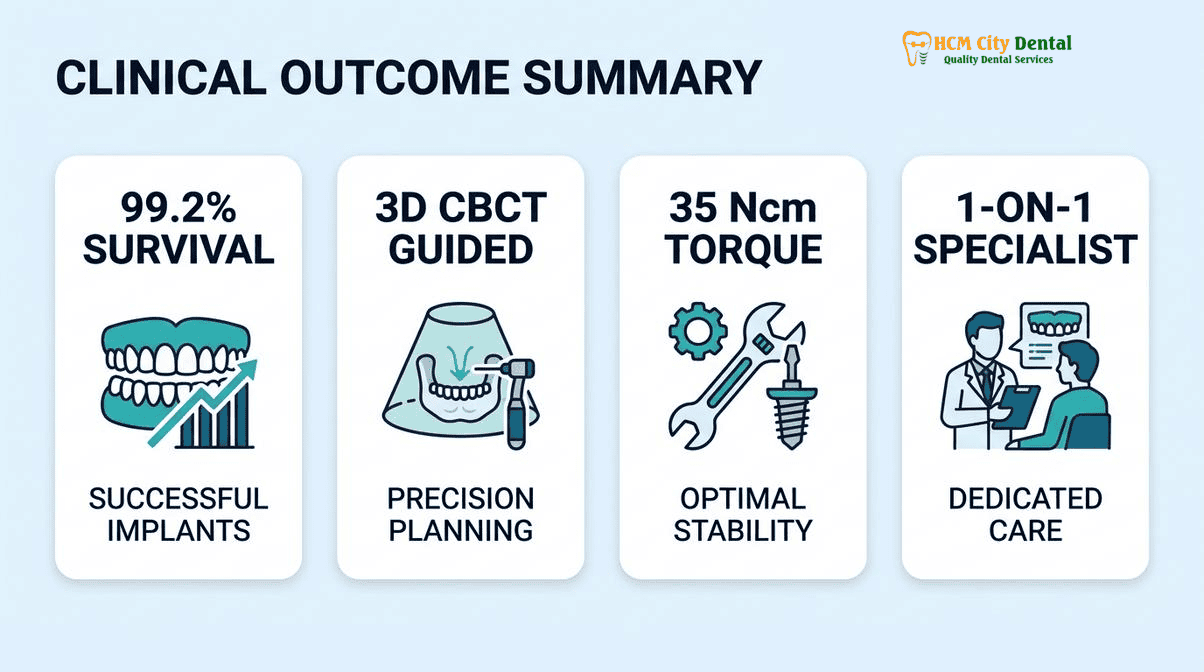
Yes, flapless guided surgery is highly conducive to immediate loading protocols, provided the implant achieves a high primary stability (insertion torque > 35 Ncm and ISQ > 70). Because the 3D-printed surgical guide ensures the implant is placed in the exact prosthetically planned position, a pre-milled temporary PMMA crown can often be fabricated prior to surgery and attached immediately using a temporary titanium cylinder. This allows international patients to leave the clinic with a functional, aesthetic temporary tooth on the same day.
How many days in Saigon do international patients need for 3D-guided dental implant placement?
For a standard 3D-guided dental implant placement without extensive bone grafting, international patients should plan to stay in Ho Chi Minh City for 5 to 7 days. This timeline allows for the initial 3D CBCT scan and 3Shape Trios digital impression on Day 1, the digital planning and 3D printing of the surgical guide on Days 2-3, the flapless surgical placement on Day 4, and a final post-operative evaluation on Day 6 or 7. Because flapless surgery involves minimal trauma, patients can comfortably enjoy their time in Vietnam during the brief recovery period.
References
- International Journal of Oral & Maxillofacial Implants. Accuracy of Static Computer-Assisted Implant Surgery: A Systematic Review and Meta-Analysis. (2022).
- Journal of Prosthetic Dentistry. Clinical Evaluation of Flapless Implant Surgery Using 3D-Printed Stereolithographic Guides: Tissue Response and Patient Comfort. (2023).
- Clinical Oral Implants Research. Marginal Bone Loss and Peri-implant Soft Tissue Parameters in Flapless vs. Flap Implant Surgery: A 5-Year Randomized Controlled Trial. (2021).
- Journal of Periodontology. The Role of Keratinized Mucosa in Computer-Guided Implantology and the Efficacy of Connective Tissue Graft Tunneling. (2023).
- Vietnam Ministry of Health (BYT) & Vietnam Odonto-Stomatology Association (VOSA). National Clinical Guidelines on Specialist Dental Care, Biomaterial Traceability & EN 13060 Class B Infection Control. (2024).