Dental retainers work by applying passive, continuous pressure to hold teeth in their newly aligned positions while the surrounding jawbone and connective tissues solidify. This stabilization prevents natural relapse after active orthodontic treatment, ensuring your straight smile remains securely in place.
Clinical Summary:
Understanding how retainers function requires looking beyond the visible alignment of teeth and examining the microscopic biological processes within the jaw. After braces or clear aligners are removed, the teeth are highly susceptible to shifting because the surrounding alveolar bone is still soft and the periodontal ligaments retain an elastic “memory” of their original positions. Retainers act as a mechanical scaffold, holding the dentition perfectly still while osteoblasts build new, mature bone to lock the roots in place. Whether utilizing a traditional wire-and-acrylic Hawley device, a clear thermoplastic Essix tray, or a bonded lingual wire, the primary goal of retention is to counteract the natural forces of relapse. Long-term clinical success depends heavily on strict patient compliance with prescribed wear schedules and proper appliance maintenance.
Key Takeaways:
- Retainers do not actively move teeth; they provide passive stabilization to maintain orthodontic results.
- The surrounding jawbone takes several months to fully calcify and harden around the new tooth positions.
- Periodontal ligaments have an elastic memory that actively tries to pull teeth back to their original misalignment.
- There are three main types of retainers: clear removable (Essix), wire-and-acrylic (Hawley), and fixed (bonded lingual wire).
- Lifetime nighttime wear is generally recommended by orthodontists to prevent age-related dental shifting.
The Biological Foundation: Retainer Science and Dental Retention Physiology
Retainers function by mechanically stabilizing the teeth while the surrounding alveolar bone and periodontal ligaments undergo microscopic adaptation and hardening around the new root positions.
To truly comprehend how these devices function, one must delve into the intricate world of Orthodontics and the biological response of the human body to mechanical stress. When a patient undergoes active orthodontic treatment, the teeth are not simply sliding through empty space; they are being pushed through living bone tissue. This process, known as bone remodeling orthodontics, involves a complex cellular dance between osteoclasts (cells that break down bone in the direction of tooth movement) and osteoblasts (cells that build new bone in the space left behind)[1].
When braces or aligners are finally removed, the newly formed bone surrounding the tooth roots is still in a transitional state known as “woven bone.” Woven bone is relatively soft and unorganized. It takes considerable time—often six to twelve months—for this immature tissue to calcify and reorganize into dense, load-bearing lamellar bone. During this critical window, the teeth are highly vulnerable to unwanted movement. This is the core principle of retainer science: providing a rigid, passive barrier that holds the teeth perfectly still while the bone maturation process completes itself.
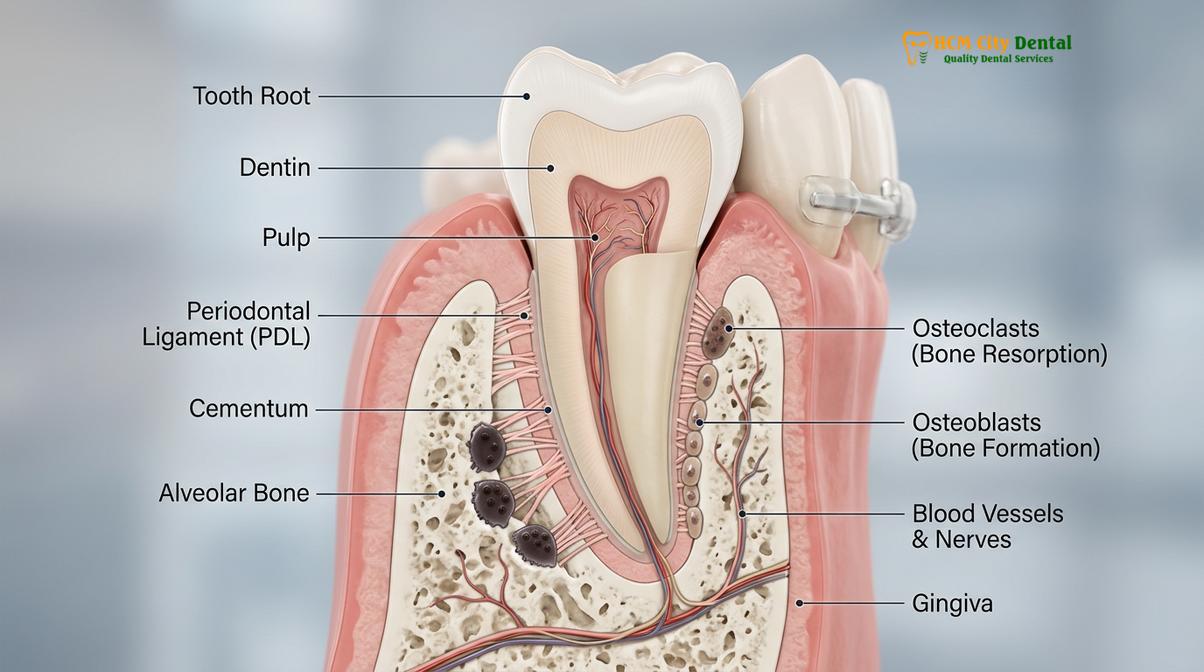
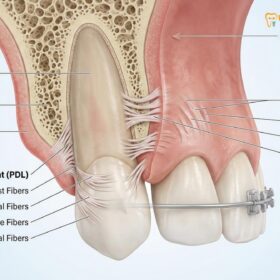
However, bone remodeling is only half of the equation. The other major factor dictating why teeth shift is the periodontal ligament (PDL). The PDL is a complex network of collagen fibers that connects the cementum of the tooth root to the surrounding alveolar bone. These fibers act like tiny elastic hammocks, suspending the tooth in its socket and absorbing the heavy forces of chewing.
“The supracrestal and transseptal fibers of the periodontal ligament possess a strong elastic memory. After orthodontic movement, these fibers remain stretched and twisted, exerting a continuous pulling force that attempts to drag the teeth back to their original, crooked positions. Retainers are the only mechanical defense against this biological recoil.”
This elastic recoil is the primary reason why immediate and consistent retainer wear is non-negotiable. The dental retention physiology dictates that while the bone may harden in a matter of months, the gingival and periodontal fibers can take over a year to fully reorganize and lose their memory of the original malocclusion[2]. Without a retainer to counteract this tension, the teeth will inevitably experience relapse, undoing years of expensive and time-consuming orthodontic work.
Types of Orthodontic Retainers and How They Function
Different retainers—such as clear removable trays, traditional wire-and-acrylic models, and bonded lingual wires—utilize distinct mechanical principles and materials to prevent unwanted tooth movement.
Orthodontic retention is not a one-size-fits-all discipline. Depending on the patient’s original malocclusion, oral hygiene habits, and lifestyle, a dental professional will prescribe a specific type of retainer. Each design employs a different mechanism of action to achieve the same goal: absolute dental stability.
Hawley Retainers (Traditional Wire and Acrylic)
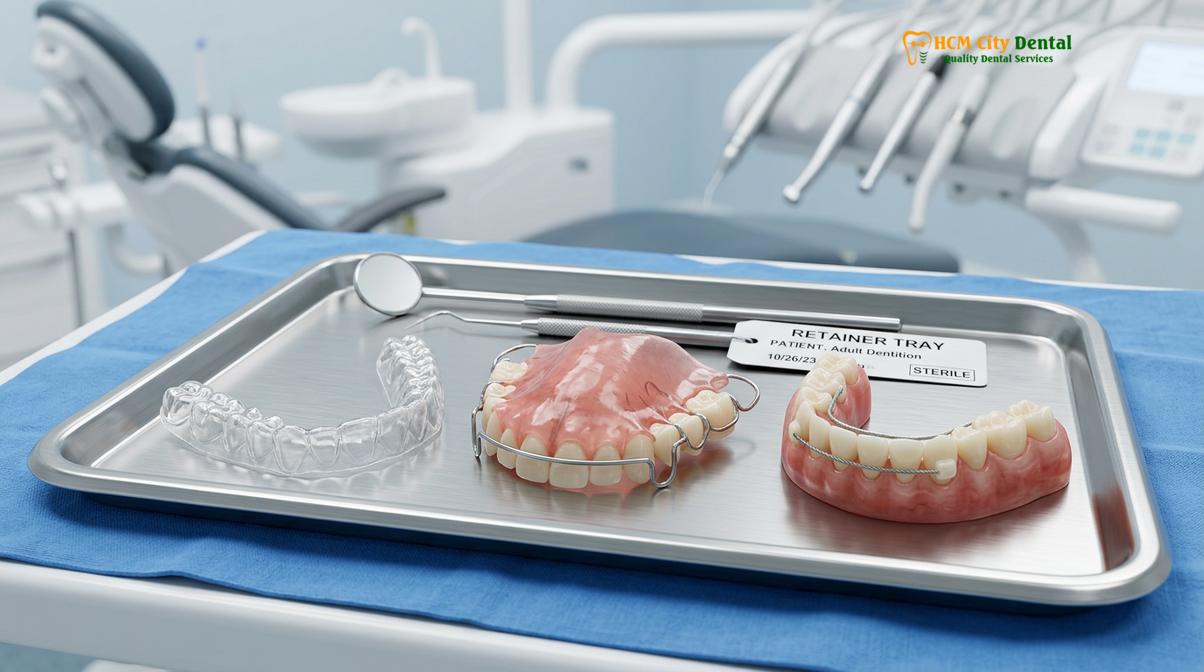
The Hawley retainer is the most recognizable and historically proven retention device. It consists of a custom-molded acrylic base that sits comfortably against the roof of the mouth (for the upper arch) or along the lingual gums (for the lower arch). Embedded within this acrylic is a heavy-gauge stainless steel wire, known as a labial bow, which wraps around the front of the anterior teeth. Additional wire clasps (such as Adams clasps) anchor the device to the posterior molars.
The Hawley retainer works by providing a rigid anterior boundary. The labial bow prevents the front teeth from flaring forward, while the acrylic base prevents them from collapsing inward. One of the greatest clinical advantages of traditional wire-and-acrylic models is their adjustability. If a patient experiences minor relapse due to inconsistent wear, an orthodontist can use specialized pliers to tighten the labial bow, applying gentle active pressure to guide the teeth back into perfect alignment.
Essix Retainers (Clear Thermoplastic Trays)
Essix retainers, often referred to as clear aligner-style retainers, have become the most popular choice for modern patients due to their superior aesthetics. These devices are vacuum-formed or thermoformed from thin sheets of transparent polyurethane or PETG plastic, creating a precise, skin-tight replica of the patient’s newly aligned dental arch.
Unlike the Hawley retainer, which only contacts specific points on the teeth, clear removable trays encapsulate the entire clinical crown of every tooth. This full-coverage design provides exceptional control over all planes of movement, making it highly effective at preventing rotational relapse (teeth twisting out of place)[3]. Because the plastic completely covers the occlusal (biting) surfaces, Essix retainers also offer a degree of protection against nocturnal bruxism (teeth grinding).
Fixed Permanent Retainers (Bonded Lingual Wires)
For patients with a high risk of relapse—particularly in the lower anterior region where crowding is notoriously common—a fixed retainer is often the treatment of choice. This device consists of a custom-adapted, multi-stranded stainless steel or gold wire that is permanently bonded to the lingual (tongue-facing) surfaces of the front teeth using dental composite resin.
The mechanism of bonded lingual wire solutions is straightforward: it splints the teeth together, creating a unified block that is highly resistant to shifting. Because it is permanently attached, it completely eliminates the variable of patient compliance. The device works 24 hours a day, 7 days a week. However, because the wire spans across the interproximal spaces, it requires meticulous oral hygiene and the use of specialized floss threaders to prevent calculus buildup and periodontal inflammation.
Clinical Comparison of Retainer Types
To help patients understand the clinical distinctions between these devices, the following table outlines their primary characteristics:
| Retainer Type | Primary Material | Mechanism of Action | Clinical Advantages | Clinical Disadvantages |
|---|---|---|---|---|
| Hawley | Acrylic base & stainless steel wire | Labial bow provides anterior boundary; acrylic supports lingual aspect. | Highly durable, adjustable by dentist, allows natural bite settling. | Visible wire, bulky acrylic affects speech initially. |
| Essix (Clear) | Thermoplastic polyurethane / PETG | Full coronal encapsulation prevents movement in all dimensions. | Virtually invisible, highly comfortable, protects against grinding. | Prone to wear/cracking, cannot be adjusted, blocks natural occlusion. |
| Fixed (Bonded) | Braided metal wire & composite resin | Splints anterior teeth together via lingual bonding. | 100% compliance, invisible, continuous 24/7 retention. | Requires specialized flossing, risk of undetected debonding. |
Clinical Workflow: Fitting and Adjusting Retainers
The creation of a retainer involves precise digital scanning or physical impressions, followed by laboratory fabrication and meticulous clinical adjustments to ensure a perfect, passive fit.
The transition from active orthodontics to the retention phase is a highly coordinated clinical process. It begins on the day the braces are debonded or the final clear aligner is completed. Because teeth can begin to shift within hours of removing the active orthodontic forces, time is of the essence when fabricating custom retention devices.
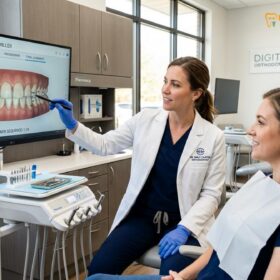
At HCMC Dental Clinic in Ho Chi Minh City, the workflow begins with capturing an exact replica of the patient’s final bite. Historically, this was done using messy alginate or polyvinyl siloxane (PVS) putty impressions. Today, advanced clinics utilize intraoral digital scanners. A wand captures thousands of optical images per second, rendering a highly accurate 3D model of the dental arches on a computer screen. This digital file is then sent to a dental laboratory or an in-house 3D printer.
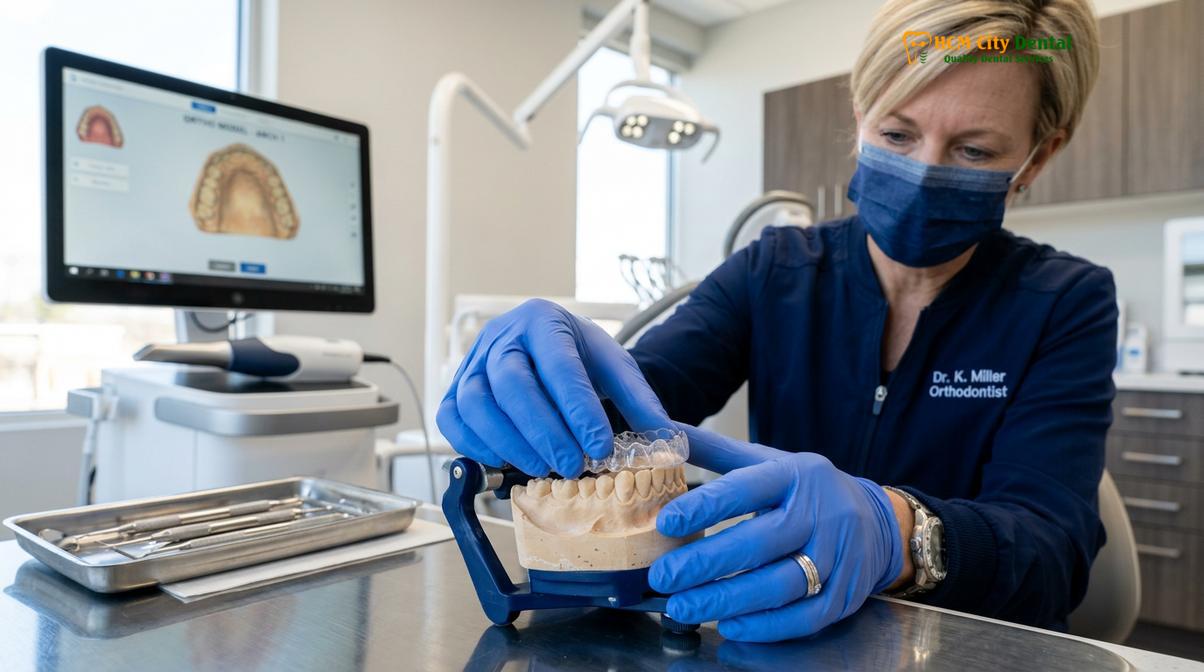
During the fabrication phase, the laboratory technician uses the model to craft the retainer. For an Essix retainer, a sheet of thermoplastic is heated until pliable and then vacuum-sucked over the 3D-printed model, capturing every microscopic detail of the tooth anatomy. For a Hawley retainer, the technician meticulously bends the stainless steel wire to follow the exact contours of the labial surfaces before curing the acrylic base.
The most critical step occurs during the delivery appointment. Dr. Nguyen Van Cuong emphasizes that a retainer must fit passively. If the device applies active pressure (unless intentionally adjusted to correct a minor relapse), it can cause unnecessary discomfort and potentially damage the periodontal ligament. During the fitting, the dentist will check the insertion path, ensure there is no impingement on the delicate gingival tissues, and verify that the patient’s occlusion (bite) is not negatively altered by the appliance[4].
Long-Term Retention Protocols and Patient Compliance
Successful orthodontic outcomes rely on strict adherence to prescribed wear schedules, transitioning from full-time wear immediately after braces to indefinite nighttime wear.
The biological reality of the human body is that it is constantly changing. Just as skin wrinkles and hair thins with age, teeth naturally tend to shift forward and crowd together over time—a phenomenon known as late mandibular incisor crowding. Therefore, the concept of a “retention phase” is somewhat misleading; retention is not a phase, but a lifelong commitment.
Immediately following the removal of braces, the standard protocol requires full-time wear (approximately 22 hours per day, removing the device only for eating and oral hygiene) for the first three to six months. This intensive period allows the woven bone to mature into lamellar bone. Once the orthodontist confirms clinical stability, the patient is typically transitioned to a nighttime-only wear schedule.
Clinical Case Review: The Importance of Compliance
A 24-year-old patient visited HCMC Dental Clinic in Ho Chi Minh City complaining of shifting lower front teeth, two years after completing braces. Upon examination, it was discovered the patient had stopped wearing their removable retainer after six months, assuming the teeth were permanently “set.” The lack of retention allowed the transseptal fibers to pull the incisors back into a crowded state. The patient required a short course of clear aligner retreatment, followed by the placement of a fixed lingual retainer to ensure compliance-free stability moving forward.
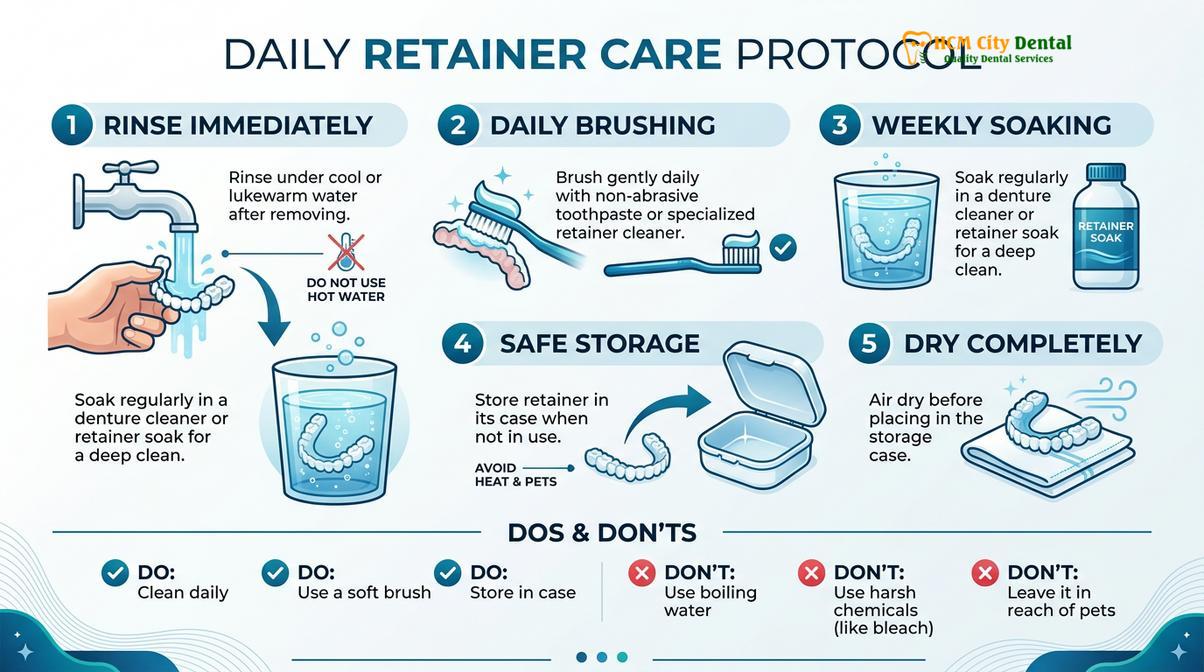
Maintaining the physical integrity of the retainer is just as important as wearing it. Thermoplastic retainers are highly susceptible to heat distortion; washing them in hot water or leaving them in a hot car can warp the plastic, rendering the device useless. Furthermore, microscopic scratches from abrasive toothpaste can harbor bacteria, leading to foul odors and an increased risk of dental caries.
“Proper maintenance of a removable retainer involves daily mechanical cleaning with a soft brush and mild soap, supplemented by weekly chemical disinfection using specialized effervescent tablets. A clean retainer protects not only the alignment of the teeth but also the health of the surrounding gingival tissues.”
Patients seeking cost-effective retention options must factor in the long-term replacement costs. Essix retainers typically wear out or crack every 1 to 3 years, depending on the patient’s bite force and grinding habits. Hawley retainers can last 5 to 10 years with proper care, while fixed retainers may remain intact for decades, provided the composite bonding does not fail[5].
When to See a Doctor: Managing Retainer Complications
While retainers are generally safe and highly effective, complications can arise that require immediate professional intervention. Ignoring these warning signs can lead to rapid orthodontic relapse or localized periodontal disease.
Important Clinical Considerations:
You should schedule an immediate appointment with your dental provider if you experience any of the following:
- Excessive Tightness or Pain: If your removable retainer causes severe pain upon insertion, it indicates significant tooth movement has occurred. Forcing it onto the teeth can traumatize the roots and bone.
- Loss or Breakage: A cracked Essix tray or a bent Hawley wire cannot hold teeth properly. Do not attempt to repair it yourself with household glues, which are toxic.
- Debonded Fixed Retainer: If you feel a sharp edge on your lingual wire or notice that the composite glue has chipped off a tooth, the wire is no longer stabilizing that specific tooth.
- Gingival Inflammation: Persistent bleeding, swelling, or redness around a fixed retainer indicates severe plaque and calculus accumulation that requires professional scaling.
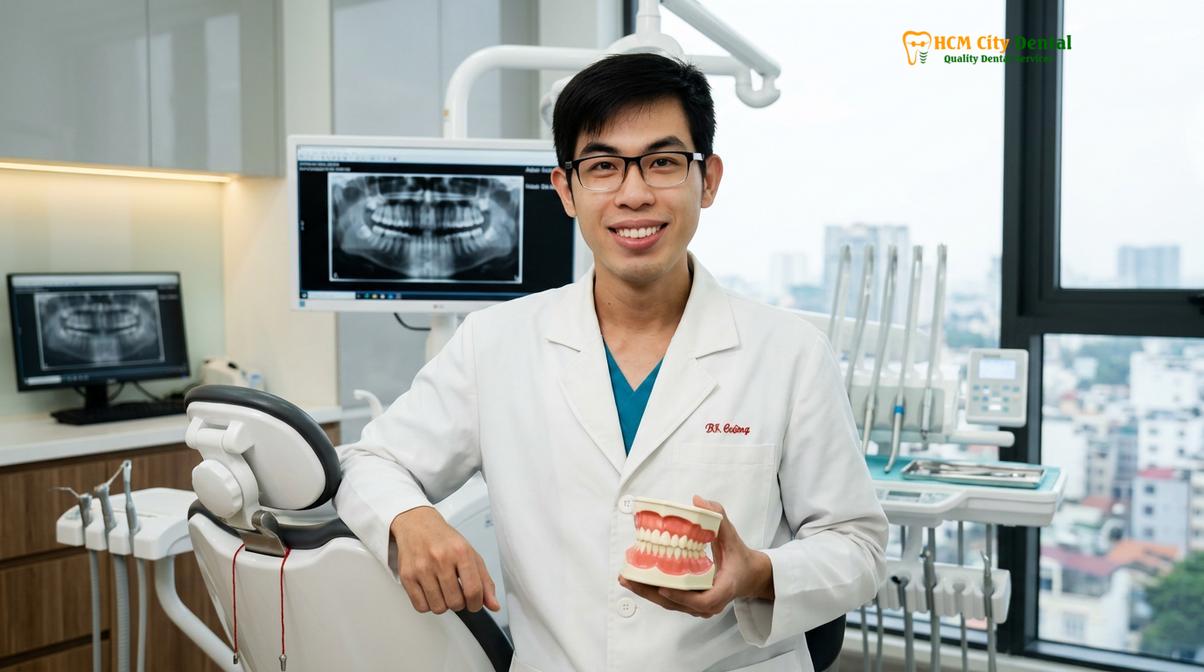
Dr. Cuong advises that patients should bring their removable retainers to every routine dental check-up. This allows the clinical team to inspect the appliance for micro-fractures, assess its fit against the current dental alignment, and provide professional ultrasonic cleaning to remove stubborn tartar buildup. Regular monitoring is the most effective strategy for ensuring your comprehensive retention pricing investment lasts a lifetime.
Frequently Asked Questions
Can a retainer move my teeth back if they have shifted?
A retainer can only correct very minor shifting if worn immediately after a brief lapse. It is not designed to apply the continuous, heavy forces required for active orthodontic movement. If significant relapse has occurred, forcing a tight retainer can damage the roots; you should consult your orthodontist for an adjustment or retreatment.
How long do I have to wear my retainer after braces?
Most patients must wear their retainers full-time for the first three to six months, followed by nighttime wear indefinitely. Because teeth naturally shift as part of the aging process, lifetime nighttime retention is the only reliable way to maintain your orthodontic results permanently.
Why does my clear retainer smell bad, and how do I fix it?
A foul-smelling retainer is caused by the accumulation of oral bacteria and microscopic plaque on the appliance surface. To resolve this, clean your retainer daily using a soft-bristled brush, mild antibacterial soap, or specialized effervescent retainer soaking tablets, and avoid using abrasive toothpaste.
Is a fixed permanent retainer better than a removable one?
Neither is universally better; they serve different clinical purposes and are often used together. Fixed retainers provide continuous, compliance-free retention for the highly relapse-prone lower front teeth, while removable retainers offer full-arch protection and are easier to keep clean.
What should I do if my retainer feels too tight?
If your retainer feels excessively tight, it indicates that your teeth have begun to shift due to inconsistent wear. You should wear it continuously for a few days to see if the teeth settle back; if the tightness persists or causes severe pain, contact your dental provider immediately.
References
- American Journal of Orthodontics and Dentofacial Orthopedics. The biological mechanisms of orthodontic relapse and retention. (2021).
- Journal of Clinical Orthodontics. Histological changes in the periodontal ligament during the retention phase. (2020).
- European Journal of Orthodontics. Comparative efficacy of Essix and Hawley retainers: A clinical trial. (2019).
- Angle Orthodontist. Long-term stability of bonded lingual retainers and periodontal health. (2022).
- Journal of Prosthetic Dentistry. Thermoplastic materials in orthodontic retention: Mechanical properties and degradation. (2018).