Preparing a child for their first dental visit involves establishing a positive foundation through early exposure, careful vocabulary selection, and familiarization techniques. By scheduling a morning appointment and utilizing roleplay at home, parents can significantly reduce pediatric dental anxiety and ensure a cooperative, stress-free clinical examination.
Clinical Summary:
The first pediatric dental visit focuses on behavioral desensitization, early caries risk assessment, and interceptive airway evaluation. Utilizing the Tell-Show-Do technique, clinicians introduce instruments using child-friendly terminology to build trust. Parents play a critical role in child dental phobia preparation by avoiding negative vocabulary, conducting pre-visit roleplay, and scheduling morning appointments when children are most cooperative. Advanced non-invasive treatments like Silver Diamine Fluoride (SDF) and fluoride-releasing Glass Ionomer Cements (GIC) ensure painless cavity management. Early diagnostic evaluations also screen for myofunctional issues, tongue-ties, and mouth breathing, establishing a comprehensive foundation for a lifetime of optimal oral health.
Key Takeaways:
- The first dental visit should occur by age one or within six months of the first tooth erupting.
- Avoid negative trigger words like “shot,” “drill,” or “hurt” to prevent anticipatory anxiety.
- The Tell-Show-Do clinical technique builds trust by explaining and demonstrating procedures before execution.
- Silver Diamine Fluoride (SDF) and Glass Ionomer Cements (GIC) offer non-invasive, drill-free decay management for primary teeth.
- Early airway and orthodontic assessments can intercept habits like mouth breathing and thumb-sucking before they alter facial growth.
Designing a Stress-Free First Visit
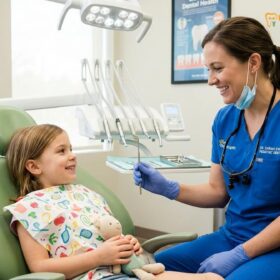
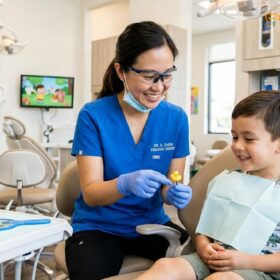
A stress-free initial dental appointment relies on the Tell-Show-Do behavioral management technique, allowing the child to acclimate to the clinical environment at their own pace without forced interventions.
The foundation of Children & Pediatric Dentistry is built upon trust, patience, and specialized behavioral management. When a child enters the clinical environment for the first time, they are exposed to unfamiliar sights, sounds, and sensations. To mitigate sensory overload and facilitate effective child dental phobia preparation, pediatric dental professionals employ a highly structured desensitization protocol known as the Tell-Show-Do technique [1].
This evidence-based behavioral management strategy is designed to demystify dental instruments and procedures. The workflow is divided into three distinct phases:
- Tell: The clinician explains the procedure using age-appropriate, non-threatening terminology. For example, local anesthesia is referred to as “sleepy juice,” a rubber dam is called a “tooth raincoat,” and the ultrasonic scaler is introduced as a “water whistle.”
- Show: Before any instrument enters the oral cavity, the dentist demonstrates its function in a safe, observable manner. This often involves touching the rotating prophylaxis cup to the child’s fingernail or spraying a gentle puff of air from the air-water syringe onto their hand.
- Do: Once the child demonstrates understanding and comfort, the clinician proceeds with the actual treatment.
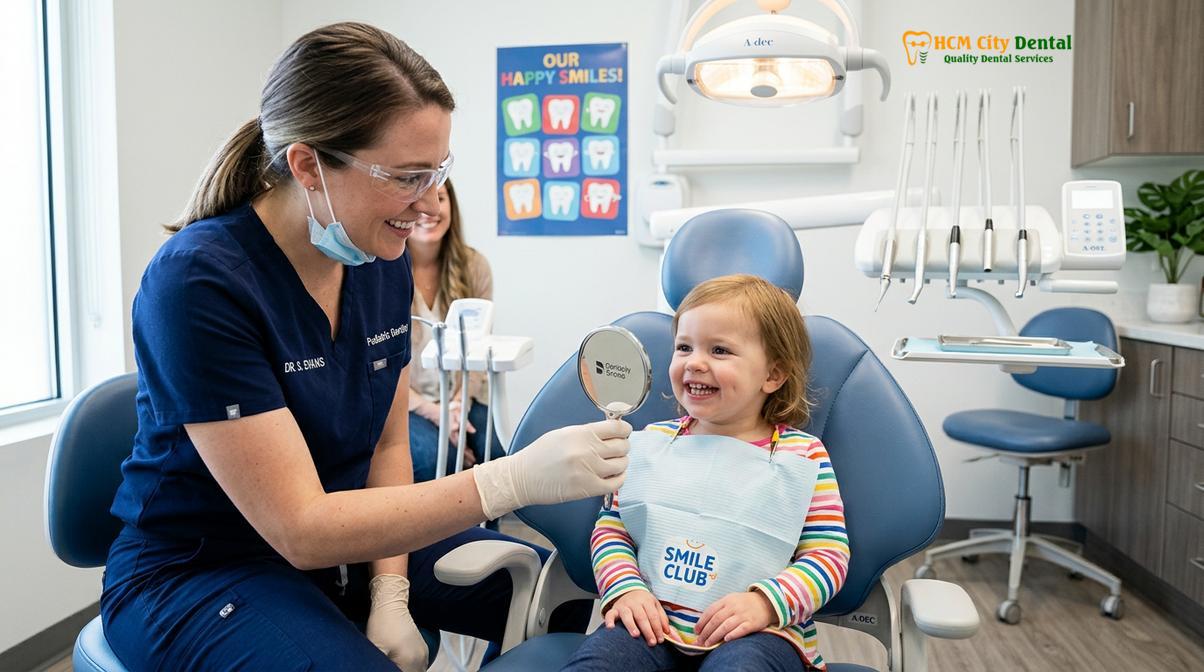
A critical component of this process is the “stop on request” protocol. Children are empowered with a physical signal—usually raising their left hand—which immediately halts the procedure. This transfer of control significantly reduces feelings of helplessness and panic. Dr. Nguyen Van Cuong, a leading specialist at HCMC Dental Clinic, emphasizes that the primary goal of the inaugural visit is not necessarily to complete a comprehensive prophylaxis, but rather to establish a positive psychological baseline. If a child is highly resistant, the clinician may opt for a simple visual inspection and defer more invasive diagnostics to a subsequent visit, ensuring the child leaves the clinic with a sense of accomplishment rather than trauma.
Positivity Training & Roleplay at Home
Conducting mock dental exams at home using a toothbrush and flashlight familiarizes the child with the physical sensations of an oral examination, significantly reducing anticipatory anxiety.
The process of introducing child to dentist begins long before they sit in the clinical chair. Parents are the primary architects of a child’s psychological expectations. Positivity training involves actively shaping the child’s perception of oral healthcare through controlled, playful exposure. Roleplaying a dental visit at home is one of the most effective strategies for behavioral conditioning.
Parents can set up a “pretend clinic” in the living room. Have the child recline on a sofa or in a recliner chair, mimicking the supine position of a dental chair. Using a small flashlight and a standard toothbrush, parents can gently count the child’s teeth, explaining that the dentist will do the exact same thing to ensure the “sugar bugs” are kept at bay. Reversing roles—allowing the child to examine the parent’s teeth or the teeth of a favorite stuffed animal—further normalizes the experience and provides a sense of mastery over the situation.
“Anticipatory anxiety in pediatric patients is largely driven by the fear of the unknown. By simulating the tactile and auditory experiences of a dental exam in a safe home environment, parents can effectively inoculate their children against clinical stress, transforming a potentially frightening medical encounter into a familiar routine.”
In addition to roleplay, utilizing multimedia resources can be highly beneficial. Reading child-friendly books or watching educational cartoons about visiting the dentist provides visual narratives that children can easily comprehend. The objective is to frame the dental team as friendly helpers whose sole purpose is to keep the child’s smile strong and healthy. This proactive approach ensures a positive reinforcement dental visit, where the child arrives at the clinic with curiosity rather than apprehension.
Vocabulary to Avoid (“Shot”, “Drill”, “Hurt”)
Eliminating negative trigger words prevents the nocebo effect, where a child develops fear based on parental anxiety rather than actual clinical experience.
Language is a powerful tool in pediatric healthcare. The vocabulary parents use when discussing an upcoming dental appointment can either alleviate anxiety or inadvertently trigger it. Children are highly perceptive and often absorb the latent dental anxieties of their parents. Using words with negative connotations—such as “shot,” “drill,” “needle,” “pull,” or “hurt”—activates the brain’s threat response before the child has even entered the clinic [2].
Instead of clinical terms, parents should adopt a specialized pediatric lexicon. A “drill” becomes a “tooth tickler” or “electric toothbrush.” An “injection” or “shot” is reframed as “sleepy juice” or “magic water.” A “cavity” is described as a “sugar bug.” By softening the terminology, the perceived threat level is drastically reduced.
It is also crucial to avoid using the dentist as a punitive threat. Statements like, “If you don’t brush your teeth, the dentist is going to pull them out,” create deep-seated dental phobias that can persist into adulthood. The dental clinic must always be presented as a positive, supportive environment focused on wellness and prevention.
Scheduling Strategy: The Morning Advantage
Morning appointments align with a child’s peak circadian energy levels, ensuring they are well-rested, highly cooperative, and less prone to fatigue-induced meltdowns during the examination.
One of the most overlooked toddler first dental checkup tips is the strategic timing of the appointment. A child’s physiological and psychological resilience fluctuates significantly throughout the day. Scheduling a dental visit late in the afternoon, after a long day of daycare, school, or play, drastically increases the likelihood of non-compliance, irritability, and emotional meltdowns.
Pediatric dentists strongly advocate for morning appointments. During the morning hours, children are generally well-rested, their cortisol levels are balanced, and their cognitive load is low. They possess the mental bandwidth required to process new environments, listen to instructions, and cope with the mild sensory challenges of a dental examination. Conversely, late afternoon appointments often coincide with drops in blood glucose and general fatigue, making even the most routine procedures feel overwhelming.
Furthermore, parents should ensure the child has a light, healthy meal before the appointment to stabilize blood sugar levels. However, avoid heavy, sugar-laden snacks immediately prior to the visit, as this can induce hyperactivity and make it difficult for the child to remain still in the dental chair. If the child requires a nap, the appointment should be scheduled well outside of their typical sleep window to avoid disrupting their routine.
Parent Presence Guidelines
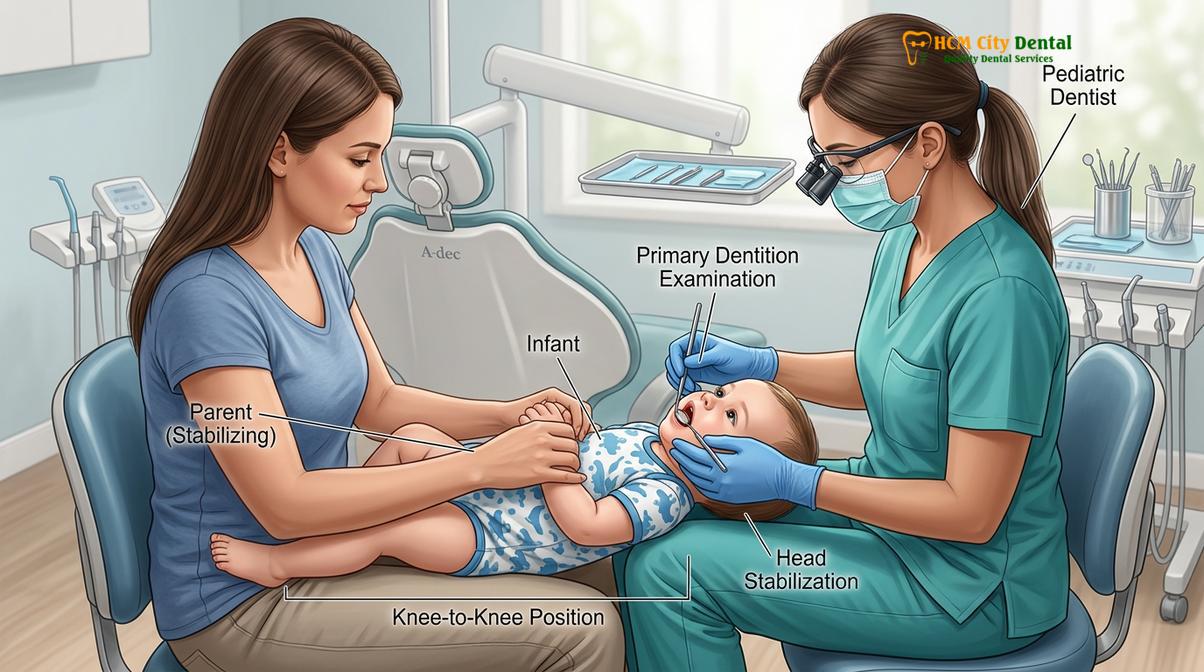
For infants and toddlers, parents actively participate in a knee-to-knee examination, providing physical comfort while allowing the clinician optimal visibility of the oral cavity.
The question of whether a parent should remain in the operatory during a pediatric dental visit depends heavily on the child’s age, developmental stage, and level of anxiety. For infants and toddlers (typically under the age of three), parental presence is not just encouraged; it is clinically necessary. During these early visits, dentists often utilize the “knee-to-knee” examination technique.
In a knee-to-knee exam, the parent and the dentist sit facing each other with their knees touching. The child sits on the parent’s lap, facing the parent, and then gently leans backward until their head rests in the dentist’s lap. This positioning allows the child to maintain physical contact and eye contact with the parent, providing immense psychological comfort, while simultaneously granting the dentist a clear, stable view of the oral cavity to check for early childhood caries and developmental anomalies.
As children grow older and reach preschool or school age, the guidelines often shift. Many pediatric dentists recommend that parents of older, cooperative children remain in the waiting room during the procedure. This separation allows the clinician to establish direct rapport and authority with the child. When a parent is present, a child will naturally look to them for cues and may exhibit exaggerated distress to elicit parental sympathy. By working one-on-one with the child, the dentist can effectively utilize behavioral management techniques, fostering the child’s independence and confidence in the dental setting.
Clinical Diagnostics & Pediatric Treatments
Modern pediatric dentistry prioritizes minimally invasive protocols, utilizing fluoride-releasing materials and chemical cavity arrest to preserve primary dentition without inducing trauma.
When clinical intervention is required, pediatric dentistry employs specialized materials and techniques designed specifically for the unique anatomy of primary (baby) teeth and the behavioral limitations of young patients. The overarching philosophy is minimally invasive dentistry—halting disease progression while maximizing patient comfort [3].
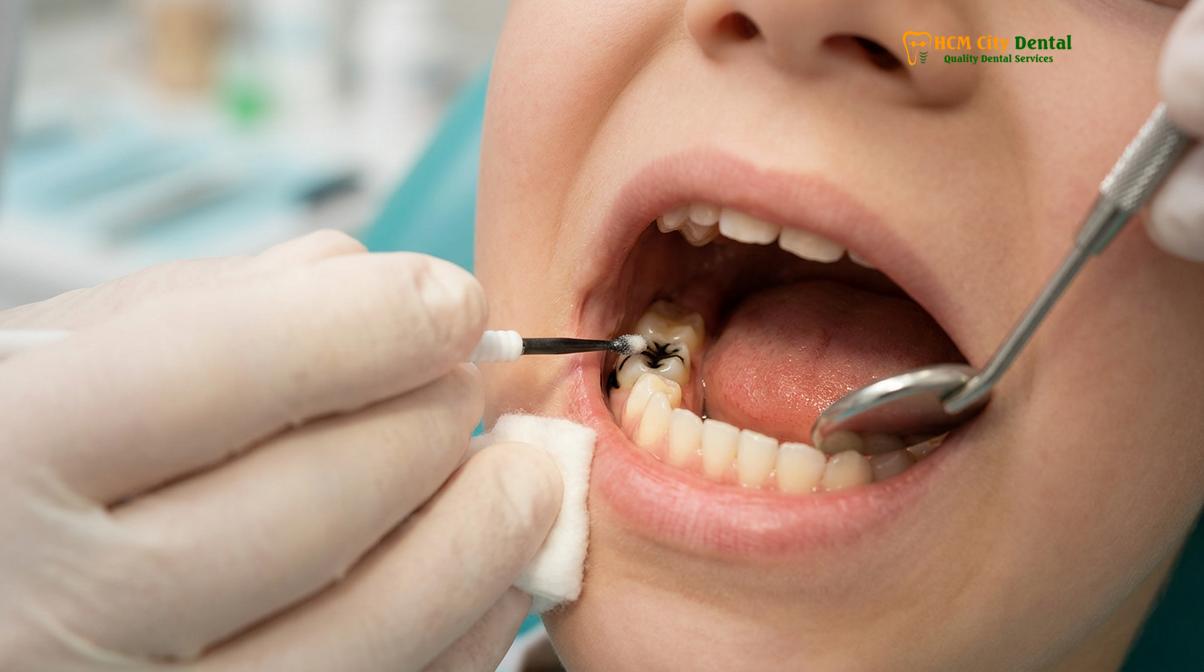
Silver Diamine Fluoride (SDF): For young children with active decay who cannot tolerate traditional drilling and filling, SDF is a revolutionary treatment. It is a topical liquid applied directly to the cavity using a microbrush. The silver ions act as a potent antimicrobial agent, killing the bacteria causing the decay, while the fluoride promotes remineralization and hardens the tooth structure. The procedure is entirely painless and takes less than a minute. However, parents must be informed of the primary side effect: SDF permanently turns the decayed portion of the tooth black, though healthy enamel remains unaffected.
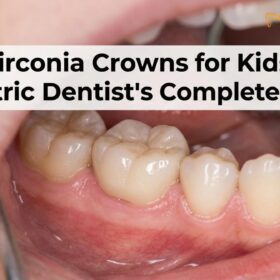
Glass Ionomer Fillings (GIC) vs. Composite: When restoring primary teeth, clinicians often prioritize Glass Ionomer Cement (GIC) over traditional composite resin. GIC chemically bonds to the tooth structure and is highly moisture-tolerant, making it ideal for pediatric patients who struggle to keep their mouths perfectly dry. More importantly, GIC continuously releases fluoride into the surrounding tooth structure, acting as a localized shield against recurrent decay. While composite resins offer superior aesthetics and strength for permanent teeth, the “fluoride recharge” capability of GIC makes it the material of choice for baby teeth.
Pediatric Pulpotomy: If tooth decay penetrates deep into the pulp chamber of a primary tooth, a baby root canal (pulpotomy) is necessary to prevent abscess formation and premature tooth loss. Unlike an adult root canal, a pulpotomy only removes the infected coronal pulp, leaving the healthy radicular pulp intact. The chamber is treated with a medicament (such as MTA or formocresol) and sealed, typically followed by the placement of a stainless steel crown to provide durable protection until the tooth naturally exfoliates.
| Material / Treatment | Clinical Indication | Key Advantages | Considerations |
|---|---|---|---|
| Silver Diamine Fluoride (SDF) | Active cavities in uncooperative or very young children. | Painless, no drilling, arrests decay immediately. | Leaves a permanent black stain on the decayed area. |
| Glass Ionomer Cement (GIC) | Small to moderate cavities in primary teeth. | Releases fluoride, moisture tolerant, chemical bond. | Lower wear resistance compared to composite. |
| Composite Resin | Anterior restorations, permanent teeth. | Highly aesthetic, matches natural tooth color perfectly. | Requires strict moisture control during placement. |
| Stainless Steel Crown | Post-pulpotomy, severe multi-surface decay. | Maximum durability, protects the entire tooth structure. | Metallic appearance, used primarily on back molars. |
Interceptive Orthodontics & Airway Assessment
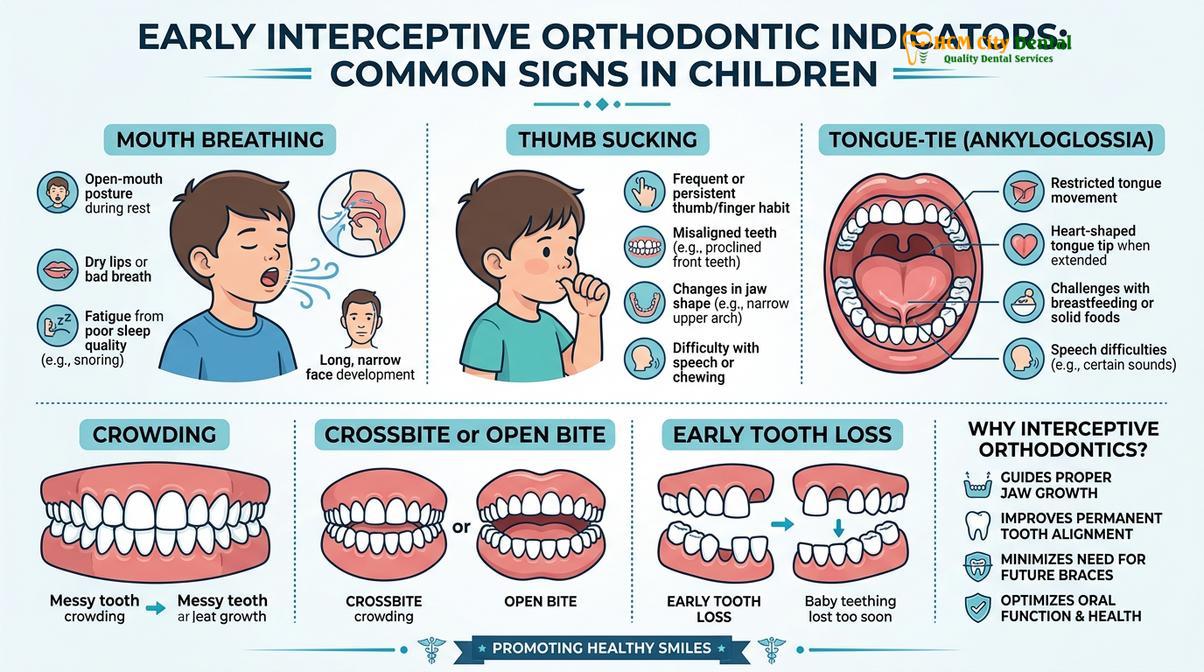
Early evaluation of jaw development and airway patency allows clinicians to intercept habits like mouth breathing and thumb-sucking before they cause permanent skeletal alterations.
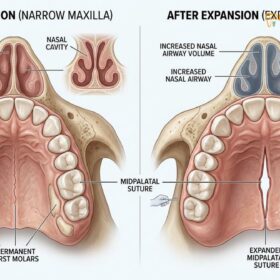
A comprehensive pediatric dental visit extends far beyond checking for cavities; it involves a holistic evaluation of the child’s craniofacial development, airway patency, and myofunctional habits. Early interceptive orthodontics (Phase I orthodontics) aims to identify and correct structural and behavioral issues while the child’s jaw is still growing and malleable [4].
One of the most critical assessments is evaluating the child for chronic mouth breathing. Children who habitually breathe through their mouths—often due to enlarged adenoids, allergies, or restricted airways—are at high risk for developing “adenoid facies” or long-face syndrome. Mouth breathing causes the tongue to rest low in the floor of the mouth rather than against the palate. Without the outward pressure of the tongue, the upper jaw (maxilla) fails to expand properly, leading to a narrow, V-shaped dental arch, severe crowding, and posterior crossbites.
Clinicians also screen for tethered oral tissues, such as tongue-ties (ankyloglossia). A restricted frenulum can impede proper swallowing, speech articulation, and natural palatal expansion. Modern pediatric dentistry utilizes diode lasers to perform quick, virtually bloodless frenectomies, instantly releasing the tension and restoring full range of motion to the tongue.
Furthermore, early intervention can address deleterious habits like prolonged thumb-sucking or pacifier use, which can cause anterior open bites and protrusive front teeth. Through myofunctional therapy and habit-breaking appliances, clinicians guide the child toward proper nasal breathing and correct resting tongue posture, laying the groundwork for optimal facial aesthetics and airway health.
Pediatric Dental Pricing at HCMC Dental Clinic
Transparent pricing for pediatric dental services ensures parents can plan for essential preventive and restorative treatments, with significant discounts available for advanced bookings.
Understanding the financial investment required for pediatric dental care helps parents make informed decisions regarding their child’s oral health. HCMC Dental Clinic provides transparent, tiered pricing based on the complexity of the procedure and the materials utilized. According to the latest clinic fee schedule, the estimated costs for pediatric services are structured to accommodate both walk-in patients and those who book in advance.
Currently, the pricing structure is as follows:
- Kids Consultation & Diagnostic check-up: 300,000 to 500,000 VND (~$12 to $20 USD). Walk-in rate: 500,000 to 800,000 VND.
- Fissure Sealant (per tooth): 400,000 to 600,000 VND (~$16 to $24 USD). Walk-in rate: 700,000 to 1,000,000 VND.
- Fluoride Varnish Application: 300,000 to 500,000 VND (~$12 to $20 USD). Walk-in rate: 500,000 to 800,000 VND.
- Pediatric Composite Filling (per tooth): 500,000 to 800,000 VND (~$20 to $32 USD). Walk-in rate: 800,000 to 1,300,000 VND.
- Pediatric Glass Ionomer Filling (GIC, fluoride-releasing, per tooth): 400,000 to 600,000 VND (~$16 to $24 USD). Walk-in rate: 700,000 to 1,000,000 VND.
- Baby Root Canal (Pulpotomy, per tooth): 1,000,000 to 1,500,000 VND (~$40 to $60 USD). Walk-in rate: 1,600,000 to 2,500,000 VND.
- Space Maintainer (fixed, band-and-loop, per unit): 2,000,000 to 3,000,000 VND (~$80 to $120 USD). Walk-in rate: 3,300,000 to 5,000,000 VND.
- Custom Pediatric Sports Mouthguard: 1,500,000 to 2,500,000 VND (~$60 to $100 USD). Walk-in rate: 2,500,000 to 3,500,000 VND.
To make high-quality pediatric care more accessible, HCMC Dental Clinic offers a -40% WhatsApp booking discount for patients who schedule their appointments in advance through the clinic’s official messaging channel. This initiative ensures that preventive treatments, such as sealants and fluoride applications, remain affordable for families prioritizing early dental intervention.
When to See a Pediatric Dentist Immediately
While routine check-ups are scheduled every six months, certain clinical scenarios require immediate emergency intervention. Pediatric dental trauma is highly common, particularly as toddlers learn to walk or older children engage in sports. If a child experiences a fall or impact to the face, a prompt clinical evaluation is necessary to rule out root fractures, alveolar bone damage, or tooth intrusion [5].
If a permanent tooth is completely knocked out (avulsed), time is of the essence. The tooth should be gently rinsed without scrubbing the root, placed in a container of cold milk or the child’s saliva, and brought to the dentist within 30 to 60 minutes for the highest chance of successful reimplantation. Note that primary (baby) teeth are never reimplanted due to the risk of damaging the underlying permanent tooth bud.
“Acute facial swelling, particularly swelling that approaches the eye or extends beneath the jawline, is a severe medical emergency in pediatric patients. This indicates a rapidly spreading odontogenic infection that requires immediate antibiotic therapy and clinical drainage to prevent systemic complications.”
Other signs that warrant an immediate visit include severe, spontaneous tooth pain that wakes the child at night, the presence of a pimple-like bump (fistula) on the gums indicating an active abscess, or prolonged bleeding following a minor oral injury. For active children participating in contact sports, parents should strongly consider investing in a custom pediatric sports mouthguard to drastically reduce the risk of traumatic dental injuries.

Establishing a dental home early ensures that in the event of an emergency, the child is treated by a familiar team in a comfortable environment. For personalized pediatric care, behavioral desensitization, and comprehensive interceptive orthodontics, families are encouraged to schedule a consultation with the specialized team at HCMC Dental Clinic in Ho Chi Minh City.
Frequently Asked Questions
At what age should a child have their first dental visit?
A child should have their first dental visit by their first birthday or within six months of the eruption of their first primary tooth. Early evaluation allows clinicians to assess caries risk, monitor jaw development, and provide parents with essential preventive oral hygiene strategies. This proactive approach establishes a dental home, ensuring that the child becomes comfortable with the clinical environment long before any restorative treatment is ever needed.
How do I prepare a nervous toddler for the dentist?
Prepare a nervous toddler by conducting positive roleplay at home, reading child-friendly dental books, and avoiding negative vocabulary like ‘hurt’ or ‘shot’. Scheduling a morning appointment when the child is well-rested also significantly reduces anticipatory anxiety and improves clinical cooperation. Emphasize that the dentist is a friendly helper who is simply going to count their teeth and make sure their smile is strong and healthy.
Should parents stay in the room during a child’s dental exam?
For infants and toddlers under age three, parents should stay in the room to participate in a knee-to-knee examination. For older, cooperative children, clinicians often recommend parents wait outside to allow the pediatric dentist to build direct rapport and utilize behavioral management techniques effectively. This separation helps foster the child’s independence and prevents them from looking to the parent for cues of anxiety.
What is Silver Diamine Fluoride and is it safe for kids?
Silver Diamine Fluoride (SDF) is a highly safe, non-invasive topical liquid used to arrest active tooth decay without drilling or local anesthesia. While it effectively halts cavity progression, parents should be aware that it leaves a permanent, localized black stain on the decayed portion of the tooth. It is an excellent alternative for very young, anxious, or special-needs children who cannot tolerate traditional restorative procedures.
Why are baby teeth filled if they will eventually fall out?
Baby teeth must be filled because they serve as critical space maintainers for developing permanent teeth, aid in proper speech development, and allow for normal chewing. Untreated decay in primary teeth can lead to severe pain, systemic infection, and orthodontic crowding. If a baby tooth is lost prematurely to decay, the adjacent teeth can shift, blocking the eruption path of the adult teeth and necessitating complex orthodontic treatment later in life.
References
- American Academy of Pediatric Dentistry. Best Practices for Behavior Guidance for the Pediatric Dental Patient. (2021).
- International Journal of Paediatric Dentistry. The clinical effectiveness of Silver Diamine Fluoride in arresting dental caries. (2020).
- Journal of the American Dental Association. Evidence-based clinical practice guideline on nonrestorative treatments for carious lesions. (2018).
- Pediatric Dentistry. The impact of early interceptive orthodontics on pediatric airway and facial development. (2022).
- Journal of Dental Research. Fluoride-releasing glass ionomer cements in pediatric restorative dentistry. (2019).