The primary types of space maintainers for kids include fixed unilateral appliances (band-and-loop), fixed bilateral appliances (lingual arch), distal shoe maintainers for unerupted molars, and removable acrylic devices. These pediatric space holding devices are designed to help prevent orthodontic crowding when primary teeth are lost prematurely due to decay or trauma.
Clinical Summary:
Space maintainers are essential interceptive orthodontic devices used in pediatric dentistry to preserve arch length after premature primary tooth loss. Fixed options, such as the band and loop appliance or the lingual holding arch, offer high reliability due to their independence from patient compliance. Distal shoes provide subgingival guidance for unerupted permanent molars, while removable variants suit older, cooperative children. Proper appliance selection depends on the child’s dental developmental stage, behavior management needs, and the specific anatomical location of the missing tooth, aiming to provide optimal guidance for the permanent dentition.
Key Takeaways:
- Space maintainers help prevent adjacent teeth from drifting into gaps left by premature baby tooth loss, preserving essential arch length.
- Fixed appliances (band-and-loop, lingual arch) are generally preferred in pediatric dentistry as they do not rely on patient compliance.
- Distal shoe maintainers feature a specialized subgingival extension to guide unerupted permanent first molars into proper alignment.
- Removable space maintainers utilize an acrylic base and are typically reserved for older children who can strictly follow wear instructions.
- Regular clinical and radiographic monitoring is required to ensure the appliance does not impede the natural eruption of permanent teeth.
The Clinical Importance of Pediatric Space Management
Preserving arch space after premature tooth loss is a fundamental pillar of interceptive orthodontics, often helping to prevent severe crowding, ectopic eruptions, and the need for complex future treatments.
In the realm of Children & Pediatric Dentistry, primary teeth serve a critical function far beyond chewing and speech development; they act as natural space maintainers for the developing permanent dentition beneath the gums. When a primary tooth is lost prematurely—most commonly due to early childhood caries, severe trauma, or congenital anomalies—the adjacent teeth have a natural tendency to drift or tilt into the edentulous space. This mesial drift, particularly of the permanent first molars, can rapidly consume the available arch length, leading to severe crowding, impaction of permanent premolars, and complex malocclusions that may require extensive orthodontic correction later in life[1].
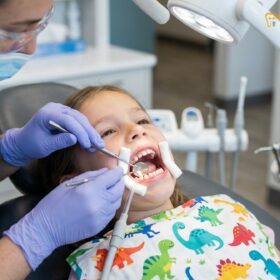
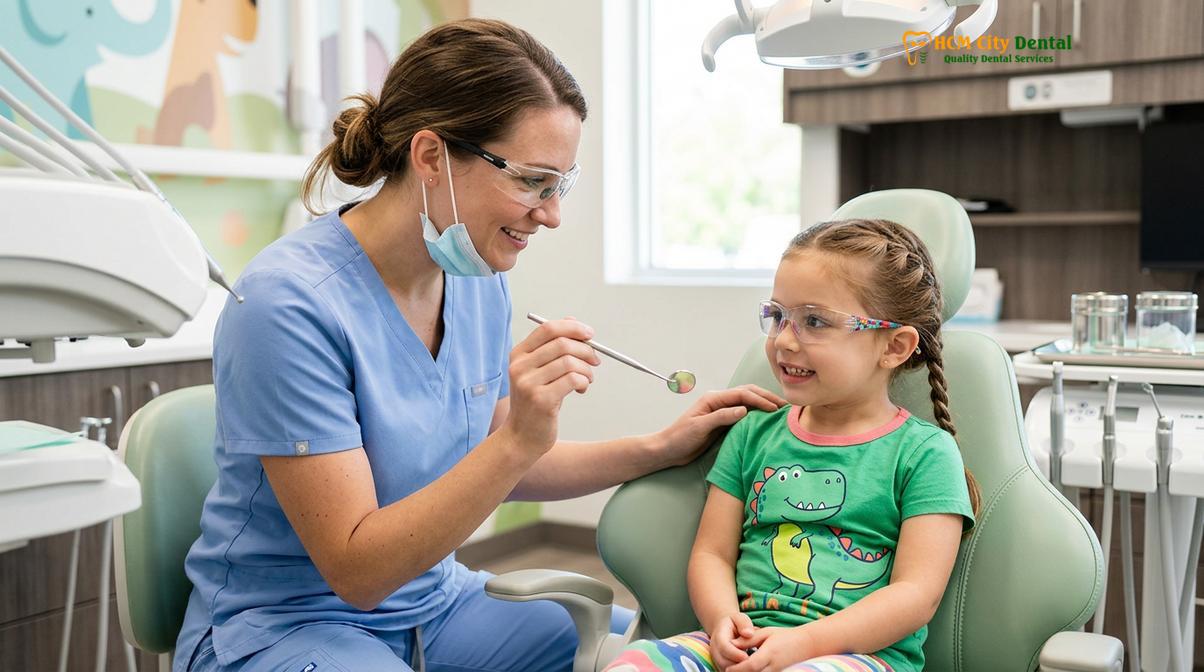
To mitigate these risks, pediatric dentists employ various types of space maintainers for kids. However, the successful implementation of these devices relies heavily on advanced pediatric behavioral management. Treating children requires a fundamentally different psychological approach compared to adults. The cornerstone of this approach is the “Tell-Show-Do” behavioral management technique, a systematic desensitization method designed to reduce dental anxiety and build trust.
The Tell-Show-Do technique involves three distinct phases. First, the dentist “Tells” the child about the procedure using non-threatening, child-friendly terminology. Next, the dentist “Shows” the instrument, perhaps demonstrating a rotating prophylaxis cup on the child’s fingernail. Finally, the dentist “Does” the procedure, but only when the child is visibly relaxed. This is often paired with a “stop on request” protocol, where the child is empowered to raise their hand if they feel overwhelmed, ensuring they maintain a sense of control throughout the appointment[4].
Unilateral Space Maintainers (Band-and-Loop)
Unilateral space maintainers, specifically the band-and-loop design, are fixed appliances used to hold space for a single missing primary molar on one side of the dental arch.
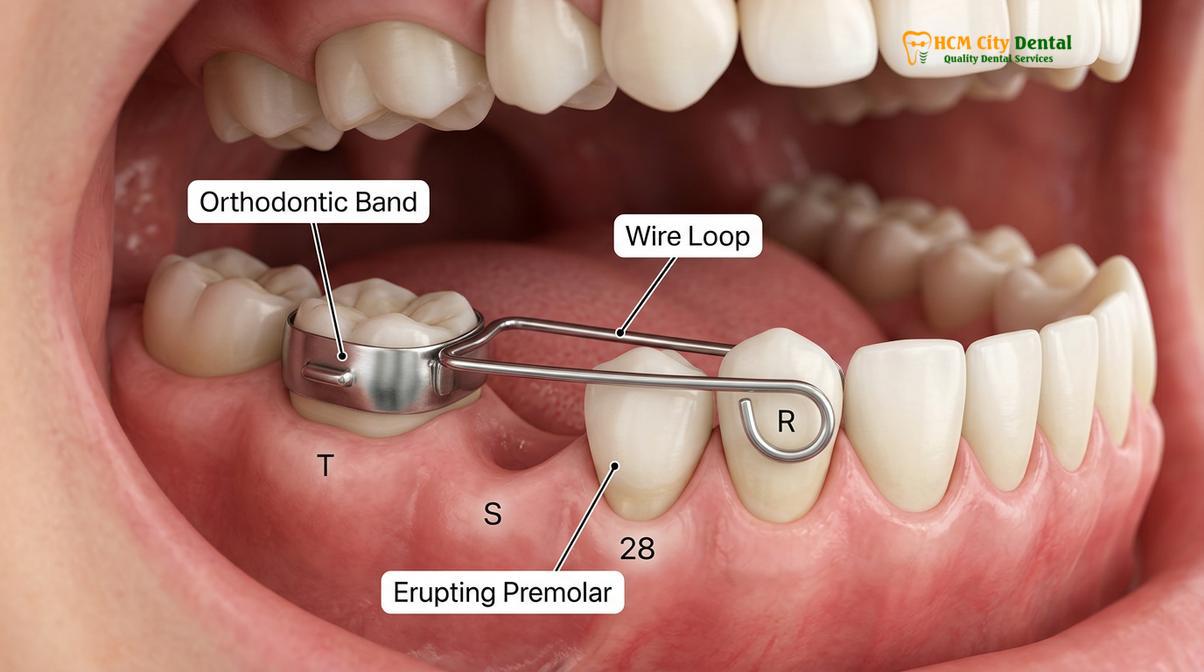
The band and loop appliance is arguably the most frequently prescribed pediatric space holding device in clinical practice. It is indicated when a single primary first or second molar is lost prematurely, and the permanent successor is not expected to erupt for at least six months. The appliance consists of a stainless steel orthodontic band that is carefully sized and fitted around an abutment tooth—usually the tooth immediately distal (behind) the extraction site. Attached to this band is a heavy-gauge stainless steel wire loop that extends mesially (forward) to rest gently against the tooth on the opposite side of the gap.
The clinical workflow for fabricating and placing a band and loop appliance involves several precise steps. First, orthodontic separators may be placed between the abutment tooth and its neighbors to create slight spacing. A few days later, the dentist selects the appropriately sized metal band and seats it on the abutment tooth. An impression or digital scan is then taken with the band in place. The band is removed, placed into the impression, and sent to a dental laboratory where the wire loop is custom-soldered to the band. During the final delivery appointment, the appliance is cemented into place, typically using a fluoride-releasing glass ionomer cement to minimize the risk of decalcification under the band.
“The band-and-loop maintainer is a highly predictable appliance that requires minimal compliance from the pediatric patient, making it an invaluable tool in helping to prevent localized arch collapse following early molar loss.”
In cases where the abutment tooth itself has suffered extensive decay and requires a baby root canal (pulpotomy), a variation known as the crown-and-loop is utilized. Following the pulpotomy, the tooth is restored with a preformed stainless steel crown to provide full-coverage protection. The space-maintaining wire loop is then soldered directly to this stainless steel crown rather than a standard orthodontic band. This dual-purpose approach restores the structural integrity of the decayed tooth while simultaneously preserving the space for the adjacent missing tooth.
Bilateral Space Maintainers (Lingual Arch)
Bilateral space maintainers, such as the lingual holding arch, are utilized when multiple primary teeth are lost on both sides of the lower or upper dental arch.
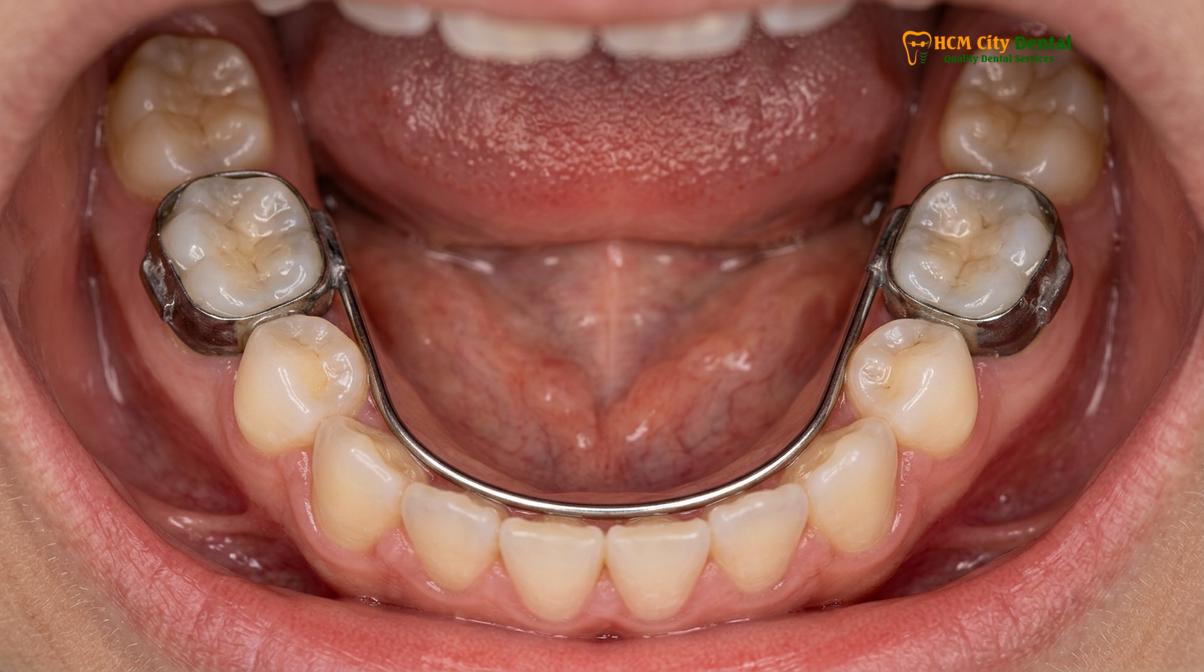
When premature tooth loss affects both sides of the dental arch, unilateral appliances are often insufficient. In these scenarios, bilateral space maintainers are required to provide cross-arch stabilization and prevent the forward migration of the permanent first molars. The specific design of the bilateral appliance depends on whether the space loss has occurred in the mandibular (lower) or maxillary (upper) arch.
For the lower arch, the lower lingual holding arch is a common standard of care. This appliance consists of orthodontic bands cemented to the permanent first molars on both sides of the mouth. A heavy stainless steel wire connects these bands, running along the lingual (tongue) surfaces of the lower teeth and resting gently against the cingula of the lower incisors. This design effectively prevents the molars from tipping forward into the extraction spaces while allowing the permanent premolars to erupt naturally. It is important to note that a lingual arch is generally contraindicated before the eruption of the permanent lower incisors, as the wire could interfere with their normal eruptive path.
For the upper arch, two primary bilateral designs are used: the Nance appliance and the Transpalatal Arch (TPA). The Nance appliance features bands on the upper first molars connected by a wire that extends forward and embeds into an acrylic button resting against the anterior hard palate. The palate provides soft tissue resistance against the forward movement of the molars. The Transpalatal Arch, conversely, uses a wire that runs directly across the roof of the mouth between the molars, without an acrylic button. The TPA is easier to clean but provides slightly less resistance to mesial molar drift compared to the Nance appliance.
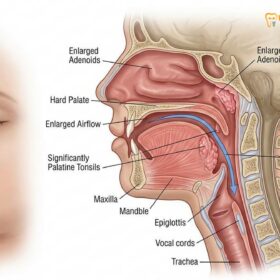
The placement of bilateral space maintainers often coincides with a broader early interceptive orthodontic evaluation. Assessing space loss is only one component of a comprehensive pediatric airway diagnosis. Children who experience premature tooth loss often exhibit other developmental issues, such as thumb-sucking habits or chronic mouth breathing. In such cases, space maintenance may be combined with early orthodontic expansion to address the root causes of the malocclusion and support proper arch development[5].
Distal Shoe Maintainers for Unerupted Molars
The distal shoe maintainer is a specialized fixed appliance featuring a subgingival metal extension designed to guide the eruption of a permanent first molar when the primary second molar is lost prematurely.
The distal shoe space maintainer addresses one of the most challenging scenarios in pediatric dentistry: the premature loss of a primary second molar before the permanent first molar has erupted. Normally, the permanent first molar uses the distal root of the primary second molar as a guide plane to erupt into its correct position. If the primary molar is extracted early, the permanent molar lacks this guidance and will likely erupt mesially (forward), becoming impacted under the primary first molar and causing severe space loss for the future second premolar.
To help prevent this, the distal shoe appliance is fabricated with a unique design. It consists of a band cemented to the primary first molar, with a wire extending distally. At the end of this wire is a metal blade that is surgically inserted through the gingival tissue and into the alveolar bone, resting just mesial to the unerupted permanent first molar. This subgingival extension acts as an artificial guide plane, directing the permanent molar to erupt vertically into its proper anatomical position.
The fabrication and placement of a distal shoe require meticulous clinical precision. Pre-operative radiographs are essential to measure the exact depth and angulation required for the subgingival blade. The procedure is typically performed under local anesthesia to ensure complete comfort. Once the permanent first molar erupts through the gums and contacts the distal shoe, the appliance is usually removed and replaced with a standard bilateral or unilateral space maintainer until the premolars erupt.
Removable Space Maintainers
Removable space maintainers are custom-made acrylic appliances, often resembling orthodontic retainers, prescribed for older children who can reliably comply with wear and care instructions.
While fixed appliances are generally preferred due to their passive nature, removable space maintainers play a vital role in specific clinical situations. These devices are constructed from an acrylic base that fits over the palate or along the lingual mucosa of the lower jaw, utilizing wire clasps to anchor onto the remaining teeth. They function similarly to traditional orthodontic retainers but incorporate acrylic blocks or wire loops to maintain the edentulous spaces.
One of the primary indications for a removable space maintainer is the premature loss of multiple anterior (front) teeth. While the loss of primary incisors rarely causes significant arch length collapse, it can cause aesthetic concerns and speech impediments. In these cases, a removable appliance can be fabricated with artificial pediatric denture teeth attached to the acrylic base, restoring the child’s smile and phonetic function while simultaneously holding space.
The success of removable space maintainers is entirely dependent on patient compliance. The child must be mature enough to wear the appliance for the prescribed number of hours each day and responsible enough not to lose or break it. For this reason, removable appliances are rarely prescribed for very young children or those with high caries risk, as poor oral hygiene around the acrylic base can rapidly lead to decalcification and secondary decay on the abutment teeth.
Care and Maintenance Guide
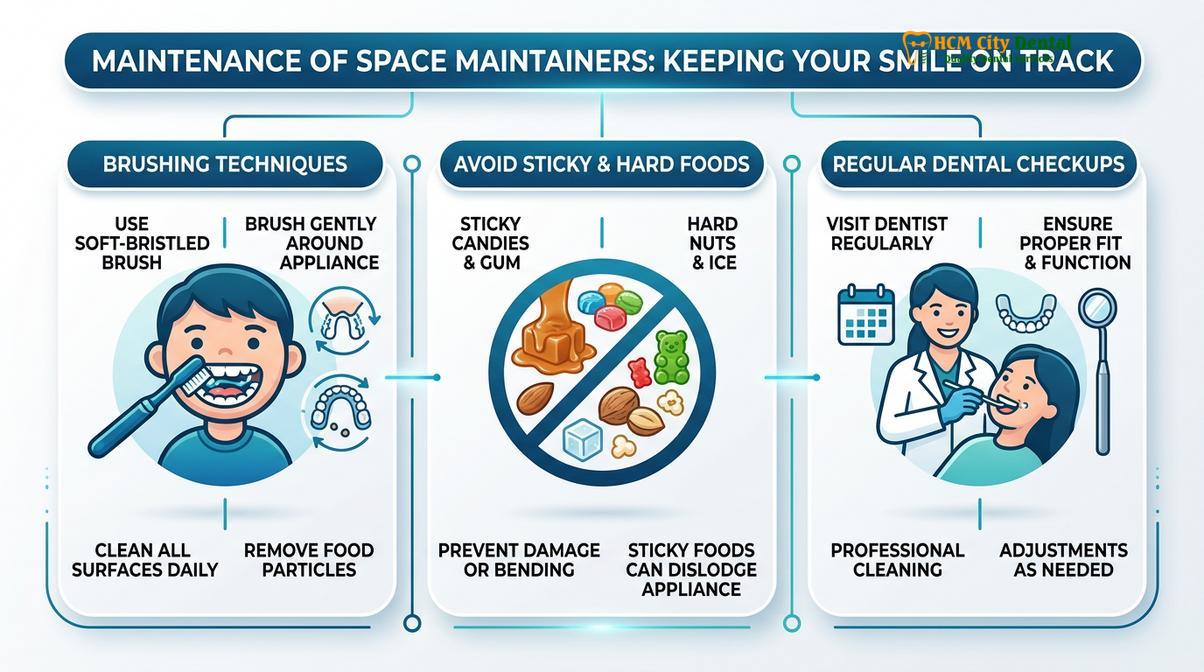
Proper maintenance of space maintainers involves strict oral hygiene protocols and preventive dental treatments to protect the supporting teeth from secondary decay.
The long-term success of any pediatric space holding device relies heavily on diligent home care. The introduction of orthodontic bands, wires, and acrylic bases into the oral cavity creates new plaque-retentive areas that require specialized cleaning techniques. Parents must take an active role in the maintenance of space maintainers, assisting their children with daily oral hygiene routines to ensure the supporting teeth and surrounding gingival tissues remain healthy.
To help prevent premature tooth loss in the first place, preventive measures are highly encouraged. The application of dental sealants can significantly reduce the risk of occlusal caries in primary and permanent molars[2]. Furthermore, for teeth that already exhibit early signs of decay, Silver Diamine Fluoride (SDF) offers a non-invasive method to arrest caries progression and preserve the natural tooth structure[3]. These preventive protocols align closely with the recommendations from the Vietnam Ministry of Health regarding pediatric oral health and preventive dentistry, which emphasize early intervention to maintain arch integrity[6].
| Type of Space Maintainer | Primary Clinical Indication | Patient Compliance Required |
|---|---|---|
| Band-and-Loop | Single missing primary molar (unilateral) | Low (Fixed appliance) |
| Lingual Arch | Multiple missing primary molars (bilateral lower) | Low (Fixed appliance) |
| Distal Shoe | Missing primary second molar before permanent molar eruption | Low (Fixed appliance) |
| Removable Acrylic | Multiple missing anterior teeth or bilateral posterior loss in older children | High (Must be worn daily) |
For children who already have space maintainers, brushing requires a soft-bristled toothbrush angled at 45 degrees toward the gumline to effectively sweep plaque away from the margins of the orthodontic bands. Interdental cleaning is equally critical; since traditional flossing can be difficult around the wire loops, the use of floss threaders or pediatric water flossers is highly recommended. Regular professional cleanings, such as kids dental cleaning & fissure sealants, are essential to monitor the integrity of the cement seal and ensure the appliance remains functional.
Clinical Case Study: Space Management in Ho Chi Minh City
A proactive approach to space management can seamlessly guide a child’s dental development, as demonstrated by successful clinical outcomes in modern pediatric practices.
Case Study: A seven-year-old patient presented at HCMC Dental Clinic in Ho Chi Minh City with the premature loss of a primary mandibular first molar due to severe decay. After a comprehensive evaluation, a unilateral band-and-loop appliance was custom-fabricated and cemented. This proactive measure successfully held the space, allowing the permanent premolar to erupt naturally without impaction, demonstrating the high standard of pediatric care available in Saigon.
Dr. Nguyen Van Cuong, a leading specialist at HCMC Dental Clinic, emphasizes that early intervention is key to helping prevent complex malocclusions. Dr. Cuong routinely utilizes advanced pediatric interceptive orthodontics to guide proper dental development. His approach focuses on minimally invasive techniques to ensure children maintain optimal arch space and oral function.
“Preserving arch space today often helps minimize the need for extensive orthodontic extractions tomorrow, safeguarding both the functional and aesthetic harmony of a child’s developing smile.”
When to Consult a Pediatric Dentist
Recognizing the early signs of space loss and seeking timely professional advice is crucial for maintaining a child’s oral health trajectory.
Parents should schedule a consultation with a pediatric dentist immediately if a child loses a baby tooth prematurely due to an accident, trauma, or severe cavity. Additionally, if a primary tooth is extracted by a dentist, a space management evaluation should be conducted during the same visit.
Important Note: Delaying the placement of a space maintainer by even a few months can allow adjacent teeth to shift significantly, potentially complicating future orthodontic treatments and leading to permanent tooth impaction.
If your child has prematurely lost a baby tooth, early evaluation is critical to ensure their permanent teeth have the space they need to erupt properly. Contact HCMC Dental Clinic in Ho Chi Minh City today to schedule a comprehensive pediatric assessment and discuss the most appropriate space management options for your child’s developing smile.
References
- American Academy of Pediatric Dentistry. Pediatric dental care guidelines. (2021).
- Journal of Dental Research. Fissure sealants and fluoride varnish. (2020).
- International Journal of Paediatric Dentistry. Silver Diamine Fluoride safety. (2019).
- Pediatric Dentistry. Behavior management techniques. (2022).
- Journal of the American Dental Association. Early orthodontic expansion. (2018).
- Vietnam Ministry of Health (MOH). National guidelines on pediatric oral health and preventive dentistry. (2020).