Myofunctional therapy for kids is a specialized neuromuscular re-education program designed to correct improper tongue posture, mouth breathing, and abnormal swallowing habits. By strengthening the orofacial muscles through targeted exercises, this non-invasive therapy guides proper jaw development, improves pediatric airway function, and significantly reduces the risk of severe orthodontic crowding.
Clinical Summary:
Orofacial myofunctional therapy (OMT) addresses dysfunctions in the muscles of the face, mouth, and throat. In pediatric dentistry, early intervention with OMT corrects chronic mouth breathing, tongue thrusting, and improper lip seal. This therapy acts as a crucial component of interceptive orthodontics, promoting natural palatal expansion, mitigating pediatric sleep apnea symptoms, and establishing a foundation for lifelong oral health. Treatment involves daily, painless exercises combined with comprehensive pediatric dental care, including behavior management and biocompatible restorations.
Key Takeaways:
- OMT corrects improper tongue resting posture and chronic mouth breathing habits.
- Early intervention can prevent severe orthodontic misalignment and “adenoid facies” (long-face syndrome).
- Therapy involves daily, painless exercises to strengthen the lips, tongue, and facial muscles.
- It is highly effective when combined with early interceptive orthodontic evaluations.
- Treatment often resolves sleep-disordered breathing and improves speech clarity.
What is Orofacial Myofunctional Therapy (OMT)?
Orofacial Myofunctional Therapy (OMT) is a structured physical therapy for the oral and facial muscles that corrects abnormal breathing, swallowing, and chewing patterns in children.
The human face and jaw are shaped by a delicate balance of muscular forces. The tongue, lips, and cheeks exert constant pressure on the developing dental arches. When these forces are imbalanced—often due to prolonged pacifier use, thumb-sucking, or chronic allergies—children develop what are known as orofacial myofunctional disorders children. These disorders disrupt the natural growth trajectory of the midface and lower jaw, leading to a cascade of dental and systemic health issues. Myofunctional therapy kids programs are designed to restore this muscular equilibrium through a series of targeted, repetitive exercises that retrain the brain’s neuromuscular pathways.
In the realm of Children & Pediatric Dentistry, OMT is not merely about straightening teeth; it is fundamentally about airway health and functional harmony. A child who cannot breathe through their nose will instinctively open their mouth, causing the tongue to drop from the roof of the mouth to the floor. Over time, this lack of internal support causes the upper jaw to narrow, restricting the nasal airway above it. By implementing OMT, pediatric dentists aim to re-establish nasal breathing, which filters, warms, and humidifies the air, thereby reducing the frequency of upper respiratory infections and tonsillar hypertrophy[1].
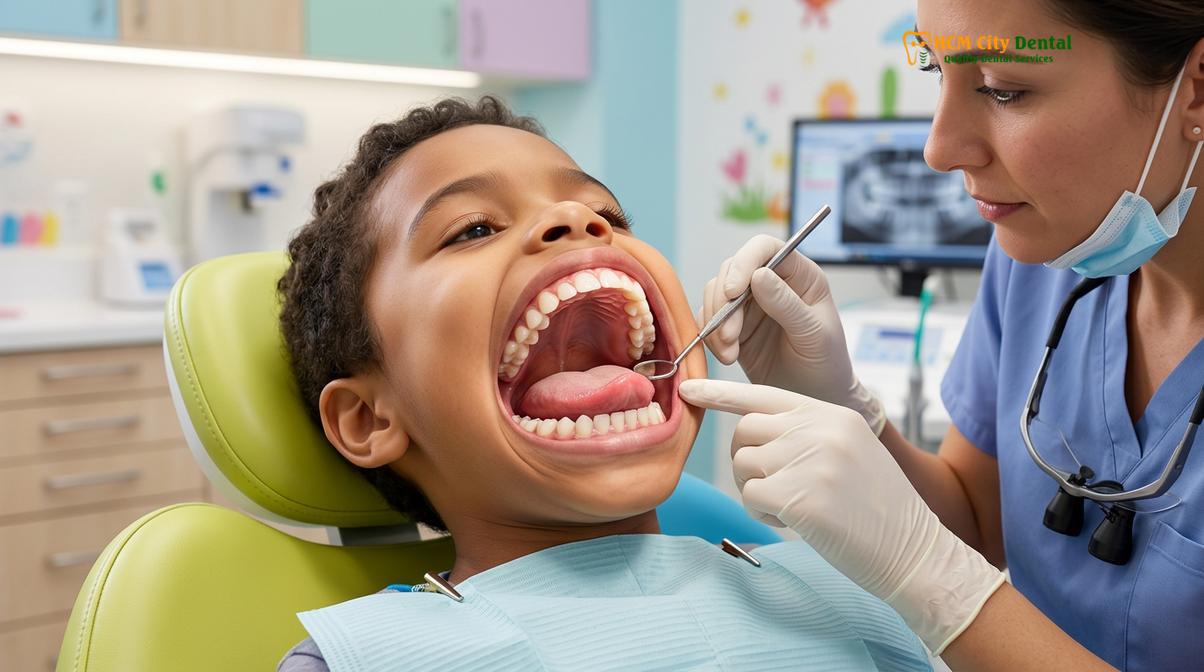
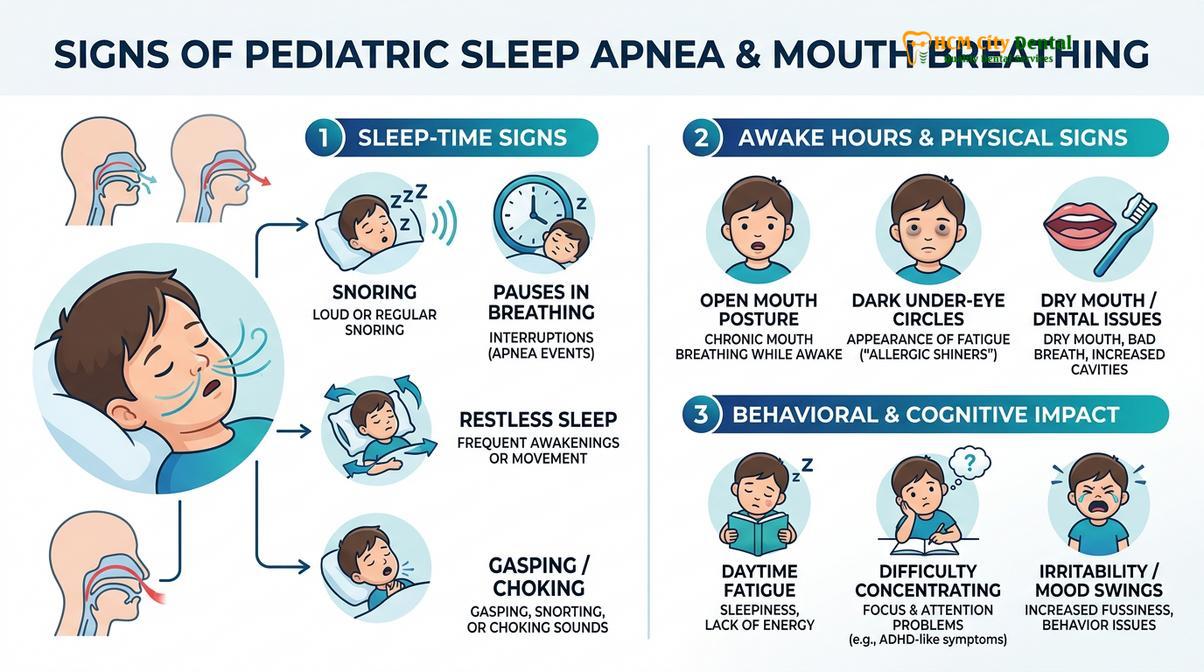
Furthermore, OMT plays a pivotal role in diagnosing and managing sleep-disordered breathing. Children who snore, grind their teeth at night (bruxism), or exhibit restless sleep may be suffering from airway resistance. Strengthening the oropharyngeal muscles through therapy helps keep the airway open during sleep. For a deeper understanding of how airway health impacts your child, refer to our comprehensive guide on Pediatric Sleep Apnea: Clinical Signs, Diagnosis & Treatment Workflows. Addressing these issues early ensures that the child receives adequate oxygenation during crucial developmental years, preventing cognitive and behavioral issues often misdiagnosed as ADHD.
Correct Tongue Resting Posture (Mewing)
Proper tongue posture requires the entire tongue to rest against the roof of the mouth, naturally expanding the palate and supporting forward midface development.
The concept of correct tongue resting posture, recently popularized in mainstream media as “mewing,” has been a foundational principle in myofunctional therapy for decades. Anatomically, the maxilla (upper jaw) forms both the roof of the mouth and the floor of the nasal cavity. When a child maintains correct tongue resting posture, the tongue acts as a natural palatal expander. The gentle, continuous pressure of the tongue against the hard palate stimulates the midpalatal suture, encouraging the upper jaw to grow wide and forward. This optimal growth creates ample space for the permanent teeth to erupt without crowding and maximizes the volume of the nasal airway[2].
Conversely, when a child breathes through their mouth, the tongue must drop to allow air to pass over it. This absence of palatal support allows the inward pressure of the cheek muscles (buccinators) to constrict the upper jaw, resulting in a high, narrow palate and a V-shaped dental arch. Clinically, this manifests as “adenoid facies” or long-face syndrome—characterized by a receded chin, drooping eyes, a narrow nose, and an open-mouth posture. Correcting this requires conscious effort and neuromuscular retraining to elevate the posterior third of the tongue, not just the tip.
“The tongue is the most powerful orthodontic appliance in the human body. By simply resting in its correct anatomical position against the palate, it dictates the width of the upper jaw, the alignment of the teeth, and the patency of the nasal airway.”
Achieving this posture is often hindered by physical anatomical restrictions, such as ankyloglossia (tongue-tie). A restrictive lingual frenulum tethers the tongue to the floor of the mouth, making it physically impossible for the child to elevate their tongue to the palate. In modern pediatric dentistry, this is treated painlessly with a diode laser frenectomy—a bloodless, suture-free procedure that releases the tension. Following the release, myofunctional therapy is immediately initiated to train the newly mobilized muscle and prevent the tissue from reattaching tightly.
Lip Seal and Swallowing Habits
Achieving a competent lip seal and a mature somatic swallowing pattern prevents tongue thrusting, which can otherwise push anterior teeth forward and cause open bites.
A competent lip seal—where the lips rest together effortlessly without straining the chin muscles—is essential for maintaining the anterior boundary of the dental arch. When a child lacks a proper lip seal, the front teeth lose the inward pressure provided by the orbicularis oris muscle, allowing them to flare outward (proclination). This flaring is exacerbated by an infantile swallowing pattern known as a tongue thrust. Humans swallow between 500 and 1,000 times a day. In a mature somatic swallow, the teeth gently occlude, the lips seal, and the tongue pushes upward and backward against the palate to propel food into the esophagus.
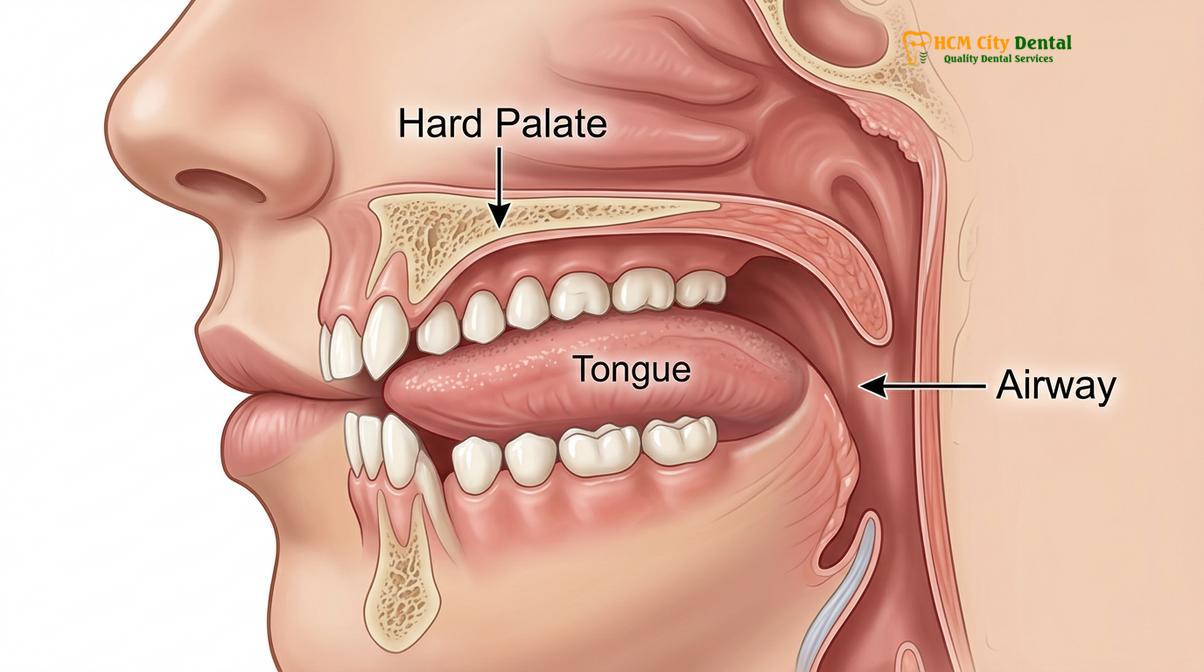
In a child with a tongue thrust, the tongue pushes forcefully forward against or between the front teeth during every swallow. This repetitive outward force acts like a reverse orthodontic brace, gradually creating an anterior open bite where the upper and lower front teeth do not touch. Myofunctional therapy focuses heavily on transitioning the child from a visceral (infantile) swallow to a mature somatic swallow. By retraining the swallowing mechanics, we eliminate the destructive forces acting on the dentition, allowing the teeth to settle into a more natural alignment[3].
Furthermore, chronic mouth breathing and a lack of lip seal severely dry out the oral cavity. Saliva is the mouth’s natural defense mechanism; it buffers bacterial acids and remineralizes enamel. A dry mouth creates an acidic environment that drastically increases the risk of early childhood caries, particularly in the deep grooves of the molars. To combat this, alongside myofunctional therapy, we strongly recommend preventive measures. You can learn more about protecting these vulnerable areas in our Kids Dental Cleaning & Fissure Sealants: Clinical Guide. Restoring nasal breathing and a closed-mouth posture is therefore as much about cavity prevention as it is about orthodontics.
OMT as Pre-Orthodontic Treatment
Integrating myofunctional therapy before or during early orthodontics addresses the muscular root causes of malocclusion, ensuring more stable and predictable skeletal correction.
The traditional approach to orthodontics often involved waiting until all permanent teeth had erupted (around age 12) before applying braces to force the teeth into alignment. However, this reactive approach ignores the underlying muscular dysfunctions that caused the crooked teeth in the first place. If the tongue thrust or mouth breathing is not corrected, the teeth will inevitably relapse to their original crowded positions once the braces are removed. This is why many parents seek to prevent braces with myofunctional therapy, or at least minimize the duration and complexity of future orthodontic work.
Today, the standard of care emphasizes early interceptive orthodontics, evaluating children as young as 7 years old. For a detailed timeline on when to schedule this crucial visit, see our guide on the Best Age for Kids First Orthodontic Evaluation. By combining OMT with Phase 1 orthodontic appliances (such as palatal expanders or habit-breaking appliances), we can harness the child’s active growth spurts. The appliance provides the mechanical expansion, while the myofunctional therapy provides the muscular retraining to maintain that expansion permanently.
Clinical Case Study: Interceptive Orthodontics & OMT
A 7-year-old patient visited HCMC Dental Clinic in Ho Chi Minh City presenting with severe mouth breathing, an anterior open bite, and a narrow V-shaped maxilla. Under the care of Dr. Nguyen Van Cuong, a comprehensive Phase 1 treatment plan was initiated. The child was fitted with a fixed palatal expander while simultaneously undergoing a 6-month myofunctional therapy program to correct a severe tongue thrust. Within 8 months, the patient achieved consistent nasal breathing, a competent lip seal, and the anterior open bite closed naturally as the tongue was trained to rest on the palate. This early intervention successfully guided the eruption of the permanent incisors and eliminated the need for complex jaw surgery in the future.
Understanding the difference between early intervention and traditional braces is vital for parents. Phase 1 focuses on skeletal correction and airway expansion, while Phase 2 focuses on final tooth detailing. Integrating OMT during Phase 1 ensures that the muscular environment supports the new skeletal framework. For a comprehensive breakdown of this two-step approach, explore our article on Phase 1 vs Phase 2 Braces Children: Clinical Guide. Furthermore, for families relocating to Vietnam, finding consistent orthodontic care is crucial; we provide seamless continuation of treatment, as detailed in our guide on Braces for Expat Children in Ho Chi Minh City.
Simple Daily Exercises for Kids
Consistent, playful daily exercises are prescribed to strengthen the lips, tongue, and cheeks, gradually retraining the child’s neuromuscular reflexes.
The success of myofunctional therapy relies heavily on patient compliance and daily repetition. Because we are dealing with children, the therapy must be engaging, positive, and integrated seamlessly into their daily routine. We prescribe specific mouth exercises for kids teeth that target different muscle groups. These exercises are designed to increase muscle tone, improve coordination, and build the endurance necessary to maintain correct posture subconsciously throughout the day and night.
A typical exercise regimen takes only 5 to 10 minutes, performed twice daily. Parents play a crucial role as “home therapists,” guiding the child and ensuring the exercises are performed with correct form. Using a mirror helps the child visualize their tongue placement and provides immediate biofeedback. Over time, these conscious movements become subconscious habits, permanently altering the child’s orofacial function.
| Exercise Name | Target Muscle Group | Clinical Goal | Frequency |
|---|---|---|---|
| The Tongue Click | Lingual muscles (Tongue) | Suction the entire tongue to the roof of the mouth and click. Strengthens elevation and palatal resting posture. | 20 reps, 2x daily |
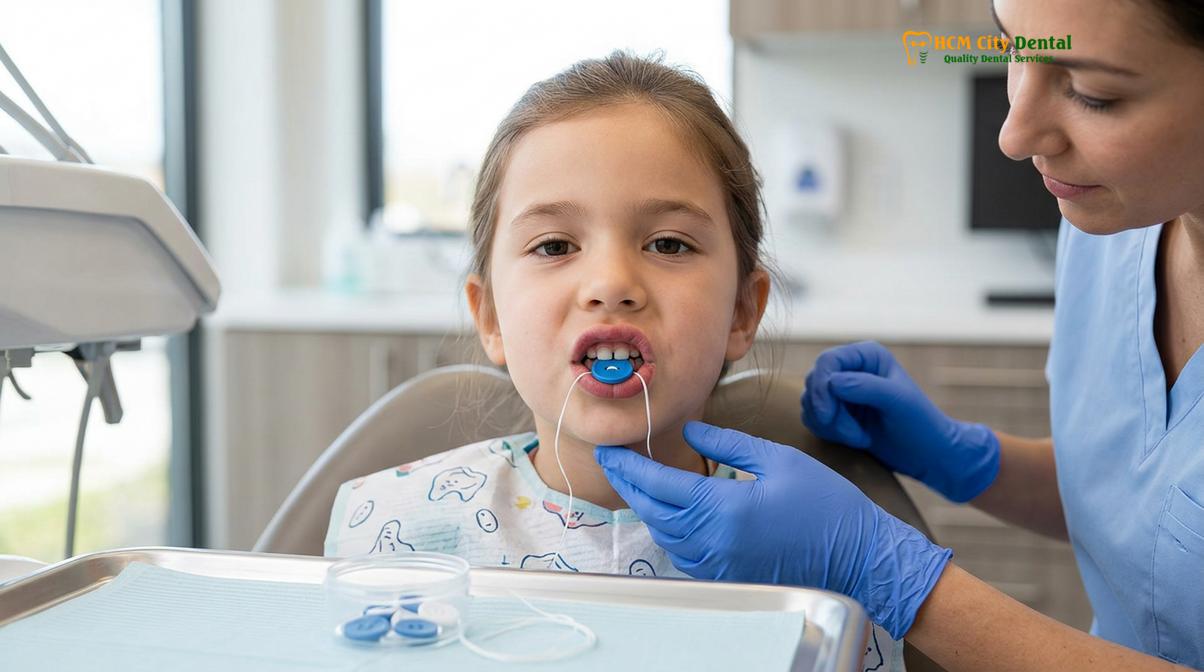
| The Button Pull | Orbicularis Oris (Lips) | Place a button attached to dental floss behind the lips (not teeth). Pull gently while the child resists. Improves lip seal. | 1 minute, 2x daily |
| The Cave (Spot Hold) | Tongue Tip | Hold the tip of the tongue on the incisive papilla (the “spot” behind upper front teeth) while swallowing saliva. | Continuous awareness |
| Cheek Puffs | Buccinators (Cheeks) | Fill cheeks with air and move the air from left to right without letting it escape the lips. Enhances facial muscle tone. | 10 reps, 2x daily |
It is important to note that these exercises must be customized to the individual child’s anatomical needs. A generic approach may not address specific dysfunctions, such as a unilateral chewing habit or an asymmetrical lip pull. Therefore, a thorough clinical assessment by a trained myofunctional therapist or pediatric dentist is essential before beginning any exercise regimen to ensure the correct muscles are being targeted effectively[4].
Clinical Pediatric Dentistry Workflows & Pricing
Comprehensive pediatric care combines myofunctional therapy with advanced behavior management, biocompatible restorative materials, and transparent pricing structures.
At the core of successful pediatric dentistry is the ability to manage a child’s anxiety and build trust. We utilize the “Tell-Show-Do” behavioral management technique to desensitize children to the dental environment. First, we Tell the child what we are going to do using non-threatening, child-friendly language (e.g., referring to topical anesthesia as “sleepy juice,” the rubber dam as a “tooth raincoat,” and the ultrasonic scaler as a “water whistle”). Next, we Show them the instrument, often demonstrating it on their fingernail so they understand the sensation. Finally, we Do the procedure, empowering the child with a “stop on request” signal, such as raising their left hand if they feel overwhelmed.
“Building trust with a pediatric patient is paramount. By utilizing the Tell-Show-Do method and respecting their boundaries, we transform dental anxiety into dental confidence, ensuring they remain cooperative for both restorative treatments and myofunctional therapy.” — Dr. Nguyen Van Cuong
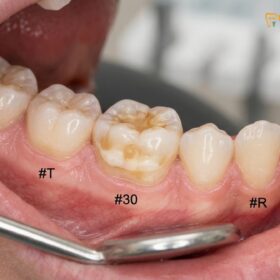
When restorative work is necessary, we prioritize minimally invasive and biocompatible materials. For early childhood caries, we offer Silver Diamine Fluoride (SDF). This liquid is painted onto the cavity, instantly halting the decay process without the need for drilling or local anesthesia. While highly effective and painless, parents are informed that SDF leaves a localized black stain on the decayed portion of the tooth. For traditional fillings in primary (baby) teeth, we prioritize Glass Ionomer Cement (GIC) over standard composite. GIC chemically bonds to the tooth, is highly tolerant of the moisture naturally present in a child’s mouth, and continuously releases fluoride (fluoride recharge) to protect the surrounding enamel from recurrent decay. Composite resins are reserved for areas requiring maximum structural strength and perfect aesthetics.
To ensure our treatments are accessible, we maintain a transparent pricing structure. According to the latest clinic fee schedule, our pediatric services are priced as follows (Note: Patients booking in advance via WhatsApp receive a -40% discount compared to walk-in rates):
- Kids Consultation & Diagnostic check-up: 300,000 to 500,000 VND (~$12 to $20 USD) (Walk-in: 500,000 to 800,000 VND).
- Fissure Sealant (per tooth): 400,000 to 600,000 VND (~$16 to $24 USD) (Walk-in: 700,000 to 1,000,000 VND).
- Fluoride Varnish Application: 300,000 to 500,000 VND (~$12 to $20 USD) (Walk-in: 500,000 to 800,000 VND).
- Pediatric Glass Ionomer Filling (GIC, fluoride-releasing, per tooth): 400,000 to 600,000 VND (~$16 to $24 USD) (Walk-in: 700,000 to 1,000,000 VND).
- Pediatric Composite Filling (per tooth): 500,000 to 800,000 VND (~$20 to $32 USD) (Walk-in: 800,000 to 1,300,000 VND).
- Baby Root Canal (Pulpotomy, per tooth): 1,000,000 to 1,500,000 VND (~$40 to $60 USD) (Walk-in: 1,600,000 to 2,500,000 VND).
- Space Maintainer (fixed, band-and-loop, per unit): 2,000,000 to 3,000,000 VND (~$80 to $120 USD) (Walk-in: 3,300,000 to 5,000,000 VND).
- Custom Pediatric Sports Mouthguard: 1,500,000 to 2,500,000 VND (~$60 to $100 USD) (Walk-in: 2,500,000 to 3,500,000 VND).
By integrating these advanced clinical workflows with myofunctional therapy, we provide a holistic approach to pediatric dental care. For more information on how OMT integrates with early orthodontic appliances, review our detailed breakdown on Pediatric Interceptive Orthodontics Myofunctional.
When to See a Doctor
While myofunctional exercises are highly beneficial, they are part of a broader medical and dental diagnosis. Parents should be vigilant for specific red flags that indicate a need for immediate professional evaluation. If your child exhibits chronic snoring, gasping for air during sleep, frequent bedwetting beyond the appropriate age, or chronic daytime fatigue, these are strong indicators of pediatric sleep apnea. Additionally, if you observe a severe tongue-tie that prevents the child from licking their lips or causes speech impediments, a clinical assessment is necessary to determine if a diode laser frenectomy is required before commencing therapy[5].
Important Clinical Considerations:
Untreated pediatric sleep apnea and severe chronic mouth breathing can lead to cognitive delays, behavioral issues frequently misdiagnosed as ADHD, and irreversible craniofacial alterations. Myofunctional therapy is a highly effective tool, but it must be prescribed based on a personalized clinical examination. Always seek a professional diagnostic evaluation to rule out enlarged adenoids, severe tonsillar hypertrophy, or other structural airway obstructions before relying solely on oral exercises.

If you suspect your child is struggling with mouth breathing, tongue thrusting, or sleep-disordered breathing, early intervention is critical. Contact HCMC Dental Clinic in Ho Chi Minh City to schedule a comprehensive pediatric airway and orthodontic evaluation. Our team is dedicated to guiding your child’s facial growth and ensuring a lifetime of healthy, confident smiles.
Frequently Asked Questions
What are the signs my child needs myofunctional therapy?
Common signs include chronic mouth breathing, open resting lips, tongue thrusting during swallowing, snoring, and prolonged thumb-sucking habits. If you notice your child struggling to chew with their lips closed, exhibiting speech impediments (especially with S, Z, or TH sounds), or showing a long, narrow facial structure, a clinical evaluation is highly recommended to assess their orofacial muscle function and airway patency.
Can myofunctional therapy prevent the need for braces?
While it cannot guarantee the complete avoidance of braces, myofunctional therapy significantly reduces the severity of orthodontic crowding by promoting natural jaw expansion. By establishing correct tongue posture and lip seal early on, the therapy addresses the muscular root causes of malocclusion, often making future orthodontic treatment shorter, less complex, and far less prone to relapse after the braces are removed.
How long do myofunctional exercises take to show results?
Noticeable improvements in breathing and lip seal typically emerge within 3 to 6 months of consistent daily practice. However, complete neuromuscular re-education and skeletal adaptation may require 12 to 18 months of therapy. The exact timeline depends heavily on the child’s age, their daily compliance with the exercises, and the severity of the initial muscular dysfunction.
Is tongue-tie release necessary before starting myofunctional therapy?
A severe tongue-tie often restricts the tongue’s range of motion, making it physically impossible to achieve correct resting posture against the palate. In such cases, a minimally invasive diode laser frenectomy is usually performed first. This is followed immediately by myofunctional therapy to train the newly released muscle, improve its strength, and prevent scar tissue from reattaching tightly.
How do you keep children engaged in daily myofunctional exercises?
We utilize play-based techniques, reward charts, and interactive tools to make the exercises feel like games rather than medical chores. Parents are encouraged to practice alongside their children, using mirrors for visual feedback and positive reinforcement to maintain high compliance levels throughout the neuromuscular retraining process, ensuring the therapy remains a positive daily habit.
References
- American Academy of Pediatric Dentistry (AAPD). Management of the developing dentition and occlusion in pediatric dentistry. (2021).
- International Journal of Pediatric Otorhinolaryngology. Orofacial myofunctional therapy in children with obstructive sleep apnea. (2020).
- Journal of the American Dental Association (JADA). The efficacy of silver diamine fluoride in arresting dental caries. (2019).
- European Journal of Orthodontics. The influence of tongue resting posture on craniofacial development. (2022).
- Pediatric Dentistry Journal. Behavior management techniques in pediatric dentistry: Tell-Show-Do and beyond. (2023).