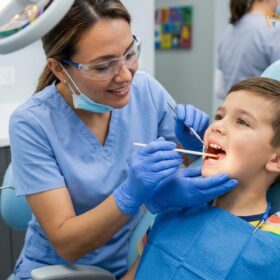
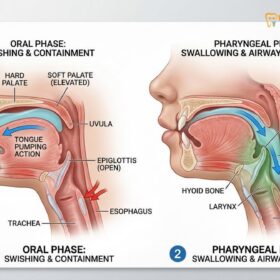
The tell show do pediatric dentistry method is a foundational behavioral management technique designed to eliminate dental anxiety in children. By explaining procedures in child-friendly language, demonstrating instruments safely, and proceeding only with the child’s consent, dentists build trust and ensure a comfortable, fear-free clinical experience.
Clinical Summary:
Pediatric dentistry requires specialized behavioral management to transform a potentially frightening medical environment into a safe, predictable space for children. The Tell-Show-Do technique is the gold standard for reducing pediatric dental anxiety, relying on clear communication, sensory desensitization, and patient autonomy. Under the guidance of specialists like Dr. Nguyen Van Cuong, this approach is seamlessly integrated with minimally invasive clinical protocols. Treatments prioritize patient comfort, utilizing non-invasive Silver Diamine Fluoride (SDF) for cavity arrest and moisture-tolerant, fluoride-releasing Glass Ionomer Cements (GIC) for restorations. Beyond basic restorative care, comprehensive pediatric evaluations now encompass early interceptive orthodontics, airway diagnostics to detect mouth breathing, and laser frenectomies for tongue-ties. By combining empathetic psychological techniques with advanced, child-specific dental materials, clinicians can foster long-term oral health literacy and ensure a lifetime of positive dental experiences.
Key Takeaways:
- Tell-Show-Do Method: A proven psychological approach that demystifies dental procedures through child-friendly explanations, safe physical demonstrations, and consent-based treatment.
- Minimally Invasive Caries Arrest: Silver Diamine Fluoride (SDF) offers a drill-free, painless solution to halt active tooth decay in primary teeth.
- Smart Restorative Materials: Glass Ionomer Cement (GIC) is prioritized for baby teeth due to its chemical bonding, moisture tolerance, and continuous fluoride release.
- Airway & Orthodontic Screening: Early evaluations detect mouth breathing, tongue-ties, and jaw discrepancies, allowing for timely interceptive orthodontic intervention.
- Patient Autonomy: The “stop on request” hand-raising protocol empowers children, significantly reducing subjective fear and improving clinical cooperation.
Clinical Philosophy of Behavior Management
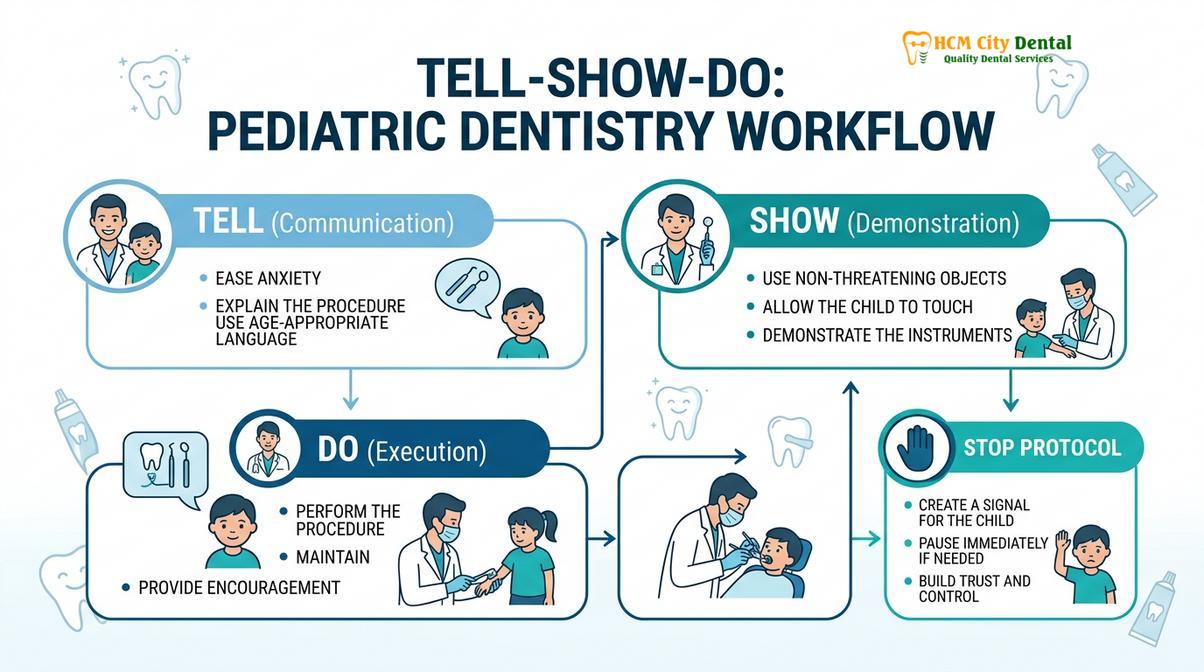
Behavior management in pediatric dentistry focuses on psychological desensitization, transforming a child’s fear of the unknown into cooperative trust through structured, empathetic communication.
The dental operatory is an environment filled with novel sights, sounds, and sensations that can easily overwhelm a child’s developing nervous system. When a pediatric patient encounters the bright lights, the high-pitched whine of a handpiece, or the unfamiliar taste of clinical materials, their natural physiological response is often rooted in the fight-or-flight mechanism. Effective pediatric dentist behavior management is not merely about achieving compliance to complete a procedure; it is about fundamentally altering the child’s psychological perception of oral healthcare. The goal is to cultivate a foundation of trust that will encourage lifelong dental health maintenance.
According to the American Academy of Pediatric Dentistry (AAPD), behavioral guidance is a continuum of interaction involving the dentist, the dental team, the patient, and the parent directed toward communication and education[1]. The Tell-Show-Do technique stands as the cornerstone of this continuum. It is a highly structured, cognitive-behavioral intervention that breaks down complex, potentially frightening medical procedures into manageable, predictable steps. By removing the element of surprise, the clinician mitigates anticipatory anxiety, allowing the child to process sensory information in a safe, controlled manner.
“The success of pediatric dentistry relies equally on clinical excellence and psychological empathy. When we take the time to explain, demonstrate, and listen, we do not just treat a tooth; we treat the child, ensuring they leave the chair with confidence rather than fear.”
Dr. Nguyen Van Cuong, a leading expert in pediatric oral health, emphasizes that the clinical philosophy of behavior management must be adaptable. A technique that works for a curious five-year-old may need modification for an anxious toddler or a child with sensory processing sensitivities. The approach requires the clinician to continuously read the child’s body language, adjusting the pace of the appointment to match the patient’s emotional bandwidth. This personalized pacing is what defines a truly trusted child dentist HCMC, ensuring that every visit contributes positively to the child’s psychological development.
“Tell”: Scoped Child Vocabulary
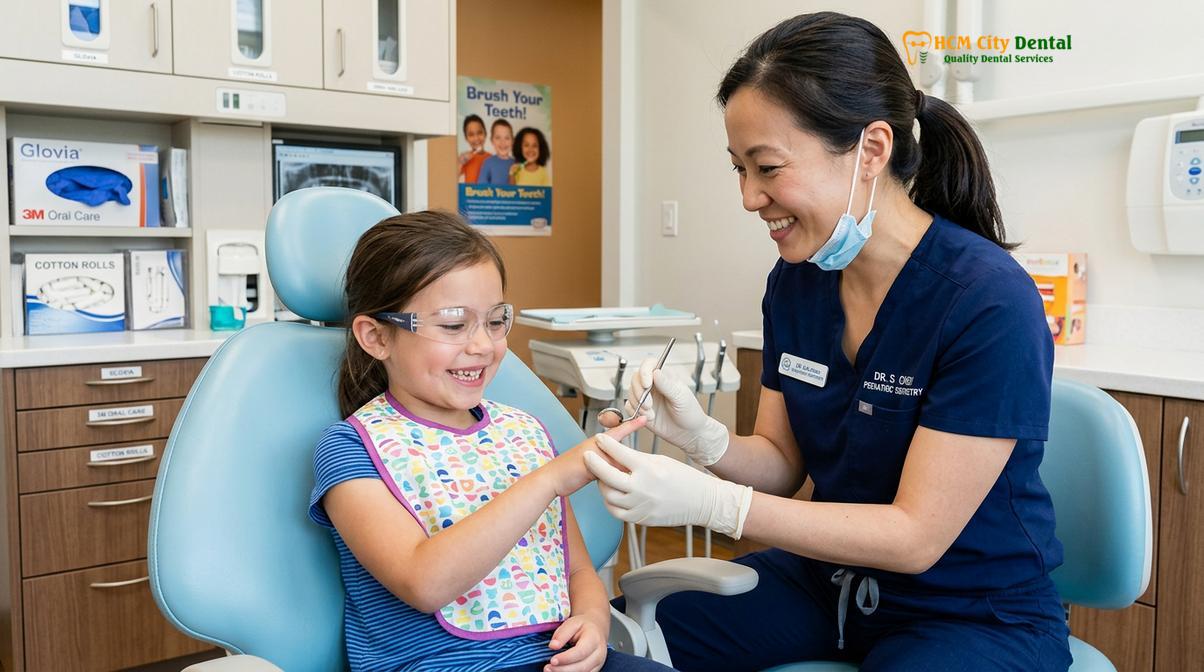
The “Tell” phase utilizes age-appropriate euphemisms to explain dental instruments and procedures, replacing intimidating medical jargon with familiar, non-threatening concepts.
The foundation of the Tell-Show-Do method begins with verbal communication tailored specifically to the child’s cognitive and emotional developmental stage. Children process language literally, and standard medical terminology—such as “needle,” “drill,” “extract,” or “pain”—can instantly trigger severe anxiety. To circumvent this, pediatric dental teams employ a highly specialized, scoped vocabulary. This linguistic substitution is designed to explain the exact nature of the procedure without invoking fear, ensuring the child understands what is happening in terms they can easily digest.
For example, when preparing a child for local anesthesia, the term “injection” is strictly avoided. Instead, the clinician might explain that they are going to put the tooth to sleep using “sleepy juice.” The high-speed handpiece, which can be intimidating due to its noise and vibration, is introduced as a “water whistle” or a “tooth tickler” that washes away the “sugar bugs.” When isolating a tooth for a filling, the rubber dam is described as a “tooth raincoat” that keeps the tooth dry while the rest of the mouth stays comfortable. This creative communication strategy is a vital component of Children & Pediatric Dentistry, bridging the gap between clinical necessity and pediatric comprehension.
The “Tell” phase is not a one-way lecture; it is an interactive dialogue. The dentist asks open-ended questions to gauge the child’s understanding and invites them to express their feelings. Voice control—modulating the tone, volume, and pace of speech—is also critical during this phase. A calm, steady, and reassuring voice helps to down-regulate the child’s nervous system. If a child becomes agitated, the dentist may lower their voice to a whisper, prompting the child to quiet down and listen closely. This nuanced approach to communication sets the stage for a fear free kids dental checkup.
“Show”: Desensitizing Instruments
The “Show” phase involves demonstrating the dental instruments visually, auditorily, and tactilely on a neutral surface, allowing the child to safely experience the sensations before treatment begins.
Once the procedure has been explained using child-friendly vocabulary, the clinician moves to the “Show” phase. This step is a practical application of systematic desensitization, a psychological method used to reduce phobias. Children are highly tactile and visual learners; simply hearing about an instrument is rarely enough to quell their anxiety. They need to see it, hear it, and feel it in a non-threatening context before it enters their mouth. This sensory familiarization is crucial for reducing dental anxiety children often experience during their first few visits[2].
During the “Show” phase, the dentist will demonstrate the instrument on a neutral, safe area, typically the child’s finger or the back of their hand. For instance, before using the slow-speed handpiece with a polishing cup, the dentist will turn it on so the child can hear the humming sound, then gently touch the rotating rubber cup to the child’s fingernail, explaining that it feels like a “buzzy toothbrush.” The air-water syringe is demonstrated by spraying a gentle puff of air or a drop of water onto the child’s hand, often referred to as a “wind machine” or a “mini squirt gun.”
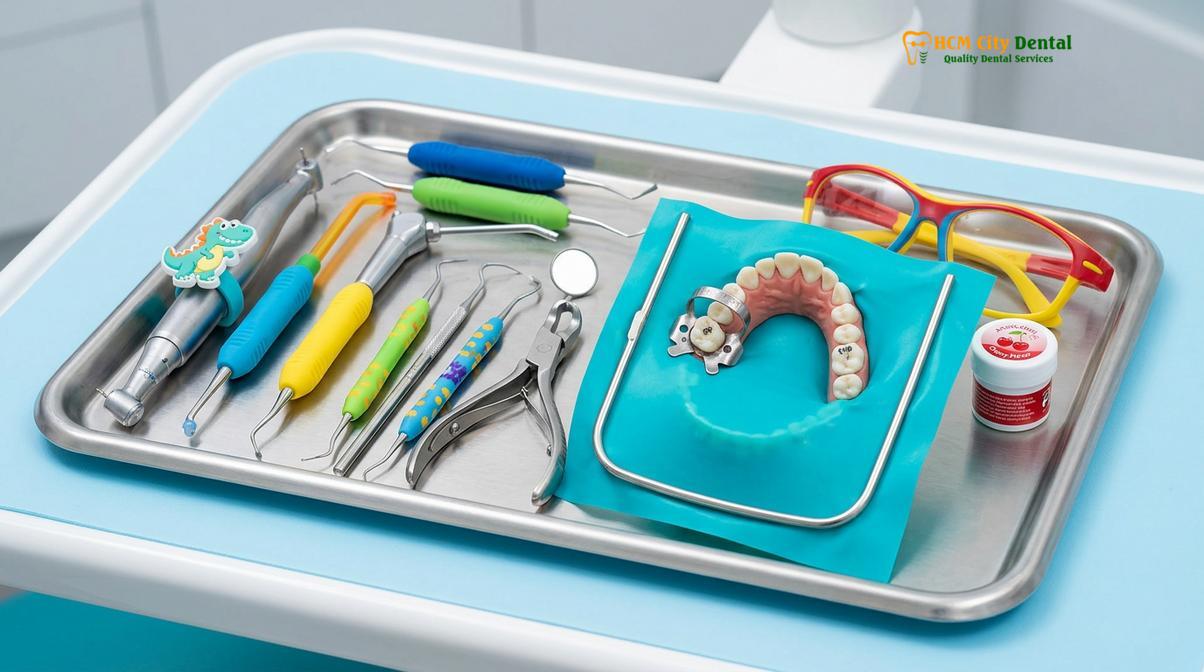
This phase also involves demonstrating the safety protocols. If a suction tube (the “Mr. Thirsty” straw) is going to be used, the dentist will let it gently grab the child’s finger to show how it “gives hugs” and drinks the water. By allowing the child to interact with the equipment, the dentist removes the mystery and perceived threat of the clinical tools. The child learns that the instruments are predictable and safe, which drastically lowers their defensive barriers and prepares them for the final phase of the technique.
“Do”: Proceeding with Consent
The “Do” phase is the actual execution of the clinical treatment, performed smoothly and efficiently only after the child has understood the process and demonstrated readiness.
The “Do” phase is where the clinical treatment is executed. However, it is imperative that this phase only commences when the child is calm and has implicitly or explicitly consented to proceed. The transition from “Show” to “Do” must be seamless. The dentist performs exactly what was described and demonstrated, without introducing any new, unannounced sensations. Maintaining this consistency is vital; if a dentist promises that a procedure will feel a certain way and it suddenly feels different or painful, the trust built during the first two phases is instantly shattered.
In modern pediatric dentistry, the “Do” phase often involves minimally invasive techniques that align perfectly with behavioral management goals. One of the most revolutionary treatments is the application of Silver Diamine Fluoride (SDF). SDF is a liquid substance used to halt the progression of active cavities without the need for local anesthesia or drilling. The silver ions act as a powerful antimicrobial agent, killing the bacteria causing the decay, while the fluoride promotes remineralization of the tooth structure[3]. The application is entirely painless—the dentist simply dries the tooth and paints the liquid on with a tiny brush. While highly effective, parents must be informed that SDF leaves a permanent, localized black stain on the decayed portion of the tooth, making it a clinical decision that requires thorough parental consultation.
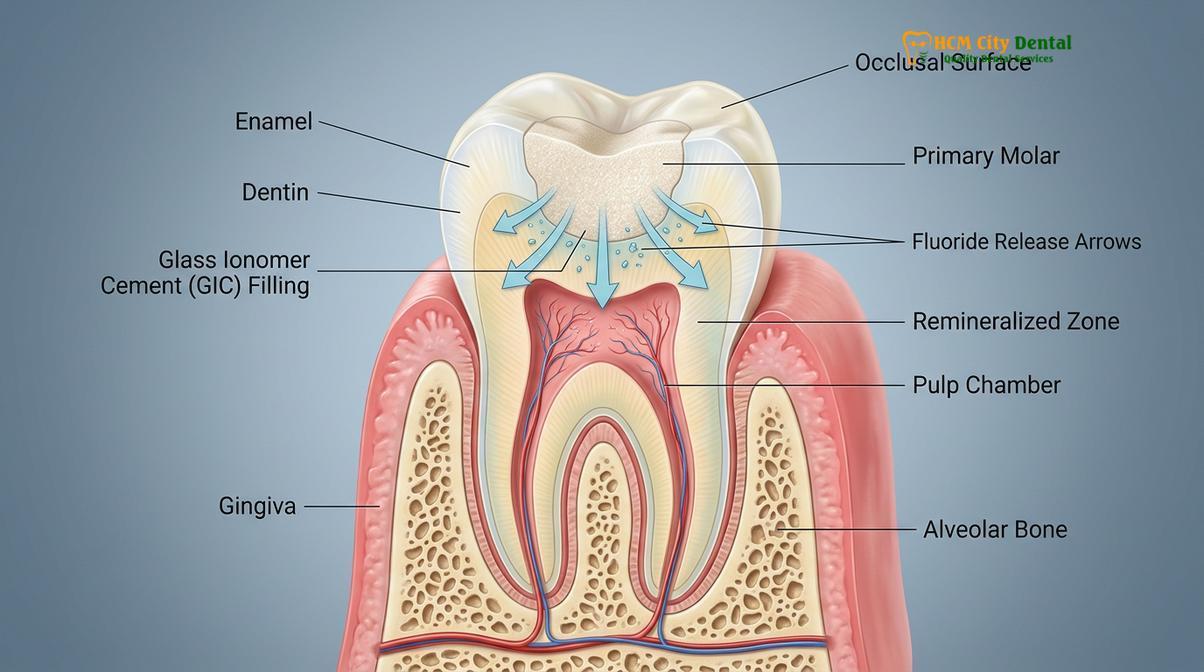
When restorative fillings are necessary, the choice of material plays a significant role in the “Do” phase. Pediatric dentists frequently prioritize Glass Ionomer Cements (GIC) over traditional resin composites for primary teeth. GIC chemically bonds to the dentin and enamel, meaning less drilling is required to create mechanical retention. Furthermore, GIC is highly moisture-tolerant. Children have smaller mouths, produce more saliva, and have shorter attention spans, making it difficult to maintain the perfectly dry field required for composite resins. Most importantly, GIC continuously releases fluoride into the surrounding tooth structure and can be “recharged” by fluoride toothpaste, providing ongoing protection against recurrent early childhood caries.
Stopping on Request Protocol
The stopping on request protocol empowers the child with a physical signal, usually raising a hand, to pause the treatment instantly, fostering a profound sense of control and safety.
A critical adjunct to the Tell-Show-Do method is the “stopping on request” protocol. One of the primary drivers of anxiety in any medical setting is the feeling of powerlessness. When a child is lying back in a dental chair with instruments in their mouth, they can easily feel trapped. To counteract this, the dentist establishes a clear, non-verbal communication system before the “Do” phase begins. The child is instructed that if they feel uncomfortable, need a break, or want to ask a question, they simply need to raise their left hand.
The success of this protocol hinges on the dentist’s absolute adherence to the rule. The very first time the child raises their hand, the dentist must immediately stop the procedure, remove the instruments from the child’s mouth, and ask what is wrong. This immediate compliance proves to the child that they are in control of their own body and that the dentist respects their boundaries. Paradoxically, psychological studies in pediatric behavior management show that when children are given a reliable “stop” button, they rarely use it. The mere knowledge that they *can* stop the procedure significantly reduces their anxiety, allowing them to tolerate longer and more complex treatments.
This protocol is especially important during procedures that involve sustained mouth opening or mild discomfort, such as the administration of local anesthesia or the placement of a rubber dam clamp. By integrating the hand-raising rule, the clinical team ensures that the child remains an active, willing participant in their healthcare journey, rather than a passive recipient of treatment.
Comprehensive Pediatric Treatments and Pricing Structure
Transparent pricing and comprehensive treatment options ensure parents can make informed decisions regarding their child’s preventive, restorative, and interceptive dental care.
Providing high-quality pediatric dental care requires a combination of advanced clinical skills, specialized materials, and dedicated time for behavioral management. At HCMC Dental Clinic, we believe in complete transparency regarding the cost of pediatric treatments. The pricing structure reflects the use of biocompatible materials, such as fluoride-releasing GIC, and the extra time allocated to ensure a stress-free experience for the child. We also offer a special -40% discount for appointments booked directly through WhatsApp, making premium pediatric care more accessible for families in Ho Chi Minh City.
Below is a detailed overview of the estimated costs for common pediatric dental procedures. Please note that exact treatment plans are customized based on the child’s specific clinical needs following a comprehensive diagnostic evaluation.
| Pediatric Dental Procedure | Standard Walk-in Price (VND) | WhatsApp Booking Price (VND) | Estimated USD (Discounted) |
|---|---|---|---|
| Kids Consultation & Diagnostic Check-up | 500,000 – 800,000 | 300,000 – 500,000 | ~$12 – $20 |
| Fissure Sealant (per tooth) | 700,000 – 1,000,000 | 400,000 – 600,000 | ~$16 – $24 |
| Fluoride Varnish Application | 500,000 – 800,000 | 300,000 – 500,000 | ~$12 – $20 |
| Pediatric Glass Ionomer Filling (GIC) | 700,000 – 1,000,000 | 400,000 – 600,000 | ~$16 – $24 |
| Pediatric Composite Filling (per tooth) | 800,000 – 1,300,000 | 500,000 – 800,000 | ~$20 – $32 |
| Baby Root Canal (Pulpotomy, per tooth) | 1,600,000 – 2,500,000 | 1,000,000 – 1,500,000 | ~$40 – $60 |
| Space Maintainer (fixed, band-and-loop) | 3,300,000 – 5,000,000 | 2,000,000 – 3,000,000 | ~$80 – $120 |
| Custom Pediatric Sports Mouthguard | 2,500,000 – 3,500,000 | 1,500,000 – 2,500,000 | ~$60 – $100 |
Preventive treatments such as fissure sealants and fluoride varnishes are highly recommended to protect the vulnerable grooves of newly erupted permanent molars. For children involved in contact sports, a Custom Sports Mouthguard for Kids provides superior protection against dental trauma compared to over-the-counter boil-and-bite alternatives, ensuring the safety of both primary and developing permanent dentition.
Early Interceptive Orthodontics & Airway Assessment
Modern pediatric dentistry extends beyond cavity prevention to include early evaluation of craniofacial growth, airway patency, and the correction of harmful oral habits.
A comprehensive pediatric dental visit involves much more than checking for cavities; it includes a thorough assessment of the child’s craniofacial development and airway health. Early interceptive orthodontics (Phase I orthodontics) aims to identify and correct skeletal discrepancies, crowding, and functional issues before all permanent teeth have erupted. By intervening early, usually between the ages of 7 and 9, pediatric dentists can guide jaw growth, create adequate space for erupting teeth, and often reduce or eliminate the need for complex orthodontic treatment or jaw surgery later in life[4].
One of the most critical aspects of this evaluation is the pediatric airway assessment. Chronic mouth breathing is a significant red flag in pediatric development. Children who habitually breathe through their mouths—often due to enlarged tonsils, adenoids, or chronic allergies—are at risk of developing “adenoid facies” or long-face syndrome. This condition is characterized by a narrow upper jaw, a high palatal vault, a retruded lower jaw, and dental crowding. Furthermore, mouth breathing bypasses the natural filtration and humidification of the nasal passages, leading to dry mouth, an increased risk of severe dental caries, and potential pediatric sleep apnea. Understanding How Mouth Breathing Changes Kids’ Face Shape is essential for parents to recognize the early signs of airway dysfunction.
Functional issues such as tongue-ties (ankyloglossia) and prolonged thumb-sucking also profoundly impact oral development. A restricted lingual frenulum prevents the tongue from resting properly against the roof of the mouth, which is necessary for normal palatal expansion. In such cases, a Tongue Tie Release for Kids using a virtually painless diode laser frenectomy can restore proper tongue mobility, aiding in speech development and correct swallowing patterns. Additionally, Myofunctional Therapy for Kids may be prescribed to retrain the oral muscles, correct swallowing habits, and encourage proper nasal breathing, acting as a vital adjunct to interceptive orthodontic appliances.
Clinical Case Study: Comprehensive Pediatric Care
A 6-year-old patient presented to HCMC Dental Clinic in Ho Chi Minh City with severe dental anxiety and a history of early childhood caries. Dr. Nguyen Van Cuong utilized the Tell-Show-Do method, introducing the dental instruments as “tooth ticklers” and “water whistles.” Once the child was comfortable and utilizing the hand-raising stop protocol, Dr. Cuong successfully placed two fluoride-releasing GIC fillings without the need for sedation. During the same visit, an airway assessment revealed chronic mouth breathing and a narrow maxilla. The patient was subsequently enrolled in a myofunctional therapy program and fitted with an early expansion appliance, successfully addressing both the restorative needs and the underlying craniofacial developmental issues in a completely fear-free environment.
Restorative Dentistry and Space Management
Preserving primary teeth through advanced endodontics and space maintainers is crucial for guiding the proper eruption of permanent teeth and preventing severe orthodontic crowding.
There is a common misconception that baby teeth do not require extensive treatment because they will eventually fall out. However, primary teeth serve critical functions: they allow for proper chewing and nutrition, aid in speech development, and, most importantly, act as natural space maintainers for the developing permanent teeth beneath them. When a primary tooth suffers from deep decay that reaches the pulp chamber, a simple filling is no longer sufficient. In these cases, a pediatric root canal, known as a pulpotomy, is required to save the tooth and alleviate Pulpotomy Pain in Kids.
During a pulpotomy, the infected coronal portion of the dental pulp is removed, while the healthy radicular pulp in the roots is preserved and treated with a medicament (such as MTA or Biodentine) to maintain its vitality. The tooth is then typically restored with a stainless steel crown or a durable composite build-up to prevent fracture. Preserving the primary molar until its natural exfoliation time is always the preferred clinical outcome.
“Premature loss of a primary molar without proper space management is a primary cause of severe orthodontic crowding. The adjacent teeth will rapidly drift into the extraction space, blocking the eruption path of the permanent premolars.”
If a primary tooth is unsalvageable and must be extracted prematurely, space management becomes an immediate clinical necessity. Pediatric dentists utilize various Types of Space Maintainers for Kids to hold the gap open. A common device is the fixed band-and-loop space maintainer, which consists of a stainless steel band cemented to the adjacent tooth with a wire loop extending across the empty space. For bilateral tooth loss in the lower arch, a lower lingual holding arch may be utilized. These custom-fabricated appliances remain in place until the permanent tooth begins to erupt, ensuring a proper, unhindered eruption pathway and significantly reducing the future need for complex orthodontic extractions[5].
When to See a Pediatric Dentist
Early clinical evaluation is essential for preventing severe dental decay, managing developmental abnormalities, and establishing a positive dental home for the child.
The American Academy of Pediatric Dentistry recommends that a child’s first dental visit should occur within six months of the eruption of their first tooth, and no later than their first birthday. Establishing a “dental home” early allows the pediatric dentist to monitor growth, provide anticipatory guidance to parents regarding diet and oral hygiene, and acclimatize the child to the dental environment using techniques like Tell-Show-Do before any invasive treatment is ever needed.
Important Clinical Considerations
Parents should schedule an immediate pediatric dental consultation if they observe any of the following red flags:
- White or Brown Spots: Chalky white lines near the gumline or brown spots on the teeth are early indicators of enamel demineralization and active decay.
- Chronic Mouth Breathing: Snoring, sleeping with the mouth open, or daytime mouth breathing can indicate airway obstruction and lead to altered facial growth.
- Prolonged Oral Habits: Thumb-sucking or pacifier use that continues past the age of 3 can cause severe anterior open bites and skeletal narrowing of the upper jaw.
- Speech Impediments or Feeding Issues: Difficulty latching during infancy or trouble articulating certain sounds may indicate a restrictive tongue-tie requiring evaluation.
- Dental Trauma: Any fall or impact that chips, loosens, or displaces a primary or permanent tooth requires immediate radiographic assessment to rule out root fractures or damage to the developing permanent tooth bud.
While behavioral management techniques are highly effective for the majority of children, they are not a universal solution. For children with severe dental phobias, extensive early childhood caries requiring multiple complex restorations, or specific special healthcare needs, non-pharmacological methods may be insufficient. In such cases, the pediatric dentist will discuss the use of conscious sedation, such as nitrous oxide (laughing gas), or treatment under general anesthesia in a hospital setting. These pharmacological adjuncts ensure that the child receives the necessary medical care safely, without enduring psychological trauma. Always consult with a qualified pediatric dental specialist to determine the most appropriate, individualized treatment plan for your child’s unique clinical and emotional needs.

Frequently Asked Questions
What is the Tell-Show-Do method in pediatric dentistry?
The Tell-Show-Do method is a foundational behavioral management technique where the dentist explains the procedure in child-friendly terms, demonstrates the instruments, and then performs the treatment. This structured approach demystifies the dental environment, significantly reducing fear and building long-term trust between the child and the clinical team. By breaking the appointment into predictable steps, the child is never surprised by sudden noises or sensations.
How does Tell-Show-Do help reduce dental anxiety in kids?
Tell-Show-Do reduces dental anxiety by eliminating the fear of the unknown and providing sensory predictability. By allowing the child to see, hear, and feel the instruments in a non-threatening manner before the actual procedure begins, their nervous system remains calm, preventing the fight-or-flight response commonly associated with dental visits. It shifts the child’s perception from feeling threatened to feeling curious and involved.
What other child behavior management techniques do you use?
In addition to Tell-Show-Do, we utilize positive reinforcement, voice control, distraction techniques, and the ‘stop on request’ hand-raising protocol. For highly anxious children or complex procedures, we may also recommend conscious sedation options, such as nitrous oxide (laughing gas), to ensure a safe and trauma-free experience. The choice of technique is always tailored to the child’s specific age, cognitive level, and emotional state.
Is Silver Diamine Fluoride (SDF) safe for my child’s baby teeth?
Yes, Silver Diamine Fluoride (SDF) is a highly safe, non-invasive treatment used to arrest active tooth decay without drilling or local anesthesia. While it is highly effective at stopping cavity progression by utilizing antimicrobial silver ions and remineralizing fluoride, parents should be aware that SDF leaves a permanent black stain exclusively on the decayed portion of the tooth. It is an excellent option for young, uncooperative children.
Why do pediatric dentists prefer Glass Ionomer Cement (GIC) over composite for baby teeth?
Pediatric dentists frequently prefer Glass Ionomer Cement (GIC) for primary teeth because it chemically bonds to the tooth structure, is highly tolerant of moisture during placement, and continuously releases fluoride. This fluoride recharge capability helps protect the surrounding enamel from recurrent decay, making it ideal for children who may struggle to keep their mouths perfectly dry during the filling procedure.
References
- American Academy of Pediatric Dentistry. Behavior Guidance for the Pediatric Dental Patient. (2021).
- Journal of Dentistry for Children. Efficacy of the Tell-Show-Do Technique in Managing Dental Anxiety. (2020).
- International Journal of Paediatric Dentistry. Clinical Application of Silver Diamine Fluoride in Early Childhood Caries. (2019).
- Pediatric Dentistry Journal. Glass Ionomer Cements vs. Resin Composites in Primary Dentition. (2022).
- Journal of Clinical Orthodontics. Early Interceptive Orthodontics and Pediatric Airway Assessment. (2018).