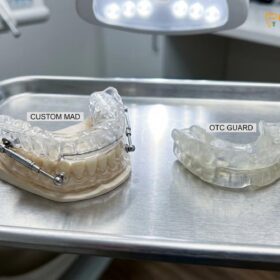
The Antisnoring Telescopic device is a custom-fitted mandibular advancement splint designed to treat primary snoring and mild-to-moderate obstructive sleep apnea. By utilizing lateral telescopic rods, it gently guides the lower jaw forward to prevent airway obstruction while allowing comfortable side-to-side movement during sleep.
Clinical Summary:
Telescopic sleep appliances utilize a Herbst-style mechanism to maintain airway patency by advancing the mandible. Unlike rigid guards, the telescopic rods permit vertical and lateral jaw mobility, significantly reducing temporomandibular joint (TMJ) stiffness. Dentists collaborate with sleep physicians to fabricate these devices for patients with mild-to-moderate OSA or those intolerant to CPAP therapy, ensuring precise titration for optimal respiratory function.
Key Takeaways:
- Telescopic devices allow lateral jaw movement, minimizing morning TMJ discomfort.
- They are clinically indicated for primary snoring and mild-to-moderate obstructive sleep apnea.
- A formal sleep study evaluated by a physician is required before appliance fabrication.
- The device features adjustable rods for precise, millimeter-by-millimeter airway titration.
- The estimated cost is 12,000,000 VND (~$480 USD) at HCMC Dental Clinic.
Why Telescopic Sleep Guards Offer Superior Comfort
Telescopic sleep guards provide superior comfort by incorporating lateral rods that allow the jaw to move naturally side-to-side and vertically, preventing the rigid locking associated with traditional mouthpieces.
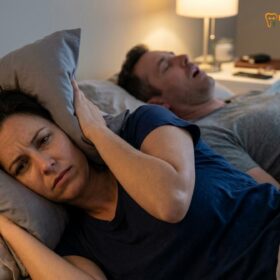
Obstructive Sleep Apnea (OSA) and primary snoring occur when the soft tissues at the back of the throat collapse during sleep, leading to airway obstruction and subsequent oxygen desaturation. To combat this, Mandibular Advancement Devices (MADs) are utilized to physically hold the lower jaw in a forward position, thereby pulling the tongue and soft palate away from the posterior pharyngeal wall. However, patient compliance with traditional, rigid one-piece devices is often hindered by significant discomfort, claustrophobia, and morning jaw pain. This is where the modern telescopic sleep appliance offers a distinct clinical advantage.
The Antisnoring Telescopic device is engineered to address the primary complaints associated with oral appliance therapy. By utilizing a two-piece design connected by lateral telescopic rods, the device allows the patient to open their mouth, speak, and even drink water while wearing the appliance. More importantly, it permits lateral (side-to-side) excursion of the mandible. This freedom of movement is crucial for patients who suffer from nocturnal bruxism (teeth grinding) or those who naturally shift their jaw during different sleep cycles. When the jaw is rigidly locked, the forces generated by the masticatory muscles are transferred directly to the temporomandibular joint (TMJ) and the teeth, leading to pain and potential dental shifting. The telescopic design dissipates these forces, resulting in a much higher rate of long-term patient compliance.[1]
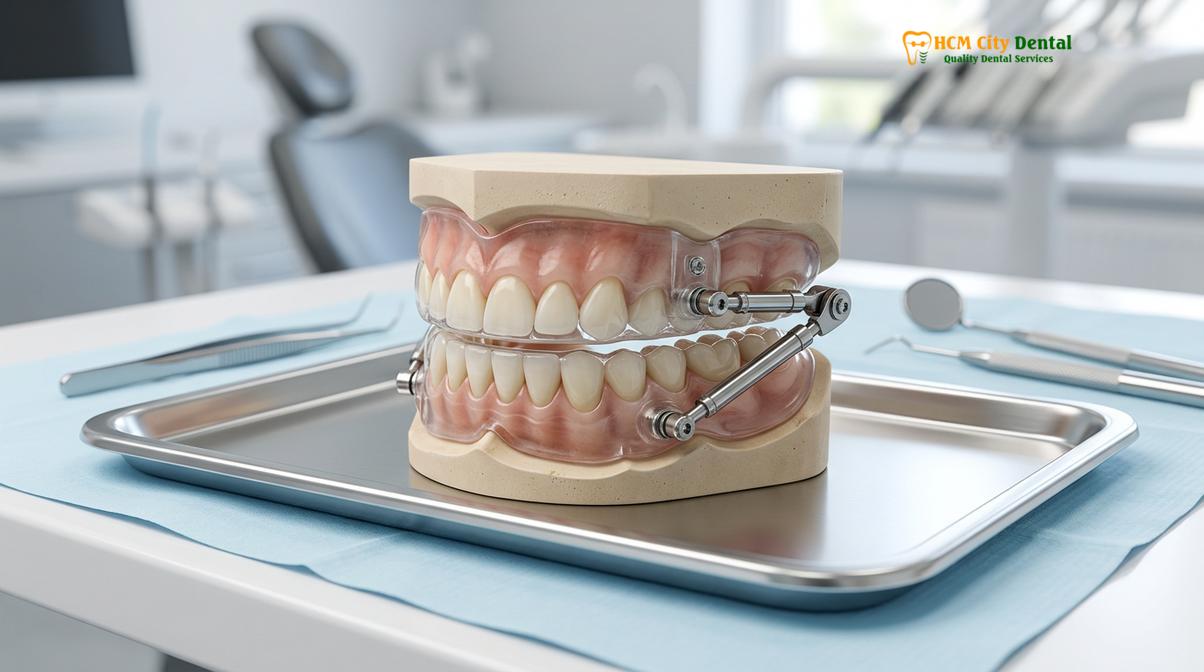
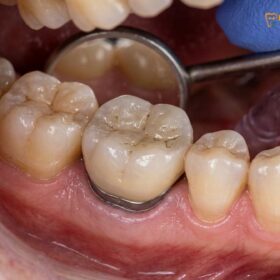
Furthermore, the customized nature of the acrylic base ensures that the forces of advancement are distributed evenly across the entire dental arch. At HCMC Dental Clinic in Ho Chi Minh City, the fabrication process begins with highly accurate intraoral digital scans, ensuring that the appliance fits snugly without placing undue pressure on any single tooth. This level of precision is what separates a professional, custom-made non-invasive snoring guard from over-the-counter “boil-and-bite” alternatives, which often cause bite misalignment and offer unpredictable clinical outcomes.
How the Herbst-Style Mechanism Protects Your Jaw
The Herbst-style mechanism protects the temporomandibular joint by distributing advancement forces evenly along the lateral telescopic rods, reducing mechanical stress and preventing morning jaw stiffness.
The core technology behind the Antisnoring Telescopic device is derived from the Herbst appliance, a well-documented orthodontic mechanism originally designed to correct severe overbites by encouraging mandibular growth. In the context of dental sleep medicine, the Herbst-style mechanism is repurposed to maintain a patent airway in adults. The mechanism consists of a sleeve and a plunger (the telescopic rods) attached to the upper and lower acrylic splints via precision-milled pivot points. This design acts as a mechanical piston; as the patient attempts to drop their jaw backward (which would normally close the airway), the rods engage and physically prevent the mandible from retrognathic collapse.
From a biomechanical perspective, this mechanism is highly protective of the TMJ. The temporomandibular joint is a complex hinge that relies on a delicate articular disc to cushion the movement of the condyle within the glenoid fossa. When a patient wears a rigid sleep appliance, any attempt to move the jaw against the locked acrylic creates severe compressive forces on the retrodiscal tissues, leading to inflammation and pain. A skilled Herbst mechanism dentist understands that by allowing the condyle to translate forward and laterally within a controlled range, the telescopic rods prevent this harmful compression. The joint remains decompressed, and synovial fluid can circulate normally, which is vital for joint health.[2]
“The incorporation of lateral telescopic mechanisms in mandibular advancement devices has revolutionized patient tolerance. By permitting natural lateral excursions during sleep, we significantly reduce the incidence of transient TMJ arthralgia, making long-term management of mild-to-moderate OSA highly sustainable.”
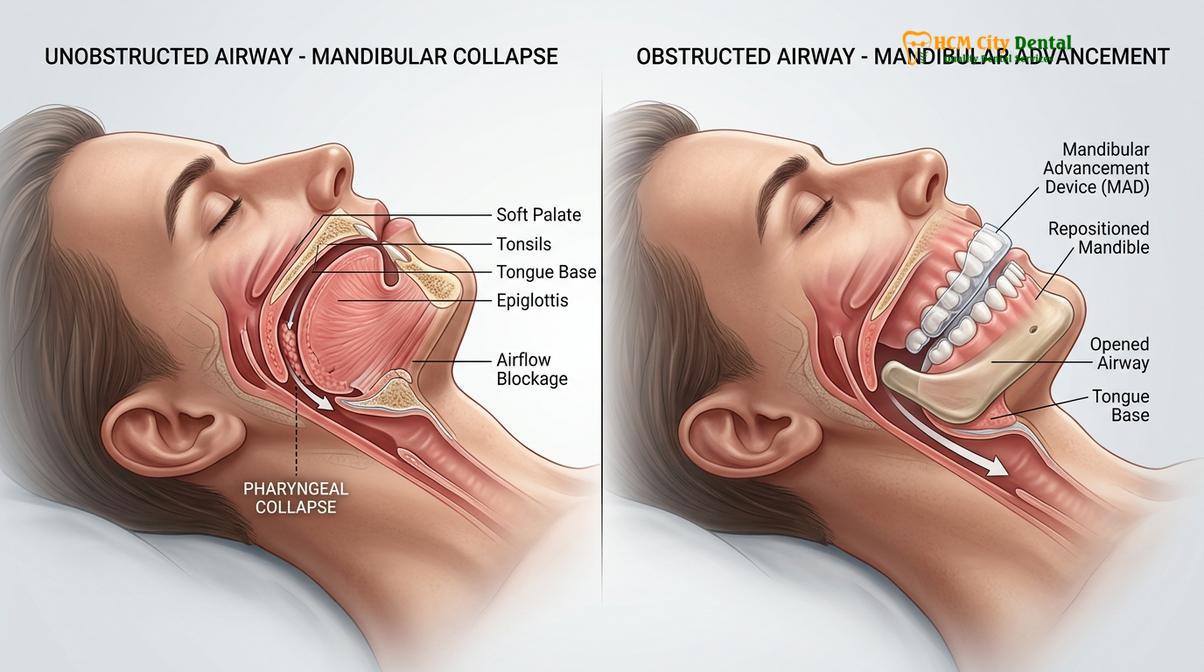
Additionally, the telescopic rods feature a micro-threaded adjustment system. This allows the dentist to perform precise “titration”—the process of gradually advancing the jaw over several weeks. Instead of forcing the jaw into a maximum forward position on the first night, the patient starts at a comfortable baseline. The rods are then adjusted in increments as small as 0.1 millimeters. This gradual calibration gives the ligaments and muscles of the jaw ample time to stretch and adapt, virtually eliminating the severe morning stiffness that causes many patients to abandon oral appliance therapy.
Candidacy: Who is Suitable for Telescopic Devices?
Ideal candidates are patients diagnosed with primary snoring or mild-to-moderate obstructive sleep apnea, particularly those who are intolerant to CPAP therapy and have healthy temporomandibular joints.
Determining candidacy for an Antisnoring Telescopic device requires a comprehensive evaluation of both the patient’s respiratory status and their dental health. The primary metric used to assess sleep apnea severity is the Apnea-Hypopnea Index (AHI), which measures the number of breathing pauses or shallow breaths per hour of sleep. Clinical guidelines indicate that oral appliances are highly effective as a first-line therapy for patients with mild OSA (AHI 5-15) to moderate OSA (AHI 15-30). For patients with severe OSA (AHI > 30), Continuous Positive Airway Pressure (CPAP) remains the gold standard; however, a custom MAD Thao Dien can be prescribed as a secondary option if the patient is strictly CPAP-intolerant.[3]
Important Clinical Disclaimer: Dentists DO NOT diagnose Obstructive Sleep Apnea. Diagnosing OSA requires a formal sleep study (Polysomnography or Home Sleep Apnea Test) evaluated by a board-certified sleep physician. Dentists collaborate with these physicians to fabricate custom oral appliances based on the confirmed medical diagnosis.
From a dental perspective, the patient must have a sufficient number of healthy teeth to anchor the appliance securely. The forces required to hold the jaw forward are substantial, and if the patient has severe periodontal disease, active tooth decay, or significant tooth loss, the appliance could cause unwanted tooth movement or exacerbate existing dental issues. Furthermore, a thorough TMJ joint check is mandatory. Patients with pre-existing, severe temporomandibular joint disorders (TMD) may not be suitable candidates, as the advancement of the jaw could aggravate their joint pain.
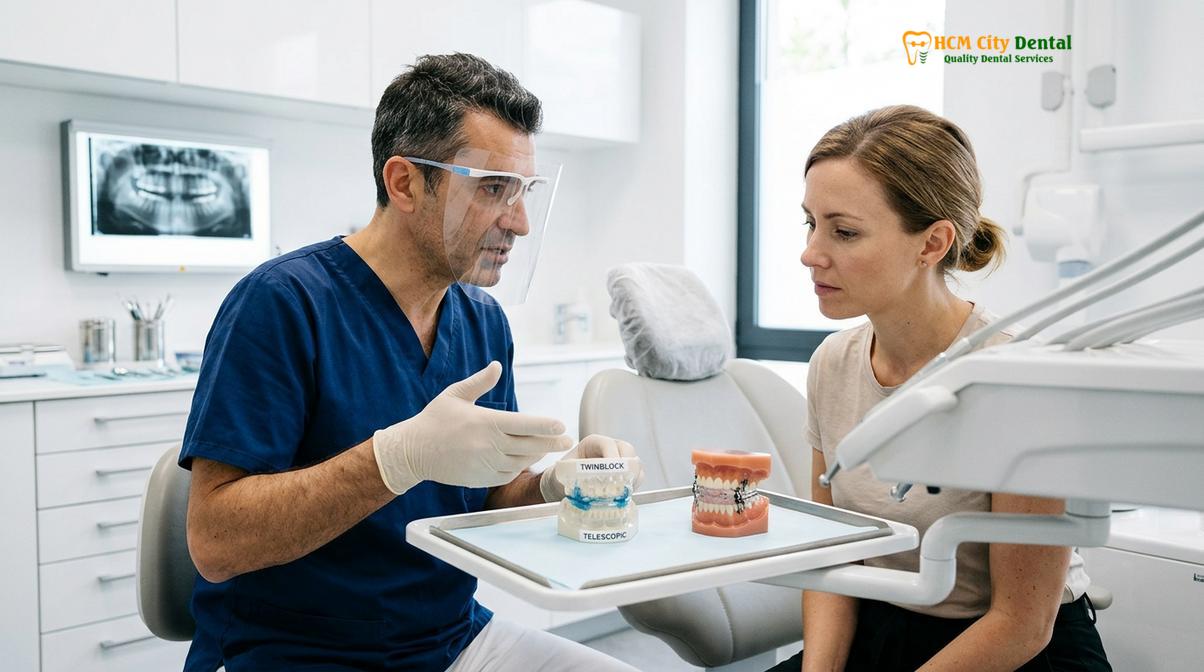
When discussing custom oral appliances, patients often compare different designs. At HCMC Dental Clinic, the two primary options are the Antisnoring Telescopic device and the Twinblock Snoring device. Understanding the mechanical and financial differences helps patients make informed decisions regarding their Sleep Apnea & Snoring treatment.
| Feature | Antisnoring Telescopic | Twinblock Snoring |
|---|---|---|
| Mechanism | Lateral metal telescopic rods (Herbst-style) | Two-piece interlocking 70-degree acrylic bite blocks |
| Jaw Mobility | High (Allows vertical opening and lateral movement) | Moderate (Jaw must remain engaged in the blocks) |
| Adjustability (Titration) | Micro-millimeter precision via adjustment key | Requires clinical acrylic modification by the dentist |
| Best Suited For | Patients needing precise titration and TMJ comfort | Patients who prefer no metal hardware in the mouth |
| Estimated Cost | 12,000,000 VND (~$480 USD) | 11,000,000 VND (~$440 USD) |
Fabrication and Titration with Dr. Nguyen Van Cuong
The fabrication process involves precise intraoral digital scans followed by a meticulous titration protocol overseen by Dr. Nguyen Van Cuong to ensure optimal airway expansion without joint strain.
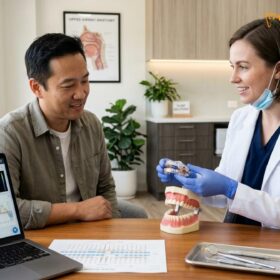
The success of any mandibular advancement device relies heavily on the precision of its fabrication and the accuracy of its clinical calibration. At HCMC Dental Clinic, the workflow is entirely digitized to maximize patient comfort and clinical outcomes. The process begins with a comprehensive consultation where the patient’s sleep study results are reviewed. Following this, Dr. Nguyen Van Cuong conducts a detailed examination of the oral cavity, assessing periodontal health, occlusal relationships, and TMJ function. If the patient is deemed a suitable candidate, the physical fabrication process begins.
Instead of using traditional, uncomfortable putty impressions that can trigger the gag reflex, the clinic utilizes advanced intraoral digital scans. A wand-like camera captures thousands of images per second, creating a highly accurate 3D model of the patient’s teeth and gums. Next, a specialized bite registration tool, often a George Gauge, is used to capture the patient’s bite in a protruded position. This establishes the starting point for the appliance. The digital files are then sent to a specialized dental laboratory where the acrylic base is milled and the telescopic hardware is precisely embedded.[4]
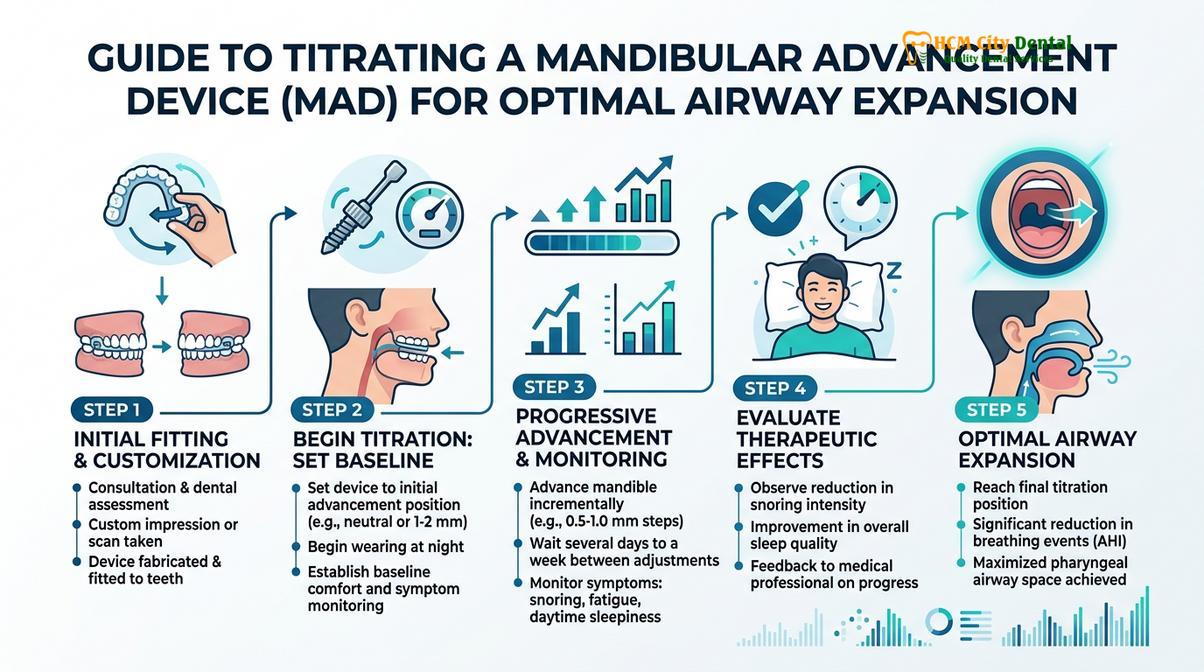
Clinical Case Example: A 45-year-old male patient visited HCMC Dental Clinic in Ho Chi Minh City presenting with severe primary snoring and mild OSA (AHI 14). He was completely intolerant to his CPAP machine due to claustrophobia. After a thorough assessment, he was fitted with an Antisnoring Telescopic device. Over a 4-week titration period, his jaw was advanced by 3.5mm. A follow-up Home Sleep Apnea Test confirmed his AHI had dropped to 4 (within normal limits), and his partner reported a complete cessation of snoring. The patient successfully claimed the 12,000,000 VND treatment cost through his international Cigna insurance policy.
Once the device is delivered, the most critical phase begins: titration. Titration is the gradual adjustment of the telescopic rods to find the “sweet spot”—the exact millimeter of advancement where the airway remains open, snoring ceases, and the jaw remains comfortable. Dr. Nguyen Van Cuong closely monitors this phase, instructing the patient on how to use the adjustment key at home. Typically, the patient advances the device by 0.1mm to 0.2mm every few nights. During follow-up appointments, joint checks are performed to ensure the TMJ is adapting well. This meticulous calibration is what ensures the high success rate of the therapy, balancing respiratory efficacy with musculoskeletal comfort.
When to See a Doctor
While oral appliances are highly effective, sleep apnea is a serious medical condition that requires careful monitoring. Patients should be aware of the clinical red flags that indicate their current therapy may not be sufficient, or that their condition requires immediate medical intervention. If you are wearing a telescopic device but continue to experience symptoms such as gasping for air during the night, waking up with a choking sensation, or suffering from severe, unmanageable daytime fatigue, you must consult a healthcare professional promptly.
Furthermore, if you experience persistent jaw pain, changes in your bite (where your upper and lower teeth no longer fit together correctly in the morning), or sharp pain in the temporomandibular joint that does not resolve within an hour of removing the device, you should stop wearing the appliance and contact your dentist immediately. These symptoms suggest that the device may be over-titrated or that the TMJ is under excessive strain. Effective management of sleep-disordered breathing is a collaborative effort. Dentists and sleep physicians must work together to monitor your AHI, oxygen desaturation levels, and overall cardiovascular health.[5]
“The management of obstructive sleep apnea requires a strict multidisciplinary approach. While custom oral appliances offer an excellent alternative to CPAP for many, continuous objective monitoring via follow-up sleep studies is essential to verify that the prescribed advancement is effectively preventing nocturnal hypoxic events.”
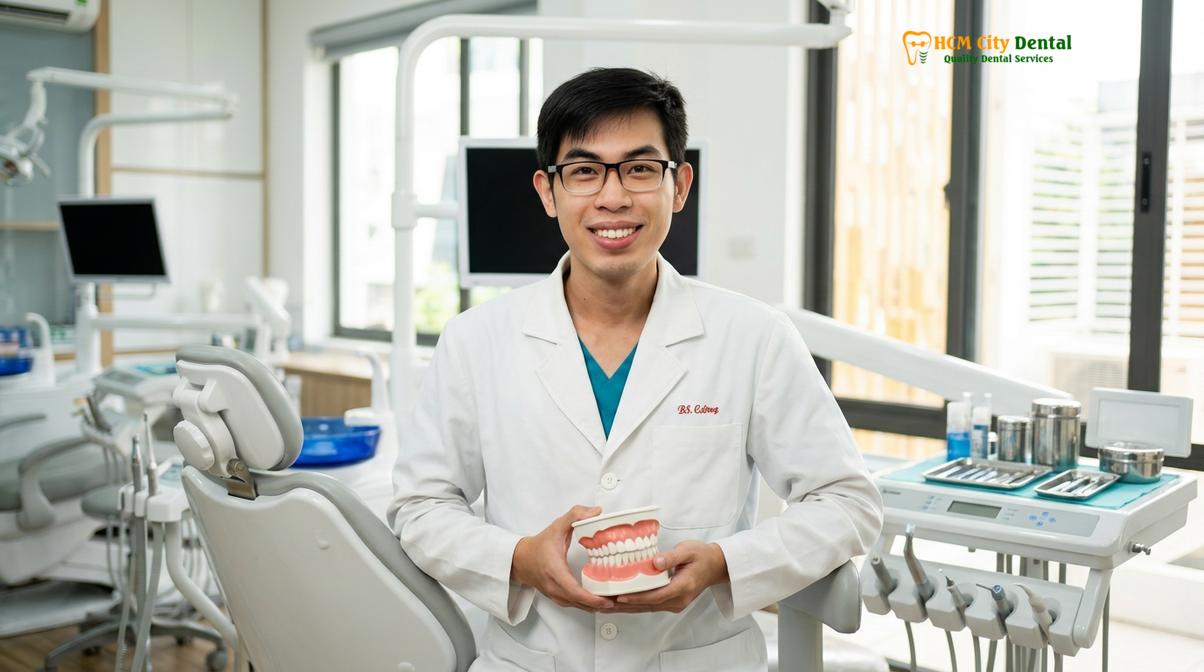
If you have been diagnosed with mild-to-moderate sleep apnea or struggle with disruptive snoring, a custom oral appliance may dramatically improve your quality of life. Patients can easily book a consultation via WhatsApp to discuss their candidacy, review international insurance claim procedures (such as Allianz or Cigna), and begin their journey toward restful, uninterrupted sleep.
Frequently Asked Questions
How does the telescopic adjuster work?
The telescopic adjuster works via lateral metal rods that can be lengthened or shortened using a specialized key, advancing the lower jaw in precise millimeter increments. This micro-calibration allows the dentist to gradually open the airway over several weeks, ensuring maximum oxygen flow while giving the jaw muscles time to adapt without strain. The piston-like movement also prevents the jaw from falling backward during deep sleep.
Is the telescopic device painful to wear?
No, the telescopic device is not painful to wear, though patients may experience mild, temporary jaw stiffness or excess salivation during the first few mornings of use. Because the Herbst-style mechanism allows for lateral and vertical jaw movement, it is generally considered much more comfortable than rigid, one-piece snoring guards. Any initial discomfort usually subsides within 15 to 30 minutes after removing the device in the morning.
How long does it take to make in District 1?
It typically takes about 7 to 10 days to fabricate a custom telescopic device in District 1 after your initial intraoral digital scans and bite registration are completed. During this time, the dental laboratory custom-mills the acrylic base and securely embeds the precision telescopic hardware to match your exact dental anatomy, ensuring a perfect, comfortable fit upon delivery.
Can I claim international insurance for this device?
Yes, many international insurance plans, such as Allianz and Cigna, cover custom oral appliances if they are prescribed for diagnosed obstructive sleep apnea. HCMC Dental Clinic provides all necessary clinical documentation, including itemized invoices, diagnostic codes, and the prescribing physician’s notes, to help patients process their direct billing or reimbursement claims efficiently.
What is the difference between Twinblock and Telescopic snoring devices?
The Twinblock uses interlocking 70-degree acrylic blocks to hold the jaw forward, while the Telescopic uses lateral metal rods that allow more natural jaw movement. The Twinblock is priced at 11,000,000 VND, whereas the highly adjustable Antisnoring Telescopic device is priced at 12,000,000 VND, making it ideal for patients requiring precise titration and maximum TMJ comfort.
References
- Journal of Dental Sleep Medicine. Mandibular advancement device efficacy and patient compliance. (2021).
- Sleep and Breathing. Telescopic Herbst appliance TMJ safety and lateral excursion. (2020).
- American Journal of Respiratory and Critical Care Medicine. CPAP vs oral appliances in mild-to-moderate OSA. (2019).
- Journal of Oral Rehabilitation. Titration protocols and airway expansion in dental sleep medicine. (2018).
- Journal of Clinical Sleep Medicine. Multidisciplinary approaches to obstructive sleep apnea diagnostics. (2022).