Sleep apnea dental implants require careful clinical management because nocturnal breathing disruptions often trigger severe bruxism. This involuntary clenching exerts immense mechanical stress on implant restorations. By utilizing custom oral appliances, patients can simultaneously maintain airway patency and protect their dental implants from catastrophic failure.
Clinical Summary:
Obstructive sleep apnea (OSA) frequently induces sleep-related bruxism as a subconscious physiological mechanism to reopen a collapsed airway. For patients with dental implants, these intense bruxism forces lack the cushioning effect of natural periodontal ligaments, drastically increasing the risk of implant crown fractures, abutment screw loosening, and peri-implant bone loss. To mitigate this, dentists collaborate with sleep physicians to provide dual-purpose therapies, such as Mandibular Advancement Devices (MADs). These custom appliances—including the Antisnoring Telescopic or Twinblock Snoring devices—reposition the mandible forward to prevent airway obstruction while simultaneously acting as a protective occlusal appliance to ensure the long-term restorative longevity of the implants.
Key Takeaways:
- Sleep-disordered breathing triggers nocturnal bruxism, multiplying the mechanical load on dental implants.
- Implants lack a periodontal ligament, making them highly vulnerable to fracture and bone loss from clenching.
- Full-arch restorations (like All-on-4) require thorough airway screening prior to fabrication to ensure tongue space.
- Custom MADs protect implant integrity while simultaneously managing mild-to-moderate OSA.
- Dentists do not diagnose sleep apnea; a formal sleep study evaluated by a physician is mandatory before appliance fabrication.
How sleep-disordered breathing increases mechanical force on implants
Obstructive sleep apnea triggers a sympathetic nervous system response that causes intense jaw clenching to reopen the airway, transferring massive mechanical forces directly onto dental implants.
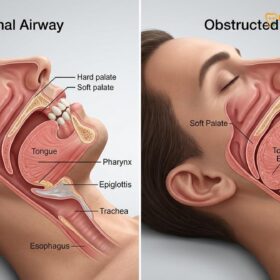
The physiological relationship between sleep-disordered breathing and nocturnal bruxism is a critical factor in modern implant dentistry. When a patient suffers from Obstructive Sleep Apnea (OSA), the soft tissues at the back of the throat collapse during sleep, leading to a partial or complete airway obstruction. This blockage prevents adequate airflow, resulting in a rapid drop in blood oxygen levels, a condition known clinically as oxygen desaturation[1]. As the brain detects this dangerous hypoxic state, it initiates a micro-arousal to prevent asphyxiation.
During this micro-arousal, the body experiences a massive surge in sympathetic nervous system activity—the “fight or flight” response. This neurological spike triggers rhythmic masticatory muscle activity (RMMA), causing the patient to subconsciously grind and clench their teeth with extreme force. The evolutionary purpose of this clenching is to activate the dilator muscles of the pharynx and thrust the lower jaw forward, thereby reopening the collapsed airway. However, while this mechanism temporarily restores breathing, it generates destructive bruxism forces that are highly detrimental to dental restorations.
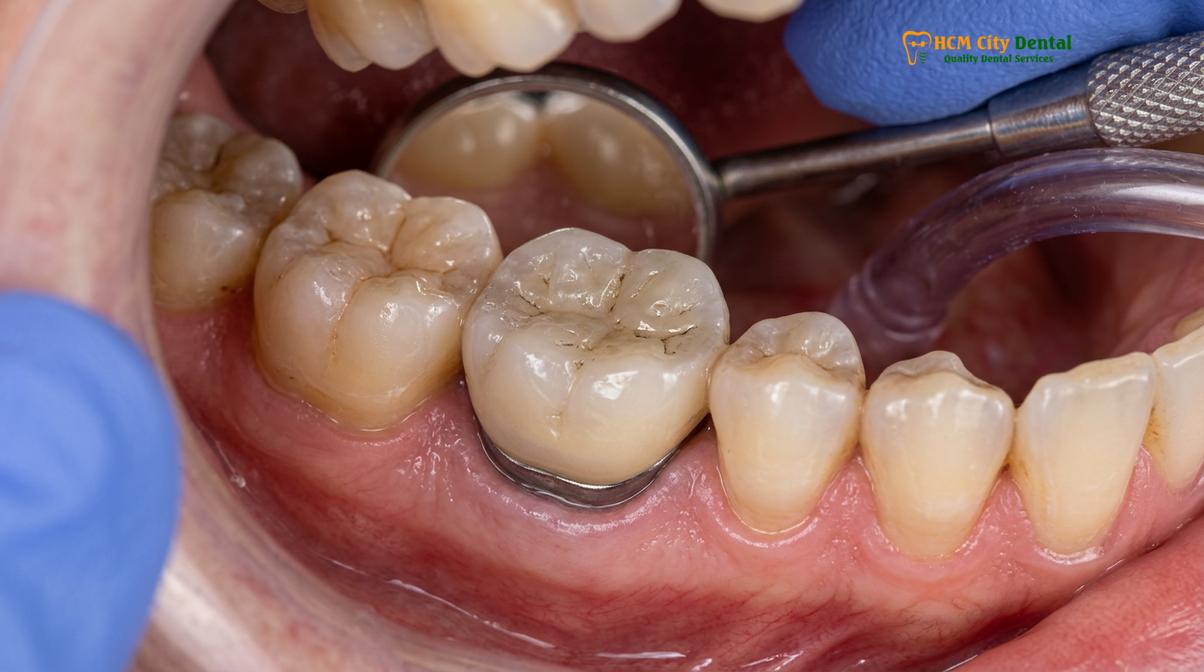
For a patient with natural teeth, these forces are somewhat mitigated by the body’s natural shock absorbers. But for a patient with dental implants, the scenario is vastly different. The mechanical load generated during an apneic episode can exceed 800 pounds per square inch (PSI). Because these episodes can occur dozens of times per hour—measured clinically as the Apnea-Hypopnea Index (AHI)—the cumulative mechanical stress placed on the titanium fixtures and prosthetic crowns is immense. Understanding this cycle is the first step in protecting the structural integrity of sleep apnea dental implants.
The risk of implant crown fractures and bone loss from nocturnal clenching
Because dental implants lack the shock-absorbing periodontal ligament found in natural teeth, the excessive bruxism forces generated during sleep apnea episodes drastically increase the risk of structural failure and bone resorption.
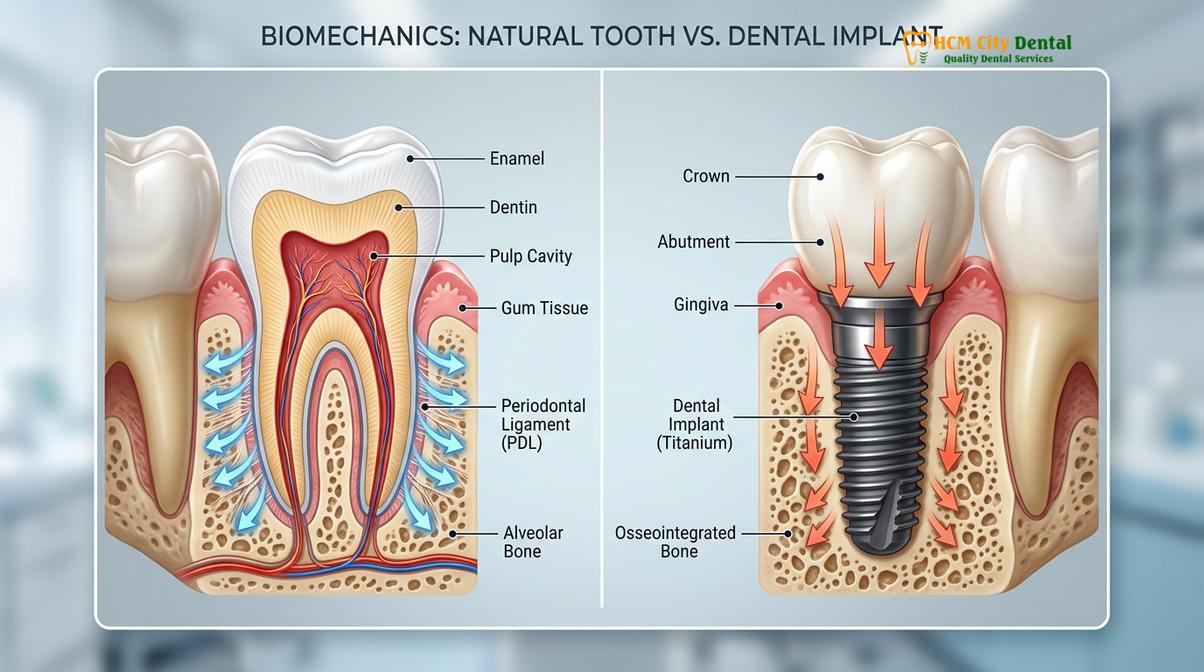
To fully comprehend the implant failure risk associated with sleep apnea, one must examine the fundamental biomechanical differences between a natural tooth and a dental implant. A natural tooth is suspended in the jawbone by the periodontal ligament (PDL), a fibrous connective tissue roughly 0.2 millimeters thick. The PDL acts as a natural shock absorber, allowing the tooth to compress slightly under pressure. More importantly, the PDL contains highly sensitive mechanoreceptors that provide proprioception. If a person bites down too hard, these receptors trigger a neurological reflex that instantly relaxes the jaw muscles, preventing damage.
Dental implants, conversely, are osseointegrated. This means the titanium post is fused directly to the surrounding alveolar bone with absolutely no intervening ligament. Implants have zero mobility and significantly reduced tactile sensitivity, a condition known as reduced osseoperception. When a patient with untreated OSA experiences a severe bruxism episode, the protective jaw-opening reflex is delayed or absent. The massive occlusal forces bypass any shock absorption and are transmitted directly into the crestal bone and the implant components[2].
The clinical consequences of this direct force transmission are severe. The most immediate complication is often the chipping or catastrophic fracture of the porcelain or zirconia crown. Beneath the surface, the repetitive micro-trauma can lead to abutment screw loosening or even the fracture of the titanium screw itself. Furthermore, the excessive lateral forces generated by grinding can cause micro-damage to the surrounding crestal bone. Over time, this mechanical overload leads to crater-like peri-implant bone loss, compromising the foundation of the implant and potentially leading to complete fixture failure.
Why full-arch All-on-4 patients should be screened for airway issues
Patients receiving full-arch implant rehabilitations must undergo airway screening, as a bulky prosthesis can inadvertently restrict airway space or suffer catastrophic damage from undiagnosed sleep-related bruxism.
The rehabilitation of a completely edentulous arch using the All-on-4 or All-on-6 protocol is a life-changing procedure. However, replacing an entire arch of teeth fundamentally alters the internal volume of the oral cavity and the vertical dimension of occlusion. For this reason, screening for airway issues is an indispensable step in the treatment planning phase. If a full-arch prosthesis is designed with excessive thickness on the lingual (tongue) side, it can force the tongue backward into the oropharyngeal space. In a supine position during sleep, this relative macroglossia can exacerbate or even induce airway obstruction.
Furthermore, the restorative longevity of a full-arch implant bridge is heavily dependent on managing occlusal forces. Because a full-arch bridge connects multiple implants rigidly together, the entire system must withstand the cumulative forces of mastication and parafunction. If a patient has undiagnosed OSA and engages in severe nocturnal clenching, the rigid acrylic or zirconia framework is subjected to immense bending moments. This can lead to the fracture of the prosthetic framework or the failure of the supporting implants.
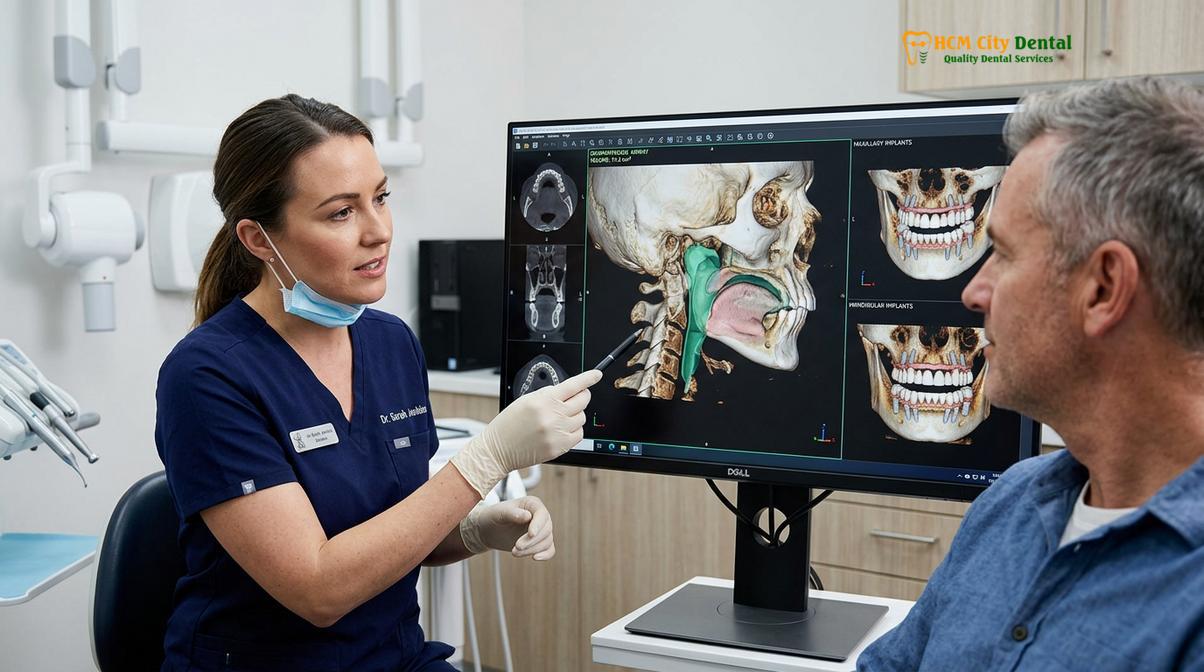
To prevent these complications, modern dental workflows utilize advanced diagnostic imaging. Intraoral digital scans and 3D Cone Beam Computed Tomography (CBCT) allow the clinician to evaluate the airway volume and precisely plan the restorative space. By identifying airway constriction before surgery, the dental team can design a prosthesis that supports the soft tissues without encroaching on the tongue space, ensuring both functional breathing and structural durability[3].
Using custom Telescopic guards to protect implants and keep airways open
Advanced dual-purpose oral appliances, such as Telescopic guards, are engineered to advance the mandible for optimal airflow while simultaneously shielding fragile implant restorations from destructive grinding forces.
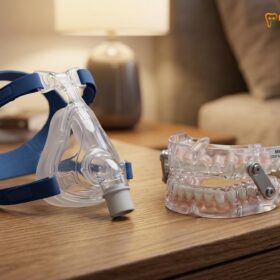
For patients who already have dental implants and suffer from mild-to-moderate OSA, Continuous Positive Airway Pressure (CPAP) therapy remains the gold standard. However, for those who are CPAP-intolerant, custom Mandibular Advancement Devices (MADs) offer a highly effective alternative. These devices serve a dual purpose: they act as a protective occlusal appliance to shield the implants from bruxism, and they physically reposition the lower jaw forward to maintain an open airway.
At HCMC Dental Clinic, two primary types of custom appliances are utilized based on the patient’s anatomical needs and implant distribution:
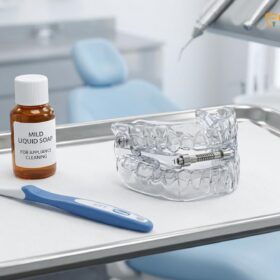
- Antisnoring Telescopic: This device utilizes a Herbst-style mechanism featuring lateral telescopic rods. The unique advantage of this design is that it allows for both side-to-side (lateral) and vertical jaw movement while keeping the mandible advanced. This freedom of movement is crucial for minimizing temporomandibular joint (TMJ) stiffness and preventing the appliance from acting as a rigid lever against the dental implants. (Currently priced at 12,000,000 VND / ~$480 USD with WhatsApp discount).
- Twinblock Snoring: This is a two-piece device featuring interlocking 70-degree bite blocks. When the patient closes their mouth, the angled blocks naturally guide the lower jaw into a forward position. It is highly effective for patients who need significant advancement and provides robust coverage over the occlusal surfaces of the teeth and implants. (Currently priced at 11,000,000 VND / ~$440 USD with WhatsApp discount).
| Appliance Feature | Antisnoring Telescopic | Twinblock Snoring |
|---|---|---|
| Mechanism | Lateral telescopic rods (Herbst-style) | Interlocking 70-degree bite blocks |
| Jaw Mobility | High (allows lateral and vertical movement) | Moderate (guides jaw forward upon closure) |
| TMJ Impact | Minimizes joint stiffness and locking | Requires careful adaptation period |
| Estimated Cost | 12,000,000 VND (~$480 USD) | 11,000,000 VND (~$440 USD) |
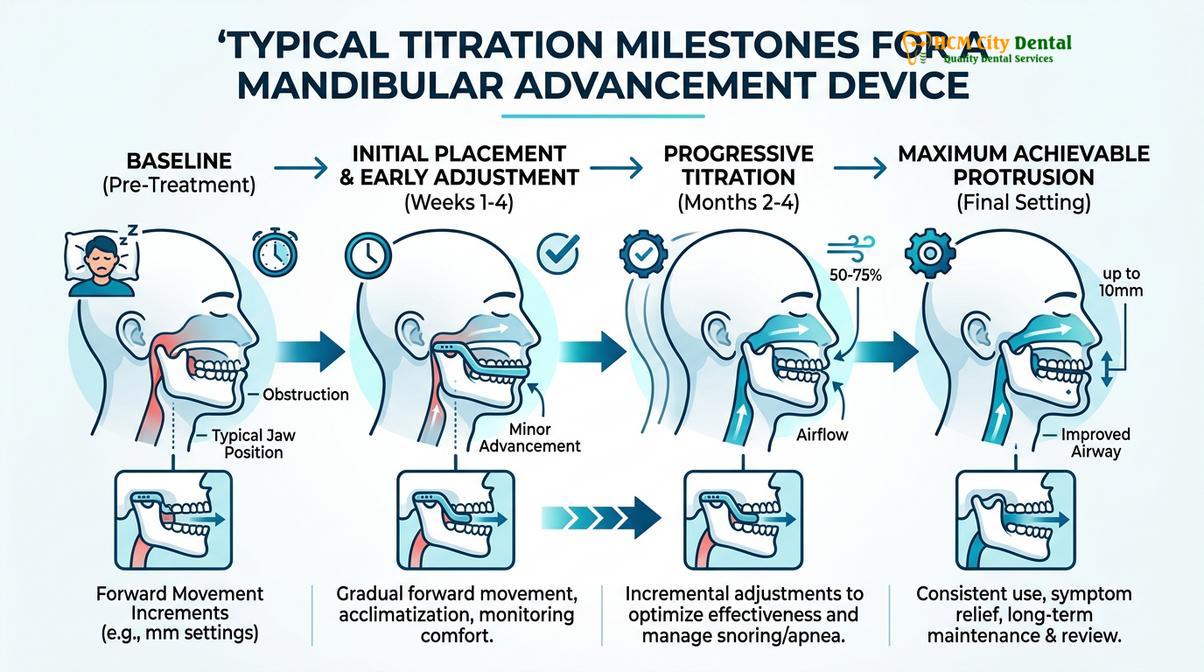
The success of these devices relies heavily on precise calibration, known as titration. The dentist will gradually advance the appliance in micro-increments (often 0.25mm at a time) over several weeks. This slow progression allows the jaw muscles and ligaments to adapt, preventing TMJ pain.
“The integration of lateral mobility in telescopic sleep appliances is a game-changer for implant patients. It prevents the rigid locking of the mandible, thereby reducing stress on both the temporomandibular joint and the osseointegrated fixtures, ensuring long-term comfort and safety.”
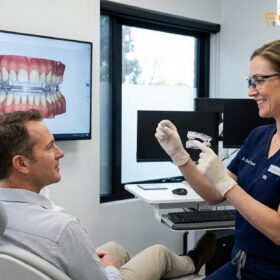
During the titration phase, routine TMJ joint checks are mandatory to ensure the condyle is not being compressed. Furthermore, the internal fitting surface of the appliance must be meticulously adjusted using intraoral digital scans to ensure it does not place excessive lateral torque on the implant abutments[4].
When to See a Doctor
If you experience chronic loud snoring, wake up gasping for air, suffer from excessive daytime fatigue, or notice frequent chipping of your dental implant crowns, it is critical to seek professional medical and dental evaluation. The management of sleep-disordered breathing is strictly a multidisciplinary endeavor.
It is vital to understand the medical boundaries: Dentists DO NOT diagnose sleep apnea. The formal diagnosis of OSA requires a comprehensive sleep study—either an in-lab Polysomnography (PSG) or a Home Sleep Apnea Test (HSAT)—which must be evaluated and interpreted by a board-certified sleep physician. Attempting to treat suspected sleep apnea with an over-the-counter boil-and-bite mouthguard without a proper medical diagnosis can be dangerous, as it may mask symptoms while the underlying hypoxia continues to damage your cardiovascular system.
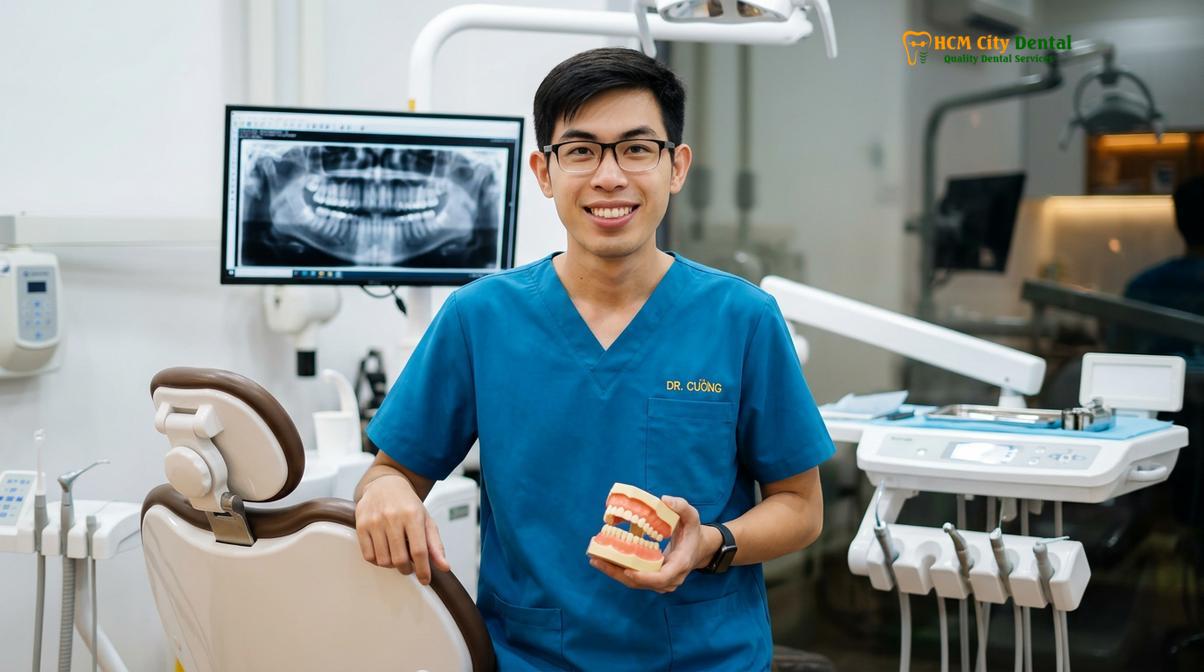
“At our practice, we emphasize that airway management is a multidisciplinary effort. While we can design precise appliances to protect your implants and keep the airway open, the foundational diagnosis must always come from a board-certified sleep physician,” explains Dr. Nguyen Van Cuong.
Once a sleep physician has diagnosed mild-to-moderate OSA, or determined that a patient with severe OSA is CPAP-intolerant, the physician will provide a prescription for oral appliance therapy. At this stage, the dental specialist steps in to fabricate the custom MAD. The dentist will take precise digital impressions, evaluate the health of the surrounding bone and implants, and design an appliance that balances airway patency with restorative protection[5]. If you are ready to explore how custom appliances can protect your implants and improve your sleep, learn more about our comprehensive approach to Sleep Apnea & Snoring.
Frequently Asked Questions
Can clenching from sleep apnea cause dental implants to fail?
Yes, the intense clenching associated with sleep apnea can cause dental implants to fail by overloading the titanium fixtures and prosthetic crowns. Because implants lack a shock-absorbing periodontal ligament, the excessive bruxism forces generated during apneic episodes transfer directly to the surrounding bone. This can lead to screw loosening, porcelain fractures, and peri-implant bone loss over time.
Is it safe to wear an MAD over implant-supported bridges?
It is generally safe to wear a Mandibular Advancement Device (MAD) over implant-supported bridges, provided the appliance is custom-designed to distribute forces evenly. A poorly fitted over-the-counter device can exert lateral pressure on specific implants, risking failure. A clinical specialist will use intraoral digital scans to design a custom MAD that anchors securely without placing undue stress on the implant abutments.
Should I get my sleep apnea treated before getting implants?
Yes, it is highly recommended to have your sleep apnea diagnosed and managed before undergoing complex dental implant surgery. Untreated sleep apnea increases the risk of surgical complications and post-operative implant failure due to nocturnal bruxism. Coordinating with a sleep physician ensures your airway is stabilized, which significantly improves the restorative longevity of your new implants.
How does a dentist adjust a sleep apnea appliance for implant patients?
Dentists adjust sleep apnea appliances for implant patients through a careful titration process that gradually advances the jaw while monitoring the bite. During follow-up visits, the dentist performs TMJ joint checks and evaluates the occlusal contacts on the implant crowns. The goal is to achieve maximum airway patency without causing joint pain or placing excessive mechanical load on the dental implants.
What is the difference between a standard night guard and a sleep apnea appliance?
A standard night guard only protects teeth from grinding, whereas a sleep apnea appliance actively repositions the lower jaw forward to keep the airway open. While a basic night guard provides a protective occlusal barrier, it does not prevent airway obstruction and can sometimes worsen sleep apnea by pushing the tongue backward. A custom MAD serves a dual purpose: protecting dental implants and treating mild-to-moderate OSA.
References
- Journal of Dental Sleep Medicine. Mandibular advancement device efficacy. (2021).
- American Journal of Respiratory and Critical Care Medicine. CPAP vs oral appliances. (2019).
- Sleep and Breathing. Telescopic Herbst appliance TMJ safety. (2020).
- Journal of Clinical Sleep Medicine. HSAT diagnostic reliability. (2022).
- Journal of Oral Rehabilitation. Titration protocols in dental sleep medicine. (2018).