Finding a reliable anti snoring device clinic in Vietnam involves seeking specialized dental providers who fabricate custom Mandibular Advancement Devices (MADs). At HCMC Dental Clinic, we utilize digital scanning to create precision-fit appliances, offering effective solutions for primary snoring and mild-to-moderate obstructive sleep apnea.
Clinical Summary:
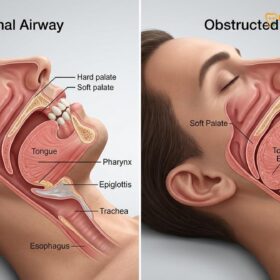
Custom oral appliances provide a non-invasive, highly compliant alternative to CPAP therapy for managing airway obstruction during sleep. Dental professionals collaborate closely with sleep physicians to design precision devices, such as the Antisnoring Telescopic and Twinblock Snoring guards. By gently repositioning the mandible forward, these custom-fitted appliances prevent soft tissue collapse in the posterior pharynx, significantly reducing oxygen desaturation events and mitigating the disruptive acoustics of primary snoring.
Key Takeaways:
- Custom oral appliances effectively treat primary snoring and mild-to-moderate obstructive sleep apnea.
- Formal diagnosis requires a sleep study evaluated by a medical physician prior to device fabrication.
- Digital intraoral scans ensure a precise, comfortable fit without the use of messy traditional impression materials.
- The Antisnoring Telescopic device allows lateral jaw movement, protecting the temporomandibular joint (TMJ).
- Fabrication typically requires a streamlined three-day lab turnaround time for international patients.
The 2-Visit Digital Scanning Workflow at HCMC Dental Clinic
Our streamlined two-visit protocol utilizes advanced digital intraoral scanning to capture precise anatomical data, ensuring your custom sleep appliance fits perfectly while minimizing chair time.
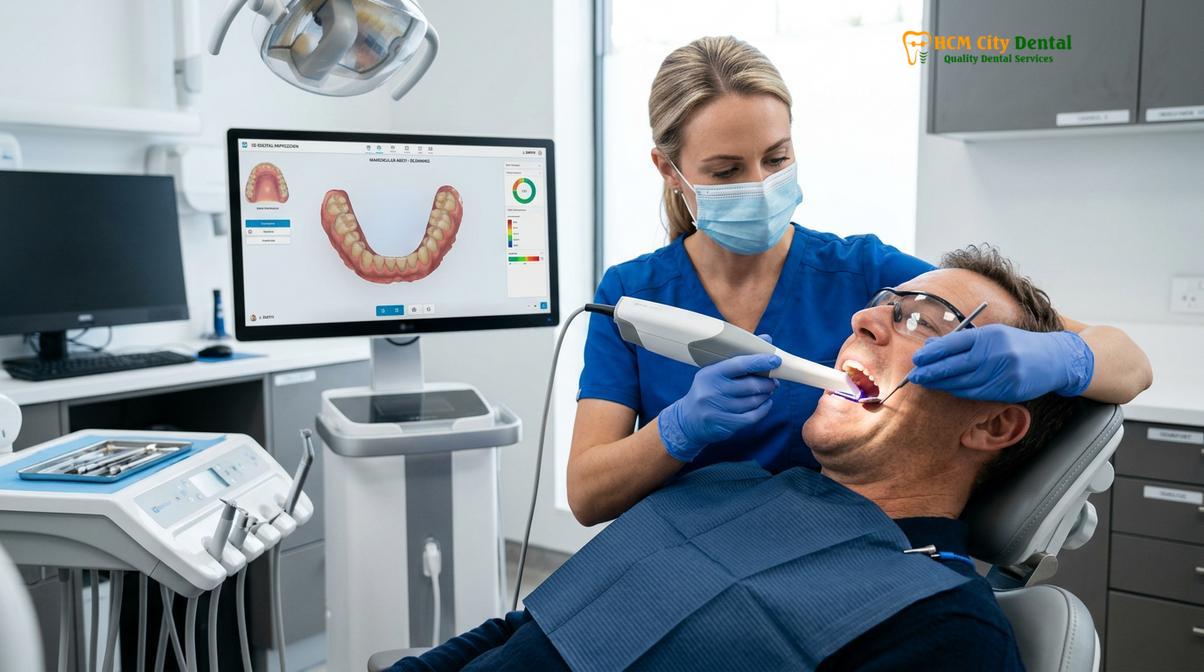
The foundation of an effective mandibular advancement device lies in the precise capture of the patient’s oral anatomy. Traditional alginate or PVS impressions can be uncomfortable, particularly for patients with a strong gag reflex, and are susceptible to dimensional distortion. To overcome these clinical challenges, our facility employs high-resolution digital intraoral scans. This technology captures thousands of images per second, stitching them together to create a flawless 3D rendering of the dental arches and the patient’s unique occlusal relationship.
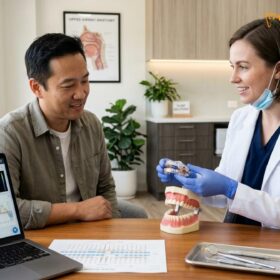
During the initial consultation, comprehensive TMJ joint checks are mandatory. According to Dr. Nguyen Van Cuong, a thorough clinical perspective on airway scanning and joint checks is paramount before fabricating any mandibular advancement device. The temporomandibular joint must be evaluated for signs of crepitus, clicking, or restricted range of motion, as advancing the lower jaw during sleep places altered biomechanical forces on these structures [1]. If a patient exhibits pre-existing joint pathology, the choice of appliance and the degree of initial advancement must be carefully calibrated to prevent exacerbating the condition.
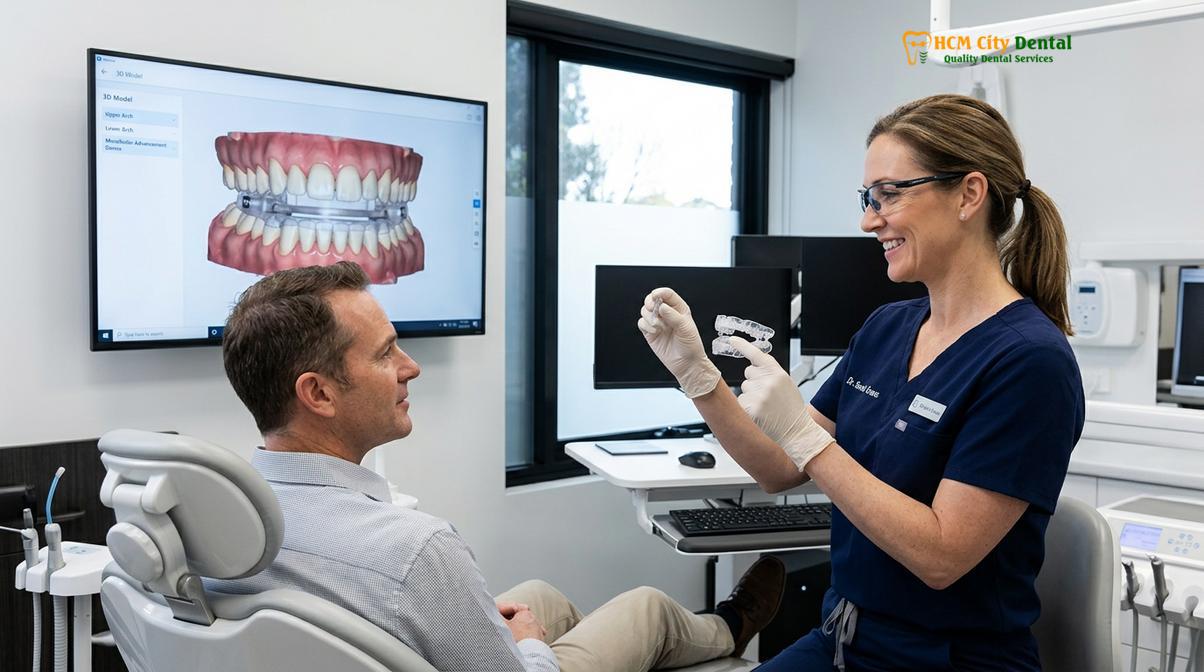
Beyond the physical scan, the first visit involves a detailed discussion of the patient’s sleep history. While dentists focus on the mechanical fabrication of custom sleep apnea appliances, understanding the patient’s Apnea-Hypopnea Index (AHI) and history of airway obstruction is crucial. The digital data is then transmitted instantly to the dental laboratory, accompanied by a precise bite registration taken with the mandible in a protruded position. This “construction bite” dictates the baseline therapeutic position of the device, aiming to open the posterior airway space sufficiently to reduce snoring acoustics and prevent apneic events.
Lab fabrication times: How we deliver custom guards in 3 days
By integrating in-house digital design with specialized dental laboratories, we achieve a rapid three-day lab turnaround time for custom snoring guards without compromising clinical quality.
For international patients and busy professionals, minimizing the waiting period between the initial scan and the final delivery of the appliance is a critical factor. The efficiency of our workflow is driven by the seamless digital transfer of intraoral data. Once the laboratory receives the STL files, CAD/CAM software is utilized to design the appliance framework. The devices are then fabricated using biocompatible, medical-grade materials designed to withstand the rigorous forces of nocturnal bruxism and sustained mandibular advancement.
At our facility, we primarily offer two distinct types of custom oral appliances, each engineered to address specific anatomical needs and patient preferences. The selection between these devices is based on the patient’s TMJ health, required degree of advancement, and budget.
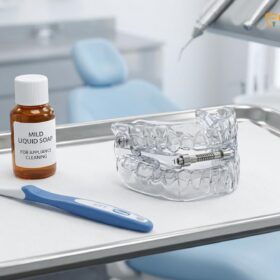
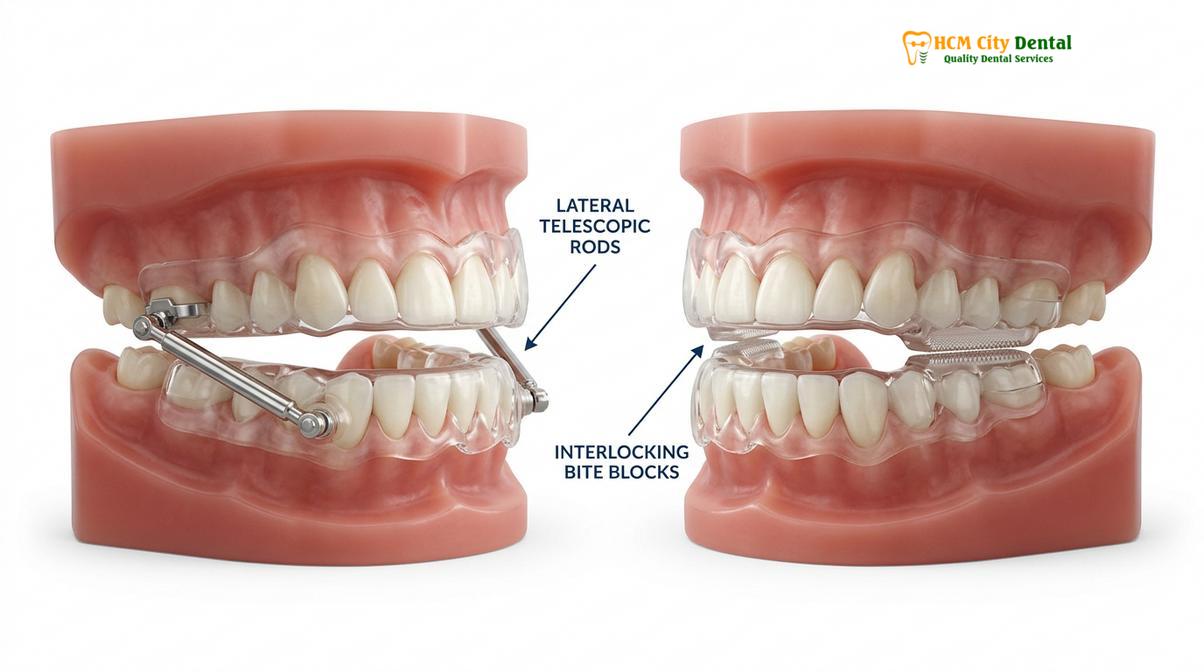
The Antisnoring Telescopic device utilizes a Herbst-style mechanism featuring lateral telescopic rods. This sophisticated design allows for side-to-side and vertical jaw movement while maintaining the forward posture of the mandible. By permitting this lateral mobility, the device significantly minimizes TMJ stiffness and muscular fatigue upon waking [2]. It is highly recommended for patients who naturally grind their teeth or those with a history of mild joint sensitivity. The investment for this premium device is currently 12,000,000 VND (approximately $480 USD when utilizing our WhatsApp booking discount).
Alternatively, the Twinblock Snoring device is a robust, two-piece appliance featuring interlocking 70-degree bite blocks. When the patient closes their mouth, the angled blocks guide the lower jaw forward into the predetermined therapeutic position. While it restricts lateral movement more than the telescopic variant, it is highly effective for maintaining a patent airway and is often preferred for its streamlined profile. The Twinblock is priced at 11,000,000 VND (approximately $440 USD with the WhatsApp discount).
| Appliance Feature | Antisnoring Telescopic | Twinblock Snoring |
|---|---|---|
| Mechanism | Herbst-style lateral telescopic rods | Interlocking 70-degree bite blocks |
| Jaw Mobility | Allows side-to-side and vertical movement | Fixed forward guidance, limited lateral movement |
| TMJ Impact | Minimizes stiffness, ideal for bruxers | Stable support, requires healthy baseline TMJ |
| Estimated Cost | 12,000,000 VND (~$480 USD) | 11,000,000 VND (~$440 USD) |
Scheduling buffer days for titration and initial fit feedback
Patients should allocate a few extra days in their itinerary for a dedicated fitting and calibration visit, allowing our team to adjust the device for optimal airway clearance and comfort.
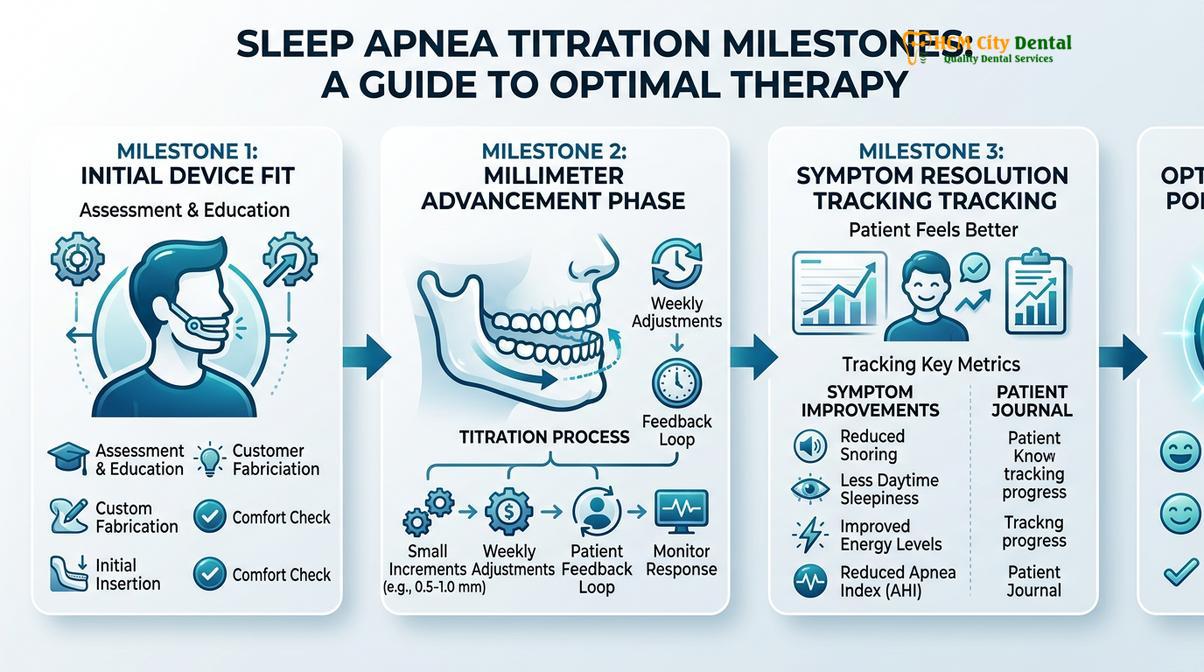
Receiving the physical appliance is only the midpoint of the therapeutic journey. The true efficacy of a mandibular advancement device relies heavily on the titration process. Titration is the gradual, millimeter-by-millimeter adjustment of the device to find the optimal balance between airway patency and patient comfort. Advancing the jaw too aggressively can lead to severe muscular discomfort and joint pain, while insufficient advancement will fail to resolve the oxygen desaturation and snoring symptoms [3].
During the fitting and calibration visit, the dentist will seat the appliance, checking for any areas of excessive pressure on the gingiva or dentition. The patient is instructed on how to insert, remove, and clean the device. More importantly, the initial advancement setting is verified. Patients are typically advised to wear the device at this baseline setting for several nights to allow the facial musculature to adapt.
“Successful oral appliance therapy is rarely achieved on the first night. A systematic titration protocol, guided by both subjective patient feedback and objective sleep data, is essential for maximizing compliance and reducing the Apnea-Hypopnea Index without compromising the temporomandibular joint.”
We strongly recommend that international patients build buffer days into their travel schedule. Wearing the device for two to three nights while still in the city allows the patient to return to the clinic for immediate adjustments. If the patient reports that snoring persists, the telescopic rods or bite blocks can be advanced slightly. Conversely, if the patient experiences morning jaw pain, the advancement can be reduced. This immediate feedback loop is critical for long-term success and high patient compliance.
Expat and tourist planning: Coordinating appointments before arrival
International patients can seamlessly integrate their treatment into a dental tourism itinerary by coordinating initial consultations and insurance documentation via WhatsApp prior to arriving in Saigon.
Ho Chi Minh City has emerged as a premier destination for high-quality, cost-effective dental and medical care. For expats living in neighboring countries or tourists planning a visit, obtaining a custom anti-snoring device can be easily integrated into a broader dental tourism itinerary. To maximize efficiency, we encourage patients to initiate contact via WhatsApp weeks before their flight. This allows our clinical coordination team to review any existing dental records, X-rays, or previous sleep study reports.
A typical itinerary for an international patient involves arriving in Ho Chi Minh City and attending the initial consultation and digital scan on Day 1. The laboratory then requires three full days for fabrication. On Day 4 or 5, the patient returns for the fitting and calibration visit. By Day 7, after a few nights of trial wear, a final review is conducted to ensure the device is comfortable and functioning as intended before the patient flies home.
Clinical Case Example:
A 45-year-old expatriate patient visited HCMC Dental Clinic presenting with primary snoring and mild CPAP intolerance. After reviewing his recent sleep study, the clinical team captured a digital intraoral scan and fabricated an Antisnoring Telescopic device. By coordinating his appointments via WhatsApp, the patient received his custom appliance within four days. Following a minor titration adjustment on day six, he reported a significant reduction in snoring acoustics and improved sleep quality, with no reported TMJ discomfort upon waking.
Financial planning is also a vital component of the international patient experience. Many patients are pleased to discover that custom oral appliances may be partially or fully covered by international health insurance policies, provided there is a formal medical diagnosis of obstructive sleep apnea. Our administrative team is highly experienced in providing the necessary itemized receipts, clinical treatment notes, and standard medical billing codes required by major global insurers such as Allianz and Cigna. This documentation empowers patients to submit direct reimbursement claims efficiently upon returning to their home country.
Important Clinical Considerations (When to See a Doctor)
While custom oral appliances are highly effective mechanical solutions for airway management, it is imperative to understand the boundaries of dental sleep medicine. Dentists are experts in the oral cavity and the fabrication of intraoral devices; however, dentists DO NOT diagnose sleep apnea. Obstructive sleep apnea is a complex medical condition that carries significant systemic risks, including hypertension, cardiovascular disease, and metabolic dysfunction.
Medical Disclaimer: A custom mandibular advancement device should only be fabricated following a formal evaluation by a qualified medical professional. Patients must undergo a diagnostic sleep study to determine the severity of their condition before seeking dental appliance therapy.
Diagnosing the root cause of airway obstruction requires a comprehensive sleep study, either through in-lab Polysomnography (PSG) or a Home Sleep Apnea Test (HSAT) [4]. These tests measure critical parameters such as brain wave activity, blood oxygen levels, heart rate, and breathing effort. The results are evaluated by a board-certified sleep physician who will determine the patient’s AHI and recommend appropriate treatment modalities.
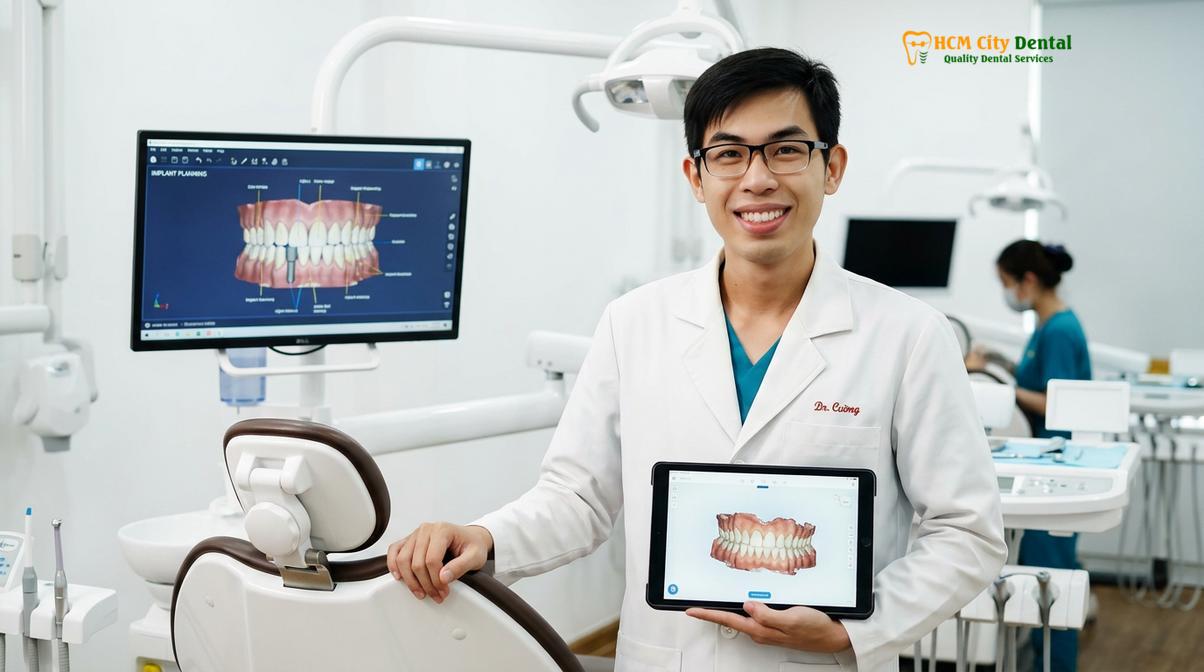
Dr. Cuong emphasizes that while dental appliances are highly effective for structural airway support, they must follow a formal medical diagnosis. Dentists collaborate with sleep physicians to fabricate custom oral appliances specifically for patients diagnosed with mild-to-moderate OSA, those who are strictly CPAP-intolerant, or individuals suffering from primary snoring without underlying apneic events [5]. Severe cases of sleep apnea typically require CPAP therapy or surgical intervention, and an oral appliance may only be used as an adjunct therapy under strict medical supervision.
“The integration of Home Sleep Apnea Testing (HSAT) has revolutionized patient access to diagnostics. However, the interpretation of these results remains strictly within the purview of medical physicians. Dental professionals act as therapeutic partners, providing the mechanical intervention required to keep the airway patent based on the physician’s diagnostic blueprint.”
If you experience symptoms such as chronic loud snoring, witnessed gasping or choking during sleep, excessive daytime sleepiness, or morning headaches, it is crucial to consult a medical doctor for a sleep evaluation before pursuing any anti-snoring devices. Once a diagnosis is established and an oral appliance is recommended, our clinical team in Ho Chi Minh City is ready to provide precision-crafted, comfortable solutions to restore your restorative sleep.
Frequently Asked Questions
Can I get a custom snoring guard made in 48 hours?
While our standard lab turnaround time is three days, expedited 48-hour fabrication may be possible depending on lab capacity and case complexity. Patients requesting rush services should contact our clinic via WhatsApp prior to their arrival so we can reserve dedicated laboratory time for their custom appliance. Please note that expedited services may incur an additional laboratory rush fee.
Do I need to send my dental records before I arrive in Saigon?
Yes, sending your recent dental X-rays and sleep study results via WhatsApp before your arrival helps our clinical team evaluate your candidacy immediately. Having your Polysomnography or HSAT results on hand allows our dentists to collaborate effectively with your sleep physician regarding the required degree of mandibular advancement and ensures you are a safe candidate for the device.
What happens if the device needs adjustment after I fly home?
Minor adjustments can often be guided remotely, but significant titration changes may require you to visit a local dental sleep medicine specialist. We provide detailed clinical notes and device specifications so your local provider can seamlessly continue your titration and calibration process without needing to fabricate a new device from scratch.
Will my international insurance cover an oral sleep appliance?
Many international insurance providers, such as Allianz and Cigna, offer coverage for custom oral appliances if you have a formal sleep apnea diagnosis. Our clinic provides comprehensive itemized receipts, clinical notes, and standard medical billing codes to assist you in submitting a direct reimbursement claim to your provider. Coverage varies by policy, so we recommend checking with your insurer beforehand.
How do I know if I need the Telescopic or Twinblock device?
The choice between the Telescopic and Twinblock device depends on your TMJ health, required jaw mobility, and the severity of your airway obstruction. During your initial consultation, our specialists will perform joint checks and assess your bite to recommend the appliance that offers the best balance of efficacy and comfort. Patients who grind their teeth generally benefit more from the lateral mobility of the Telescopic device.
References
- Journal of Dental Sleep Medicine. Mandibular advancement device efficacy in mild-to-moderate OSA. (2021).
- American Journal of Respiratory and Critical Care Medicine. CPAP vs oral appliances: Patient compliance and outcomes. (2019).
- Sleep and Breathing. Telescopic Herbst appliance TMJ safety and lateral mobility. (2020).
- Journal of Clinical Sleep Medicine. HSAT diagnostic reliability for obstructive sleep apnea. (2022).
- Journal of Oral Rehabilitation. Titration protocols and calibration in dental sleep medicine. (2018).