To stop snoring effectively, you must address the root cause of airway obstruction. Clinical solutions range from lifestyle modifications and sleep position changes to custom oral appliances like mandibular advancement devices (MADs), which physically keep the airway open, ensuring a silent sleep environment and uninterrupted rest.
Clinical Summary:
Snoring is caused by the vibration of relaxed throat tissues during sleep. While lifestyle changes can help, chronic cases often require medical intervention. Dentists collaborate with sleep physicians to treat primary snoring and mild-to-moderate obstructive sleep apnea (OSA) using custom oral appliances. Devices like the Antisnoring Telescopic and Twinblock gently advance the lower jaw, preventing airway collapse and restoring healthy breathing patterns without the need for invasive surgery.
Key Takeaways:
- Snoring indicates partial airway obstruction and can be a precursor to sleep apnea.
- Custom dental mouthpieces effectively manage snoring by repositioning the jaw.
- A formal sleep study is required to rule out severe obstructive sleep apnea.
- Modern oral appliances allow for lateral jaw movement, protecting the TMJ.
- Collaborative care between sleep physicians and dentists yields the highest success rates.
The Hidden Impact of Chronic Snoring on Spousal Sleep
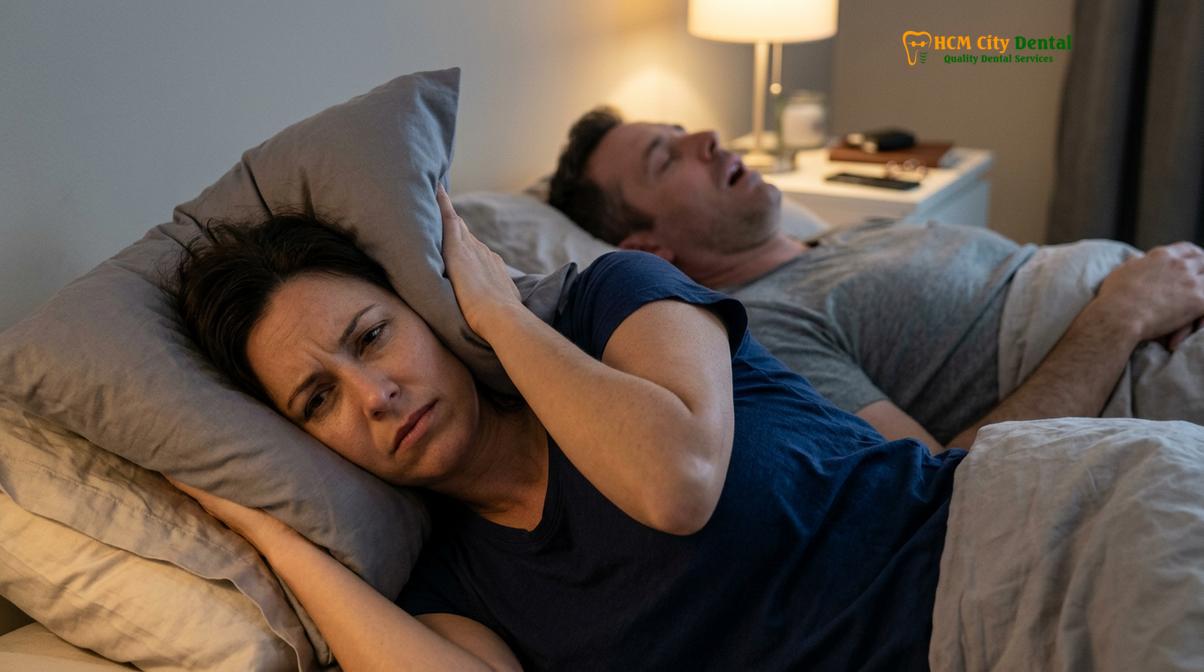
Chronic snoring extends beyond the individual, severely disrupting a partner’s sleep architecture and leading to significant daytime fatigue, elevated stress hormones, and relationship strain.
When discussing how to manage nocturnal breathing issues, the focus is often solely on the patient. However, the acoustic trauma generated by a snoring partner has profound physiological and psychological effects on those sharing the bed. Snoring can reach decibel levels comparable to a vacuum cleaner or heavy traffic, making it nearly impossible for a bed partner to achieve deep, restorative sleep. This constant auditory disruption leads to fragmented sleep architecture, specifically reducing the amount of time spent in Rapid Eye Movement (REM) and slow-wave sleep.
The resulting sleep deprivation marital stress is a well-documented clinical phenomenon. Partners of chronic snorers frequently report waking up feeling unrefreshed, experiencing chronic daytime fatigue, irritability, and decreased cognitive function. The sympathetic nervous system of the partner is repeatedly activated by the loud, irregular noises, leading to micro-arousals and spikes in cortisol levels throughout the night. Over time, this chronic stress response can contribute to elevated blood pressure and a weakened immune system in the non-snoring partner [1].
“The collateral damage of untreated snoring is profound. Bed partners often lose up to an hour of sleep per night due to micro-arousals caused by acoustic disruption, leading to a cascade of metabolic and psychological stressors.”
Achieving a silent sleep environment is not merely a matter of comfort; it is a fundamental requirement for the long-term health and emotional well-being of both individuals. Addressing the root cause of the noise through clinical intervention is the only sustainable way to restore harmony and health to the household.
Why Earplugs and Separate Bedrooms Are Temporary Fixes
Masking the noise of snoring ignores the underlying physiological airway obstruction, leaving the snorer at risk for progressive respiratory and cardiovascular complications.
In an attempt to cope with the nightly disruption, many couples resort to popular chronic snoring remedies that focus entirely on symptom management rather than addressing the anatomical root cause. The use of high-decibel earplugs, white noise machines, or the increasingly common practice of a “sleep divorce”—where partners sleep in separate bedrooms—may provide temporary acoustic relief for the partner, but they do a profound disservice to the individual suffering from the breathing disorder.
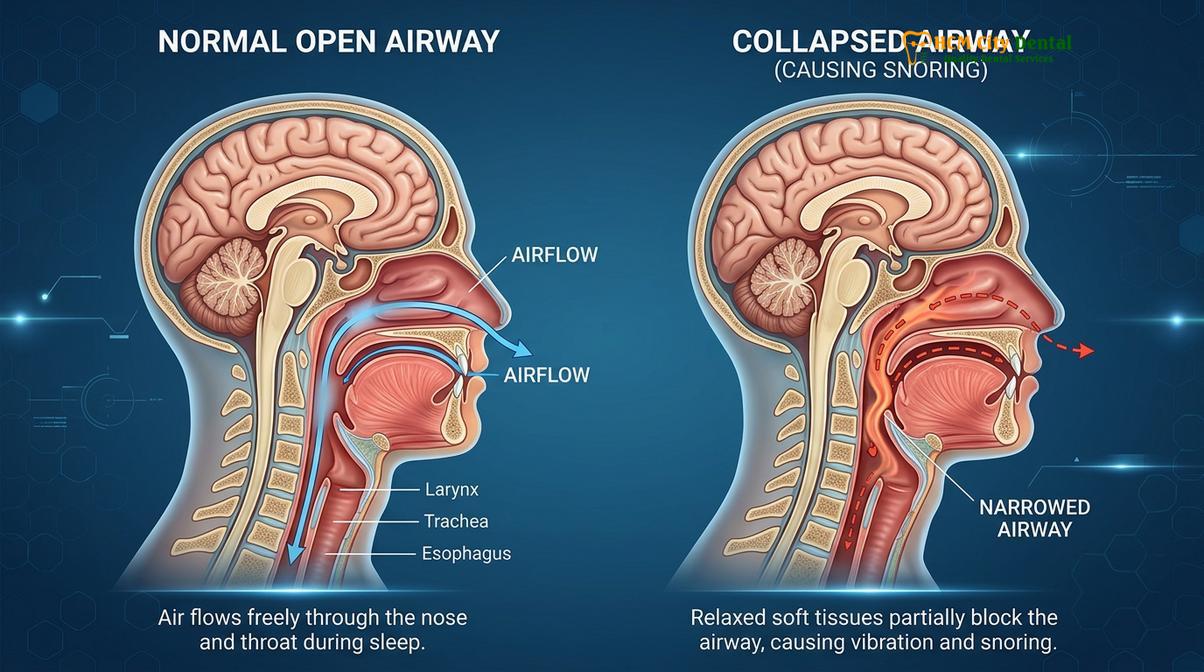
Snoring is the audible symptom of turbulent airflow forcing its way through a narrowed pharyngeal space. When the muscles of the soft palate, uvula, and base of the tongue relax during sleep, they partially occlude the airway. By simply ignoring the noise, the patient is left vulnerable to the progressive worsening of this obstruction. What begins as primary snoring can slowly evolve into more severe forms of sleep-disordered breathing, characterized by repeated episodes of oxygen desaturation and cardiovascular strain [2].
Furthermore, relying on separate bedrooms can mask the onset of critical warning signs. A bed partner is often the first to notice the terrifying pauses in breathing, gasping, or choking that indicate the transition from benign snoring to obstructive sleep apnea. When partners sleep apart, these vital observational diagnostics are lost, potentially delaying life-saving medical intervention. Therefore, while temporary separation might save a night’s sleep, it is imperative to seek a definitive clinical solution to open the airway.
Clinical Snoring vs. Sleep Apnea: Knowing the Difference
While primary snoring is a benign acoustic issue, obstructive sleep apnea involves complete airway collapse, requiring precise diagnostic differentiation through a formal sleep study.
Understanding the distinction between simple snoring and Obstructive Sleep Apnea (OSA) is the most critical step in the treatment journey. Primary snoring occurs when the airway is partially narrowed, causing the surrounding soft tissues to vibrate as air passes through. While it creates significant noise, it does not typically result in a complete cessation of breathing or a dangerous drop in blood oxygen levels.
Conversely, Obstructive Sleep Apnea is a serious medical condition where the airway completely collapses multiple times per hour. These events are measured using the Apnea-Hypopnea Index (AHI). An apnea is a complete pause in breathing lasting at least 10 seconds, while a hypopnea is a partial reduction in airflow that results in a measurable drop in blood oxygen (oxygen desaturation). When the brain senses this lack of oxygen, it triggers a micro-arousal, forcing the patient to wake up just enough to restore muscle tone and reopen the airway, often accompanied by a loud gasp or snort.
Important Clinical Disclaimer: Dentists DO NOT diagnose sleep apnea. Diagnosing requires a formal sleep study (Polysomnography or Home Sleep Apnea Test) evaluated by a board-certified sleep physician. Dentists collaborate with sleep physicians to fabricate custom oral appliances (MADs) for mild-to-moderate OSA, CPAP-intolerant patients, or those with primary snoring.
Because the symptoms overlap so heavily, a clinical diagnosis cannot be made based on sound alone. A comprehensive sleep study is mandatory to evaluate the AHI, oxygen desaturation levels, and sleep architecture. Only after a sleep physician has reviewed this data can a safe and appropriate treatment pathway be established [3].
The Medical Workflow: From Diagnosis to Dental Intervention
Effective treatment relies on a multidisciplinary approach where sleep physicians diagnose the condition and dental specialists design targeted anatomical interventions.
The modern management of sleep-disordered breathing is highly collaborative. If a patient presents with complaints of loud snoring or daytime fatigue, the first step is a referral to a sleep medicine specialist. The physician will typically order a Home Sleep Apnea Test (HSAT) or an in-lab Polysomnography (PSG) to gather objective data on the patient’s respiratory effort, heart rate, and oxygen levels during sleep [4].
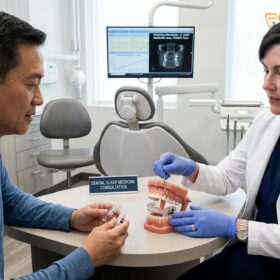
Once the sleep physician provides a diagnosis and determines that the patient is a candidate for Oral Appliance Therapy (OAT)—usually for primary snoring or mild-to-moderate OSA—the patient is referred to a qualified dental professional. At this stage, the focus shifts from respiratory diagnostics to anatomical biomechanics.
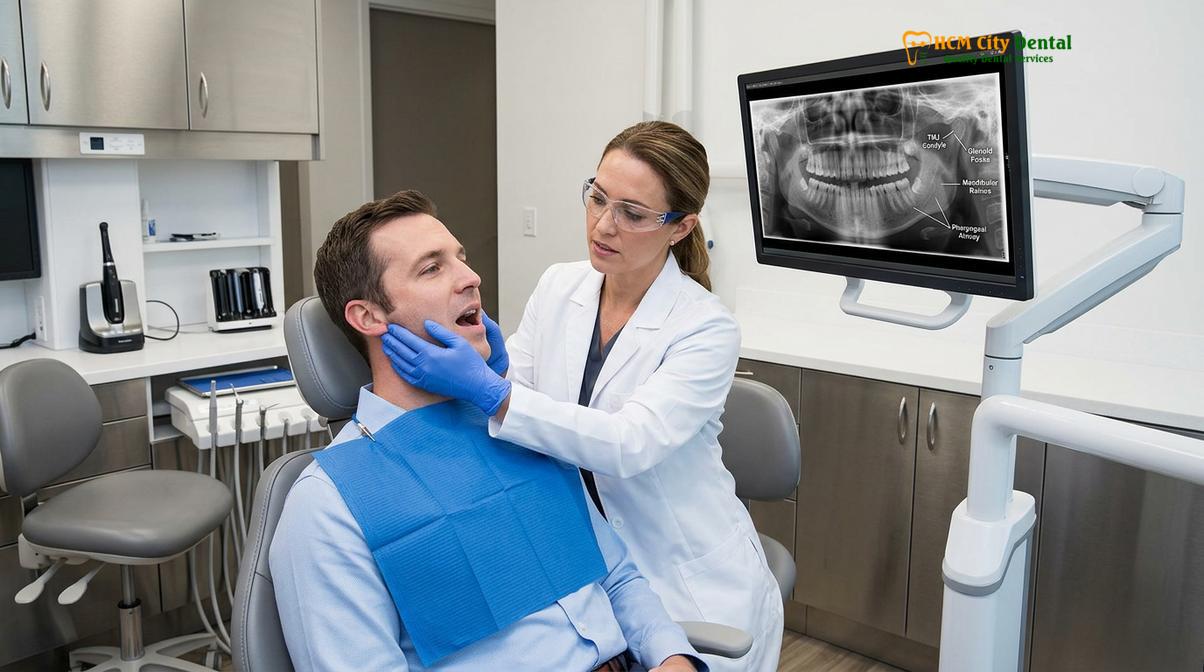
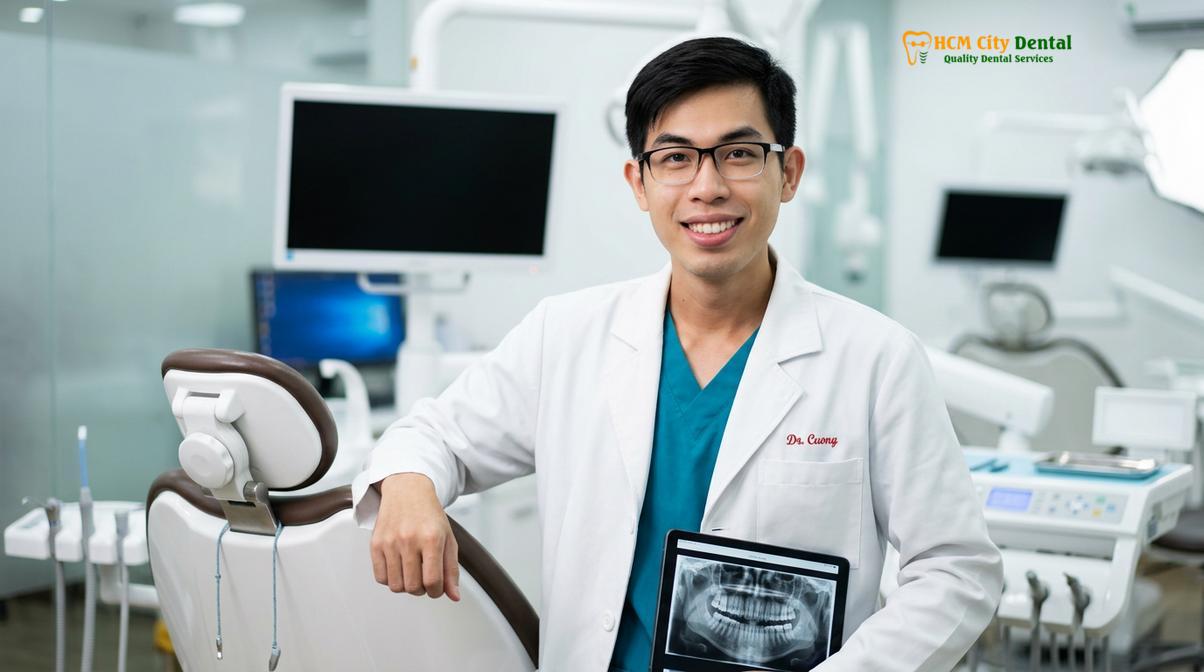
According to Dr. Nguyen Van Cuong’s clinical perspective on airway scanning and joint checks, a comprehensive evaluation of the temporomandibular joint (TMJ) is mandatory before any appliance is prescribed. The dentist must assess the patient’s periodontal health, the number of healthy teeth available to anchor the device, and the maximum protrusive capability of the lower jaw. If the TMJ is compromised or there is active periodontal disease, alternative therapies must be considered before advancing the mandible.
How Custom Dental Guards Provide a Permanent Silent Solution
Mandibular advancement devices physically prevent airway collapse by holding the lower jaw forward, offering a highly effective, non-invasive alternative to CPAP therapy.
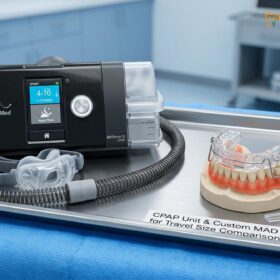
For patients seeking a reliable stop snoring mouthpiece, custom-fabricated Mandibular Advancement Devices (MADs) represent the gold standard in dental sleep medicine. Unlike continuous positive airway pressure (CPAP) machines, which use forced air to pneumatically splint the airway open, MADs work mechanically. By gently holding the lower jaw (mandible) in a forward position, these devices pull the base of the tongue away from the posterior pharyngeal wall, tightening the soft tissues and preventing the vibrations that cause snoring.
At HCMC Dental Clinic in Ho Chi Minh City, patients have access to advanced, custom-milled appliances designed for maximum efficacy and joint comfort. Two of the most prominent clinical options include:
1. The Antisnoring Telescopic Appliance
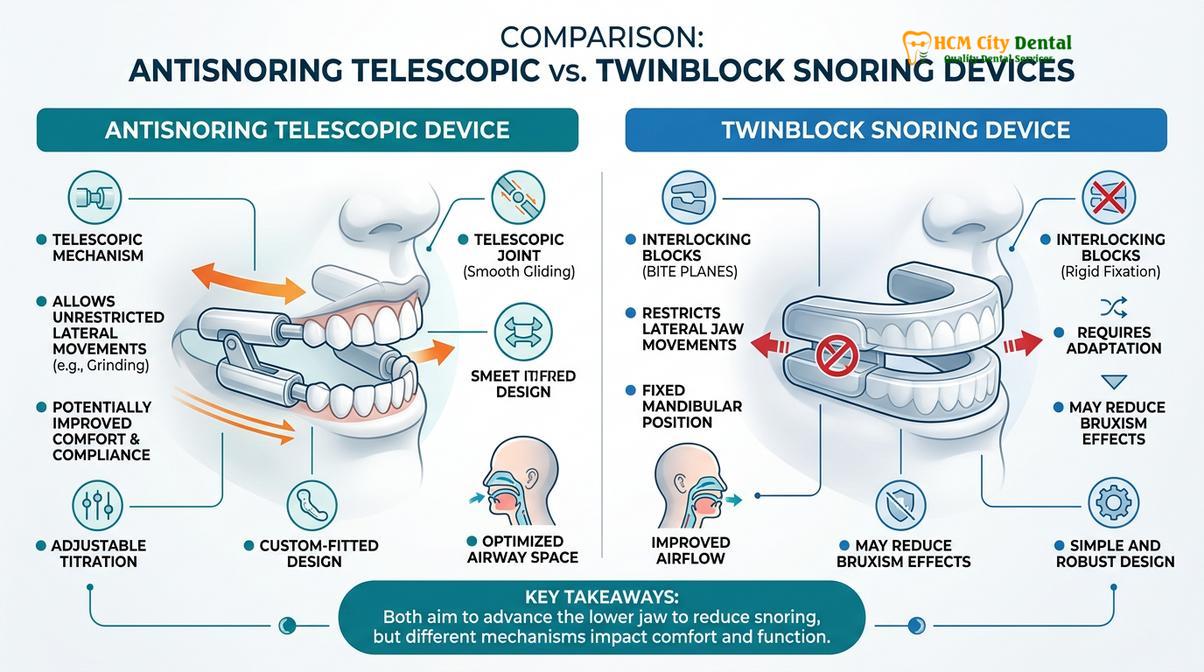
This premium device utilizes a Herbst-style mechanism featuring lateral telescopic rods. The engineering brilliance of the telescopic design is that it allows for significant side-to-side (lateral) and vertical jaw movement while maintaining the forward posture of the mandible. This freedom of movement is crucial for minimizing temporomandibular joint (TMJ) stiffness and muscle fatigue upon waking. It is highly recommended for patients who naturally grind their teeth (bruxism) during sleep. Currently, this advanced appliance is priced at 12,000,000 VND (approximately $480 USD with a WhatsApp consultation discount).
2. The Twinblock Snoring Appliance
The Twinblock is a robust, two-piece device featuring interlocking 70-degree bite blocks. When the patient closes their mouth, the angled blocks guide the lower jaw forward into the predetermined therapeutic position. Because it consists of separate upper and lower trays without connecting metal hinges, it offers a high degree of comfort and ease of use, particularly for patients who breathe through their mouths. This device is currently available for 11,000,000 VND (approximately $440 USD with a WhatsApp consultation discount).
To better understand the clinical differences, consider the following comparison:
| Feature | Antisnoring Telescopic (Herbst-Style) | Twinblock Snoring |
|---|---|---|
| Mechanism | Lateral telescopic rods | Interlocking 70-degree bite blocks |
| Jaw Mobility | High (allows lateral and vertical movement) | Moderate (guides jaw upon closure) |
| TMJ Impact | Minimizes stiffness, ideal for bruxism | Comfortable, requires stable bite closure |
| Structure | Connected upper and lower arches | Two separate, unlinked pieces |
| Estimated Cost | 12,000,000 VND (~$480 USD) | 11,000,000 VND (~$440 USD) |
Both devices are highly effective at maintaining a patent airway, and the choice between them depends heavily on the patient’s specific dental anatomy, TMJ health, and sleep habits. You can learn more about these options by exploring our comprehensive guide on Sleep Apnea & Snoring.
The Clinical Process: Intraoral Scanning and Titration
Fabricating a custom sleep appliance involves precise digital impressions and gradual millimeter adjustments to maximize airway opening while ensuring joint comfort.
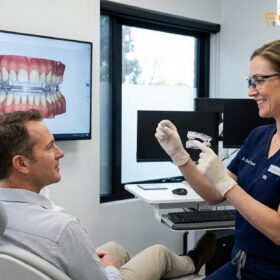
The journey to a quieter night begins with precise data collection. Gone are the days of uncomfortable, gag-inducing putty impressions. Modern dental sleep medicine relies on high-resolution intraoral digital scans to create a flawless 3D model of the patient’s teeth and gingival contours. Following the scan, the dentist uses a specialized tool called a George Gauge to capture the patient’s bite in a protruded position, determining the exact starting point for the appliance.
Once the custom device is fabricated and delivered, the most critical phase of treatment begins: titration calibration. Titration is the process of gradually advancing the lower jaw in micro-millimeter increments over several weeks. The goal is to find the “sweet spot”—the exact position where snoring and airway obstruction are eliminated without causing undue stress on the TMJ or facial muscles [5].
Clinical Case Study: A 45-year-old male patient visiting HCMC Dental Clinic presented with severe primary snoring that had forced his spouse into a separate bedroom. Following a sleep study that ruled out severe OSA, he was fitted with an Antisnoring Telescopic appliance. Initial delivery was set at 50% of his maximum protrusion. Over four weeks, the device was titrated forward by 2 millimeters. By the final calibration appointment, the patient’s snoring was completely resolved, and his spouse reported a return to a normal, silent sleep environment.
Dr. Cuong emphasizes that titration calibration is not a one-time event but a progressive adaptation process. Patients are closely monitored, and adjustments are made based on subjective feedback regarding sleep quality, partner observations, and morning joint comfort. This meticulous approach ensures high compliance and long-term therapeutic success.
“The success of an oral appliance lies not just in its fabrication, but in the precise, patient-guided titration. Rushing the advancement of the mandible can lead to joint pain, while under-advancing leaves the airway vulnerable. Patience and precision are paramount.”
Lifestyle Modifications and Adjunctive Therapies
Combining oral appliance therapy with targeted lifestyle changes, such as weight management and positional therapy, significantly enhances overall treatment efficacy.
While custom dental appliances are highly effective mechanical solutions, treating airway obstruction often requires a holistic approach. Adopting specific lifestyle modifications can drastically reduce the severity of snoring and improve overall respiratory health.
Weight management is one of the most impactful changes a patient can make. Excess adipose tissue around the neck and throat physically narrows the pharyngeal space, increasing the likelihood of collapse during sleep. Even a modest reduction in body weight can significantly decrease the Apnea-Hypopnea Index and reduce the acoustic volume of snoring.
Positional therapy is another vital component. Sleeping in a supine position (on the back) allows gravity to pull the base of the tongue and the soft palate downward, exacerbating airway blockage. Training oneself to sleep in a lateral position (on the side) can immediately improve airflow. Specialized pillows or wearable devices that gently vibrate when the patient rolls onto their back can aid in this transition.
Furthermore, patients must be mindful of substances that relax the central nervous system. Consuming alcohol or taking sedative medications close to bedtime excessively relaxes the pharyngeal dilator muscles, making the airway floppy and highly susceptible to vibration and collapse. Avoiding these triggers for at least four hours before sleep is a standard clinical recommendation.
When to See a Doctor
While occasional snoring is common, certain red flags indicate the need for immediate medical evaluation. You should schedule a consultation with a healthcare provider if your snoring is accompanied by any of the following symptoms:
- Witnessed pauses in breathing, gasping, or choking during sleep.
- Excessive daytime sleepiness, fatigue, or an inability to concentrate.
- Waking up with a dry mouth, sore throat, or a morning headache.
- High blood pressure that is difficult to control with medication.
- Your snoring is loud enough to disrupt the sleep of others in the household.
Ignoring these signs can lead to severe long-term health consequences, including an increased risk of cardiovascular disease, stroke, and metabolic disorders. Early diagnosis through a formal sleep study is the key to implementing effective, life-saving interventions.
Frequently Asked Questions
How can I convince my partner to get a snoring guard?
Approach the conversation with empathy, focusing on their long-term health and the mutual benefits of uninterrupted rest. Explain that chronic snoring is often a physical airway issue, not a personal failing. Highlighting the link between snoring, daytime fatigue, and potential cardiovascular risks can help them view a custom dental appliance as a necessary medical intervention rather than a mere convenience.
Does a custom mouthpiece stop snoring instantly on the first night?
Many patients experience a significant reduction or complete cessation of snoring on the very first night of use. However, the device often requires a period of titration calibration to find the optimal jaw position. It may take a few weeks of minor adjustments by your dentist to achieve maximum airway clearance while ensuring the temporomandibular joint remains comfortable.
Is snoring always a sign of a medical condition?
No, occasional snoring can result from temporary factors like nasal congestion, alcohol consumption, or sleeping on your back. However, loud, chronic snoring accompanied by gasping, choking, or severe daytime sleepiness is a strong indicator of obstructive sleep apnea (OSA). A formal sleep study is required to differentiate between benign primary snoring and a serious respiratory condition.
Can I use an over-the-counter boil-and-bite guard instead of a custom one?
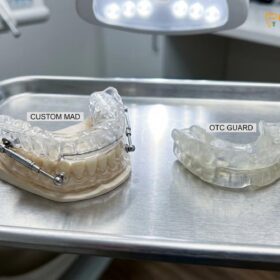
Over-the-counter boil-and-bite guards are generally not recommended for long-term snoring management due to their bulky fit and lack of precision. They often fail to hold the jaw in the correct therapeutic position and can cause significant temporomandibular joint pain or unwanted tooth movement. A custom-fabricated device ensures exact anatomical alignment, superior comfort, and safe, long-term efficacy.
How long do custom snoring mouthpieces last?
With proper care and maintenance, a high-quality custom snoring mouthpiece typically lasts between three to five years. The lifespan depends on the specific materials used, the patient’s bruxism (teeth grinding) habits, and adherence to daily cleaning protocols. Regular dental check-ups are essential to monitor the appliance’s structural integrity and ensure it continues to function optimally.
References
- Journal of Dental Sleep Medicine. Mandibular advancement device efficacy in primary snoring. (2021).
- American Journal of Respiratory and Critical Care Medicine. Cardiovascular implications of untreated airway obstruction. (2019).
- Sleep and Breathing. Telescopic Herbst appliance TMJ safety and lateral mobility. (2020).
- Journal of Clinical Sleep Medicine. HSAT diagnostic reliability for obstructive sleep apnea. (2022).
- Journal of Oral Rehabilitation. Titration protocols and joint health in dental sleep medicine. (2018).