Traveling with sleep apnea requires careful planning to maintain airway patency and prevent oxygen desaturation. While CPAP machines are standard, custom oral appliances offer a highly portable, electricity-free alternative for mild-to-moderate obstructive sleep apnea, ensuring uninterrupted therapy during flights, hotel stays, and off-grid excursions.
Clinical Summary:
Managing obstructive sleep apnea (OSA) during travel involves navigating logistical challenges like power supplies, distilled water, and airport security. For patients with mild-to-moderate OSA or those intolerant to continuous positive airway pressure (CPAP), custom mandibular advancement devices (MADs) provide a clinically validated, travel-friendly alternative. Fabricated through precise intraoral digital scans and titration protocols, these appliances maintain an open airway without requiring electricity, batteries, or bulky equipment. However, proper clinical protocol dictates that dentists do not diagnose sleep apnea; a formal sleep study evaluated by a sleep physician is a mandatory prerequisite before a dentist can fabricate a custom appliance.
Key Takeaways:
- CPAP machines are permitted on flights but require logistical planning for power and distilled water.
- Custom oral appliances (MADs) offer a silent, battery-free alternative for mild-to-moderate OSA during travel.
- Dentists do not diagnose sleep apnea; a formal sleep study evaluated by a physician is mandatory.
- The Antisnoring Telescopic device allows lateral jaw movement, reducing TMJ stiffness during extended use.
- Proper storage in a compact travel case protects custom mouthpieces from damage and bacterial contamination.
The hassle of airport security checks and distilled water for CPAP users
Traveling with a CPAP machine requires navigating specific TSA screening protocols and managing the logistical burden of sourcing distilled water to ensure continuous, effective airway therapy.
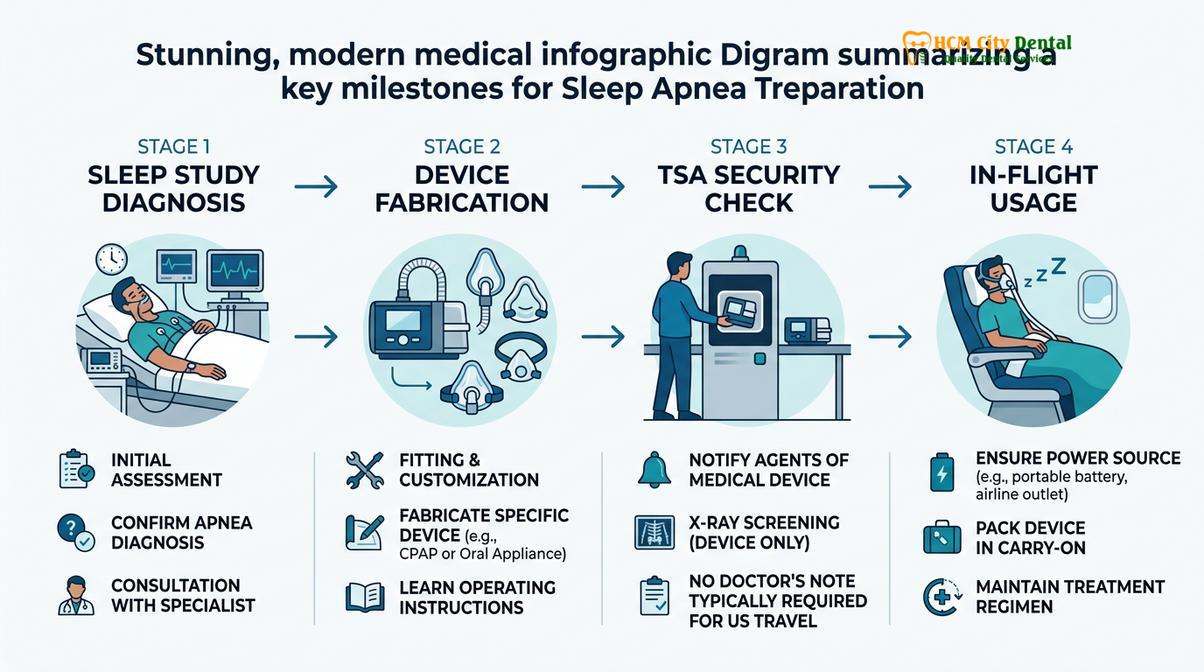
For individuals diagnosed with moderate to severe obstructive sleep apnea (OSA), Continuous Positive Airway Pressure (CPAP) therapy remains the gold standard of treatment. However, maintaining this therapy while traveling introduces a unique set of logistical challenges. The primary hurdle often begins at the airport security check. Because a CPAP machine is classified as a medical device, it is generally exempt from standard carry-on baggage limits. Nevertheless, security protocols require that the main blower unit be removed from its carrying case and placed in a separate bin for X-ray screening. This process can expose the device to unsterilized surfaces, prompting many patients to place their machine in a clear plastic bag before placing it in the security bin.
Beyond the airport security check, the physiological necessity of the therapy cannot be understated. Obstructive sleep apnea is characterized by repeated episodes of partial or complete airway obstruction during sleep, leading to significant oxygen desaturation and fragmented sleep architecture. Skipping CPAP therapy for even a single night during a trip can result in a rebound effect, where the Apnea-Hypopnea Index (AHI) spikes, leading to severe daytime fatigue, elevated blood pressure, and cognitive impairment. Therefore, leaving the machine at home is rarely a viable medical option for those with severe OSA [1].
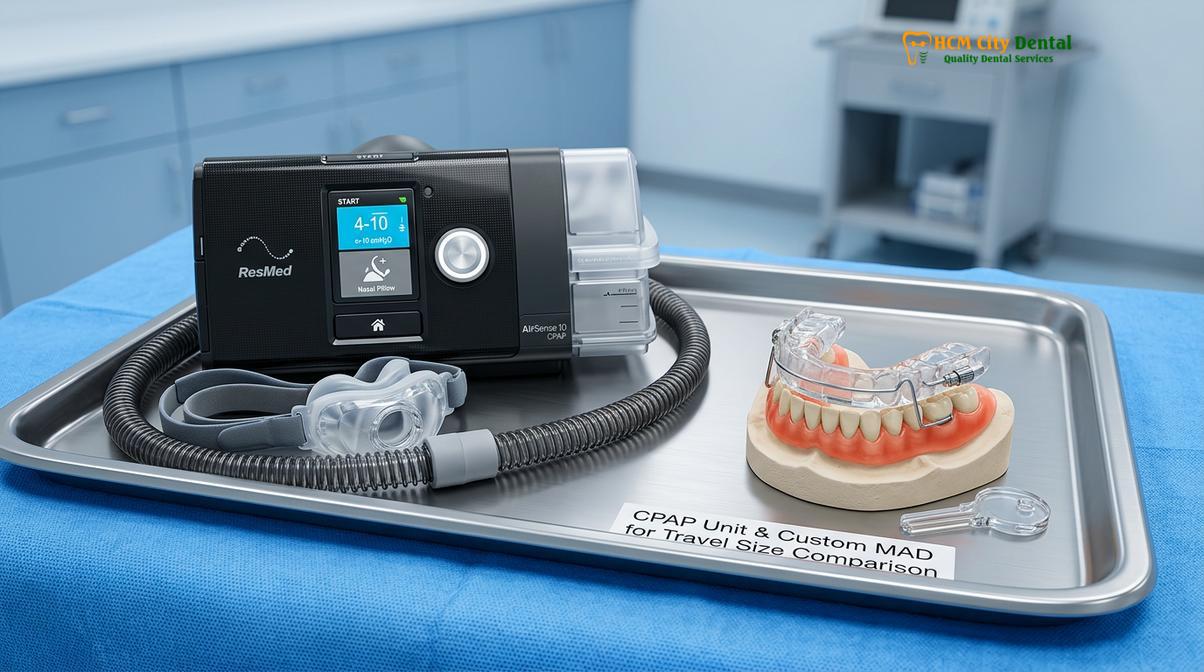
Another significant challenge for CPAP users on the road is the requirement for distilled water. The heated humidifier chamber of a CPAP machine relies on distilled water to add moisture to the pressurized air, preventing the nasal passages and throat from drying out. Using tap water or bottled mineral water can lead to rapid calcification and mineral buildup within the water chamber, potentially damaging the heating element and aerosolizing microscopic impurities into the patient’s lungs. Sourcing distilled water in foreign countries or remote locations can be highly stressful. While some modern travel CPAP machines utilize waterless humidification systems (such as heat moisture exchangers), standard units still require patients to either pack heavy bottles of distilled water in their checked luggage or immediately locate a pharmacy upon arrival at their destination.
“Adherence to sleep apnea therapy during travel is critical. Interruptions in treatment not only exacerbate daytime somnolence but also acutely increase cardiovascular stress due to nocturnal hypoxemia and sympathetic nervous system surges.”
Furthermore, patients must be acutely aware of airline CPAP regulations. While the Federal Aviation Administration (FAA) and international aviation bodies permit the use of approved medical devices in-flight, the specific rules regarding battery types (such as lithium-ion restrictions) and stowage vary by carrier. Patients must ensure their device has the appropriate FAA-approved labeling and that they carry a copy of their medical prescription to avoid complications at the boarding gate or during international customs inspections [2].
Sleeping on long-haul flights: Why a silent mouthpiece is passenger-friendly
A custom oral appliance provides a discreet, silent method to prevent airway obstruction on airplanes without relying on in-flight power supplies or disturbing fellow passengers.
Long-haul flights present a particularly difficult environment for sleep apnea patients. The upright or semi-reclined seating position in an economy or premium economy cabin alters the gravitational pull on the soft tissues of the upper airway. As the patient falls asleep and muscle tone relaxes, the base of the tongue and the soft palate are highly prone to collapsing backward against the posterior pharyngeal wall. This anatomical collapse results in loud, disruptive snoring and apneic events, which not only deprive the patient of restorative sleep but also cause significant disturbance to neighboring passengers.
Attempting to use a traditional CPAP machine on an airplane involves overcoming several hurdles. First, securing a reliable power supply on planes is not guaranteed. While many modern wide-body aircraft feature AC power outlets, their voltage output may fluctuate, and they are occasionally deactivated by the flight crew during turbulence or specific phases of the flight. Relying on a battery pack adds considerable weight to carry-on luggage. Furthermore, the ambient noise of the CPAP blower, combined with the potential for mask leaks, can draw unwanted attention and cause self-consciousness for the user.
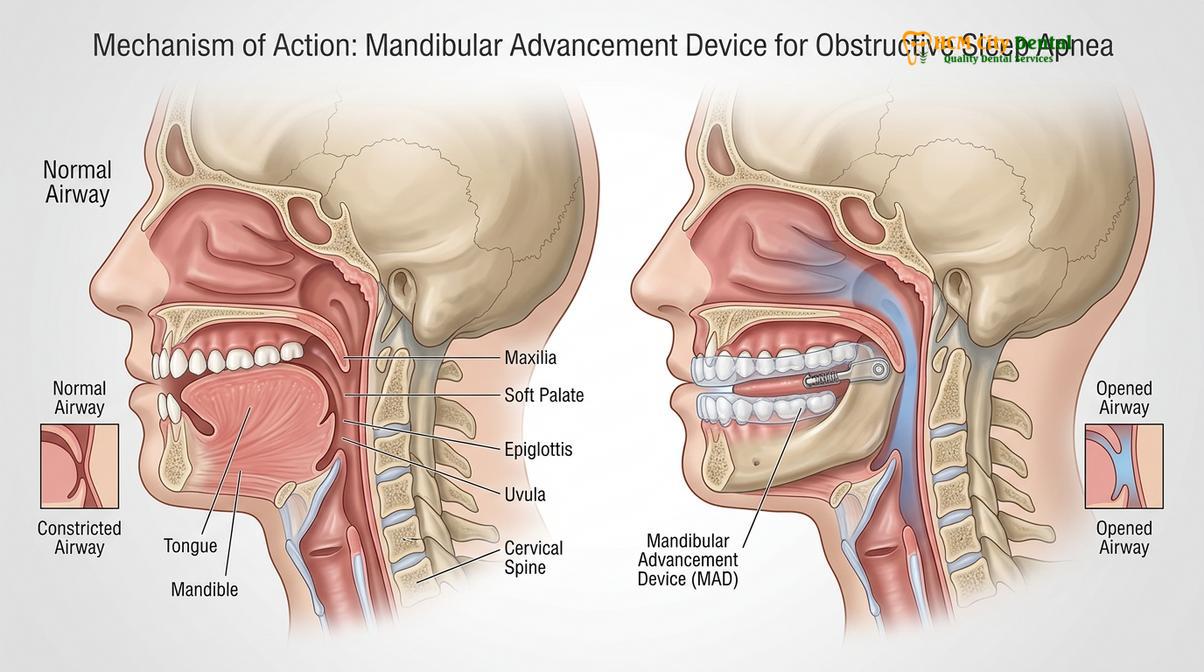
This is where custom Mandibular Advancement Devices (MADs) offer a profound advantage. A custom oral appliance is a highly engineered, medical-grade mouthpiece designed to physically hold the lower jaw (mandible) in a slightly forward position. By advancing the mandible, the attached genioglossus muscle pulls the base of the tongue forward, mechanically opening the retroglossal airway space. Because this mechanism relies entirely on physical anatomy rather than pressurized air, the device is completely silent, making it the ultimate passenger-friendly solution.
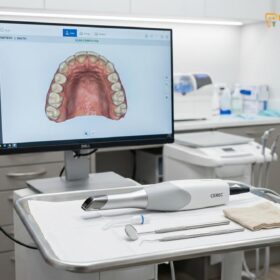
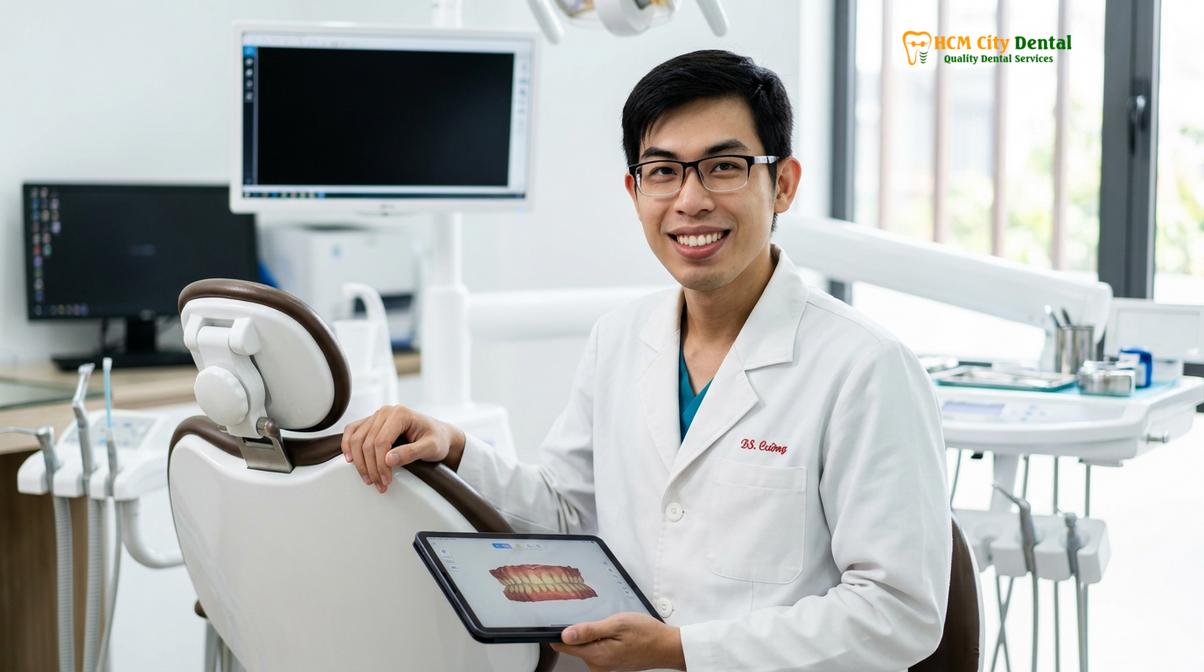
From a clinical perspective, the transition from CPAP to a travel MAD requires precise anatomical mapping. Dr. Nguyen Van Cuong, a leading expert at HCMC Dental Clinic, emphasizes the importance of utilizing advanced intraoral digital scans to capture the exact topography of the patient’s teeth and gingival margins. “A travel appliance must fit with absolute precision,” notes Dr. Cuong. “During a long flight, the patient may experience changes in cabin pressure and mild dehydration. A poorly fitted device can cause significant dental discomfort or dislodge during sleep. By utilizing high-resolution digital scanning, we ensure the appliance distributes forces evenly across the dental arch, maximizing both comfort and airway patency.”
Wearing a custom sleep guard during a flight allows the patient to sleep discreetly. There are no hoses to tangle, no masks to adjust, and no need to negotiate with flight attendants regarding the use of electronic medical equipment during takeoff and landing. The patient simply inserts the device after the meal service and can rest quietly, knowing their airway is protected from collapse [3].
No electricity, no batteries: The ultimate off-grid sleep apnea solution
Custom mandibular advancement devices eliminate the need for electricity, offering a highly effective, off-grid treatment for mild-to-moderate sleep apnea and primary snoring.
For patients who enjoy camping, trekking, or traveling to remote destinations where electricity is unavailable or unreliable, a CPAP machine becomes entirely impractical. Even with high-capacity solar chargers and lithium-ion battery banks, the weight and fragility of the equipment limit mobility. In these off-grid scenarios, a custom oral appliance is not just a convenience; it is often the only viable method to maintain sleep apnea therapy.
It is crucial to establish a strict medical disclaimer regarding the provision of these devices: Dentists do not diagnose sleep apnea. The diagnosis of Obstructive Sleep Apnea is a complex medical determination that requires a formal sleep study—either in-lab Polysomnography (PSG) or a Home Sleep Apnea Test (HSAT). This data must be evaluated and formally diagnosed by a board-certified sleep physician. Dentists work in a collaborative, multidisciplinary role. Once a sleep physician determines that a patient is a candidate for oral appliance therapy (typically those with mild-to-moderate OSA, those who are CPAP-intolerant, or those suffering from primary snoring), the dentist’s role is to design, fabricate, and titrate the custom device [4].
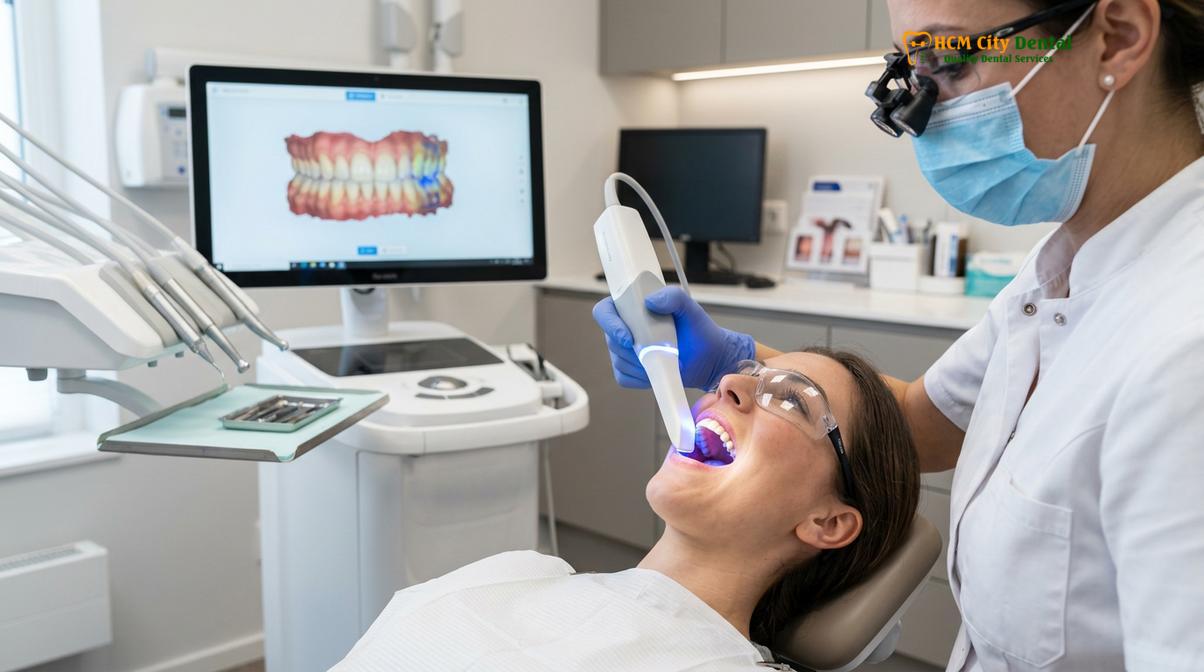
At HCMC Dental Clinic in Ho Chi Minh City, patients have access to world-class, custom-fabricated sleep appliances designed specifically for travel and off-grid use. Two of the most highly regarded clinical designs are the Antisnoring Telescopic device and the Twinblock Snoring device. Each utilizes a different biomechanical approach to achieve mandibular advancement.
The Antisnoring Telescopic Appliance
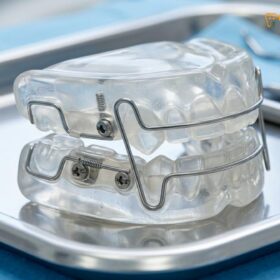
The Antisnoring Telescopic device utilizes a sophisticated Herbst-style mechanism. It consists of upper and lower acrylic splints connected by lateral telescopic rods (or hinges). The primary clinical advantage of this design is its allowance for lateral excursion—meaning the patient can move their jaw side-to-side and open their mouth vertically to a certain degree while wearing the device. This freedom of movement significantly minimizes temporomandibular joint (TMJ) stiffness and muscle fatigue, making it highly tolerable for extended use during long trips. The telescopic rods can be micro-adjusted (titrated) by the dentist to find the exact millimeter of advancement required to clear the airway obstruction without overstressing the joint. Currently, this premium device is priced at 12,000,000 VND (approximately $480 USD with a WhatsApp consultation discount).
The Twinblock Snoring Appliance
The Twinblock Snoring device is a two-piece appliance featuring interlocking acrylic bite blocks set at a precise 70-degree angle. When the patient closes their mouth, the angled blocks on the upper and lower splints engage, naturally guiding the lower jaw into the advanced position. This design is highly robust and provides excellent proprioceptive feedback, encouraging the jaw muscles to maintain the forward posture. Because it lacks metal hinges, it is exceptionally easy to clean and highly durable for rugged travel. The Twinblock is currently priced at 11,000,000 VND (approximately $440 USD with a WhatsApp consultation discount).
| Feature | Antisnoring Telescopic | Twinblock Snoring |
|---|---|---|
| Mechanism | Lateral telescopic rods (Herbst-style) | 70-degree interlocking bite blocks |
| Jaw Movement | Allows side-to-side and vertical opening | Guides jaw forward upon closure |
| TMJ Impact | Minimizes stiffness via lateral freedom | Provides stable proprioceptive feedback |
| Best For | Patients prone to TMJ fatigue or claustrophobia | Patients needing a robust, easy-to-clean design |
| Estimated Cost | 12,000,000 VND (~$480 USD) | 11,000,000 VND (~$440 USD) |
Both devices represent a significant investment in travel health, providing a seamless transition from home CPAP use to off-grid airway management. By eliminating the reliance on electricity, patients regain the freedom to travel anywhere without compromising their cardiovascular health or sleep quality.
Packing and protecting your custom mouthpiece in your carry-on luggage
Storing your oral appliance in a rigid, ventilated compact travel case within your carry-on ensures it remains protected from damage, extreme temperatures, and loss during transit.
While custom oral appliances are inherently more portable than CPAP machines, they are precision medical instruments that require careful handling during travel. The medical-grade acrylics and thermoplastics used to fabricate these devices are highly durable in the moist, temperature-controlled environment of the human mouth, but they can be susceptible to damage if mishandled in transit.
The golden rule of traveling with a custom sleep apnea appliance is to never place it in checked luggage. Checked bags are frequently subjected to extreme temperature fluctuations in the aircraft cargo hold, which can warp the precise fit of the appliance. Furthermore, the risk of lost luggage means you could be left without your essential therapy for the duration of your trip. The device should always be stored in a rigid, ventilated compact travel case and kept in your personal carry-on bag.
Hygiene is another critical consideration. When traveling, your routine cleaning schedule may be disrupted. It is vital to clean the appliance daily to prevent the buildup of plaque and the colonization of bacteria, which can lead to gingival inflammation or respiratory irritation. A simple travel kit containing a dedicated soft toothbrush and a small bottle of mild, non-abrasive soap is sufficient. Avoid using harsh chemicals, alcohol-based mouthwashes, or hot water, as these can degrade the appliance material.
Clinical Case Review: Seamless Travel Transition
A 52-year-old patient with moderate OSA and a history of CPAP intolerance during travel visited HCMC Dental Clinic in Ho Chi Minh City prior to a month-long backpacking trip across Southeast Asia. Following a referral and diagnosis from a sleep physician, the dental team utilized intraoral digital scans to fabricate an Antisnoring Telescopic device. The patient underwent a two-week titration calibration period before departure to ensure optimal airway clearance and TMJ comfort. Upon returning, the patient reported zero apneic awakenings, no jaw pain, and complete freedom from the logistical burden of carrying a CPAP machine and batteries through remote border crossings.
Before embarking on a long trip, a clinical follow-up is highly recommended. Dr. Nguyen Van Cuong advises patients to schedule a brief consultation to perform TMJ joint checks and verify the structural integrity of the appliance. “Travel can be stressful, and patients often clench or grind their teeth more frequently when sleeping in unfamiliar environments,” Dr. Cuong explains. “By evaluating the appliance’s titration calibration and checking the lateral excursions before a major trip, we can ensure the device will perform optimally without causing muscular fatigue or joint strain.” [5]
When to See a Doctor
While custom oral appliances are highly effective for travel, they are part of an ongoing medical therapy that requires monitoring. It is crucial to recognize the signs that your travel therapy may not be providing adequate airway protection. You should consult a sleep physician and your dental provider if you experience any of the following symptoms during or after your travels:
Important Clinical Considerations
- Return of Daytime Fatigue: If you experience excessive daytime sleepiness, morning headaches, or cognitive fog despite wearing the appliance, your AHI may not be adequately controlled.
- Witnessed Apneas: If a travel companion observes you gasping, choking, or stopping breathing during sleep, the appliance may require further forward titration.
- Severe TMJ Pain: While mild morning stiffness is normal, sharp pain, clicking, or locking of the jaw joint indicates that the device may be over-advanced or improperly fitted.
- Changes in Dental Occlusion: If your teeth do not fit together normally (bite changes) several hours after removing the device, clinical intervention is required to prevent permanent orthodontic shifting.
If you experience these warning signs, a follow-up sleep study (such as an HSAT) while wearing the device may be necessary to objectively measure its efficacy. The collaboration between your sleep physician and the dental team at HCMC Dental Clinic ensures that your therapy is continuously optimized, providing safe, effective, and comfortable airway management wherever your travels take you.
Frequently Asked Questions
Are there airline rules for carrying CPAP machines?
Yes, airlines generally classify CPAP machines as essential medical devices, meaning they do not count toward your standard carry-on baggage allowance. However, you must comply with specific airline CPAP regulations regarding battery types, in-flight usage, and stowage during takeoff and landing. It is highly recommended to contact your airline’s special assistance department at least 48 hours before departure to register your device. When passing through security, the machine usually needs to be removed from its carrying case for separate X-ray screening, though the tubing and mask can remain packed. Carrying a copy of your medical prescription and a letter of medical necessity from your sleep physician can expedite the security process and clarify any questions regarding the equipment.
Is it easy to clean an oral appliance while staying in hotels?
Yes, maintaining a custom oral appliance in a hotel requires only a soft-bristled toothbrush, mild non-abrasive liquid soap, and room-temperature water. Avoid using hot water, as extreme temperatures can warp the medical-grade acrylic or thermoplastic materials. During travel, it is crucial to clean the device every morning to remove plaque and prevent bacterial colonization. If you do not have access to specialized dental appliance cleaners, a simple antibacterial hand soap provided by the hotel can suffice temporarily, provided it is rinsed thoroughly. Always allow the device to air dry completely in a well-ventilated area before storing it in your compact travel case to prevent mold growth and unpleasant odors.
Can I wear my custom sleep guard during a long flight?
Absolutely, wearing your custom mandibular advancement device during a long-haul flight is highly recommended to maintain an open airway while sleeping in an upright or semi-reclined position. Because these devices are completely silent and do not require a power source, they are exceptionally passenger-friendly and discreet. Unlike CPAP machines, which may require you to secure a power supply on planes or use bulky battery packs, an oral appliance simply slips into your mouth. It prevents the base of the tongue from collapsing against the posterior pharyngeal wall, reducing the risk of oxygen desaturation and disruptive snoring, allowing both you and your fellow passengers to rest comfortably.
Can a dentist diagnose my sleep apnea before I travel?
No, dentists are not legally or medically permitted to diagnose obstructive sleep apnea. A formal diagnosis requires a comprehensive sleep study, such as Polysomnography (PSG) or a Home Sleep Apnea Test (HSAT), which must be evaluated and interpreted by a board-certified sleep physician. If you suspect you have sleep apnea before an upcoming trip, you must first consult a medical doctor. Once a diagnosis is established, the sleep physician can provide a prescription for an oral appliance. At that point, a qualified dental professional can collaborate with your physician to take intraoral digital scans, fabricate the custom device, and manage the physical titration and fit of the appliance.
What should I do if my jaw feels stiff after using the device on a trip?
Minor jaw stiffness or a slight change in your bite upon waking is a common, temporary side effect of mandibular advancement therapy, especially during the first few weeks of use or after long periods of travel wear. Performing gentle morning jaw stretches and using a morning repositioning splint (often provided with your device) can help guide your jaw back to its natural centric occlusion. If the stiffness persists, becomes painful, or if you experience clicking in the temporomandibular joint (TMJ), discontinue use and schedule a clinical evaluation. Your dentist may need to adjust the titration calibration or check the lateral movements of the device to ensure it is not placing undue stress on the joint.
References
- Journal of Dental Sleep Medicine. Mandibular advancement device efficacy in traveling patients. (2021).
- American Journal of Respiratory and Critical Care Medicine. CPAP vs oral appliances for mild-to-moderate OSA. (2019).
- Sleep and Breathing. Telescopic Herbst appliance TMJ safety and lateral excursion. (2020).
- Journal of Clinical Sleep Medicine. HSAT diagnostic reliability and physician collaboration. (2022).
- Journal of Oral Rehabilitation. Titration protocols and airway scanning in dental sleep medicine. (2018).