Dental sleep medicine in Vietnam focuses on the management of snoring and obstructive sleep apnea through the use of highly customized oral appliances. While dentists do not diagnose sleep disorders, they collaborate closely with sleep physicians to fabricate mandibular advancement devices, offering a highly effective, non-invasive alternative for patients who cannot tolerate traditional CPAP therapy.
Clinical Summary:
Dental sleep medicine is a rapidly expanding subfield in Vietnam that bridges the gap between dentistry and respiratory health. The primary clinical intervention involves Mandibular Advancement Devices (MADs), which mechanically reposition the lower jaw and tongue to prevent pharyngeal collapse during sleep. At the forefront of this discipline, practitioners utilize advanced intraoral scanning and precise bite registration to create custom devices such as the Antisnoring Telescopic (Herbst-style) and Twinblock Snoring appliances. Because dentists cannot legally or clinically diagnose Obstructive Sleep Apnea (OSA), a strict multidisciplinary workflow is enforced. Patients must undergo a formal sleep study (Polysomnography or HSAT) evaluated by a medical sleep specialist. Once diagnosed, the dentist manages the fabrication, fitting, and micro-millimeter titration of the appliance, ensuring maximum airway patency while preserving the integrity of the temporomandibular joint (TMJ).
Key Takeaways:
- Dentists provide structural airway solutions but rely on sleep physicians for the official diagnosis of sleep apnea.
- Custom oral appliances work by advancing the mandible, thereby tightening the soft tissues of the upper airway.
- The Antisnoring Telescopic device allows for lateral jaw movement, significantly reducing TMJ stiffness.
- Clinical success depends on a gradual, millimeter-by-millimeter titration process to find the optimal jaw position.
- Comprehensive TMJ assessments and 3D intraoral scans are mandatory prerequisites for safe appliance fabrication.
The emergence of Dental Sleep Medicine as a specialized field
Dental sleep medicine has evolved into a critical sub-discipline focusing on the management of sleep-disordered breathing through oral appliance therapy, providing a vital, scientifically backed alternative to traditional CPAP machines.
Historically, the field of dentistry was primarily confined to the hard tissues of the oral cavity—focusing on restorative procedures, caries management, and periodontal health. However, as medical understanding of the upper airway has deepened, the anatomical relationship between the maxillofacial structure and respiratory function has become undeniable. This realization birthed the specialized field of dental sleep medicine, a discipline dedicated to treating sleep-disordered breathing, primarily snoring and Obstructive Sleep Apnea (OSA), through the use of custom-fabricated oral appliances.
The global standard for this discipline is heavily influenced by organizations such as the American Academy of Dental Sleep Medicine, which establishes rigorous clinical guidelines for the fabrication, fitting, and follow-up of oral appliances. In Vietnam, the integration of these international standards has transformed how local practitioners approach chronic fatigue, heavy snoring, and nocturnal breathing interruptions. Rather than viewing the mouth in isolation, modern dental professionals evaluate the oral cavity as the gateway to the respiratory system.
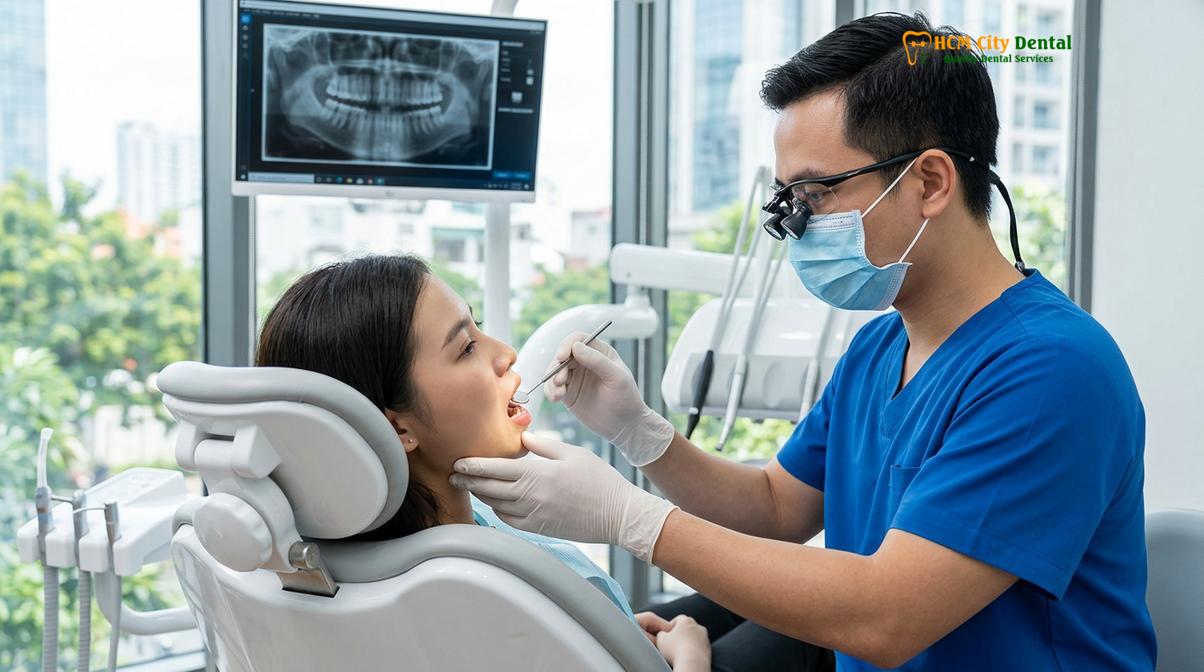
Understanding the Pathophysiology of Sleep-Disordered Breathing
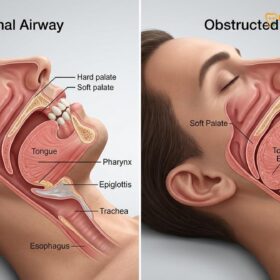
To comprehend the role of the dentist in sleep medicine, one must first understand the mechanics of airway collapse. During the transition from wakefulness to sleep, the neuromuscular tone of the upper airway naturally relaxes. In individuals with specific anatomical predispositions—such as a retrognathic (recessed) mandible, macroglossia (enlarged tongue), or excessive parapharyngeal adipose tissue—this relaxation leads to a critical narrowing of the airway. According to Bernoulli’s principle, as air is forced through this narrowed passage, the velocity increases and the pressure drops, causing the soft tissues of the velopharynx and oropharynx to vibrate. This vibration manifests audibly as snoring.
When the airway collapses entirely, an apneic event occurs. The brain senses the resulting oxygen desaturation and triggers a micro-arousal, forcing the patient to wake briefly, gasp for air, and restore muscle tone. This cycle can repeat dozens of times per hour, severely fragmenting sleep architecture and placing immense strain on the cardiovascular system. The severity of this condition is measured by the Apnea-Hypopnea Index (AHI), which quantifies the number of breathing disruptions per hour of sleep.[1]
The Shift Toward Oral Appliance Therapy
For decades, Continuous Positive Airway Pressure (CPAP) has been the gold standard for treating OSA. CPAP acts as a pneumatic splint, using pressurized air to keep the throat open. However, despite its high clinical efficacy, CPAP therapy suffers from notoriously low patient compliance. Many patients find the masks claustrophobic, the machine noisy, or the pressurized air irritating to their nasal passages. This compliance gap is where dental sleep medicine provides a life-saving alternative.
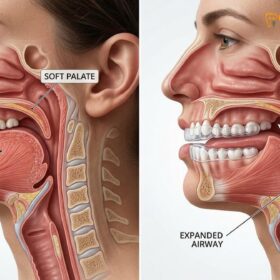
By utilizing a Mandibular Advancement Device (MAD), dentists can mechanically splint the airway open. The device physically holds the lower jaw in a forward position, which pulls the base of the tongue forward and increases the lateral dimensions of the pharyngeal airway. This structural intervention has proven highly effective for primary snoring and mild-to-moderate OSA, and serves as a crucial secondary option for severe OSA patients who are entirely CPAP-intolerant.[2]
How dentists identify airway obstructions and breathing disorders
Dentists utilize advanced intraoral digital scans and comprehensive anatomical assessments to identify signs of airway obstruction, such as enlarged tonsils, scalloped tongues, and narrow palates, initiating the diagnostic referral process.
Because patients typically visit their dentist more frequently than their primary care physician, dental professionals are uniquely positioned to act as the first line of defense in identifying sleep-disordered breathing. A routine prophylactic exam can reveal a multitude of intraoral biomarkers that suggest a compromised airway. The clinical workflow for identifying these risks involves a meticulous evaluation of both hard and soft tissues, combined with advanced digital imaging.
Intraoral Biomarkers of Sleep Apnea
During a comprehensive examination, a dentist trained in sleep medicine looks far beyond cavities and gingivitis. They conduct a thorough anatomical risk assessment. One of the primary indicators is the Mallampati score, a visual grading of the posterior airway space based on the visibility of the uvula, soft palate, and tonsillar pillars when the mouth is wide open. A high Mallampati score (Class III or IV) indicates a crowded oropharynx, a significant risk factor for OSA.
Additionally, dentists look for a “scalloped” tongue—a condition where the lateral borders of the tongue have indentations matching the lingual surfaces of the teeth. This occurs when an enlarged tongue is chronically pressed against the dental arches in an attempt to keep the airway open. Other hard tissue signs include severe attrition (wear) on the occlusal surfaces of the teeth. Sleep bruxism (teeth grinding) is highly correlated with sleep apnea; it is often an autonomic central nervous system response, an attempt by the body to push the jaw forward and open a collapsing airway during an apneic event.
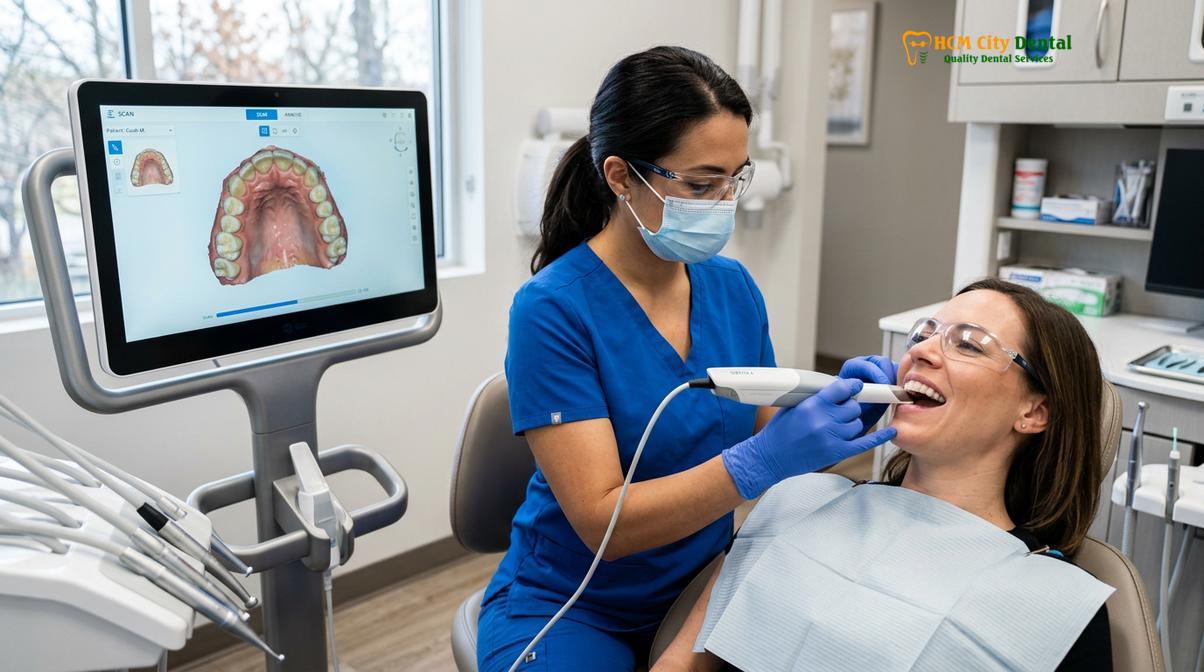
Advanced Digital Scanning and TMJ Assessment
The modern clinical workflow relies heavily on precision technology. At facilities like HCMC Dental Clinic in Ho Chi Minh City, the traditional, uncomfortable alginate impressions have been entirely replaced by intraoral digital scans. These high-resolution 3D scans capture the exact topography of the dental arches, ensuring that any fabricated appliance will fit with micrometer accuracy. This precision is not just for comfort; it is essential for retention, ensuring the device does not dislodge during the unconscious movements of sleep.
Equally critical to the airway assessment is the evaluation of the temporomandibular joint (TMJ). Because oral appliances function by holding the mandible in a protruded position for 6 to 8 hours a night, the health of the TMJ must be verified before treatment begins. Dr. Nguyen Van Cuong emphasizes the importance of a clinical perspective on airway scanning, joint checks, and titration calibration. A thorough TMJ assessment involves palpating the joint capsule and the muscles of mastication (masseter, temporalis, medial and lateral pterygoids) to check for inflammation, clicking, popping, or limited range of motion. If a patient has severe, active temporomandibular joint dysfunction (TMD), mandibular advancement may be contraindicated until the joint pathology is stabilized.
Bite Registration and the George Gauge
If the anatomical and joint assessments indicate that the patient is a suitable candidate for an oral appliance, the dentist must capture a specialized bite registration. Unlike a standard centric occlusion bite used for crowns or dentures, a sleep medicine bite registration captures the jaw in a protruded (forward) position. Dentists utilize an instrument called a George Gauge to measure the patient’s maximum mandibular protrusion and retrusion. The initial bite is typically captured at 50% to 60% of the patient’s maximum protrusion, providing a starting point that balances airway opening with joint comfort. This precise measurement is then sent to the dental laboratory alongside the intraoral digital scans.
The collaborative loop: Nha sĩ, Sleep Physicians, and ENT Specialists
Effective treatment requires a strict multidisciplinary approach where sleep physicians diagnose the condition via sleep studies, and dentists fabricate and titrate the prescribed oral appliances to ensure optimal airway management.
The cornerstone of ethical and effective dental sleep medicine is the absolute adherence to medical boundaries. It is a fundamental clinical rule: Dentists do not diagnose Obstructive Sleep Apnea. OSA is a complex, systemic medical condition that affects cardiovascular health, neurological function, and metabolic stability. Therefore, the diagnosis must be rendered by a board-certified medical doctor, typically a pulmonologist, neurologist, or dedicated sleep physician. The role of the nha sĩ (dentist) is therapeutic, acting as the structural engineer of the airway once the medical diagnosis has been established.
The Diagnostic Phase: Sleep Studies
When a dentist identifies the intraoral signs of sleep-disordered breathing, or when a patient complains of chronic snoring and daytime fatigue, the immediate next step is a medical referral. The patient must undergo a sleep study to quantify the severity of their condition. There are two primary modalities for this diagnostic testing:
- Polysomnography (PSG): Conducted in an overnight sleep laboratory, PSG is the gold standard for diagnosing sleep disorders. It monitors brain waves (EEG), blood oxygen levels, heart rate, breathing effort, and eye/leg movements. It provides a comprehensive picture of sleep architecture and definitively calculates the AHI.
- Home Sleep Apnea Testing (HSAT): For patients with a high pre-test probability of uncomplicated moderate-to-severe OSA, an HSAT may be prescribed. This is a simplified device worn by the patient in their own bed, typically measuring airflow, respiratory effort, and blood oxygen saturation. While less comprehensive than a PSG, it is highly convenient and effective for initial diagnosis.[4]
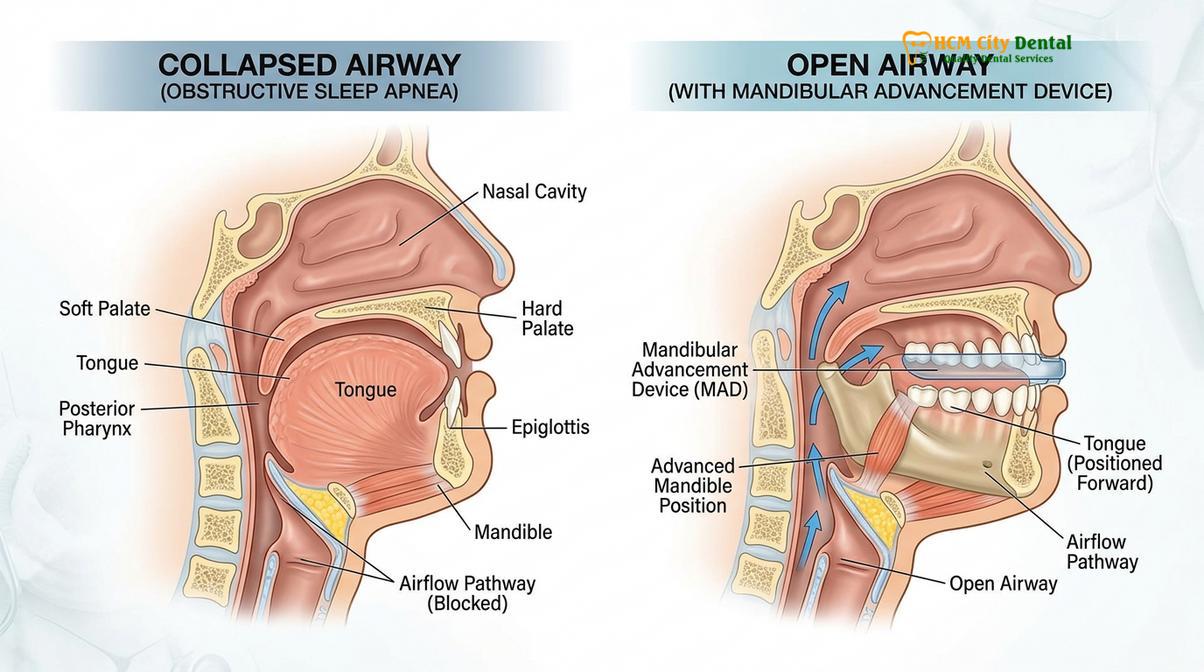
The Concept of Sleep Physician Collaboration
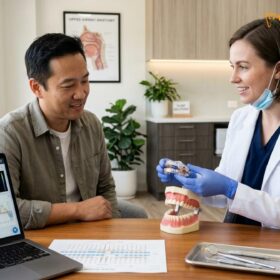
Once the sleep study is evaluated, the sleep physician will determine the appropriate treatment modality. If the diagnosis is primary snoring, mild-to-moderate OSA, or if the patient has severe OSA but is documented as CPAP-intolerant, the physician will write a prescription for an oral appliance. This initiates the sleep physician collaboration phase. The physician sends the diagnostic report and prescription to the dentist, who then takes over the mechanical management of the airway.
“The success of oral appliance therapy does not rest solely on the fabrication of the device, but on the seamless communication loop between the diagnosing physician, the treating dentist, and the patient’s ongoing subjective feedback.”
The Role of the ENT Specialist
In many cases, the collaborative loop also involves an Otorhinolaryngologist (ENT). While a dental appliance manages the retroglossal (behind the tongue) and retropalatal (behind the palate) airway spaces, it cannot resolve nasal obstructions. If a patient has a severely deviated septum, hypertrophic nasal turbinates, or massive palatine tonsils, they may not be able to breathe through their nose comfortably. Nasal breathing is crucial for the efficacy of oral appliances, as mouth breathing allows the mandible to drop backward, defeating the purpose of the device. An ENT may perform surgical interventions to clear the nasal passages or remove enlarged tonsils, working in tandem with the dentist’s appliance to achieve multi-level airway clearance.
Why non-invasive oral appliance therapy is the first-line treatment choice
Custom mandibular advancement devices offer a highly compliant, non-invasive airway therapy for mild-to-moderate OSA and primary snoring, effectively keeping the airway open during sleep without the discomfort of pressurized masks.
For patients seeking an alternative to CPAP, non-invasive airway therapy via custom oral appliances represents a paradigm shift in comfort and compliance. Unlike over-the-counter “boil-and-bite” mouthguards—which are bulky, lack precision, and can actually worsen sleep apnea by taking up valuable space in the oral cavity—custom-fabricated devices are engineered for maximum efficacy and minimal anatomical disruption. At HCMC Dental Clinic, the focus is on utilizing premium, scientifically validated appliance designs that cater to the specific biomechanical needs of the patient.
Biomechanical Engineering of Custom Devices
The primary mechanism of action for these devices is mandibular advancement. By anchoring to the maxillary (upper) and mandibular (lower) dental arches, the appliance forces the lower jaw into a protruded position. Because the genioglossus muscle (the primary muscle of the tongue) is attached to the lingual surface of the mandible, advancing the jaw inherently pulls the tongue forward. This prevents the base of the tongue from collapsing against the posterior pharyngeal wall, effectively neutralizing the primary cause of airway obstruction and oxygen desaturation.
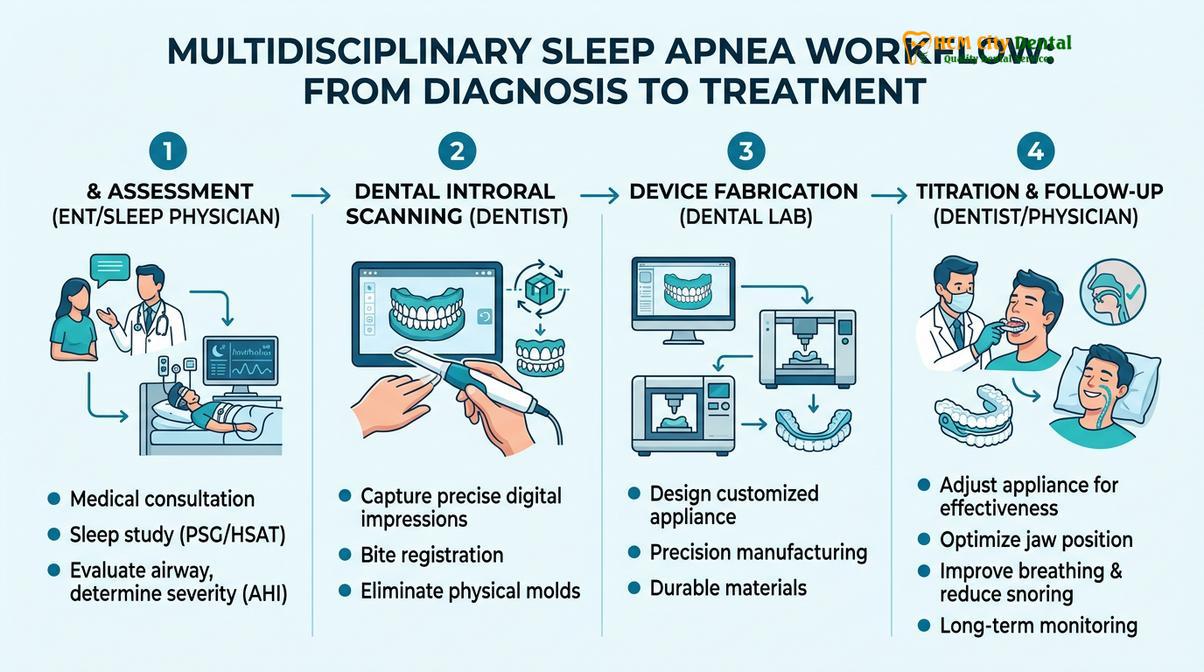
To achieve this, dentists rely on sophisticated appliance designs. Two of the most prominent devices utilized in advanced clinical settings include the Antisnoring Telescopic and the Twinblock Snoring appliances.
1. The Antisnoring Telescopic Device
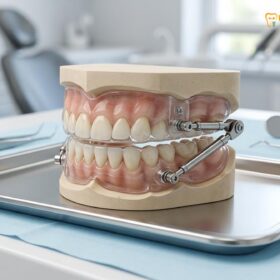
The Antisnoring Telescopic appliance utilizes a Herbst-style mechanism. It consists of two separate custom-milled acrylic or thermal-pressed splints that fit over the upper and lower teeth. These splints are connected laterally by bilateral telescopic rods (plungers and tubes). The defining clinical advantage of this design is its allowance for mobility. The telescopic rods permit the patient to open and close their mouth vertically and move their jaw side-to-side (lateral excursion) while still maintaining the forward protrusion required to keep the airway open.[3]
This freedom of movement is crucial for patient comfort and joint health. By allowing lateral movement, the device minimizes temporomandibular joint (TMJ) stiffness and prevents the feeling of being “locked in,” which is a common complaint with rigid appliances. Currently, this premium device is priced at 12,000,000 VND (approximately $480 USD with applicable WhatsApp consultation discounts), reflecting the complex laboratory engineering required for the telescopic hinges.
2. The Twinblock Snoring Device
The Twinblock Snoring appliance is a two-piece device characterized by its interlocking acrylic bite blocks. The upper and lower splints feature blocks that meet at a precise 70-degree angle. When the patient closes their mouth, the angled planes of the upper blocks engage the lower blocks, physically guiding the mandible forward into the predetermined protrusive position.
While slightly more restrictive in lateral movement compared to the Telescopic design, the Twinblock is highly durable and excellent for patients who are heavy bruxers (teeth grinders), as the acrylic blocks absorb the occlusal forces. It is also completely unattached, meaning the patient can open their mouth fully without any connecting rods pulling on the arches. This device is typically priced at 11,000,000 VND (approximately $440 USD with WhatsApp discount).
| Feature | Antisnoring Telescopic (Herbst-style) | Twinblock Snoring |
|---|---|---|
| Mechanism | Bilateral lateral telescopic rods | Interlocking 70-degree acrylic bite blocks |
| Jaw Mobility | High (allows vertical and lateral movement) | Moderate (guides jaw forward upon closure) |
| TMJ Impact | Minimizes joint stiffness and capsulitis | Stable support, excellent for heavy bruxers |
| Design Structure | Connected via hinges/rods | Two separate, unattached pieces |
| Estimated Cost | 12,000,000 VND (~$480 USD) | 11,000,000 VND (~$440 USD) |
The Critical Phase: Titration Calibration
Delivering the appliance to the patient is only the beginning of the therapeutic process. The most critical phase of dental sleep medicine is titration—the gradual, millimeter-by-millimeter advancement of the mandible to find the optimal balance between airway patency and joint comfort. Dr. Cuong notes that precise titration calibration is what separates a successful clinical outcome from a failed intervention.[5]
Patients are instructed to advance the device (using a small key for the Telescopic, or via adjustments made in the clinic for the Twinblock) by 0.25mm to 0.5mm increments every few days. The patient monitors their subjective symptoms: Is the snoring decreasing? Are they waking up feeling more refreshed? Is there any morning jaw pain? Once the subjective symptoms are resolved, the titration is paused. The final step in the collaborative loop is sending the patient back to the sleep physician for a follow-up sleep study (often an HSAT) while wearing the appliance. This objective data confirms that the AHI has been successfully reduced to normal levels, validating the efficacy of the non-invasive airway therapy.
“While CPAP forces the airway open with pressure, oral appliances rely on anatomical repositioning. The high compliance rates of custom dental devices often result in a greater overall reduction in cardiovascular risk simply because patients actually wear them all night.”
When to See a Doctor: Clinical Considerations and Contraindications
While oral appliance therapy is highly effective, it is not a universal solution. Proper patient selection is paramount to ensure safety and efficacy. Patients must be aware of the clinical boundaries and recognize when immediate medical intervention is required over dental management.
Clinical Warning: Never attempt to treat suspected sleep apnea with over-the-counter, boil-and-bite mouthguards. These generic devices lack the rigidity and precision required to maintain airway patency and can inadvertently push the jaw backward, worsening oxygen desaturation and increasing cardiovascular strain.
You should seek an immediate consultation with a sleep physician or a qualified dentist if you experience the following symptoms:
- Witnessed Apneas: A bed partner reports that you stop breathing, gasp, or choke during sleep.
- Severe Daytime Somnolence: Falling asleep involuntarily during meetings, while watching television, or, most dangerously, while driving.
- Morning Headaches: Waking up with a dull, generalized headache is a strong indicator of nocturnal oxygen deprivation and carbon dioxide retention.
Furthermore, there are specific dental and medical contraindications for Mandibular Advancement Devices. Patients with severe Central Sleep Apnea (a neurological condition where the brain fails to signal the breathing muscles) will not benefit from a mechanical dental device. Dentally, patients must have a sufficient number of healthy teeth to anchor the appliance. Those with severe periodontal disease, extensive tooth mobility, or active, painful temporomandibular joint disorders are generally not candidates for MAD therapy until their underlying dental issues are resolved. A comprehensive evaluation under the umbrella of General & Preventive Dentistry is required to ensure the oral cavity can support the biomechanical forces of the appliance.
Clinical Case Example:
A 45-year-old male patient visited HCMC Dental Clinic in Ho Chi Minh City complaining of chronic fatigue and loud snoring that disrupted his partner’s sleep. He had previously been diagnosed with moderate OSA (AHI of 22) but abandoned his CPAP machine after two months due to claustrophobia. Following a comprehensive airway and TMJ assessment, digital intraoral scans were taken. The clinical team collaborated with his sleep physician and fabricated an Antisnoring Telescopic appliance. Over a four-week titration period, the mandible was advanced by a total of 4.5mm. The patient reported a complete cessation of snoring and a return of daytime energy. A follow-up Home Sleep Apnea Test with the appliance in place confirmed his AHI had dropped to 4, well within the normal range, demonstrating a highly successful clinical outcome without the need for pressurized air.
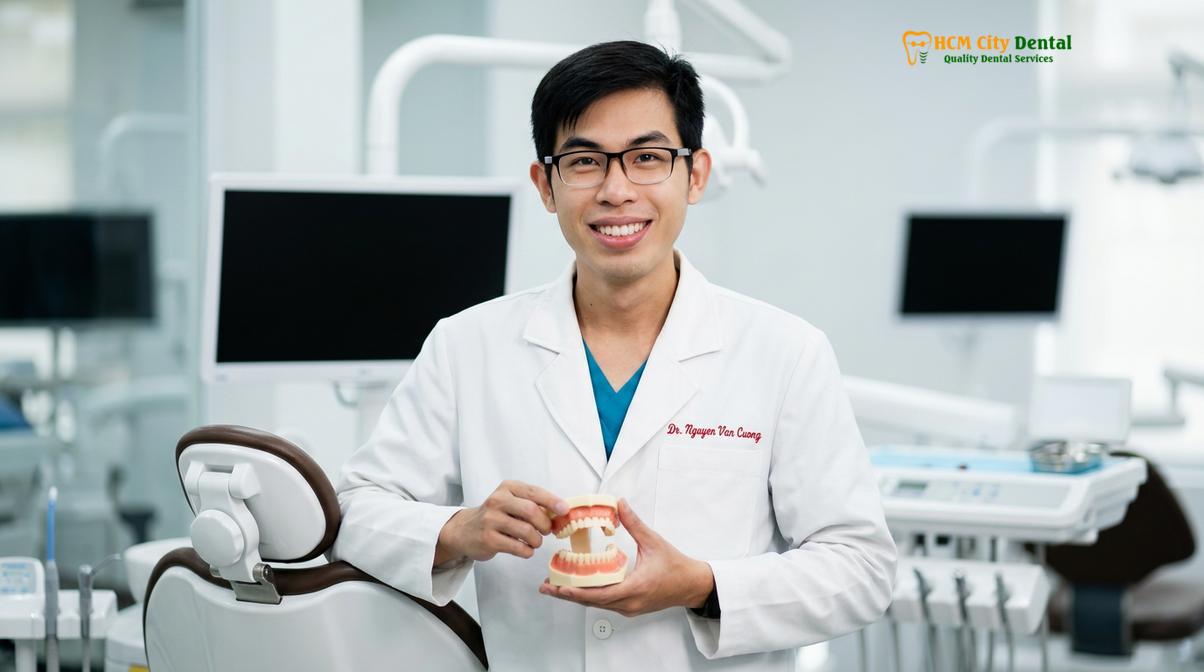
If you are struggling with CPAP intolerance or chronic snoring, a structural evaluation of your airway may provide the solution you need. By bridging the gap between dental anatomy and respiratory medicine, customized oral appliances offer a scientifically validated path to restorative sleep. For a comprehensive assessment of your suitability for custom sleep apnea oral appliances, consult with a qualified dental professional who understands the intricate biomechanics of the airway.
Frequently Asked Questions
What qualifications does a dentist need for sleep medicine?
A dentist practicing sleep medicine requires specialized postgraduate training in dental sleep medicine, airway anatomy, and temporomandibular joint (TMJ) management. They must understand sleep study interpretation and collaborate closely with board-certified sleep physicians to ensure safe, effective oral appliance therapy. This training ensures they can manage the biomechanical forces applied to the jaw without causing long-term joint damage.
Why is dental sleep medicine growing in popularity in Saigon?
Dental sleep medicine is growing in Saigon because patients are increasingly seeking comfortable, non-invasive alternatives to CPAP machines. The rise of modern dental technology and multidisciplinary medical networks in the city allows for highly customized, effective treatments for snoring and mild-to-moderate sleep apnea, making therapy more accessible and patient-friendly.
How do dentists and ENTs work together on sleep apnea?
Dentists and ENTs collaborate by addressing different anatomical aspects of the airway. While an ENT may surgically correct nasal obstructions or enlarged tonsils, the dentist provides a mandibular advancement device to prevent tongue base collapse, ensuring comprehensive, multi-level airway management. This dual approach maximizes the volume of the upper airway.
Can an oral appliance completely cure my sleep apnea?
No oral appliance can permanently cure obstructive sleep apnea, as it is a chronic anatomical and physiological condition. However, when worn during sleep, a custom mandibular advancement device can effectively manage the condition by keeping the airway open, significantly reducing apneas and snoring, much like eyeglasses manage poor vision.
Is the titration process painful for the jaw joints?
The titration process should not be painful if managed correctly by a qualified dentist. By advancing the jaw in micro-millimeter increments over several weeks and utilizing devices that allow lateral movement, the dentist minimizes stress on the temporomandibular joint (TMJ). Mild, temporary morning stiffness is normal, but sharp pain indicates a need for immediate adjustment.
References
- Journal of Dental Sleep Medicine. Mandibular advancement device efficacy and compliance. (2021).
- American Journal of Respiratory and Critical Care Medicine. CPAP versus oral appliance therapy for obstructive sleep apnea. (2019).
- Sleep and Breathing. Telescopic Herbst appliance TMJ safety and lateral mobility. (2020).
- Journal of Clinical Sleep Medicine. HSAT diagnostic reliability in multidisciplinary care. (2022).
- Journal of Oral Rehabilitation. Titration protocols and biomechanics in dental sleep medicine. (2018).