Complete dentures replace an entire arch of missing teeth using tissue support and atmospheric suction, whereas partial dentures fill specific gaps by anchoring to remaining natural teeth. The optimal choice depends entirely on the number of viable teeth, periodontal health, and the patient’s biomechanical requirements.
Clinical Summary:
The decision between complete and partial removable prosthetics is a fundamental aspect of restorative dentistry. Complete dentures are indicated for fully edentulous arches, relying on the mucoperiosteum (gum tissue) and underlying alveolar bone for support. Their retention is achieved through a precise peripheral seal that creates atmospheric suction. Conversely, partial dentures are utilized when a patient retains healthy, structurally sound natural teeth. These appliances use a combination of metal frameworks, acrylic bases, and retentive clasps to distribute masticatory (chewing) forces between the gums and the abutment teeth. Beyond restoring aesthetics and chewing function, partials play a critical role in preventing the migration of adjacent teeth. Transitioning from a partial to a complete denture involves careful clinical planning, often utilizing immediate dentures to manage the extraction phase seamlessly.
Key Takeaways:
- Complete dentures require a fully edentulous arch and rely on tissue support and suction for stability.
- Partial dentures anchor to existing natural teeth, providing superior mechanical retention and chewing efficiency.
- Wearing a partial appliance prevents adjacent teeth from drifting and opposing teeth from over-erupting.
- The transition to full dentures can be managed with immediate prosthetics, avoiding periods without teeth.
- Maintenance protocols differ significantly; partials require meticulous cleaning around clasps to protect abutment teeth from decay.
Structural Anatomy of a Complete Denture: Base and Artificial Teeth
A complete denture consists of a tissue-colored acrylic base that rests directly on the alveolar ridge, housing artificial teeth designed to restore full masticatory function and facial aesthetics.
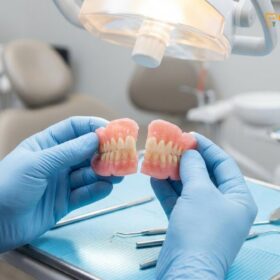
To understand how a full dental arch replacement functions, it is essential to examine its structural components. A complete denture is a highly customized prosthetic device designed to replace the entire dentition of the maxilla (upper jaw) or mandible (lower jaw). The foundation of this appliance is the denture base, typically fabricated from polymethyl methacrylate (PMMA), a durable, tissue-compatible acrylic resin. This base is meticulously tinted and contoured to mimic the natural appearance of gingival (gum) tissues, complete with subtle vascular detailing in premium variations.
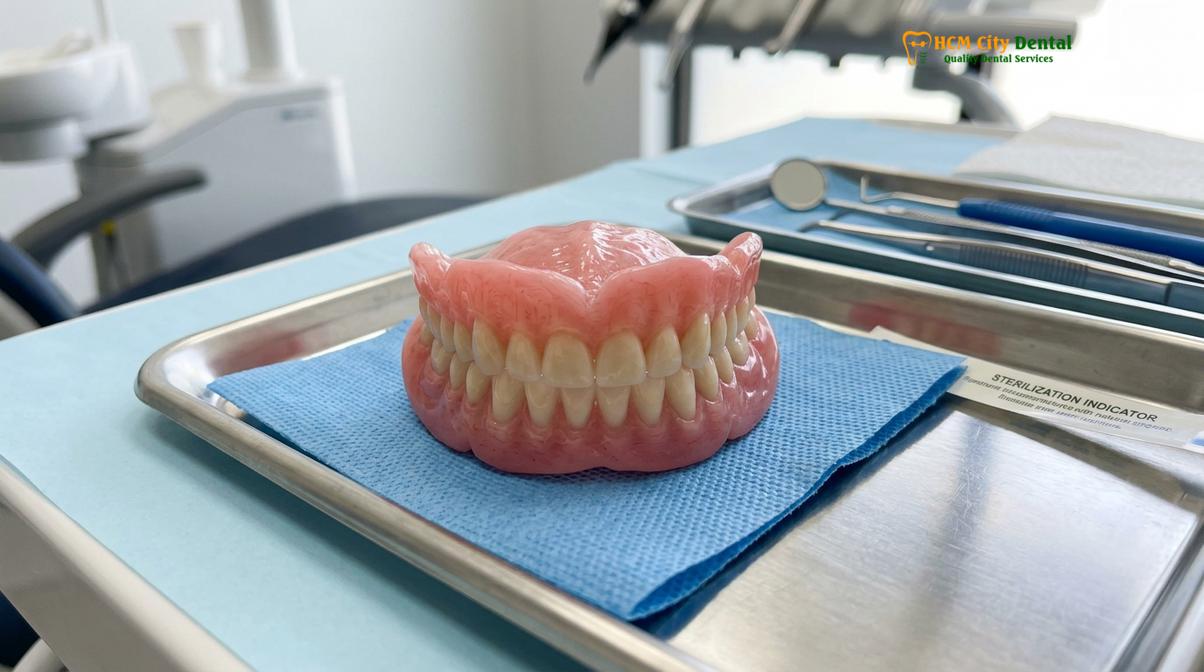
The base features three distinct surfaces. The intaglio surface is the interior portion that rests directly against the patient’s mucosal tissues. This surface must be an exact negative replica of the patient’s alveolar ridge to ensure proper fit and minimize pressure points. The polished surface encompasses the outer aspects of the base, which interact with the lips, cheeks, and tongue. Proper contouring of the polished surface is vital, as the surrounding facial musculature helps stabilize the denture during speech and swallowing. Finally, the occlusal surface consists of the artificial teeth themselves[1].
The artificial teeth embedded in the base are engineered to replicate the anatomy of natural dentition. Historically made of porcelain for superior aesthetics and wear resistance, modern denture teeth are predominantly manufactured from highly cross-linked acrylic resins or composite materials. These advanced polymers offer excellent durability, resist chipping better than porcelain, and form a stronger chemical bond with the acrylic denture base. The arrangement of these teeth—a process known as setting the occlusion—is a complex clinical task. The dentist must establish the correct Vertical Dimension of Occlusion (VDO) to ensure the patient’s facial profile is supported, preventing the collapsed, prematurely aged appearance often associated with total tooth loss.
Partial Denture Architecture: Clasps, Frameworks, and Rest Seats
Partial dentures utilize a combination of rigid frameworks, retentive clasps, and precision rest seats to distribute chewing forces evenly between the soft tissues and the remaining natural teeth.
When a patient retains a sufficient number of healthy teeth, general dentistry principles dictate that these teeth should be preserved and utilized to support a removable partial denture (RPD). The architecture of partial dental plates is inherently more complex than that of complete dentures, as it must integrate seamlessly with the existing biological structures. The core of a traditional, high-quality partial denture is the cast metal framework, most commonly fabricated from a biocompatible Cobalt-Chromium (Co-Cr) alloy.
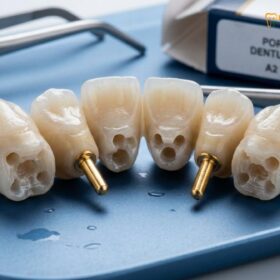
This metal framework serves as the rigid skeleton of the prosthetic. It consists of major connectors (such as a palatal strap for the upper jaw or a lingual bar for the lower jaw) that join the components on both sides of the dental arch, providing cross-arch stability. Attached to the major connector are minor connectors, which link the retentive elements to the main framework. The most recognizable components of a partial denture are the clasps and anchors. These metal arms encircle the abutment teeth (the natural teeth serving as supports), engaging specific anatomical undercuts to prevent the denture from dislodging during function[2].
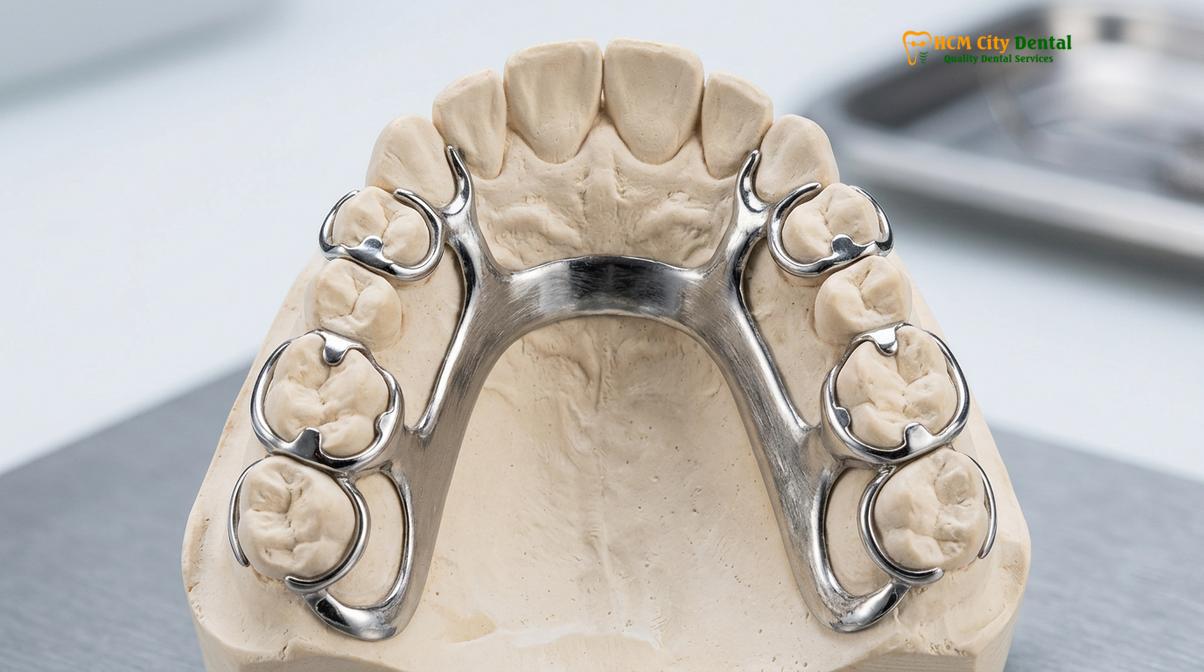
Equally important, though less visible, are the rest seats. A rest is a small metallic extension of the framework that sits within a shallow, conservatively prepared depression (the rest seat) on the biting surface or cingulum of an abutment tooth. The primary biomechanical function of the rest is to direct vertical masticatory forces down the long axis of the natural tooth. Because natural teeth are anchored in the jawbone by the periodontal ligament, they are exceptionally well-equipped to absorb these vertical forces. By transferring the load to the teeth, the rest seats prevent the partial denture from sinking into and traumatizing the underlying gum tissues.
Retention Mechanisms: Atmospheric Suction vs. Mechanical Anchorage
Complete dentures rely on atmospheric pressure and a precise peripheral seal for suction, while partials achieve superior stability through mechanical clasps gripping the natural dentition.
The mechanisms by which dentures resist displacement—known clinically as retention and stability—differ fundamentally between complete and partial prosthetics. For complete dentures, retention is primarily a matter of physics. The prosthetic relies on a phenomenon known as interfacial surface tension, combined with atmospheric pressure. A thin layer of saliva acts as an adhesive film between the intaglio surface of the denture and the mucosal tissues. However, the true key to suction retention is the peripheral seal.
To achieve this seal, the dentist performs a procedure called border molding during the impression phase. This captures the dynamic movements of the patient’s facial muscles, frenums, and tissues. When the denture borders precisely fill the anatomical vestibules without overextending, air is expelled from beneath the base during insertion, creating a vacuum effect. This is particularly effective in the upper jaw, where the broad surface area of the hard palate and the compressible tissues of the posterior palatal seal provide excellent suction. The lower jaw, however, presents a greater challenge due to the presence of the tongue, a smaller surface area, and the continuous movement of the floor of the mouth[3].
“Achieving a stable lower complete denture is one of the most demanding tasks in prosthodontics. We rely heavily on capturing the precise anatomical boundaries of the retromolar pad and the sublingual crescent to maximize atmospheric retention, but patient adaptation remains a critical factor.”
— Dr. Nguyen Van Cuong, Clinical Director
In stark contrast, partial dentures do not rely on suction. Instead, they utilize mechanical anchorage. The retentive clasps are designed with a specific degree of flexibility. As the partial denture is seated, the clasp flexes over the widest part of the abutment tooth (the height of contour) and snaps into a narrower undercut area near the gumline. Once seated, the clasp returns to its passive state, firmly locking the prosthetic in place. To prevent the tooth from being pushed laterally by the retentive clasp, a rigid reciprocal arm is placed on the opposite side of the tooth, ensuring biomechanical equilibrium. This mechanical grip provides partial dentures with a level of stability and chewing efficiency that complete dentures simply cannot match without the aid of dental implants.
Preserving Remaining Teeth: Why Partials Prevent Tooth Drift
Wearing a partial denture prevents adjacent teeth from tilting into edentulous spaces and stops opposing teeth from over-erupting, thereby maintaining proper bite alignment and joint health.
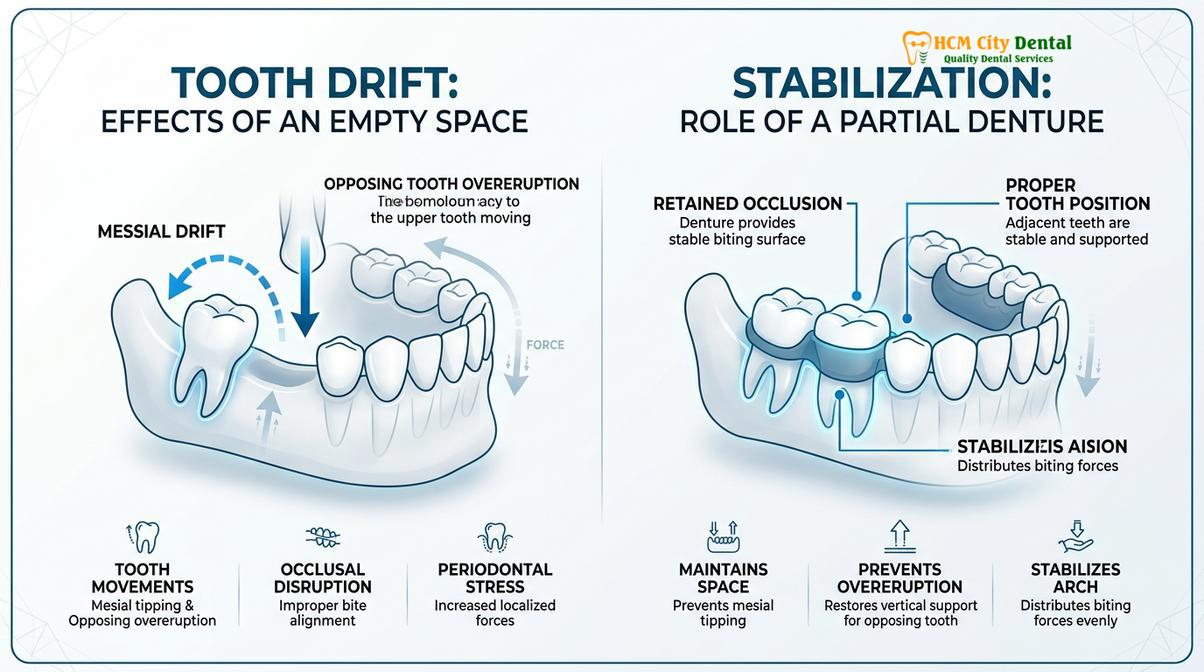
Beyond the obvious benefits of restoring chewing capacity and aesthetic appearance, partial dentures serve a vital preventative role in maintaining oral health stability. The human dentition is a dynamic system; teeth maintain their position through a delicate balance of forces exerted by adjacent teeth, opposing teeth, the lips, cheeks, and tongue. When a tooth is extracted and the space is left empty, this equilibrium is disrupted, leading to a cascade of negative biomechanical consequences.
The most immediate consequence of an unreplaced missing tooth is mesial drift. Natural teeth have an inherent tendency to migrate forward (mesially) toward the midline of the mouth. When a gap exists, the teeth behind the space will gradually tilt and drift into the void. Simultaneously, the tooth in the opposing jaw that previously bit against the missing tooth will begin to supra-erupt (grow downward or upward out of its socket) because it no longer encounters resistance during chewing[4].
Clinical Warning: Ignoring missing teeth can lead to severe malocclusion (bite misalignment). As teeth drift and over-erupt, they create interferences during chewing, which can trigger temporomandibular joint (TMJ) disorders, chronic facial pain, and accelerated periodontal disease due to new, hard-to-clean plaque traps.
By utilizing a partial denture, the dentist effectively acts as a space maintainer. The artificial teeth fill the edentulous spans, providing the necessary proximal contacts to keep adjacent teeth upright. Furthermore, they provide occlusal stops for the opposing dentition, preventing supra-eruption. This natural teeth retention strategy preserves the integrity of the entire dental arch, ensuring that the patient’s bite remains stable and functional over the long term.
Transitioning from Partial to Full: Planned Extraction Sequences
When remaining teeth fail, patients can transition to complete dentures through planned extraction sequences and the use of immediate transitional prosthetics to avoid edentulism.
Despite the best efforts in restorative care, there are clinical scenarios where the remaining natural teeth become structurally compromised due to advanced periodontal disease, severe decay, or recurrent fractures. In these instances, transitioning from a partial denture to a complete denture becomes a medical necessity. This transition, often referred to as managing the terminal dentition, requires meticulous planning to ensure the patient does not experience a period without teeth.
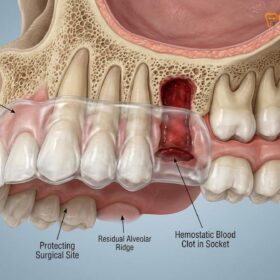
The standard clinical workflow for this transition involves the fabrication of an immediate denture. While the failing teeth are still present in the mouth, the dentist takes highly accurate impressions and records the patient’s bite. The dental laboratory then creates a complete denture based on these records, estimating the shape of the gum ridge after the teeth are removed. On the day of surgery, the remaining teeth are extracted, and the immediate denture is inserted directly over the surgical sites.
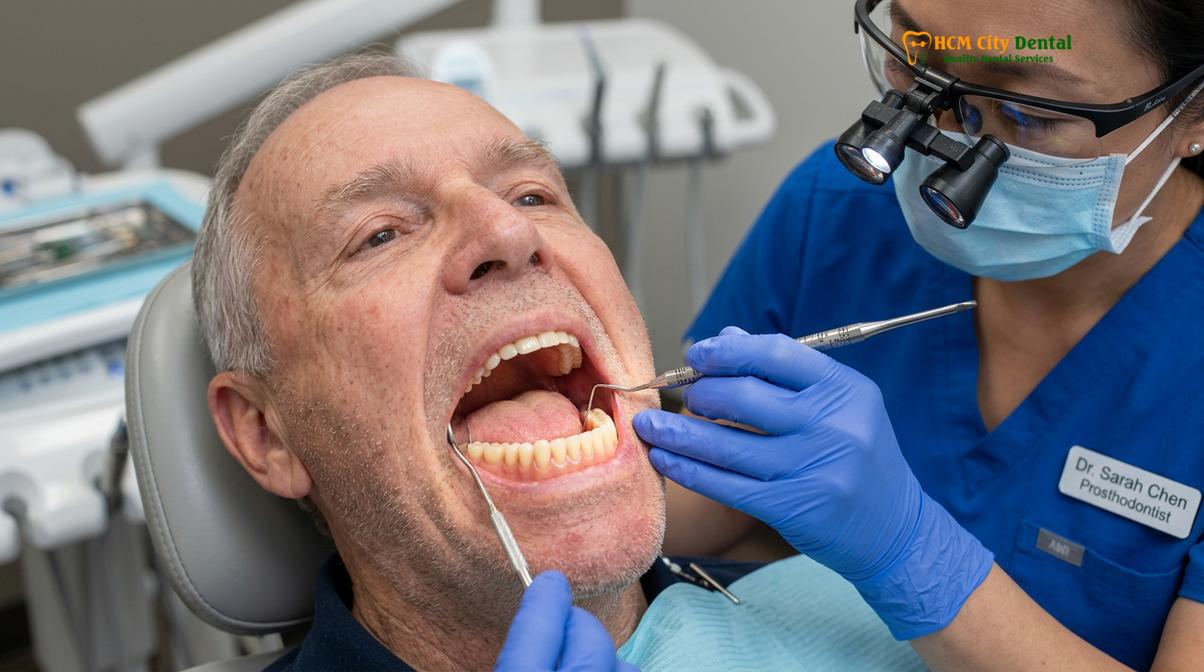
Clinical Case Example: A 62-year-old patient presented to HCMC Dental Clinic in Ho Chi Minh City with a failing upper partial denture and severe mobility in the remaining six upper teeth. The clinical team planned a single-stage extraction protocol. An immediate complete upper denture was fabricated prior to surgery. Following the extractions, the denture was placed immediately, acting as a surgical stent to control bleeding and minimize swelling, while allowing the patient to leave the clinic with a fully restored smile.
The immediate denture serves multiple purposes: it provides instant aesthetic restoration, acts as a protective bandage over the extraction sockets, and helps the patient adapt to speaking with a full palate appliance immediately. However, it is crucial to understand that following extractions, the alveolar bone undergoes a significant remodeling and resorption process. As the gums heal and shrink over the subsequent three to six months, the immediate denture will inevitably become loose. During this phase, the dentist will use temporary tissue conditioners (soft liners) to maintain the fit. Once the bone level has stabilized, the denture must be permanently relined or completely remade to ensure long-term suction and stability, a standard protocol in advanced prosthodontics Saigon.
Caring for Different Types: Maintenance Protocols for Full vs. Partials
Maintenance protocols differ; complete dentures require mucosal resting periods and thorough acrylic brushing, whereas partials demand meticulous cleaning of clasps to prevent abutment tooth decay.
The longevity of any removable prosthetic, as well as the health of the underlying oral tissues, depends heavily on the patient’s adherence to proper maintenance protocols. Both complete and partial dentures are susceptible to the accumulation of plaque biofilm, calculus (tartar), and fungal colonization, particularly by Candida albicans, which can cause severe mucosal inflammation known as denture stomatitis.
For complete dentures, daily hygiene involves removing the appliance and brushing all surfaces—especially the intaglio surface—with a soft-bristled denture brush and a non-abrasive cleanser. Standard toothpastes are strictly contraindicated, as their abrasive agents create microscopic scratches in the acrylic resin, which subsequently harbor bacteria and cause odor. Furthermore, complete dentures must be removed at night and stored in water or a specialized soaking solution to prevent the acrylic from warping and to allow the gum tissues to rest and reoxygenate[5].
Partial dentures require an even more rigorous hygiene routine. Because the appliance interacts directly with natural teeth, any plaque trapped beneath the framework or inside the clasps acts as a continuous source of acid and bacterial toxins. If a partial denture is not kept immaculately clean, the abutment teeth are at a high risk of developing rapid cervical decay (cavities at the gumline) and periodontal disease.
| Maintenance Aspect | Complete Dentures | Partial Dentures |
|---|---|---|
| Brushing Technique | Focus on intaglio surface and acrylic teeth; use non-abrasive cleanser. | Focus on metal clasps, rest seats, and intaglio surface; clean natural teeth separately. |
| Overnight Storage | Soak in water or effervescent denture cleanser to maintain acrylic hydration. | Soak in water; avoid harsh bleaches that can corrode the Co-Cr metal framework. |
| Tissue Management | Remove for 6-8 hours daily to prevent mucosal ischemia and fungal infections. | Remove daily; meticulous flossing and brushing of natural abutment teeth is mandatory. |
| Clinical Adjustments | Periodic relines required as the edentulous ridge naturally resorbs over time. | Clasp tension adjustments and monitoring of abutment tooth mobility. |
When to See a Doctor: Important Clinical Considerations
While removable prosthetics are highly effective, they require ongoing professional supervision. The oral cavity is not static; the jawbone continuously remodels, and natural teeth can shift or experience wear. Patients should not assume that a denture is a lifetime device that requires no further clinical attention.
You should schedule an evaluation if you experience persistent sore spots, ulcerations, or a burning sensation under the denture base, as these are signs of uneven pressure distribution or fungal infection. Additionally, if a complete denture loses its suction, or if a partial denture feels loose and the clasps no longer engage securely, professional adjustment is required. Attempting to bend metal clasps or repair acrylic fractures at home often results in irreparable damage to the prosthetic and potential trauma to the natural teeth.
“A well-fitting denture should never cause chronic pain. If a patient experiences ongoing discomfort, it is a clinical indicator that the occlusion is unbalanced or the tissue surface requires a reline. Regular annual check-ups are essential to evaluate the integrity of the appliance and screen for oral pathology.”
— Dr. Nguyen Van Cuong, HCMC Dental Clinic
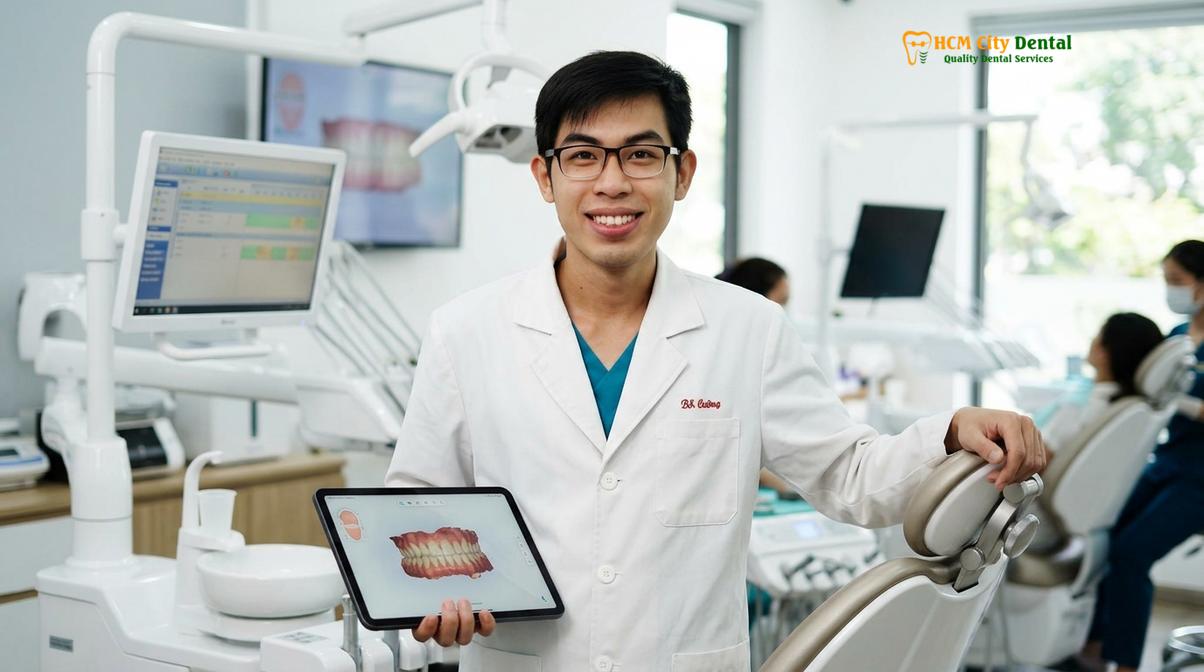
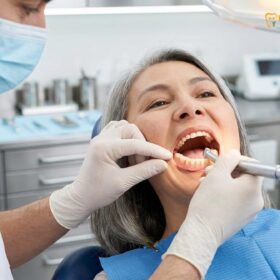
For patients considering their options, a comprehensive diagnostic evaluation, including panoramic radiography and periodontal probing, is necessary to determine candidacy for either complete or partial prosthetics. We encourage patients to consult with the restorative team at HCMC Dental Clinic to explore personalized treatment pathways that align with their anatomical needs and long-term oral health goals.
Frequently Asked Questions
Is it hard to chew with complete dentures compared to partials?
Yes, complete dentures typically require a longer adaptation period for chewing because they rely entirely on gum support rather than anchored teeth. Patients must learn to balance food on both sides of the mouth simultaneously to prevent the prosthetic from tipping or dislodging during mastication. In contrast, partial dentures offer significantly greater chewing force and stability because they are mechanically anchored to the roots of natural teeth, which absorb and distribute the biting pressure more effectively.
Do partial dentures damage your remaining healthy teeth?
Partial dentures do not inherently damage healthy teeth, provided they are designed correctly and the patient maintains excellent oral hygiene. However, plaque accumulation around the clasps can increase the risk of enamel decay and periodontal inflammation if the appliance and natural teeth are not cleaned meticulously. Regular dental visits are required to ensure the clasps are adjusted properly; if a clasp is too tight, it can exert excessive lateral force on the abutment tooth, potentially causing mobility over time.
What is the pricing difference between a partial and a full denture?
Generally, cast metal partial dentures can be more expensive than standard complete acrylic dentures due to the complex custom framework and precision attachments required. However, pricing varies significantly based on the materials used, clinical complexity, and the specific prosthetic design chosen for the patient. For example, a premium biofunctional complete denture may cost more than a simple acrylic transitional partial. A clinical consultation is necessary to provide an accurate fee estimate based on current clinic schedules.
Can I sleep with my dentures in?
Dentists strongly advise against sleeping with dentures to allow the gum tissues to rest and recover from daytime pressure. Continuous wear restricts blood flow to the mucosa, increases the risk of oral fungal infections like denture stomatitis, and can accelerate the rate of jawbone resorption. Removing the prosthetics at night and storing them in a hydrating solution ensures the longevity of the appliance and maintains the health of the underlying oral tissues.
How long does it take to get used to a new denture?
Most patients require four to eight weeks to fully adapt to a new denture, during which speech and chewing efficiency gradually improve. Initial excessive salivation, minor speech impediments, and slight sore spots are normal physiological responses that resolve as the oral tissues acclimate to the prosthesis. The neuromuscular system must learn to control the new appliance, particularly for lower complete dentures, where the tongue and cheeks play a vital role in keeping the device seated during function.
References
- Journal of Prosthetic Dentistry. Biomechanical principles and tissue response in complete dentures. (2021).
- International Journal of Prosthodontics. Partial denture design and abutment tooth preservation. (2020).
- British Dental Journal. Atmospheric pressure and peripheral seal in complete denture retention. (2019).
- Journal of the American Dental Association. The impact of tooth loss on adjacent dentition and mesial drift. (2022).
- Clinical Oral Investigations. Maintenance protocols and biofilm accumulation on removable prosthetics. (2018).