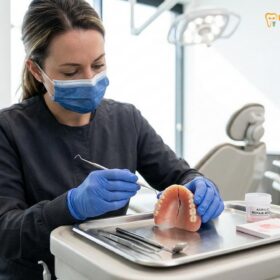
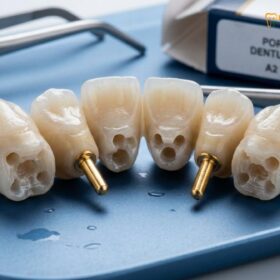
A denture repair in Ho Chi Minh City typically takes two to twenty-four hours, depending on the severity of the fracture. Professional dental laboratories use clinical-grade acrylics to seamlessly bond cracked plates or replace dislodged teeth, restoring full masticatory function and aesthetics without requiring a completely new prosthesis.
Clinical Summary:
Removable dental prostheses are subjected to immense daily occlusal forces and environmental stresses, making them susceptible to structural failure. When a fracture occurs, whether it is a clean midline split of the polymethyl methacrylate (PMMA) base or a debonded acrylic tooth, immediate professional intervention is required. Attempting DIY repairs with household adhesives introduces severe cytotoxicity and permanently alters the chemical matrix of the resin, often rendering the prosthesis irreparable. Modern clinical protocols involve creating a precise plaster index, preparing a dovetail joint at the fracture site, and utilizing auto-polymerizing acrylic cured under hydrostatic pressure. This rapid laboratory repair ensures that the dimensional stability, flexural strength, and biocompatibility of the denture are fully restored, allowing patients to resume normal function with minimal disruption.
Key Takeaways:
- Professional repairs restore the structural integrity of the denture using biocompatible, color-matched acrylic resins.
- Household glues are highly toxic, cause tissue necrosis, and permanently destroy the denture’s chemical matrix.
- Most standard acrylic fractures and dislodged teeth can be resolved within a few hours via same-day laboratory services.
- Flexible thermoplastic dentures (like Valplast) generally cannot be bonded and often require complete replacement.
- Preserving all broken fragments in a hydrated environment is crucial for a successful and seamless professional repair.
Common Denture Disasters: Dropped Plates and Popped Teeth
Most denture fractures occur from accidental drops onto hard surfaces or excessive occlusal stress, resulting in midline cracks, broken flanges, or debonded acrylic teeth.
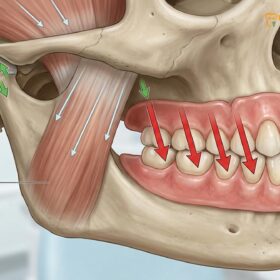
The structural integrity of a removable prosthesis relies heavily on the flexural strength of its base material, typically polymethyl methacrylate (PMMA). Despite its durability, PMMA is susceptible to fatigue failure over time. The oral cavity presents a harsh biomechanical environment where the prosthesis must withstand repetitive compressive and tensile forces during mastication. When the alveolar ridge undergoes natural bone resorption, the resulting micro-gaps between the acrylic base and the gum tissue cause the denture to flex slightly with every bite. This continuous micro-flexion concentrates stress along the midline of the palate or the mandibular arch, eventually leading to a catastrophic fracture[1].
Beyond intraoral stress, the most frequent cause of a broken denture plate is mechanical trauma outside the mouth. Patients often drop their prostheses onto porcelain sinks or tiled bathroom floors during routine cleaning. Because the acrylic is rigid, the sudden impact energy cannot be absorbed, resulting in a clean break or a shattered flange. In other instances, patients may experience a cracked acrylic tooth or a complete debonding of a tooth from the pink resin base. This usually occurs when biting into unexpectedly hard foods, which shears the chemical bond at the ridge-lap interface of the artificial tooth.
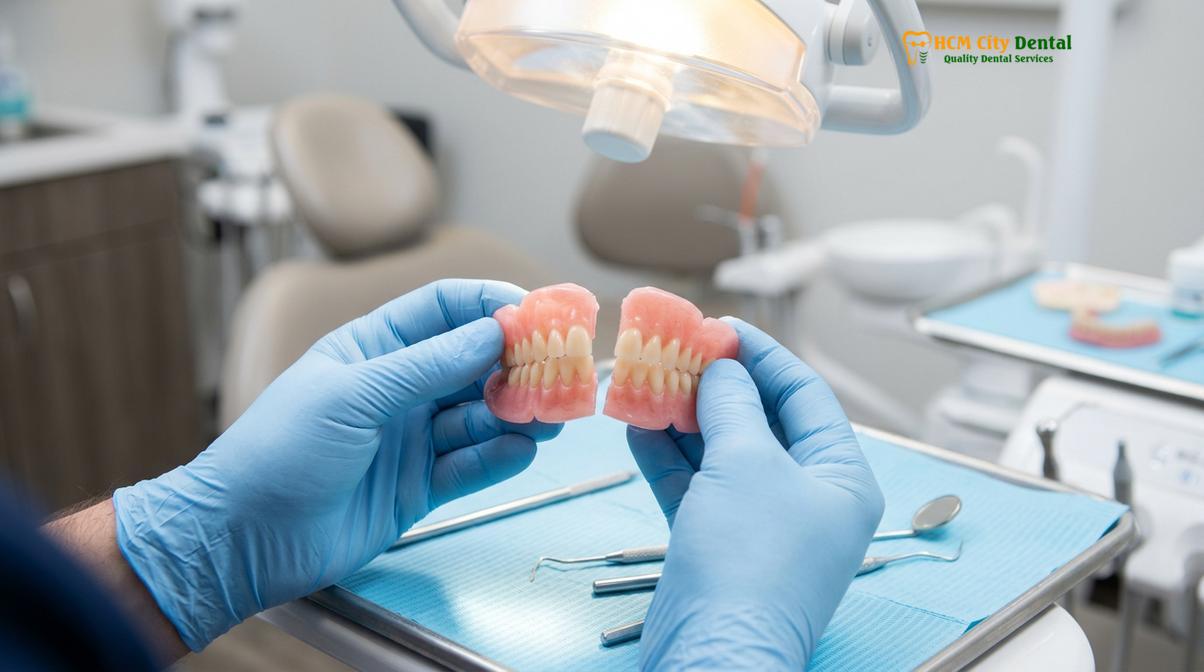
Understanding the nature of the fracture is critical for determining the repair protocol. A clean fracture—where the pieces fit back together perfectly like a puzzle—is highly favorable for a seamless restoration. Conversely, a comminuted fracture, where the acrylic has splintered into multiple missing fragments, presents a significant clinical challenge. For international patients experiencing a dental tourist urgency, identifying the type of damage helps the clinical team prepare the laboratory for immediate action.
“Flexural fatigue in polymethyl methacrylate is the leading cause of midline denture fractures. As the underlying bone resorbs, the lack of tissue support turns the prosthesis into a cantilever, amplifying stress until the material’s yield strength is surpassed.”
It is also important to note that the age of the prosthesis plays a significant role in its vulnerability. Over years of use, the plasticizers within the acrylic matrix slowly leach out into the saliva, causing the material to become increasingly brittle. Furthermore, microscopic scratches from abrasive toothpastes can act as stress-concentration points, accelerating the initiation of cracks. Regular clinical evaluations can identify these micro-fractures before they propagate into full structural failures.
Why Superglue is Highly Toxic and Will Ruin Your GBR Resin
Cyanoacrylate adhesives are highly toxic to oral tissues and chemically degrade dental acrylics, making professional laboratory repairs impossible and often necessitating a complete denture replacement.
When faced with a broken prosthesis, the immediate panic often drives patients to reach for household adhesives, most commonly cyanoacrylate (superglue). From a clinical perspective, this is the single most detrimental action a patient can take. Cyanoacrylate is an industrial chemical designed for porous inanimate objects, not for biocompatible medical devices that reside in the moist, sensitive environment of the oral cavity. The application of superglue initiates a rapid exothermic reaction that is highly cytotoxic to the oral mucosa, potentially leading to severe chemical burns, tissue necrosis, and systemic allergic reactions[2].
Beyond the biological hazards, superglue fundamentally destroys the chemical structure of the denture base. Dental prostheses are fabricated from specific formulations of PMMA or GBR (Guided Bone Regeneration) compatible resins. When cyanoacrylate is applied to these materials, it acts as a solvent, melting and distorting the precise margins of the fracture. This chemical melting creates a thick, brittle, and irregular barrier between the broken pieces.
Clinical Warning: Never apply cyanoacrylate (superglue), epoxy, or any household adhesive to a broken denture. These chemicals are toxic, dissolve the acrylic margins, and prevent dental technicians from properly re-aligning the fracture, often turning a simple repair into a costly full replacement.
For a dental technician to perform a successful repair, the fractured pieces must be perfectly re-approximated to recreate the exact original dimensions of the prosthesis. If superglue has been used, the pieces will no longer fit together accurately. The technician is forced to grind away the glue-contaminated acrylic, which alters the fit and occlusion of the denture. In many cases, the distortion is so severe that the repaired denture will rock on the tissues, causing painful ulcerations and requiring the fabrication of an entirely new arch.
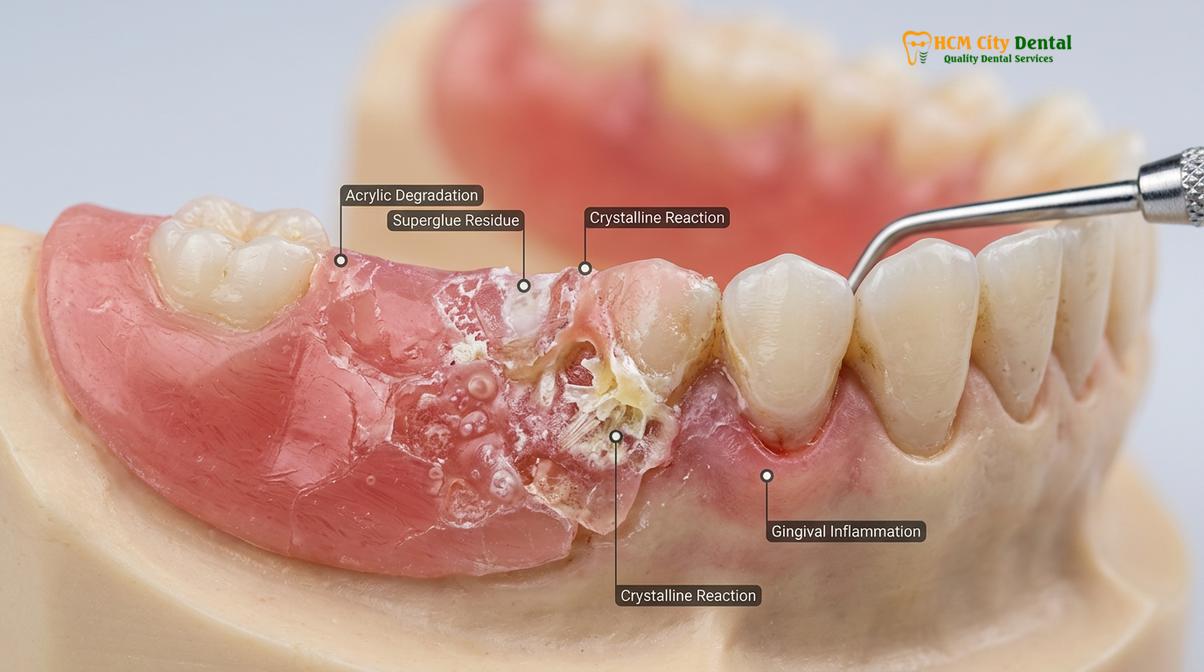
Furthermore, household adhesives are highly soluble in saliva. The bond they create is temporary and brittle, meaning the denture is almost guaranteed to break again within hours or days, usually at the most inconvenient time. The microscopic pores created by the degrading glue also become a breeding ground for pathogenic bacteria and Candida albicans, leading to severe denture stomatitis. Patients must understand that a broken denture is a medical device failure requiring professional intervention, not a DIY craft project.
Saigon Same-Day Lab Repairs: Restoring Your Denture in Hours
Advanced in-house dental laboratories in Ho Chi Minh City utilize rapid polymerization techniques and digital color matching to execute a same-day denture fix, minimizing patient downtime.
The anxiety of being without teeth is profound, affecting a patient’s ability to eat, speak, and interact socially. Recognizing this, premium facilities like HCMC Dental Clinic have integrated advanced in-house laboratories to facilitate a rapid same-day denture fix. The workflow for a professional repair is a meticulous process that combines material science with precise anatomical engineering, ensuring the restored prosthesis is as strong as the original.
The repair protocol begins with the careful re-assembly of the fractured pieces using sticky wax. Once the pieces are perfectly aligned, the technician pours a fast-setting plaster index (or matrix) against the tissue-bearing surface of the denture. This plaster index serves as a rigid mold that holds the exact three-dimensional shape of the prosthesis. After the plaster sets, the sticky wax is removed, and the fracture line is intentionally widened using a carbide bur. This step, known as creating a dovetail preparation, increases the surface area for the new acrylic to bond and ensures the repair joint is mechanically locked[3].
Clinical Case Example: A patient visiting Ho Chi Minh City experienced a complete midline fracture of their upper maxillary denture after dropping it. By bringing all fragments immediately to the clinic, the in-house laboratory was able to pour a plaster index, prepare a dovetail joint, and cure new high-impact acrylic under hydrostatic pressure. The patient’s smile and chewing function were fully restored within three hours, salvaging their travel itinerary.
Once the preparation is complete, the exposed acrylic margins are treated with a liquid monomer to soften the surface, promoting a chemical cross-linking bond. A specialized auto-polymerizing repair acrylic, carefully color-matched to the patient’s original pink gingival shade, is then packed into the defect. To ensure maximum density and eliminate microscopic air bubbles (porosity), the entire assembly is placed into a pressure pot. Curing the acrylic under warm water and high hydrostatic pressure (typically 20-30 psi) significantly enhances the flexural strength and stain resistance of the repair material[4].
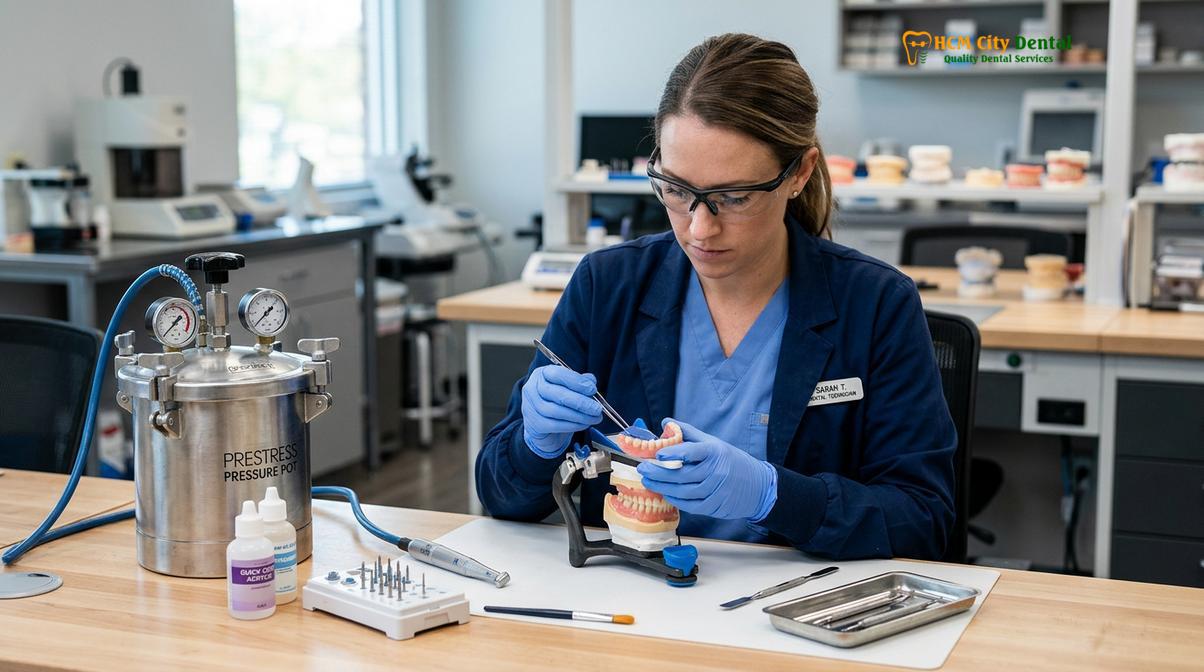
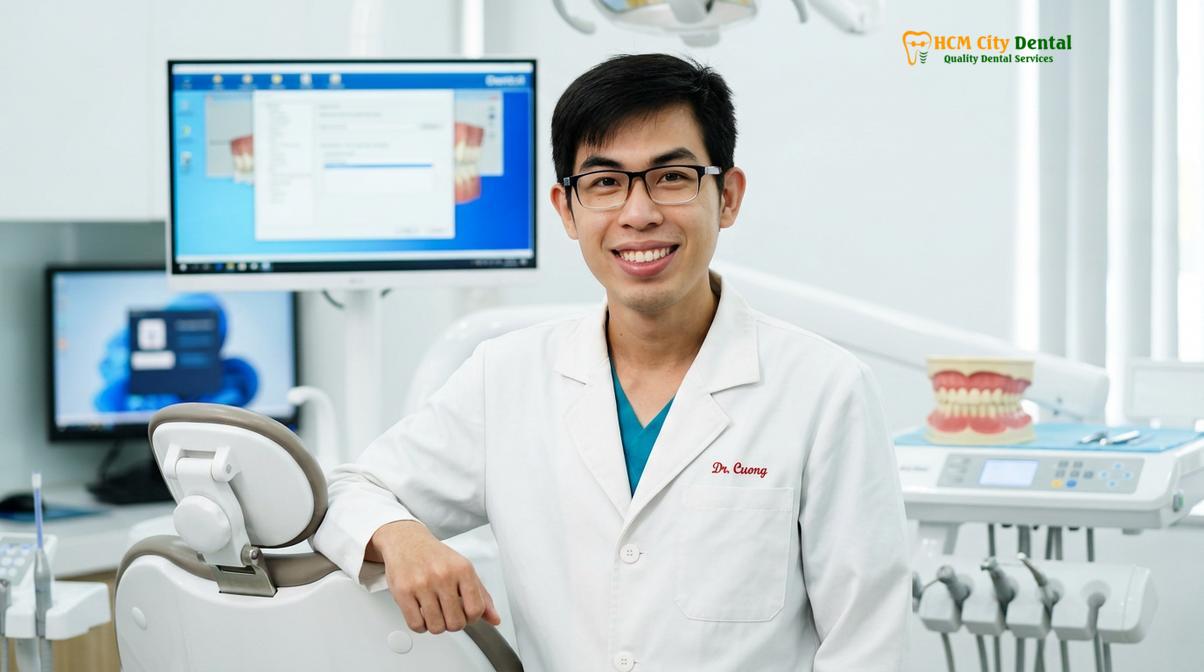
Dr. Nguyen Van Cuong emphasizes that the final stage of the repair is just as critical as the chemical bonding. The repaired area must be meticulously contoured and polished using pumice and high-shine compounds. A microscopic step or rough patch on the tissue-bearing surface can cause severe irritation to the oral mucosa. By utilizing these rapid laboratory repair techniques, patients can have their custom removable prosthetics restored to optimal function, allowing them to enjoy their time in the city without prolonged embarrassment or discomfort.
Managing a Broken Plate While Traveling: Emergency Steps
If your prosthesis breaks while traveling, immediately collect all fractured pieces, keep them hydrated, and seek an emergency dentist in Saigon rather than attempting DIY fixes.
Experiencing a prosthetic failure while away from home is highly stressful. For international visitors, a broken denture plate can disrupt dining experiences, social engagements, and overall confidence. However, taking the correct immediate actions can mean the difference between a simple, inexpensive repair and the need for a costly, time-consuming replacement. The first and most crucial step is to carefully collect every single piece of the fractured denture, no matter how small. Even tiny fragments of the acrylic flange or a single dislodged tooth are essential for the dental technician to accurately reconstruct the puzzle.
Once collected, the acrylic pieces must be kept hydrated. PMMA is a hydrophilic material; if it dries out completely, it can undergo microscopic dimensional changes, warping the fit. Place the broken pieces in a small container or a ziplock bag with a few drops of clean water or wrap them in a damp paper towel. Do not use hot water, as thermal shock can further distort the resin.
| Action Taken | Material Used | Clinical Outcome | Long-Term Prognosis | |
|---|---|---|---|---|
| DIY Repair | Cyanoacrylate (Superglue) | Toxic tissue response, melted acrylic margins, altered occlusion. | Poor. Usually requires complete replacement of the prosthesis. | |
| DIY Repair | Drugstore Repair Kits | Low-grade temporary resin | Weak bond, high porosity, harbors bacteria, prone to immediate re-fracture. | Very Poor. High risk of swallowing broken fragments. |
| Professional Repair | Clinical-grade Auto-polymerizing PMMA | Seamless chemical bond, exact anatomical fit, high-gloss polish. | Excellent. Restores original flexural strength and biocompatibility. |
If the denture has only suffered a minor chip but is still structurally intact, patients might be tempted to continue wearing it. This is strongly discouraged. The sharp edges of fractured acrylic can easily lacerate the tongue, cheeks, and gums, leading to painful traumatic ulcers. If you must wear a slightly chipped denture for a brief period (e.g., for a critical social interaction), you can apply a small amount of orthodontic wax over the sharp edge as a temporary buffer. However, this is strictly a stopgap measure.
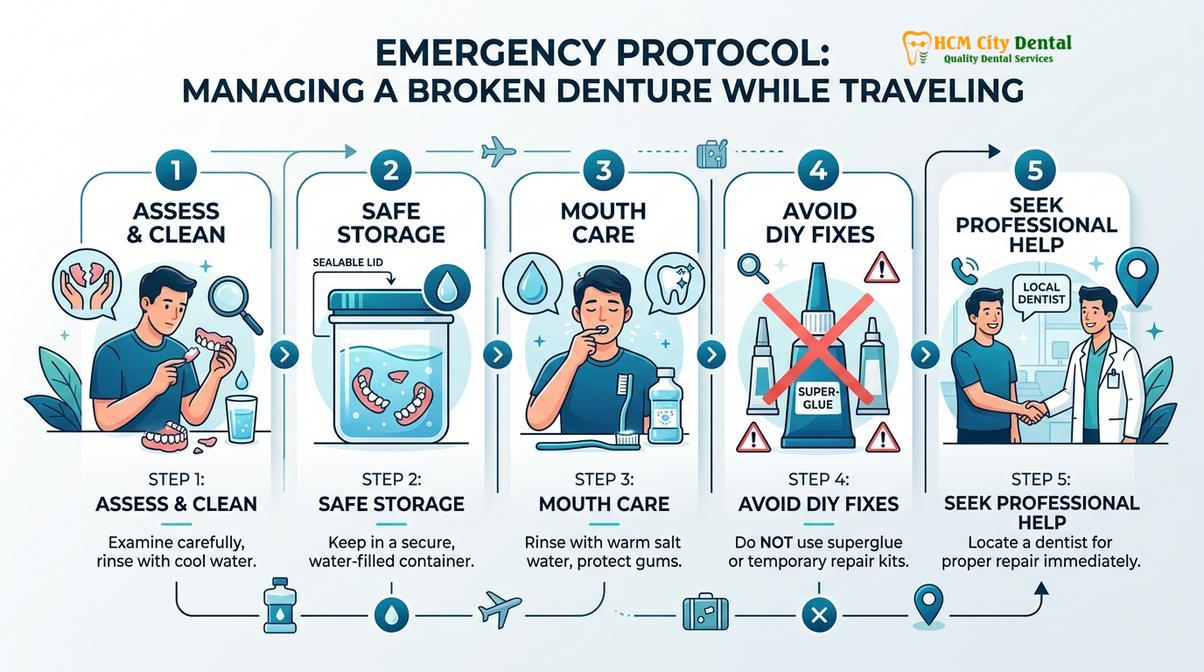
The definitive solution is to contact an emergency dentist in Saigon immediately. Clinics accustomed to treating international patients understand the urgency of these situations and often reserve dedicated laboratory time for emergency repairs. When contacting the clinic, clearly describe the nature of the break (e.g., “the pink plate snapped in half” or “a front tooth fell out”) so the team can prepare the necessary materials before your arrival.
When Can a Denture Be Repaired vs. When You Need a New Arch
Clean midline fractures and single debonded teeth are easily repairable, whereas shattered plates, severe warping, or compromised metal frameworks usually dictate the fabrication of a new prosthesis.
While modern dental laboratories can perform miraculous restorations, not every broken prosthesis is a candidate for repair. The decision to repair versus replace depends on the material of the denture, the nature of the fracture, and the underlying cause of the failure. Standard acrylic (PMMA) dentures with clean, simple fractures are the most straightforward to fix. Because the material allows for chemical cross-linking, the new acrylic seamlessly integrates with the old, restoring the plate’s structural integrity.
However, the situation is vastly different for flexible dentures, such as those made from Valplast or other thermoplastic nylons. These materials are injected under high heat and do not chemically bond with standard repair resins. If a flexible denture snaps or tears, it generally cannot be repaired chairside or even in a standard lab. It often requires being sent back to a specialized milling center for re-injection, or more commonly, the fabrication of an entirely new prosthesis[5].
“A repair is only as good as the foundation it rests upon. If a denture fractures due to severe alveolar bone resorption, simply fixing the crack without addressing the poor tissue adaptation will inevitably lead to a secondary failure.”
Dr. Nguyen Van Cuong advises that the underlying cause of the fracture must be diagnosed. If a denture breaks because it was dropped, a simple repair is usually sufficient. However, if the denture broke while the patient was eating soft food, it indicates a fundamental flaw in the fit or occlusion. Over time, as the jawbone shrinks, the denture loses its intimate contact with the tissues. This creates a fulcrum effect, causing the acrylic to bend and eventually snap under chewing pressure. In these cases, repairing the crack is only a temporary fix. The prosthesis will require a hard reline to restore tissue adaptation, or if the teeth are heavily worn, a completely new arch may be the most clinically sound recommendation.
Furthermore, if a denture has been repaired multiple times, or if it has shattered into numerous small fragments (a comminuted fracture), the structural integrity is permanently compromised. The accumulation of repair acrylic alters the flexibility and weight distribution of the prosthesis. In such instances, transitioning to a new, digitally designed denture—or exploring implant-supported options—provides a more reliable, long-term solution for the patient’s oral health.
When to See a Doctor (Emergency Dental Care)
Immediate clinical evaluation is necessary if a broken denture causes oral lacerations, if you suspect you have swallowed a fragment, or if a repaired prosthesis causes localized pain.
A fractured dental prosthesis is not merely an inconvenience; it can pose immediate risks to your oral and systemic health. You should seek prompt evaluation at a qualified clinic if the broken appliance has caused lacerations, bleeding, or deep ulcerations on your gums, tongue, or buccal mucosa. Sharp acrylic edges can quickly cause severe tissue trauma, which may become infected if left untreated. Furthermore, if a tooth or a piece of the acrylic flange breaks off while eating and cannot be located, there is a risk of ingestion or aspiration. If you experience coughing, difficulty breathing, or abdominal pain after a denture fracture, seek immediate medical attention.
Additionally, if you have recently had a denture repaired and it feels uneven, causes localized pressure spots, or alters your bite, you must return to the clinic for an occlusal adjustment. Continuing to wear an ill-fitting repaired denture can accelerate bone loss and cause chronic temporomandibular joint (TMJ) discomfort. A professional clinical assessment ensures that the repaired prosthesis distributes masticatory forces evenly and safely across the alveolar ridge.
Frequently Asked Questions
How long does it take to repair a cracked denture in HCMC?
A standard acrylic denture repair in Ho Chi Minh City typically takes between two to four hours. Advanced in-house dental laboratories can quickly re-approximate the fractured pieces, apply new clinical-grade acrylic, and cure the prosthesis under pressure to ensure you are not without your teeth for long. Complex repairs involving metal frameworks may require up to 24 hours.
Can you fix a flexible Valplast denture that has snapped?
Flexible Valplast dentures generally cannot be repaired using traditional acrylic bonding methods. Because the thermoplastic nylon material does not chemically bond with standard repair resins, a snapped flexible denture usually requires a complete re-fabrication or a specialized re-injection process that takes significantly longer than standard acrylic repairs.
Does travel insurance cover emergency dental repairs?
Many comprehensive travel insurance policies cover emergency dental care required to relieve pain or restore immediate function. However, coverage for prosthetic repairs varies widely by provider, so patients should retain all clinical receipts, X-rays, and diagnostic reports provided by the clinic for their claims. It is advisable to contact your insurance provider immediately to confirm your specific prosthetic benefits.
Is it safe to wear a partially cracked denture?
Wearing a partially cracked denture is highly discouraged as it can cause severe soft tissue trauma. The compromised structural integrity alters the distribution of bite forces, which can lead to rapid propagation of the fracture, potential swallowing hazards, and painful ulcerations on the gums. Remove the denture immediately and store it safely until it can be professionally assessed.
Will my repaired denture look different or feel bulky?
A professionally repaired denture should look and feel virtually identical to its original state. Dental technicians use precise plaster indices and color-matched acrylics to seamlessly blend the repair site, followed by high-gloss polishing to ensure the surface remains smooth and comfortable against the oral tissues. If a repair feels bulky, it requires further clinical adjustment.
References
- Journal of Prosthetic Dentistry. Flexural fatigue and fracture mechanics of polymethyl methacrylate denture base resins. (2021).
- International Journal of Toxicology. Cytotoxicity and tissue necrosis associated with cyanoacrylate adhesives in oral environments. (2019).
- British Dental Journal. Clinical workflows for rapid laboratory repair of removable dental prostheses. (2020).
- Journal of Oral Rehabilitation. Dimensional stability and bond strength of auto-polymerizing repair acrylics. (2022).
- Clinical Oral Investigations. Thermoplastic flexible partial dentures: clinical suitability and repair limitations. (2018).