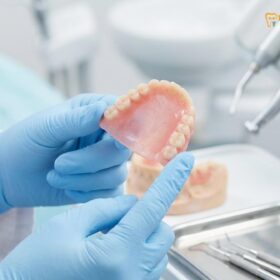
Porcelain denture teeth are highly esthetic, wear-resistant artificial teeth utilized in complete or partial removable prosthetics. Unlike acrylic teeth that chemically bond to the denture base, porcelain teeth rely entirely on mechanical retention. They offer superior color stability but require precise occlusal balancing to prevent opposing tooth wear.
Clinical Summary:
Porcelain denture teeth represent a premium, highly durable option in removable prosthodontics, celebrated for their exceptional wear resistance, lifelike translucency, and long-term color stability. While modern composite resins have gained significant popularity, porcelain remains clinically relevant for specific edentulous cases requiring maximum occlusal durability and esthetic longevity. Because porcelain does not chemically bond to acrylic denture bases, these teeth utilize mechanical retention mechanisms such as diatoric holes for posteriors and metal pins for anteriors. Careful case selection by a qualified prosthodontist is essential, as the extreme hardness of porcelain can cause severe attrition if placed against natural opposing teeth or softer restorative materials. Furthermore, the increased density of ceramic materials necessitates precise biomechanical planning to ensure adequate prosthesis retention and stability.
Key Takeaways:
- Porcelain teeth provide unmatched esthetics, translucency, and resistance to staining compared to standard acrylics.
- They require mechanical retention features (metal pins or diatoric holes) to attach securely to the acrylic denture base.
- Due to their extreme hardness, they are generally contraindicated against natural opposing teeth to prevent severe enamel wear.
- Porcelain dentures may produce a distinct clicking sound during mastication and speech due to the lack of shock absorption.
- Proper clinical evaluation is mandatory to ensure adequate interarch space, as porcelain teeth cannot be heavily modified without compromising their retention.
The Clinical Anatomy and Material Science of Porcelain Denture Teeth
Porcelain denture teeth are crafted from high-fusing feldspathic ceramics, designed to mimic the exact light-reflecting properties of natural enamel while utilizing mechanical undercuts for base attachment.
The fabrication and utilization of porcelain denture teeth represent a fascinating intersection of material science and clinical prosthodontics. Unlike conventional acrylic resin teeth, which are composed of polymethyl methacrylate (PMMA) and can chemically fuse with the denture base during the curing process, porcelain teeth are entirely inert. They are manufactured using high-fusing feldspathic ceramics, which are fired in vacuum furnaces at extremely high temperatures. This manufacturing process yields a material that is exceptionally dense, highly polished, and virtually impervious to oral fluids, bacterial colonization, and dietary stains [1].
Because there is no chemical adhesion between the ceramic tooth and the pink acrylic denture base, retention must be achieved mechanically. Anterior porcelain teeth are typically manufactured with small, gold-clad or base-metal pins embedded into their lingual surfaces. During the laboratory processing phase, the denture base resin flows around these pins, locking the tooth firmly in place once the acrylic polymerizes. Posterior porcelain teeth, on the other hand, utilize “diatoric holes”—undercut channels hollowed out within the base of the tooth. The fluid acrylic resin flows into these diatoric spaces and hardens, creating a robust mechanical interlock.
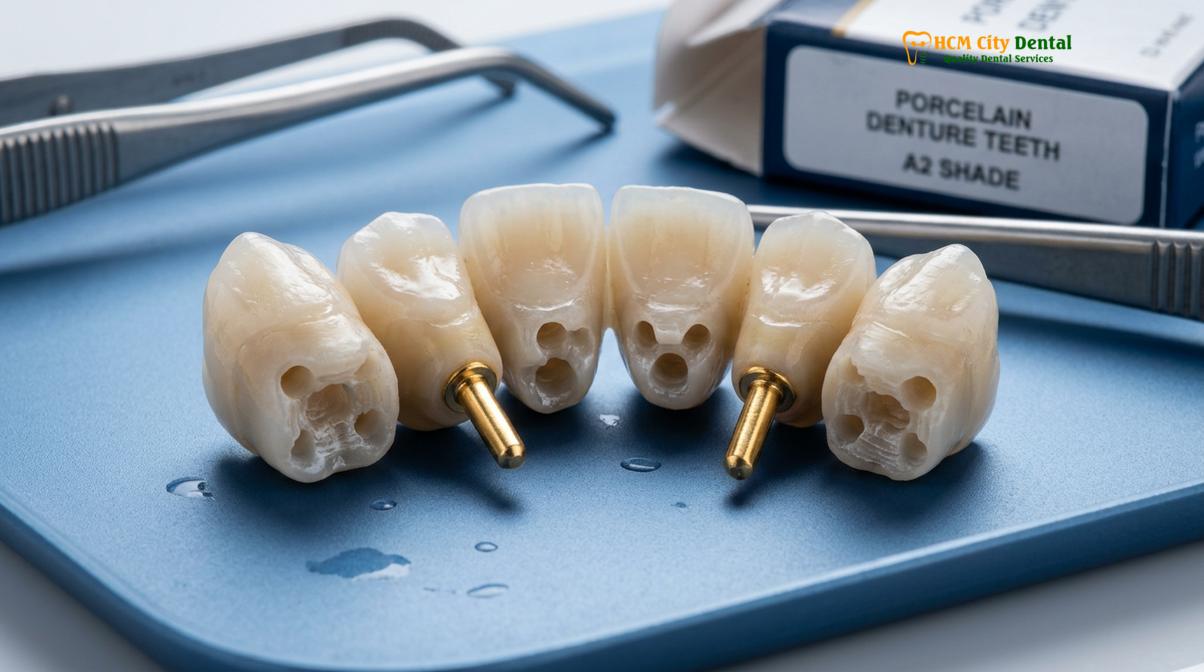
The optical properties of porcelain are arguably its greatest clinical advantage. The material can be layered during manufacturing to include varying degrees of opacity at the cervical margin and high translucency at the incisal edge, closely replicating the complex internal anatomy of natural human dentition. Furthermore, the surface glaze applied to porcelain teeth provides a lifelike luster that does not degrade over time, unlike resin teeth which may become dull due to microscopic surface abrasions from daily brushing and mastication.
However, the material science of porcelain also dictates its limitations. The high modulus of elasticity means the material is very rigid and brittle. It lacks the ability to absorb shock, transferring masticatory forces directly to the underlying alveolar ridge. This characteristic requires careful consideration when designing the prosthesis, particularly for patients with severely resorbed ridges or sensitive oral mucosa.
Porcelain vs. Acrylic and Composite Resin Teeth: A Clinical Comparison
While acrylic teeth chemically bond to the denture base and absorb shock, porcelain teeth offer superior wear resistance and esthetics but lack shock absorption and chemical bonding capabilities.
When planning a removable prosthesis, the selection of artificial tooth material is a critical decision that impacts the longevity, function, and comfort of the denture. The three primary categories of denture teeth available today are conventional acrylic resin, highly cross-linked composite resin, and porcelain. Each material possesses distinct biomechanical properties that make it suitable for specific clinical scenarios [2].
Conventional acrylic teeth have been the industry standard for decades due to their ease of adjustment, ability to chemically bond to the denture base, and excellent shock-absorbing qualities. However, their primary drawback is a relatively low resistance to occlusal wear. Over time, the cusps of acrylic posterior teeth can flatten, leading to a loss of the vertical dimension of occlusion (VDO) and a decrease in masticatory efficiency. To address this, manufacturers developed highly cross-linked composite resin teeth, which incorporate inorganic micro-fillers to significantly enhance wear resistance while maintaining the ability to chemically bond to the base.
Porcelain teeth sit at the far end of the spectrum regarding hardness and wear resistance. They exhibit virtually zero occlusal wear over the lifespan of the prosthesis. This ensures that the patient’s vertical dimension of occlusion remains perfectly stable, which is crucial for temporomandibular joint (TMJ) health and facial esthetics. However, this extreme hardness comes with trade-offs. Porcelain teeth are prone to chipping or fracturing if dropped, and they transmit greater impact forces to the underlying tissues.
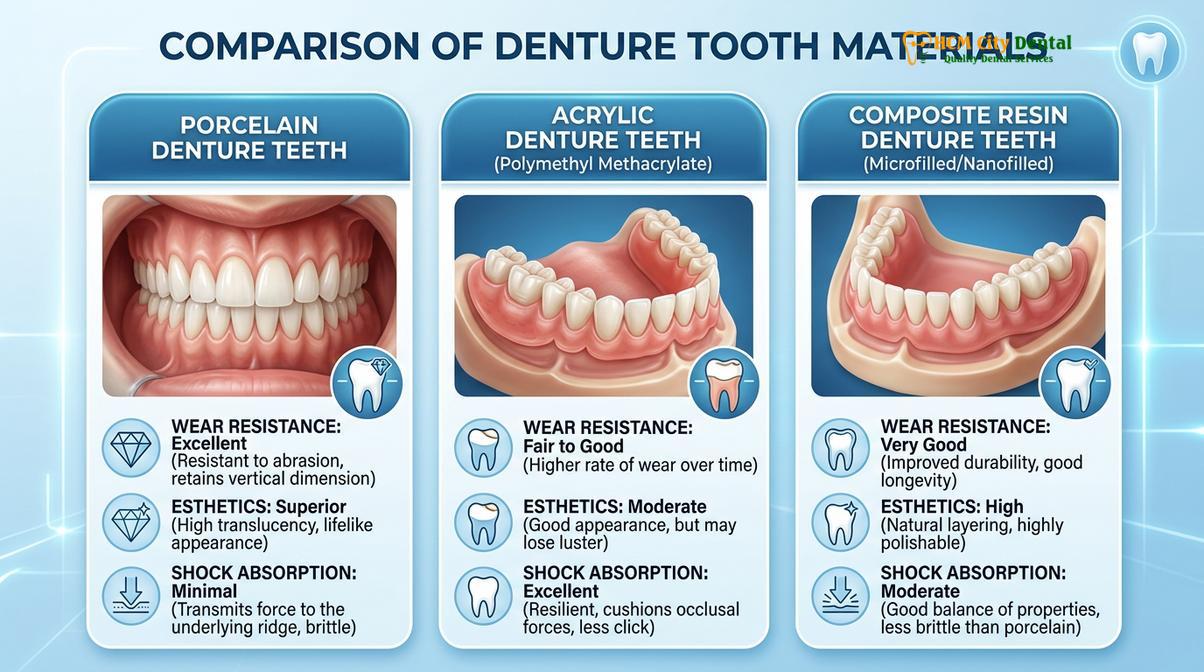
To provide a clear clinical perspective, the following table outlines the comparative properties of these three materials:
| Clinical Property | Conventional Acrylic Resin | Composite Resin (Cross-linked) | Porcelain |
|---|---|---|---|
| Wear Resistance | Low (Prone to flattening over time) | High (Excellent durability) | Exceptional (Virtually no wear) |
| Esthetics & Translucency | Good (May dull over time) | Very Good (Maintains luster well) | Excellent (Lifelike, permanent glaze) |
| Base Attachment | Chemical Bond | Chemical Bond | Mechanical (Pins/Diatoric holes) |
| Shock Absorption | High (Gentle on alveolar ridges) | Moderate | Low (Transmits force to tissues) |
| Risk to Opposing Teeth | Minimal (Safe for natural enamel) | Low to Moderate | High (Causes severe enamel attrition) |
| Acoustic Properties | Muted, natural sound | Muted, natural sound | Prone to “clicking” sounds |
In modern prosthodontics, the choice often comes down to balancing the need for durability with the preservation of opposing structures. For patients exploring comprehensive rehabilitation, comparing these materials is just as important as evaluating structural options, such as understanding the differences in an Overdenture vs All on 4 implant-supported prosthesis, where the choice of tooth material drastically affects the final biomechanical outcome.
Indications and Contraindications in Prosthodontics
Porcelain teeth are indicated for patients prioritizing long-term esthetics and wear resistance, but are strictly contraindicated when opposing natural dentition due to the risk of severe enamel abrasion.
The decision to prescribe porcelain denture teeth must be based on a thorough clinical examination, taking into account the patient’s anatomical limitations, opposing dentition, and functional habits. Porcelain is not a universal solution; rather, it is a highly specialized material that excels in specific environments while posing significant risks in others.
Primary Indications: Porcelain teeth are highly successful in patients who present with well-formed, healthy alveolar ridges capable of bearing the increased functional load transmitted by the rigid ceramic material. They are particularly indicated for patients with a history of rapid wear of acrylic teeth, often due to a highly abrasive diet or parafunctional habits (though severe bruxism may contraindicate porcelain due to fracture risk). Additionally, patients with high esthetic demands who desire a prosthesis that will not stain from heavy coffee, tea, or tobacco use are excellent candidates for porcelain anteriors [3].
Clinical Warning: Opposing Natural Dentition
Porcelain denture teeth should almost never be placed in direct occlusion against natural teeth or gold restorations. The extreme hardness of the ceramic will act as an abrasive file, rapidly wearing away the natural enamel or restorative material, potentially leading to pulpal exposure and catastrophic tooth damage.
Contraindications: The most absolute contraindication for porcelain posterior teeth is opposition to natural dentition. If a patient has a complete maxillary denture opposing a partially dentate mandible with natural teeth, resin teeth must be used to protect the natural enamel. Furthermore, porcelain teeth require adequate interarch space (restorative space). Because they rely on internal pins and diatoric holes for retention, they cannot be aggressively ground down or hollowed out to fit a patient with severely limited vertical space. If the prosthodontist grinds away the retention features to make the tooth fit, the tooth will inevitably debond from the acrylic base.
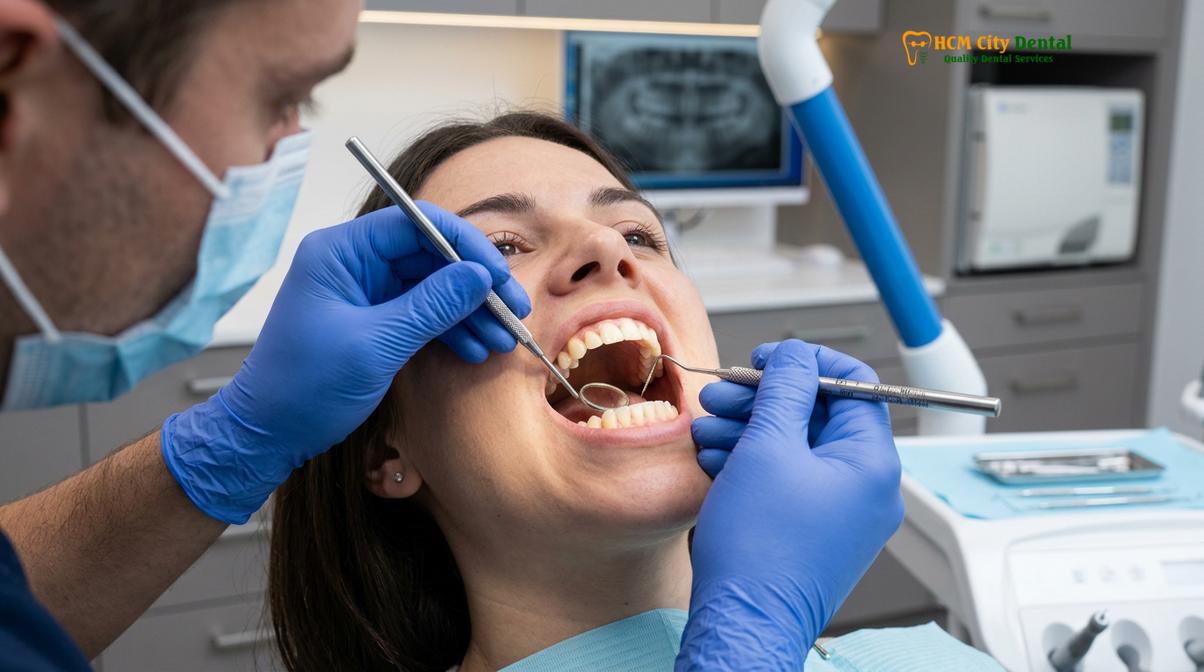
Dr. Nguyen Van Cuong, a leading expert at HCMC Dental Clinic, emphasizes the importance of individualized treatment planning. “When evaluating a patient for removable prosthetics, we must look beyond just the esthetics,” notes Dr. Cuong. “The biomechanical harmony of the stomatognathic system is paramount. If a patient lacks the necessary interarch space or presents with highly resorbed ridges, forcing the use of porcelain teeth will only lead to mechanical failures and soft tissue trauma. In such cases, premium composite resins offer a much safer, yet highly esthetic, alternative.”
For patients requiring extensive restorative work, understanding the scope of General Dentistry and prosthodontic evaluation is the first step toward achieving a functional and comfortable smile.
Clinical Workflow for Porcelain Denture Fabrication
The fabrication of porcelain dentures requires meticulous clinical impressions, precise maxillomandibular relation records, and specialized laboratory processing to ensure mechanical retention and balanced occlusion.
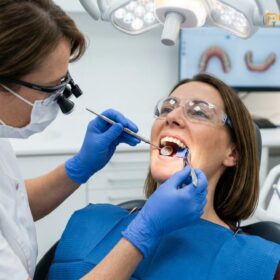
The clinical and laboratory workflow for fabricating a prosthesis with porcelain teeth is notably more demanding than that for conventional acrylic dentures. Because porcelain teeth cannot be easily adjusted or reshaped chairside without destroying their surface glaze and potentially compromising their retention, the initial clinical records must be exceptionally precise.
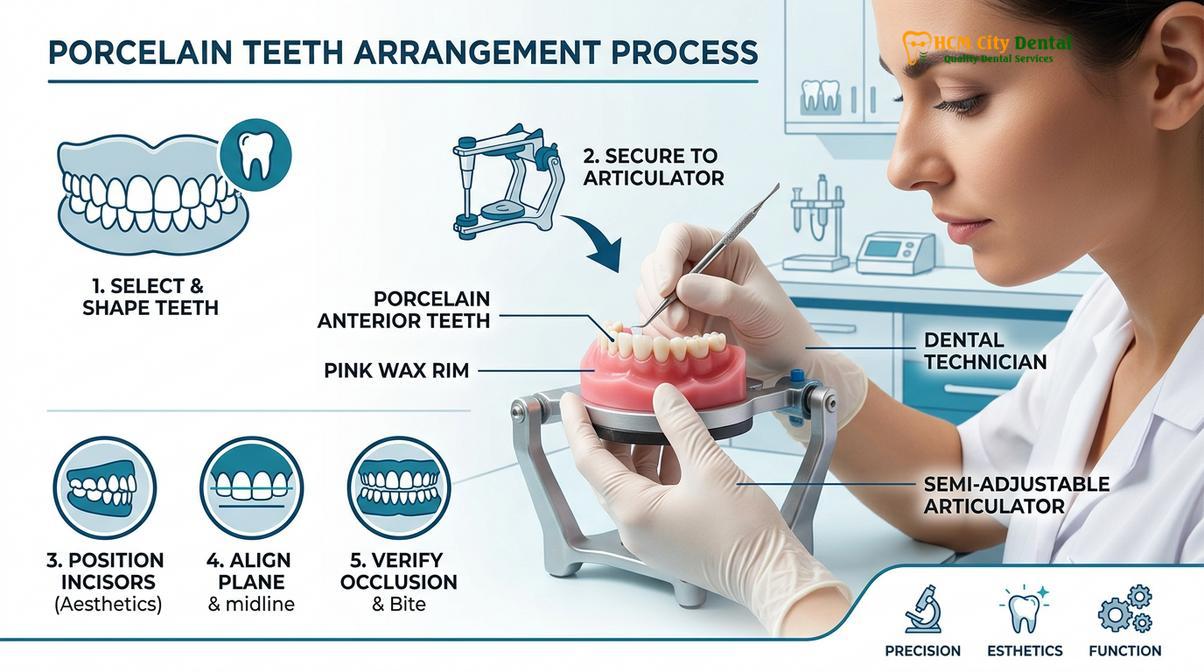
The process begins with preliminary and final impressions to capture the exact topography of the edentulous ridges. Custom trays and border molding techniques are utilized to ensure the denture base will have optimal peripheral seal and support. Following this, maxillomandibular relation records are obtained using wax occlusion rims. The clinician must accurately record the vertical dimension of occlusion (VDO) and centric relation (CR). A facebow transfer is often employed to mount the maxillary cast on a semi-adjustable articulator in the exact spatial relationship to the TMJ as it exists in the patient’s skull [4].
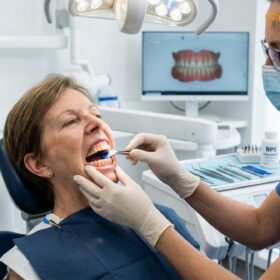
During the laboratory phase, the dental technician carefully selects the porcelain teeth based on the prescribed mold and shade. Setting porcelain teeth in wax requires great skill, as the technician must ensure that the diatoric holes and retention pins are positioned correctly to be engulfed by the acrylic resin later. The trial denture is then returned to the clinic for a wax try-in. At this stage, the clinician verifies the esthetics, phonetics, and occlusal relationships. Any necessary adjustments to the tooth arrangement must be made now, while the teeth are still in wax.
Clinical Case Example: HCMC Dental Clinic
A 65-year-old patient visited HCMC Dental Clinic in Ho Chi Minh City complaining of rapid wear and discoloration of her existing acrylic dentures. After a comprehensive evaluation by Dr. Nguyen Van Cuong, it was determined that she had excellent alveolar ridge support and adequate interarch space. A new set of complete dentures utilizing premium porcelain anterior teeth for esthetics and highly cross-linked composite posterior teeth for shock absorption was fabricated. The hybrid approach provided the patient with a permanent, stain-resistant smile while protecting her underlying bone from excessive masticatory forces.
Once the wax try-in is approved, the denture is processed. The flasking and packing procedure must be handled with extreme care. If the acrylic resin is packed with too much pressure, the brittle porcelain teeth can fracture within the flask. After polymerization, the denture is deflasked, finished, and polished. A clinical remount is often performed at the delivery appointment to refine the occlusion using articulating paper and specialized ceramic polishing kits. Patients investing in such premium prosthetics should also review their denture warranty coverage to understand the maintenance and adjustment protocols provided by their clinic.
Biomechanical Considerations and Occlusal Dynamics
The rigid nature of porcelain requires a perfectly balanced occlusal scheme to distribute masticatory forces evenly, preventing localized stress concentrations that could fracture the denture base.
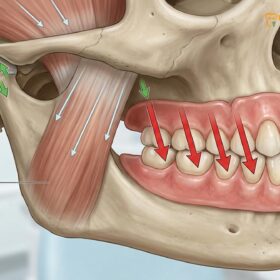
The integration of porcelain teeth into a removable prosthesis fundamentally alters the biomechanics of the denture. Because porcelain does not yield or wear under pressure, the occlusal scheme—the specific way the upper and lower teeth meet and function—must be meticulously designed to prevent instability and tissue trauma.
In complete denture prosthodontics, a “bilateral balanced occlusion” is frequently employed. This scheme ensures that during any excursive movement of the mandible (sliding the jaw left, right, or forward), there are simultaneous contacts on both sides of the dental arch. This bilateral contact prevents the denture from tipping or dislodging. When using porcelain teeth, achieving and maintaining this balance is critical. If a single porcelain cusp is slightly too high (a premature contact), the extreme hardness of the material will cause the denture base to shift abruptly, leading to sore spots on the underlying mucosa and potential fracture of the acrylic base due to flexural fatigue [5].
“The integration of porcelain teeth into a removable prosthesis demands a bilateral balanced occlusion to mitigate the lack of shock absorption inherent to ceramic materials. Without precise force distribution, the underlying alveolar bone is subjected to concentrated stress, accelerating ridge resorption.”
Furthermore, the weight of porcelain must be considered. Ceramic is significantly denser than acrylic. While this added weight can actually aid in the retention of a mandibular (lower) denture by utilizing gravity, it can be detrimental to a maxillary (upper) denture. A heavy upper denture requires a superior peripheral seal to resist the forces of gravity pulling it downward. For patients with compromised systemic health or specific mucosal conditions, managing these biomechanical forces is vital. Proper diabetic denture care, for instance, emphasizes the need for minimal tissue trauma, making the shock-absorbing qualities of resin sometimes more favorable than porcelain in medically compromised individuals.
Maintenance and Longevity of Porcelain Prosthetics
Maintaining porcelain dentures involves daily non-abrasive cleaning, handling over a water-filled basin to prevent impact fractures, and regular clinical evaluations of the mechanical retention.
While the porcelain teeth themselves are highly resistant to wear and staining, the prosthesis as a whole requires diligent care to ensure longevity. The primary vulnerability of a porcelain denture lies not in the teeth, but in the acrylic base and the mechanical junction between the two materials.
Patients must be educated on proper handling protocols. Because porcelain is brittle, dropping the denture onto a hard surface like a bathroom sink or tile floor will almost certainly result in a fractured tooth or a cracked denture base. Clinicians universally recommend that patients clean their dentures over a sink filled with water or a folded towel to cushion any accidental drops.
Cleaning protocols also differ slightly. While porcelain can withstand aggressive brushing without scratching, the surrounding pink acrylic base cannot. Therefore, a soft-bristled denture brush and non-abrasive denture cleanser should be used. Harsh abrasives will scour the acrylic, removing its polish and creating microscopic scratches that harbor plaque and bacteria.
“While porcelain resists brushing abrasion far better than acrylic, the underlying resin base remains vulnerable, necessitating careful selection of denture cleansing agents to prevent degradation of the acrylic matrix.”
Chemical soaking is recommended to maintain hygiene, but patients must avoid exposing the denture to extreme thermal shock (such as boiling water), which can cause the acrylic base to warp or the porcelain teeth to debond due to differing coefficients of thermal expansion. For patients with sensitivities to conventional denture materials, exploring hypoallergenic denture bases can provide a safer foundation, though the mechanical retention requirements for porcelain teeth remain the same.
When to See a Doctor: Evaluating Your Denture Fit
Even with the most durable materials, the oral environment is dynamic. The alveolar bone and soft tissues that support the denture will naturally change and resorb over time, while the porcelain teeth will remain completely unchanged. This discrepancy means that regular clinical evaluations are essential to maintain oral health and prosthesis function.
You should schedule an appointment with your prosthodontist or general dentist if you experience any of the following clinical signs:
- Chronic Mucosal Irritation: Persistent sore spots, redness, or ulcerations under the denture base indicate that the prosthesis is no longer fitting intimately with the tissues, causing uneven pressure distribution.
- Loss of Retention: If the denture becomes loose, drops when speaking, or requires excessive amounts of denture adhesive to stay in place, a clinical reline or rebase is likely necessary.
- Clicking Sounds During Speech: While some sound is normal with porcelain teeth, a sudden increase in clicking or clacking may indicate a loss of vertical dimension or a shift in the denture’s seating.
- Visible Separation at the Tooth-Base Junction: Because porcelain relies on mechanical retention, any visible gap, micro-leakage, or dark staining at the junction where the tooth meets the pink acrylic is a warning sign that the tooth may be debonding.
- Fractured or Chipped Teeth: Although highly wear-resistant, porcelain can chip upon hard impact. A chipped porcelain tooth can present sharp edges that may lacerate the tongue or buccal mucosa.
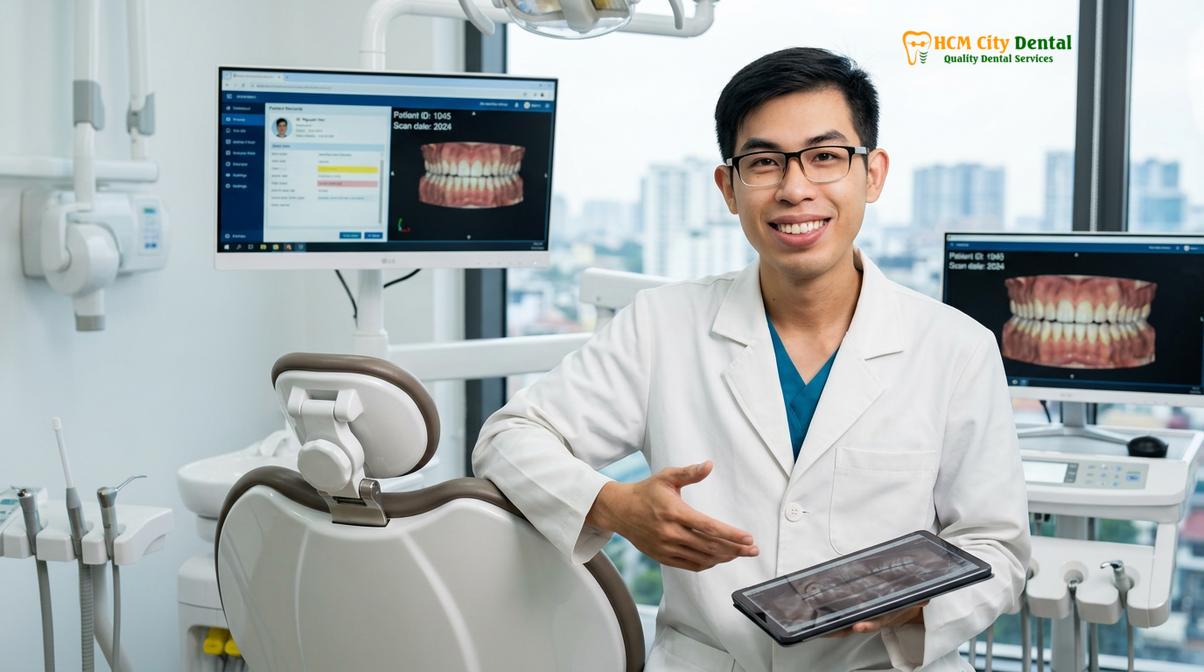
Dr. Cuong advises patients to undergo a comprehensive denture evaluation at least once a year. “Many patients assume that because their porcelain teeth haven’t worn down, their denture is fine for a decade,” he explains. “However, the foundation—the bone and gums—is always changing. Wearing an ill-fitting denture, even one with premium porcelain teeth, accelerates bone loss and can lead to conditions like epulis fissuratum.” If you experience a sudden breakage or loss of function, seeking immediate care is crucial. Reviewing a lost or broken denture emergency guide can help you navigate urgent prosthodontic repairs effectively.
Frequently Asked Questions
Are porcelain denture teeth better than acrylic resin teeth?
Porcelain teeth are not universally better; they offer superior wear resistance and esthetics but lack the shock absorption of acrylic. The choice depends entirely on the patient’s opposing dentition, interarch space, and specific biomechanical needs as evaluated by a prosthodontist. While porcelain excels in longevity and stain resistance, acrylic is often preferred for its forgiving nature on the underlying bone and ease of adjustment.
Can porcelain teeth be added to an existing acrylic denture?
Generally, it is not recommended to mix porcelain and acrylic teeth on the same prosthesis or add them to an existing base. Porcelain requires specific mechanical retention mechanisms (pins or diatoric holes) that are integrated during the initial laboratory processing phase. Attempting to hollow out an existing acrylic denture to retro-fit a porcelain tooth often results in poor retention and subsequent debonding.
Why do porcelain dentures sometimes make a clicking sound?
Porcelain dentures may produce a clicking sound during speech or mastication due to the extreme hardness and density of the ceramic material. Unlike acrylic, which absorbs impact forces, porcelain transmits the acoustic energy when the upper and lower teeth contact. This sound can sometimes be mitigated by adjusting the occlusal vertical dimension or utilizing a hybrid setup with resin posterior teeth.
How long do porcelain denture teeth typically last?
The porcelain teeth themselves can last indefinitely without significant occlusal wear or discoloration. However, the underlying acrylic denture base will still require relining or replacement every few years due to natural alveolar bone resorption and tissue changes. Therefore, while the teeth may last 10 to 15 years, the prosthesis as a whole requires ongoing maintenance.
Are porcelain teeth heavier than composite resin teeth?
Yes, porcelain is significantly denser and heavier than both standard acrylic and composite resin. While this added weight is generally well-tolerated in the mandibular (lower) arch, it can sometimes negatively impact the retention of a maxillary (upper) complete denture. Clinicians must ensure an optimal peripheral seal to counteract the gravitational pull on a heavy maxillary prosthesis.
References
- Journal of Prosthetic Dentistry. Wear resistance and mechanical properties of artificial denture teeth. (2021).
- International Journal of Prosthodontics. Biomechanical considerations in complete denture occlusion. (2020).
- Journal of Oral Rehabilitation. Patient satisfaction with different artificial tooth materials in complete dentures. (2019).
- Clinical Oral Investigations. Retention mechanisms of porcelain teeth in acrylic resin bases. (2022).
- British Dental Journal. Esthetic outcomes and color stability of ceramic vs. resin denture teeth. (2018).