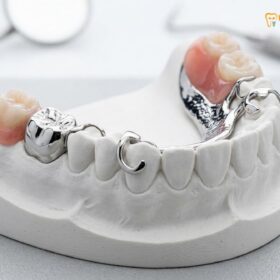
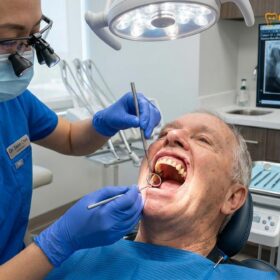
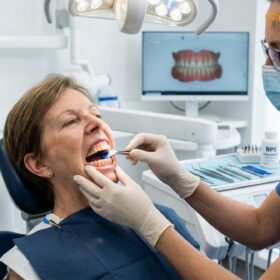
Immediate dentures in HCMC provide a seamless transition for patients undergoing tooth extraction, ensuring you never leave the clinic without teeth. Fabricated prior to your surgical appointment, these prosthetics act as a protective bandage over extraction sites while instantly restoring your smile and basic masticatory function.
Clinical Summary:
Immediate dentures represent a critical intersection between oral surgery and removable prosthodontics, designed to immediately replace failing teeth on the exact day of extraction. Clinically, these prostheses serve a dual purpose: they provide immediate aesthetic rehabilitation, preventing the psychological distress of edentulism, and act as a rigid surgical stent that promotes hemostasis and protects the vulnerable extraction sockets. Because the jawbone undergoes rapid physiological remodeling following tooth removal, the initial fit of an immediate denture is inherently transient. Successful management requires a structured protocol of post-operative care, including the strategic application of tissue conditioners and soft relines to accommodate the shrinking alveolar ridge. Ultimately, the immediate prosthesis serves as a transitional therapeutic device, guiding the oral tissues through the healing phase until the underlying anatomy stabilizes sufficiently to support a definitive permanent denture or an implant-retained overdenture.
Key Takeaways:
- Immediate dentures are fabricated prior to surgery and inserted immediately after tooth removal.
- The prosthesis acts as a surgical bandage, controlling bleeding and minimizing post-operative swelling.
- Rapid bone remodeling requires multiple temporary soft relines during the first few months of healing.
- Patients must not remove the denture during the first 24 hours to prevent rebound edema.
- The temporary prosthesis eventually requires a permanent hard reline or replacement once the jaw ridge stabilizes.
What are Immediate Dentures? The Toothless Prevention Protocol
Immediate dentures are custom-fabricated temporary prosthetics inserted immediately following tooth extractions to protect surgical sites, control bleeding, and ensure patients never experience a period without teeth.
The prospect of having multiple teeth extracted can be highly distressing, particularly due to the fear of appearing in public without a functional smile. Immediate dentures are specifically engineered to eliminate this transitional edentulous period. By fabricating the prosthesis before the surgical appointment, the dentist ensures that the patient walks out of the clinic with a fully restored dental arch on the very same day the failing teeth are removed. This approach, often referred to as providing same-day dentures, is a cornerstone of modern transitional prosthodontics.
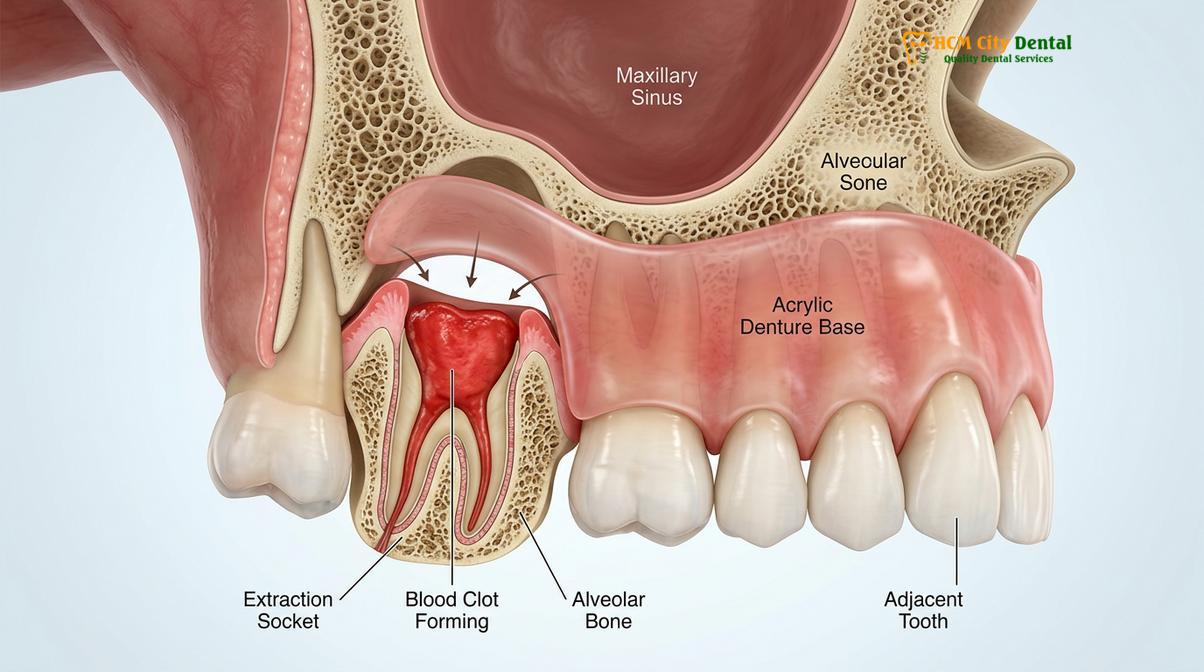
Beyond their obvious aesthetic benefits, immediate dentures serve a profound clinical function. When a tooth is extracted, the resulting socket is an open surgical wound that must form a stable blood clot to initiate the healing cascade. An immediate denture acts as a rigid, custom-fitted surgical stent. When inserted over the fresh extraction sites, the acrylic base applies gentle, even pressure across the soft tissues. This mechanical compression is highly effective at promoting hemostasis (stopping the bleeding) and preventing the dislodgement of the crucial blood clot [1]. Furthermore, by covering the exposed sockets, the denture shields the sensitive nerve endings from the oral environment, significantly reducing post-operative pain and preventing the ingress of food debris.
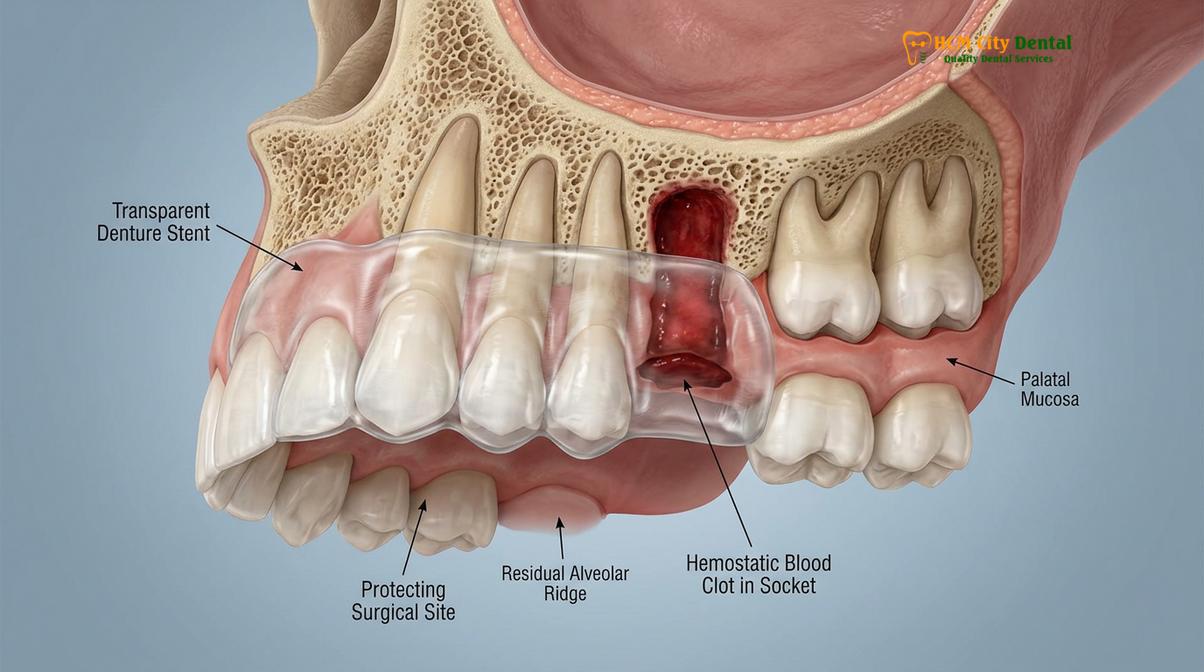
It is crucial to understand that an immediate denture is fundamentally a transitional device. Because it is fabricated based on an estimation of what the jaw ridge will look like after the teeth are removed, its initial fit is rarely perfect. The primary goal during the initial phase is not to provide flawless masticatory function, but rather to facilitate optimal tooth extraction healing while maintaining the patient’s vertical dimension of occlusion (the distance between the nose and chin) and facial aesthetics. Patients must approach immediate dentures with the understanding that the prosthesis will require ongoing professional maintenance as the underlying biological landscape changes.
The Clinical Process: Fabrication Before Extraction Day
Fabricating an immediate denture requires taking precise preliminary impressions and bite registrations while the failing teeth are still present, allowing the laboratory to simulate the extractions on a plaster model.
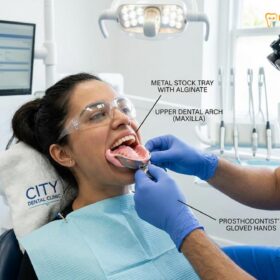
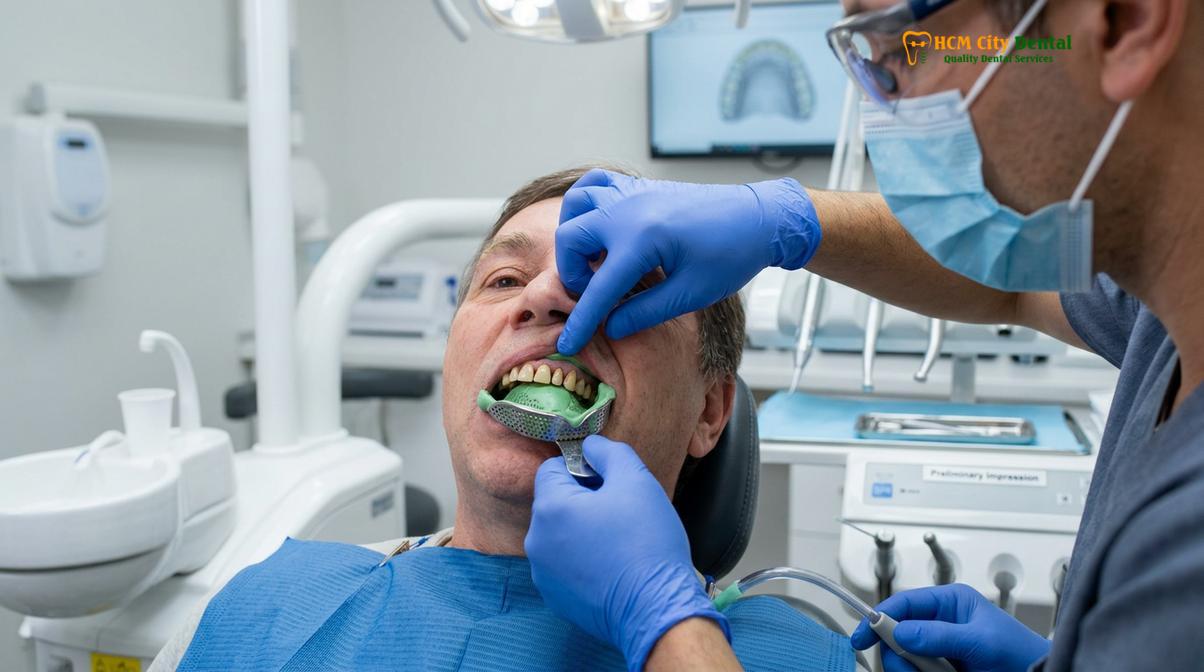
The workflow for creating an immediate denture is inherently complex because the dental technician must construct a prosthesis for an anatomical landscape that does not yet exist. The process begins several weeks before the scheduled surgery. During the initial consultation, the prosthodontist takes highly detailed primary impressions of the patient’s upper and lower dental arches. These impressions capture the exact position of the remaining teeth, the contours of the palate, and the depth of the vestibular spaces.
Once the impressions are poured into stone models, the dentist records the patient’s maxillomandibular relationship—how the upper and lower jaws meet. This bite registration is critical for ensuring that the new denture will allow the patient to close their mouth comfortably and symmetrically. The models and bite records are then sent to the dental laboratory. Here, the technician performs a procedure known as “predictive cast trimming.” Using specialized tools, the technician physically cuts the remaining plaster teeth off the model and carefully sculpts the underlying stone to simulate the anticipated shape of the healed alveolar ridge [2].
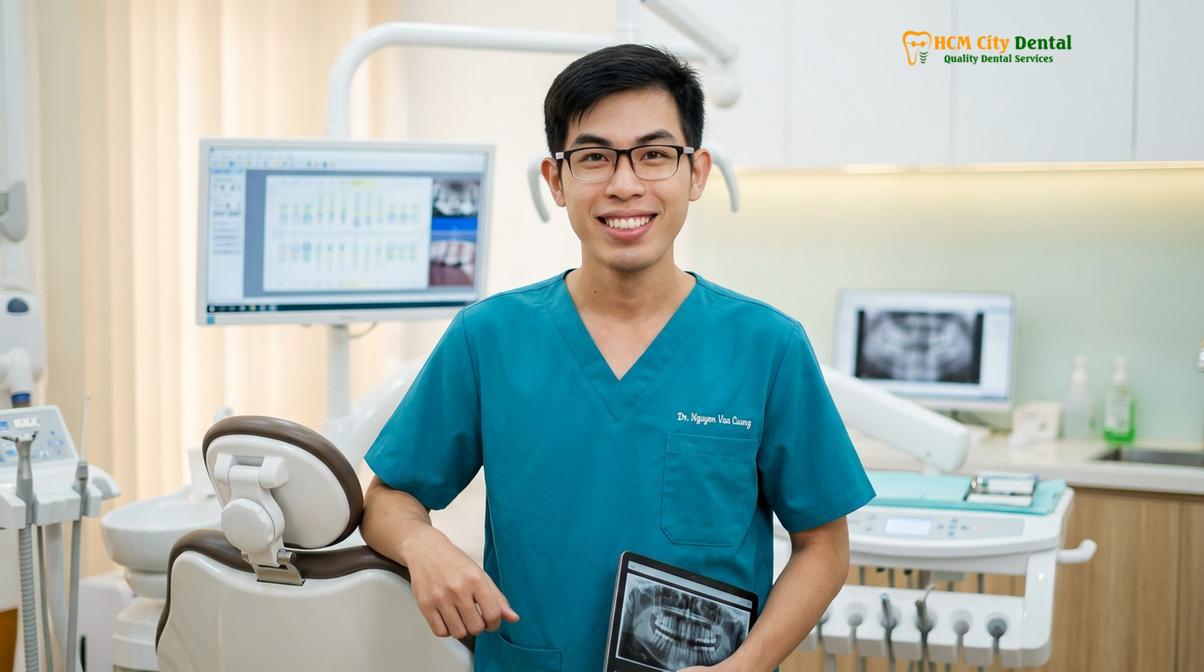
Dr. Nguyen Van Cuong, a leading specialist at HCMC Dental Clinic, emphasizes the importance of this predictive phase:
“The success of an immediate denture relies heavily on the clinician’s ability to accurately anticipate the surgical outcome. By carefully evaluating the patient’s periodontal bone loss on radiographs, we can guide the laboratory technician on exactly how much stone to reduce from the model, ensuring the immediate prosthesis seats intimately against the surgical site without causing excessive pressure.”
In some complex cases, particularly when a patient has a mix of relatively healthy posterior teeth and failing anterior teeth, a staged extraction approach may be recommended. In this protocol, the posterior (back) teeth are extracted first, and the gums are allowed to heal for several weeks. The immediate denture is then fabricated to replace all the teeth, but on the day of delivery, only the remaining anterior (front) teeth are extracted. This staged approach provides a more stable, healed posterior ridge for the denture to rest upon, significantly improving the initial retention and stability of the temporary dental plate.
Post-Extraction Healing: Managing Swelling and Bleeding on Day One
During the first 24 hours, the immediate denture must remain securely in the mouth to act as a pressure bandage, minimizing edema and stabilizing the post-extraction blood clots.
The immediate post-operative period is the most critical phase of the immediate denture journey. Once the oral surgeon has extracted the teeth, contoured the bone (alveoloplasty), and sutured the gums, the pre-fabricated denture is immediately inserted. The patient is instructed to bite down gently but firmly on gauze pads placed between the upper and lower teeth. This occlusal pressure seats the denture fully against the tissues, initiating the bandage effect.
A strict clinical rule applies to the first 24 hours: the patient must absolutely not remove the denture under any circumstances. Following surgical trauma, the body’s natural inflammatory response causes the gingival tissues to swell (edema). As long as the denture is in place, it physically constrains this swelling, forcing the tissues to conform to the shape of the prosthesis [3]. If the patient removes the denture prematurely, the unconstrained tissues will rapidly swell. Within a matter of hours, the gums can become so engorged that reinserting the rigid acrylic denture becomes biologically impossible, leaving the patient without teeth and exposing the surgical sites to trauma.
Clinical Warning: Never remove your immediate denture during the first 24 hours following surgery unless explicitly instructed by your dentist. Premature removal will result in severe rebound swelling, making it impossible to reinsert the prosthesis and potentially disrupting the delicate blood clots, leading to painful dry sockets.
On the day following the surgery, the patient must return to the dental clinic for their first post-operative evaluation. During this appointment, the dentist will carefully remove the denture for the first time. The surgical sites are gently irrigated with an antimicrobial solution, and the underlying tissues are inspected for any signs of excessive pressure, ulceration, or hematoma. The dentist will also clean the prosthesis and make minor adjustments to the acrylic base to relieve any severe sore spots. It is only after this professional evaluation that the patient is taught how to safely remove, clean, and reinsert the denture themselves, marking the beginning of their active role in the tooth extraction healing process.
The Gums Shrinking Process: Why Your Immediate Denture Will Loosen
Following tooth removal, the alveolar bone undergoes rapid physiological resorption, causing the jaw ridge to shrink and inevitably leading to a loose-fitting immediate denture.
To understand why an immediate denture requires constant maintenance, one must understand the biological fate of the alveolar bone. The alveolar ridge—the portion of the jawbone that holds the teeth—exists solely to support the dentition. When teeth are extracted, the mechanical stimulation provided by chewing forces is lost. In response, the body initiates a process of osteoclastic activity, breaking down and resorbing the bone that is no longer deemed necessary. This phenomenon is known as alveolar bone remodeling or jaw ridge shrinkage.
The rate of bone resorption is not linear; it is highly accelerated during the first three to six months following extractions [4]. The maxilla (upper jaw) tends to resorb upward and inward, while the mandible (lower jaw) resorbs downward and outward. As the bone and overlying gum tissue shrink away, a void is created between the healing ridge and the static acrylic base of the immediate denture. Consequently, a prosthesis that fit snugly on the day of surgery will inevitably become loose, unstable, and prone to rocking within a matter of weeks.
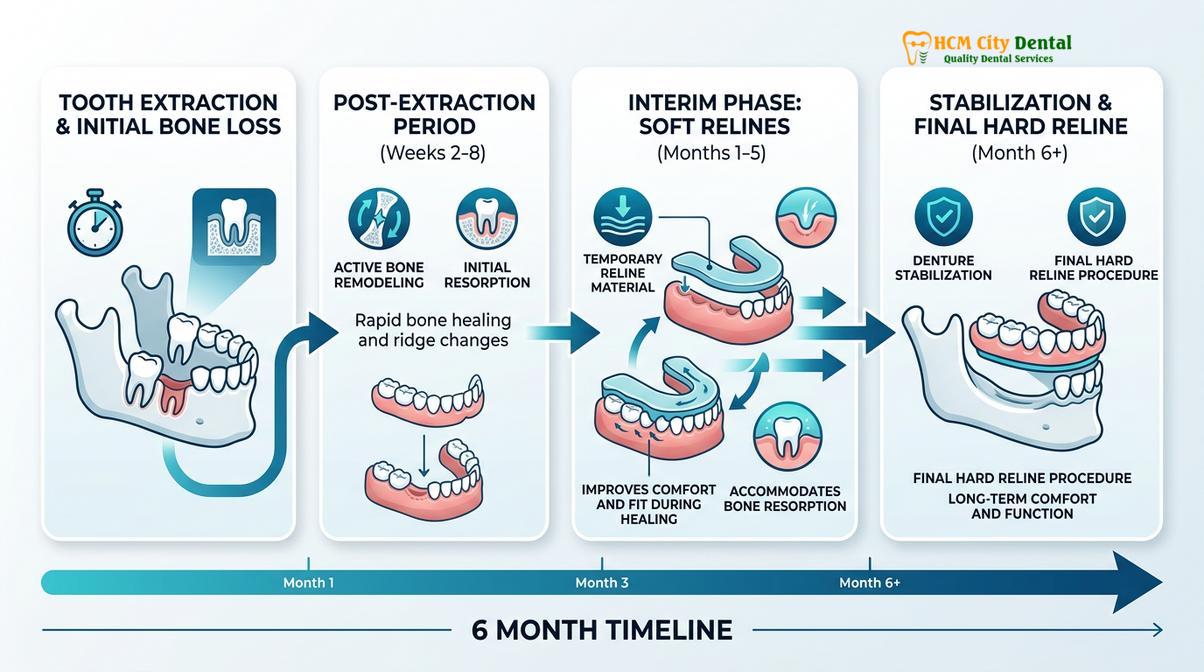
This loosening is a normal, expected physiological outcome, not a failure of the denture’s design. However, a loose denture can cause significant problems. It can rub against the tender gums, creating painful ulcerations, and it can make chewing and speaking exceedingly difficult. To manage this dynamic period, a structured timeline of clinical interventions is required to continuously adapt the prosthesis to the changing anatomy.
| Healing Phase | Biological Status | Clinical Intervention Required |
|---|---|---|
| Days 1 – 7 | Acute inflammation, clot stabilization, initial epithelialization. | Minor acrylic adjustments to relieve severe pressure spots. |
| Weeks 2 – 4 | Reduction of edema, rapid initial bone remodeling begins. | Application of the first temporary tissue conditioner. |
| Months 2 – 3 | Continued rapid jaw ridge shrinkage, soft tissue maturation. | Replacement of tissue conditioners with a soft reline. |
| Months 4 – 6 | Bone resorption rate slows down and begins to stabilize. | Evaluation for a definitive hard reline or new permanent denture. |
Soft Relines and Tissue Conditioners: Transitioning Safely
To compensate for rapid anatomical changes, dentists apply temporary tissue conditioners and soft relines to continuously refit the denture base to the shrinking gums.
The clinical solution to a loosening immediate denture is the application of resilient lining materials. During the first few weeks, when the tissues are still highly sensitive and actively healing, a tissue conditioner is utilized. Tissue conditioners are highly plasticized, viscoelastic materials—typically composed of polyethyl methacrylate powder mixed with an aromatic ester liquid [5]. When applied to the inner surface of the denture and seated in the mouth, this material flows under functional pressure, adapting perfectly to the unique contours of the healing ridge.
Because tissue conditioners remain soft and compliant, they act as a shock absorber, distributing masticatory forces evenly across the surgical sites and preventing localized pressure necrosis. However, their highly plasticized nature means they degrade relatively quickly in the oral environment. A tissue conditioner typically needs to be replaced every two to four weeks during the initial rapid phase of jaw ridge shrinkage.
Clinical Case Review: A 62-year-old patient presented to HCMC Dental Clinic in Ho Chi Minh City requiring full maxillary clearance due to advanced periodontitis. An immediate denture was delivered on the day of surgery. By week three, significant tissue shrinkage caused the prosthesis to drop during speech. Dr. Cuong applied a polyethyl methacrylate tissue conditioner, instantly restoring retention and providing a cushioning effect that allowed the patient to comfortably transition to a solid food diet while the bone continued to heal.
As the healing progresses into the second and third months, the rate of bone resorption begins to slow. At this stage, the dentist may transition from a short-term tissue conditioner to a more durable soft reline. Soft relines utilize a silicone-based or higher-density acrylic material that provides a longer-lasting fit, typically remaining functional for several months. These temporary relines are essential for maintaining the patient’s comfort, function, and confidence while waiting for the underlying bone to reach a state of relative stability.
Once the alveolar ridge has fully stabilized—usually between four to six months post-extraction—the temporary linings are no longer sufficient. The patient must then undergo a hard reline. During a hard reline, the dentist takes a final, highly accurate impression using the patient’s existing denture as a custom tray. The laboratory then replaces the temporary soft materials with dense, permanent pink acrylic, finalizing the fit of the prosthesis to the newly healed jawbone.
Cost Factors: Factoring in Immediate Plates and Final Permanent Dentures
The cost of immediate dentures encompasses the initial temporary prosthesis, surgical extractions, ongoing reline maintenance, and the eventual fabrication of a definitive permanent denture.
When evaluating the financial investment required for immediate dentures, patients must understand that they are essentially paying for a comprehensive, multi-stage treatment plan rather than a single product. The initial cost includes the clinical time required for preliminary impressions, the laboratory fees for predictive cast trimming, and the fabrication of the immediate prosthesis itself. Additionally, the surgical fees for the tooth extractions and any necessary bone contouring (alveoloplasty) must be factored into the initial phase of treatment.
A common point of confusion for patients is the ongoing maintenance costs. Because the immediate denture is a transitional device, the fees for the necessary tissue conditioners and temporary soft relines over the first six months are often billed separately as the treatment progresses. It is vital to discuss these anticipated maintenance costs with your dental provider during the initial consultation to avoid unexpected financial surprises.
Furthermore, patients must plan for the final phase of treatment. While a hard reline can permanently adapt an immediate denture to the healed ridge, many immediate prostheses are inherently compromised aesthetically and structurally because they were fabricated without a try-in phase. Therefore, many clinicians recommend fabricating a completely new, definitive permanent denture once healing is complete. Dr. Nguyen Van Cuong advises his patients on this long-term perspective:
“An immediate denture is an excellent therapeutic tool for managing the surgical transition, but it is rarely the optimal long-term solution. I always encourage patients to view their immediate plate as a temporary bandage and a functional prototype. Once the bone has stabilized, investing in a new, custom-crafted permanent denture—or upgrading to an implant-supported system—ensures superior aesthetics, optimal occlusion, and long-lasting durability.”
For patients seeking the highest level of stability, the healed jawbone provides an excellent foundation for dental implants. The transition from a conventional immediate denture to an implant-retained overdenture represents the gold standard in modern comprehensive denture solutions, offering unparalleled retention and halting further bone resorption.
When to See a Doctor
While discomfort and functional adjustments are normal during the transition to immediate dentures, certain symptoms require prompt clinical evaluation. You should contact your dental provider immediately if you experience heavy, uncontrolled bleeding from the extraction sites that does not subside with sustained biting pressure on gauze. Severe, localized pain that worsens after the first few days may indicate the loss of a blood clot (dry socket) or an acute infection. Additionally, if the denture causes severe ulcerations that make wearing the prosthesis unbearable, do not attempt to adjust the acrylic yourself; professional modification is required. Systemic symptoms such as a high fever, persistent chills, or swelling that extends into the neck or under the eyes are medical emergencies that necessitate immediate intervention to prevent the spread of oral infections.
Frequently Asked Questions
Do I sleep with my immediate dentures on the first night?
Yes, you must sleep with your immediate dentures in place during the first 24 hours following your extractions. Removing the prosthesis prematurely allows the surgical sites to swell, which can make reinserting the denture nearly impossible the next day. After your first post-operative checkup, your dentist will instruct you on when it is safe to begin removing them at night to allow your gum tissues to rest and breathe.
How long do immediate dentures last before needing a hard reline?
An immediate denture typically requires a permanent hard reline between four to six months after the initial tooth extractions. During the first few months, your jawbone undergoes rapid remodeling and shrinkage, which is managed with temporary soft relines. Once the bone level stabilizes, a hard reline is performed in the dental laboratory to permanently adapt the inner surface of the denture to your new, healed anatomical contours.
Can immediate dentures be converted into implant-supported overdentures?
Yes, in many clinical scenarios, a high-quality immediate denture can be retrofitted and converted into an implant-supported overdenture. Once your jawbone has fully healed and dental implants have been successfully integrated, the existing temporary dental plate can be hollowed out to accommodate locator attachments. However, if the initial immediate denture was designed strictly as a short-term interim prosthesis, fabricating a completely new, reinforced overdenture is often recommended for optimal durability.
How do I clean my immediate denture during the first week?
During the first week, you should only remove the immediate denture for brief periods to clean it, strictly following your dentist’s timeline. Rinse the prosthesis gently with cold or lukewarm water and brush it using a soft-bristled denture brush and non-abrasive denture cleanser. Avoid using regular toothpaste, as it can scratch the acrylic surface. While the denture is out, gently rinse your mouth with a prescribed antimicrobial mouthwash without swishing vigorously.
Will eating be difficult with a temporary dental plate?
Eating will require a significant adjustment period when you first receive a temporary dental plate, as your gums will be tender and the denture’s fit will fluctuate. You must start with a strictly soft-food or liquid diet, taking small bites and chewing evenly on both sides of your mouth to prevent the prosthesis from tipping. As your extraction sites heal and your dentist applies tissue conditioners to improve the fit, your masticatory efficiency will gradually improve.
References
- Journal of Prosthetic Dentistry. Hemostatic and splinting effects of immediate complete dentures following full-arch extractions. (2021).
- International Journal of Oral and Maxillofacial Surgery. Predictive cast trimming and anatomical simulation in immediate denture fabrication. (2020).
- British Dental Journal. Post-operative edema management and patient compliance in immediate removable prosthodontics. (2019).
- Journal of Clinical Periodontology. Alveolar bone remodeling and dimensional ridge changes following tooth extraction. (2022).
- Dental Materials Journal. Rheological properties and clinical efficacy of polyethyl methacrylate tissue conditioners. (2018).