Recognizing the signs you need dentures involves identifying irreversible dental damage, such as widespread decay, advanced bone loss, and chronic chewing pain. When natural teeth can no longer be restored through fillings or crowns, removable or implant-supported prosthetics become the clinical standard for restoring oral function and aesthetics.
Clinical Summary:
The transition from natural dentition to removable prosthetics is a significant clinical milestone driven by the irreversible failure of the oral environment. Key indicators include severe and widespread dental caries that preclude restorative treatments, advanced periodontal disease resulting in critical bone loss, and persistent masticatory pain. Additionally, secondary symptoms such as chronic indigestion, facial sagging due to jawbone resorption, and the pathological shifting of remaining teeth strongly suggest the need for comprehensive prosthetic intervention. Through a thorough prosthodontics evaluation, specialists like Dr. Nguyen Van Cuong can determine whether partial or complete dentures are required to restore structural integrity, digestive health, and facial aesthetics.
Key Takeaways:
- Widespread, unrestorable tooth decay is a primary indicator for complete or partial dentures.
- Advanced bone loss from periodontal disease eliminates the foundation needed to keep natural teeth.
- Chronic pain while chewing signals severe periapical or structural failure of the dentition.
- Unreplaced missing teeth lead to bite collapse, facial sagging, and gastrointestinal distress.
- Modern prosthodontic evaluations provide customized pathways to restore full oral function.
Severe and Widespread Decay: When Tooth Restorations Fail
When dental caries progresses beyond the scope of root canals and crowns, extracting the compromised dentition and transitioning to dentures prevents systemic infection and restores masticatory function.
Dental caries is a progressive bacterial infection that demineralizes enamel and destroys the underlying dentin. In its early stages, decay can be effectively managed with conservative treatments such as composite fillings, inlays, or dental crowns. However, when a patient presents with severe and widespread decay affecting multiple teeth across the dental arch, the clinical paradigm shifts from preservation to full-mouth rehabilitation. At this advanced stage, the structural integrity of the teeth is often so compromised that they can no longer support restorative materials [1].
When decay reaches the inner pulp chamber and travels down the root canals, it causes pulp necrosis and periapical abscesses. While root canal therapy is the standard treatment for isolated infections, widespread pulpal involvement often indicates a highly cariogenic oral environment that will continue to degrade any remaining natural tooth structure. If a tooth has decayed down to the gum line, leaving insufficient ferrule (the band of solid tooth structure required to anchor a crown), extraction becomes the only viable clinical option.
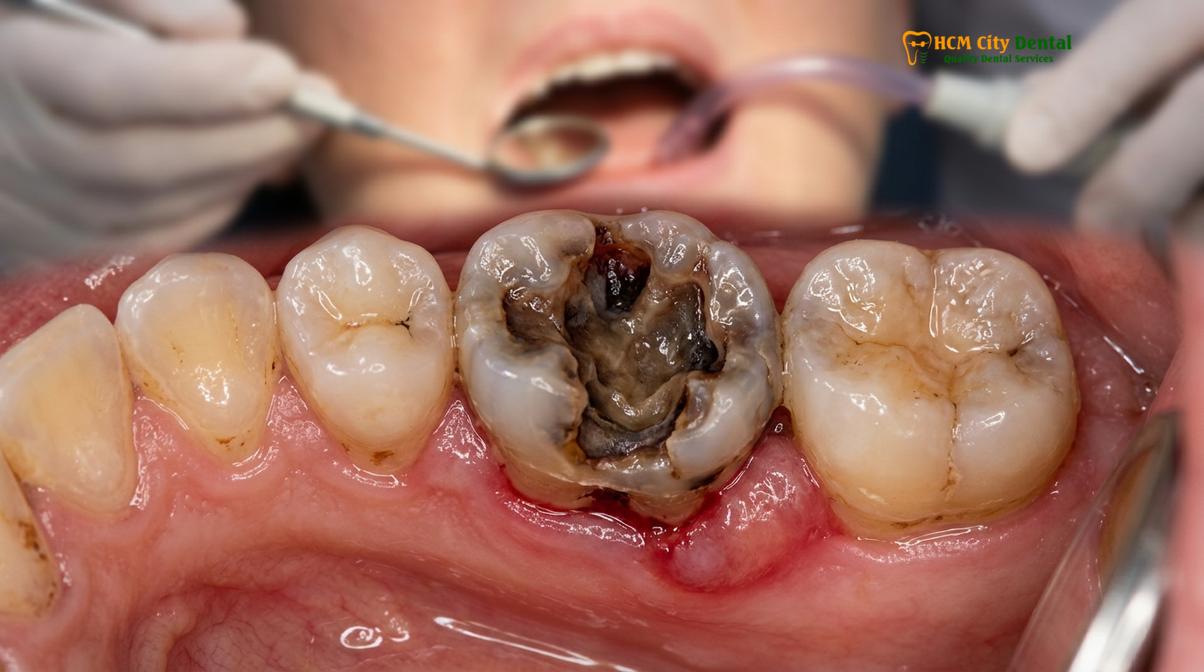
The decision to transition to dentures is not taken lightly. It requires a comprehensive assessment of the remaining dentition. If the majority of the teeth exhibit severe decay, recurrent caries under existing crowns, or root fractures, attempting to save them may result in a cycle of continuous dental emergencies, chronic pain, and financial strain. In these scenarios, clearing the hopeless dentition and placing a complete or partial denture provides a clean, infection-free oral environment. This proactive approach eliminates the source of bacterial overload, protecting the patient’s systemic health from the risks associated with chronic oral infections.
Advanced Periodontal Disease: Chronic Loss of Supporting Bone
Uncontrolled periodontal infection destroys the alveolar bone and periodontal ligaments, making tooth retention impossible and necessitating prosthetic replacement to halt further tissue degradation.
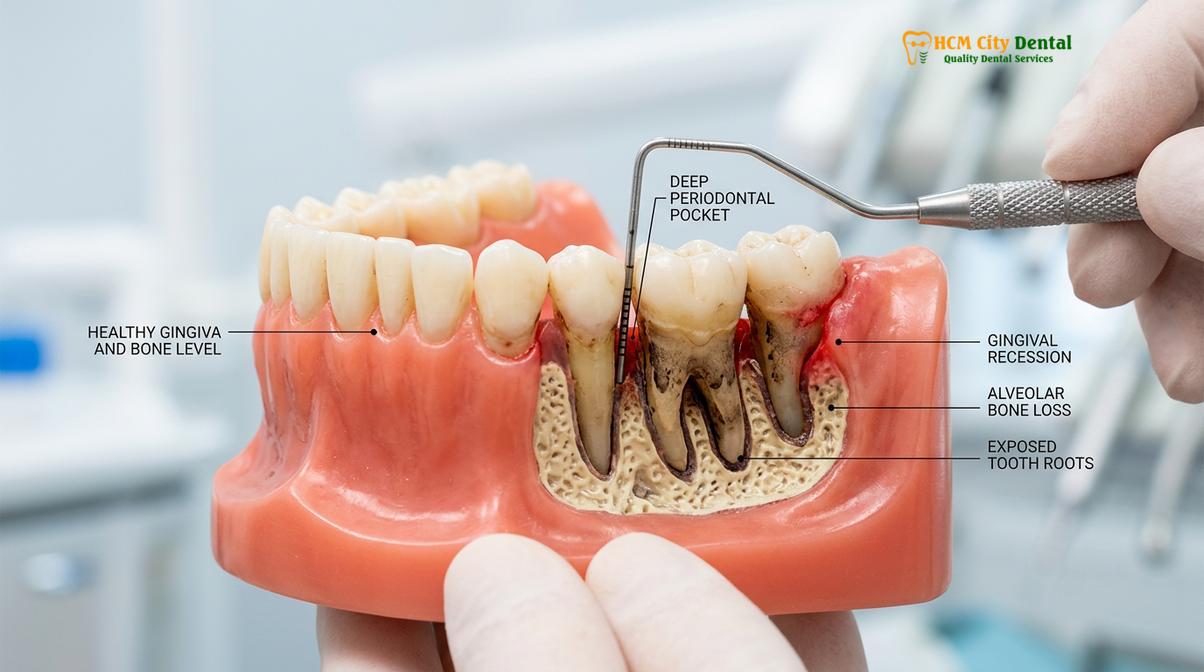
Periodontal disease is the leading cause of tooth loss among adults. Unlike dental caries, which attacks the hard tissues of the tooth, periodontitis attacks the foundation: the gums, the periodontal ligament, and the alveolar bone. When plaque biofilms are allowed to accumulate below the gum line, they trigger a hyperactive immune response. The body’s own inflammatory mediators, in an attempt to fight the bacterial invasion, inadvertently activate osteoclasts—cells that break down bone tissue [2].
As severe gum disease progresses, the attachment between the tooth and the surrounding bone is severed, creating deep periodontal pockets. These pockets harbor anaerobic bacteria, accelerating the destruction of the jawbone. Clinically, this manifests as gingival recession, purulent exudate (pus) from the gums, and profound tooth mobility. Once the alveolar bone has resorbed beyond a critical threshold—typically when more than 70% of the supporting bone is lost—the teeth become structurally hopeless.
“The preservation of alveolar bone is paramount; retaining periodontally hopeless teeth not only prolongs chronic infection but accelerates the destruction of the very bone needed to support future prosthetic appliances.”
In cases of advanced periodontitis, extracting the affected teeth is often a necessary intervention to halt the progression of bone loss. If failing teeth are left in place too long, the resulting jawbone resorption can become so severe that it compromises the ability to wear a conventional denture comfortably. By removing the source of the periodontal infection, the gums can heal, and the remaining bone can be preserved and contoured to provide a stable foundation for a custom denture.
Persistent Pain and Chewing Discomfort: Struggling to Process Food
Chronic pain during mastication indicates severe structural or periapical pathology, signaling that the natural teeth are failing and may require extraction followed by denture placement.
The primary biological function of the human dentition is mastication—the mechanical breakdown of food. When this process becomes consistently painful, it is a glaring warning sign of underlying dental failure. Chewing pain can originate from several sources: deep carious lesions exposing the nerve, cracked tooth syndrome, or acute periapical periodontitis where the tissues surrounding the root tip are inflamed and highly sensitive to pressure.
Patients experiencing chronic chewing discomfort often unconsciously alter their eating habits. They may shift their chewing to one side of the mouth, leading to asymmetrical muscle strain and temporomandibular joint (TMJ) dysfunction. Alternatively, they may adopt a soft-food diet, avoiding fibrous vegetables, meats, and nuts. This dietary restriction not only diminishes the quality of life but can also lead to significant nutritional deficiencies over time.
From a clinical perspective, when multiple teeth are causing pain upon occlusion (biting down), it indicates that the structural integrity of the dental arch has been compromised. If the teeth are deemed unrestorable due to extensive fractures or untreatable endodontic infections, removing them and providing a well-fitting denture restores the patient’s ability to eat without agony. Modern dentures are engineered to distribute occlusal forces evenly across the alveolar ridges, allowing patients to regain a functional and pain-free bite.
Loose or Shifting Remaining Teeth: Structural Foundation Failure
Increased tooth mobility and pathological migration are late-stage signs of attachment loss, often requiring clearance of the failing teeth and immediate denture therapy.
Healthy teeth are firmly anchored in the jawbone by the periodontal ligament, which allows for a microscopic amount of physiological movement to absorb the shock of chewing. However, when teeth become noticeably loose or begin to shift out of their normal alignment, it is a definitive sign of structural foundation failure. This pathological mobility is most commonly the result of advanced periodontal bone loss, but it can also be caused by severe occlusal trauma or underlying systemic conditions.
Dentists categorize tooth mobility using a clinical grading scale to determine the prognosis of the tooth:
| Mobility Grade | Clinical Description | Prognosis & Treatment Implication |
|---|---|---|
| Class I | Slight mobility, up to 1mm of horizontal movement. | Fair prognosis. Often treatable with splinting and periodontal therapy. |
| Class II | Moderate mobility, between 1mm and 2mm of horizontal movement. | Guarded prognosis. May require extraction if bone loss is progressive. |
| Class III | Severe mobility, >2mm of horizontal movement or any vertical depression. | Hopeless prognosis. Extraction and prosthetic replacement (dentures) required. |
When multiple teeth reach Class II or Class III mobility, they can no longer function effectively as a chewing unit. Furthermore, loose teeth often undergo pathological migration—they fan out, create new gaps, and disrupt the entire bite relationship. In these advanced cases, attempting to retain the loose teeth is futile. A comprehensive treatment plan involving the extraction of the mobile teeth and the fabrication of an immediate denture is the most predictable way to restore oral stability.
Indigestion and Stomach Issues: The Link to Incomplete Mastication
Inadequate breakdown of food due to compromised dentition forces the gastrointestinal tract to overwork, leading to chronic indigestion that can be resolved by restoring chewing efficiency with dentures.
Digestion does not begin in the stomach; it begins in the oral cavity. The process of mastication serves two critical functions: it mechanically reduces food into smaller particles, increasing the surface area, and it mixes the food with saliva. Saliva contains alpha-amylase, an enzyme that initiates the chemical breakdown of carbohydrates. When a patient suffers from missing teeth, severe decay, or chewing pain, their masticatory efficiency drops dramatically [3].
Consequently, large, unchewed boluses of food are swallowed and enter the gastrointestinal tract. The stomach and intestines are not designed to process large food fragments. This forces the digestive system to produce excess stomach acid and work significantly harder to break down the meal. The clinical result is a high incidence of chronic indigestion, acid reflux, bloating, and gastrointestinal distress among patients with severely compromised dentition.
Clinical Case Observation
A 62-year-old patient visited HCMC Dental Clinic in Ho Chi Minh City complaining of chronic acid reflux and an inability to eat solid foods due to the loss of posterior molars. Following a comprehensive evaluation, Dr. Nguyen Van Cuong designed a custom cast-metal partial denture to restore the posterior bite. Within two months of wearing the prosthetic, the patient reported a complete resolution of their indigestion symptoms, highlighting the direct physiological link between proper mastication and gastrointestinal health.
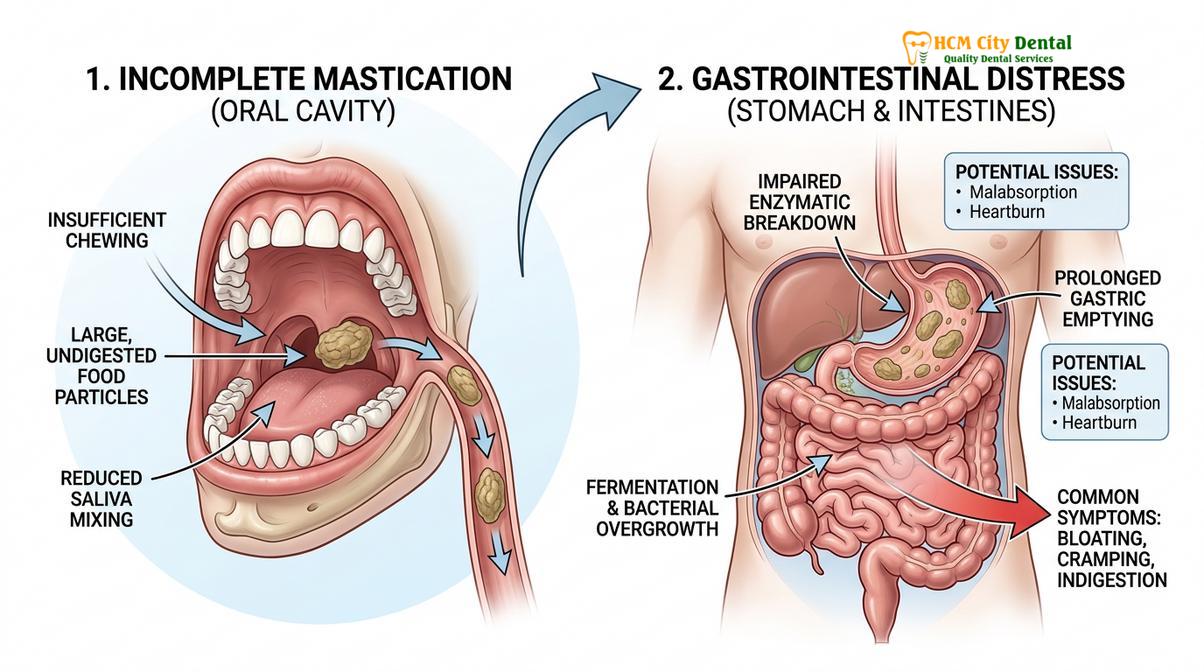
Restoring the dental arch with high-quality dentures directly addresses the root cause of this digestive burden. By providing a stable, broad chewing surface, dentures allow the patient to properly grind and triturate their food. This ensures that the food bolus is adequately prepared before swallowing, facilitating smooth digestion, maximizing nutrient absorption, and eliminating the chronic discomfort associated with indigestion.
Facial Sagging and Premature Wrinkles: The Aesthetic Impact of Bone Loss
The loss of dental roots triggers jawbone resorption, leading to a collapsed lower facial third and premature aging that dentures can structurally support and reverse.
The aesthetic consequences of tooth loss extend far beyond the visible gaps in a smile. The roots of natural teeth provide essential biomechanical stimulation to the alveolar bone during chewing. When teeth are lost, this stimulation ceases, and the body begins to resorb (melt away) the unused jawbone. This process, known as disuse atrophy, leads to a significant reduction in the height and width of the jaw [4].
As the jawbone shrinks, the lower third of the face loses its structural foundation. This results in a condition clinically referred to as facial collapse. The vertical dimension of occlusion (VDO)—the distance between the nose and the chin when the jaws are closed—decreases. The chin rotates forward and upward, the lips thin and invert, and deep wrinkles form around the mouth (marionette lines). This loss of support causes the facial muscles to sag, making the patient appear decades older than their actual age.
“Prosthodontic rehabilitation is not merely about replacing teeth; it is about restoring the vertical dimension of the face, supporting the perioral musculature, and rejuvenating the patient’s entire facial profile.”
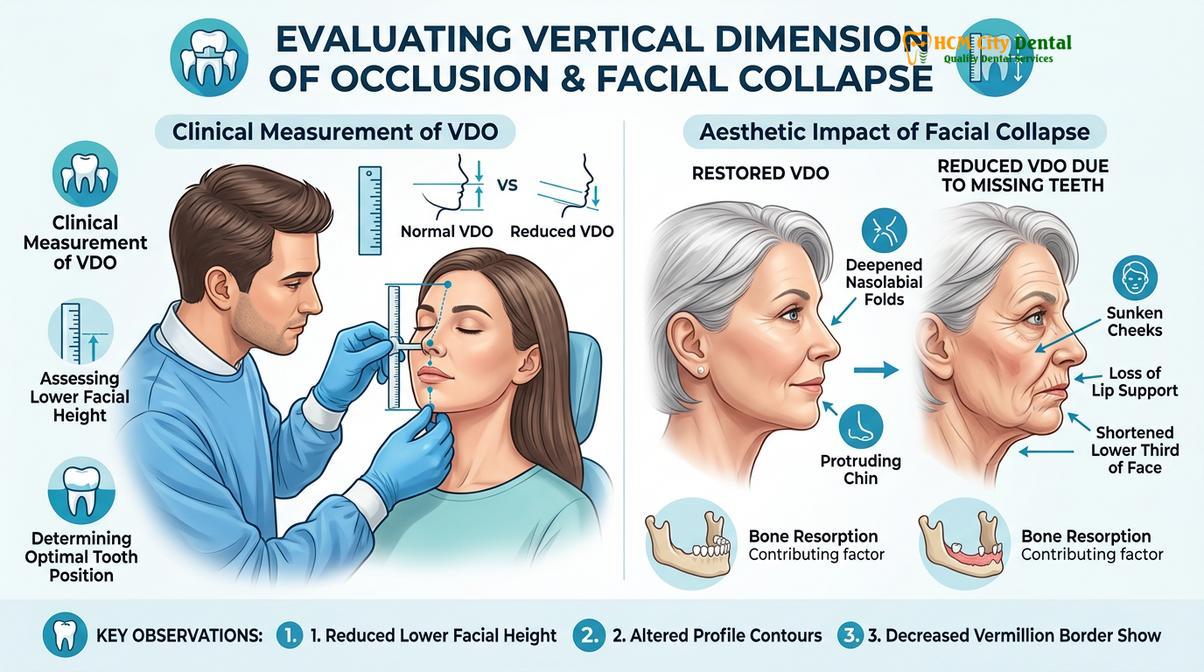
Well-designed dentures act as an internal scaffolding for the face. By meticulously calculating and restoring the correct vertical dimension of occlusion, a dentist can use the denture base and artificial teeth to push the lips and cheeks back out to their natural contours. This eliminates the sunken appearance, smooths out premature wrinkles, and restores a youthful, balanced facial profile. For patients experiencing facial collapse, dentures offer a profound aesthetic transformation alongside functional restoration.
Missing Multiple Teeth: Why Leaving Gaps Threatens Dental Alignment
Unreplaced missing teeth cause adjacent teeth to drift and opposing teeth to supra-erupt, destabilizing the entire bite and making partial or complete dentures essential for arch integrity.
The dental arch is a highly interdependent system. Every tooth relies on its neighbors for mesiodistal support and its opposing tooth for occlusal stability. When multiple teeth are extracted and the gaps are left untreated, this delicate balance is destroyed. The teeth adjacent to the extraction site will naturally begin to tilt or drift into the empty space. This mesial drift alters the contact points between teeth, creating food traps that increase the risk of localized periodontal disease and decay.
Furthermore, the tooth in the opposing jaw that previously bit against the missing tooth will begin to supra-erupt (extrude) out of its socket in search of a biting partner. This extrusion exposes the root surface, leading to severe sensitivity and eventual loss of the opposing tooth. As teeth shift and extrude, the entire occlusal plane becomes uneven, leading to bite interferences, TMJ disorders, and chronic facial pain [5].
To prevent this cascade of structural collapse, gaps must be filled. If a patient is missing multiple teeth across an arch, a removable partial denture is often the most conservative and effective solution. The partial denture not only replaces the missing teeth for chewing and aesthetics but also acts as a space maintainer, physically preventing the remaining natural teeth from drifting or supra-erupting. By stabilizing the arch, dentures protect the longevity of the remaining natural dentition.
When to See a Doctor: The Prosthodontics Evaluation
If you are experiencing any combination of widespread decay, chronic chewing pain, loose teeth, or the aesthetic signs of jawbone resorption, it is imperative to seek professional clinical guidance. Delaying treatment not only prolongs discomfort but allows the underlying bone loss to progress, which can complicate future prosthetic treatments.
Important Clinical Considerations
Ignoring the signs of failing dentition can lead to severe systemic infections, irreversible alveolar bone loss, and malnutrition. However, the decision to extract remaining teeth and transition to dentures is permanent. A thorough clinical and radiographic examination is required to determine if teeth can be saved through General Dentistry procedures or if prosthetic replacement is the safest medical pathway.
During a comprehensive prosthodontics evaluation, specialists utilize panoramic X-rays and 3D CBCT scans to assess the volume and density of your jawbone, the health of your temporomandibular joints, and the viability of any remaining teeth. Dr. Nguyen Van Cuong emphasizes that modern dentistry offers a spectrum of solutions, from flexible partial dentures to implant-supported overdentures, ensuring that treatment is tailored to the patient’s specific anatomical and financial needs.
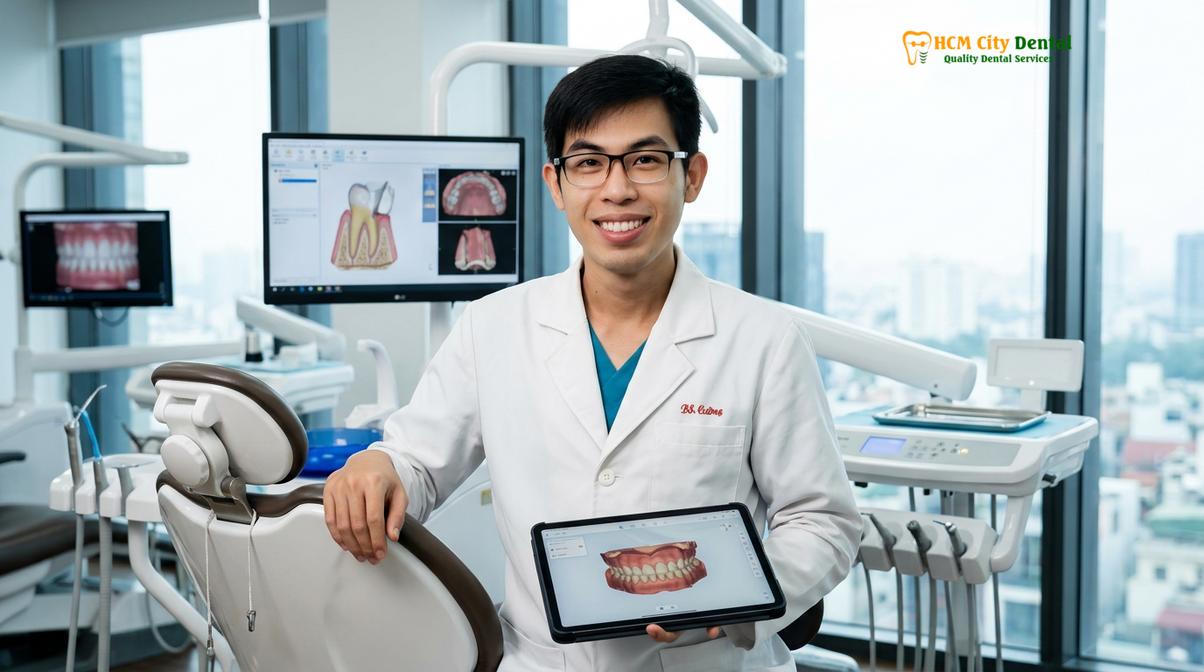
At HCMC Dental Clinic, the workflow for transitioning to dentures is designed to be as seamless and comfortable as possible. Whether you require immediate dentures placed on the day of extraction or are looking to upgrade an old, ill-fitting appliance, a personalized consultation will provide you with a clear, evidence-based roadmap to restoring your smile, your ability to eat, and your overall quality of life.
Frequently Asked Questions
Can you get dentures if you still have some healthy teeth?
Yes, partial dentures are specifically designed for patients who retain some healthy natural teeth. A clinical evaluation will determine if your remaining teeth have sufficient bone support and structural integrity to serve as anchors for a removable partial prosthetic, preserving your natural dentition while replacing the missing gaps. These partials can be made from traditional cast metal, acrylic, or flexible thermoplastic materials, depending on your aesthetic and functional requirements.
What happens if you leave missing tooth gaps untreated?
Leaving missing tooth gaps untreated leads to the shifting of adjacent teeth, supra-eruption of opposing teeth, and progressive jawbone resorption. Over time, this destabilizes your entire bite, alters your facial structure, and significantly increases the risk of temporomandibular joint (TMJ) disorders and further tooth loss. The uneven distribution of chewing forces also places excessive stress on the remaining teeth, accelerating their wear and potential failure.
How long after teeth extractions can you get fitted for dentures?
Immediate dentures can be placed on the exact same day as your extractions, ensuring you never go without teeth. However, conventional dentures typically require a healing period of six to eight weeks to allow the gums and jawbone to fully heal and stabilize before the final fitting. Because the jawbone shrinks rapidly during the first few months post-extraction, immediate dentures will require relining to maintain a proper fit as the tissues change shape.
Are modern dentures comfortable for daily wear?
Modern dentures are highly comfortable when properly fitted and fabricated using advanced biofunctional materials. While there is an initial adjustment period for the oral musculature, custom-molded acrylics and flexible thermoplastics ensure a snug, irritation-free fit that closely mimics the feel of natural teeth. Routine adjustments by your dentist are essential to alleviate any minor sore spots and ensure the prosthetic continues to function harmoniously with your oral tissues.
How do I know if I need partial or complete dentures?
The choice between partial and complete dentures depends entirely on the health and viability of your remaining teeth. If you have several structurally sound teeth with healthy bone support, a partial denture is recommended; if all teeth in an arch are failing, a complete denture is necessary. A thorough clinical examination, including periodontal probing and radiographic imaging, is required to make this diagnostic determination.
References
- Journal of Prosthetic Dentistry. Clinical indicators for transitioning to complete removable dental prostheses. (2021).
- Periodontology 2000. The impact of severe periodontitis on tooth retention and prosthetic rehabilitation. (2020).
- International Journal of Prosthodontics. Masticatory dysfunction and gastrointestinal health in edentulous patients. (2019).
- Journal of Oral Rehabilitation. Facial morphology changes following alveolar bone resorption. (2022).
- American College of Prosthodontists. Guidelines for the management of partial edentulism. (2018).