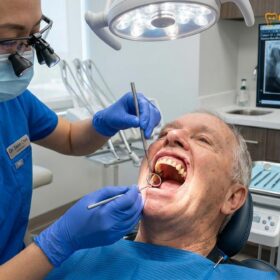
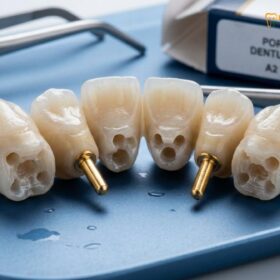
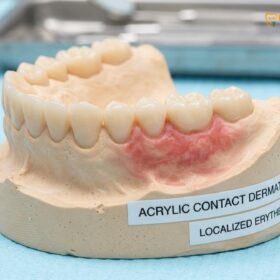
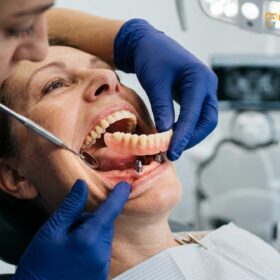
BPS Dentures in HCMC offer a premium, precision-engineered solution for complete tooth loss. Utilizing the Biofunctional Prosthetic System by Ivoclar Vivadent, these advanced prosthetics provide superior suction, lifelike aesthetics, and optimal chewing function compared to conventional acrylic alternatives.
Clinical Summary:
The Biofunctional Prosthetic System (BPS) represents the pinnacle of removable prosthodontics, transforming denture fabrication from a trial-and-error process into a predictable, biomechanically sound protocol. By integrating specialized clinical instruments—such as the UTS transfer bow for spatial orientation and the Gnathometer M for precise bite registration—the system ensures exact anatomical harmony. Furthermore, the laboratory phase utilizes the SR Ivocap high-pressure injection technique to eliminate acrylic shrinkage, resulting in a prosthesis that offers unparalleled mucosal fit, premium suction, and exceptional durability through highly cross-linked resin teeth.
Key Takeaways:
- BPS utilizes a standardized clinical and laboratory protocol to ensure predictable, high-quality outcomes.
- The UTS transfer bow accurately maps the maxilla to the cranial base, preventing occlusal canting.
- Intraoral gothic arch tracing via the Gnathometer M secures an exact, muscle-guided centric relation.
- SR Ivocap continuous pressure injection eliminates polymerization shrinkage for a flawless mucosal seal.
- Multi-layered DCL resin teeth provide superior wear resistance and lifelike optical properties.
What is BPS (Biofunctional Prosthetic System)? The Ivoclar Protocol
The Biofunctional Prosthetic System (BPS) is a comprehensive, standardized clinical and laboratory protocol developed by Ivoclar Vivadent to fabricate highly functional and aesthetic removable dentures.
For decades, the fabrication of complete dentures relied heavily on subjective clinical estimations and conventional laboratory techniques that often resulted in compromised fit, poor retention, and accelerated bone loss. The introduction of the Biofunctional Prosthetic System fundamentally shifted this paradigm. Developed by Ivoclar Vivadent, BPS is not merely a product line; it is a rigorous, step-by-step methodology that synchronizes the clinical diagnostic phase with advanced laboratory manufacturing. This protocol ensures that every anatomical nuance of the patient’s oral cavity is captured, transferred, and replicated with microscopic precision [1].
The core philosophy of the BPS protocol is biofunctionality—the seamless integration of the artificial prosthesis with the dynamic biological environment of the mouth. Unlike conventional dentures that are fabricated on static models, BPS dentures are designed to function in harmony with the active movements of the temporomandibular joints (TMJ), the masticatory muscles, and the surrounding soft tissues. This dynamic approach is what allows the prosthesis to achieve premium suction, particularly in the notoriously difficult mandibular (lower) arch.
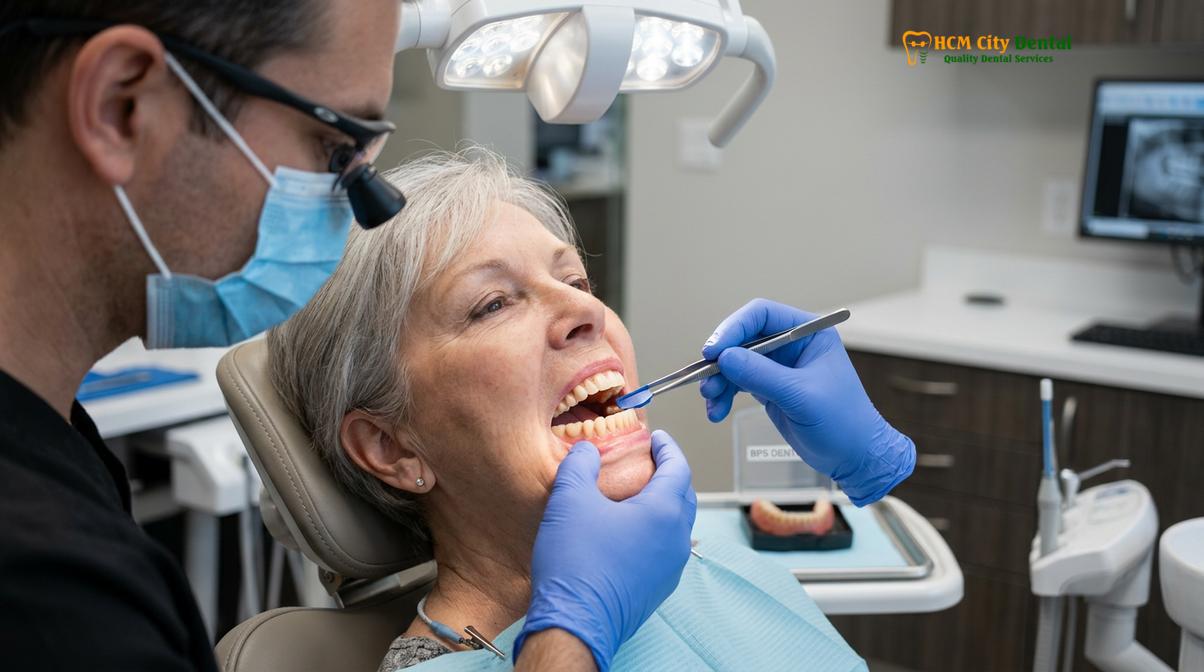
Dr. Nguyen Van Cuong, a leading prosthodontic specialist, emphasizes that the success of any removable prosthesis lies in the meticulous execution of foundational clinical steps. “When a patient presents with complete edentulism, we are not just replacing teeth; we are reconstructing the entire lower third of the face,” notes Dr. Cuong. “The BPS protocol provides us with the precise instrumentation required to capture the patient’s unique physiological parameters, eliminating the guesswork that often leads to denture instability.”
Patients seeking custom removable dentures benefit immensely from this system. The protocol mandates specific impression techniques, utilizing custom trays and specialized border molding materials to capture the functional depth and width of the mucobuccal fold. This functional impression is critical for establishing the peripheral seal necessary for atmospheric retention. By adhering strictly to the Ivoclar protocol, clinicians can deliver a prosthesis that restores not only masticatory efficiency but also phonetic clarity and facial aesthetics.
The UTS Transfer Bow: Mapping Your Jaw Orientation Accurately
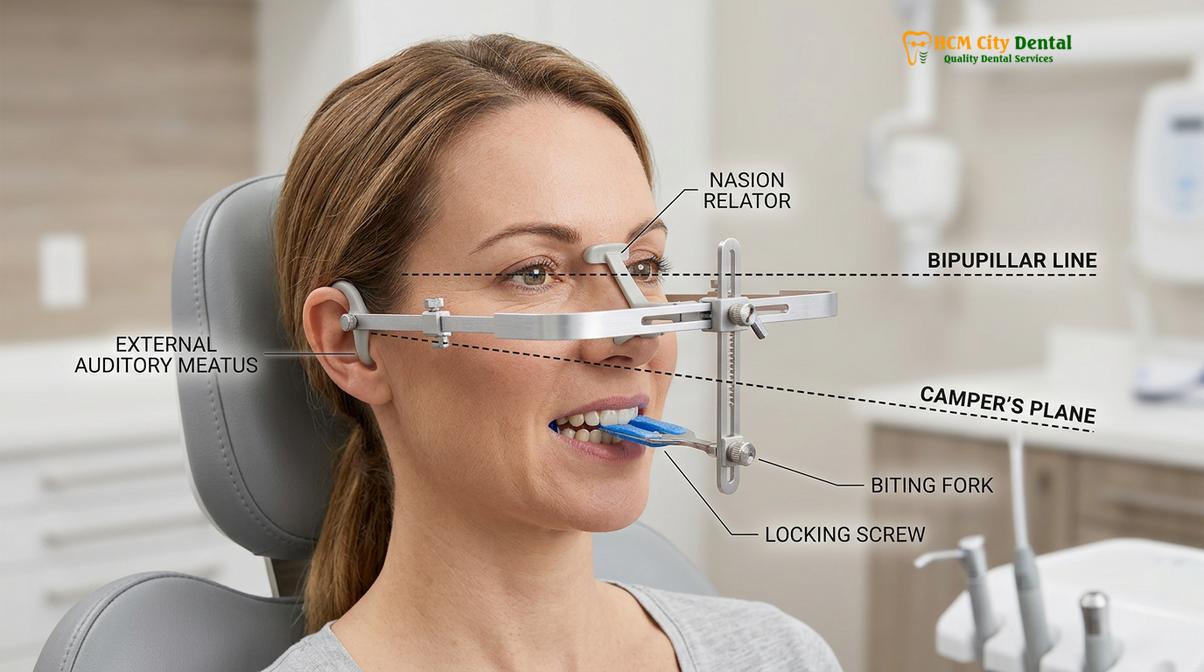
The UTS transfer bow is a precision clinical instrument used to capture the exact spatial orientation of the patient’s upper jaw relative to the cranial base and temporomandibular joints.
One of the most common errors in conventional denture fabrication is the incorrect orientation of the occlusal plane. If the biting surface of the teeth is tilted or unaligned with the patient’s facial features, the result is an unnatural smile (an occlusal cant) and biomechanical instability during chewing. The BPS protocol eliminates this risk through the mandatory use of the UTS transfer bow.
The UTS transfer bow is a specialized facebow designed specifically for edentulous patients. Its primary function is to record the three-dimensional position of the maxilla (upper jaw) in relation to the hinge axis of the temporomandibular joints. During the clinical appointment, the dentist aligns the bow with two critical anatomical reference planes: Camper’s plane (an imaginary line running from the inferior border of the ala of the nose to the superior border of the tragus of the ear) and the bipupillary line (the horizontal line connecting the pupils of the eyes) [2].
By locking these spatial coordinates into the transfer bow, the clinician can accurately transfer the patient’s cranial anatomy to the laboratory articulator. An articulator is a mechanical device that simulates jaw movements. When the master casts are mounted using the UTS transfer bow data, the laboratory technician can arrange the artificial teeth so that the occlusal plane is perfectly parallel to the patient’s natural facial planes.
This precise mapping is crucial for both aesthetics and function. Aesthetically, it ensures that the teeth appear straight and natural when the patient smiles or speaks. Functionally, it guarantees that the forces of mastication are directed vertically along the residual alveolar ridges, minimizing lateral sheer forces that can dislodge the denture and accelerate bone resorption. For patients undergoing general dentistry services to restore their oral health, this level of biomechanical precision is the difference between a prosthesis that merely sits in the mouth and one that actively functions as a part of the body.
Gnathometer M: Digital Registration of Central Occlusion (Bite)
The Gnathometer M utilizes intraoral gothic arch tracing to precisely record the patient’s centric relation and vertical dimension of occlusion, eliminating bite registration errors.
Determining the correct bite—clinically known as the maxillomandibular relationship—is arguably the most challenging aspect of treating a completely edentulous patient. Without natural teeth to guide the jaw into its habitual resting position, the mandible tends to wander, making conventional wax bite registrations highly inaccurate. The BPS protocol overcomes this challenge using the Gnathometer M device.
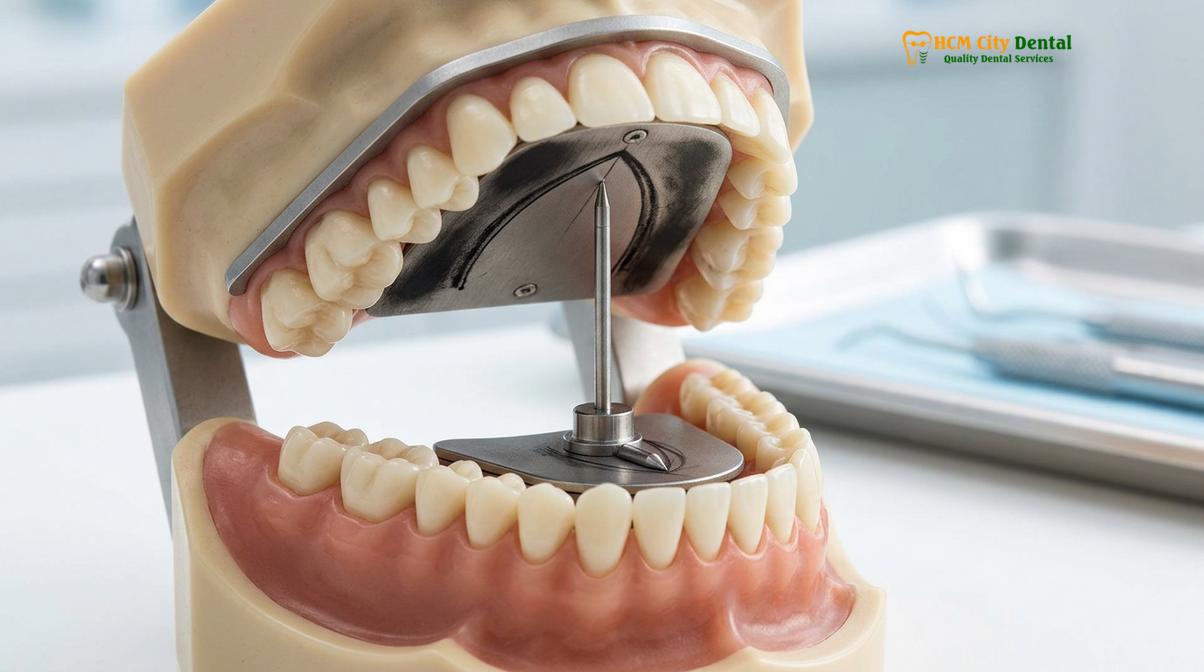
The Gnathometer M is an intraoral tracing device that employs the principles of gothic arch tracing. It consists of a striking plate attached to the upper record base and a central bearing pin attached to the lower record base. During the clinical procedure, the patient is instructed to perform various jaw movements—sliding the lower jaw forward, backward, and side to side. As the patient moves, the central bearing pin scribes a distinct arrow-shaped pattern (the gothic arch) onto the striking plate, which has been coated with a marking medium [3].
The apex of this traced arrow represents the patient’s centric relation—the most retruded, unstrained position of the condyles in the mandibular fossae. This position is highly reproducible and serves as the biomechanical starting point for all jaw movements. Once the apex is identified, a specialized locking disc is placed over it, and the patient closes their jaw, locking the pin exactly into the centric relation position. Fast-setting registration material is then injected between the arches to permanently record this relationship.
“The Gnathometer M removes the subjective human error from bite registration. By allowing the patient’s own musculature to dictate the centric relation through active movement, we achieve a level of occlusal harmony that is virtually impossible to replicate with static wax rims alone.”
In addition to centric relation, the Gnathometer M allows the clinician to precisely calibrate the Vertical Dimension of Occlusion (VDO). The central bearing pin can be raised or lowered to establish the optimal distance between the upper and lower jaws, ensuring that the facial muscles are properly supported and that the patient does not appear “over-closed” or “over-opened.” This meticulous calibration is a hallmark of complete denture solutions that prioritize long-term neuromuscular health.
SR Ivocap High-Pressure Hot Injection: Zero Base Shrinkage
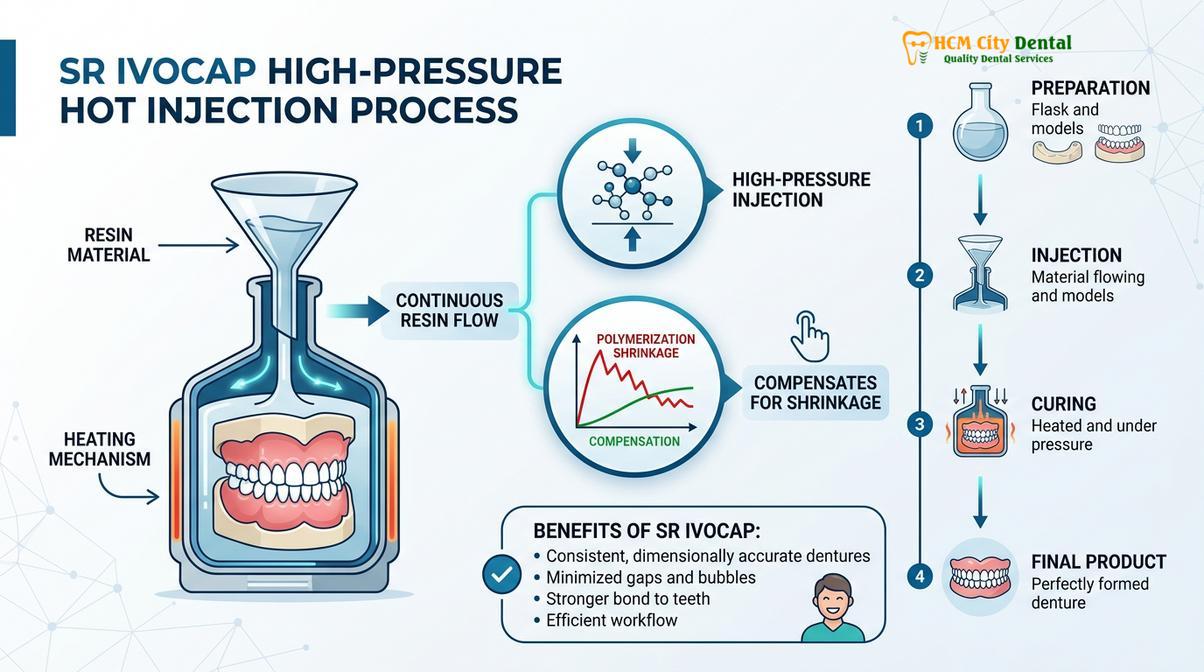
The SR Ivocap system uses continuous high-pressure injection during the curing process to compensate for acrylic shrinkage, ensuring an impeccable fit and superior mucosal seal.
Even if the clinical impressions and bite registrations are flawless, the final fit of a denture can be compromised by the limitations of conventional laboratory materials. Standard denture bases are fabricated using Polymethyl methacrylate (PMMA) acrylic resin. During the polymerization (curing) process, PMMA undergoes a volumetric shrinkage of approximately 6% to 8%. In conventional flasking techniques, this shrinkage pulls the acrylic away from the master cast, resulting in microscopic gaps—particularly in the deep palatal vault—which destroys the suction and fit of the final prosthesis.
The BPS workflow solves this critical issue with the SR Ivocap injection system. Instead of packing doughy acrylic into a mold and hoping it retains its shape, the SR Ivocap system utilizes a pneumatic press that injects the acrylic resin into the closed flask under a continuous pressure of 6 bars (approximately 87 psi). As the flask is heated in a boiling water bath, the resin begins to polymerize and shrink. However, because the system remains under constant pressure, fresh, uncured resin is continuously forced into the mold to compensate for the volumetric loss [4].
This continuous injection mechanism ensures absolute dimensional stability. The resulting denture base is an exact, 1:1 replica of the clinical master cast. There is zero base shrinkage, meaning the prosthesis adapts intimately to the patient’s oral mucosa without any palatal gaps or distorted flanges. This intimate adaptation is the physical basis for the premium suction characteristic of BPS dentures.
| Feature | Conventional Flasking (Standard Acrylic) | SR Ivocap Injection (BPS Protocol) |
|---|---|---|
| Polymerization Shrinkage | High (6-8% volumetric loss) | Fully compensated (Zero effective shrinkage) |
| Palatal Adaptation | Prone to gaps and poor suction | Intimate mucosal contact, premium suction |
| Material Density | Porous, susceptible to plaque and odors | Highly dense, non-porous, hygienic |
| Vertical Dimension Alteration | Common (requires extensive clinical adjustment) | Maintained perfectly (minimal adjustment needed) |
Furthermore, the high pressure and controlled temperature of the SR Ivocap process result in a significantly denser, non-porous acrylic base. This high-density material is highly resistant to plaque accumulation, bacterial colonization, and the absorption of oral fluids, making the denture much more hygienic and resistant to odors over time. For patients investing in restorative dental care, this translates to a cleaner, healthier, and more comfortable daily experience.
Esthetics and Wear Resistance: Multi-layered Ivoclar Resin Teeth
BPS dentures utilize highly cross-linked, multi-layered Ivoclar Vivadent teeth that mimic the natural optical properties and wear resistance of human enamel.
A prosthesis must not only function flawlessly but also restore the patient’s confidence through natural, lifelike aesthetics. The artificial teeth used in conventional dentures are often made from basic acrylic, which tends to wear down rapidly under the forces of mastication. As the teeth flatten, the patient’s vertical dimension collapses, leading to joint pain, facial sagging, and a compromised ability to chew food effectively.
The Biofunctional Prosthetic System exclusively utilizes premium Ivoclar Vivadent teeth, which are manufactured from advanced DCL (Double Cross-Linked) acrylic resin. This material features a highly interpenetrating polymer network that provides exceptional compressive strength and resistance to abrasive wear. Clinical studies have demonstrated that DCL teeth maintain their anatomical occlusal morphology significantly longer than standard acrylic teeth, ensuring that the patient’s chewing efficiency and vertical dimension are preserved for years [5].
Clinical Case Review: Aesthetic Rehabilitation
A 68-year-old patient visited HCMC Dental Clinic in Ho Chi Minh City complaining of severe wear on her 5-year-old conventional dentures, which caused her face to appear sunken and aged. Following a comprehensive evaluation, the clinical team fabricated a new set of BPS dentures utilizing the anatomical teeth setup. By restoring the correct vertical dimension and selecting multi-layered Ivoclar teeth that matched her natural age-appropriate shade, the patient experienced an immediate rejuvenation of her facial profile and a dramatic improvement in masticatory function.
Beyond durability, Ivoclar teeth are celebrated for their unparalleled optical properties. They are constructed in multiple layers, mimicking the natural transition from the opaque dentin core to the translucent enamel edge. This multi-layered structure interacts with light exactly as natural teeth do, providing depth, vitality, and a natural fluorescence. Furthermore, the anatomical teeth setup follows strict biofunctional principles, ensuring that the teeth are arranged to support the lips and cheeks properly, facilitating clear phonetics and a vibrant, natural smile.
Clinical vs. Lab Collaboration: Why the BPS Workflow Prevents Errors
The success of the BPS workflow relies on a strict, certified synergy between the prosthodontist and the dental laboratory, ensuring every clinical record translates perfectly into the final prosthesis.
The fabrication of a premium prosthesis is a highly collaborative endeavor. Even the most accurate clinical impressions and bite registrations are useless if the dental laboratory lacks the technology or expertise to process them correctly. The BPS protocol bridges this gap by mandating a certified, closed-loop workflow between the clinic and the laboratory.
To offer authentic BPS dentures, both the clinician and the dental technician must undergo specialized training and certification by Ivoclar Vivadent. This shared educational foundation ensures that both parties speak the same clinical language. When a prosthodontist sends a UTS transfer bow record and a Gnathometer M tracing to the lab, the certified technician knows exactly how to mount the casts on the Stratos articulator and interpret the data without ambiguity.
“The communication between the clinic and the laboratory is the invisible backbone of prosthodontics. The BPS system provides a standardized framework that eliminates misinterpretation, ensuring that the prosthesis we design in the clinic is exactly what the laboratory delivers.”
This rigorous quality control process prevents the compounding errors that plague conventional denture fabrication. In a standard workflow, a slight distortion in the impression, combined with a minor shrinkage in the acrylic base, can result in a denture that requires hours of chairside adjustment or, worse, a complete remake. The BPS workflow, with its emphasis on precision instrumentation and zero-shrinkage injection molding, drastically reduces the need for post-insertion adjustments. Patients receive high-quality prosthetic teeth that fit comfortably and function correctly from the very first day of insertion.
When to See a Doctor for Prosthodontic Evaluation
Regular clinical evaluations are essential to monitor the fit of your dentures and the health of your underlying jawbone, preventing long-term complications.
Even the highest quality prosthetics require professional monitoring. The human body is dynamic, and the alveolar bone that supports a denture naturally resorbs (shrinks) over time following tooth loss. This physiological change can alter the fit of the prosthesis, leading to instability, tissue irritation, and decreased chewing efficiency.
Important Clinical Considerations
You should schedule a clinical evaluation if you experience any of the following symptoms: chronic sore spots or ulcerations on the gums, a denture that frequently dislodges while speaking or eating, a clicking sound during mastication, or the development of angular cheilitis (cracking at the corners of the mouth). These signs indicate that the prosthesis no longer fits correctly or that the vertical dimension of occlusion has been compromised.
During a consultation at HCMC Dental Clinic, the prosthodontic team will assess the integrity of your current dentures, evaluate the health of your oral mucosa, and measure your jawbone density. Based on clinical diagnostics, the doctor may recommend a reline procedure to adapt the denture base to the new tissue contours, or, if the wear is extensive, the fabrication of a new BPS prosthesis. Do not attempt to adjust or repair dentures yourself using over-the-counter kits, as this can permanently damage the prosthesis and harm your oral tissues. To ensure optimal oral health and function, schedule a clinical consultation with a qualified specialist.
Frequently Asked Questions
Why are BPS dentures more expensive than regular acrylic dentures?
BPS dentures require specialized Ivoclar materials, precision clinical instruments like the UTS transfer bow, and a certified laboratory workflow, which increases the overall cost. Unlike conventional dentures that rely on basic impressions and standard acrylic, the Biofunctional Prosthetic System utilizes high-pressure SR Ivocap injection to eliminate shrinkage, ensuring a superior, long-lasting fit that justifies the premium investment.
How long does a BPS biofunctional denture last?
With proper maintenance and regular clinical check-ups, a BPS biofunctional denture typically functions optimally for many years before requiring a reline or replacement. The longevity is significantly enhanced by the highly cross-linked DCL resin teeth, which resist wear and discoloration, and the dense, non-porous acrylic base that withstands daily masticatory forces better than conventional materials.
Can you get BPS dentures in 4 days in Saigon?
While expedited timelines are sometimes possible, fabricating authentic BPS dentures generally requires multiple precise clinical appointments over a slightly longer period to ensure optimal results. The protocol mandates preliminary impressions, custom tray border molding, gothic arch tracing, and a wax try-in, meaning a rushed 4-day schedule may compromise the meticulous biofunctional calibration required for premium suction.
Are BPS dentures suitable for patients with severe bone loss?
Yes, BPS dentures are highly recommended for patients with severe alveolar bone resorption because the precision border molding and functional impression techniques maximize tissue utilization. By capturing the dynamic movements of the oral musculature, the system creates a peripheral seal that provides premium suction, even in compromised mandibular ridges where conventional dentures typically fail.
How do I clean and maintain my BPS dentures?
You should clean your BPS dentures daily using a soft-bristled denture brush and a non-abrasive denture cleanser to prevent scratching the highly polished acrylic surface. Avoid using hot water, which can warp the resin, and ensure you soak the prosthesis overnight in a specialized cleaning solution to eliminate bacteria and maintain the integrity of the Ivoclar Vivadent teeth.
References
- Journal of Prosthetic Dentistry. Clinical outcomes of the Biofunctional Prosthetic System in complete denture wearers. (2021).
- International Journal of Prosthodontics. Dimensional accuracy of injection-molded vs. conventionally flasked denture bases. (2020).
- Journal of Oral Rehabilitation. Gothic arch tracing and its efficacy in determining centric relation. (2019).
- British Dental Journal. Wear resistance of double cross-linked acrylic resin denture teeth. (2022).
- Clinical Oral Investigations. Patient satisfaction with suction-effective mandibular complete dentures. (2018).