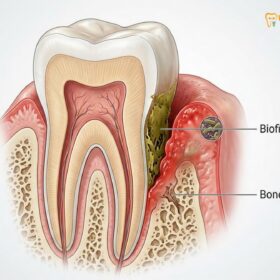
Patients often ask if they can receive dental implants while suffering from gum disease. The clinical answer is yes, but only after the active periodontal infection is completely eradicated. Placing implants into infected gums severely compromises osseointegration and leads to early implant failure.
Clinical Summary:
Dental implants require a sterile, structurally sound foundation to integrate successfully with the jawbone. Active periodontal disease introduces pathogenic bacteria that can colonize the implant surface, leading to peri-implantitis and rapid bone loss. Consequently, comprehensive periodontal therapy—ranging from deep scaling to flap surgery—must precede any implant placement. Once the gums are healthy and bone density is restored, patients with a history of periodontitis can safely receive and maintain dental implants with proper long-term clinical supervision.
Key Takeaways:
- Active gum disease must be fully treated and stabilized before any dental implant surgery begins.
- Placing implants in infected tissue drastically increases the risk of immediate surgical failure.
- Peri-implantitis is a severe condition where periodontal bacteria destroy the bone around an implant.
- Bone grafting is frequently necessary to rebuild the jaw after periodontal bone loss.
- Strict oral hygiene and regular clinical maintenance are mandatory for long-term implant success.
The Relationship Between Gum Health and Implant Success
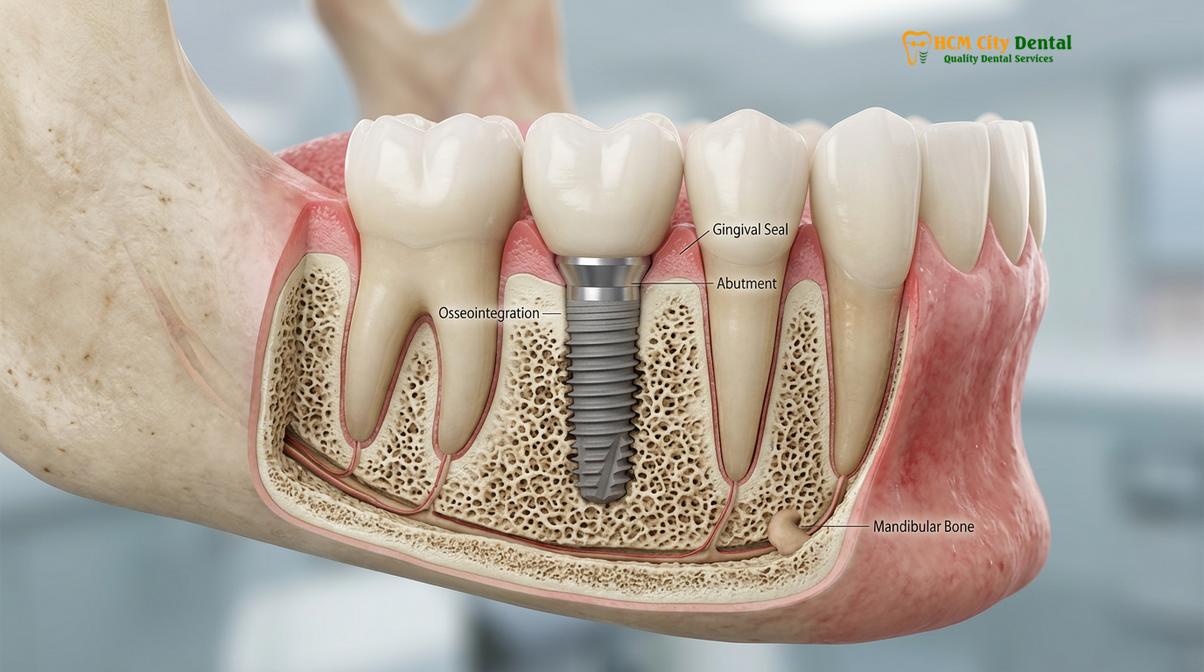
Healthy gum tissue acts as a vital biological seal, protecting the underlying jawbone and the dental implant from invasive oral bacteria.
To understand the complex dynamic between gum disease dental implants, one must first examine the biological requirements for a successful dental restoration. A dental implant is a titanium post surgically inserted into the jawbone to serve as an artificial tooth root. For this post to function correctly, it must undergo a process called osseointegration, where the living bone cells attach directly to the titanium surface. This structural fusion provides the immense stability required for chewing and speaking.
However, the bone does not exist in isolation. It is covered and protected by the gingiva (gum tissue). In a healthy mouth, the gums form a tight, fibrous cuff around the neck of the tooth—or in this case, the implant abutment. This cuff is known as the biological seal. Its primary function is to prevent oral bacteria, food debris, and toxins from penetrating the deeper connective tissues and reaching the alveolar bone[1]. When planning for restorative surgery, ensuring the integrity of this seal through comprehensive periodontal therapy is the most critical prerequisite.
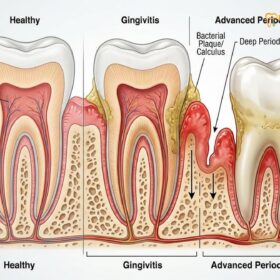
When periodontal health is compromised, this biological seal breaks down. The gums pull away from the teeth, creating deep periodontal pockets where anaerobic bacteria thrive. If an implant is placed into an environment where the surrounding tissues are already compromised by disease, the protective seal cannot form properly. Without this barrier, the underlying bone is left entirely defenseless against bacterial invasion, making long-term implant survival highly improbable.
Why Active Periodontitis is a Contraindication for Implants
Inserting an implant into an active periodontal infection guarantees bacterial contamination of the surgical site, preventing bone integration and causing implant rejection.
Periodontitis is a chronic inflammatory disease triggered by a dysbiotic biofilm (plaque) that accumulates on the teeth. The primary pathogens involved, such as Porphyromonas gingivalis and Treponema denticola, are highly aggressive. They release toxins that not only destroy the soft gum tissue but also stimulate the body’s immune system to break down its own bone in an attempt to isolate the infection. Attempting to place implants with active gum infection is universally recognized in the dental community as an absolute contraindication.
During implant surgery, the dentist must drill into the jawbone to create an osteotomy (the receptor site for the implant). If the surrounding gums are infected, the surgical instruments can easily push pathogenic bacteria deep into the sterile bone cavity. Once bacteria adhere to the microscopic roughened surface of a titanium implant, they form a highly resistant biofilm that is nearly impossible to eradicate without removing the implant entirely. Patients who notice swollen gums around a tooth or experience bleeding when brushing must have these symptoms thoroughly evaluated and resolved before any surgical intervention is considered.
Furthermore, active periodontitis keeps the body in a state of chronic inflammation. The localized immune response in the oral cavity is hyperactive, producing inflammatory cytokines that interfere with the delicate cellular processes required for osseointegration. Instead of forming new bone around the implant, the body may encapsulate the titanium post in fibrous scar tissue, resulting in a loose, failing implant that cannot support a dental crown.
The Threat of Peri-Implantitis: When Bacteria Attack Implants
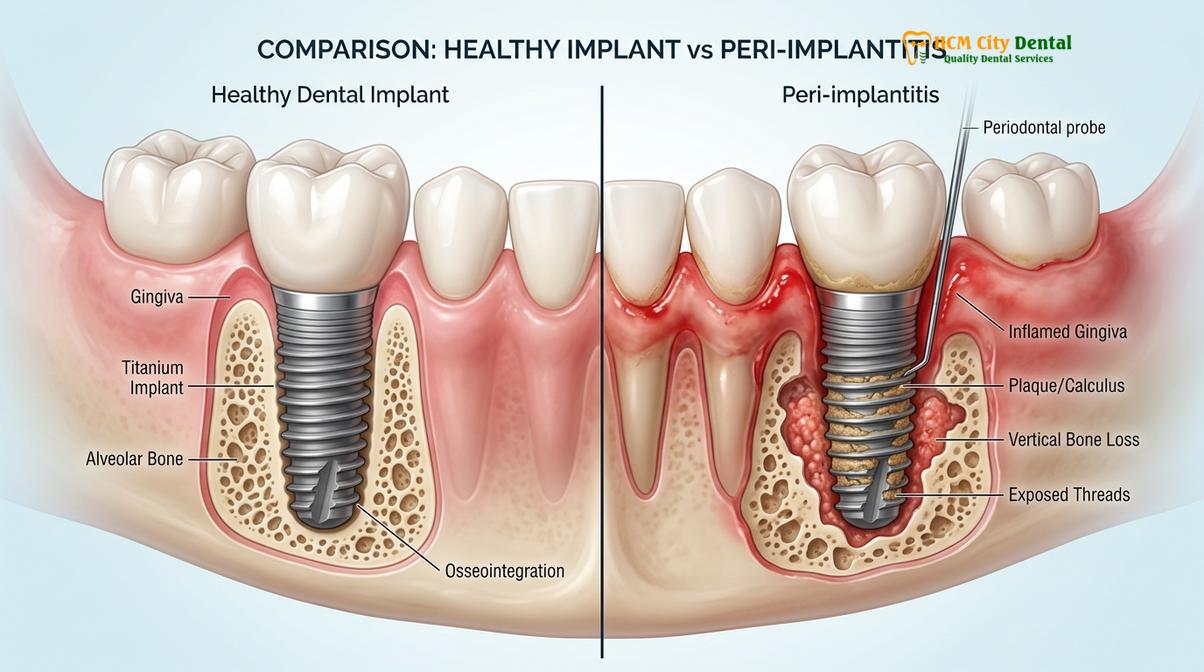
Peri-implantitis is an aggressive inflammatory condition affecting the soft and hard tissues surrounding an implant, often triggered by residual periodontal pathogens.
Even if an implant successfully integrates with the bone initially, patients with a history of gum disease remain at a higher risk for a condition known as peri-implantitis. This disease is essentially periodontitis that occurs around an artificial implant rather than a natural tooth. It is characterized by inflammation of the peri-implant mucosa and progressive loss of the supporting alveolar bone[2]. Because implants lack the complex periodontal ligament that surrounds natural teeth, the progression of bone loss in peri-implantitis is often much faster and more destructive.
The bacteria that cause peri-implantitis are largely the same strains responsible for traditional gum disease. If a patient has untreated periodontal pockets around their remaining natural teeth, these pockets act as reservoirs for bacteria. The pathogens can easily migrate through the saliva and colonize the newly placed dental implants. This cross-contamination highlights why a full-mouth approach to periodontal health is mandatory; a single infected tooth can jeopardize the entire implant restoration.
“The microflora that destroys natural teeth is the exact same microflora that destroys dental implants. Without eliminating the primary infection, we are simply providing a new surface for bacteria to attack,” explains Dr. Nguyen Van Cuong.
Certain lifestyle factors exponentially increase the likelihood of developing this condition. For instance, the peri implantitis risk smokers face is significantly higher than that of non-smokers. Smoking constricts the blood vessels in the gums, reducing oxygen and nutrient delivery to the tissues. This not only masks the early signs of inflammation, such as bleeding, but also creates an ideal low-oxygen environment for anaerobic bacteria to multiply. Additionally, patients who suffer from chronic halitosis should be evaluated, as bad breath linked to gum disease is a strong indicator of high bacterial loads that could threaten implant stability.
Pre-Implant Periodontal Therapy: Scaling and Flap Surgery Protocols
Eradicating gum disease requires a phased approach, starting with deep cleaning and potentially advancing to surgical interventions to eliminate deep periodontal pockets.
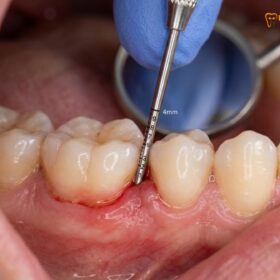
To ensure a sterile and stable environment for future restorations, treating gum disease before implants is a non-negotiable phase of the treatment plan. The goal of pre-implant periodontal therapy is to eliminate bacterial plaque and calculus, reduce periodontal pocket depths to a maintainable level (typically under 4 millimeters), and arrest any ongoing bone loss. This is achieved through a combination of non-surgical and surgical protocols, depending on the severity of the disease[3].
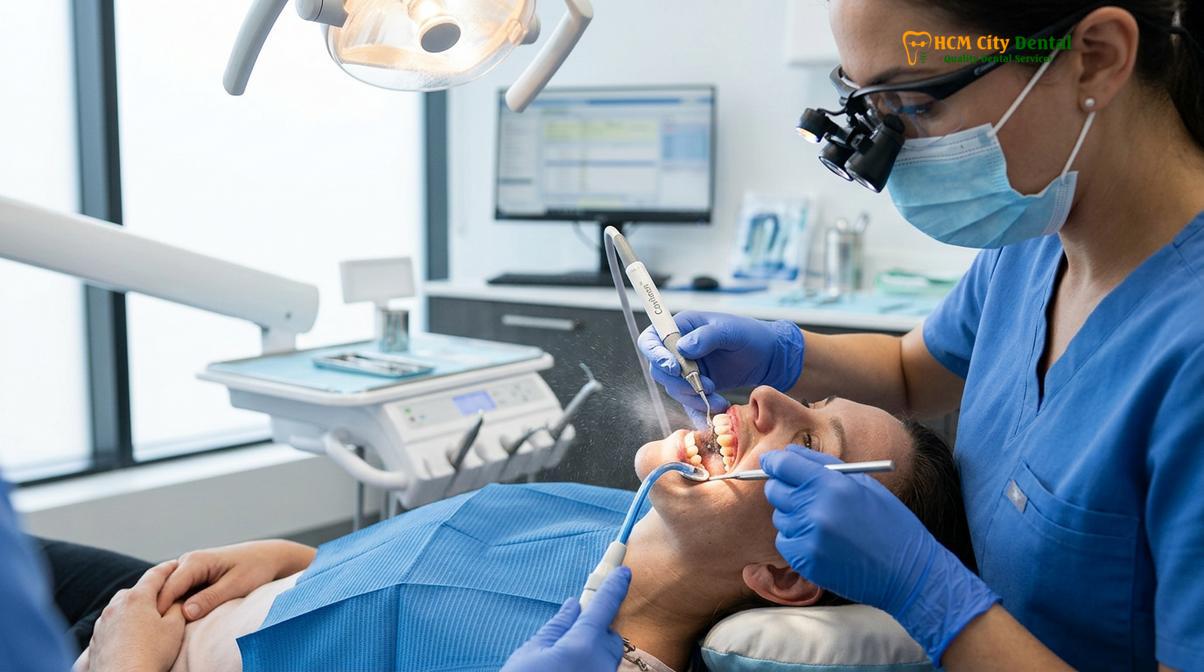
The first line of defense is always non-surgical mechanical debridement. This procedure, commonly referred to as deep cleaning teeth (scaling and root planing), involves the meticulous removal of calcified plaque from above and below the gumline. The dentist uses specialized ultrasonic scalers and hand curettes to clean the root surfaces, smoothing them out to prevent future bacterial adherence and allowing the gum tissue to reattach to the tooth.
However, in cases of advanced periodontitis where pockets are excessively deep and inaccessible to standard instruments, surgical intervention becomes necessary. Gum flap surgery (osseous surgery) allows the periodontist to gently fold back the gum tissue, providing direct visual access to the roots and the damaged bone. The roots are thoroughly debrided, and irregular bone contours caused by the infection are smoothed out. The gums are then sutured back tightly against the teeth, effectively eliminating the deep pockets where bacteria hide.
| Therapy Type | Clinical Procedure | Primary Indication | Healing Time Before Implants |
|---|---|---|---|
| Scaling & Root Planing | Ultrasonic and manual removal of subgingival calculus. | Mild to moderate periodontitis (pockets 4-5mm). | 4 to 8 weeks |
| Laser Therapy (LANAP) | Targeted light energy to vaporize diseased tissue and bacteria. | Moderate periodontitis, patients seeking minimally invasive options. | 8 to 12 weeks |
| Osseous Flap Surgery | Surgical reflection of gums for deep debridement and bone recontouring. | Severe periodontitis (pockets >6mm) with significant bone defects. | 3 to 6 months |
Following these therapies, the patient enters a healing phase. The dental team will conduct a comprehensive re-evaluation after several weeks to measure pocket depths and assess tissue response. Only when the gums exhibit no signs of inflammation, bleeding, or suppuration can the patient be cleared for the surgical placement of dental implants.
Rebuilding Bone Support Before Implant Insertion
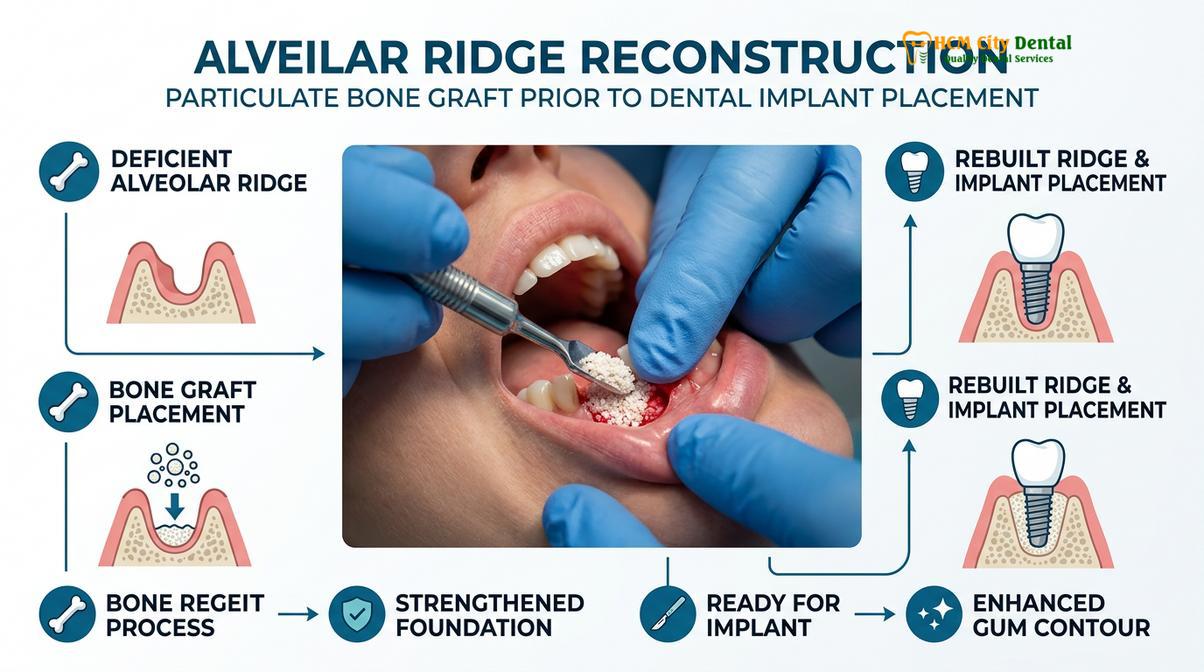
Because advanced gum disease destroys the alveolar bone, bone grafting procedures are frequently required to create a stable foundation for the titanium post.
One of the most devastating consequences of untreated periodontitis is the resorption (melting away) of the alveolar bone that supports the teeth. When teeth are lost to gum disease, the bone in that area continues to atrophy due to the lack of chewing stimulation. Dental implants require a specific volume and density of bone to be anchored securely. If the bone is too thin or too short, the implant threads may become exposed, or the implant may fail to integrate entirely.
To overcome this anatomical deficiency, bone grafting is routinely performed either prior to or simultaneously with implant placement. Guided Bone Regeneration (GBR) is a highly predictable surgical technique used to rebuild the lost ridge[4]. During this procedure, the surgeon places particulate bone graft material—which can be autogenous (from the patient), allogenic (human donor), xenogenic (animal source), or synthetic—into the bony defect. This material acts as a scaffold, encouraging the patient’s own bone cells to migrate into the area and generate new, dense bone.
In some cases, modern technology can accelerate the healing of both soft and hard tissues. For example, laser gum treatment can be utilized to decontaminate the surgical site gently, promoting faster regeneration and reducing postoperative discomfort. Regardless of the specific techniques used, the overarching principle remains the same: the architectural foundation of the jaw must be structurally sound and completely free of disease before introducing a foreign titanium body.
Maintaining Gums Post-Implant Placement: Key Rules
Long-term implant survival relies on meticulous daily oral hygiene and strict adherence to professional periodontal maintenance schedules.
Successfully receiving dental implants after periodontitis is a significant clinical milestone, but it is not the end of the journey. Patients who have lost teeth to gum disease are inherently more susceptible to future infections. Their immune response to oral bacteria is genetically and environmentally primed for inflammation. Therefore, maintaining the health of the peri-implant tissues requires a lifelong commitment to rigorous oral hygiene and professional oversight.
Daily home care must be meticulous. Brushing twice a day with a soft-bristled or electric toothbrush is mandatory, but brushing alone is insufficient. Plaque accumulates heavily in the interproximal spaces (between the teeth) and around the base of the implant crown. Patients must use interdental brushes, high-quality dental floss, or water irrigators to disrupt the biofilm in these hard-to-reach areas. Antimicrobial mouthrinses may also be prescribed to help keep bacterial counts low.
“An implant is not a ‘set it and forget it’ solution. Patients with a history of periodontal disease remain susceptible to future infections and require customized, lifelong maintenance protocols to protect their investment and their systemic health.”
Professional maintenance is equally critical. The American Academy of Periodontology recommends that patients with a history of gum disease undergo supportive periodontal therapy every three to four months[5]. During these visits, the dental hygienist or periodontist will carefully probe the tissues around the implants to check for deepening pockets or bleeding. They will also use specialized titanium or plastic scalers to remove any calculus without scratching the implant surface. Radiographs are taken periodically to monitor the bone levels. Patients should also be observant of any changes in their oral tissues; for example, noticing black gums or sudden changes in tissue color could indicate underlying issues that require immediate clinical evaluation.
When to See a Doctor
If you are considering dental implants but have a history of bleeding gums, loose teeth, or chronic bad breath, it is imperative to seek a comprehensive periodontal evaluation before proceeding with any restorative work. Early diagnosis and intervention can save your remaining natural teeth and create a healthy environment for future implants.
For patients who already have dental implants, immediate clinical attention is required if you experience any of the following symptoms:
- Redness, swelling, or bleeding around the implant crown.
- Pus or a bad taste originating from the implant site.
- A feeling of looseness or mobility in the implant itself.
- Dull pain or discomfort when chewing on the implant.
- Visible recession of the gums, exposing the grey titanium threads.
These are classic signs of peri-implantitis. The earlier this condition is detected, the higher the chances of arresting the bone loss and saving the implant. If you are experiencing these symptoms or wish to explore your tooth replacement options in a safe, clinically controlled environment, we encourage you to schedule a consultation at HCMC Dental Clinic in Ho Chi Minh City. Our specialized team utilizes advanced diagnostics to ensure your foundation is perfectly healthy before any surgical steps are taken.
Frequently Asked Questions
Can you get dental implants if you have gum disease?
Yes, you can receive dental implants if you have a history of gum disease, provided the active infection is completely treated first. Placing an implant into a healthy, stable periodontal environment is critical for successful osseointegration and long-term survival. Your dentist will first focus on eliminating the bacterial infection through deep cleaning or surgical therapy. Once the gums have healed and pocket depths are reduced to normal levels, implant surgery can proceed safely.
What happens if you put an implant in infected gums?
Placing an implant into infected gums almost certainly leads to immediate bacterial contamination of the titanium post. This prevents the bone from fusing to the implant, resulting in rapid bone loss, severe pain, and the inevitable failure and removal of the implant. The surgical process itself can push existing bacteria deeper into the jawbone, exacerbating the infection and potentially causing systemic health issues. Therefore, a sterile surgical site is an absolute requirement.
How long after periodontitis treatment can I get implants?
Patients typically need to wait between three to six months after completing periodontal treatment before receiving implants. This healing period allows the gums to stabilize, inflammation to subside completely, and the dentist to verify that the infection has not returned. During this time, the bone also undergoes remodeling. Rushing the process increases the risk of surgical complications and implant failure, so patience during the healing phase is essential.
Is periodontitis contagious to dental implants?
Yes, the same bacteria that cause periodontitis around natural teeth can migrate and infect the tissues surrounding dental implants. This condition, known as peri-implantitis, is highly destructive and can lead to implant failure if the original gum disease is not managed. Because implants do not have the same protective biological attachments as natural teeth, the progression of bone loss around an infected implant is often much faster and more aggressive.
How do I prevent gum disease around my new implants?
Preventing infection around implants requires meticulous daily brushing and flossing, alongside professional dental cleanings every three to four months. Using interdental brushes, water flossers, and attending regular clinical evaluations are essential steps to maintain peri-implant health. Patients must also avoid smoking, manage systemic conditions like diabetes, and immediately report any signs of bleeding or swelling to their dental provider to catch potential issues early.
References
- Journal of Periodontology. Impact of active periodontal disease on dental implant survival rates. (2021).
- Clinical Oral Implants Research. The pathogenesis and microbiology of peri-implantitis. (2020).
- International Journal of Oral and Maxillofacial Surgery. Protocols for non-surgical and surgical periodontal therapy prior to implant placement. (2019).
- Journal of Clinical Periodontology. Guided bone regeneration in patients with severe periodontitis. (2022).
- American Academy of Periodontology. Long-term maintenance and supportive periodontal therapy for implant patients. (2018).