Laser gum treatment is an advanced, minimally invasive periodontal therapy that utilizes focused light energy to remove diseased tissue and eradicate bacteria from periodontal pockets. This modern approach promotes natural tissue regeneration and reattachment, offering a highly effective alternative to traditional scalpel-based gum surgery with significantly reduced recovery times.
Clinical Summary:
Laser gum treatment, notably LANAP (Laser-Assisted New Attachment Procedure), represents a paradigm shift in the field of periodontics. By deploying specific light wavelengths, dental lasers selectively target infected gingival tissue and dark-pigmented periodontal pathogens while preserving healthy anatomical structures. This precise protocol stimulates fibrin clot formation, facilitating periodontal regeneration and reducing pocket depths without the need for incisions or sutures. Clinical evidence demonstrates high success rates in managing moderate to severe periodontitis when this therapy is integrated into a comprehensive, long-term periodontal maintenance program.
Key Takeaways:
- Utilizes targeted light energy to selectively vaporize diseased tissue without the use of scalpels.
- Promotes natural alveolar bone and connective tissue regeneration by stimulating a stable fibrin clot.
- Significantly reduces postoperative discomfort, gingival bleeding, and overall recovery time.
- Highly effective for managing moderate to severe periodontitis as well as peri-implantitis.
- Requires specialized clinical training and precise operational protocols to ensure optimal patient outcomes.
What is Laser Gum Treatment (LANAP)?
Laser gum treatment, specifically LANAP, is a minimally invasive surgical protocol that uses a specialized dental laser to vaporize infected tissue and bacteria within the gums, promoting natural healing and tissue reattachment.
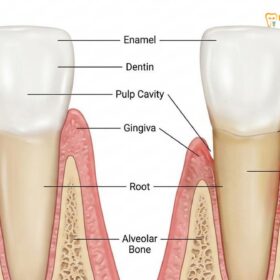
Periodontal disease is a chronic inflammatory condition triggered by bacterial plaque and calculus accumulation beneath the gum line. If left untreated, it leads to the progressive destruction of the supporting structures of the teeth, including the periodontal ligament and alveolar bone. Historically, the standard of care for advanced periodontitis involved invasive osseous surgery, where the gums were cut and flapped back to provide access to the tooth roots for cleaning. Today, laser gum treatment offers a sophisticated, tissue-sparing alternative that fundamentally alters how clinicians approach severe gingival infections.
The most widely recognized and clinically validated protocol in this domain is LANAP (Laser-Assisted New Attachment Procedure). This FDA-cleared therapy utilizes a specific free-running pulsed Nd:YAG (Neodymium-doped Yttrium Aluminum Garnet) laser. Operating at a wavelength of 1064 nanometers, this laser is highly selective. It is absorbed primarily by melanin and hemoglobin, which are abundant in diseased, inflamed gum tissue and dark-pigmented periodontal bacteria[1]. Consequently, the laser energy passes harmlessly through healthy, fibrotic tissue, allowing the clinician to selectively ablate the infection without causing collateral damage to the surrounding periodontium.
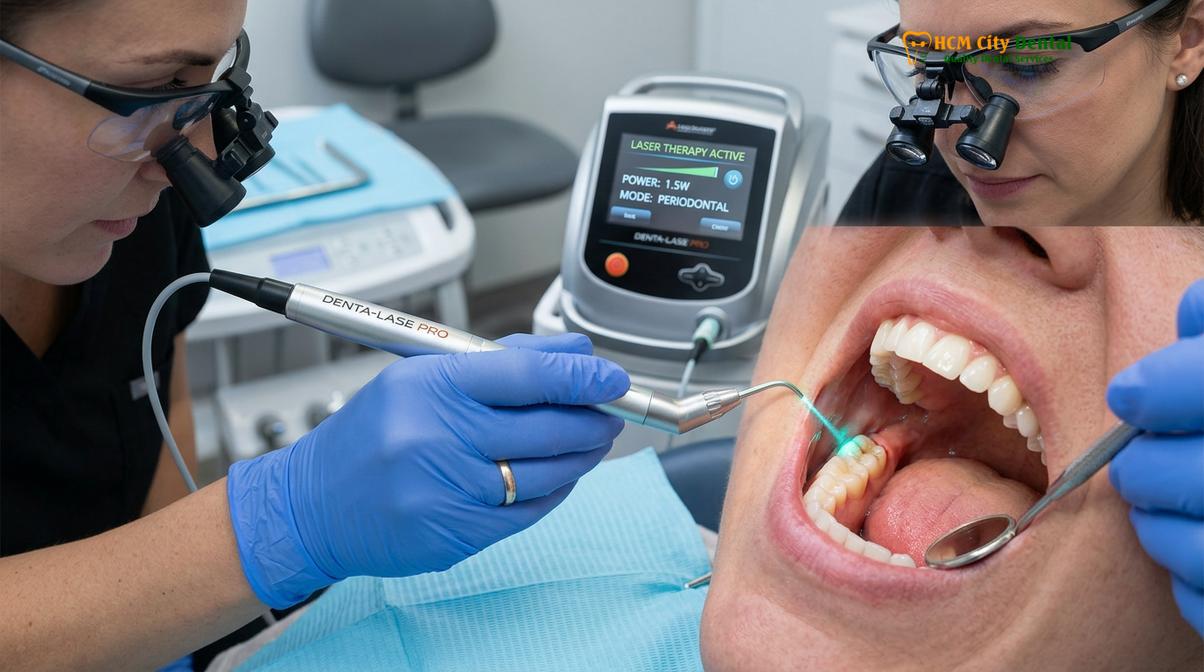
Beyond simply removing diseased tissue, advanced gum disease management utilizing lasers focuses on regeneration. The ultimate goal of LANAP is not just to halt the progression of bone loss, but to facilitate “new attachment”—the regrowth of cementum, periodontal ligament, and alveolar bone onto a previously diseased root surface. This regenerative capacity is what sets true laser periodontal therapy apart from traditional resective surgeries, which often result in permanent gum recession and increased root sensitivity.
Furthermore, the integration of laser technology extends beyond severe surgical cases. Many clinics now utilize a diode laser dental cleaning as an adjunctive therapy during routine periodontal maintenance. While not a replacement for the comprehensive LANAP protocol, low-level diode lasers can help decontaminate shallow periodontal pockets and reduce bacterial loads during standard prophylaxis, showcasing the versatility of light energy in modern dental care.
How Dental Lasers Treat Periodontal Disease
Dental lasers emit concentrated light energy that selectively targets dark-pigmented bacteria and diseased tissue, effectively sterilizing the periodontal pocket while leaving healthy gingival tissue intact.
To fully appreciate the efficacy of laser treatment for gum disease, it is essential to understand the underlying physics and biological interactions of dental lasers. When a laser beam is directed into a periodontal pocket, the light energy interacts with the tissue through absorption, reflection, transmission, or scattering. In periodontal therapy, absorption is the critical mechanism. The Nd:YAG laser is specifically calibrated to be absorbed by the chromophores present in inflamed tissue and specific periodontal pathogens, such as Porphyromonas gingivalis and Prevotella intermedia.
As the laser energy is absorbed, it converts into thermal energy, creating a photothermal effect. This rapid increase in localized temperature vaporizes the diseased epithelial lining of the periodontal pocket and lyses the bacterial cell walls, effectively sterilizing the environment[2]. Because healthy gingival tissue lacks the high concentration of these specific chromophores, it remains largely unaffected by the laser energy. This concept, known as selective photothermolysis, is the cornerstone of minimally invasive laser dentistry.
“The selective photothermolysis achieved by specific laser wavelengths allows clinicians to eradicate periodontal pathogens and diseased epithelium while preserving the structural integrity of the surrounding healthy periodontium, thereby setting the stage for true histological regeneration.”
In addition to its ablative and bactericidal properties, laser energy also induces a phenomenon known as photobiomodulation (PBM). Low-level laser energy penetrates deep into the surrounding tissues, stimulating cellular metabolism. It enhances the production of adenosine triphosphate (ATP) within the mitochondria, accelerates angiogenesis (the formation of new blood vessels), and modulates the inflammatory response. This biostimulatory effect significantly reduces postoperative pain and edema while accelerating the overall healing cascade[3].
Another critical function of the laser during periodontal therapy is achieving hemostasis. The thermal energy coagulates blood vessels as it cuts, resulting in a virtually bloodless surgical field. This not only improves the clinician’s visibility during the procedure but also plays a vital role in the final steps of the protocol, where the laser is used to create a stable, thermal fibrin clot. This clot acts as a natural biological dressing, sealing the pocket from the oral environment and providing a scaffold for the migration of osteoblasts and fibroblasts necessary for tissue regeneration.
LANAP vs Traditional Gum Flap Surgery
While traditional surgery requires scalpels and sutures to access and clean tooth roots, LANAP uses laser energy to achieve similar clinical outcomes with significantly less trauma, bleeding, and postoperative recession.
For decades, the gold standard for treating advanced periodontitis was osseous surgery, commonly referred to as flap surgery. This procedure involves using a scalpel to incise the gums, reflecting the tissue back to expose the tooth roots and underlying bone. The clinician then mechanically removes calculus, recontours the damaged bone, and sutures the gums back into place, often at a lower level to reduce pocket depth. While effective at arresting disease, this resective approach carries significant drawbacks, including severe postoperative pain, swelling, permanent gum recession, and aesthetic compromises.
LANAP laser surgery offers a fundamentally different philosophy: regeneration over resection. By utilizing laser energy to access and clean the periodontal pocket, the need for scalpels and sutures is entirely eliminated. The structural integrity of the gingival papillae (the gum tissue between the teeth) is preserved, resulting in superior aesthetic outcomes and minimal root exposure.

To clearly illustrate the clinical differences between these two modalities, the following table outlines a comparative analysis of traditional osseous surgery versus laser periodontal therapy:
| Clinical Parameter | Traditional Flap Surgery | Laser Gum Treatment (LANAP) |
|---|---|---|
| Surgical Approach | Invasive (Scalpel incisions and tissue reflection) | Minimally Invasive (Laser fiber inserted into pocket) |
| Tissue Management | Resective (Removal of healthy and diseased tissue) | Selective (Vaporization of diseased tissue only) |
| Sutures Required | Yes (Extensive suturing to reposition gums) | No (Relies on natural fibrin clot formation) |
| Postoperative Pain | Moderate to Severe (Often requires prescription analgesics) | Mild (Typically managed with over-the-counter medication) |
| Gum Recession | Common (Intentional reduction of pocket depth) | Minimal to None (Preserves natural gingival contours) |
| Healing Mechanism | Repair (Long junctional epithelium formation) | Regeneration (Potential for new bone and ligament attachment) |
The choice between these treatments depends heavily on the patient’s specific anatomical presentation and the severity of the disease. However, the reduced morbidity and regenerative potential of laser therapy have made it the preferred option for many patients seeking general dental care that prioritizes comfort and tissue preservation. It is important to note that while lasers are highly effective, traditional surgery may still be indicated in cases of severe bony defects that require extensive grafting or anatomical recontouring.
Step-by-Step Laser Gum Therapy Protocol
The laser therapy protocol involves precise measurement of pockets, initial laser debridement, mechanical scaling, a second laser pass to form a protective clot, and careful occlusal adjustment.
The success of laser gum treatment relies heavily on strict adherence to a standardized, evidence-based clinical protocol. The procedure is highly technique-sensitive and requires a deep understanding of both laser physics and periodontal anatomy. When performed correctly, the workflow ensures the complete eradication of infection and establishes the optimal biological environment for regeneration.
The standard protocol for comprehensive laser periodontal therapy typically involves the following sequential steps:
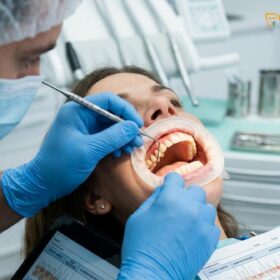
- Comprehensive Periodontal Charting and Anesthesia: The clinician begins by meticulously measuring and recording the depth of every periodontal pocket using a calibrated probe. This charting provides a baseline to evaluate the success of the treatment. Local anesthesia is then administered to ensure the patient remains completely comfortable throughout the procedure.
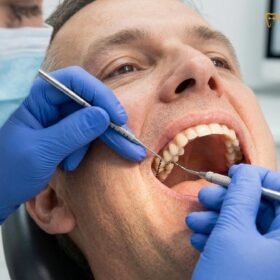
- First Laser Pass (Ablation): A thin, flexible laser fiber (approximately the thickness of three human hairs) is gently inserted into the periodontal pocket. The laser is activated at specific settings to selectively vaporize the diseased epithelial lining and eradicate the bacterial pathogens residing within the pocket. This step also helps to loosen hard calculus deposits on the root surface.
- Mechanical Scaling and Root Planing: Once the pocket is sterilized and the diseased tissue is removed, the clinician uses specialized ultrasonic scalers and fine hand instruments to meticulously remove the calculus (tartar) from the root surface. The laser does not remove hard calculus; therefore, this mechanical debridement is a critical component of the therapy[4].
- Second Laser Pass (Hemostasis and Clot Formation): The laser fiber is reintroduced into the pocket using different operational parameters. This second pass serves a dual purpose: it destroys any remaining bacteria at the base of the pocket and stimulates the blood at the surgical site to form a firm, sticky fibrin clot. This clot acts as a biological seal, preventing reinfection and providing a matrix for healing.
- Tissue Compression: The clinician gently compresses the gum tissue against the root surface. Because no scalpels were used, the tissue remains intact and is simply pressed back into its natural position, supported by the newly formed fibrin clot. No sutures are required.
- Occlusal Adjustment (Bite Management): Periodontal disease often causes teeth to shift or become mobile. The clinician will carefully evaluate the patient’s bite and adjust the occlusal surfaces (biting surfaces) of the teeth to ensure that excessive biting forces do not disrupt the healing process. In cases of severe mobility, the teeth may be temporarily splinted together for stability.

Clinical Case Review: Advanced Periodontitis Management
A 52-year-old patient presented to HCMC Dental Clinic in Ho Chi Minh City with severe gingival bleeding, halitosis, and generalized 6-8mm periodontal pockets. After a comprehensive evaluation, Dr. Nguyen Van Cuong recommended a full-mouth LANAP laser surgery protocol. The procedure was completed in two visits. At the 6-month postoperative evaluation, the patient exhibited a remarkable reduction in pocket depths to a healthy 2-3mm range, cessation of bleeding, and radiographic evidence of early alveolar bone regeneration. The patient reported minimal discomfort during recovery, highlighting the efficacy of integrating advanced laser technology into periodontal treatment protocols.
Recovery Time and Aftercare Following Laser Therapy
Recovery from laser gum therapy is typically swift, with most patients returning to normal activities within 24 hours, provided they adhere to a strict soft diet and specific oral hygiene protocols.
One of the most significant advantages of laser gum treatment is the accelerated and relatively comfortable recovery period. Because the procedure does not involve cutting or suturing the gingival tissue, the postoperative inflammatory response is drastically reduced. Most patients experience only mild tissue tenderness, slight swelling, or minor changes in tooth sensitivity, which usually subside within the first few days.
However, the absence of severe pain does not mean the healing process is complete. The biological regeneration of bone and connective tissue occurs deep beneath the gum line and requires several months of undisturbed healing. The critical factor in the success of the treatment is the preservation of the fibrin clot formed during the final step of the laser protocol. If this clot is dislodged, the pocket can become reinfected, and the regenerative potential is lost.
Important Clinical Warning: Patients must strictly avoid brushing, flossing, or using water picks directly on the treated surgical areas for the first 7 to 10 days post-operation. Mechanical disruption will dislodge the fragile fibrin clot, severely compromising the regenerative healing process and potentially leading to treatment failure.
To ensure optimal healing, clinicians provide strict postoperative instructions that patients must follow diligently:
- Dietary Modifications: Patients are required to adhere to a liquid or ultra-soft mushy diet for the first 3 to 7 days. Foods such as yogurt, smoothies, mashed potatoes, and broths are recommended. Hard, crunchy, or sticky foods that could traumatize the gums must be strictly avoided.
- Oral Hygiene Adjustments: As noted, mechanical cleaning of the treated areas is temporarily suspended. Instead, patients are typically prescribed an antimicrobial mouth rinse (such as Chlorhexidine) to gently bathe the tissues and manage bacterial plaque without disrupting the clot.
- Smoking Cessation: Tobacco use severely impairs blood flow and the immune response, drastically reducing the success rate of any periodontal therapy. Patients are strongly advised to abstain from smoking during the critical healing phase.
- Medication Management: While severe pain is rare, clinicians may recommend over-the-counter anti-inflammatory medications (like Ibuprofen) to manage mild discomfort and reduce residual swelling. Antibiotics may also be prescribed depending on the severity of the initial infection.
Long-term success relies on a commitment to ongoing maintenance. Following the initial healing phase, patients must return for professional periodontal maintenance cleanings every 3 to 4 months. These frequent visits allow the clinician to monitor the healing progress, manage plaque accumulation, and ensure the disease remains in remission.
Who is an Ideal Candidate for Laser Gum Treatment?
Ideal candidates are individuals suffering from moderate to advanced periodontitis, patients with medical conditions that complicate traditional surgery, or those experiencing failing dental implants.
Laser gum treatment is a highly versatile therapy, but proper patient selection is crucial for achieving predictable clinical outcomes. The ideal candidate is an individual diagnosed with moderate to severe periodontitis, characterized by periodontal pockets measuring 5 millimeters or deeper, bleeding upon probing, and radiographic evidence of alveolar bone loss. For these patients, laser therapy offers a chance to save teeth that might otherwise be slated for extraction.
Furthermore, laser therapy is particularly advantageous for patients with systemic health conditions that make traditional surgery risky. Because the laser provides excellent hemostasis (blood clotting), it is often the treatment of choice for patients taking anticoagulant medications (blood thinners) or those with bleeding disorders. Similarly, patients with poorly controlled diabetes, who typically experience delayed wound healing and are highly susceptible to postoperative infections, benefit greatly from the minimally invasive and bactericidal nature of the laser protocol[5].

“Patient selection is paramount; while laser therapy offers profound benefits for periodontitis and peri-implantitis, comprehensive diagnostic imaging and meticulous periodontal charting remain the absolute foundation of successful treatment planning and long-term disease management.”
Another emerging application for this technology is the treatment of peri-implantitis—an inflammatory condition that causes bone loss around dental implants. The laser can effectively decontaminate the rough titanium surface of the implant without damaging it, helping to arrest the disease and potentially regenerate bone around the failing implant.
However, there are certain contraindications. Patients with extremely advanced bone loss where the teeth are highly mobile and lack any foundational support may not be viable candidates for regeneration and may require extractions. Additionally, while the laser is excellent for treating infection, it cannot correct severe anatomical defects or perform extensive bone grafting procedures. In such complex cases, a combination of laser therapy and traditional surgical techniques may be required.
When to See a Doctor
Periodontal disease is often described as a “silent disease” because it can progress significantly before causing noticeable pain. By the time a patient experiences severe discomfort or tooth mobility, the destruction of the supporting bone is usually advanced. Early detection and intervention are critical for preserving your natural dentition and preventing systemic health complications associated with chronic oral inflammation.
You should schedule a comprehensive evaluation if you experience any of the following symptoms:
- Gums that bleed easily during routine brushing, flossing, or eating hard foods.
- Persistent halitosis (bad breath) or a chronic bad taste in the mouth that does not improve with oral hygiene.
- Gums that appear red, swollen, tender, or are visibly pulling away from the teeth (recession).
- Changes in the way your teeth fit together when you bite, or the sudden appearance of spaces between teeth.
- Pus or exudate visible between the gums and teeth when pressure is applied.
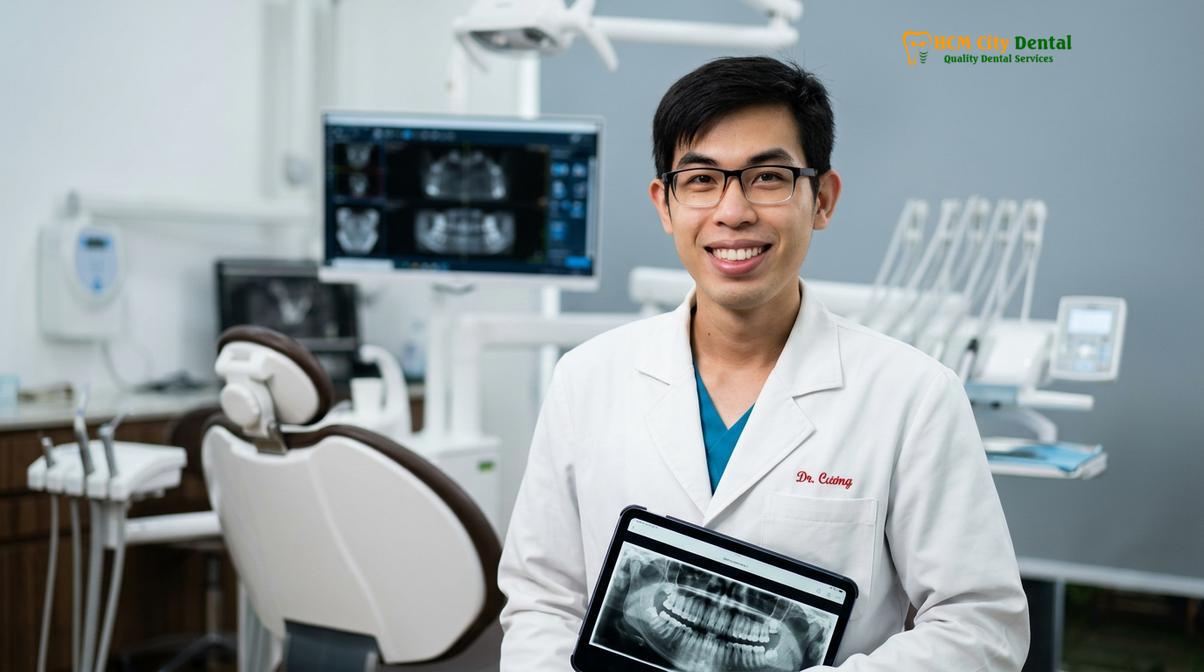
If you are experiencing these symptoms, it is imperative to seek professional routine dental examinations. At HCMC Dental Clinic in Ho Chi Minh City, experts like Dr. Nguyen Van Cuong utilize advanced diagnostic tools, including 3D CBCT imaging and digital periodontal charting, to accurately assess the health of your gums. Based on a thorough clinical evaluation, our team can determine if you are a candidate for specialized gum therapy and develop a personalized treatment plan designed to restore your oral health and preserve your smile.
Frequently Asked Questions
Does laser gum treatment actually work?
Yes, laser gum treatment is highly effective for managing moderate to severe periodontitis when performed by a qualified clinician. Clinical studies demonstrate that targeted laser therapy successfully reduces periodontal pocket depths, eradicates harmful bacteria, and promotes the regeneration of alveolar bone and connective tissue attachments without the need for invasive scalpel surgery. The success of the treatment is heavily dependent on the specific laser wavelength used and the clinician’s adherence to established protocols.
Is LANAP painful?
LANAP is generally associated with minimal discomfort compared to traditional flap surgery, as it does not involve scalpels or sutures. Local anesthesia is administered prior to the procedure to ensure patient comfort. Postoperatively, most patients report only mild soreness or tissue sensitivity, which is typically well-managed with over-the-counter pain relievers. The biostimulatory effect of the laser also helps to reduce postoperative inflammation and accelerate the healing process.
How much does laser gum therapy cost?
The cost of laser gum therapy varies depending on the severity of the periodontal disease and the number of quadrants requiring treatment. According to the latest clinic fee schedule, it is often comparable to or slightly higher than traditional surgery due to the advanced technology involved. A personalized clinical consultation is necessary for an accurate estimate, as the treatment plan must be tailored to the specific anatomical and pathological needs of the patient.
Can lasers cure periodontitis?
While there is no absolute cure for periodontitis, laser therapy can effectively arrest the progression of the disease and restore periodontal health. By eliminating the bacterial infection and facilitating tissue regeneration, lasers help stabilize the gums and bone. However, periodontitis is a chronic condition. Long-term success requires strict adherence to daily oral hygiene, lifestyle modifications (such as smoking cessation), and professional maintenance cleanings every 3 to 4 months to prevent disease recurrence.
How long does it take to recover from laser gum treatment?
Recovery from laser gum treatment is typically rapid, with most patients resuming normal daily activities within 24 to 48 hours. The initial healing of the soft tissue occurs within the first week, though complete structural regeneration of bone and connective tissue beneath the gum line may take several months of undisturbed healing. Patients must strictly follow dietary restrictions and avoid mechanical disruption of the surgical site during the initial phase to ensure the stability of the regenerative blood clot.
References
- Journal of Periodontology. Efficacy of Nd:YAG laser therapy in the management of periodontitis. (2021).
- International Journal of Periodontics & Restorative Dentistry. Histological evaluation of laser-assisted new attachment procedure. (2020).
- Clinical Oral Investigations. Comparative analysis of LANAP versus traditional osseous surgery. (2019).
- Journal of Clinical Periodontology. Photobiomodulation and tissue regeneration in periodontal therapy. (2022).
- American Academy of Periodontology. Guidelines for the management of severe periodontal diseases. (2018).