Flying after sedation requires careful timing, clinical clearance, and a thorough understanding of how altitude affects the recovering human body. Generally, patients can fly immediately after receiving mild nitrous oxide, but must strictly wait 24 to 48 hours after oral or intravenous (IV) sedation to allow the central nervous system to fully clear the pharmacological agents and prevent in-flight medical complications.
Clinical Summary:
Air travel after dental sedation involves navigating the complex physiological effects of reduced cabin pressure, lower oxygen saturation, and the pharmacokinetics of residual sedative medications. While mild inhalation sedation clears the body within minutes, moderate to deep sedation requires a strict 24- to 48-hour grounding period. Premature flying can exacerbate respiratory depression, increase the risk of deep vein thrombosis (DVT) due to unnatural immobility, and complicate the healing of surgical sites such as extraction sockets. Clinical guidelines emphasize personalized risk assessment, proper hydration, and securing a formal fit-to-fly clearance for complex surgical cases to ensure optimal patient safety during transit.
Key Takeaways:
- Nitrous oxide clears the respiratory system rapidly, allowing for safe air travel on the same day of treatment.
- Oral and IV sedation protocols require a mandatory 24- to 48-hour waiting period before boarding a commercial flight.
- Cabin pressure fluctuations can directly affect sinus cavities and disrupt blood clots in recent dental extraction sites.
- Residual sedatives combined with flight immobility significantly elevate the risk of deep vein thrombosis (DVT).
- Always consult your treating dental surgeon for a fit-to-fly certificate following complex oral surgery with sedation.
The Pressurized Cabin: How Flying Affects Post-Sedation Bodies
Commercial aircraft cabins are pressurized to an equivalent of 6,000 to 8,000 feet, which lowers oxygen saturation and causes trapped gases in the body to expand, directly impacting post-operative healing and exacerbating the effects of residual sedation.
To understand the risks associated with air travel after dental sedation, one must first examine the unique environment of a commercial aircraft cabin. While modern jets cruise at altitudes of 30,000 to 40,000 feet, the interior cabin is artificially pressurized. However, it is not pressurized to sea level. Instead, the cabin pressure is maintained at an equivalent altitude of approximately 6,000 to 8,000 feet. At this altitude, the atmospheric pressure is significantly lower than on the ground, which triggers a cascade of physiological responses in the human body.
According to Boyle’s Law, a fundamental principle of physics, the volume of a gas is inversely proportional to its pressure. As the aircraft ascends and cabin pressure drops, any trapped gases within the body’s enclosed spaces—such as the middle ear, the gastrointestinal tract, and the paranasal sinuses—will expand by up to 30%. For a healthy individual, this expansion is usually managed by the body’s natural equalization mechanisms. However, for a patient recovering from dental surgery, particularly procedures involving the upper jaw or maxillary sinuses, this gas expansion can cause severe barotrauma, leading to acute pain and potential disruption of the surgical site [1].
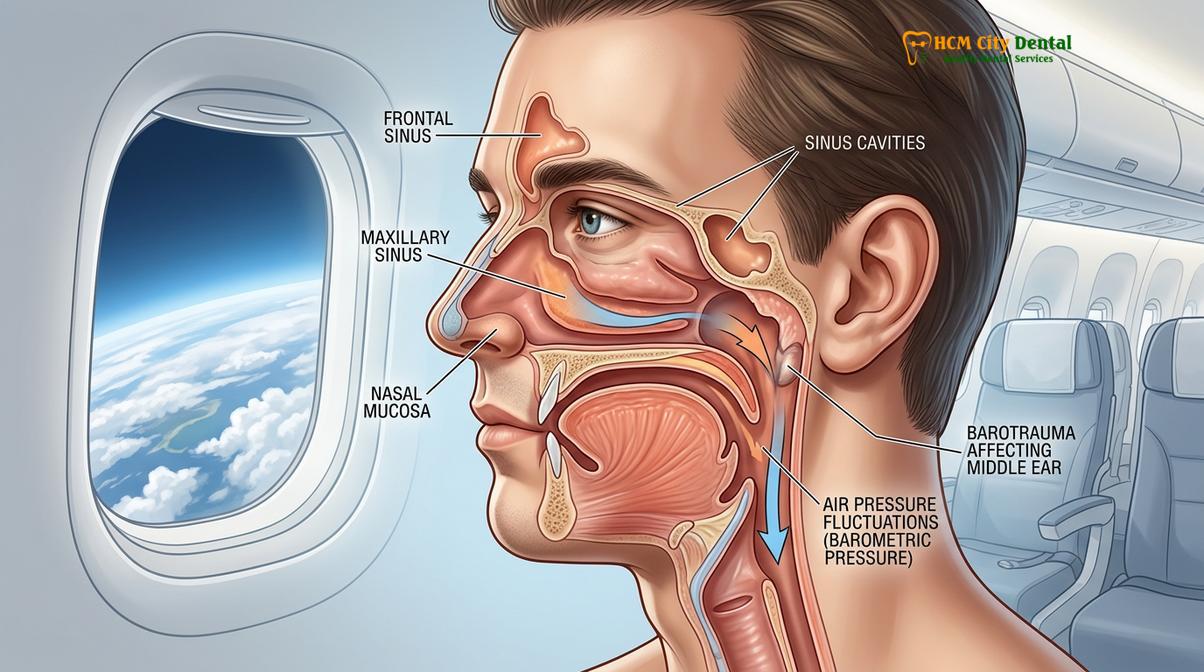
Furthermore, the lower atmospheric pressure results in a decreased partial pressure of oxygen. In a healthy passenger, blood oxygen saturation might drop from 98% to around 92% during a flight. While this mild hypoxia is generally well-tolerated, it becomes a critical concern for patients who have recently undergone sedation dentistry protocols. Sedative medications, particularly benzodiazepines and propofol, are central nervous system depressants. They naturally slow down the respiratory rate and blunt the body’s automatic response to low oxygen levels. If a patient flies while these drugs are still active in their bloodstream, the combination of drug-induced respiratory depression and cabin hypoxia can lead to dangerous drops in oxygen saturation.
Dr. Nguyen Van Cuong, a leading expert in oral surgery, frequently cautions patients about the compounding effects of altitude and anesthesia. He notes that the residual effects of sedatives can mask the early warning signs of hypoxia, making the patient unaware of their compromised respiratory state. This is why a mandatory grounding period is universally recommended to ensure the complete metabolic clearance of all sedative agents before exposing the body to the stresses of aviation.
Flight Safety Timeline: Recommended Waiting Periods by Sedation Level
The safe window for flying depends entirely on the sedation method: zero wait time for nitrous oxide, 24 hours for oral conscious sedation, and 24 to 48 hours for intravenous (IV) sedation or general anesthesia.
The pharmacokinetics of dental sedatives—how the body absorbs, distributes, metabolizes, and excretes the drugs—dictate the required waiting period before a patient can safely fly. Because different sedation modalities utilize different pharmacological agents, the flight safety timeline varies significantly. Understanding these timelines is crucial for patients planning their recovery and travel itineraries.
Nitrous Oxide (Inhalation Sedation)
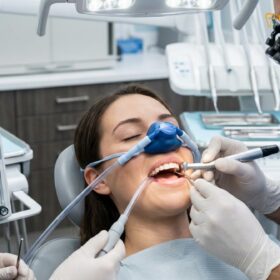
Nitrous oxide, commonly known as laughing gas, is a mild inhalation sedative used extensively in General Dentistry to manage mild to moderate anxiety. The defining characteristic of nitrous oxide is its extremely low blood-gas partition coefficient. This means the gas does not readily dissolve into the bloodstream or bind to tissues. Instead, it is rapidly exhaled through the lungs as soon as the administration ceases and the patient is placed on 100% oxygen for a few minutes. Because nitrous oxide leaves no residual cognitive impairment or respiratory depression, patients are generally cleared to fly on the exact same day, provided the underlying dental procedure itself does not contraindicate travel [2].
Oral Conscious Sedation
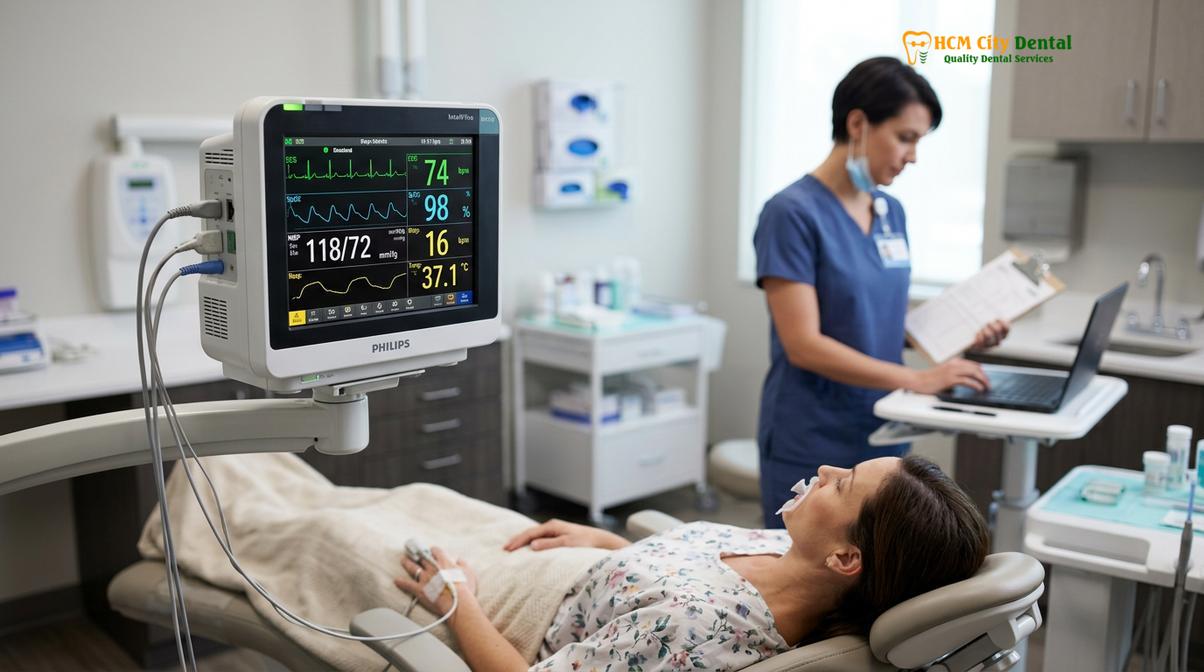
Oral sedation typically involves the administration of benzodiazepines, such as diazepam, lorazepam, or triazolam, taken in pill form prior to the procedure. These medications are metabolized by the liver and have varying half-lives. Diazepam, for instance, has a particularly long half-life and produces active metabolites that can remain in the system for an extended period. Even after the subjective feeling of drowsiness has faded, the patient’s reaction times, judgment, and respiratory drive may still be subtly impaired. Consequently, clinical guidelines mandate a minimum waiting period of 24 hours after taking oral sedatives before engaging in air travel. This ensures the liver has had sufficient time to process and eliminate the medication.
Intravenous (IV) Sedation and General Anesthesia
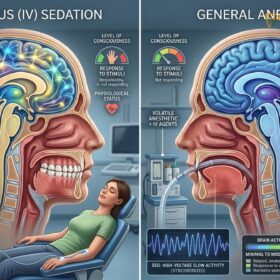
IV sedation delivers medications directly into the bloodstream, allowing for a deeper state of relaxation and amnesia. Drugs commonly used include midazolam, propofol, and fentanyl. While the initial recovery from IV sedation may seem rapid due to the redistribution of the drugs away from the brain, the actual elimination half-life requires much more time. Flying after twilight sleep or deep IV sedation carries the highest risk of in-flight complications. Patients must wait a minimum of 24 to 48 hours before flying. This extended window is non-negotiable, as the combination of residual IV anesthetics and cabin hypoxia poses a severe risk to patient safety [3].
| Sedation Type | Common Medications | Metabolic Clearance | Safe to Fly Timeline |
|---|---|---|---|
| Inhalation (Mild) | Nitrous Oxide | Rapid (via lungs) | Same Day (0 hours) |
| Oral (Moderate) | Diazepam, Triazolam | Hepatic (Liver) | Minimum 24 Hours |
| Intravenous (Deep) | Midazolam, Propofol | Hepatic / Renal | 24 to 48 Hours |
| General Anesthesia | Propofol, Sevoflurane | Complex systemic | 48+ Hours (Consult Doctor) |
Risk of Dehydration, Drowsiness, and Thrombosis on Long Flights
The combination of residual central nervous system depressants, low cabin humidity, and prolonged immobility significantly elevates the risk of dehydration, severe drowsiness, and deep vein thrombosis (DVT) during long-haul flights.
Long-haul flights present a unique set of physiological challenges that are exponentially magnified when a patient is recovering from sedation. One of the most critical concerns is the development of Deep Vein Thrombosis (DVT), a condition where blood clots form in the deep veins of the legs. The aviation environment naturally predisposes passengers to DVT due to prolonged immobility in cramped seating, which causes venous stasis (sluggish blood flow). When a patient flies too soon after receiving oral sedation dentistry or IV anesthesia, the risk skyrockets.
Sedatives induce an unnaturally deep state of sleep. During normal, unmedicated sleep, the brain continuously prompts the body to make micro-movements—shifting weight, adjusting the legs, and changing posture. These movements act as a muscle pump, pushing venous blood back toward the heart. However, residual sedatives suppress this protective mechanism. A sedated patient may remain entirely motionless for hours on end, creating the perfect conditions for blood to pool and coagulate in the lower extremities [4].
Clinical Warning: Deep Vein Thrombosis (DVT)
If you experience sudden swelling, localized warmth, redness, or a deep aching pain in your calf or thigh during or after a flight, seek emergency medical attention immediately. These are hallmark signs of a DVT, which can be life-threatening if the clot breaks loose and travels to the lungs (pulmonary embolism).
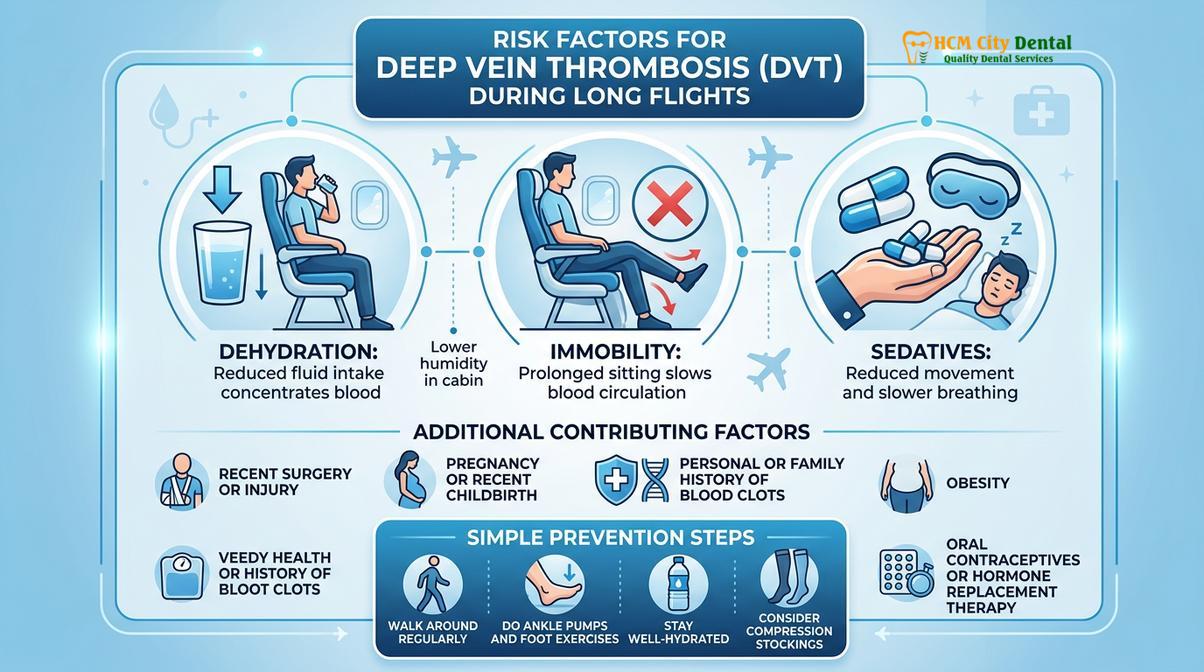
Compounding the risk of DVT is the issue of severe dehydration. The air circulated within a commercial aircraft cabin is drawn from the high-altitude atmosphere, which is virtually devoid of moisture. Cabin humidity levels frequently drop below 20%, which is drier than most deserts. This arid environment causes rapid insensible fluid loss through respiration and skin evaporation. Dehydration leads to hemoconcentration—a thickening of the blood—which further increases its tendency to clot. Patients recovering from dental surgery are often already slightly dehydrated due to pre-operative fasting and post-operative difficulty drinking fluids. Therefore, aggressive hydration with water or electrolyte solutions is a critical component of post-sedation travel care.
Managing Surgical Sockets: Pressure Risks and Pain Control
Barometric pressure fluctuations can dislodge blood clots in recent extraction sites, leading to dry socket or bleeding, while sinus pressure can cause severe pain if the upper jaw was operated on.
While the systemic effects of sedation dictate the overall timeline for safe travel, the localized healing of the surgical site presents its own set of aviation-related challenges. The phrase “plane pressure extraction socket” is frequently searched by patients, and for good reason. The healing of a dental extraction site relies entirely on the formation and stabilization of a blood clot within the empty socket. This clot serves as a biological bandage, protecting the underlying bone and nerves while providing a matrix for new tissue growth.
As discussed earlier, the drop in cabin pressure causes gases to expand. If a patient has undergone a complex extraction, particularly of an upper molar, the surgical site is in very close proximity to the maxillary sinus. In some cases, the roots of the upper teeth extend directly into the sinus cavity. When the tooth is removed, a thin membrane or even a microscopic communication between the mouth and the sinus may exist. As trapped air in the sinus expands during the flight’s ascent, it exerts downward pressure on the extraction socket. This pressure differential can physically push the fragile blood clot out of the socket, resulting in a painful condition known as alveolar osteitis, or dry socket.
“Barometric trauma in the maxillofacial region following recent surgical interventions is a well-documented phenomenon. The expansion of gases in the paranasal sinuses can exert sufficient mechanical force to disrupt early fibrin clots, significantly increasing the incidence of post-operative hemorrhage and delayed wound healing in aviation passengers.” [5]
Furthermore, the stress of travel can exacerbate dental anxiety symptoms, which in turn can elevate blood pressure. Increased systemic blood pressure, combined with the localized effects of altitude, heightens the risk of secondary bleeding from the surgical site. To mitigate these risks, clinicians strongly advise patients to avoid creating any negative pressure in the mouth—such as using straws or forcefully spitting—and to manage pain proactively. Taking prescribed analgesics before the flight boards ensures that the medication reaches peak efficacy just as the aircraft begins its ascent, which is typically when pressure-related discomfort is most acute.
What to Pack in Your Carry-On: Post-Sedation Travel Essentials
A well-prepared carry-on should include prescribed analgesics, sterile gauze, a reusable ice pack, and a copy of your clinical treatment records to manage any unexpected post-operative complications mid-flight.
Preparation is the cornerstone of a safe and comfortable flight following dental surgery. Because access to medical supplies is severely limited at 35,000 feet, patients must pack a comprehensive post-operative care kit in their carry-on luggage. Checked baggage is inaccessible during the flight and is subject to loss or delay, making it an inappropriate place for essential medications or recovery tools.
The foundation of your travel kit should be your prescribed medications. This includes antibiotics, anti-inflammatory drugs (NSAIDs), and any specific pain relievers recommended by your surgeon. It is vital to keep all medications in their original, clearly labeled pharmacy bottles to comply with aviation security regulations and to provide clear information in the event of a medical emergency. Note that if you are managing dental phobia vs anxiety with prescribed anxiolytics for the flight itself, you must discuss this with your surgeon to ensure there are no dangerous drug interactions with your recent sedation.
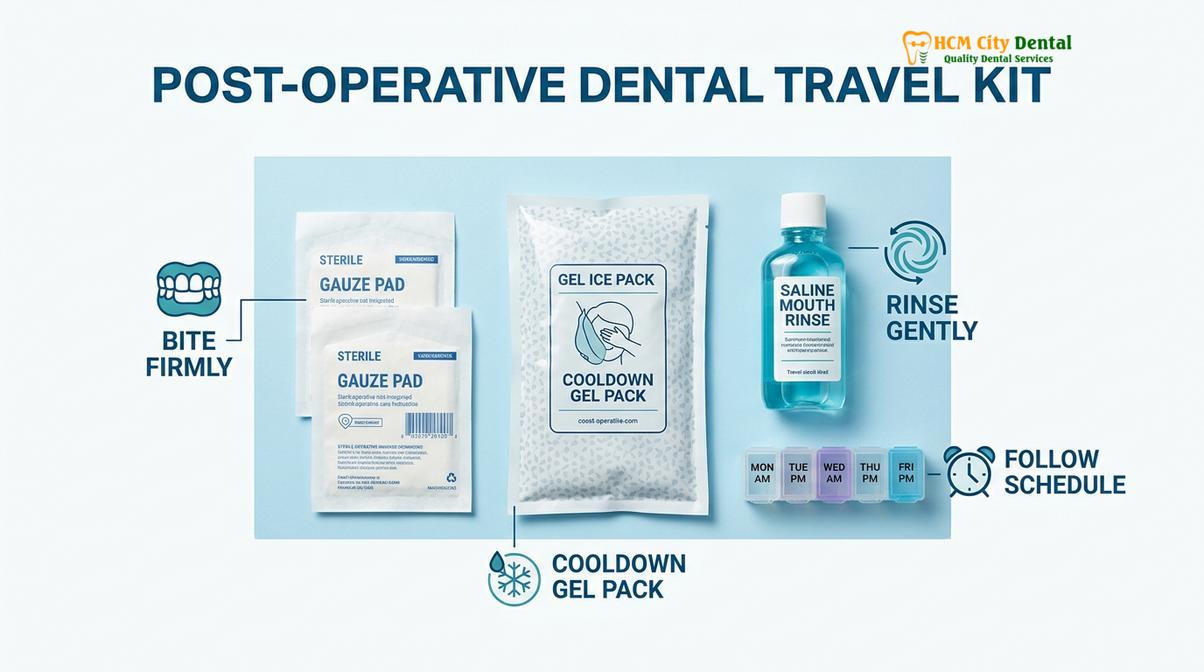
In addition to medications, your carry-on should include an ample supply of sterile gauze pads. If secondary bleeding occurs due to pressure changes, biting down firmly on a folded piece of sterile gauze is the most effective way to achieve hemostasis. Pack a travel-sized bottle of saline solution or a prescribed antimicrobial mouthwash, ensuring the container size complies with the airline’s liquid restrictions (typically under 100ml).
Finally, temperature therapy is highly effective for managing post-operative swelling and discomfort. While traditional ice packs may be confiscated by airport security if they are partially melted, instant chemical cold packs (which activate when squeezed) are generally permitted and are invaluable for in-flight relief. Alternatively, you can pack empty ziplock bags and ask the flight attendant to fill them with ice once you are airborne.
Obtaining a Doctor’s Fit-to-Fly Certificate in Saigon
For international travelers undergoing complex dental surgeries with sedation, securing a formal fit-to-fly certificate from your treating clinician ensures airline compliance and validates your medical readiness for travel.
For dental tourists and expatriates receiving treatment abroad, navigating the logistics of flying home post-surgery requires formal medical documentation. Airlines reserve the right to deny boarding to any passenger who appears medically unfit to travel, particularly if they exhibit signs of recent surgery, facial swelling, or residual drowsiness from sedation. To prevent travel disruptions, obtaining a “Fit-to-Fly” certificate is a critical administrative step.
At HCMC Dental Clinic in Ho Chi Minh City, the protocol for international patients is meticulously structured to ensure safe transit. Before issuing a clearance certificate, the clinical team conducts a comprehensive post-operative evaluation. This assessment verifies that the surgical site is stable, hemostasis (blood clotting) is fully achieved, and all sedative agents have been adequately metabolized. The certificate itself is a formal medical document detailing the nature of the procedure, the type of anesthesia administered, the date of clearance, and the contact information of the treating facility.
Clinical Case Example: Safe Repatriation
An expatriate patient visited HCMC Dental Clinic in Ho Chi Minh City for the surgical extraction of four impacted wisdom teeth under intravenous sedation. Recognizing the patient’s need to fly back to Europe, the clinical team scheduled the procedure 72 hours prior to departure. Following a final evaluation on day three, the patient was issued a fit-to-fly certificate, ensuring a smooth boarding process and a complication-free 14-hour flight home.
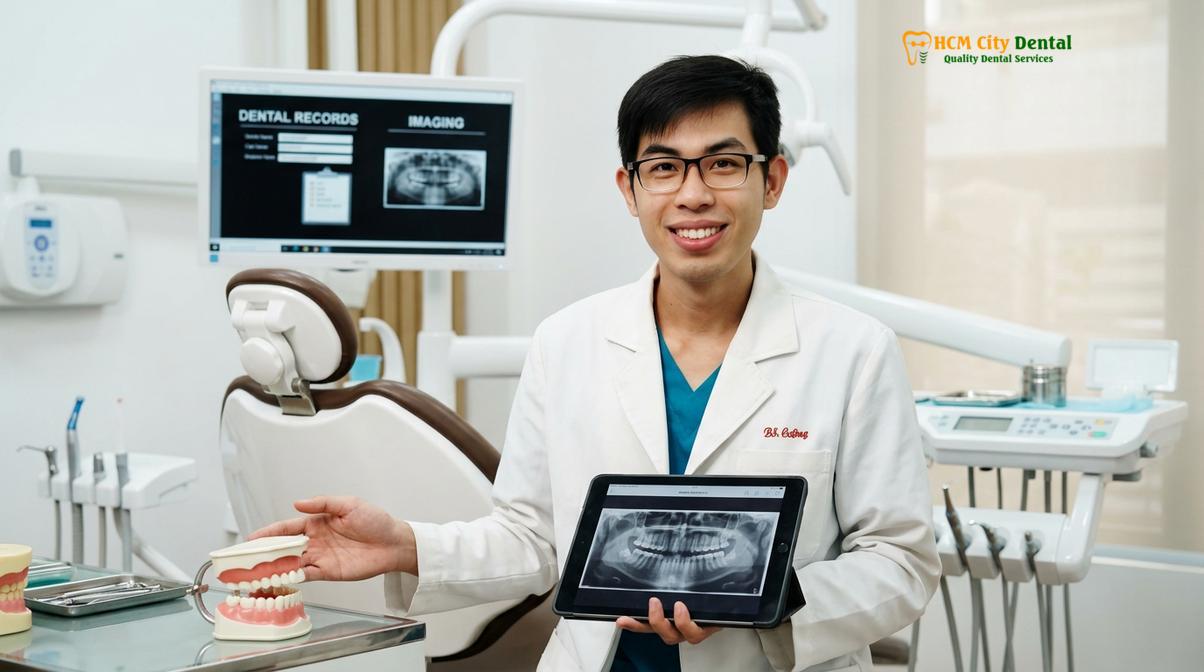
Dr. Nguyen Van Cuong emphasizes that a fit-to-fly certificate is not merely a travel pass; it is a clinical endorsement of the patient’s physiological stability. Patients who attempt to fly prematurely, bypassing this evaluation, risk severe complications that flight crews are ill-equipped to handle. If you are planning to combine travel with complex dental care, always communicate your flight itinerary to your surgeon during the initial consultation so that a safe, realistic treatment timeline can be established.
When to See a Doctor (Important Clinical Considerations)
Immediate medical intervention is required if you experience uncontrolled bleeding, severe facial swelling, respiratory distress, or signs of deep vein thrombosis following a flight.
While adhering to the recommended waiting periods and preparation guidelines minimizes risk, complications can still arise. It is crucial to be able to distinguish between normal post-operative discomfort and signs of a medical emergency. Normal symptoms during a flight may include mild throbbing at the surgical site, minor swelling, and slight stiffness in the jaw. These can typically be managed with over-the-counter analgesics and cold compresses.
However, you should seek immediate medical attention—either by notifying the flight crew mid-air or visiting an emergency room upon landing—if you experience any of the following red-flag symptoms:
- Uncontrolled Hemorrhage: Bleeding that rapidly fills the mouth and does not subside after 30 to 45 minutes of continuous, firm pressure with sterile gauze.
- Respiratory Distress: Shortness of breath, chest pain, or a sudden drop in oxygen saturation, which could indicate a pulmonary embolism or severe reaction to residual sedatives.
- Signs of DVT: Acute pain, swelling, redness, or warmth in the calf or thigh, particularly after a long-haul flight.
- Severe Infection Signs: A sudden spike in fever, chills, or rapidly spreading facial swelling that extends toward the eye or down the neck.
If you have any doubts about your recovery trajectory or if you are struggling with how to overcome dental fear related to post-operative complications, contact your dental provider immediately for professional guidance.
Frequently Asked Questions
How long after dental sedation can I fly?
The required waiting period depends entirely on the type of sedation administered. Patients can generally fly immediately after receiving nitrous oxide, but must wait 24 hours after oral sedation, and 24 to 48 hours after intravenous (IV) sedation or general anesthesia to ensure all medications have cleared the system. Premature flying can lead to severe drowsiness and respiratory issues.
Can I fly on the same day as receiving nitrous oxide?
Yes, it is generally safe to fly on the same day after receiving nitrous oxide (laughing gas). Because this mild inhalation sedative is rapidly expelled from the lungs within minutes of stopping the gas flow, it leaves no residual cognitive or respiratory depression that would contraindicate air travel. However, the underlying dental procedure itself must also be evaluated for flight safety.
Does flying increase the risk of bleeding after dental surgery?
Yes, flying shortly after dental surgery can increase the risk of bleeding. The lower barometric pressure in an aircraft cabin can cause trapped gases to expand, which may dislodge the fragile blood clot forming in the extraction socket, potentially leading to secondary bleeding or a painful dry socket. Avoiding negative pressure in the mouth is essential.
Is it safe to sleep on a plane after receiving IV sedation?
Sleeping on a plane immediately after IV sedation carries elevated risks and is not recommended. Residual sedatives can cause an unnaturally deep sleep with reduced spontaneous movement, which, combined with the cramped seating and low cabin humidity, significantly increases the risk of developing deep vein thrombosis (DVT). Patients must wait until the sedatives are fully metabolized.
What should I do if I feel pain or bleeding while flying?
If you experience pain or bleeding mid-flight, immediately bite down firmly on sterile gauze for 30 minutes to apply continuous pressure. Take your prescribed over-the-counter analgesics, apply a cold compress to the outside of your cheek, and notify the flight attendants if the bleeding becomes heavy or uncontrollable. Do not rinse your mouth forcefully, as this can worsen the bleeding.
References
- Journal of Oral and Maxillofacial Surgery. Patient safety in dental sedation and aviation medicine. (2021).
- International Journal of Oral and Maxillofacial Surgery. Intravenous conscious sedation protocols for complex oral surgery. (2020).
- British Dental Journal. Nitrous oxide inhalation sedation in dentistry: a review of safety and clearance. (2019).
- Aviation, Space, and Environmental Medicine. The effects of cabin altitude on post-operative recovery and hemodynamics. (2022).
- Clinical Oral Investigations. Safety and recovery profiles of conscious sedation vs general anesthesia in traveling patients. (2018).
For pricing, booking, and a free clinical assessment, visit our Sedation Dentistry service page at HCMC Dental Clinic in Ho Chi Minh City.