Sedation dental implants combine advanced surgical placement with pharmacological relaxation, aiming to provide a comfortable, anxiety-free experience. While local anesthesia blocks nociceptive pain signals, sedation manages fear, controls gag reflexes, and allows patients to remain perfectly still during complex procedures like bone grafting or full-arch restorations. By stabilizing the patient’s physiological response, clinicians can work toward optimal surgical outcomes with minimized intraoperative stress[1].
Clinical Summary:
Sedation dentistry for implantology utilizes nitrous oxide, oral sedatives, or intravenous (IV) medications to depress the central nervous system, significantly reducing patient anxiety and motor responses during surgery. This pharmacological approach is highly indicated for patients undergoing extensive procedures such as sinus augmentations, block grafts, or full-arch reconstructions. By stabilizing hemodynamics and mitigating the acute physiological stress response, sedation enhances the efficacy of local anesthetics and provides optimal, controlled surgical conditions. Continuous monitoring of vital signs by trained professionals ensures patient safety while facilitating efficient, highly precise implant angulation and placement.
Key Takeaways:
- Sedation manages severe dental anxiety and minimizes involuntary movement, which is crucial for precise implant angulation.
- Anesthesia options range from mild nitrous oxide inhalation to moderate intravenous (IV) twilight sleep.
- IV sedation allows for the comfortable completion of complex, multi-implant surgeries and bone grafting in a single visit.
- A dedicated anesthesiologist or trained specialist continuously monitors vital signs throughout the surgical procedure.
- Pharmacological relaxation helps stabilize blood pressure, reducing cardiovascular stress during extensive oral surgery.
Why Sedation is Recommended for Dental Implant Placement
Sedation is recommended to manage severe dental anxiety, suppress the gag reflex, and maintain hemodynamic stability, allowing the oral surgeon to place implants with maximum precision.
The prospect of undergoing oral surgery can trigger significant psychological distress in many patients. When considering the placement of titanium posts into the jawbone, the anticipation of the procedure often causes more discomfort than the surgery itself. While modern local anesthetics are highly effective at completely blocking pain, they do not address the psychological components of fear, the physical sensation of pressure, or the auditory stimuli of surgical instruments. Clinical studies indicate that managing these psychological factors through conscious sedation significantly improves overall patient satisfaction and compliance[4].
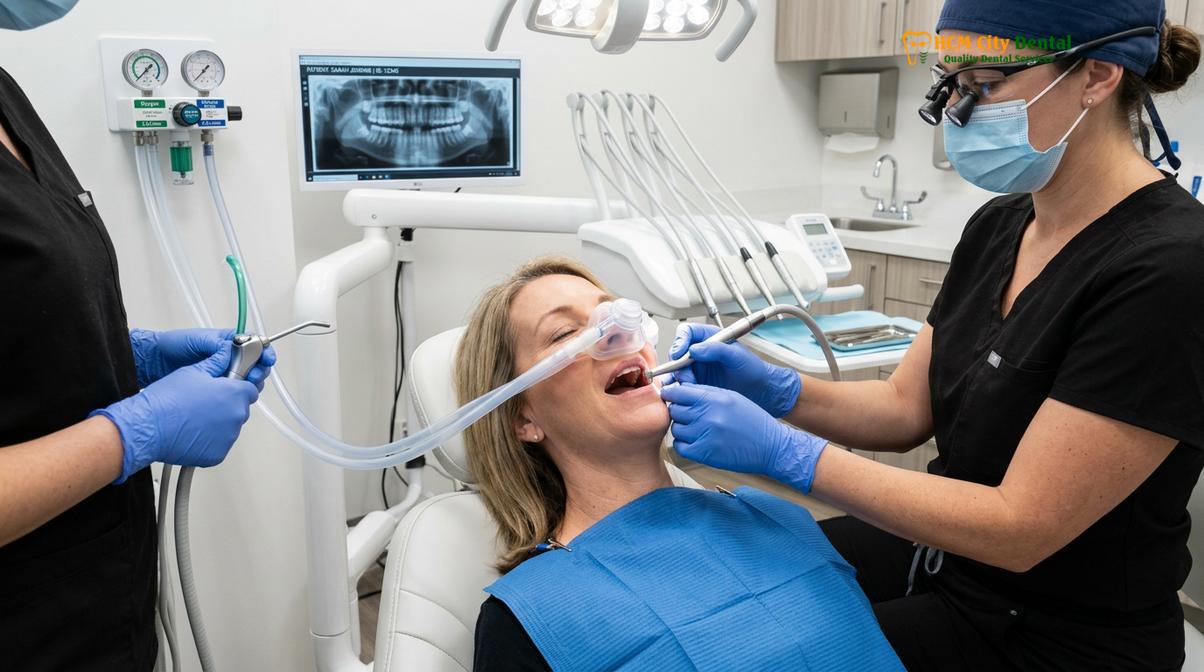
From a physiological standpoint, severe anxiety triggers the sympathetic nervous system, leading to a “fight or flight” response. This acute stress reaction causes the adrenal glands to release endogenous epinephrine and cortisol, resulting in tachycardia (rapid heart rate), hypertension (elevated blood pressure), and hyperventilation. When a patient is in this heightened state of arousal, achieving profound local anesthesia can actually become more difficult. By administering sedative agents, clinicians can blunt this sympathetic response, stabilizing the patient’s hemodynamics and ensuring that the local anesthesia remains highly effective throughout the procedure.
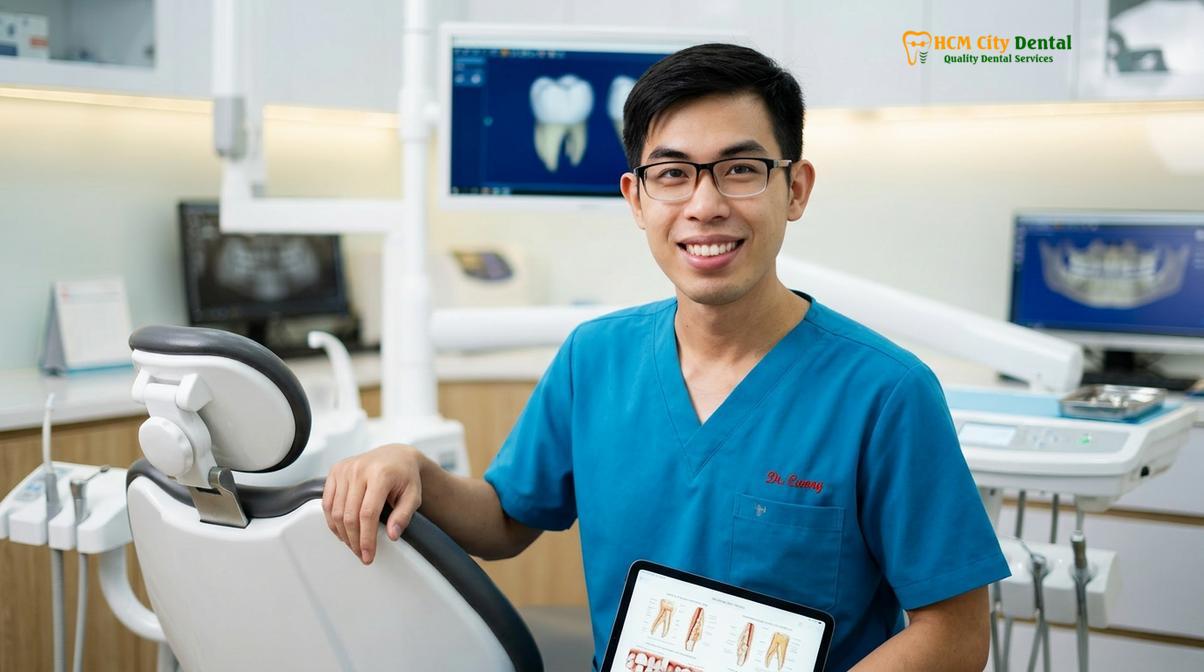
Dr. Nguyen Van Cuong, a leading expert in implantology, frequently emphasizes that patient comfort is inextricably linked to surgical success. When a patient is relaxed, the surgical team can work more efficiently, often reducing the overall time required in the chair. For patients who have avoided restoring their missing teeth due to deep-seated fears, understanding the clinical differences between dental phobia and anxiety and how sedation addresses them is the first step toward regaining a healthy, functional smile.
“The primary goal of sedation in implantology is not merely to induce sleep, but to create a physiologically stable and psychologically relaxed state. This allows the surgical team to execute complex, millimeter-precise procedures without the variables of patient movement or stress-induced hemodynamic fluctuations.”
Surgical Benefits: Staying Still During Sinus Lifts and Grafting
Minimizing patient movement is critical during delicate bone grafting and sinus lift procedures, where millimeter precision dictates the success of the implant foundation.
Not all dental implant procedures are straightforward single-tooth replacements. Many patients who have suffered from long-term tooth loss also experience significant bone resorption. When teeth are missing, the alveolar bone that once supported them begins to atrophy due to a lack of biomechanical stimulation. In the posterior maxilla (the upper back jaw), this bone loss is often compounded by the pneumatization, or expansion, of the maxillary sinus. Before an implant can be safely placed in this region, a sinus lift (sinus floor elevation) is frequently required to create sufficient vertical bone height.
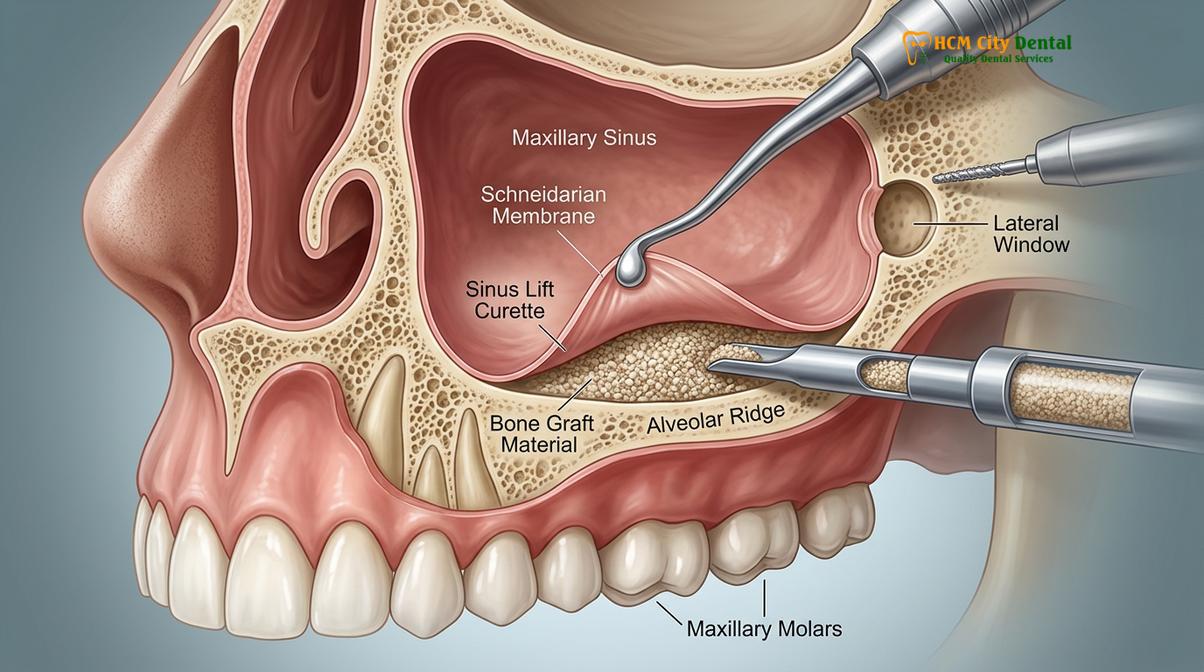
A sinus lift is a highly delicate surgical procedure. The surgeon must create a small lateral window in the jawbone and carefully elevate the Schneiderian membrane—the thin, fragile lining of the sinus cavity—without tearing or perforating it. During the elevation of this membrane, absolute patient stillness is mandatory. A sudden flinch, a sneeze, or a reflexive movement of the head can cause the surgical instrument to puncture the membrane. Sedation protocols specifically designed for complex oral surgery help mitigate these risks by dulling motor responses while maintaining spontaneous respiration[2].
For patients undergoing these extensive preparatory surgeries, the use of oral sedation medications or intravenous protocols ensures that the experience is not only tolerable but entirely comfortable. The amnesic properties of many sedative drugs also mean that the patient will have little to no memory of the drilling, the pressure, or the duration of the grafting procedure, which significantly reduces the likelihood of developing postoperative psychological trauma.
IV Sedation (Twilight Sleep) for Single and Multiple Implants
Intravenous (IV) sedation delivers rapid, titratable relaxation, placing the patient in a state of twilight sleep where they remain responsive but deeply relaxed and amnesic.
Intravenous (IV) sedation, often referred to as “twilight sleep,” is widely considered the gold standard for moderate to complex dental implant surgeries. Unlike oral sedatives, which must pass through the gastrointestinal tract and liver before taking effect, IV medications are administered directly into the bloodstream. This route of administration offers several distinct clinical advantages, the most significant being the rapid onset of action and the ability to precisely titrate the dosage. The attending clinician or anesthesiologist can adjust the level of sedation minute by minute, deepening it during the more stimulating parts of the surgery and lightening it during the suturing phase.
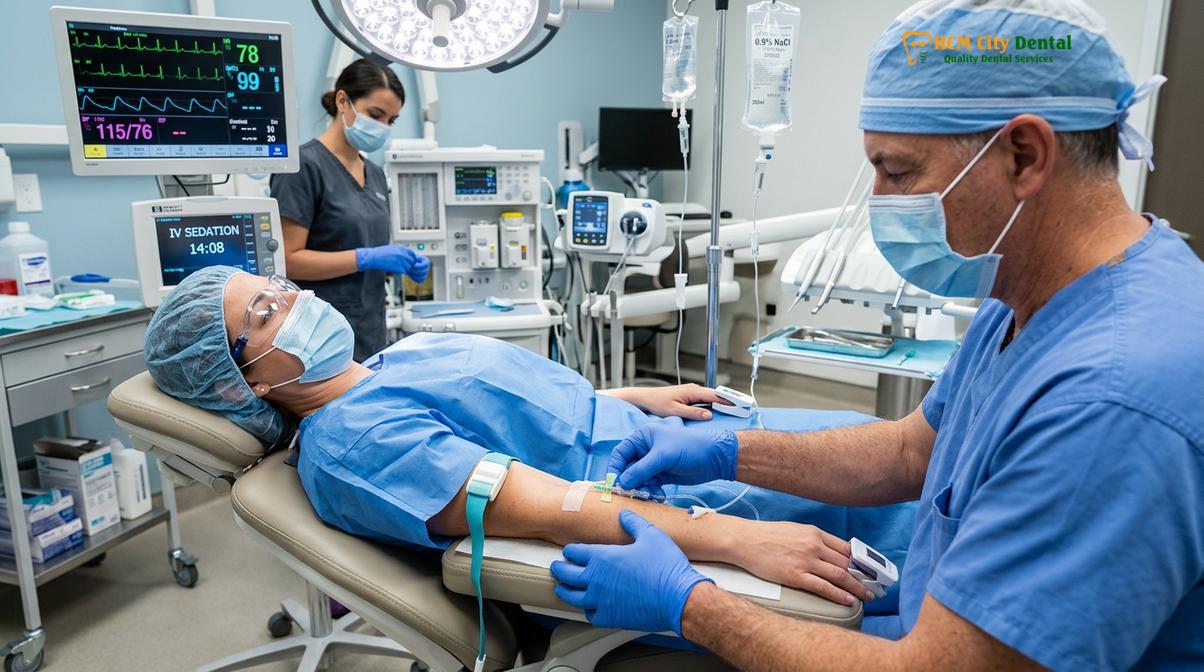
The pharmacological agents most commonly utilized in IV sedation for dentistry include benzodiazepines, which provide excellent anxiolysis (anxiety reduction) and anterograde amnesia. This amnesic effect is highly desirable, as it prevents the brain from consolidating new memories during the time the drug is active. Patients often perceive a two-hour surgery as having lasted only a few minutes. Propofol, an ultra-short-acting sedative-hypnotic agent, is also frequently used due to its rapid clearance and smooth recovery profile, allowing patients to wake up feeling clear-headed rather than groggy[5].
| Sedation Modality | Administration Route | Level of Sedation | Amnesic Effect | Best Suited For |
|---|---|---|---|---|
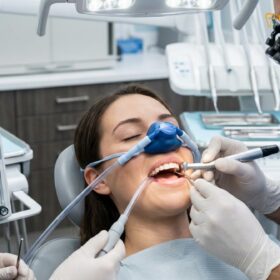
| Nitrous Oxide (Laughing Gas) | Inhalation via nasal mask | Minimal (Anxiolysis) | None to Mild | Single implants, mild anxiety, quick recovery |
| Oral Conscious Sedation | Enteral (Pill/Liquid) | Mild to Moderate | Moderate | Needle phobia, moderate anxiety, longer procedures |
| Intravenous (IV) Sedation | Parenteral (Direct to vein) | Moderate to Deep | Profound | Multiple implants, bone grafting, severe phobia |
Safety is the paramount concern during any procedure involving altered states of consciousness. During IV sedation for dental implant placement, the patient is connected to comprehensive monitoring equipment. This includes continuous electrocardiography (ECG) to monitor heart rhythm, pulse oximetry to measure blood oxygen saturation (SpO2), capnography to monitor end-tidal carbon dioxide (ventilation), and automated non-invasive blood pressure cuffs. Nitrous oxide inhalation sedation also maintains an excellent safety record when administered with proper scavenging systems and oxygen fail-safes[3].
All-on-4 and All-on-6 Full Arch Reconstructions Under Sedation
Full arch reconstructions require extensive surgical time and bone leveling, making moderate to deep sedation essential for patient endurance and surgical efficiency.
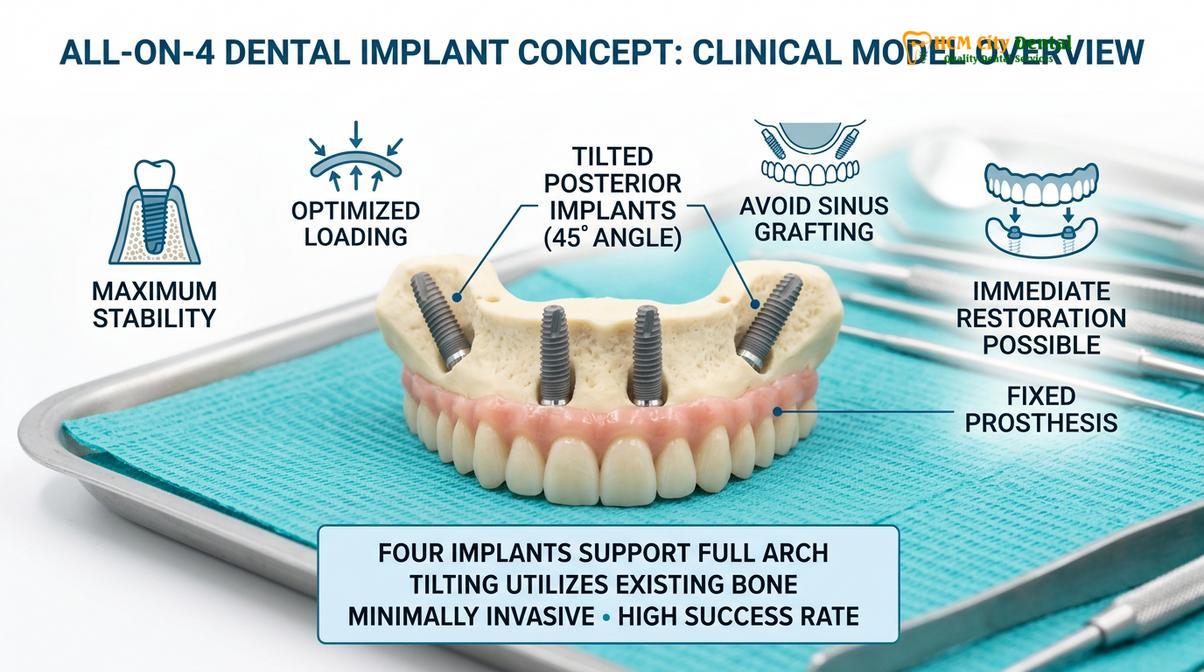
The All-on-4 and All-on-6 treatment concepts represent the pinnacle of modern implant dentistry, offering patients with terminal dentition or complete edentulism a fixed, non-removable prosthesis supported by strategically placed implants. These procedures are highly complex and involve multiple surgical phases executed in a single appointment. The workflow typically includes the atraumatic extraction of any remaining failing teeth, aggressive alveoloplasty (the surgical reshaping and leveling of the jawbone to create a flat foundation), the precise placement of four to six titanium implants, and finally, the immediate loading of a provisional acrylic bridge.
Clinical Case Example: A 62-year-old patient presented to HCMC Dental Clinic in Ho Chi Minh City with severe periodontal disease and terminal dentition. The treatment plan required full-mouth extractions and a dual-arch All-on-6 reconstruction. Due to the patient’s severe dental anxiety and the anticipated 6-hour surgical duration, the procedure was performed under continuous IV sedation administered by a dedicated anesthesiologist. The patient remained hemodynamically stable throughout the surgery, experienced profound amnesia, and reported zero intraoperative discomfort, allowing the surgical team to achieve optimal implant torque and immediate provisionalization.
Because the posterior implants in an All-on-4 configuration are often tilted at angles up to 45 degrees to avoid critical anatomical structures like the maxillary sinus or the inferior alveolar nerve, the surgical preparation is extensive. The vibration of the surgical handpieces, the pressure of the torque wrench during implant insertion, and the sheer duration of the procedure make this an incredibly demanding experience for an awake patient. Consequently, performing full-arch reconstructions under sedation dentistry protocols is considered the standard of care to ensure clinical success and patient compliance.
Implant + Anesthesia Pricing Packages at HCMC Dental
Comprehensive pricing packages bundle the cost of surgical implant placement with the necessary anesthesia, providing transparent and predictable treatment expenses.
Understanding the financial investment required for restorative dentistry is a crucial part of the treatment planning process. At HCMC Dental Clinic, we strive to provide transparent pricing structures that encompass both the surgical phases and the required pharmacological support. The cost of sedation varies depending on the modality chosen. Nitrous oxide inhalation typically incurs a minimal flat fee per session, making it a highly accessible option for straightforward, single-implant placements.
For more complex procedures requiring intravenous (IV) sedation, the costs are generally calculated based on the hourly rate of the attending anesthesiologist and the specific medications utilized. To simplify this for our patients, HCMC Dental Clinic offers bundled “Implant + Anesthesia Pricing Packages.” These packages are particularly advantageous for patients undergoing extensive full-arch reconstructions, such as All-on-4 or All-on-6, as they consolidate the fees for extractions, bone grafting, implant placement, provisional prosthetics, and continuous IV sedation monitoring into a single, predictable cost structure. This approach ensures that patients can focus entirely on their recovery without concerns about unexpected ancillary fees.
How Sedation Reduces Post-Operative Swelling and Recovery Time
By controlling the body’s acute stress response and allowing for the administration of intraoperative anti-inflammatory medications, sedation can significantly decrease postoperative swelling.
A lesser-known but highly significant clinical benefit of intravenous sedation is its positive impact on the postoperative healing phase. Swelling (edema) and pain following dental implant surgery are primarily driven by the body’s inflammatory response to surgical trauma. When tissue is incised and bone is drilled, cell membrane phospholipids release arachidonic acid, which is then converted by cyclooxygenase (COX) enzymes into prostaglandins. These prostaglandins mediate inflammation, causing blood vessels to dilate and become permeable, leading to fluid accumulation and swelling.
When a patient undergoes surgery under local anesthesia alone, the psychological stress and physical discomfort can elevate systemic cortisol and catecholamine levels, which can exacerbate the inflammatory cascade. Sedation mitigates this by keeping the patient in a deep state of relaxation, thereby blunting the neuroendocrine stress response. Furthermore, the intravenous line established for sedation provides direct access for the administration of potent intraoperative medications. Anesthesiologists frequently administer IV corticosteroids and non-steroidal anti-inflammatory drugs (NSAIDs) during the procedure. According to guidelines established by the Vietnam Odonto-Stomatology Association (VOSA), integrating these pharmacological protocols during sedation significantly reduces postoperative edema and improves the overall recovery trajectory[6].
When to Consult a Specialist: Important Clinical Notes
While sedation is highly beneficial, a thorough pre-anesthetic medical evaluation is mandatory to identify any contraindications and ensure patient safety.
Clinical Warning: Sedation dentistry is highly safe when performed by trained professionals, but it is not suitable for everyone. Patients with severe obstructive sleep apnea (OSA), uncontrolled cardiovascular disease, or those taking certain central nervous system depressants must undergo a rigorous medical clearance before receiving intravenous anesthesia.
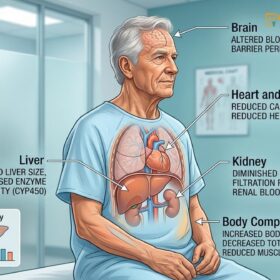
Before proceeding with any form of conscious sedation, patients must undergo a comprehensive medical history review and physical assessment. It is crucial to consult with your dental specialist and anesthesiologist if you have underlying systemic conditions. Patients with severe obstructive sleep apnea (OSA), chronic obstructive pulmonary disease (COPD), or morbid obesity may be at a higher risk for airway compromise during moderate to deep sedation. In such cases, the clinical team may need to adjust the sedation modality, utilize advanced airway management techniques, or opt for treatment in a hospital setting rather than a private clinic.
Additionally, patients must disclose all current medications, including over-the-counter supplements and herbal remedies, as these can interact with sedative agents. For instance, certain antidepressants, anxiolytics, or even grapefruit juice can alter the metabolism of benzodiazepines, leading to prolonged sedation or unexpected respiratory depression. Recognizing the clinical signs of dental anxiety early allows the dental team to plan the appropriate sedation protocol well in advance, ensuring a safe and seamless surgical experience.
“Patient safety in sedation dentistry relies entirely on rigorous preoperative screening. Identifying potential airway challenges and systemic comorbidities before the day of surgery is the most critical step in preventing intraoperative complications.”
If you are considering restoring your smile but struggle with dental fear, contact HCMC Dental Clinic in Ho Chi Minh City today. Our dedicated team of specialists and anesthesiologists will work with you to design a personalized sedation plan, ensuring your implant journey is as comfortable and stress-free as possible.
References
- Journal of Oral and Maxillofacial Surgery. Patient safety in dental sedation and anesthesia.
- International Journal of Oral and Maxillofacial Surgery. Intravenous conscious sedation protocols for complex oral surgery.
- British Dental Journal. Nitrous oxide inhalation sedation in dentistry: a review of safety.
- Journal of the American Dental Association. Patient satisfaction and anxiety levels under conscious sedation.
- Clinical Oral Investigations. Safety and recovery profiles of conscious sedation vs general anesthesia.
- Vietnam Odonto-Stomatology Association (VOSA). Guidelines on sedation and anesthesia in dental implantology.
For pricing, booking, and a free clinical assessment, visit our Sedation Dentistry service page at HCMC Dental Clinic in Ho Chi Minh City.