When you experience wisdom tooth coming through pain, it typically manifests as a dull ache, jaw stiffness, or tender gums at the back of your mouth. This discomfort occurs as the third molars push through dense gum tissue, often requiring clinical evaluation to prevent impaction or infection.
Clinical Summary:
Wisdom tooth eruption pain is a common adult dental issue caused by third molars penetrating the gingival tissue. While mild, intermittent soreness is a normal physiological response, severe throbbing, facial swelling, or trismus indicates potential impaction or pericoronitis. Clinical management ranges from conservative home care using NSAIDs and saline rinses to surgical extraction if the jaw lacks sufficient space. Early radiographic assessment is critical to prevent damage to adjacent second molars and surrounding bone structures.
Key Takeaways:
- Eruption discomfort typically presents as localized pressure and mild gingival inflammation.
- Intermittent flare-ups are normal, but persistent pain suggests impaction or infection.
- Warm saline rinses and over-the-counter anti-inflammatories provide effective temporary relief.
- Pericoronitis, an infection of the gum flap covering the tooth, requires immediate clinical intervention.
- Panoramic X-rays are essential to determine the exact trajectory and available space for the emerging molars.
Signs Your Wisdom Teeth Are Coming Through
The primary signs of emerging wisdom teeth include localized gum tenderness, a dull ache in the posterior jaw, and a sensation of pressure against adjacent teeth.
The development and emergence of the third molars represent the final stage of adult dentition. Unlike other permanent teeth that erupt during childhood while the jaw is still actively growing, wisdom teeth typically begin their descent in the late teenage years or early twenties. Because the jawbone has often reached its maximum size by this time, the available space in the posterior region is frequently insufficient to accommodate these large molars. As a result, the process of wisdom teeth coming in is rarely seamless and is frequently accompanied by a distinct set of physical symptoms.
The initial physiological response to an erupting wisdom tooth is localized inflammation. As the crown of the tooth pushes upward, it exerts continuous mechanical pressure on the overlying gingival tissue (gums) and the surrounding alveolar bone. This pressure stimulates pain receptors in the area, leading to the characteristic dull, throbbing ache that many patients report. You may notice that the gums at the very back of your mouth feel unusually tender to the touch, and they may appear red or slightly swollen when examined in a mirror.
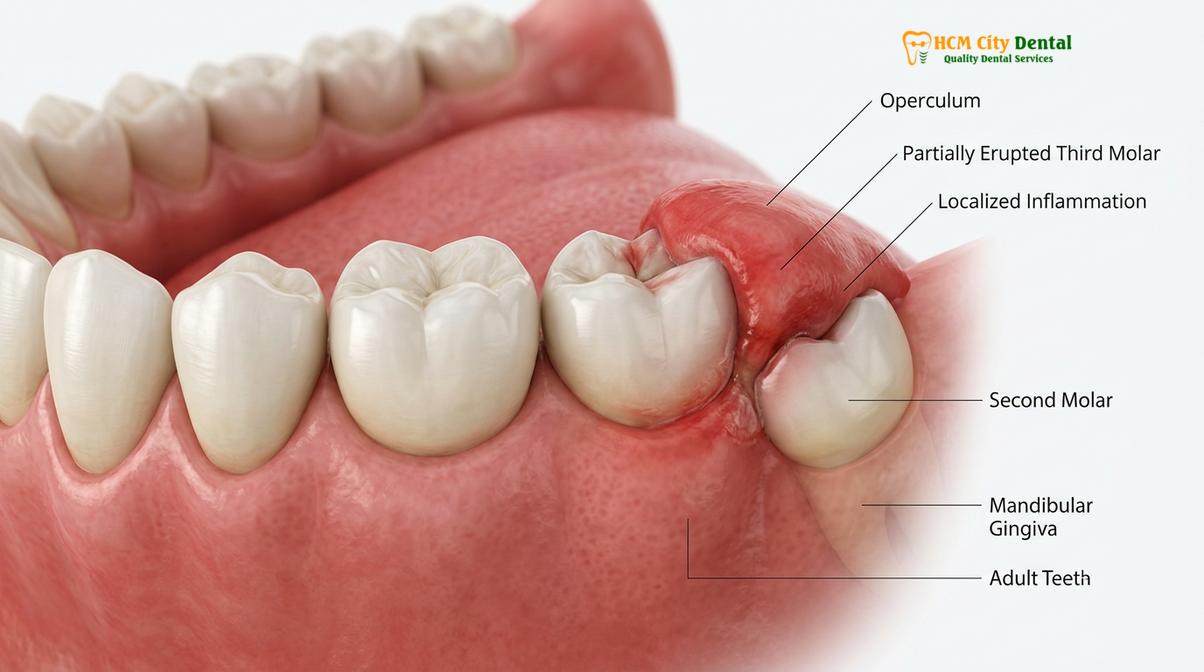
Beyond localized gum tenderness, the pressure exerted by the emerging tooth can have a cascading effect on the surrounding oral structures. It is common to experience a sensation of crowding or pressure against the adjacent second molars. While modern dental literature debates whether erupting wisdom teeth possess enough force to cause anterior crowding (shifting of the front teeth), the localized pressure against the neighboring molar is undeniable and can cause significant discomfort[1]. Furthermore, the inflammation can trigger muscle guarding in the jaw, leading to mild stiffness or difficulty opening the mouth fully, a condition known clinically as mild trismus.
Referred pain is another frequent hallmark of this process. The trigeminal nerve, which supplies sensation to the teeth and jaws, has multiple branches that serve the face and head. Consequently, the intense localized pressure in the posterior mandible or maxilla can radiate along these nerve pathways. Patients frequently report experiencing unexplained tension headaches, earaches, or pain radiating down the side of the neck, all of which can be traced back to the erupting third molar.
How Long Does Wisdom Tooth Eruption Pain Last?
Normal eruption pain typically lasts for a few days to a couple of weeks per flare-up, recurring intermittently over several months as the tooth slowly emerges.
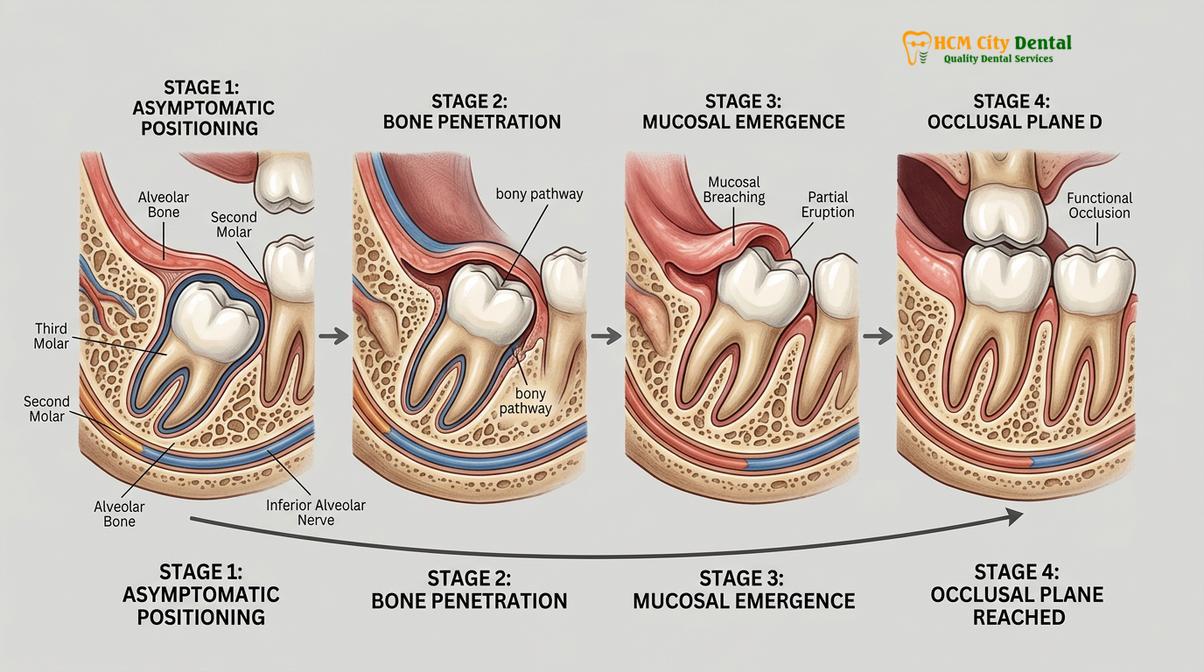
Understanding the timeline of wisdom tooth eruption pain requires an appreciation of how teeth actually move through bone and tissue. Tooth eruption is not a continuous, uninterrupted movement; rather, it occurs in distinct phases of active growth followed by periods of rest. During an active phase, the tooth pushes against the overlying bone and gum tissue, triggering an inflammatory response and the associated discomfort. Once the tooth reaches a temporary resting phase, the inflammation subsides, and the pain dissipates.
Because of this stop-and-start mechanism, patients rarely experience continuous pain for months on end. Instead, you are likely to experience flare-ups that last anywhere from three days to two weeks. During these flare-ups, the gums may feel particularly tender, and chewing on that side of the mouth may become difficult. After the active phase concludes, you might experience weeks or even months of complete comfort before the next growth spurt initiates another cycle of pain.
“Patients often delay seeking care because their wisdom tooth pain disappears after a few days, leading them to believe the problem has resolved. However, this intermittent pain is simply the natural cycle of eruption. Without a radiographic assessment, we cannot determine if the tooth is actually making progress or if it is hopelessly impacted against the adjacent bone.”
— Dr. Nguyen Van Cuong, Lead Surgeon at HCMC Dental Clinic
The total duration of this intermittent process varies wildly among individuals. For some, the teeth may fully emerge through the gums over a period of six to twelve months. For others, particularly those with partial impactions where the tooth is angled improperly, the tooth may never fully erupt. In these cases, the cycle of inflammation and pain can persist for years until clinical intervention is sought. The density of the jawbone also plays a role; mandibular (lower) wisdom teeth often cause more prolonged and severe pain than maxillary (upper) wisdom teeth due to the denser nature of the lower jawbone.
Immediate Home Remedies for Wisdom Tooth Pain
Temporary relief can be achieved using over-the-counter NSAIDs like ibuprofen, warm saltwater rinses to reduce bacterial load, and cold compresses to minimize facial swelling.
When you are in the midst of an active eruption flare-up, finding effective ways on how to relieve wisdom tooth pain becomes the immediate priority. While home remedies cannot correct an anatomical impaction or cure a severe infection, they are highly effective at managing the acute inflammatory response and providing comfort until you can be evaluated by a dental professional.
Pharmacological management is typically the first line of defense. Non-steroidal anti-inflammatory drugs (NSAIDs), such as ibuprofen, are particularly effective for dental pain. Unlike standard analgesics that only block pain signals, NSAIDs actively inhibit the production of prostaglandins—the chemicals responsible for causing inflammation and swelling in the gum tissue[2]. Taking ibuprofen as directed on the packaging can significantly reduce both the throbbing ache and the localized gingival swelling. For patients who cannot tolerate NSAIDs due to gastrointestinal issues or other medical contraindications, paracetamol (acetaminophen) serves as a viable alternative for pain modulation, though it lacks the anti-inflammatory benefits.
Non-pharmacological approaches are equally important in managing the discomfort. A warm saltwater rinse is one of the most universally recommended home treatments in dentistry. By dissolving half a teaspoon of salt in a cup of warm water and gently swishing it around the affected area, you create a hypertonic environment. This osmotic effect helps draw excess fluid out of the swollen gum tissues, reducing pressure. Furthermore, the saline solution acts as a mild antiseptic, flushing away food debris and reducing the bacterial load around the partially erupted tooth, which is crucial for preventing infection.
Clinical Warning: Never place a crushed aspirin tablet directly against the gums adjacent to the aching tooth. Aspirin is highly acidic and will cause a severe chemical burn on the delicate mucosal tissue, exacerbating your pain. Additionally, avoid applying heat packs to the outside of your face, as heat increases blood flow and can dramatically worsen swelling and promote the spread of infection.
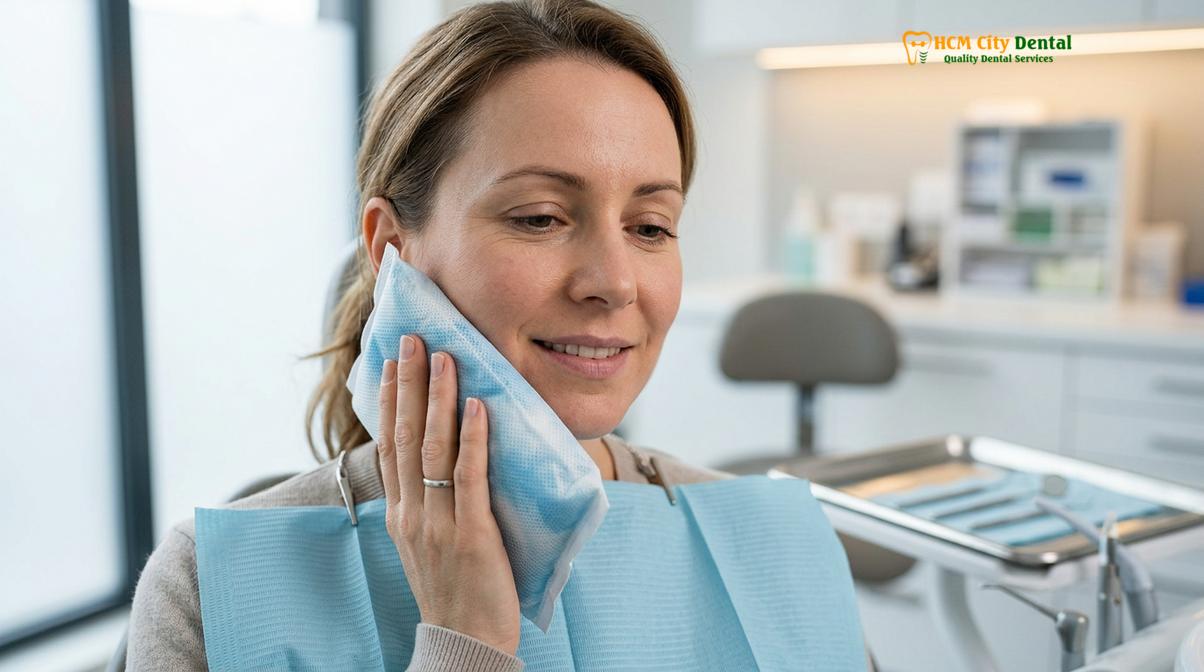
For external relief, cold therapy is highly beneficial. Applying an ice pack or a cold compress wrapped in a thin towel to the outside of the cheek for 15-minute intervals causes vasoconstriction—the narrowing of blood vessels. This reduces blood flow to the inflamed area, thereby minimizing facial swelling and temporarily numbing the localized nerve endings.
Many patients also inquire about teething pain adults and whether over-the-counter topical gels are appropriate. Products containing benzocaine can be applied directly to the inflamed gums to provide a temporary numbing effect. While these gels can offer brief respite, particularly before meals or at bedtime, their efficacy is short-lived as saliva quickly washes the active ingredients away. They should be used sparingly and strictly according to the manufacturer’s instructions.
How to Identify an Infected Wisdom Tooth
An infected wisdom tooth, or pericoronitis, is characterized by severe, throbbing pain, visible pus discharge, foul breath, and difficulty opening the mouth fully.
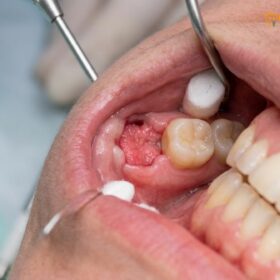
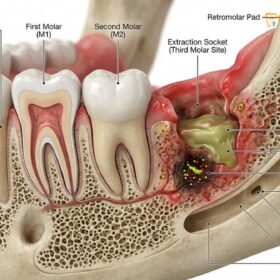
Differentiating between normal eruption discomfort and a pathological infection is a critical skill for any patient experiencing wisdom tooth issues. When a wisdom tooth only partially emerges through the gums, it creates a small, overlapping flap of gingival tissue known as an operculum. This flap acts as a trap for food particles, plaque, and oral bacteria. Because this area is notoriously difficult to clean with a standard toothbrush, the trapped bacteria rapidly multiply, leading to a localized infection called pericoronitis.
Pericoronitis is the most common complication associated with erupting lower wisdom teeth. Unlike the dull, intermittent ache of normal eruption, the pain associated with an infection is typically acute, severe, and constant. The localized gum tissue becomes highly erythematous (red), engorged, and exquisitely tender to even the slightest touch. In advanced cases, you may notice a foul-tasting, purulent discharge (pus) oozing from beneath the gum flap when pressure is applied.
Systemic signs often accompany a severe localized infection. Patients frequently report halitosis (chronic bad breath) that does not improve with brushing or mouthwash. The inflammation can spread to the surrounding masticatory muscles, causing severe trismus—a condition where the patient is physically unable to open their mouth more than a few millimeters. Furthermore, the infection can trigger an immune response resulting in swollen, tender lymph nodes in the neck (lymphadenopathy) and a low-grade fever.
| Clinical Indicator | Normal Eruption Pain | Infected Wisdom Tooth |
|---|---|---|
| Pain Characteristics | Dull, intermittent ache; pressure sensation. | Severe, constant, throbbing pain; sharp upon biting. |
| Gum Appearance | Slightly pink, mild localized swelling. | Deep red, highly engorged, overlapping operculum. |
| Discharge/Odor | None. Normal oral environment. | Visible pus discharge; persistent foul breath/taste. |
| Jaw Mobility | Mild stiffness, usually full range of motion. | Severe trismus; difficulty opening mouth or swallowing. |
| Systemic Symptoms | None. Patient feels generally well. | Swollen lymph nodes, potential low-grade fever, malaise. |
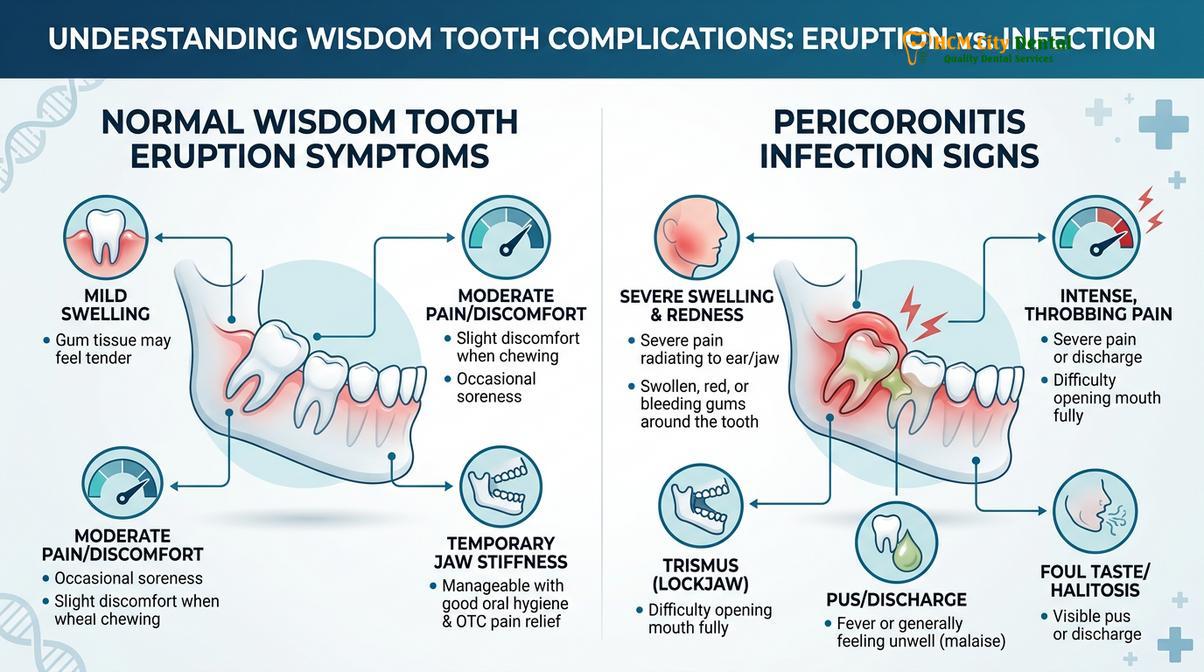
If left untreated, pericoronitis can escalate rapidly. The infection can spread from the localized gum tissue into the deeper fascial spaces of the head and neck, leading to serious, potentially life-threatening conditions such as Ludwig’s angina. Therefore, recognizing the transition from normal eruption pressure to active infection is paramount for timely medical intervention.
When to See a Dentist in Saigon
While mild discomfort can often be managed at home, certain red flag symptoms necessitate immediate professional evaluation. If your pain is unresponsive to over-the-counter analgesics, if you develop visible facial swelling that alters your appearance, or if you experience difficulty swallowing or breathing, you must seek emergency dental care. These symptoms indicate that an infection is spreading beyond the immediate vicinity of the tooth and requires aggressive clinical management, typically involving prescription antibiotics and surgical intervention.
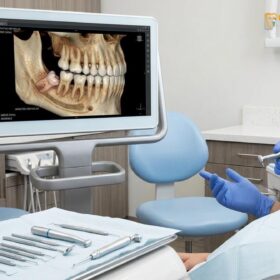
Even in the absence of severe infection, a proactive dental consultation is highly recommended when you first notice your wisdom teeth emerging. At HCMC Dental Clinic in Ho Chi Minh City, the diagnostic process begins with a comprehensive clinical examination and advanced radiographic imaging. A standard panoramic X-ray (OPG) provides a two-dimensional overview of the entire jaw, allowing the dentist to assess the presence, position, and angulation of all four wisdom teeth simultaneously.
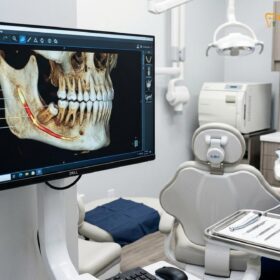
For more complex cases, particularly when the roots of the lower wisdom tooth appear to be in close proximity to the inferior alveolar nerve, a 3D Cone Beam Computed Tomography (CBCT) scan is utilized. This advanced imaging technology provides a highly detailed, three-dimensional view of the maxillofacial structures, enabling the surgeon to map the exact trajectory of the nerve and plan a safe, precise extraction strategy[3]. This level of diagnostic precision is crucial for minimizing the risk of post-operative complications such as temporary or permanent nerve numbness.
Clinical Case Study: Managing Impacted Eruption
A 22-year-old patient visited HCMC Dental Clinic in Ho Chi Minh City complaining of recurrent, severe pain in the lower right jaw that radiated to the ear, accompanied by mild trismus. Clinical examination revealed a partially erupted third molar with a highly inflamed operculum. A CBCT scan confirmed a mesioangular impaction, meaning the tooth was growing forward into the adjacent second molar, causing localized bone loss. Dr. Cuong prescribed a short course of antibiotics to reduce the acute infection, followed by a surgical extraction using minimally invasive Piezotome technology. The patient experienced a smooth recovery with complete resolution of referred pain within one week.
The decision to extract a wisdom tooth is based on a careful risk-benefit analysis. If the tooth is erupting vertically, has sufficient space in the dental arch, and can be easily cleaned by the patient, it may be left in place and monitored. However, if the tooth is impacted (mesioangular, horizontal, or distoangular), is causing damage to adjacent teeth, or is the source of recurrent pericoronitis, extraction is the definitive, evidence-based treatment.
Wisdom Tooth Removal Cost at HCMC Dental
The cost of removal depends on the tooth’s position, the complexity of the impaction, and the surgical technology utilized during the extraction procedure.
When extraction is deemed necessary, patients naturally inquire about the financial investment required. The cost of wisdom tooth removal is not a flat rate; it varies significantly based on the clinical complexity of the individual case. A fully erupted upper wisdom tooth that requires a simple, routine extraction will be considerably less expensive than a deeply impacted lower wisdom tooth that requires a complex surgical approach involving bone removal and tooth sectioning.
At HCMC Dental Clinic, the fee structure is transparent and is discussed in detail following the initial diagnostic workup. The total cost typically encompasses the consultation, the necessary radiographic imaging (OPG or CBCT), the local anesthesia, the surgical procedure itself, and the post-operative care package. For patients with high anxiety or particularly complex impactions, options for conscious sedation are available, which will factor into the overall treatment cost.
Modern surgical techniques also influence the investment. For instance, the use of an ultrasonic Piezotome device—which cuts bone precisely using high-frequency vibrations without damaging surrounding soft tissue or nerves—represents a premium standard of care. While this technology may slightly increase the procedural cost, it significantly reduces surgical trauma, minimizes post-operative swelling, and accelerates the healing timeline[4]. To understand the full scope of our surgical protocols and patient care standards, you can review our comprehensive guide on Tooth Extraction.
“Investing in the timely removal of an impacted wisdom tooth is ultimately a cost-saving measure. Delaying treatment often leads to severe decay in the adjacent second molar, recurrent infections, or cyst formation—complications that require far more extensive and expensive restorative treatments down the line.”
— Dr. Nguyen Van Cuong, Lead Surgeon at HCMC Dental Clinic
Following the extraction, the clinic often utilizes advanced healing protocols, such as the application of Platelet-Rich Fibrin (PRF). By drawing a small sample of the patient’s blood and centrifuging it to isolate growth factors, a biological membrane is created and placed directly into the extraction socket. This technique dramatically reduces the risk of dry socket, promotes rapid soft tissue closure, and enhances bone regeneration[5]. While such advanced modalities represent an investment in your oral health, they provide a virtually seamless recovery experience, allowing you to return to your normal daily activities with minimal disruption.
Frequently Asked Questions
How can I tell if my wisdom tooth is coming in or infected?
Normal eruption causes mild, intermittent pressure and slight gum tenderness, whereas an infection presents with severe throbbing pain, visible pus, foul breath, facial swelling, and difficulty opening your mouth. If symptoms escalate rapidly, clinical evaluation is necessary to rule out pericoronitis. An infected tooth requires immediate professional cleaning and potentially antibiotics, while normal eruption pain can often be managed with conservative home care until the tooth fully emerges.
What is the fastest way to relieve wisdom tooth pain?
The fastest temporary relief is achieved by taking over-the-counter non-steroidal anti-inflammatory drugs (NSAIDs) like ibuprofen, combined with applying a cold compress to the outside of your cheek for 15-minute intervals. This dual approach simultaneously addresses internal inflammation and numbs localized nerve endings. Ensure you follow the dosage instructions on the medication packaging and avoid placing ice directly against the skin without a protective barrier to prevent frostbite.
Can I use warm salt water for wisdom tooth pain?
Yes, rinsing with warm salt water is highly effective for managing eruption discomfort. The hypertonic saline solution creates an osmotic effect that draws out fluid from swollen gingival tissues, reduces bacterial load around the emerging tooth, and promotes a cleaner environment for healing. Mix half a teaspoon of salt into a cup of warm water and rinse gently for 30 seconds, particularly after meals, to dislodge trapped food debris from the gum flap.
How long does the pain last when wisdom teeth are coming through?
Eruption pain typically occurs in phases, lasting from a few days to two weeks during an active growth spurt. Because wisdom teeth erupt gradually, you may experience these intermittent flare-ups over several months or even years until the tooth fully emerges or is extracted. If the pain becomes constant rather than intermittent, it is a strong indicator that the tooth is impacted against the jawbone or adjacent teeth and cannot progress further.
Are there over-the-counter teething gels for adults?
Yes, adults can use over-the-counter oral numbing gels containing active ingredients like benzocaine to temporarily dull the pain of erupting molars. However, these provide only short-term surface relief and should not be used as a substitute for professional dental assessment if pain persists. Saliva quickly washes away topical anesthetics, meaning their efficacy is limited to brief periods, making them most useful immediately before eating or attempting to sleep.
References
- Journal of Oral and Maxillofacial Surgery. Pathophysiology of third molar eruption and associated pericoronitis. (2021).
- International Journal of Dentistry. Efficacy of NSAIDs in managing acute dental pain and inflammation. (2020).
- British Dental Journal. Diagnostic criteria for impacted mandibular third molars. (2019).
- Journal of the American Dental Association. The role of CBCT imaging in surgical extraction planning. (2022).
- Clinical Oral Investigations. Application of Platelet-Rich Fibrin (PRF) in third molar surgery recovery. (2023).