Choosing between a permanent retainer vs removable retainer depends on your clinical needs, lifestyle, and oral hygiene habits. Permanent retainers offer continuous, compliance-free alignment for the front teeth, while removable retainers provide full-arch protection and easier cleaning but require strict daily discipline to prevent orthodontic relapse.
Clinical Summary:
The transition from active orthodontic treatment to the retention phase is a critical period that determines the long-term success of your smile. The debate between a permanent retainer vs removable retainer centers on balancing biomechanical stability with patient compliance and periodontal health. Fixed retainers, bonded directly to the lingual surfaces of the anterior teeth, provide uninterrupted retention but demand meticulous oral hygiene to prevent calculus accumulation. Conversely, removable retainers—whether clear thermoformed trays or traditional acrylic appliances—offer comprehensive control over the entire dental arch and facilitate normal brushing and flossing. However, their efficacy is entirely dependent on the patient’s adherence to the prescribed wear schedule. In modern clinical practice, orthodontists frequently employ a dual-retention strategy, utilizing both fixed and removable appliances to maximize stability, protect against occlusal forces, and ensure the periodontal ligaments adapt successfully to the new dental alignment.
Key Takeaways:
- Orthodontic retention is mandatory to prevent teeth from shifting back to their original positions due to periodontal ligament memory.
- Permanent retainers offer 24/7 compliance-free stability for the front teeth but require specialized flossing techniques.
- Removable retainers control the entire dental arch and allow for easy cleaning, but they can be lost or forgotten.
- Many complex orthodontic cases benefit from a dual approach: a fixed wire on the bottom teeth and a removable tray for nighttime wear.
- Regular dental check-ups are essential to monitor retainer integrity and maintain optimal periodontal health.
The Clinical Importance of Post-Braces Retention
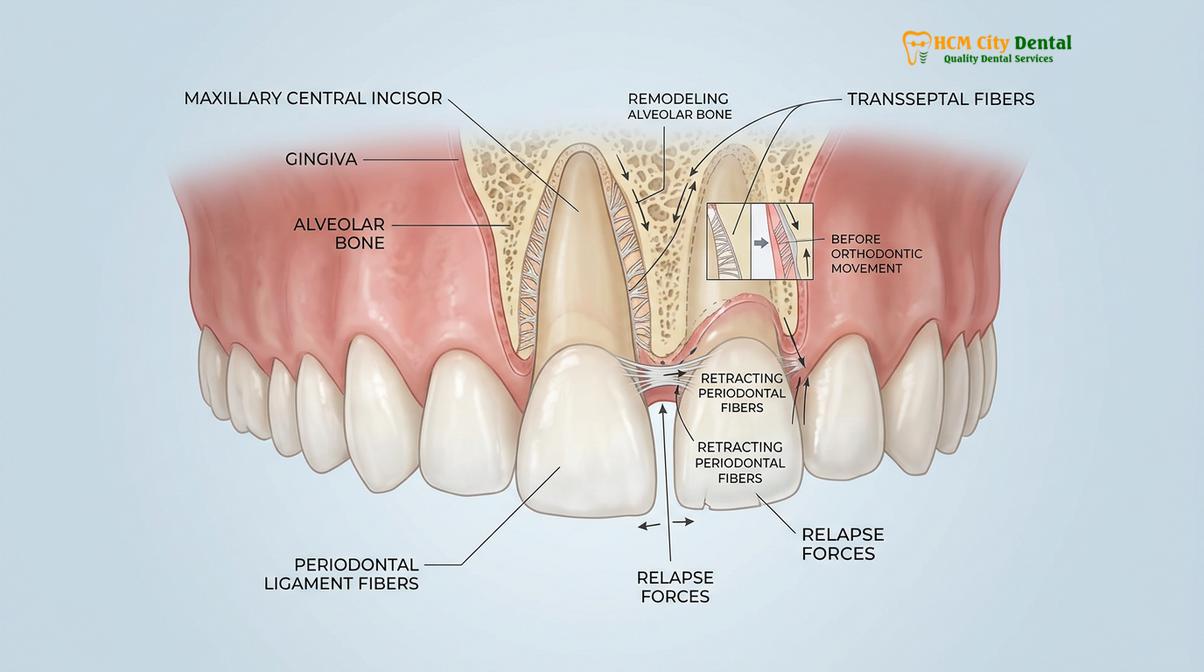
Orthodontic retention is a mandatory phase of treatment designed to stabilize teeth in their new positions while the surrounding periodontal ligaments and alveolar bone adapt and remodel.
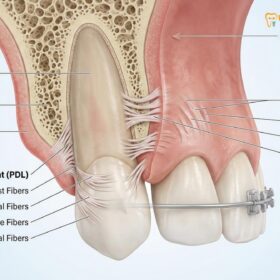
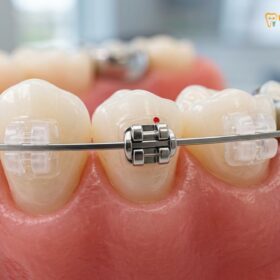
To fully appreciate the debate between a permanent retainer vs removable retainer, one must first understand the biological mechanisms that govern tooth movement. When you undergo orthodontic treatment, whether through traditional brackets or clear aligners, continuous controlled forces are applied to the crowns of your teeth. These forces are transmitted down to the roots, compressing the periodontal ligament (PDL) on one side and stretching it on the other. This mechanical stress triggers a complex cellular response involving osteoclasts, which resorb bone in the direction of movement, and osteoblasts, which deposit new bone in the space left behind. This dynamic process of bone remodeling is what allows teeth to move through the dense alveolar bone.
However, once the active orthodontic appliances are removed, the biological environment does not immediately stabilize. The periodontal ligament fibers, particularly the supracrestal and transseptal fibers that connect adjacent teeth, possess a high degree of elasticity and “memory.” These fibers have been stretched and twisted during treatment, and their natural tendency is to contract and pull the teeth back toward their original, pre-treatment positions. This phenomenon is clinically referred to as orthodontic relapse. Furthermore, the newly formed alveolar bone surrounding the roots remains relatively immature and less dense for several months following the cessation of active forces. Without mechanical stabilization, the teeth are highly susceptible to shifting under the influence of everyday functional forces, such as mastication (chewing), swallowing, and the resting pressure of the tongue and lips.
This biological reality underscores why exploring various orthodontic retention treatments is not merely an optional final step, but a critical, lifelong commitment to preserving your investment. The retention phase provides the necessary mechanical support to hold the teeth in their corrected alignment while the periodontal tissues reorganize and the alveolar bone calcifies and matures. Even after the initial stabilization period, age-related physiological changes—such as late mandibular growth and the natural mesial drift of teeth—continue to exert subtle pressures that can cause late crowding, particularly in the lower anterior region. Therefore, selecting the appropriate post braces retention options is a vital clinical decision that requires careful consideration of the patient’s specific malocclusion history, periodontal biotype, and lifestyle factors.
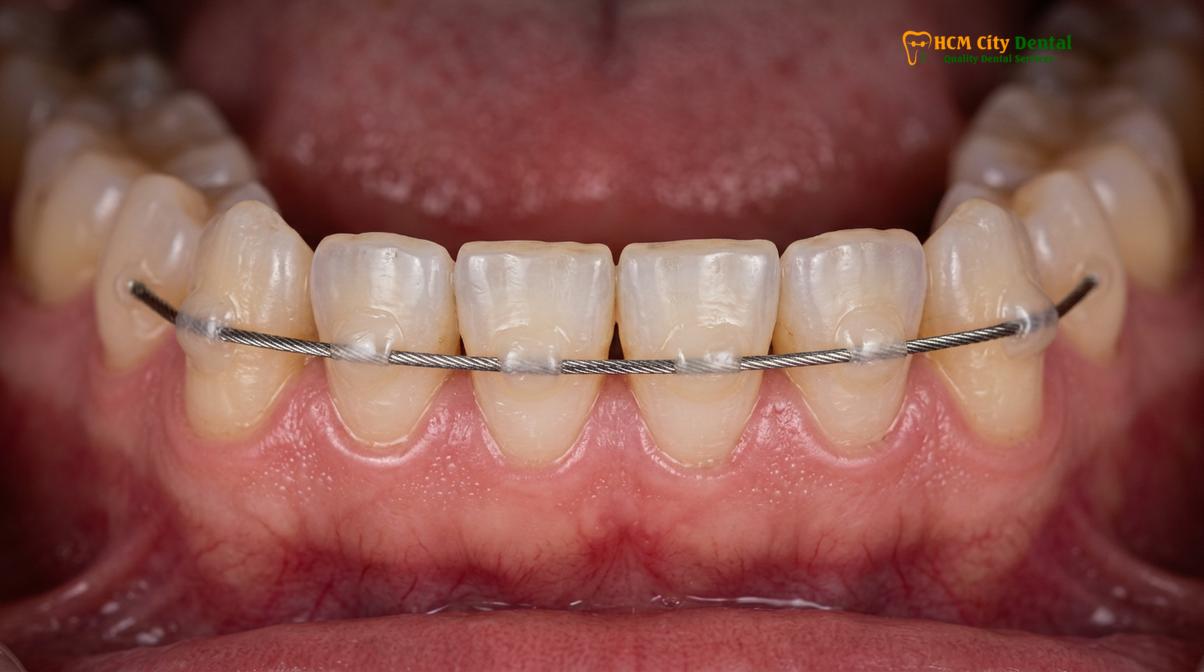
Understanding the Permanent Retainer (Fixed Bonded Wire)
A permanent retainer is a custom-fitted wire bonded to the lingual surfaces of the anterior teeth, providing continuous, invisible stabilization without relying on patient compliance.
The permanent retainer, frequently referred to in clinical settings as a fixed bonded wire, is a highly effective appliance designed to prevent the relapse of the anterior teeth. It is most commonly placed on the lingual (tongue-facing) surfaces of the lower six front teeth (from canine to canine), though it can also be utilized on the upper anterior teeth depending on the patient’s bite clearance. The primary advantage of this retention method is its continuous, passive operation. Because it is permanently attached to the teeth, it provides 24/7 stabilization without requiring any conscious effort or memory from the patient. This makes it an exceptionally reliable safeguard against the rapid shifting that can occur if a removable appliance is forgotten or lost.
The clinical workflow for placing a fixed bonded wire requires precision and meticulous moisture control. Once the active orthodontic appliances are removed and the enamel is polished, the orthodontist custom-contours a segment of wire to passively adapt to the lingual anatomy of the target teeth. Modern fixed retainers are typically fabricated from multi-stranded stainless steel or dead-soft braided wires, which offer a balance of flexibility and strength, allowing for physiological tooth micro-movement while preventing macroscopic shifting. The enamel surfaces are then isolated, etched with phosphoric acid, and treated with a bonding primer. Small increments of flowable composite resin are applied over the wire on each tooth and polymerized with a dental curing light. This creates a strong micromechanical bond that secures the wire in place.
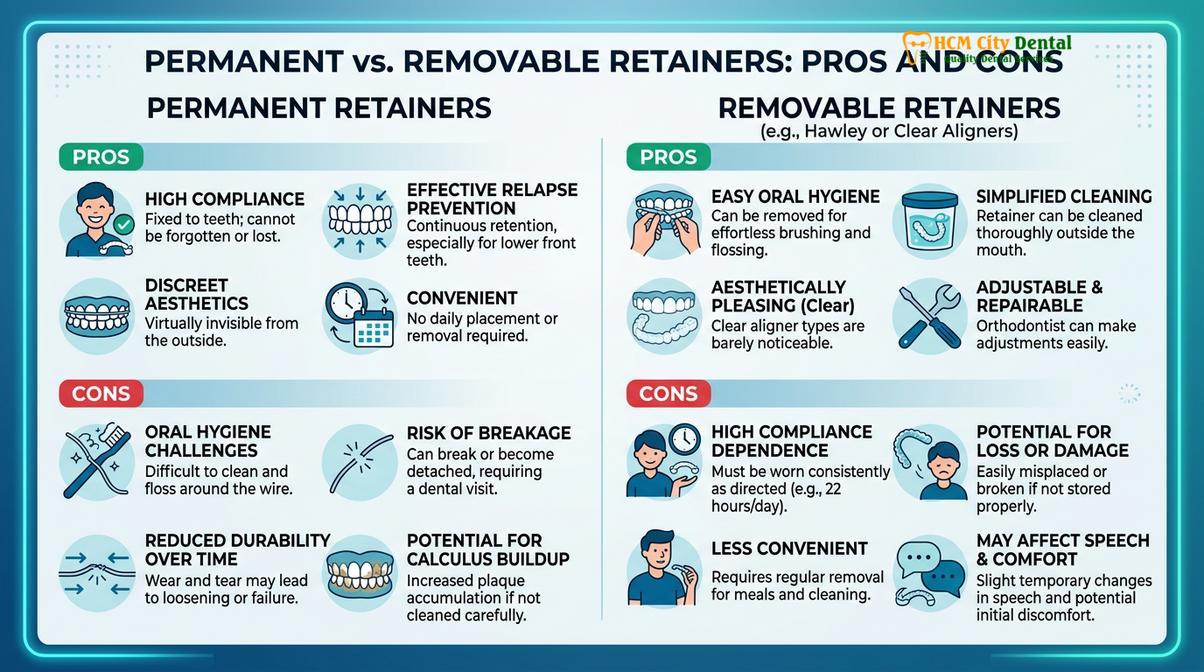
When evaluating the pros and cons of permanent retainer placement, the benefits of aesthetic invisibility and guaranteed compliance must be weighed against the challenges of maintenance. The presence of the bonded wire and composite pads creates a highly retentive surface for dental plaque and calculus (tartar) accumulation. Because the wire physically blocks traditional dental floss from passing through the interproximal contacts, patients must adopt specialized oral hygiene techniques. If plaque is allowed to stagnate around the retainer, it can lead to localized gingival inflammation (gingivitis), periodontal attachment loss, and interproximal dental caries. Furthermore, while the wire is robust, it is not indestructible. Biting into excessively hard or crunchy foods can cause the composite resin to fracture or the wire to debond from a single tooth. If a debonding event goes unnoticed by the patient, that specific tooth can rapidly shift out of alignment, necessitating retreatment.
Exploring the Removable Retainer Options
Removable retainers, including clear plastic aligner-style trays and traditional wire-and-acrylic devices, offer comprehensive full-arch retention that patients can take out for eating and oral hygiene.
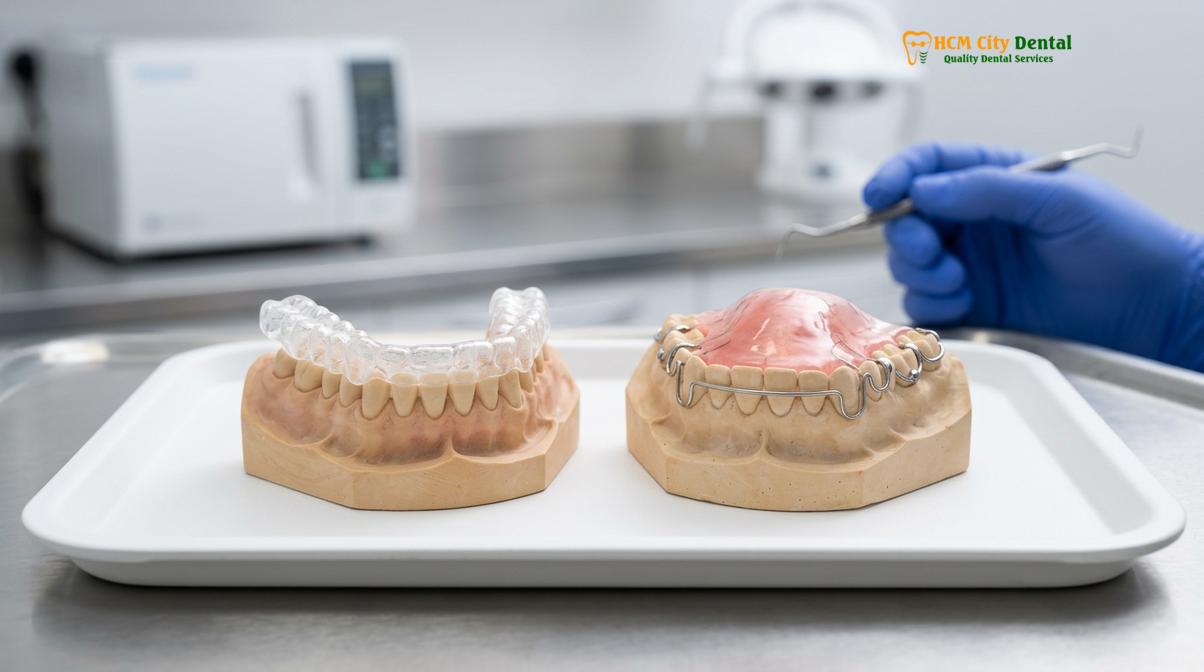
In contrast to fixed appliances, removable retainers provide the distinct advantage of full-arch coverage and the flexibility to be taken out of the mouth. This category of retention primarily encompasses two distinct designs: the traditional Hawley retainer and the modern removable clear retainer (often referred to generically as an Essix retainer). Both designs serve the fundamental purpose of maintaining the corrected positions of the teeth, but they achieve this through different biomechanical approaches and material compositions.
The Hawley retainer is a time-tested appliance constructed from a combination of a rigid acrylic baseplate that rests against the palate (or the lingual mucosa of the lower jaw) and a heavy-gauge stainless steel labial bow that wraps around the anterior teeth. The appliance is secured in place using specialized metal clasps, typically Adams clasps, that engage the undercuts of the posterior molars. The primary clinical advantage of the Hawley retainer lies in its durability and adjustability. The acrylic base is robust and resistant to fracture, and the metal wire can be subtly adjusted by the orthodontist to close minor spaces or fine-tune the alignment of individual teeth even after the braces have been removed. Furthermore, because the Hawley retainer does not cover the occlusal (biting) surfaces of the teeth, it allows for the natural settling of the occlusion, enabling the upper and lower teeth to establish optimal interdigitation over time. For patients interested in the durability of different removable appliances, the Hawley remains a gold standard for longevity.
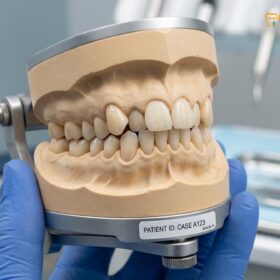
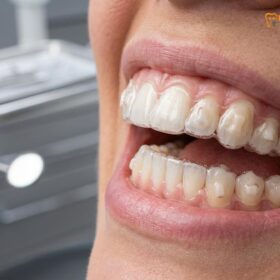
Conversely, the removable clear retainer has become increasingly popular due to its superior aesthetics and precise fit. Fabricated from transparent thermoplastic materials, such as polyethylene terephthalate glycol (PETG) or specialized polyurethane blends, these retainers are thermoformed directly over a physical or 3D-printed model of the patient’s final dental alignment. The resulting appliance is a thin, virtually invisible tray that intimately encases the entire clinical crown of every tooth in the arch. This full-coverage design provides excellent three-dimensional control, preventing not only horizontal shifting but also unwanted vertical eruption or rotation of the teeth. The clear retainer is particularly favored by adult patients and those who have completed clear aligner therapy, as it mimics the look and feel of the active treatment trays. However, the thermoplastic material is susceptible to wear, deformation from hot liquids, and degradation from heavy occlusal forces, meaning clear retainers typically require more frequent replacement than their Hawley counterparts.
Permanent Retainer vs Removable Retainer: A Comprehensive Clinical Comparison
Comparing these two retention methods reveals distinct differences in patient compliance requirements, oral hygiene accessibility, aesthetic impact, and long-term durability.
When making the clinical decision between a permanent retainer vs removable retainer, it is essential to evaluate how each appliance aligns with the patient’s specific anatomical needs and behavioral tendencies. The following table provides a comprehensive clinical comparison of the key features, advantages, and limitations of both retention modalities.
| Clinical Feature | Permanent Retainer (Fixed Bonded Wire) | Removable Retainer (Clear/Hawley) |
|---|---|---|
| Compliance Requirement | Zero patient effort required; functions 24/7 passively. | High discipline required; must be worn as prescribed (often nightly). |
| Arch Coverage | Limited to the anterior teeth (usually canine-to-canine). | Comprehensive control of the entire dental arch (anterior and posterior). |
| Oral Hygiene Accessibility | Challenging; requires floss threaders and interdental brushes. | Excellent; appliance is removed for normal brushing and flossing. |
| Aesthetic Impact | Completely invisible from the front; hidden behind the teeth. | Clear trays are highly discreet; Hawley wires are visible. |
| Durability & Longevity | Can last 5-10+ years, but susceptible to composite fracture from hard foods. | Clear trays last 1-2 years; Hawley retainers can last 5-10 years. |
| Risk of Loss | Cannot be misplaced or lost. | High risk of being lost, accidentally discarded, or damaged by pets. |
The most significant differentiator between the two options is the locus of responsibility. With a fixed bonded wire, the responsibility for maintaining alignment rests entirely on the integrity of the appliance and the strength of the composite bond. This is particularly advantageous for adolescent patients or individuals who may struggle with the strict routine required for removable appliances. However, this convenience comes at the cost of hygiene complexity. The continuous presence of the wire creates a plaque-retentive niche that demands meticulous daily attention to prevent periodontal complications.[1]
Removable retainers shift the responsibility directly onto the patient. The appliance can only prevent relapse if it is actually worn. Failure to adhere to the prescribed wear schedule—even for a few days—can allow the periodontal fibers to contract, causing the teeth to shift. If the teeth shift significantly, the removable retainer may no longer fit properly, or it may cause discomfort when inserted. However, the ability to remove the appliance completely transforms the oral hygiene experience, allowing the patient to brush and floss their teeth without any physical obstructions, thereby significantly reducing the risk of interproximal caries and gingivitis.[2]
“In clinical practice, we must evaluate the patient holistically. A permanent retainer is an excellent safeguard against anterior relapse, but if the patient has a history of poor oral hygiene or high caries risk, bonding a wire to their teeth may inadvertently compromise their periodontal health. In such cases, a removable appliance, coupled with thorough patient education, is often the safer long-term strategy.”
— Dr. Nguyen Van Cuong, Lead Orthodontist
Clinical Case Review: HCMC Dental Clinic
Patient Profile: A 26-year-old female patient presented to HCMC Dental Clinic in Ho Chi Minh City following the completion of comprehensive orthodontic treatment to resolve severe lower anterior crowding and a deep bite.
Clinical Challenge: Due to the severity of the initial crowding, the patient’s lower incisors were at a exceptionally high risk of relapse. However, the patient also exhibited signs of nocturnal bruxism (teeth grinding), which could rapidly degrade a standard clear removable retainer.
Treatment Strategy: Dr. Cuong implemented a dual-retention protocol. A multi-stranded fixed bonded wire was placed on the lingual surfaces of the lower anterior teeth (canine-to-canine) to provide continuous, robust stabilization against the strong relapse vectors. To address the bruxism and maintain the posterior occlusion, a durable, heavy-gauge removable clear retainer was fabricated for nighttime wear over the fixed wire. This approach successfully maintained perfect alignment while protecting the dentition from grinding forces.
Dual Retention Strategies: Maximizing Orthodontic Stability
In many clinical scenarios, orthodontists recommend a combination of both fixed and removable retainers to leverage the continuous anterior support of a bonded wire alongside the full-arch protection of a removable tray.
The debate between a permanent retainer vs removable retainer often presents a false dichotomy. In modern orthodontic practice, these two modalities are frequently viewed not as mutually exclusive options, but as complementary components of a comprehensive retention strategy. This approach, known as dual retention, is increasingly considered the gold standard for patients who present with a high risk of relapse, such as those who initially had severe crowding, significant spacing (diastemas), or complex rotational corrections.
The rationale behind dual retention is rooted in biomechanics and risk mitigation. A fixed bonded wire is unparalleled in its ability to hold the highly volatile lower anterior teeth in perfect alignment, as it operates continuously without relying on patient memory. However, the fixed wire only controls the front six teeth; it offers zero protection for the premolars and molars. If a patient only has a fixed retainer, the posterior teeth remain susceptible to shifting, which can alter the bite and lead to occlusal instability. By prescribing a removable clear retainer to be worn at night over the fixed wire, the orthodontist ensures that the entire dental arch is stabilized. The removable tray prevents the posterior teeth from drifting, maintains the transverse width of the arch, and provides an additional layer of protection for the anterior teeth in the event that the fixed wire accidentally debonds. Furthermore, for patients who grind their teeth, the thermoplastic tray acts as a protective barrier, shielding both the enamel and the composite bonding of the fixed retainer from excessive occlusal wear.
Maintenance, Oral Hygiene Protocols, and Longevity
Proper maintenance of your chosen retainer is critical to prevent dental caries, periodontal disease, and appliance failure, ensuring the long-term success of your orthodontic treatment.
Regardless of which post braces retention options you and your orthodontist select, meticulous maintenance is non-negotiable. The longevity of your orthodontic results and the health of your periodontium are directly correlated with your daily hygiene habits. For patients with a fixed bonded wire, traditional flossing is physically impossible because the wire blocks the interproximal spaces. Therefore, patients must utilize specialized tools to clean beneath the wire and around the composite pads. Floss threaders, which act like a needle to pull the floss under the wire, or orthodontic floss with a stiffened end (such as Superfloss), are essential for disrupting interdental plaque. Additionally, interdental brushes (proxy brushes) are highly effective for cleaning the embrasure spaces between the teeth. Many dental professionals also strongly recommend the daily use of a water flosser to flush out food debris and bacteria from the hard-to-reach areas around the lingual bonding.[3]
For those utilizing a removable clear retainer or a Hawley appliance, hygiene focuses on keeping the appliance itself pristine. Removable retainers should be brushed gently every time they are taken out of the mouth. However, it is crucial to avoid using abrasive toothpaste on clear thermoplastic retainers, as the abrasives can create microscopic scratches in the plastic. These micro-abrasions not only cause the retainer to appear cloudy and unesthetic but also serve as breeding grounds for odor-causing bacteria. Instead, retainers should be cleaned with a soft-bristled brush and a mild, unscented antibacterial soap. For deeper cleaning, effervescent retainer cleaning tablets or specialized soaking solutions should be used regularly to dissolve plaque and prevent calcium buildup. It is absolutely critical to never expose a removable clear retainer to hot or boiling water, as the heat will irreversibly warp the thermoplastic material, rendering the appliance useless and necessitating immediate replacement.[4]
Clinical Warning: The Risks of Hygiene Neglect
Failing to properly clean around a permanent retainer can lead to the rapid accumulation of calculus (tartar). This hardened plaque can form a solid bridge over the wire, causing severe gingival inflammation, bleeding, and eventual bone loss. Regular professional dental cleanings (scaling and root planing) every 6 months are mandatory for patients with fixed retainers to ensure the health of the supporting periodontal tissues and to verify the integrity of the composite bonds.
“The success of any orthodontic retention protocol is a partnership between the clinician and the patient. We can design the most biomechanically sound appliance, but if the patient neglects their oral hygiene or fails to wear their removable trays, the biological forces of relapse will inevitably prevail. Education and consistent follow-up are just as important as the retainers themselves.”
— Dr. Nguyen Van Cuong, Lead Orthodontist
When to See a Doctor (Important Clinical Considerations)
While retainers are designed for long-term use, they are subjected to the harsh, dynamic environment of the oral cavity and will occasionally require professional attention. It is crucial to monitor your retainers daily and seek prompt clinical evaluation if you notice any signs of damage or failure. For patients with a fixed bonded wire, the most common emergency is a debonded composite pad or a fractured wire. If you feel a sharp edge with your tongue, or if you notice that the wire is loose on one or more teeth, you must schedule an appointment immediately. Even a single debonded tooth can begin to shift within a matter of days, potentially requiring advanced orthodontic mechanics to correct the relapse. Do not attempt to pull or remove a broken fixed wire yourself, as this can cause severe damage to the enamel or adjacent teeth.
For patients utilizing removable retainers, the primary indicator that you need to see a doctor is a change in the fit of the appliance. If your retainer feels excessively tight, causes significant pain upon insertion, or fails to seat completely over your teeth, it is a clear clinical sign that your teeth have begun to shift. This often occurs if the patient has not been compliant with the prescribed wear schedule. In such cases, forcing the retainer onto the teeth can cause damage to the appliance or excessive stress on the periodontal ligaments. You should consult your orthodontist to determine if the current retainer can still be used to recapture the alignment, or if a new appliance—or a brief phase of active retreatment—is necessary. Additionally, if you lose your appliance, you must review the steps to take if you misplace your retainer and contact your clinic immediately to have a replacement fabricated before significant relapse occurs. Regular check-ups at a qualified facility, such as HCMC Dental Clinic, are essential to ensure your retention strategy remains effective over the long term.[5]
Frequently Asked Questions
Which is better, a permanent or removable retainer?
Neither option is universally superior; the best choice depends entirely on your specific orthodontic case, oral hygiene habits, and lifestyle. Permanent retainers offer continuous compliance-free alignment for the front teeth, while removable retainers provide comprehensive full-arch protection and easier daily cleaning. Your orthodontist will recommend the most appropriate option based on a clinical assessment of your relapse risk and periodontal health.
Can a permanent retainer be removed later in life?
Yes, a permanent retainer can be safely removed by a dental professional using specialized tools to dissolve the composite resin. However, removing it without replacing it with another form of retention significantly increases the risk of orthodontic relapse and tooth shifting. If you choose to have your fixed wire removed due to hygiene concerns or discomfort, you must commit to wearing a removable retainer to maintain your alignment.
Do I still need a removable retainer if I have a permanent one?
Yes, orthodontists frequently prescribe a removable retainer to be worn at night over your permanent retainer. The permanent wire only secures the front teeth, so the removable tray is necessary to prevent the posterior teeth (premolars and molars) from shifting. This dual-retention approach provides the highest level of stability and protects the fixed wire from excessive occlusal forces, particularly if you grind your teeth.
How do I floss with a permanent retainer?
You must use specialized flossing tools, such as floss threaders or orthodontic floss with a stiffened end, to navigate under the bonded wire. Interdental brushes and water flossers are also highly recommended to remove plaque and prevent calculus buildup around the composite bonding. Maintaining meticulous oral hygiene is critical to prevent gingivitis and bone loss around the retained teeth.
How long do removable clear retainers typically last?
With proper care and maintenance, a removable clear retainer typically lasts between 12 to 24 months before needing replacement. Factors such as nighttime teeth grinding (bruxism), improper cleaning with hot water, or taking them in and out incorrectly can shorten their lifespan. It is important to understand the duration required for wearing retainers and budget for periodic replacements as part of your lifelong comprehensive orthodontic care.
References
- American Journal of Orthodontics and Dentofacial Orthopedics. Long-term stability of anterior alignment and the role of fixed retention. (2019).
- Journal of Clinical Orthodontics. Periodontal health and plaque accumulation associated with fixed bonded retainers. (2021).
- European Journal of Orthodontics. A comparative clinical trial of Essix and Hawley retainers for post-orthodontic stability. (2020).
- Australian Dental Journal. Patient compliance and satisfaction with removable orthodontic retainers. (2018).
- Journal of Prosthodontic Research. Material degradation and wear resistance of thermoformed clear retainers. (2022).