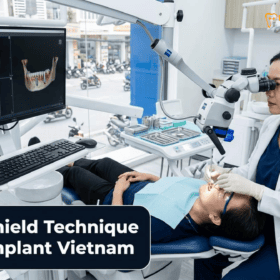
For international patients and dental travelers seeking complex oral rehabilitation, the integration of Piezosurgery ultrasonic bone surgery sinus lift Vietnam protocols represents a paradigm shift in surgical safety, precision, and postoperative comfort. Historically, procedures such as maxillary sinus floor elevation, ridge expansion, and the extraction of deeply impacted mandibular third molars relied heavily on high-speed rotary burs and oscillating micro-saws. While effective, these conventional instruments carry inherent risks of thermal necrosis, aggressive macro-trauma, and inadvertent damage to critical soft tissue structures, including the delicate Schneiderian sinus membrane and the inferior alveolar nerve. Today, at HCMC Dental Clinic in District 1, Ho Chi Minh City, advanced piezoelectric technology has fundamentally transformed the landscape of oral and maxillofacial surgery. By utilizing modulated ultrasonic micro-vibrations in the precise frequency range of 24 to 36 kHz, Piezosurgery enables selective bone cutting that effortlessly sections mineralized tissue while leaving adjacent elastic soft tissues completely unharmed. Under the expert clinical direction of Dr. Nguyen Van Cuong, DDS (Clinical Director — MOH License 0003265/BL-CCHN), this hospital-grade surgical protocol ensures that expats and medical tourists receive world-class, atraumatic implantology and bone grafting at a fraction of Western costs.
Clinical Summary:
Piezosurgery (piezoelectric ultrasonic bone surgery) is an advanced osteotomy technique utilized at HCMC Dental Clinic to perform highly precise, atraumatic bone modifications for sinus lifts, bone grafting, and impacted wisdom tooth extractions. Operating at a selective frequency of 24–36 kHz, the ultrasonic tip cuts only hard mineralized bone while preserving soft tissues such as nerves, blood vessels, and the sinus membrane. Combined with 0.075mm high-resolution 3D CBCT diagnostics, 3Shape Trios 5D intraoral scanning, and Choukroun low-speed centrifugation for autologous L-PRF Sticky Bone, this protocol drastically reduces surgical complications, minimizes postoperative swelling, and accelerates osseointegration for international patients seeking premium dental implants in Vietnam.
Key Takeaways:
- Selective Cutting Physics: Piezosurgery operates at 24–36 kHz, a frequency that shatters mineralized bone but harmlessly bounces off elastic soft tissues, protecting the inferior alveolar nerve and Schneiderian membrane.
- Near-Zero Perforation Rates: In lateral and crestal maxillary sinus lifts, piezoelectric ultrasonic surgery reduces the risk of sinus membrane perforation to below 3%, compared to 10–35% with conventional rotary burs.
- Blood-Free Surgical Field: The ultrasonic micro-vibrations create a hydrodynamic cavitation effect with the sterile saline irrigant, temporarily halting capillary bleeding for unparalleled surgical visibility.
- Advanced Biomaterial Integration: Piezosurgery is seamlessly combined with Khoury autogenous cortical bone shell grafting, Urban Sausage GBR, and 100% autologous L-PRF / A-PRF / i-PRF Sticky Bone for optimal regeneration.
- Transparent Global Pricing: Surgical wisdom tooth extraction using a Piezotome ranges from just $58 to $115 USD per tooth, while comprehensive 3D-Guided Dental Implants & Specialist Oral Surgery in Vietnam offer savings of up to 70% compared to the US and Australia.
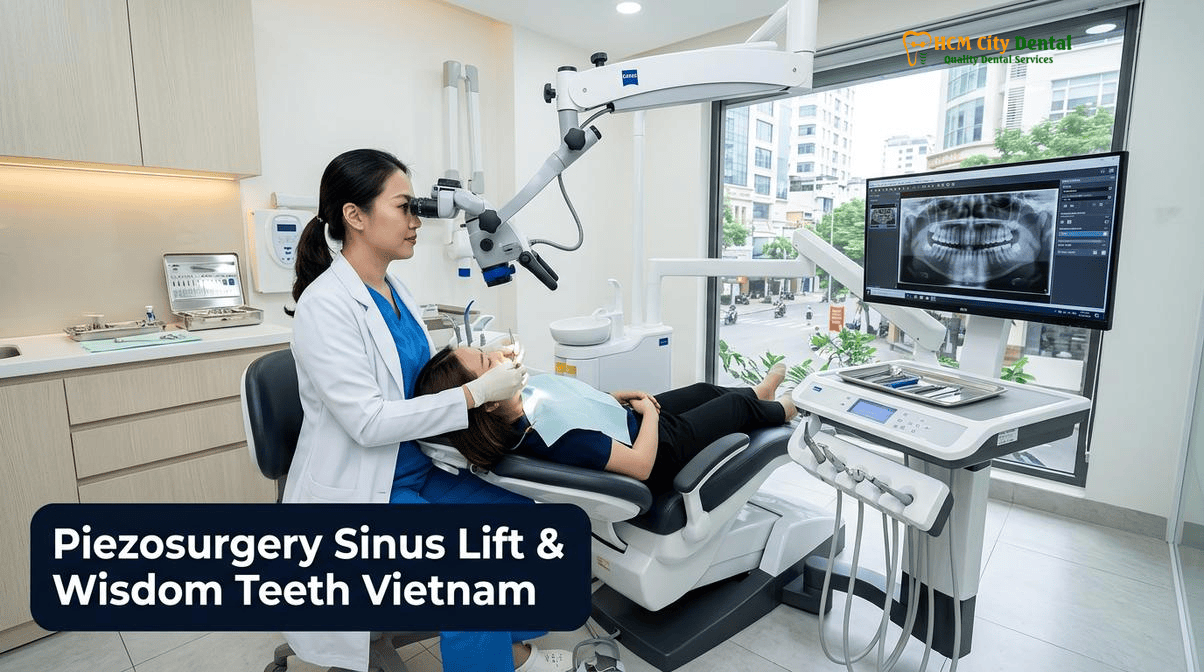
What Is Piezosurgery (Piezoelectric Ultrasonic Bone Surgery) and How Does Selective Cut Physics Work?
To fully appreciate the clinical superiority of Piezosurgery ultrasonic bone surgery for sinus lifts and impacted wisdom teeth in Vietnam, one must first understand the underlying physics of the piezoelectric effect. Discovered in the late 19th century, piezoelectricity refers to the physical phenomenon where certain crystals, such as quartz or specialized ceramics, generate an electrical charge when subjected to mechanical stress. In modern oral surgery, this principle is applied in reverse. An alternating electrical current is delivered to a transducer containing these crystals, causing them to rapidly expand and contract. This continuous oscillation generates ultrasonic waves that are transmitted to a specialized surgical tip, producing highly controlled, microscopic linear vibrations.
The true genius of Piezosurgery lies in its frequency modulation. The device is meticulously calibrated to operate within a specific ultrasonic frequency range of 24 to 36 kHz. At this exact frequency, the mechanical energy is perfectly tuned to disrupt and fragment solid, mineralized segments such as cortical and cancellous bone tissue. The micro-vibrations shatter the hydroxyapatite crystal lattice of the bone with micrometric precision, allowing the surgeon to perform osteotomies (bone cutting) and osteoplasties (bone reshaping) with a level of control that is physically impossible to achieve with traditional high-speed rotary drills or oscillating micro-saws.
Crucially, this 24–36 kHz frequency is entirely ineffective at cutting non-mineralized, elastic tissues. Soft tissues require a much higher frequency (typically above 50 kHz) to be incised by ultrasonic vibration. Therefore, when the active Piezosurgery tip encounters soft tissue—such as the gingiva, blood vessels, nerve bundles, or the delicate mucosal lining of the maxillary sinus—the tissue simply absorbs the kinetic energy, vibrating harmlessly without sustaining any structural damage. This principle of “selective cutting” is the cornerstone of piezoelectric safety, transforming high-risk anatomical zones into highly predictable surgical sites.
Furthermore, the amplitude of the micro-vibrations is incredibly small, typically ranging from 60 to 200 micrometers. This micrometric movement ensures that the surgical cut is exceptionally clean and precise, minimizing the loss of valuable native bone. Unlike conventional rotary burs that generate significant frictional heat and macro-vibration, Piezosurgery operates with a gentle, sweeping motion. This not only preserves the vitality of the surrounding osteocytes (bone cells) but also drastically reduces the psychological stress and acoustic trauma experienced by the patient during the procedure, making it an ideal solution for anxious dental travelers receiving care in Ho Chi Minh City.
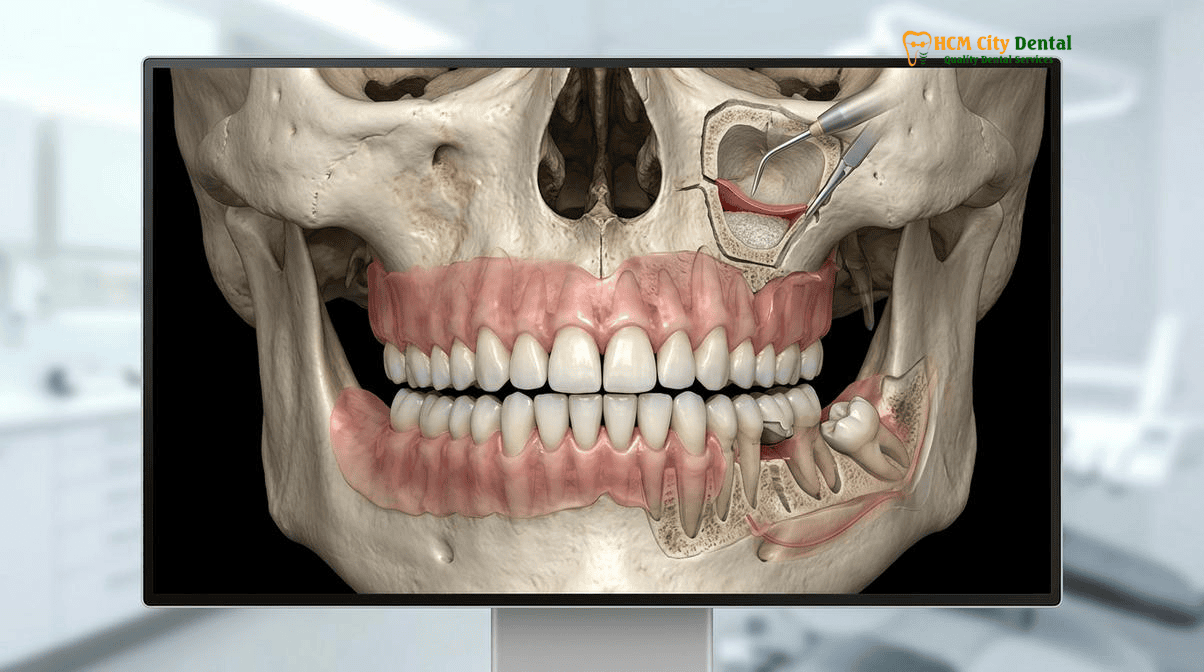
Protecting Soft Tissue, Nerves, and the Schneiderian Sinus Membrane (24–36 kHz Ultrasonic Micro-Vibrations)
In the realm of advanced oral implantology, the preservation of critical anatomical structures is paramount. The posterior maxilla and the posterior mandible present unique surgical challenges due to the proximity of the maxillary sinus cavity and the inferior alveolar nerve canal, respectively. Conventional surgical techniques utilizing high-speed rotary instruments carry a constant, inherent risk of iatrogenic trauma. A momentary lapse in depth control or a sudden patient movement can result in a bur penetrating the sinus membrane or severing a nerve bundle, leading to severe complications such as chronic sinusitis, graft failure, or permanent facial paresthesia (numbness).
Piezosurgery completely neutralizes these risks through its selective cutting physics. The most profound application of this safety profile is observed during maxillary sinus floor elevation procedures. The maxillary sinus is lined by the Schneiderian membrane, a delicate, ciliated respiratory epithelium that is typically only 0.3 to 0.8 millimeters thick. When preparing a lateral window to access the sinus cavity, the surgeon must remove the overlying cortical bone without tearing the underlying membrane. With a rotary diamond bur, this requires extraordinary tactile sensitivity and carries a high risk of perforation. With a Piezosurgery device, the ultrasonic tip effortlessly cuts through the lateral bony wall. The moment the tip touches the Schneiderian membrane, the cutting action ceases. The membrane simply vibrates, remaining completely intact.[1]
“The introduction of piezoelectric ultrasonic bone surgery has fundamentally redefined our approach to complex anatomical challenges. By utilizing 24 to 36 kHz micro-vibrations, we can perform aggressive bone harvesting and precise osteotomies mere millimeters from the inferior alveolar nerve or the Schneiderian membrane with absolute confidence. The selective cutting physics ensure that even if the ultrasonic tip directly contacts these critical soft tissues, they remain completely unharmed. This technology is not just a surgical luxury; it is a mandatory standard of care for ensuring the safety and long-term success of our international implant patients.”
— Dr. Nguyen Van Cuong, DDS (Clinical Director, HCMC Dental Clinic)
Similarly, in the posterior mandible, the extraction of deeply impacted wisdom teeth or the harvesting of autogenous bone blocks from the mandibular ramus often requires working in dangerous proximity to the inferior alveolar nerve. Piezosurgery allows the surgeon to meticulously remove the overlying bone and section the tooth structure without the fear of wrapping or severing the nerve bundle. Even in cases where the nerve is directly exposed within the surgical field, the ultrasonic tip will not cause laceration.
Beyond selective cutting, Piezosurgery offers another critical advantage: the cavitation effect. The ultrasonic micro-vibrations interact with the continuous flow of sterile saline cooling irrigation to create thousands of microscopic bubbles. As these bubbles rapidly expand and implode (cavitation), they generate a localized hydrodynamic shockwave. This effect continuously washes away bone debris and creates a temporary hemostatic effect, significantly reducing capillary bleeding. The result is a surgical field that is virtually blood-free, providing the surgeon with unparalleled visibility of the bone architecture and adjacent soft tissues, further enhancing the safety and precision of the procedure.
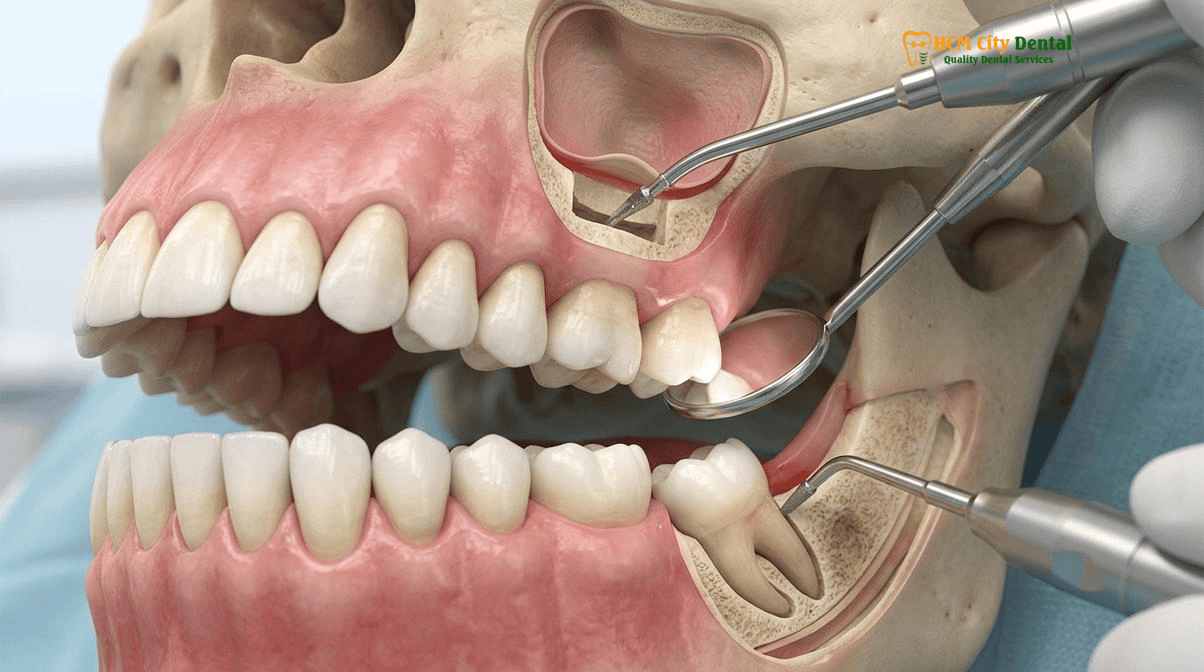
Piezosurgery in Lateral and Crestal Maxillary Sinus Lifts: Reducing Perforation Rates Below 3%
For patients who have experienced prolonged tooth loss in the upper posterior jaw, the natural process of alveolar bone resorption is often compounded by the pneumatization (expansion) of the maxillary sinus cavity. This dual process leaves insufficient vertical bone height to securely anchor dental implants. To overcome this anatomical limitation, a maxillary sinus lift (subantral augmentation) is required to elevate the sinus floor and create a space for bone graft material, which will eventually regenerate into solid, implant-supporting bone. Bone Grafting, Sinus Lifts & Zygomatic Implants in Vietnam | HCMC Dental are routinely performed using two primary approaches: the lateral window technique and the crestal (transalveolar) approach.
The lateral window approach is typically indicated when there is severe bone atrophy (less than 4-5mm of residual bone height). Traditionally, a rotary bur is used to outline a bony window on the lateral wall of the maxilla, which is then carefully infractured or removed to expose the sinus membrane. The primary complication of this conventional method is the perforation of the Schneiderian membrane, which literature reports occurring in 10% to 35% of cases. A perforated membrane compromises the containment of the bone graft material, increasing the risk of infection, graft migration, and ultimate implant failure.
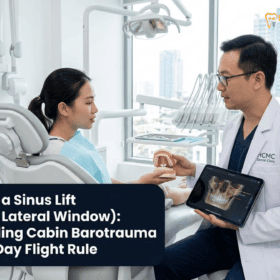
By integrating Piezosurgery into the lateral sinus lift protocol, HCMC Dental Clinic has reduced membrane perforation rates to below 3%. The ultrasonic tip is used to precisely trace and cut the lateral bony window. Because the tip cannot cut soft tissue, the surgeon can confidently complete the osteotomy without fear of tearing the underlying mucosa. Furthermore, specialized piezoelectric elevators utilize the hydrodynamic pressure of the cavitation effect to gently separate and elevate the membrane from the bony sinus floor in a highly atraumatic manner. This fluid-assisted elevation is significantly gentler than manual instrumentation, preserving the integrity and osteogenic potential of the membrane.[2]
For cases requiring less extensive augmentation (typically when 5-7mm of residual bone is present), the crestal approach is utilized. This minimally invasive technique involves accessing the sinus floor vertically through the implant osteotomy site. Conventional crestal lifts often rely on manual osteotomes and surgical mallets to tap the sinus floor upward, a process that can be highly uncomfortable for the patient and carries a risk of benign paroxysmal positional vertigo (BPPV) due to the percussive trauma. Piezosurgery revolutionizes the crestal approach by utilizing specialized ultrasonic tips to gently erode the sinus floor and hydrodynamically elevate the membrane, completely eliminating the need for malleting and ensuring a smooth, anxiety-free patient experience.
Once the sinus membrane is safely elevated, the newly created space is grafted using advanced biomaterials. At HCMC Dental Clinic, Dr. Nguyen Van Cuong, DDS employs a hospital-grade regenerative protocol. This includes the use of 0.075mm high-resolution 3D CBCT DICOM data fused with 3Shape Trios 5D STL scans for precise volumetric planning. The graft site is often augmented using Choukroun low-speed centrifugation to create 100% autologous L-PRF / A-PRF / i-PRF Sticky Bone. This concentrated matrix of the patient’s own platelets, leukocytes, and growth factors is mixed with premium xenograft or allograft particulate, accelerating angiogenesis and bone maturation. For severe defects, Khoury autogenous cortical bone shell grafting or Urban Sausage GBR (Guided Bone Regeneration) utilizing titanium fixation pins and native collagen membranes are employed, followed by meticulous closure using 6-0/7-0 microsurgical Connective Tissue Graft (CTG) tunneling to ensure tension-free primary wound healing.
Atraumatic Impacted Wisdom Tooth Osteotomy and Ridge Split Bone Expansion Without Thermal Necrosis
The extraction of impacted mandibular third molars (wisdom teeth) is one of the most common, yet potentially complex, procedures in oral surgery. When a wisdom tooth is deeply embedded in the jawbone, horizontally impacted, or positioned in close proximity to the inferior alveolar nerve canal, surgical removal is required. The conventional approach involves using a high-speed surgical handpiece and a carbide bur to remove the overlying bone (ostectomy) and section the tooth into smaller pieces for removal. While fast, this method generates significant frictional heat. If the sterile irrigation is insufficient, this heat can cause thermal necrosis (death of bone cells) in the adjacent osseous tissue, leading to delayed healing, severe postoperative pain, and an increased risk of alveolar osteitis (dry socket).
Piezosurgery offers a vastly superior, atraumatic alternative for complex extractions. The ultrasonic micro-vibrations cut through the dense cortical bone of the mandible with extreme precision and minimal heat generation. The continuous cavitation effect of the cooling fluid ensures that the temperature at the surgical site remains well below the critical threshold for thermal bone damage. This preservation of osteocyte vitality translates directly into a faster, more robust healing cascade. Furthermore, the micrometric cutting action allows the surgeon to remove the absolute minimum amount of bone necessary to access the tooth, preserving the structural integrity of the posterior mandible.[3]
In cases where the roots of the impacted wisdom tooth are intimately entangled with the inferior alveolar nerve, Dr. Nguyen Van Cuong, DDS may employ a specialized protocol known as a Coronectomy. Instead of risking permanent nerve damage by attempting to extract the entire tooth, the crown of the tooth is sectioned and removed, while the vital root complex is intentionally left in place. Using Piezosurgery, the tooth is sectioned 3–4mm below the alveolar crest without mobilizing the roots near the mandibular canal. The selective cutting physics ensure that even if the ultrasonic tip approaches the nerve during the sectioning process, the nerve remains completely protected.
Clinical Case Study: Complex Bilateral Wisdom Tooth Extraction for an Australian Expat
Patient Profile: A 28-year-old Australian expat residing in Thao Dien, District 2, presented to HCMC Dental Clinic with severe pericoronitis and pain caused by bilateral, horizontally impacted mandibular third molars. 3D CBCT imaging revealed that the roots of both wisdom teeth were in direct contact with the inferior alveolar nerve canal.
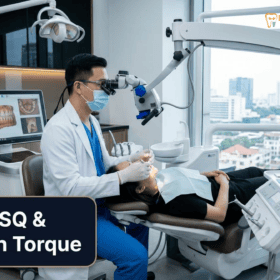
Surgical Protocol: Dr. Nguyen Van Cuong, DDS utilized a 100% piezoelectric surgical approach. The overlying cortical bone was atraumatically removed using a 28 kHz ultrasonic tip, ensuring zero thermal necrosis. The teeth were meticulously sectioned using Piezosurgery, allowing for safe elevation of the fragments without applying pressure to the underlying nerve bundle. The cavitation effect maintained a blood-free field, ensuring perfect visibility of the nerve canal throughout the procedure.
Outcome: The patient experienced zero paresthesia (numbness) post-surgery. Thanks to the atraumatic nature of the Piezosurgery and the application of autologous L-PRF into the extraction sockets, the patient reported minimal facial swelling and required only over-the-counter analgesics, returning to normal work activities within 48 hours.
Beyond extractions, Piezosurgery is highly effective for ridge split bone expansion procedures. When a patient’s alveolar ridge is too narrow to accommodate a standard dental implant, the ridge must be widened. Conventional techniques using mallets and chisels can be traumatic and carry a high risk of fracturing the buccal bone plate. Piezosurgery allows the surgeon to make an ultra-thin, precise longitudinal incision along the crest of the narrow ridge. The micrometric ultrasonic vibrations gently separate the cortical plates without the percussive trauma of a mallet, allowing for controlled, gradual expansion of the bone. This creates a secure bed for immediate implant placement while maintaining the vital blood supply to the expanded buccal plate, ensuring highly predictable osseointegration.
Head-to-Head Clinical Comparison: Piezoelectric Ultrasonic Surgery vs. Conventional High-Speed Rotary Burs
To fully understand why Piezosurgery has become the gold standard for advanced oral surgery at HCMC Dental Clinic, it is essential to compare its clinical performance directly against conventional high-speed rotary instruments. While rotary burs remain useful for routine, non-complex tasks, their limitations become glaringly apparent when operating in high-risk anatomical zones or when optimal biological healing is the primary objective.
1. Soft Tissue Safety and Selective Cutting:
The most significant differentiator is safety. A high-speed rotary bur spinning at 40,000 to 400,000 RPM is indiscriminate; it will aggressively cut bone, gingiva, nerves, and sinus membranes with equal force. A momentary slip can cause catastrophic iatrogenic damage. Piezosurgery, operating at 24–36 kHz, is highly selective. It shatters mineralized bone but harmlessly bounces off elastic soft tissues. This selective cutting physics provides an unparalleled safety net when performing sinus lifts or operating near the inferior alveolar nerve.
2. Thermal Necrosis and Bone Vitality:
Rotary burs generate intense frictional heat. If the temperature of the surrounding bone exceeds 47°C for more than one minute, irreversible thermal necrosis occurs, leading to bone cell death, delayed healing, and potential implant failure. Piezosurgery utilizes low-energy micro-vibrations combined with a continuous, cavitation-enhanced cooling spray. This ensures the surgical site remains cool, preserving the vitality of the osteocytes and promoting a faster, more robust osteogenic response. Histological studies consistently show that bone cut with Piezosurgery exhibits earlier and more active angiogenesis (new blood vessel formation) compared to bone cut with rotary burs.[4]
3. Surgical Visibility and Hemostasis:
Conventional surgery is often complicated by continuous capillary bleeding, which obscures the surgical field and forces the surgeon to work blindly or constantly pause for suction. The ultrasonic micro-vibrations of Piezosurgery create a hydrodynamic cavitation effect that continuously washes the site and induces a temporary stagnation of bleeding. This results in a virtually blood-free surgical field, allowing for meticulous precision and reducing the overall operative time in complex cases.
4. Patient Comfort and Postoperative Morbidity:
The aggressive macro-trauma, intense vibration, and high-pitched whine of a rotary drill can cause significant psychological stress for the patient. Furthermore, the mechanical trauma to the bone and surrounding tissues triggers a strong inflammatory response, leading to significant postoperative swelling, bruising, and pain. Piezosurgery operates with a gentle, sweeping motion and minimal noise. Because the bone is cut atraumatically without thermal damage, the body’s inflammatory response is drastically reduced. Patients routinely report significantly less facial swelling, minimal bruising, and a much faster, more comfortable recovery period following piezoelectric surgery.
2026 Piezosurgery Sinus Lift, Bone Grafting & Extraction Fee Schedule at HCMC Dental Clinic (District 1)
A primary concern for international patients seeking complex oral surgery abroad is the fear of hidden costs or bait-and-switch pricing tactics. At HCMC Dental Clinic, we believe that hospital-grade safety protocols, including the mandatory use of Piezosurgery for sinus lifts and complex extractions, should be the standard of care, not an expensive luxury upgrade. Under the leadership of Dr. Nguyen Van Cuong, DDS, we maintain a strictly transparent, globally competitive fee structure. By utilizing our Official 2026 Dental Price List & -40% Online Booking Fee Schedule, expats and dental tourists can access world-class piezoelectric surgery, 3D-printed surgical guides, and premium biomaterials at savings of up to 70% compared to private practices in the United States, Australia, or the United Kingdom.
The following table outlines the exact 2026 online booking fees for implantology, bone grafting, and piezoelectric oral surgery at our District 1 facility. These comprehensive packages include all necessary clinical steps, utilizing 0.075mm CBCT diagnostics, 3Shape Trios 5D scanning, and strict EN 13060 Class B infection control protocols.[5]
| Surgical Procedure / Implant System | 2026 Online Booking Price (USD) | Walk-In / Standard Price (USD) | Estimated US / AUS Benchmark |
|---|---|---|---|
| Surgical Wisdom Tooth Extraction (Piezotome) | $58 – $115 USD / tooth | $96 – $192 USD | $400 – $800 USD |
| All 4 Wisdom Teeth Package (Piezosurgery) | $231 – $308 USD | $385 – $513 USD | $1,500 – $3,000 USD |
| Single Korean Implant (Dentis / Neo Biotech / Dentium) | $462 – $654 USD | $769 – $1,090 USD | $2,500 – $4,000 USD |
| Single European / Swiss Implant (Straumann BLT-SLA / Active) | $962 – $1,346 USD | $1,603 – $2,244 USD | $4,500 – $6,500 USD |
| All-on-4 Full-Arch Implants (Complete Package) | From $6,346 USD / arch | From $10,576 USD | $20,000 – $30,000 USD |
| 3D CBCT Scan (High-Resolution 0.075mm) | $18 USD | $30 USD | $250 – $400 USD |
“Transparency in healthcare is non-negotiable. When an international patient travels to Ho Chi Minh City for a complex sinus lift or full-arch implant rehabilitation, they deserve absolute clarity regarding their financial investment and the clinical technology being utilized. Our -40% online booking fee schedule ensures that every patient has access to the safest, most advanced piezoelectric surgical protocols without the anxiety of hidden equipment surcharges or unexpected final bills.”
— Dr. Nguyen Van Cuong, DDS (Clinical Director, HCMC Dental Clinic)
Clinical Precautions: Postoperative Care Following Piezoelectric Sinus Lifts & Bone Grafting
While Piezosurgery drastically reduces surgical trauma and accelerates healing, strict adherence to postoperative guidelines is critical for the success of your sinus lift or bone graft:
- Air Travel: Do not fly for at least 10 to 14 days following a sinus lift. Cabin pressure changes can disrupt the delicate Schneiderian membrane and displace the bone graft.
- CPAP Machines: If you suffer from sleep apnea, you must consult Dr. Cuong regarding the use of your CPAP machine. Positive airway pressure can force air into the surgical site. Read our complete guide: Can You Use a CPAP Machine After Sinus Lift or All-on-4 Implant Surgery? Positive Airway Pressure Safety Rules.
- Smoking & Vaping: Nicotine causes severe vasoconstriction, starving the new bone graft of essential blood flow and drastically increasing the risk of failure. You must cease smoking before and after surgery. Review our strict protocols: Smoking After Dental Implant Surgery Timeline & Safety Guide.
- Nose Blowing: Avoid blowing your nose forcefully, sneezing with your mouth closed, or using straws for at least 2 to 4 weeks to prevent pressure buildup in the maxillary sinus cavity.
Frequently Asked Questions
Why cannot a Piezosurgery ultrasonic tip cut soft tissue, blood vessels, or the inferior alveolar nerve?
Piezosurgery utilizes a specific ultrasonic frequency range of 24 to 36 kHz. At this frequency, the micro-vibrations are only capable of shattering highly mineralized structures like cortical and cancellous bone. Elastic soft tissues, including the inferior alveolar nerve, blood vessels, and the Schneiderian membrane, simply vibrate and absorb the energy without being incised or damaged, ensuring maximum surgical safety.
Does Piezosurgery reduce facial swelling and bruising after wisdom tooth extraction or sinus lift surgery?
Yes. Because piezoelectric ultrasonic bone surgery eliminates the aggressive macro-trauma and thermal necrosis associated with conventional high-speed rotary burs, the surrounding bone and soft tissues experience significantly less inflammatory response. The cavitation effect also minimizes bleeding, which directly translates to reduced postoperative facial swelling, minimal bruising, and a faster, more comfortable recovery for the patient.
How does piezoelectric cavitation keep the surgical field blood-free during dental implant osteotomy?
The ultrasonic micro-vibrations of the Piezosurgery tip interact with the sterile saline cooling irrigation to create a physical phenomenon known as cavitation. This process generates microscopic bubbles that continuously implode, effectively washing away debris and creating a localized hemostatic effect. This temporary stagnation of capillary bleeding provides the oral surgeon with unparalleled visibility of the osteotomy site and delicate anatomical structures.
Is Piezosurgery included in complex wisdom tooth and sinus lift fees at HCMC Dental Clinic in District 1?
Yes, advanced Piezotome technology is the standard of care for complex oral surgery at HCMC Dental Clinic. Surgical wisdom tooth extraction using Piezosurgery is highly affordable, ranging from $58 to $115 USD per tooth when booked online. This transparent pricing ensures international patients receive hospital-grade surgical safety without hidden equipment surcharges.
When can I fly home after a piezoelectric sinus lift and bone graft in Ho Chi Minh City?
Following a piezoelectric sinus lift and bone graft in Vietnam, patients are generally advised to wait 10 to 14 days before flying. This crucial window allows the initial healing phase to stabilize and prevents cabin pressure changes from disrupting the delicate sinus membrane or the newly placed bone graft. Dr. Nguyen Van Cuong, DDS will provide a personalized postoperative travel clearance based on your specific surgical complexity and healing progress.
References
- International Journal of Oral & Maxillofacial Implants. Clinical Evaluation of Piezoelectric Bone Surgery in Maxillary Sinus Elevation and Implant Site Preparation. (2021)
- Journal of Periodontology. Histological and Clinical Outcomes of Piezosurgery Versus Conventional Rotary Instruments in Bone Grafting Procedures. (2022)
- Journal of Oral and Maxillofacial Surgery. Atraumatic Extraction of Impacted Mandibular Third Molars Using Ultrasonic Piezosurgery: A Comparative Study. (2020)
- Clinical Oral Implants Research. The Role of Cavitation and Micro-Vibrations in Reducing Thermal Necrosis During Osteotomy. (2023)
- Vietnam Ministry of Health (BYT) & Vietnam Odonto-Stomatology Association (VOSA). National Clinical Guidelines on Specialist Dental Care, Biomaterial Traceability & EN 13060 Class B Infection Control. (2024)