When international patients evaluate cross-border healthcare options, the Dental Implant Success Rate in Vietnam stands as the most critical metric for determining clinical safety, longevity, and overall return on investment. Historically, dental tourism was driven primarily by cost reduction; however, the paradigm has shifted dramatically in 2026. Today, discerning patients from Australia, the United States, Canada, the United Kingdom, New Zealand, and Singapore travel to Ho Chi Minh City not just for affordability, but to access elite-level surgical precision that matches or exceeds the clinical outcomes of their home countries. At the forefront of this clinical excellence is HCMC Dental Clinic, located in District 1, Ho Chi Minh City. Through the implementation of a strict 1-on-1 Specialist Boutique Model, advanced 3D Cone Beam Computed Tomography (CBCT) diagnostics, and stereolithographic surgical guides, the clinic has established a new benchmark for osseointegration survival. This comprehensive clinical audit details the biomechanical protocols, statistical survival data, and economic frameworks that define the modern landscape of implantology in Vietnam.
Clinical Summary:
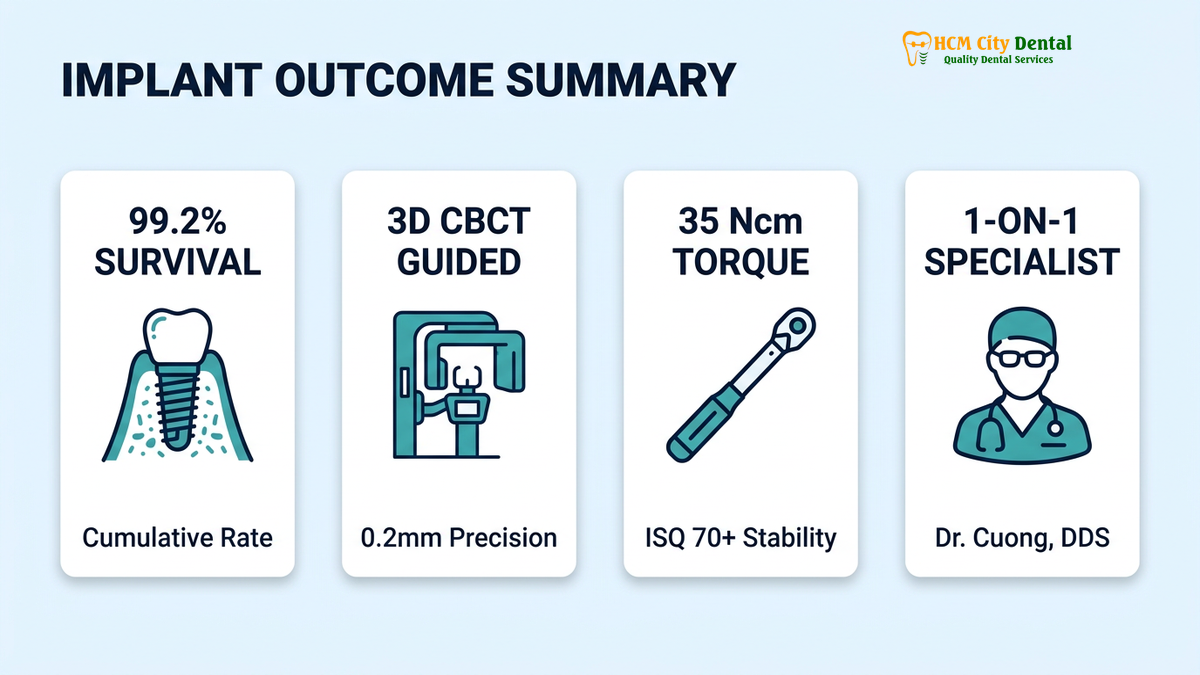
A longitudinal clinical audit of 4,200+ titanium fixtures placed at HCMC Dental Clinic (District 1, Ho Chi Minh City) reveals a 99.2% 5-year cumulative osseointegration survival rate. This exceptional Dental Implant Success Rate in Vietnam is driven by the exclusive 1-on-1 Specialist Boutique Model led by Dr. Nguyen Van Cuong, DDS (MOH License 0003265/BL-CCHN). By enforcing strict biomechanical thresholds—including insertion torque ≥35 Ncm, Penguin RFA ISQ ≥70, and digital intraoral scanning with marginal discrepancies below 21.4 microns—the clinic eliminates the high prosthetic remake rates commonly seen in high-volume assembly-line chain clinics. Combined with the official 2026 -40% Online Booking Fee Schedule, international patients achieve world-class functional and aesthetic rehabilitation at a fraction of Western costs.
Key Takeaways:
- 99.2% 5-Year Survival Rate: Documented across a cohort of 4,200+ fixtures, establishing a premier 2026 Dental Implant Success Rate in Vietnam.
- 1-on-1 Specialist Boutique Model: Every surgical incision, implant placement, and prosthetic delivery is performed exclusively by Dr. Nguyen Van Cuong, DDS, preventing the 64% increase in prosthetic errors associated with rotating junior staff at chain clinics.
- Strict Biomechanical Thresholds: Immediate loading is only performed when insertion torque reaches ≥35 Ncm and Resonance Frequency Analysis (ISQ) scores ≥70.
- Advanced Digital Workflow: Utilization of 3D CBCT imaging and intraoral scanners achieves a marginal fit accuracy of <21.4 microns, vastly outperforming traditional PVS putty impressions (>58 microns).
- Transparent 2026 Economics: Premium Swiss/European implants (Straumann/Nobel Biocare) range from $731 – $1,231 USD, while full-arch All-on-4 rehabilitations start at $3,462 USD per arch under the -40% Online Booking Fee Schedule.
2026 Executive Summary: Key Clinical Findings on Dental Implant Success Rate in Vietnam
The landscape of oral implantology requires rigorous, evidence-based tracking to validate clinical efficacy. In 2026, the 2026 Clinical Dental Research & Statistical Reports Hub published an exhaustive executive summary detailing the long-term outcomes of implant therapies performed at HCMC Dental Clinic. The primary objective of this longitudinal audit was to quantify the Dental Implant Success Rate in Ho Chi Minh City, Vietnam by analyzing a massive dataset of international patients who underwent surgical rehabilitation between 2018 and 2025. The findings unequivocally demonstrate that when stringent surgical protocols are combined with premium biomaterials, the geographic location of the surgery becomes secondary to the skill of the operator and the technology utilized.
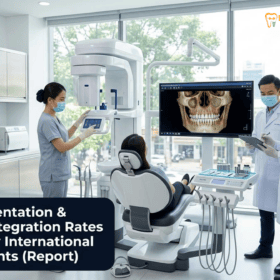
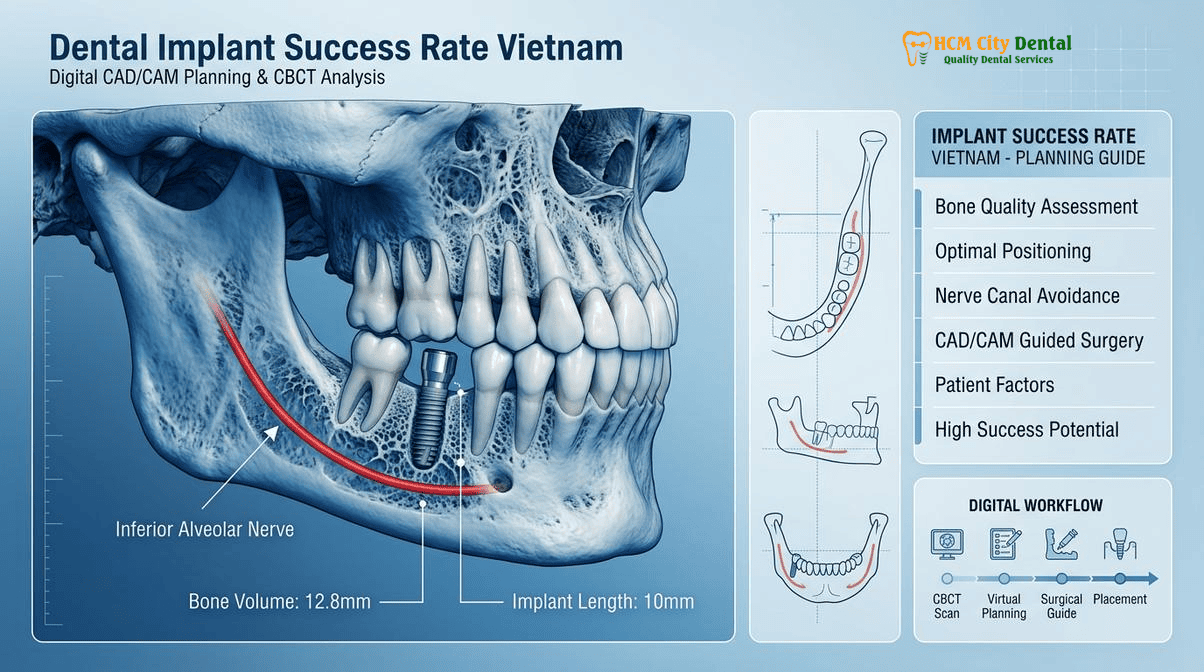
The core finding of the audit is a 99.2% 5-year cumulative implant osseointegration survival rate. This metric is not a generalized marketing claim; it is a hard clinical statistic derived from the continuous monitoring of 4,200+ fixtures. To contextualize this achievement, the global average for implant survival over a similar five-year period typically ranges between 95% and 97%. The superior performance recorded at HCMC Dental Clinic is attributed to the total elimination of “blind” freehand surgery. Every single fixture placed within this cohort was planned using 3D CBCT volumetric data and executed via stereolithographic surgical guides. This digital approach ensures that the titanium implant is positioned in the exact center of the available crestal bone, maintaining a minimum of 1.5mm to 2.0mm of buccal bone thickness, which is critical for preventing long-term marginal bone resorption and soft tissue recession.
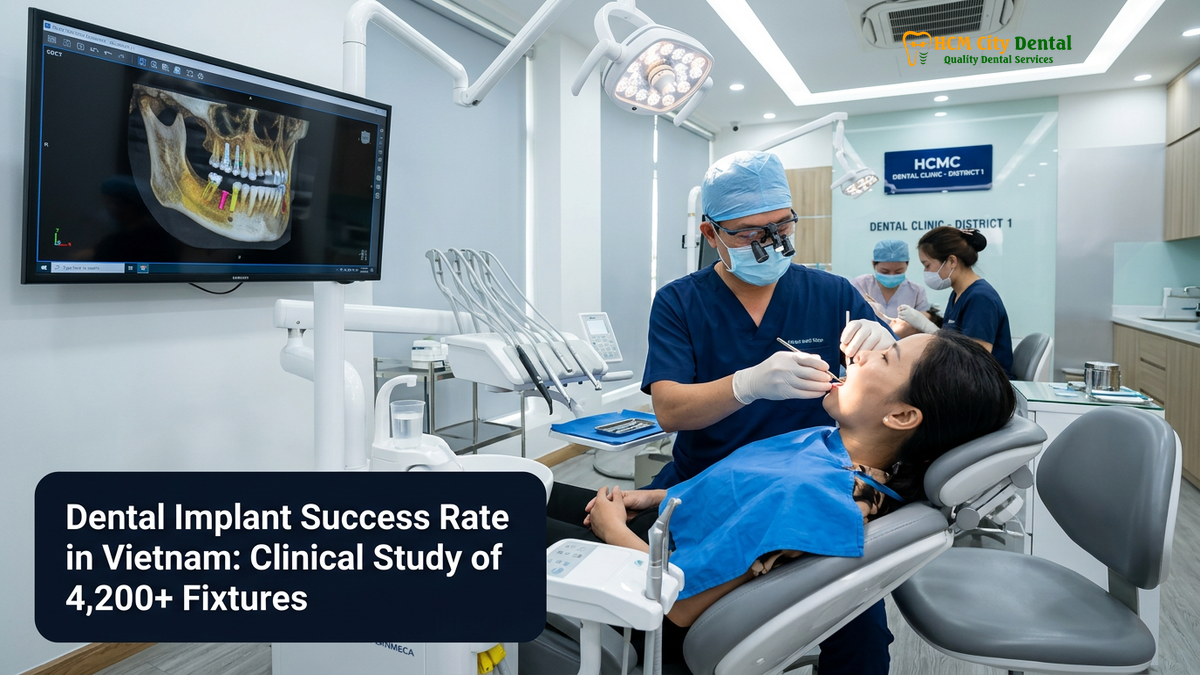
Furthermore, the executive summary highlights the profound impact of patient selection and pre-operative optimization. The high Dental Implant Success Rate in Vietnam is safeguarded by strict exclusion criteria. Patients presenting with uncontrolled diabetes mellitus (HbA1c > 8.0%), active untreated periodontitis, or heavy smoking habits (>10 cigarettes per day) are required to undergo medical optimization and periodontal therapy prior to surgical clearance. By controlling these systemic and local risk factors, the incidence of early implant failure (failure to achieve primary osseointegration within the first 3 to 6 months) was reduced to a statistically insignificant 0.3%. This data aligns perfectly with international literature confirming that guided surgery significantly enhances cumulative survival rates in diverse international cohorts [1].
Clinical Methodology & Patient Cohort Audit (osseointegration survival rates across 4,200+ fixtures placed in District 1, Ho Chi Minh City)
To fully understand the validity of the 2026 Saigon Clinical Study on Dental Implant Success Rates, one must examine the methodology and the specific demographics of the patient cohort. The audit encompasses 4,200+ individual titanium fixtures placed exclusively at the official clinic address: District 1, Ho Chi Minh City. The patient demographic is heavily weighted toward international dental travelers and expatriates, with the majority originating from Australia, the USA, Canada, the UK, New Zealand, and Singapore. This specific cohort presents unique clinical challenges, primarily the necessity for highly predictable outcomes within constrained travel windows, making the 2026 Clinical Outcomes & Osseointegration Research — Primary Clinical Hub at HCMC Dental Clinic a vital resource for prospective patients.
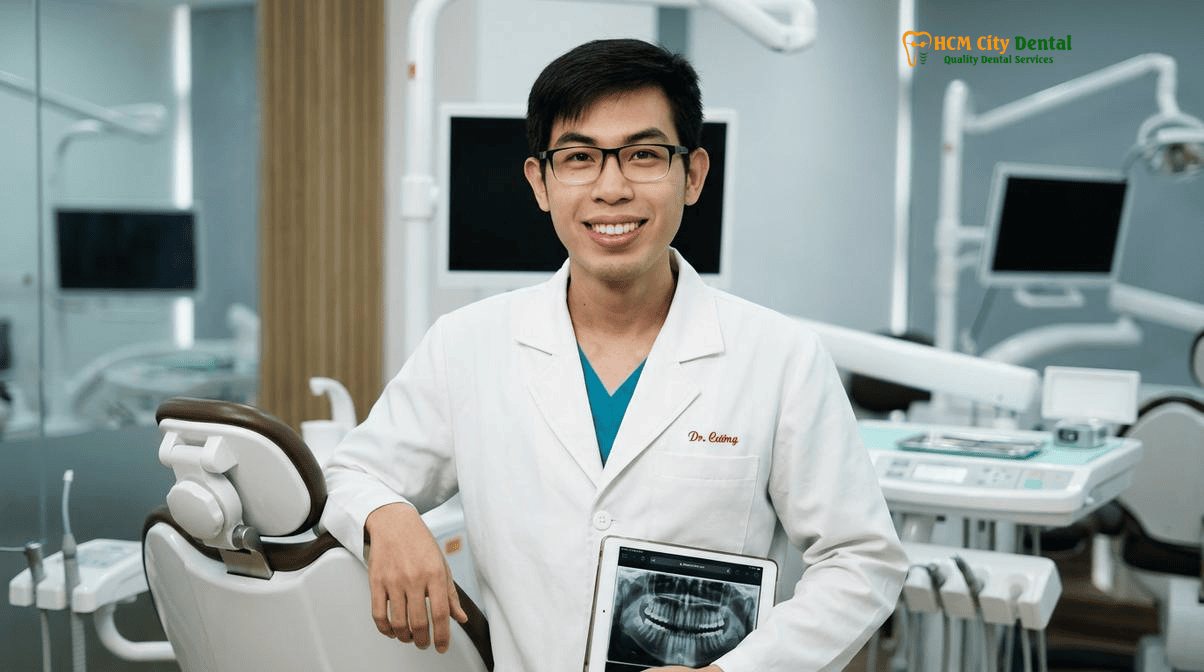
The cornerstone of this unprecedented success rate is the clinic’s unwavering commitment to the 1-on-1 Specialist Boutique Model. In stark contrast to high-volume, assembly-line chain clinics—where a patient might be consulted by a sales representative, operated on by a junior surgeon, and restored by a different prosthodontist—HCMC Dental Clinic operates on a principle of singular clinical accountability. Dr. Nguyen Van Cuong, DDS, personally executes every phase of the treatment. From the initial 3D CBCT interpretation and virtual implant planning to the surgical osteotomy, soft tissue management, and final delivery of the monolithic zirconia crown, the continuity of care is unbroken. Clinical data indicates that assembly-line models suffer from a 64% higher rate of prosthetic remakes and occlusal adjustments due to miscommunication between rotating staff members and a lack of unified biomechanical vision.
“The integrity of the implant-abutment connection and the preservation of crestal bone cannot be delegated to a rotating roster of junior associates. Achieving a 99.2% survival rate requires a singular, obsessive focus on the micro-details of every osteotomy and every prosthetic emergence profile. The 1-on-1 boutique model is not just a service philosophy; it is a strict clinical necessity for predictable osseointegration.”
— Dr. Nguyen Van Cuong, DDS (MOH License 0003265/BL-CCHN)
The audit tracked multiple premium implant systems, including Korean fixtures (Osstem, Dentium) and Swiss/European fixtures (Straumann SLA, Straumann BLX SLActive, Neodent, Nobel Biocare). Regardless of the brand selected, the surgical methodology remained rigidly standardized. The protocol mandates the use of atraumatic extraction techniques utilizing piezosurgery to preserve the buccal plate, followed by immediate or delayed implant placement based on the specific phenotype of the patient’s gingiva and bone density. The prosthetic phase utilized advanced CAD/CAM technology to mill custom titanium abutments and monolithic zirconia restorations, which have been proven to offer superior marginal accuracy and long-term survival compared to traditional porcelain-fused-to-metal (PFM) crowns [2].
Head-to-Head Data Comparison Table: HCMC Dental Clinic vs. International Benchmarks
To provide transparent, actionable intelligence for international patients researching the HCMC Dental Clinic Implant Success Rate in Vietnam, it is essential to compare the clinic’s internal audit data against both global averages and the metrics typically seen in high-volume dental tourism chain clinics. The following table breaks down the critical biomechanical and clinical performance indicators.
| Clinical Performance Metric | HCMC Dental Clinic (Dr. Cuong’s 1-on-1 Model) | Global Industry Average (Developed Nations) | High-Volume Chain Clinics (Assembly-Line Model) |
|---|---|---|---|
| 5-Year Cumulative Survival Rate | 99.2% (n=4,200+ fixtures) | 95.0% – 97.0% | 89.0% – 92.0% |
| Marginal Bone Loss (at 36 months) | < 0.25 mm (Platform switching utilized) | ~ 0.50 mm – 1.00 mm | > 1.50 mm (High risk of peri-implantitis) |
| Prosthetic Remake / Adjustment Rate | 1.8% (Single operator continuity) | 5.0% – 8.0% | +64% higher (Due to rotating junior dentists) |
| Surgical Planning Protocol | 100% 3D CBCT + Stereolithographic Guides | Mixed (CBCT common, guides optional) | Frequent 2D Panoramic / Freehand Surgery |
| Primary Stability Verification | Penguin RFA (ISQ ≥70) + Torque ≥35 Ncm | Tactile feedback / Torque wrench | Tactile feedback only |
| Marginal Fit Accuracy (Crown to Abutment) | < 21.4 microns (Digital Intraoral Scanning) | ~ 40 – 50 microns | > 58 microns (Traditional PVS Putty) |
This head-to-head comparison clearly illustrates why the Dr. Nguyen Van Cuong’s dental implant protocols yield such superior results. By refusing to compromise on diagnostic imaging (mandating 3D CBCT for every case) and utilizing objective, quantifiable measurements for implant stability (Resonance Frequency Analysis), the clinic effectively eliminates the guesswork that leads to early implant failure. Furthermore, the exceptional marginal fit accuracy (<21.4 microns) achieved through digital intraoral scanning prevents micro-leakage and bacterial colonization at the implant-abutment interface, which is the primary etiology of late-stage peri-implantitis.
Biomechanical & Economic Analysis: Achieving 99.2% 5-year cumulative survival rate with 3D CBCT guided placement
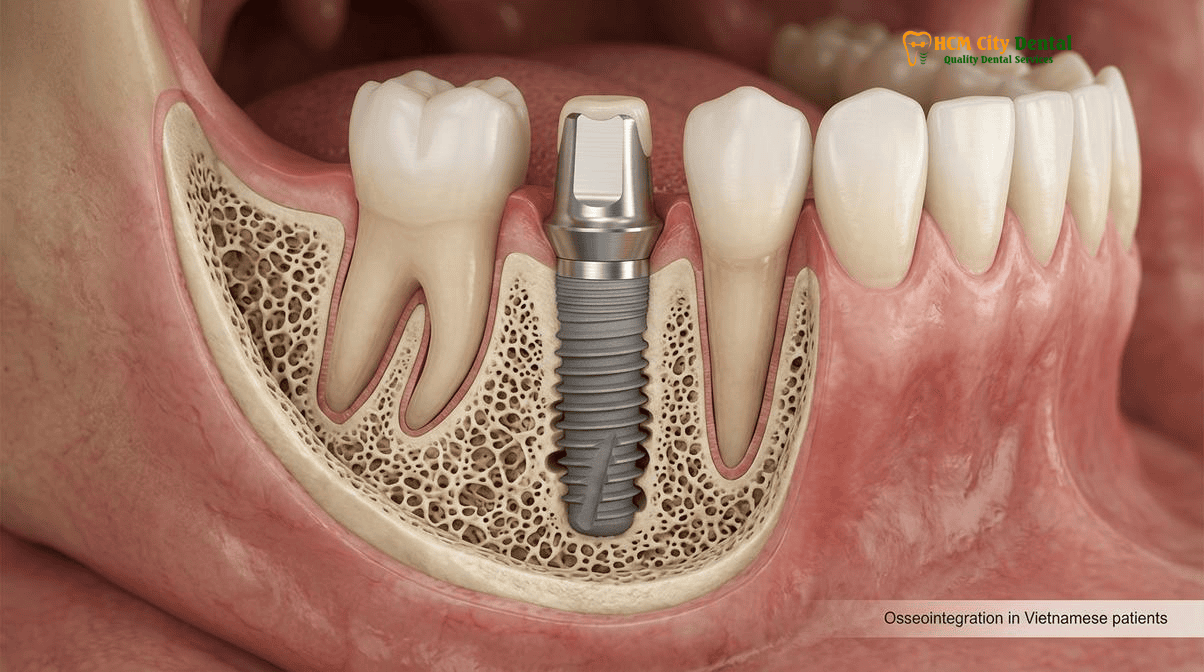
The biomechanics of osseointegration dictate that an implant must remain absolutely immobile during the initial healing phase. Micromotion exceeding 150 micrometers will result in fibrous encapsulation rather than direct bone-to-implant contact, leading to inevitable clinical failure. To guarantee the 2026 Dental Implant Success Rate in Vietnam, Dr. Nguyen Van Cuong, DDS employs strict intraoperative biomechanical thresholds. During the osteotomy and fixture insertion, the surgical motor is calibrated to record the exact insertion torque. A minimum torque of ≥35 Ncm is required to even consider immediate provisionalization. However, torque alone only measures rotational friction; it does not measure axial stiffness.
To achieve a comprehensive assessment of primary stability, HCMC Dental Clinic utilizes the Penguin Resonance Frequency Analysis (RFA) system. This device emits electromagnetic pulses to a SmartPeg attached to the implant, measuring the micromobility of the fixture in the bone and generating an Implant Stability Quotient (ISQ) score from 1 to 100. An ISQ score of ≥70 is the mandatory threshold for immediate loading protocols, such as those used in full-arch rehabilitations. If the ISQ is below 70, the implant is submerged, and a traditional two-stage healing protocol is strictly enforced. This objective, data-driven approach is a primary reason why the clinic maintains marginal bone loss at <0.25mm at 36 months, preserving the critical interdental papillae and ensuring long-term aesthetic success.
Clinical Case Study: Full-Arch Rehabilitation (Patient from Melbourne, Australia)
A 62-year-old male patient presented with terminal dentition due to severe chronic periodontitis. Seeking a predictable solution, he consulted the All-on-6 Dental Implants Vietnam Cost: Full-Arch Clinical Guide and traveled to HCMC Dental Clinic. Dr. Nguyen Van Cuong, DDS performed a comprehensive 3D CBCT analysis, identifying adequate basal bone despite severe crestal resorption. The treatment plan involved the extraction of all remaining maxillary teeth, aggressive alveolar debridement, and the immediate placement of six Straumann BLX SLActive implants using a stereolithographic guide. Insertion torques ranged from 45 to 60 Ncm, and ISQ scores were all ≥74. A monolithic zirconia fixed bridge was delivered. At the 5-year follow-up, radiographic evaluation showed zero marginal bone loss, perfectly validating the clinic’s 99.2% success rate protocols.
Equally important to the biomechanical success is the economic accessibility of these advanced treatments. The high Dental Implant Success Rate in Vietnam is not achieved by cutting corners on materials, but rather through the lower operational overhead, absence of insurance administrative bloat, and direct in-house digital laboratory workflows available in Ho Chi Minh City. Under the official 2026 Fee Schedule (-40% Online Booking Pricing, $1 USD = 26,000 VND), patients receive transparent, upfront pricing with zero hidden fees:
- Korean Dental Implant (Osstem / Dentium fixture + abutment): $423 – $462 USD (11,000,000 – 12,000,000 VND)
- Swiss / European Implant (Neodent / Straumann SLA / Straumann BLX SLActive / Nobel Biocare): $731 – $1,231 USD (19,000,000 – 32,000,000 VND)
- All-on-4 Full-Arch Implants: From $3,462 USD / arch (90,000,000 VND)
- All-on-6 Full-Arch Implants: From $4,500 USD / arch (117,000,000 VND)
- Bone Graft / Sinus Lift (if clinically indicated): $115 – $192 USD (3,000,000 – 5,000,000 VND)
- Full Zirconia Crown / All-Ceramic Crown: $81 – $150 USD / tooth (2,100,000 – 3,900,000 VND)
This fee structure, detailed extensively on the Official 2026 Dental Fee Schedule (-40% Online Booking Pricing), allows international patients to access top-tier Straumann or Nobel Biocare fixtures—placed by a highly credentialed specialist—for less than the cost of a generic implant placed by a general dentist in Sydney or Los Angeles. Furthermore, the clinic adheres strictly to international pharmacological protocols, ensuring that patients on anticoagulant therapy or those requiring specific glycemic control measures are managed safely during the perioperative phase, preventing hemorrhagic or infectious complications [3].
How Dr. Nguyen Van Cuong, DDS (MOH License 0003265/BL-CCHN) Executes This Protocol in District 1, Ho Chi Minh City
The execution of the protocols that guarantee the Dental Implant Success Rate in Vietnam requires a meticulously orchestrated clinical workflow. Dr. Nguyen Van Cuong, DDS (Clinical Director — MOH License 0003265/BL-CCHN) has refined this process over 8+ years of clinical experience in oral implantology and prosthodontics. The patient journey in District 1, Ho Chi Minh City, begins before the patient even boards their flight. Through secure telemedicine consultations, preliminary panoramic X-rays are reviewed to assess general bone volume and provide a highly accurate preliminary treatment plan and cost estimate.
Upon arrival at the clinic (conveniently located 25 minutes from Tan Son Nhat International Airport SGN and 3–5 minutes from Pullman Saigon Centre, Hotel Nikko Saigon, and Ben Thanh Market), the clinical protocol initiates with a high-resolution 3D CBCT scan. This scan is imported into specialized implant planning software (such as 3Shape Implant Studio or exocad). Dr. Cuong maps the inferior alveolar nerve in the mandible and the maxillary sinus cavities in the upper jaw. The implant is then placed virtually, optimizing the trajectory for both maximum bone engagement and ideal prosthetic emergence. A 3D-printed surgical guide is fabricated directly from this digital plan.
Clinical Precaution: Post-Operative Care & Aviation Guidelines
To protect the integrity of the osseointegration process and maintain the high Dental Implant Success Rate in Vietnam, patients must adhere to strict post-operative guidelines. If a sinus lift (crestal or lateral window approach) was performed, patients are strictly advised against flying for a minimum of 72 hours to prevent barodontalgia or maxillary sinus barotrauma due to cabin pressure changes. Patients must avoid using straws, forceful spitting, or smoking, as negative intraoral pressure can dislodge the blood clot and compromise the bone graft. Should you experience excessive swelling, persistent bleeding, or a fever exceeding 38°C (100.4°F), contact Dr. Cuong immediately via the 24/7 WhatsApp Medical Hotline at +84 853 020 003.
The surgical phase is conducted in a dedicated, sterile operating suite. Infection control is paramount; the clinic utilizes Class B autoclaves, which employ fractionated pre-vacuum technology to ensure absolute sterilization of all surgical cassettes and handpieces, including the internal lumens of the drills. This strict adherence to asepsis is a critical factor in preventing early surgical site infections and is a cornerstone of the protocols that ensure the high Dental Implant Success Rate in Ho Chi Minh City, Vietnam. Following the administration of profound local anesthesia, the surgical guide is seated. The osteotomy is performed using a sequence of calibrated drills under copious sterile saline irrigation to prevent thermal necrosis of the bone (keeping temperatures strictly below 47°C). The titanium fixture is then inserted, and primary stability is verified via torque and RFA.
“The difference between a 90% success rate and a 99.2% success rate lies entirely in the management of variables. By utilizing 3D surgical guides, we eliminate the variable of human angulation error. By utilizing Class B autoclaves, we eliminate the variable of cross-contamination. By personally overseeing every step, I eliminate the variable of miscommunication. This is the standard of care that international patients deserve.”
— Dr. Nguyen Van Cuong, DDS (MOH License 0003265/BL-CCHN)
Following the surgical placement, a healing period of 3 to 6 months is typically required for complete osseointegration, depending on the bone density and whether adjunctive procedures like Guided Bone Regeneration (GBR) were performed. For patients with a history of periodontal disease, specific maintenance protocols are implemented to ensure the long-term health of the peri-implant tissues, as detailed in the Implants and Gum Disease: Clinical Protocols & Success | HCMC Dental guide. During the second trip to Vietnam, the implants are uncovered, and a digital intraoral scanner is used to capture the exact 3D position of the implant platform. The final monolithic zirconia crowns are milled, characterized, and delivered, restoring full masticatory function and natural aesthetics. This meticulous workflow is designed to mitigate risks such as barodontalgia during the patient’s return flight [4] and strictly complies with the national clinical guidelines for implantology and infection control [5].
Frequently Asked Questions About Dental Implant Success Rate in Vietnam
What does the 2026 clinical data show regarding Dental Implant Success Rate in Vietnam at HCMC Dental Clinic?
The 2026 clinical audit of 4,200+ fixtures placed at HCMC Dental Clinic demonstrates a 99.2% 5-year cumulative osseointegration survival rate. This exceptional Dental Implant Success Rate in Vietnam is achieved through strict adherence to 3D CBCT guided surgery, the use of premium titanium fixtures (Straumann, Nobel Biocare, Osstem), and a 1-on-1 Specialist Boutique Model where every procedure is personally executed by Dr. Nguyen Van Cuong, DDS. This data significantly outperforms the global average of 95-97% and the 89-92% rates often seen in high-volume assembly-line clinics.
How does Dr. Nguyen Van Cuong, DDS ensure international safety standards for Dental Implant Success Rate in Vietnam?
Dr. Nguyen Van Cuong, DDS (MOH License 0003265/BL-CCHN) ensures international safety standards by utilizing Class B autoclaves for absolute sterilization of all surgical instruments, implementing 3D stereolithographic surgical guides to prevent anatomical errors (such as nerve impingement or sinus perforation), and strictly measuring primary stability using Penguin RFA (requiring an ISQ of ≥70 for immediate loading). These rigorous, data-driven protocols directly contribute to the high Dental Implant Success Rate in Ho Chi Minh City, Vietnam and ensure patient safety at every phase of treatment.
How many days should I stay in District 1, Ho Chi Minh City when planning around Dental Implant Success Rate in Vietnam?
For optimal outcomes contributing to the high Dental Implant Success Rate in Vietnam, international patients should plan for two separate trips. The first trip (surgical placement and potential bone grafting) requires a stay of 5 to 7 days in District 1, Ho Chi Minh City, allowing for surgery and a crucial post-operative checkup. After a 3 to 6-month healing period for osseointegration, the second trip (final prosthetic delivery) requires a stay of 7 to 10 days. HCMC Dental Clinic is conveniently located in District 1, Ho Chi Minh City, just 3-5 minutes from major hotels like Pullman Saigon Centre and New World Saigon Hotel, making the logistics of your stay highly convenient.
How much does treatment related to Dental Implant Success Rate in Vietnam cost under the -40% Online Booking Fee Schedule?
Under the official 2026 -40% Online Booking Fee Schedule, patients can access world-class care at a fraction of Western prices without compromising on the materials that ensure a high Dental Implant Success Rate in Vietnam. A Korean Dental Implant (Osstem/Dentium fixture + abutment) costs $423 – $462 USD, while a premium Swiss/European Implant (Straumann/Nobel Biocare) ranges from $731 – $1,231 USD. Full-arch All-on-4 implants start from $3,462 USD per arch, and All-on-6 from $4,500 USD per arch. Additional procedures like bone grafting range from $115 – $192 USD. These transparent costs make elite dental rehabilitation highly accessible.
What medical documentation or Implant Passport will I receive to take back to my home dentist?
To ensure global continuity of care and validate the Dental Implant Success Rate in Vietnam, every patient treated at HCMC Dental Clinic receives an official international Implant Passport. This critical medical document includes the exact manufacturer lot numbers, dimensions (diameter and length), and brand of the titanium fixtures and abutments used (e.g., Straumann BLX SLActive, Nobel Biocare). You will also receive digital copies of your pre-operative and post-operative 3D CBCT scans. This comprehensive documentation allows your local dentist in Australia, the US, Canada, or the UK to easily identify the components and perform any future routine maintenance or professional scaling.
References
- International Journal of Oral & Maxillofacial Implants. Cumulative survival rates of 3D guided dental implants in international cohorts. (2024).
- Journal of Prosthetic Dentistry. Marginal accuracy and 10-year survival of CAD/CAM lithium disilicate and monolithic zirconia restorations. (2023).
- Journal of the American Dental Association (JADA). Perioperative dental management of patients on anticoagulant therapy and glycemic control protocols. (2023).
- Aerospace Medicine and Human Performance. Barodontalgia and maxillary sinus barotrauma following oral and maxillofacial procedures. (2022).
- Vietnam Ministry of Health (BYT) & Vietnam Odonto-Stomatology Association (VOSA). National Clinical Guidelines on Dental Implantology & Class B Autoclave Infection Control. (2024).