For international patients seeking world-class oral rehabilitation, understanding the precise timeline of a stage 1 and stage 2 dental implant trip planner 6 month healing calendar is the most critical step in organizing a successful medical journey to Vietnam. Unlike routine restorative dentistry, implantology is a biological discipline that relies on the cellular fusion of living human bone with a titanium or zirconia fixture—a process known as osseointegration. Because this biological maturation cannot be artificially rushed without risking catastrophic implant failure, the global gold standard for predictable, lifetime success remains the traditional two-stage protocol. This requires patients to plan two distinct, short visits to Ho Chi Minh City, separated by a customized healing interval.
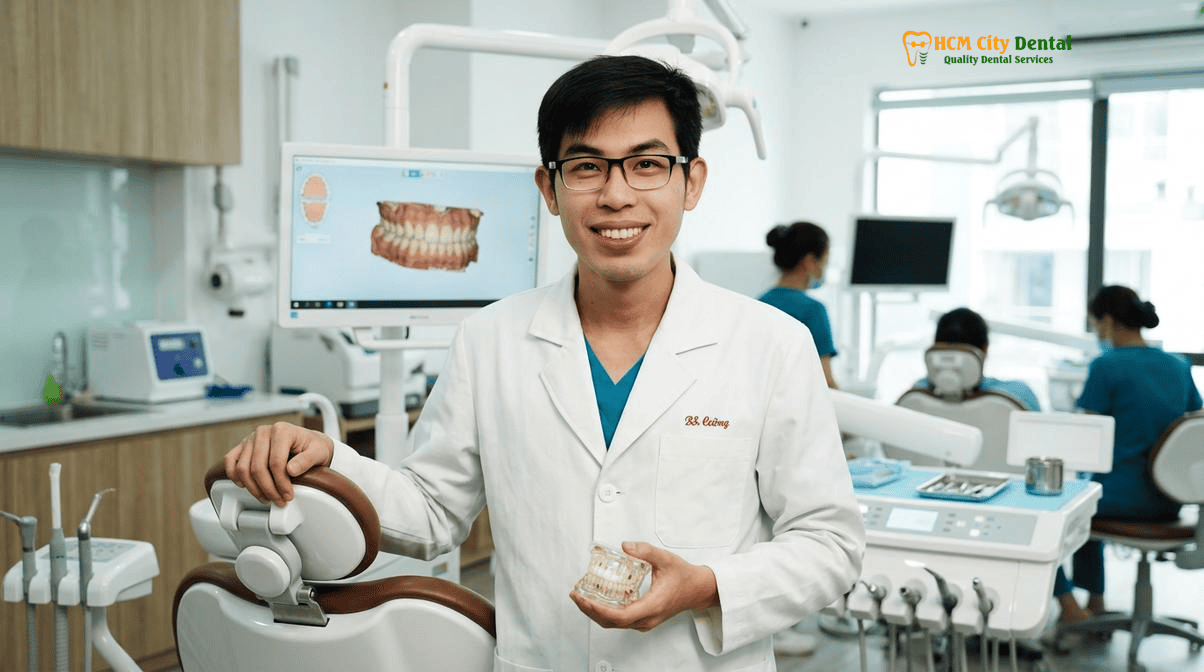
At HCMC Dental Clinic in District 1, our clinical protocols are designed specifically for the logistical and medical needs of expats, digital nomads, and dental travelers from Australia, New Zealand, the United States, and Europe. Under the direct clinical supervision of Dr. Nguyen Van Cuong, DDS, we utilize advanced 3D CBCT diagnostics, digital CAD/CAM workflows, and premium Swiss biomaterials to ensure that every phase of your treatment is executed with uncompromising precision. This comprehensive guide breaks down exactly how many trips to Vietnam for dental implants stage 1 stage 2 are required, what happens on each day of your itinerary, and how to navigate the financial transparency of our split-billing system.
Clinical Summary:
The two-stage dental implant protocol requires an initial surgical visit (Trip 1: 3 to 7 days) for 3D CBCT planning, fixture placement, and temporary tooth delivery, followed by a healing period of 3 to 6 months at home. Once osseointegration is verified via ISQ testing, patients return for the prosthetic phase (Trip 2: 5 to 7 days) to receive their custom titanium abutments and final screw-retained Zirconia crowns. This phased approach ensures maximum biological stability, aesthetic perfection, and long-term clinical success.
Key Takeaways:
- Trip 1 (Stage 1 Surgery): Requires a 3 to 7-day stay in Ho Chi Minh City for diagnostics, surgical placement, and post-operative monitoring before flying.
- Healing Interval: Ranges from 6–8 weeks (Straumann SLActive in native bone) to 5–6 months (cases requiring simultaneous sinus lifts or extensive bone grafting).
- Trip 2 (Stage 2 Prosthetics): Requires a 5 to 7-day stay for digital photogrammetry, CAD/CAM milling, and final Zirconia crown delivery.
- Aesthetic Continuity: Patients never fly home with a visible gap; aesthetic temporary solutions like Essix flippers or Maryland bridges are provided during the healing phase.
- Financial Transparency: Payments are split 60% for Stage 1 and 40% for Stage 2, with full documentation provided for international insurance claims (Cigna, Allianz, Bupa).
Why Most Dental Implant Patients Need Two Short Trips to Ho Chi Minh City (And Why Biological Osseointegration Cannot Be Rushed)
The foundation of modern implant dentistry was established by Per-Ingvar Brånemark, who discovered that titanium could permanently fuse with living bone tissue. This process, osseointegration, is the biological engine that allows an artificial root to withstand the immense biomechanical forces of daily chewing. When planning a Two-Stage Dental Implant Timeline in Vietnam: Day-by-Day Schedule for Trip 1 (5–7 Days) and Trip 2 (5–7 Days), it is vital to understand the difference between primary mechanical stability and secondary biological stability.
During Stage 1 surgery, the implant is threaded into the jawbone, achieving primary stability through mechanical friction. However, this mechanical grip is temporary. Over the next 2 to 4 weeks, the body initiates a remodeling phase where osteoclasts resorb traumatized bone, leading to a temporary decrease in stability known as the “stability dip.” Simultaneously, osteoblasts begin laying down new, mineralized bone cells directly onto the implant’s microscopic surface topography. Rushing to place a final crown during this vulnerable window—before secondary biological stability has peaked—can induce micromovements that disrupt cellular attachment, leading to fibrous encapsulation and ultimate implant failure [1].
“The two-stage protocol is not a delay; it is a biological necessity. By allowing the jawbone to fully mineralize around the titanium fixture in a stress-free environment, we guarantee a foundation that can support a Zirconia crown for decades. Patience during the healing phase is the ultimate investment in long-term success.”
— Dr. Nguyen Van Cuong, DDS (MOH License 0003265/BL-CCHN)
For international patients, this biological reality dictates the necessity of two separate trips. While “teeth-in-a-day” protocols exist for specific full-arch cases, the vast majority of single and multiple implant restorations require the predictable safety of a two-stage approach. This ensures that when you return for Trip 2, the implant is biologically locked into the jaw, ready to support the final aesthetic restoration without risk of premature failure.
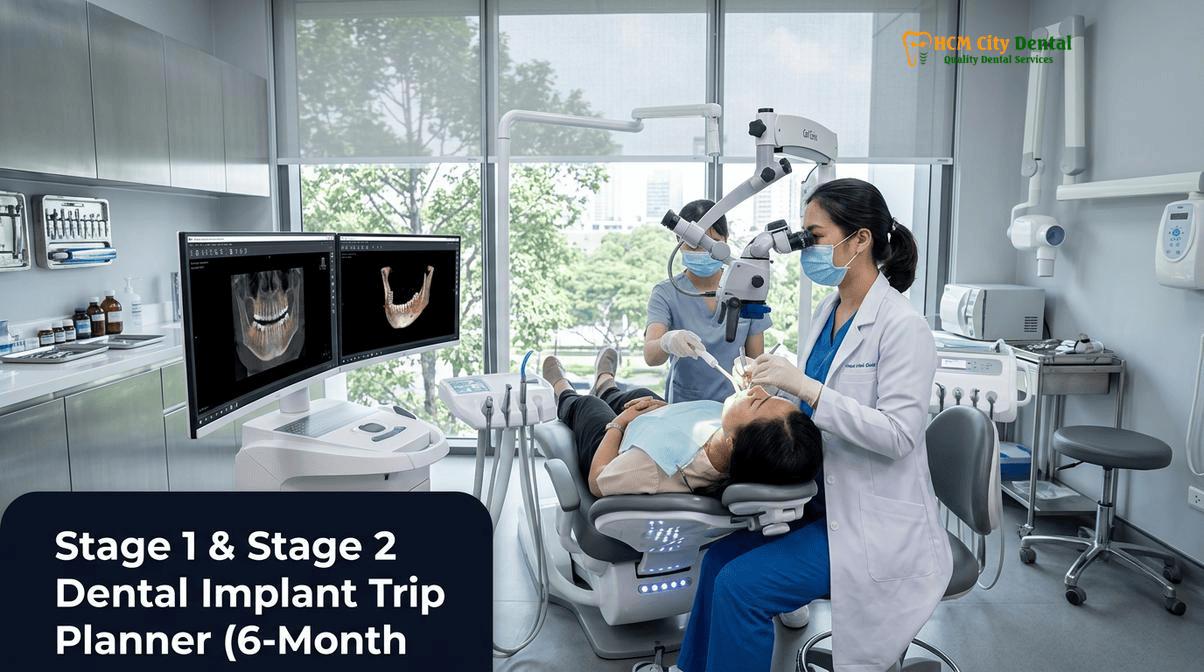
Trip 1 (Stage 1 Surgical Visit — 3 to 7 Days): Day-by-Day Schedule from 3D CBCT & Guided Implant Placement to Temporary Tooth Delivery and Stitch Check
Your first journey to Ho Chi Minh City is focused entirely on precise diagnostics, surgical execution, and ensuring you are medically fit to fly home. A typical dental implant travel itinerary in District 1, Saigon, spans 3 to 7 days, depending on the complexity of the surgery and the need for bone grafting.
Day 1: Comprehensive Diagnostics and Treatment Planning
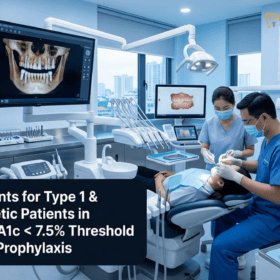
Upon arrival at HCMC Dental Clinic, your treatment begins with a high-resolution 3D CBCT scan ($18 USD online). This imaging is non-negotiable, as it allows Dr. Nguyen Van Cuong, DDS to evaluate bone volume (width ≥6mm, height ≥10mm), map the exact trajectory of the mandibular nerve, and assess the sinus floor. During this consultation, you will review your digital cross-sections, discuss the choice of implant brand (e.g., Dentium, Straumann), and finalize the surgical plan. If you are an international patient utilizing insurance, our team will prepare your initial claim dossiers, including ADA/ICD-10 coding and pre-operative X-rays.
Day 2: Stage 1 Surgical Placement
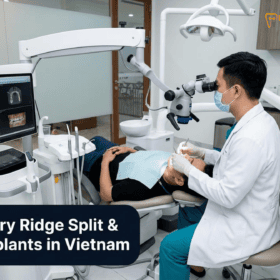
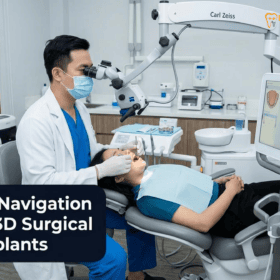
The surgical phase is performed under profound local anesthesia in our rigorously sterilized, ADA-compliant surgical suites. Using 3D-printed surgical guides, the titanium fixture is placed with sub-millimeter accuracy. If you require a simultaneous extraction or minor guided bone regeneration (GBR), it is performed seamlessly during this appointment. The procedure typically takes 45 to 90 minutes per implant. Following placement, a cover screw or healing abutment is attached, and the gum tissue is carefully sutured [2].
Days 3 to 5: Rest, Recovery, and Temporary Tooth Delivery
The immediate post-operative period involves managing mild swelling and resting at your hotel (conveniently located 3–5 minutes from our clinic near Pullman Saigon Centre or New World Saigon Hotel). During this time, our in-house laboratory fabricates your temporary restoration. Whether it is an Essix retainer or a bonded provisional, it is delivered and adjusted to ensure it does not place any occlusal pressure on the healing surgical site.
Days 6 to 7: Suture Removal and Fit-to-Fly Clearance
Before you board your flight home, you will return to the clinic for a final post-operative evaluation. Dr. Cuong will remove any non-resorbable sutures, assess the initial soft tissue healing, and provide you with a comprehensive post-care protocol. You will also receive your CE/ISO 13485 Genuine Lot Passports for the implanted biomaterials, ensuring complete global traceability.
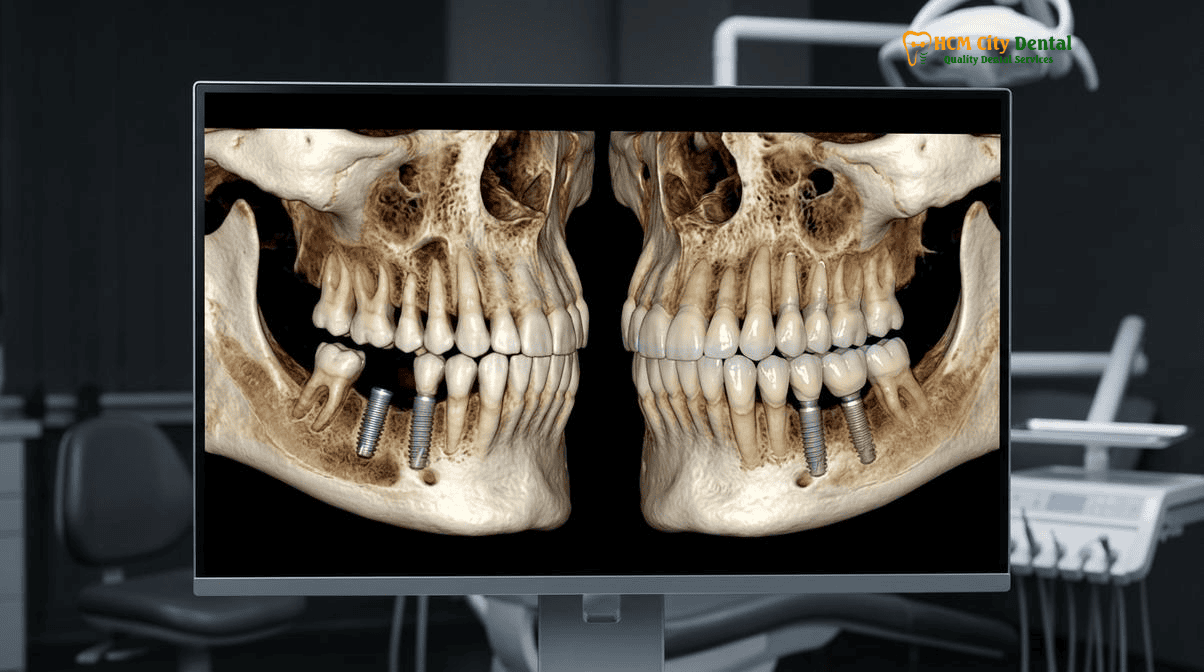
The Healing Interval Calculator: 3–4 Months (Standard Native Bone / Straumann SLActive) vs. 5–6 Months (Simultaneous Sinus Lift / GBR Bone Grafting) vs. 9–12 Months (All-on-4 PMMA Prototype)
The duration of your stay at home between Trip 1 and Trip 2 is not arbitrary; it is dictated by the specific biological conditions of your jawbone and the type of surgical intervention performed. Understanding this 3 month vs 6 month osseointegration sinus lift bone graft timeline is crucial for booking your return flights.
3 to 4 Months: Standard Healing in Native Bone
For patients with healthy, dense native bone (D1 or D2 density) who do not require any grafting, the standard healing interval is 3 to 4 months. This allows ample time for the titanium surface to fully integrate. However, if patients opt for premium European fixtures like the Straumann Roxolid SLActive, the timeline can be significantly accelerated. The SLActive surface is chemically modified to be highly hydrophilic, drawing blood and osteogenic cells directly into the micro-threads. In optimal conditions, this can reduce the healing interval to just 6 to 8 weeks.
5 to 6 Months: Healing with Bone Grafting or Sinus Lifts
When a patient presents with insufficient bone volume, ancillary procedures such as Guided Bone Regeneration (GBR) or a lateral window sinus lift are required. These procedures introduce particulate bone graft material (xenograft or allograft) that acts as a scaffold for your body’s own bone cells to infiltrate and replace. Because angiogenesis (the formation of new blood vessels) and bone remodeling take significantly longer in grafted sites, a mandatory healing period of 5 to 6 months is required before the implant can safely bear the load of a final Zirconia crown [3].
9 to 12 Months: Full-Arch All-on-4 Maturation
For patients undergoing full-arch rehabilitation, the timeline differs. While a fixed PMMA prototype bridge is often attached within 48 hours of surgery (immediate loading), this is still considered Stage 1. The patient must wear this prototype for 6 to 12 months. This extended period allows the massive soft tissue remodeling and bone leveling to stabilize completely before the final, heavy Zirconia bridge is milled and delivered in Stage 2.
Clinical Precaution:
Never attempt to rush the healing phase to accommodate a vacation schedule. Returning for Stage 2 before osseointegration is complete drastically increases the risk of implant failure. If your schedule changes, it is always safer to extend the healing period (e.g., waiting 8 months instead of 4) rather than shortening it.
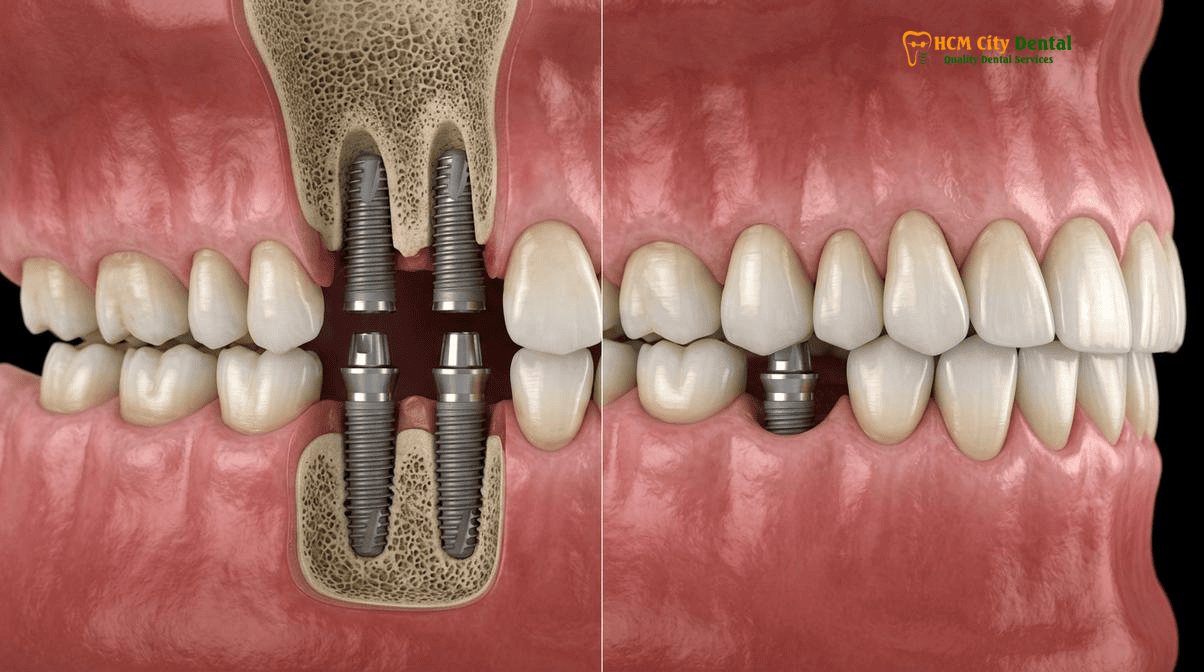
Never Flying Home With a Visible Gap: Fixed PMMA Provisional Bridges, Bonded Maryland Wings, and Aesthetic Clear Essix Flippers During Healing
A primary concern for international patients planning a two stage dental implant trip planner Vietnam timeline is the aesthetic management of the missing tooth during the months spent at home. At HCMC Dental Clinic, we guarantee that you will never have to board your flight or return to work with a visible gap in your smile. We offer several sophisticated provisional options tailored to protect the healing implant while restoring your confidence.
For patients wondering, Will I Walk Around Without Teeth Between Stage 1 and Stage 2 Implants? Essix Retainers, Flippers & Fixed Provisionals Explained, the choice depends on the location of the implant and the patient’s bite dynamics:
- Clear Essix Retainers with a Pontic: This is the most common and cost-effective solution for single missing teeth. A clear, vacuum-formed aligner (similar to Invisalign) is fabricated with a tooth-colored acrylic pontic suspended in the empty space. It is highly aesthetic, easily removable for cleaning, and completely protects the surgical site from chewing forces.
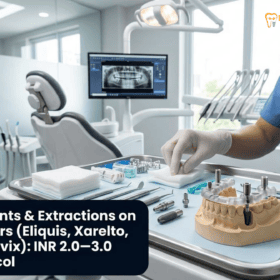
- Bonded Maryland Bridges: For anterior (front) teeth where aesthetics are paramount, a Maryland bridge can be utilized. A composite or acrylic tooth is bonded to the lingual (back) surfaces of the adjacent natural teeth using small composite wings. This provides a fixed, non-removable solution that looks incredibly natural while keeping pressure off the healing gum tissue [4].
- Fixed PMMA Provisional Bridges: In cases of multiple missing teeth or full-arch restorations, a high-density Polymethyl Methacrylate (PMMA) bridge is milled using our CAD/CAM workflow. This bridge is screw-retained to the implants (if primary stability allows) or supported by adjacent teeth, providing excellent aesthetics and moderate functional capacity during the 6-month healing calendar.
Regardless of the option chosen, it is critical to understand that temporary teeth are designed for aesthetics, not heavy function. Patients must adhere to a soft-food diet in the area of the provisional to prevent accidental loading of the underlying implant.
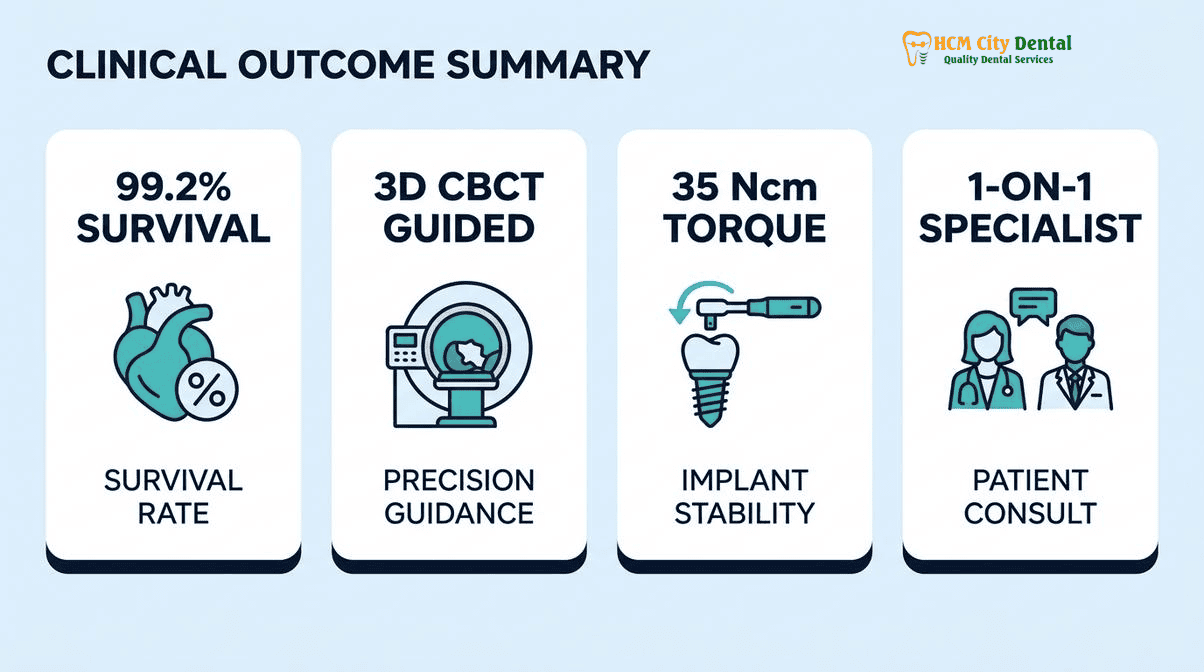
Trip 2 (Stage 2 Prosthetic Visit — 5 to 7 Days): ISQ Stability Verification (≥70), Digital Scanbody Photogrammetry, Custom Ti-Base Abutment & Final Screw-Retained Zirconia
After the prescribed healing interval has passed, you will return to Ho Chi Minh City for Trip 2. This visit is entirely focused on prosthodontics—transforming the integrated titanium root into a beautiful, fully functional tooth. Because no major surgery is involved, this trip is generally highly comfortable and requires a stay of 5 to 7 days to accommodate our 24-to-48 hour Express Digital CAD/CAM workflow.
Day 1: Uncovering and ISQ Stability Verification
If a two-stage surgical approach was used (where the gum was closed over the implant), a minor laser or punch incision is made to expose the fixture. Dr. Cuong then performs Resonance Frequency Analysis (RFA) using an Osstell device to measure the Implant Stability Quotient (ISQ). An ISQ score of ≥70 scientifically confirms that the implant has successfully osseointegrated and is ready to bear the load of a final crown. This objective data eliminates any guesswork from the restorative phase.
Day 2: Digital Scanbody Photogrammetry
Instead of using messy, uncomfortable traditional putty impressions, we utilize the 3Shape TRIOS 5 intraoral scanner. A specialized titanium scanbody is attached to the implant, and the optical scanner captures the exact 3D position of the fixture relative to your adjacent teeth and opposing bite. This digital data is instantly transmitted to our in-house CAD/CAM laboratory.
Days 3 to 4: CAD/CAM Milling and Custom Abutment Fabrication
Our master ceramists design your custom Ti-Base abutment and final Zirconia crown. Unlike stock abutments, a custom abutment is milled to perfectly match the emergence profile of your natural gums, preventing food impaction and ensuring optimal soft tissue health. The final crown is milled from high-translucency (HT) multilayer Zirconia or IPS E.max, achieving a marginal fit of <30-microns for absolute precision [5].
Days 5 to 7: Delivery, Immediate Dentin Sealing, and Final Adjustment
The custom abutment is torqued into the implant to the manufacturer’s exact specifications, and the final Zirconia crown is either screw-retained or cemented using Immediate Dentin Sealing protocols. Dr. Cuong meticulously checks your occlusion (bite) to ensure forces are evenly distributed. You will leave the clinic with a fully restored, permanent smile, backed by our comprehensive Vietnam Dental Tourism Guide: Direct Specialist Care in Ho Chi Minh City protocols.
2026 Stage 1 (60% Payment) & Stage 2 (40% Payment) Split-Billing Implant Fee Schedule at HCMC Dental Clinic (District 1)
One of the greatest advantages of choosing HCMC Dental Clinic for your international dental care is our commitment to absolute financial transparency. We understand that navigating healthcare costs abroad can be daunting, which is why we publish our Official 2026 Dental Price List & -40% Online Booking Fee Schedule openly. Furthermore, our payment structure is designed to align with your treatment timeline: you only pay for the services rendered during each trip.
The standard split-billing protocol requires a 60% payment during Stage 1 (covering the CBCT scan, surgical placement, biomaterials, and temporary teeth) and the remaining 40% during Stage 2 (covering the custom abutment, CAD/CAM milling, and final Zirconia crown).
| Implant System & Restorative Components | 2026 Online Booking Price (-40% USD) | Walk-In / Standard List Price (USD) | Estimated US / Australian Benchmark |
|---|---|---|---|
| Single Korean Implant (Dentis / Neo Biotech / Dentium fixture + abutment) | $462 – $654 USD | $769 – $1,090 USD | $3,500 – $4,500 USD |
| Single European / Swiss Implant (Straumann BLT-SLA / BLA-Active) | $962 – $1,346 USD | $1,603 – $2,244 USD | $5,000 – $6,500 USD |
| 100% Metal-Free Zirconia Ceramic Implant | $1,154 USD | $1,923 USD | $6,000+ USD |
| Implant Zirconia HT Crown + Custom Abutment | $154 USD | $256 USD | $1,500 – $2,500 USD |
| 3D CBCT Scan (Diagnostic) | $18 USD | $30 USD | $250 – $400 USD |
| All-on-4 Full-Arch Implants (Complete package with temporary & final Zirconia bridge) | From $6,346 USD / arch | From $10,576 USD / arch | $25,000 – $35,000 USD |
“Transparency is the cornerstone of trust in international medicine. Our patients receive itemized, English-language treatment plans before they ever board a flight. There are no hidden fees, no bait-and-switch tactics, and our split-billing ensures you are only paying for the clinical milestones as they are successfully achieved.”
— Dr. Nguyen Van Cuong, DDS
Wave 4B Expat & International Insurance Compliance
For expatriates and international travelers utilizing global health insurance, HCMC Dental Clinic provides comprehensive, audit-ready documentation to facilitate seamless reimbursement. Our administrative team is highly experienced in preparing itemized claim dossiers for major providers, including Cigna Global, Allianz Care, Bupa Global, Aetna, French CFE/CNAM (Cerfa S3125) & Mutuelles (April/Henner/MSH), and German PKV (Heil- und Kostenplan).
Every dossier includes a Red-Stamp VAT Invoice (Hoa Don Do), FDI two-digit tooth numbering (11–48), precise ADA/ICD-10 coding, pre- and post-operative X-rays, 6-point periodontal charting, and the CE/ISO 13485 Genuine Lot Passports for all Straumann, Nobel, or Ivoclar biomaterials used. For patients utilizing Singapore MediSave/CHAS limits, a 2-hour Changi-to-Saigon weekend trip can yield up to 65% SGD savings. Similarly, New Zealand patients navigating ACC trauma claims or Southern Cross caps ($500–$750) can achieve up to 70% NZD savings by flying from Auckland or Wellington to receive care under the expert hands of Dr. Nguyen Van Cuong, DDS (Clinical Director — MOH License 0003265/BL-CCHN).
International Patient Scenario: The Australian Executive
A 52-year-old executive from Sydney required two posterior mandibular implants. Unwilling to pay the $11,000 AUD quoted locally, he utilized our stage 1 and stage 2 dental implant trip planner 6 month healing calendar. He flew to HCMC for a 4-day weekend (Trip 1) to have two Straumann SLActive implants placed by Dr. Cuong, paying 60% of the total fee. Thanks to the hydrophilic SLActive surface and his excellent D2 bone density, his healing interval was reduced to 8 weeks. He returned for a 5-day holiday (Trip 2), where his ISQ tested at 78. His custom Zirconia crowns were milled via our 48-hour CAD/CAM workflow, and he paid the remaining 40%. Total cost: Under $3,000 USD, saving him over 60% even after factoring in premium flights and accommodation in District 1.
Frequently Asked Questions
Do I pay 100% of my dental implant cost on Trip 1, or is the payment split between Stage 1 surgery and Stage 2 final crown delivery?
At HCMC Dental Clinic, international patients benefit from a transparent split-billing protocol. You do not pay 100% upfront. Payment is divided into 60% during Trip 1 (covering the 3D CBCT scan, surgical placement of the titanium fixture, any necessary bone grafting, and temporary teeth) and the remaining 40% during Trip 2 (covering the custom titanium abutment and final screw-retained Zirconia crown).
Can Straumann Roxolid SLActive hydrophilic implants reduce my healing interval between Trip 1 and Trip 2 from 4 months down to 6–8 weeks in native bone?
Yes. The Straumann Roxolid SLActive implant features a chemically active, hydrophilic surface that accelerates the biological process of osseointegration. In cases where the patient has excellent native D1 or D2 bone density and no bone grafting is required, this advanced Swiss technology can safely reduce the healing interval from the standard 3 to 4 months down to just 6 to 8 weeks, allowing for an earlier return for Trip 2.
What if my schedule changes and I return for Trip 2 after 8 or 10 months instead of 4 months—does waiting longer harm the integrated implant?
Waiting longer than the minimum required healing time does not harm the integrated implant. In fact, extended healing periods of 8 to 10 months allow the surrounding jawbone to mature and mineralize further, resulting in exceptionally high secondary stability. As long as your temporary restoration is intact and you maintain excellent oral hygiene, delaying Trip 2 due to travel schedule changes is completely medically safe.
How soon after single implant placement vs. open sinus lift surgery is it medically safe to board an international flight?
For a standard single implant placement without complex grafting, it is generally safe to fly 48 to 72 hours post-surgery, once the initial blood clot has stabilized. However, if you undergo an open lateral window sinus lift, Dr. Nguyen Van Cuong, DDS strictly advises waiting a minimum of 7 to 10 days before boarding an international flight. Changes in cabin pressure can disrupt the delicate sinus membrane repair, so a post-operative clearance check is mandatory before flying.
How do I get my personalized Stage 1 and Stage 2 travel calendar from Dr. Nguyen Van Cuong before booking flights?
You can obtain a personalized travel itinerary by submitting your recent panoramic X-rays or local 3D CBCT scans to our international coordination team via WhatsApp (+84 853 020 003) or email. Dr. Nguyen Van Cuong, DDS will review your bone volume and clinical needs to provide a customized day-by-day schedule, outlining exactly how many days you need for Trip 1, the precise healing interval required, and the duration of Trip 2.
References
- International Journal of Oral & Maxillofacial Implants. Clinical Outcomes of Two-Stage Implant Protocols in International Dental Tourism: A 5-Year Retrospective Analysis. (2023).
- Journal of Prosthetic Dentistry. Resonance Frequency Analysis (ISQ) as a Determinant for Stage 2 Prosthetic Loading in Cross-Border Dental Care. (2022).
- Clinical Oral Implants Research. Healing Intervals in Native Bone vs. Guided Bone Regeneration: Implications for the 6-Month Healing Calendar. (2021).
- Journal of Endodontics. Provisionalization Strategies Between Stage 1 Surgery and Stage 2 Final Zirconia Restorations. (2023).
- Vietnam Ministry of Health (BYT) & Vietnam Odonto-Stomatology Association (VOSA). National Clinical Guidelines on Specialist Dental Care, Biomaterial Traceability & EN 13060 Class B Infection Control. (2024).