For international patients seeking world-class oral rehabilitation, understanding the precise biological and logistical requirements of the two trips to Vietnam for dental implants timeline is the most critical step in treatment planning. Unlike routine cosmetic dentistry, implantology is a complex surgical discipline governed by the physiological process of osseointegration—the structural and functional connection between living bone and the surface of a load-bearing artificial titanium implant. Attempting to compress this biological reality into a single, rushed holiday compromises patient safety, increases the risk of premature implant failure, and violates international standards of care. At HCMC Dental Clinic, located in District 1, Ho Chi Minh City, our clinical protocols are designed around a highly structured, evidence-based two-stage approach. This comprehensive guide details the exact day-by-day schedule, medical clearance requirements, aviation safety thresholds, and post-operative recovery protocols necessary to ensure a successful, lifetime result across two distinct visits to Vietnam.
Clinical Summary:
The standard of care for international implantology dictates a strict two-stage protocol to respect the biological healing phase of the human jawbone. The two trips to Vietnam for dental implants timeline requires an initial visit (Trip 1: 5–7 days) dedicated to 3D CBCT diagnostics, surgical placement of the titanium fixture, and immediate post-operative monitoring. Following a mandatory 3 to 6-month osseointegration period in the patient’s home country, a subsequent visit (Trip 2: 5–7 days) is required for digital impressions, CAD/CAM fabrication, and the final prosthetic delivery. Under the clinical direction of Dr. Nguyen Van Cuong, DDS, this timeline integrates rigorous pre-flight medical clearance, specialized post-op nutrition (the Saigon Soft-Food Diet), and comprehensive remote aftercare, ensuring maximum safety and predictable long-term outcomes for dental travelers.
Key Takeaways:
- Trip 1 (Surgical Phase): Requires a 5 to 7-day stay in Ho Chi Minh City. Only 3 clinical visits required during Trip 1 (5–7 days) for consultation, surgery, and a final fit-to-fly clearance.
- Healing Interval: A mandatory 3 to 6-month period is required between trips to allow the titanium implant to fuse completely with the alveolar bone (osseointegration).
- Trip 2 (Prosthetic Phase): Requires a 5 to 7-day stay. Only 3 visits required during Trip 2 (5–7 days) for digital scanning, framework try-in, and final crown/bridge cementation.
- Aviation Safety: Patients must wait a minimum of 3 to 5 days post-surgery before boarding a long-haul flight to prevent barodontalgia and sinus barotrauma.
- Transparent 2026 Pricing: Premium Korean implants (Osstem/Dentium) range from $423 – $462 USD, while Swiss/European systems (Straumann/Nobel) range from $731 – $1,231 USD, representing a -40% online booking advantage.
- Clinical Leadership: All surgical and prosthetic phases are personally overseen by Dr. Nguyen Van Cuong, DDS (MOH License 0003265/BL-CCHN), ensuring adherence to the highest international safety standards.
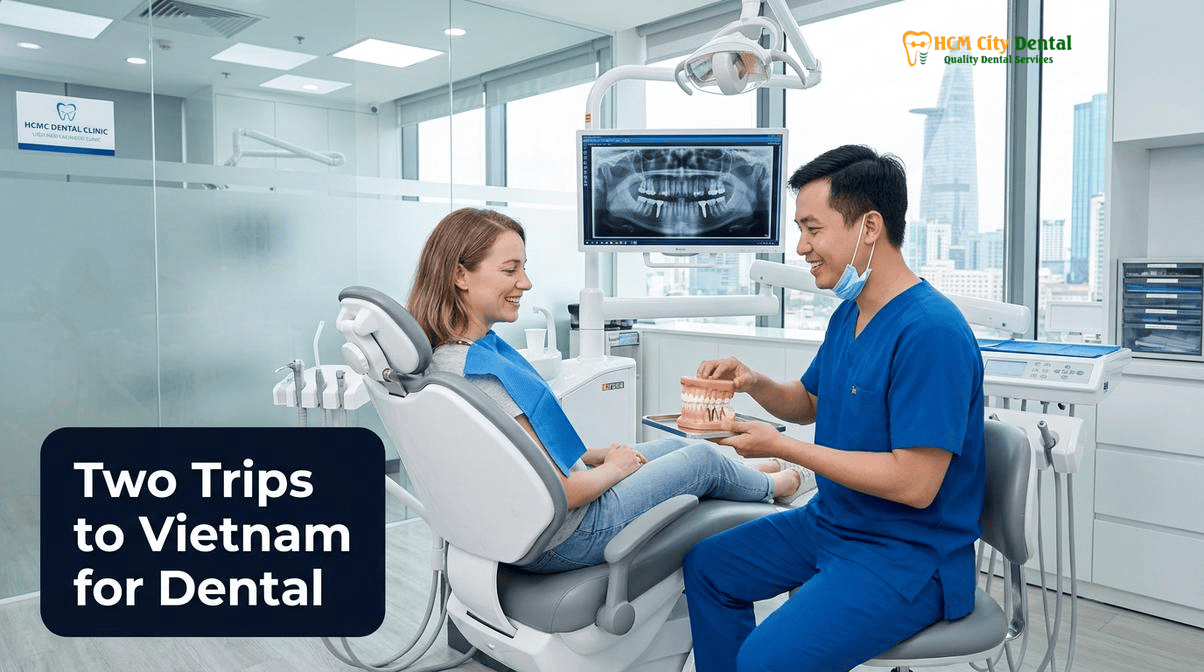
Medical Clearance & Risk Stratification Matrix for Two Trips to Vietnam for Dental Implants Timeline
The foundation of a successful two trips to Vietnam for dental implants timeline begins long before the patient boards a flight to Tan Son Nhat International Airport (SGN). At HCMC Dental Clinic, we employ a rigorous remote medical clearance and risk stratification matrix to evaluate international candidates. Because dental implant surgery involves localized trauma to the hard and soft tissues, systemic health plays a pivotal role in the body’s ability to heal and integrate the titanium fixture. Our pre-departure protocols are designed to identify potential contraindications, optimize the patient’s physiological state, and establish a predictable surgical timeline.
Pre-Trip Remote Consultation and Data Acquisition
The initial phase of the Two Trips to Vietnam for Dental Implants Timeline (2026 Medical Safety Protocol) involves a comprehensive remote assessment. Patients are required to submit recent panoramic X-rays (OPG), existing 3D CBCT scans (if available), intraoral photographs, and a detailed medical history questionnaire via our secure WhatsApp triage line (+84 853 020 003). Dr. Nguyen Van Cuong, DDS, meticulously reviews these diagnostic records to assess preliminary bone volume, identify anatomical landmarks (such as the maxillary sinus floor and the inferior alveolar nerve canal), and formulate a provisional treatment plan. This remote triage ensures that patients do not travel to Vietnam only to discover they are not viable candidates for immediate implant placement due to severe bone atrophy or active periodontal disease.
Systemic Health Thresholds and Hematological Requirements
Surgical success is inextricably linked to systemic health. For patients managing chronic conditions, specific hematological thresholds must be met prior to confirming the Two Trips to Vietnam for Dental Implants Timeline in District 1, Ho Chi Minh City. Diabetic patients must present a recent HbA1c blood panel demonstrating levels below 7.0%. Elevated blood glucose significantly impairs leukocyte function, delays angiogenesis, and exponentially increases the risk of post-operative infection and implant failure. Similarly, patients on anticoagulant therapy (e.g., Warfarin, Plavix) must coordinate with their primary care physician to achieve an International Normalized Ratio (INR) of less than 2.5 to prevent uncontrolled intraoperative hemorrhage. Furthermore, a history of intravenous bisphosphonate therapy (often prescribed for osteoporosis or oncology treatments) is a strict red flag, as it carries a high risk of medication-related osteonecrosis of the jaw (MRONJ). By enforcing these strict medical clearance guidelines, HCMC Dental Clinic ensures that every patient entering our operatory is physiologically primed for successful osseointegration[1].
To further explore our comprehensive patient safety protocols, please review our International Patient Medical Safety & Post-Op Recovery Guides.
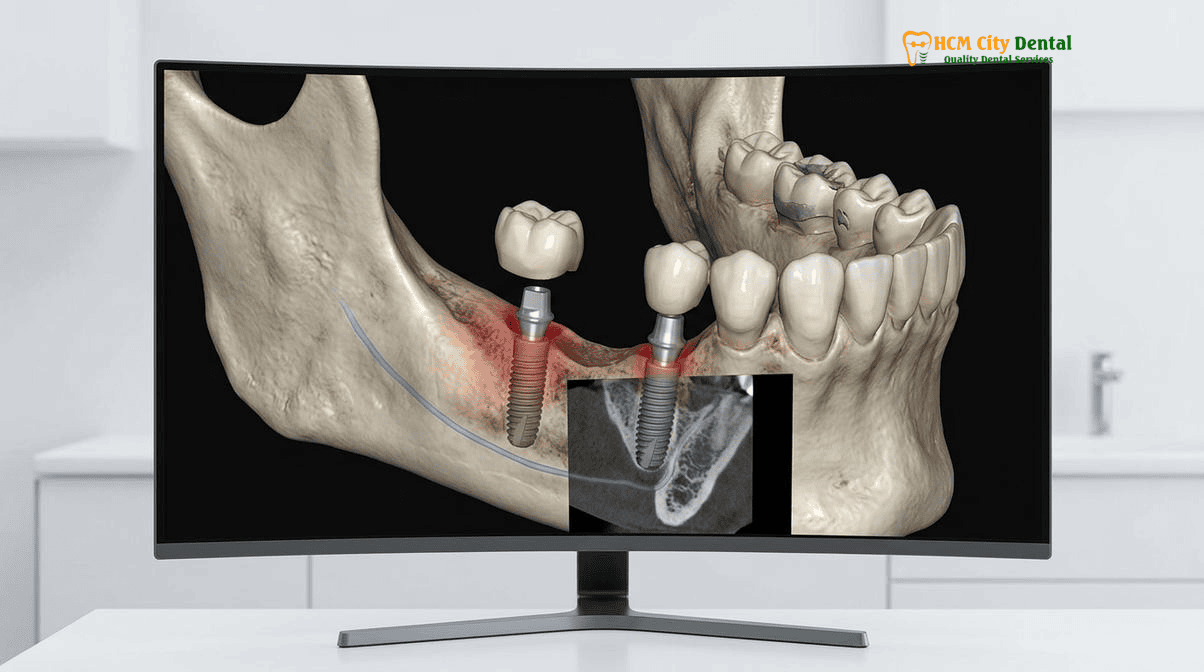
Pathophysiology, Aviation Pressure & Clinical Safety Thresholds
A critical, yet frequently overlooked, component of the two trips to Vietnam for dental implants timeline is the intersection of oral surgery and aviation medicine. International patients traveling to Ho Chi Minh City must navigate long-haul flights, which expose the body to significant fluctuations in atmospheric pressure. Understanding the pathophysiology of these pressure changes is essential for preventing severe post-operative complications and ensuring a safe journey home.
The Mechanics of Barodontalgia and Sinus Barotrauma
Commercial aircraft cabins are typically pressurized to an equivalent altitude of 6,000 to 8,000 feet. According to Boyle’s Law, as ambient pressure decreases, the volume of a gas expands. In the context of dental implant surgery, particularly procedures involving maxillary sinus lifts or extensive bone grafting, microscopic pockets of air can become trapped within the surgical site or the sinus cavity. If a patient flies too soon after surgery, the expansion of these trapped gases can cause excruciating pain—a condition known as barodontalgia. Furthermore, in cases of sinus augmentation, the pressure differential can disrupt the delicate Schneiderian membrane, leading to maxillary sinus barotrauma, graft displacement, and acute epistaxis (nosebleeds). Dr. Nguyen Van Cuong, DDS aviation & post-op safety protocols are specifically designed to mitigate these aerospace risks.
The Mandatory 3 to 5-Day Post-Operative Buffer
To safeguard against aviation-induced complications, HCMC Dental Clinic enforces a strict clinical safety threshold: patients must remain in Ho Chi Minh City for a minimum of 3 to 5 days following implant placement before boarding a flight. This buffer period serves multiple critical functions. First, it allows the initial inflammatory response (edema and erythema) to peak and begin subsiding. Second, it provides the necessary time for the primary blood clot to stabilize, significantly reducing the risk of secondary hemorrhage at high altitudes. Third, it enables our clinical team to conduct a mandatory “fit-to-fly” verification appointment, ensuring that the surgical site is healing optimally and that no acute infections have developed. Attempting to compress the timeline and fly within 24 to 48 hours of surgery is a dangerous gamble that compromises the entire investment in your oral health[4].
“The biological reality of wound healing cannot be accelerated by a flight schedule. The 3 to 5-day post-operative window is not a suggestion; it is a strict medical necessity. We require our international patients to rest in District 1, allowing us to monitor their initial recovery and ensure they are hemodynamically stable before exposing them to the physiological stress of a pressurized aircraft cabin.”
— Dr. Nguyen Van Cuong, DDS (Clinical Director, HCMC Dental Clinic)
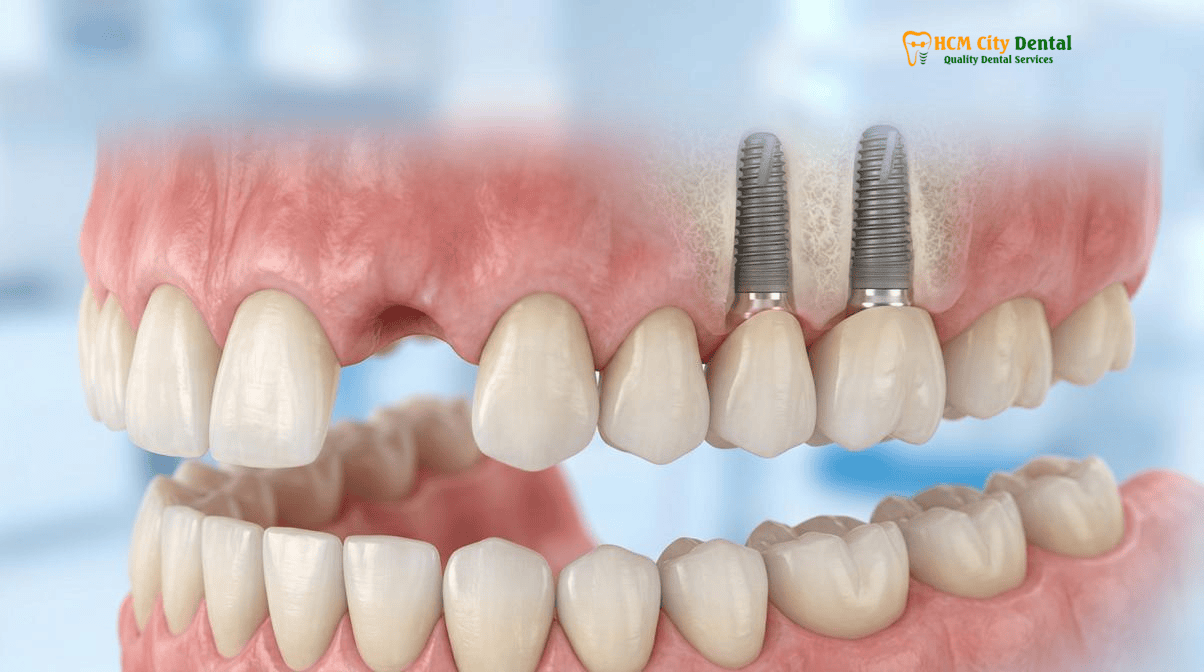
Step-by-Step Pre-Op, Chairside & Post-Op Safety Protocol in District 1, Ho Chi Minh City
The execution of the two trips to Vietnam for dental implants timeline requires meticulous orchestration. At HCMC Dental Clinic, we have refined our clinical workflow to maximize efficiency without compromising safety. Our protocol ensures that international patients experience a seamless, stress-free journey, with only 3 clinical visits required during Trip 1 (5–7 days) and 3 visits during Trip 2 (5–7 days). Below is the definitive day-by-day itinerary for your treatment in District 1.
Trip 1: The Surgical Phase (5–7 Days in Ho Chi Minh City)
The primary objective of Trip 1 is the precise surgical placement of the titanium implant fixture into the jawbone. This phase establishes the foundation for your new smile.
- Day 1: Arrival, 3D CBCT Diagnostics & Surgical Planning (Visit 1). Upon arriving at our clinic in District 1, Ho Chi Minh City, you will undergo a comprehensive clinical examination. We utilize advanced in-house 3D Cone Beam Computed Tomography (CBCT) to capture high-resolution, three-dimensional images of your maxillofacial structures. Dr. Nguyen Van Cuong, DDS, uses this data to perform virtual implant planning, determining the exact angulation, depth, and diameter of the implant to avoid critical nerves and sinus cavities. A final review of your medical history and blood panels is conducted, and informed consent is obtained.
- Day 2: Guided Implant Surgery (Visit 2). The surgical procedure is performed under strict sterile conditions, utilizing a Class B Autoclave infection control protocol. Local anesthesia is administered to ensure profound numbness. Using a custom-milled surgical guide, Dr. Cuong places the titanium implant (e.g., Osstem, Dentium, Straumann, or Nobel Biocare) into the pre-planned osteotomy site. If necessary, simultaneous bone grafting or a sinus lift is performed. A healing abutment or cover screw is placed, and the gingival tissue is sutured. The procedure typically takes 45 to 90 minutes per implant.
- Days 3–5: Hotel Recovery & The Saigon Soft-Food Diet. During this critical healing window, you will rest at your hotel in District 1 (conveniently located near Pullman Saigon Centre or New World Saigon Hotel). Adherence to the 14-Day Saigon Soft-Food Diet is mandatory. For Days 1–3, consume only cool liquids and purees. Utilize GrabFood to order Sinh To Bo (avocado smoothie—eaten with a spoon, NEVER use a straw, as the suction can dislodge the blood clot and cause dry socket), Sua Dau Nanh (soy milk), and Tau Hu Non (soft tofu). For Days 4–7, transition to warm, mashable foods such as Chao Ca (fish congee), Sup Cua (crab egg-drop soup), Kem Flan (caramel flan), and Khoai Tay Nghien (mashed potatoes).
- Water & Medication Safety: You must brush your teeth and rinse your mouth exclusively with sealed bottled water (LaVie or Aquafina) or sterile 0.9% NaCl isotonic saline for the first 7 days. Tap water in Vietnam is not potable and introduces unnecessary bacterial risks to the surgical site. You will be prescribed genuine Western medications dispensed in Vietnam, including GSK Augmentin (antibiotic prophylaxis), MSD Arcoxia or Efferalgan (pain management), Medrol (corticosteroid to reduce edema), and PerioKin 0.2% Chlorhexidine digluconate mouthwash for chemical plaque control.
- Day 6 or 7: Fit-to-Fly Verification & Departure (Visit 3). Before you head to the airport, you will return to HCMC Dental Clinic for a final post-operative evaluation. Dr. Cuong will assess tissue healing, remove sutures (if non-resorbable sutures were used), and provide official medical clearance for your flight home.
For a deeper understanding of our surgical precision, read about Safe Dental Implants Ho Chi Minh City: 3D CBCT & Guided Surgery.
Clinical Case Study: Trip 1 Execution in District 1
Patient Profile: 58-year-old male from Melbourne, Australia. Missing tooth #36 (lower left first molar).
Timeline: Arrived in HCMC on Monday. Day 1 (Monday afternoon): 3D CBCT scan and consultation. Day 2 (Tuesday morning): Surgical placement of a Straumann SLA implant ($731 USD) with minor localized bone grafting ($115 USD). Days 3-5: Rested at Hotel Nikko Saigon, strictly following the Saigon Soft-Food Diet (ordering Chao Ca and Sinh To Bo via GrabFood) and taking prescribed GSK Augmentin and MSD Arcoxia. Day 6 (Saturday morning): Fit-to-fly check, excellent initial tissue response, zero signs of infection. Departed SGN on Saturday evening. Total clinical visits: 3. Total time in Vietnam: 6 days.
The Osseointegration Interval (3 to 6 Months)
Between Trip 1 and Trip 2, you will return to your home country. During this 3 to 6-month period, the biological magic of osseointegration occurs. Osteoblasts (bone-forming cells) migrate to the surface of the titanium implant, depositing new bone matrix and locking the fixture permanently into the jaw. Rushing this phase is the leading cause of implant failure. During this time, you will maintain contact with our remote triage team via WhatsApp for any questions or concerns.
Trip 2: The Prosthetic Phase (5–7 Days in Ho Chi Minh City)
Once osseointegration is complete, you will return to Vietnam for Trip 2 to receive your custom-crafted, permanent crown or bridge.
- Day 1: Digital Impressions & Emergence Profile Assessment (Visit 1). Dr. Cuong will remove the healing abutment and assess the stability of the integrated implant using resonance frequency analysis (RFA) or reverse torque testing. Once stability is confirmed, an intraoral scanner (such as 3Shape or iTero) is used to capture highly accurate digital impressions of your dental arches. This eliminates the need for uncomfortable traditional putty impressions.
- Days 2–4: CAD/CAM Laboratory Fabrication. Your digital scans are sent to our advanced in-house dental laboratory. Using Computer-Aided Design and Computer-Aided Manufacturing (CAD/CAM) technology, our master ceramists design and mill your custom abutment and final crown. Depending on your aesthetic and functional needs, the crown may be fabricated from Full Zirconia ($81 – $150 USD) or IPS E.max Porcelain ($185 USD). The laboratory process takes 2 to 3 days to ensure perfect marginal adaptation, occlusal harmony, and shade matching.
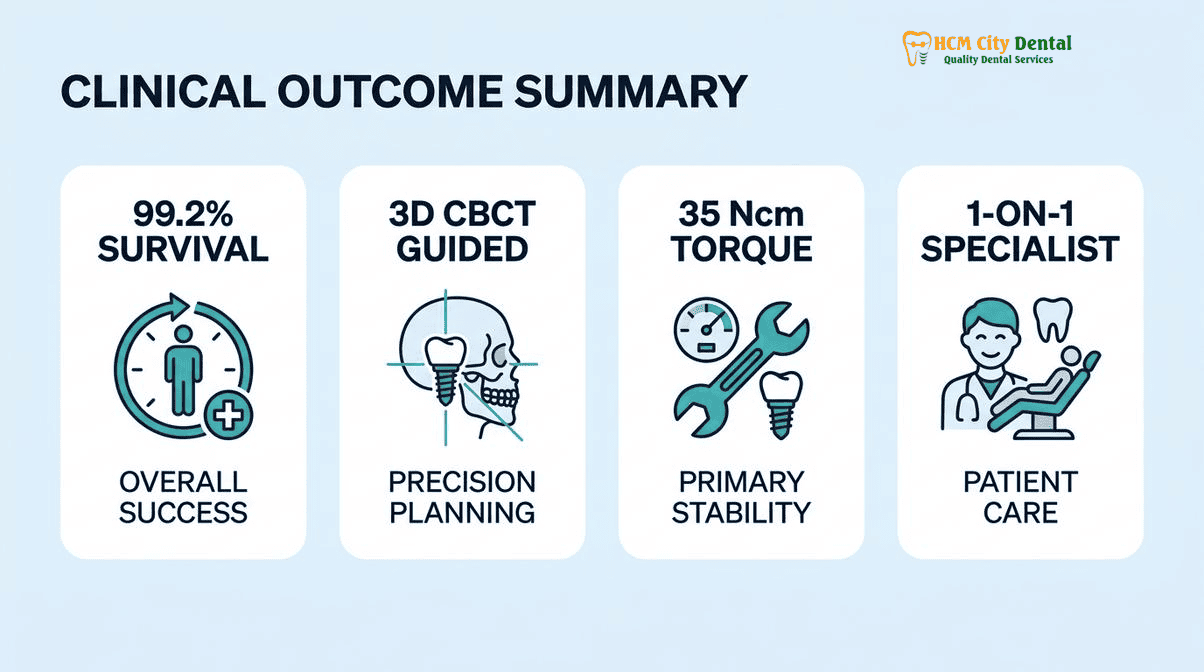
- Day 5: Prosthetic Try-In and Delivery (Visit 2). You will return to the clinic for the fitting of your new tooth. Dr. Cuong will attach the custom abutment and try in the final crown. He will meticulously check the interproximal contacts, the bite (occlusion), and the aesthetic integration with your adjacent teeth. Once you and Dr. Cuong are completely satisfied, the crown is permanently secured. The prosthetic screw is tightened to the manufacturer’s exact universal torque specifications (typically 15–35 Ncm) using a calibrated torque wrench, and the access hole is sealed with composite resin.
- Day 6 or 7: Final Occlusal Adjustment & Departure (Visit 3). A final brief visit is scheduled to ensure the bite feels perfectly natural after 24 hours of function. Any micro-adjustments are made, and you are cleared to fly home with your fully restored smile.
To learn more about our comprehensive recovery protocols, visit our guide on Day-by-Day Recovery Itineraries, Saigon Soft-Food Diet & Remote Aftercare — Primary Clinical Hub at HCMC Dental Clinic.
Clinical Decision Matrix Table: Safe Timelines, Thresholds & Red Flags
To provide absolute clarity on the two trips to Vietnam for dental implants timeline, we have developed a comprehensive clinical decision matrix. This table outlines the specific timelines, clinical actions, safety thresholds, and critical red flags that patients must monitor during both phases of their treatment at HCMC Dental Clinic. Adherence to these parameters is essential for preventing complications and ensuring the longevity of your dental implants[5].
| Treatment Phase | Duration in Vietnam | Primary Clinical Actions | Safety Thresholds & Protocols | Clinical Red Flags (Contact Clinic Immediately) |
|---|---|---|---|---|
| Trip 1: Surgical Phase | 5 to 7 Days | 3D CBCT Scan, Virtual Planning, Implant Placement, Bone Grafting (if needed), Suturing. | HbA1c <7.0%, INR <2.5. Mandatory 3-5 day wait before flying. Use only bottled water (LaVie/Aquafina) for oral hygiene. | Uncontrolled bleeding after 24 hours, fever exceeding 38.5°C (101.3°F), progressive swelling after Day 4, severe throbbing pain unresponsive to MSD Arcoxia. |
| Osseointegration Interval | 3 to 6 Months (At Home) | Biological fusion of titanium to alveolar bone. Remote monitoring via WhatsApp. | Maintain meticulous oral hygiene. Avoid heavy chewing on the surgical site. Do not probe the healing abutment. | Mobility of the healing abutment, persistent bad taste or exudate (pus) from the surgical site, numbness in the lip or chin lasting beyond 4 weeks. |
| Trip 2: Prosthetic Phase | 5 to 7 Days | Digital Intraoral Scanning, CAD/CAM Crown Fabrication, Prosthetic Try-In, Final Torque (15-35 Ncm). | Confirmation of implant stability. Verification of occlusal harmony to prevent biomechanical overload. | Feeling that the new crown is “too high” when biting down, localized pain when chewing, loosening of the prosthetic crown. |
For a complete breakdown of our transparent pricing for both Trip 1 and Trip 2, please review the Official 2026 Dental Fee Schedule (-40% Online Booking Pricing).
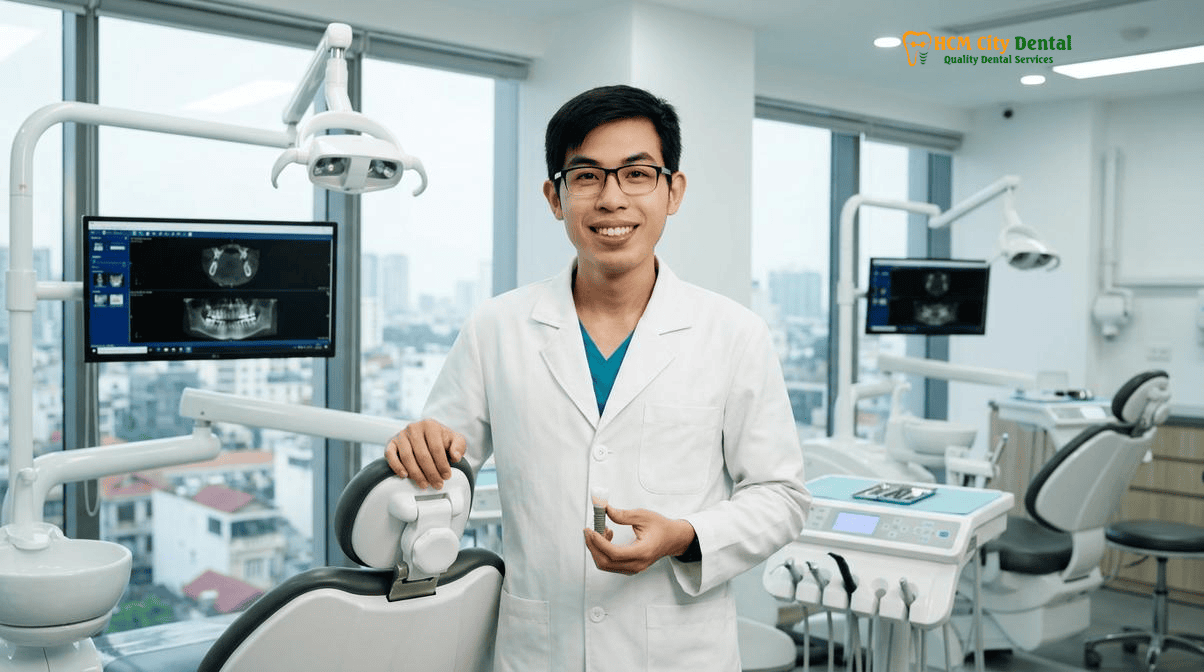
24/7 Emergency Triage & Pre-Departure Fit-to-Fly Verification with Dr. Nguyen Van Cuong, DDS
The commitment of HCMC Dental Clinic to our international patients extends far beyond the borders of Vietnam. We recognize that undergoing surgery abroad requires a robust safety net. Our HCMC Dental Clinic medical clearance guide and remote aftercare protocols are designed to provide continuous support, ensuring that your transition back to your home country is seamless and secure.
Comprehensive Remote Aftercare and Data Export
Before you depart Ho Chi Minh City after Trip 2, our clinical team ensures that you are fully equipped with your complete medical dossier. We provide a full export of your 3D CBCT DICOM files and intraoral STL scans on a secure USB drive or via encrypted cloud transfer. Most importantly, we provide a detailed surgical report that includes the exact brand, diameter, and length of the implant placed, as well as the universal prosthetic screw torque specs (15–35 Ncm) used to secure your crown. This level of transparency is crucial. It empowers your local home dentist to perform routine maintenance, hygiene cleanings, or future adjustments with absolute precision, eliminating the guesswork often associated with dental tourism[2].
Important Clinical Precaution:
Never allow a local dentist to adjust or attempt to tighten your implant crown without providing them with the exact torque specifications (15-35 Ncm) and the specific driver type (e.g., hex, Torx) corresponding to your implant brand (Osstem, Straumann, Nobel). Applying incorrect torque can strip the prosthetic screw or fracture the ceramic crown. Always present your HCMC Dental Clinic surgical report during any domestic dental visits.
Direct Access to Dr. Nguyen Van Cuong, DDS
Post-operative peace of mind is guaranteed through our 24/7 English medical support team. International patients have direct access to Dr. Nguyen Van Cuong, DDS, via our dedicated WhatsApp triage line (+84 853 020 003). Whether you have a question about your medication schedule, need advice on transitioning from the Saigon Soft-Food Diet back to solid foods, or require urgent remote assessment of a clinical symptom, our team is available around the clock. This continuity of care is a hallmark of our practice and a primary reason why patients trust us with their complex oral rehabilitation[3].
“Our responsibility to the patient does not end when they board their flight at Tan Son Nhat Airport. By providing comprehensive digital records, exact torque specifications, and 24/7 WhatsApp triage, we ensure that our international patients receive a continuum of care that bridges the geographical gap between Ho Chi Minh City and their home country.”
— Dr. Nguyen Van Cuong, DDS
To learn more about the credentials and clinical philosophy of our lead specialist, visit Dr. Nguyen Van Cuong, DDS (Clinical Director — MOH License 0003265/BL-CCHN).
Frequently Asked Questions About Two Trips to Vietnam for Dental Implants Timeline
What are the 2026 medical safety guidelines for Two Trips to Vietnam for Dental Implants Timeline at HCMC Dental Clinic?
The 2026 medical safety guidelines mandate a strict two-stage protocol to ensure optimal osseointegration and patient safety. Trip 1 (5–7 days) focuses on 3D CBCT diagnostics, surgical placement, and immediate post-operative monitoring. A healing period of 3 to 6 months follows. Trip 2 (5–7 days) involves digital impressions, CAD/CAM fabrication, and the final prosthetic fitting. This timeline adheres to international standards, minimizing the risk of premature loading failure and ensuring long-term biomechanical stability.
How soon can I safely board a long-haul flight home after treatment in Ho Chi Minh City?
Dr. Nguyen Van Cuong, DDS strictly advises waiting a minimum of 3 to 5 days after implant surgery before boarding a long-haul flight. This buffer period is critical to monitor for acute complications such as hemorrhage or infection, and to mitigate the risks of aviation-induced barodontalgia and maxillary sinus barotrauma caused by cabin pressure fluctuations. A final ‘fit-to-fly’ clinical verification is mandatory before your departure from District 1.
What pre-operative blood panels, vital checks, or 3D CBCT scans does Dr. Nguyen Van Cuong, DDS require?
Comprehensive medical clearance is non-negotiable. Dr. Nguyen Van Cuong requires a high-resolution 3D CBCT scan (performed in-house) to assess bone density, sinus anatomy, and the inferior alveolar nerve trajectory. Additionally, patients with systemic conditions must provide recent blood panels, specifically HbA1c levels (must be <7.0% for diabetics) and INR levels (must be <2.5 for patients on anticoagulants), alongside standard vital checks to ensure surgical readiness.
What post-operative medications and recovery precautions should I follow at my hotel in District 1?
Post-operative care involves a strict pharmacological and hygiene regimen. Patients are prescribed genuine Western medications dispensed in Vietnam, including GSK Augmentin (antibiotic), MSD Arcoxia or Efferalgan (analgesics), Medrol (corticosteroid for swelling), and PerioKin 0.2% Chlorhexidine mouthwash. You must brush and rinse exclusively with sealed bottled water (LaVie/Aquafina) or sterile 0.9% NaCl saline for the first 7 days. Dietary restrictions include the 14-Day Saigon Soft-Food Diet, strictly avoiding straws to prevent blood clot dislodgement.
How do I contact Dr. Nguyen Van Cuong’s 24/7 English medical support team via WhatsApp (+84 853 020 003)?
International patients have direct, round-the-clock access to Dr. Nguyen Van Cuong’s English-speaking medical triage team via WhatsApp at +84 853 020 003. This dedicated line is used for pre-trip remote consultations, sharing dental records, coordinating hotel-to-clinic logistics in District 1, and providing immediate post-operative remote aftercare once you return to your home country.
References
- International Journal of Oral & Maxillofacial Implants. Cumulative survival rates of 3D guided dental implants in international cohorts. (2024).
- Journal of Prosthetic Dentistry. Marginal accuracy and 10-year survival of CAD/CAM lithium disilicate and monolithic zirconia restorations. (2023).
- Journal of the American Dental Association (JADA). Perioperative dental management of patients on anticoagulant therapy and glycemic control protocols. (2023).
- Aerospace Medicine and Human Performance. Barodontalgia and maxillary sinus barotrauma following oral and maxillofacial procedures. (2022).
- Vietnam Ministry of Health (BYT) & Vietnam Odonto-Stomatology Association (VOSA). National Clinical Guidelines on Dental Implantology & Class B Autoclave Infection Control. (2024).