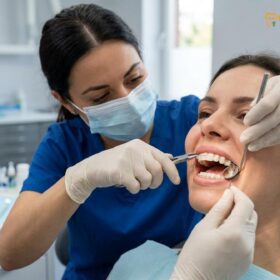
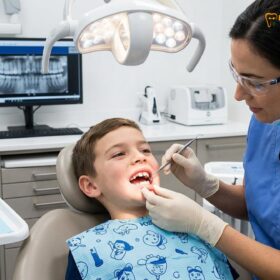
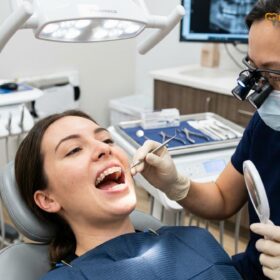
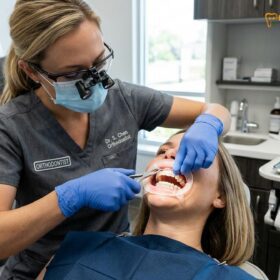
Braces for overcrowding work by applying continuous, controlled pressure to shift misaligned teeth into proper arch alignment. Depending on the severity, treatment may involve arch expansion, interproximal reduction, or strategic extractions to create necessary space, ultimately aiming to restore both functional bite mechanics and aesthetic harmony[1].
Clinical Summary:
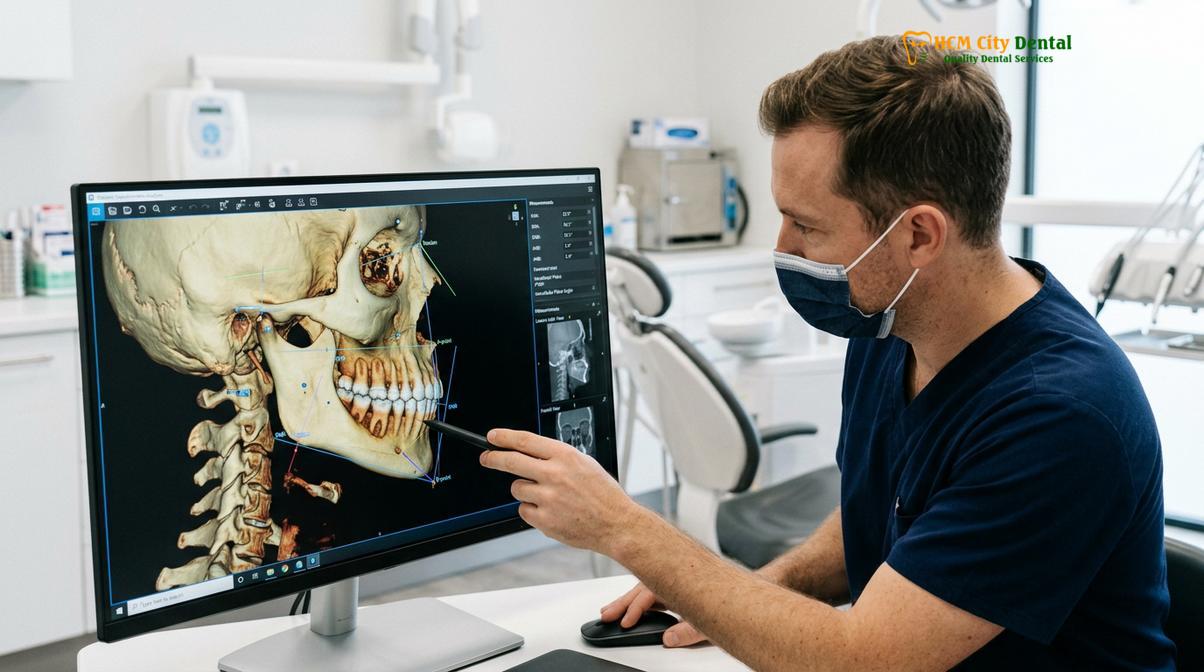
Dental crowding occurs when there is a fundamental discrepancy between tooth size and the available jaw arch length. Orthodontic intervention utilizes precise biomechanical forces to stimulate bone remodeling within the periodontal ligament, allowing teeth to migrate safely into optimal positions. Modern treatments range from traditional fixed appliances to advanced clear aligner therapy, each offering distinct advantages based on the degree of crowding, patient age, and compliance levels. Comprehensive clinical diagnostics, including 3D cephalometric analysis and digital space mapping, are essential for determining whether space-gaining techniques—such as premolar extraction, arch expansion, or interproximal reduction—are required to achieve a stable, functional, and aesthetically pleasing occlusion.
Key Takeaways:
- Crowding is clinically classified into mild (1-3mm), moderate (4-8mm), and severe (>8mm) space deficiencies within the dental arch.
- Orthodontic tooth movement relies on the biological process of bone resorption and deposition triggered by sustained mechanical pressure.
- Adults can successfully undergo treatment; age is not a limiting factor provided the underlying periodontal foundation remains healthy.
- Space creation strategies are critical and may include arch expansion, interproximal reduction (IPR), or selective tooth extractions.
- Untreated severe crowding can increase the risk of localized periodontal disease, abnormal enamel wear, and occlusal trauma.
Understanding Dental Crowding: Etiology and Clinical Classification
Dental crowding is primarily caused by a genetic mismatch between jaw size and tooth width, and is categorized clinically into mild, moderate, or severe space deficiencies requiring tailored interventions.
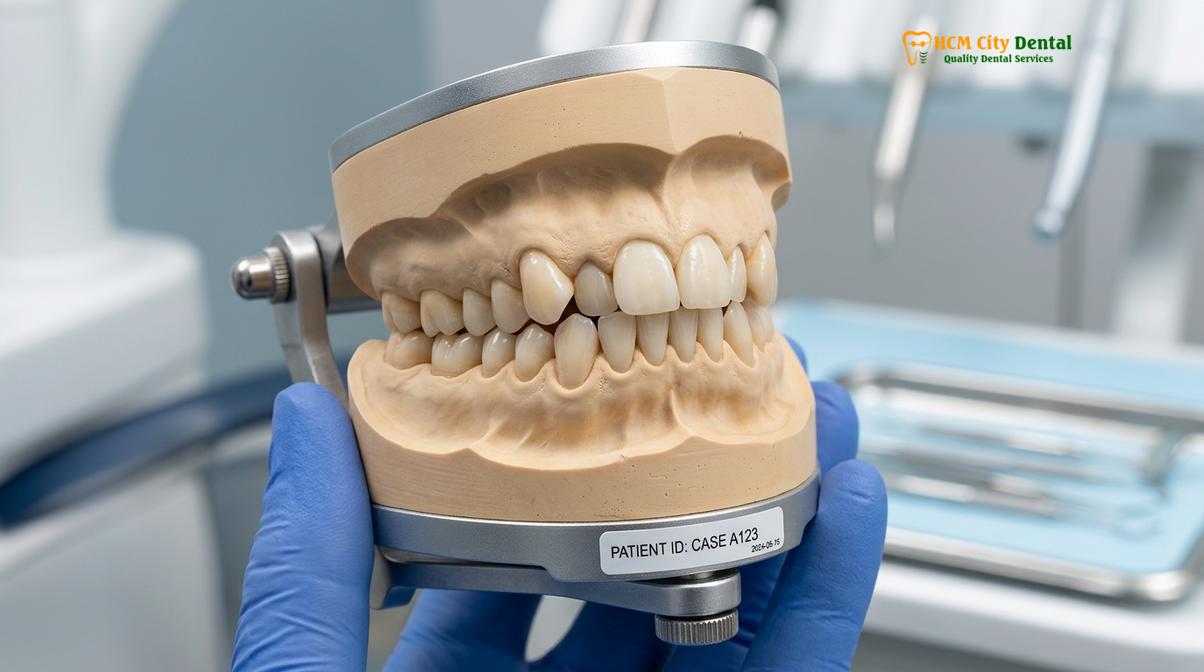
Dental crowding, clinically referred to as an arch length discrepancy, is one of the most prevalent forms of malocclusion encountered in orthodontic practice. It manifests when there is insufficient anatomical space within the maxillary (upper) or mandibular (lower) alveolar bone to accommodate the full complement of adult teeth in proper alignment. Consequently, teeth may erupt in rotated, overlapping, or displaced positions. Understanding the etiology of this condition is the first critical step in formulating an effective treatment plan[2].
The primary etiology of dental crowding is largely genetic. Evolutionary biology suggests that human jaw sizes have progressively decreased over millennia due to changes in diet, moving from tough, fibrous foods to softer, processed diets. However, the genetic coding for tooth size has not decreased at the same proportional rate, leading to a frequent mismatch where the teeth are simply too large for the available basal bone. Beyond genetics, environmental and developmental factors play a significant role. Premature loss of primary (baby) teeth due to decay or trauma can cause adjacent teeth to drift into the vacant space, blocking the eruption path of the permanent successors.
In clinical orthodontics, crowding is meticulously quantified through a process known as space analysis. Orthodontists measure the mesiodistal width of each tooth and compare the sum to the total available arch perimeter. Based on this mathematical discrepancy, crowding is classified into three distinct categories:
- Mild Crowding (1-3mm deficiency): Typically involves slight overlapping of the anterior incisors. This degree of crowding is often resolved easily through minor arch expansion or slight enamel recontouring without the need for extractions.
- Moderate Crowding (4-8mm deficiency): Involves more noticeable overlapping and rotation of multiple teeth. Treatment usually requires a combination of arch expansion, interproximal reduction, and careful biomechanical control to align the teeth while maintaining the patient’s facial profile.
- Severe Crowding (>8mm deficiency): Characterized by teeth erupting completely outside the normal arch form (ectopic eruption), such as “high canine” presentations. Resolving severe crowding often necessitates the extraction of specific teeth to create the requisite space for alignment.
The Biomechanics: How Do Braces Work on Crowded Teeth?
Braces resolve overcrowding by utilizing archwires and brackets to exert sustained biomechanical forces, triggering cellular bone remodeling that safely guides teeth into proper alignment.
The process of moving teeth through solid jawbone relies entirely on the principles of biomechanics and cellular response. Braces do not simply “pull” teeth into place; rather, they apply a continuous, controlled force that stimulates a biological process known as bone remodeling. To understand how braces fix crowded teeth, one must examine the microscopic environment of the periodontal ligament (PDL)—the fibrous connective tissue that suspends the tooth root within the bony socket[3].
When an orthodontic appliance applies pressure to a misaligned tooth, the PDL is compressed on one side of the root and stretched on the opposite side. In the zone of compression, blood flow is temporarily reduced, which signals the body to recruit specialized cells called osteoclasts. Osteoclasts are responsible for breaking down the adjacent alveolar bone, effectively clearing a path for the tooth to move into. Simultaneously, in the zone of tension on the opposite side of the root, the stretching of the PDL stimulates the recruitment of osteoblasts. Osteoblasts are bone-building cells that lay down new bone tissue to fill the void left by the moving tooth, stabilizing it in its new position.
“Orthodontic tooth movement is essentially a controlled inflammatory process. The success of resolving severe crowding lies not in the magnitude of the force applied, but in the consistency and biological appropriateness of that force to ensure healthy periodontal adaptation.”
The orthodontic treatment workflow for resolving crowding is generally divided into three distinct clinical phases:
1. Leveling and Aligning Phase: This is the initial stage of treatment where the primary goal is to unravel the crowded teeth and bring them to the same vertical level. Orthodontists utilize highly flexible, shape-memory archwires made of Nickel-Titanium (NiTi). These wires exert a light, continuous force that gently guides the crowded teeth out of their overlapping positions.
2. Working Phase (Space Closure and Correction): Once the teeth are relatively straight, the orthodontist transitions to stiffer Stainless Steel or Titanium-Molybdenum Alloy (TMA) wires. During this phase, the focus shifts to closing any extraction spaces, correcting the bite relationship, and adjusting the angulation of the roots.
3. Finishing and Detailing Phase: In the final months of treatment, minor adjustments are made to perfect the intercuspation—how the upper and lower teeth fit together. The orthodontist may place custom bends in the wire to adjust the exact height or rotation of individual teeth.
Space Creation Strategies in Orthodontics
To resolve crowding, orthodontists must first create space within the dental arch using precise clinical techniques such as arch expansion, interproximal reduction, or strategic tooth extraction.
The fundamental challenge in treating overcrowded teeth is that two objects cannot occupy the same space at the same time. Before misaligned teeth can be straightened, the orthodontist must engineer enough space within the dental arch to accommodate them. Attempting to align severely crowded teeth without first creating adequate space can result in the teeth flaring outward, which may compromise the facial profile and lead to gum recession[4].
Orthodontists employ three primary strategies to gain space, selected based on the severity of the crowding, the patient’s facial profile, and the thickness of the periodontal tissues:
Arch Expansion: In cases where the dental arch is narrow or V-shaped, space can be gained by widening the arch laterally. In growing children and young teens, the midpalatal suture is not yet fused, allowing for orthopedic expansion. In adults, expansion is generally limited to dental tipping or requires surgically assisted rapid palatal expansion for skeletal changes.
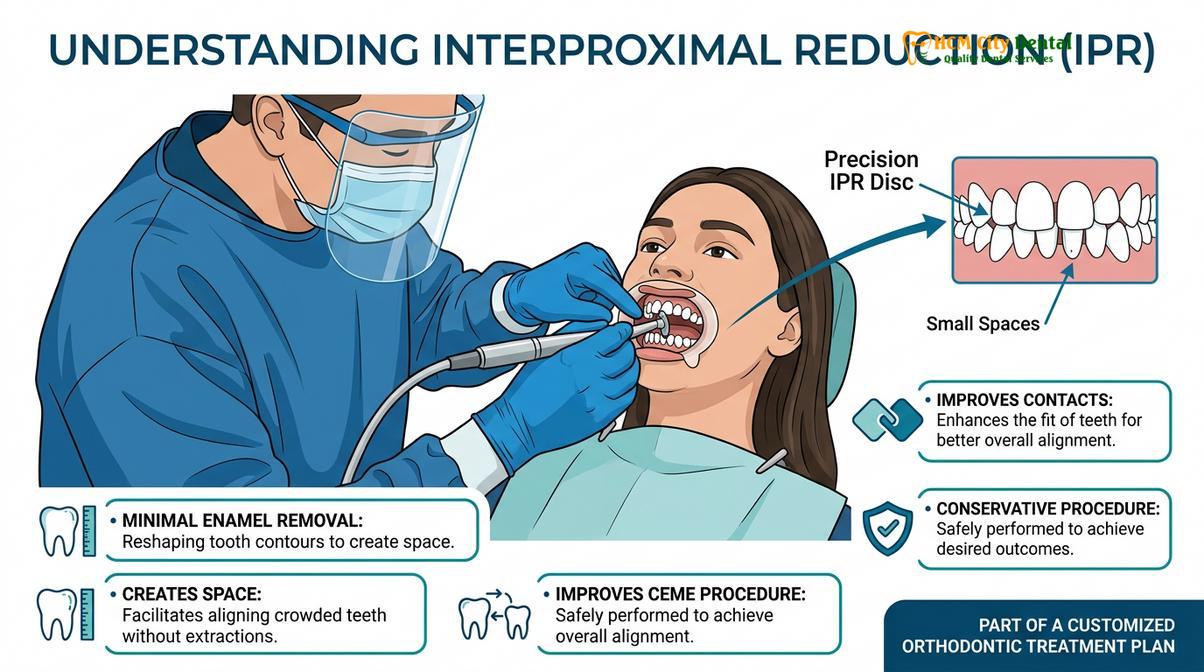
Interproximal Reduction (IPR): Also known as enamel stripping, IPR is a highly controlled clinical procedure used for mild to moderate crowding. The orthodontist uses specialized abrasive strips to polish away a microscopic amount of the outer enamel from the sides of specific teeth. By slightly narrowing several teeth, the orthodontist can gain a few crucial millimeters of space across the arch.
Strategic Tooth Extraction: In cases of severe crowding, expansion and IPR may be insufficient. To achieve a stable, functional bite and a balanced facial profile, the extraction of permanent teeth can become a biological necessity. The most commonly extracted teeth are the first premolars, providing significant space right in the middle of the arch.
Comparing Treatment Modalities for Overcrowding
Patients can choose between traditional metal braces, aesthetic ceramic brackets, and clear aligners, with the optimal choice depending on the severity of the crowding and lifestyle preferences.
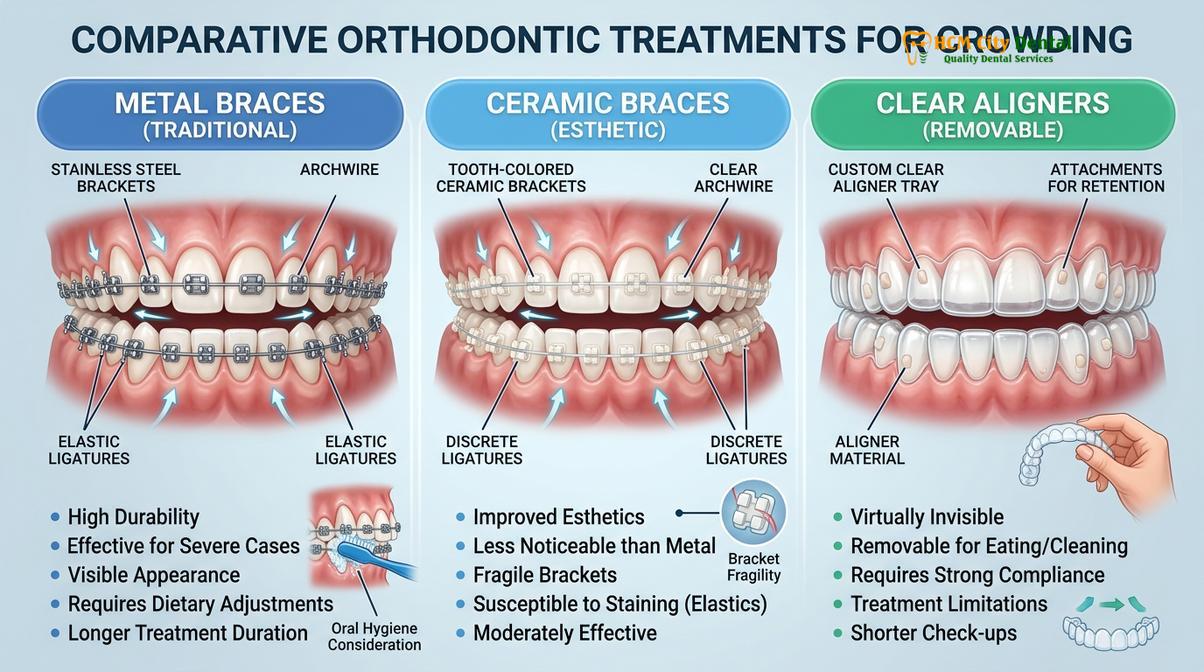
Advancements in orthodontic technology have provided patients with multiple modalities to resolve dental crowding. The decision of which system to use is based on a combination of clinical requirements, aesthetic preferences, and budget. For patients researching various bracket systems, understanding the mechanical differences is essential.
Traditional Metal Braces: Constructed from high-grade stainless steel, traditional braces remain highly effective for treating severe and complex crowding. They offer the orthodontist maximum 3D control over tooth movement, allowing for precise root torquing and rotation correction.
Ceramic (Clear) Braces: Functioning identically to metal braces, ceramic braces utilize brackets made of translucent materials that blend naturally with the tooth enamel. They provide the same level of biomechanical control as metal braces but offer a highly aesthetic, discreet appearance.
Clear Aligner Therapy: Clear aligners have revolutionized the treatment of mild to moderate crowding. Instead of fixed brackets and wires, this system uses a series of custom-fabricated, removable thermoplastic trays. Patients often wonder, does Invisalign work as well as braces? While aligners offer unparalleled aesthetics, they rely heavily on patient compliance and may struggle with severe rotational corrections compared to fixed appliances.
| Treatment Modality | Best Suited For | Aesthetic Level | Biomechanical Control |
|---|---|---|---|
| Traditional Metal Braces | Severe crowding, complex bite issues, extraction cases | Low (Highly visible) | Maximum (Excellent root control) |
| Ceramic Braces | Moderate to severe crowding, aesthetic-conscious patients | High (Blends with enamel) | High (Similar to metal) |
| Clear Aligners | Mild to moderate crowding, highly compliant patients | Very High (Nearly invisible) | Moderate (Struggles with severe rotations) |
When discussing orthodontic treatment fees, it is important to note that the complexity of the crowding often dictates the duration of treatment, which in turn influences the overall investment. A thorough clinical consultation is required to determine the most appropriate modality.
Adult Orthodontics: Addressing Age and Complexities
Orthodontic treatment is highly effective for adults, provided that the underlying periodontal foundation is healthy enough to support biomechanical tooth movement without compromising bone levels.
A common misconception in dentistry is that orthodontics is exclusively for children and teenagers. However, adult orthodontics has seen a massive surge in popularity. The biological process of tooth movement is identical regardless of age; osteoclasts and osteoblasts function in a 50-year-old just as they do in a 15-year-old. The primary difference lies in the density of the alveolar bone and the absence of active skeletal growth in adults[5].
Adults presenting with crowding often have concurrent dental issues, such as missing teeth, existing crowns or implants, and varying degrees of periodontal (gum) disease. Before initiating any orthodontic movement, the periodontal tissues must be completely healthy. Moving teeth through inflamed or infected gums can rapidly accelerate bone loss. Once treatment is complete, adults must also be diligent about retention, often exploring options like dental retainers for adults or researching Invisalign Vivera retainers to ensure their newly aligned smile remains stable for life.
Case Study: Resolving Severe Crowding in Ho Chi Minh City
Clinical case studies demonstrate how severe arch length discrepancies can be successfully managed through precise biomechanical planning and space creation techniques.
A recent patient visiting HCMC Dental Clinic in Ho Chi Minh City presented with severe mandibular crowding and a blocked-out canine. The patient had previously been concerned about their profile and wondered, can braces fix overjet alongside crowding? Following a comprehensive 3D cephalometric analysis, the clinical team determined that the arch length discrepancy exceeded 10mm.
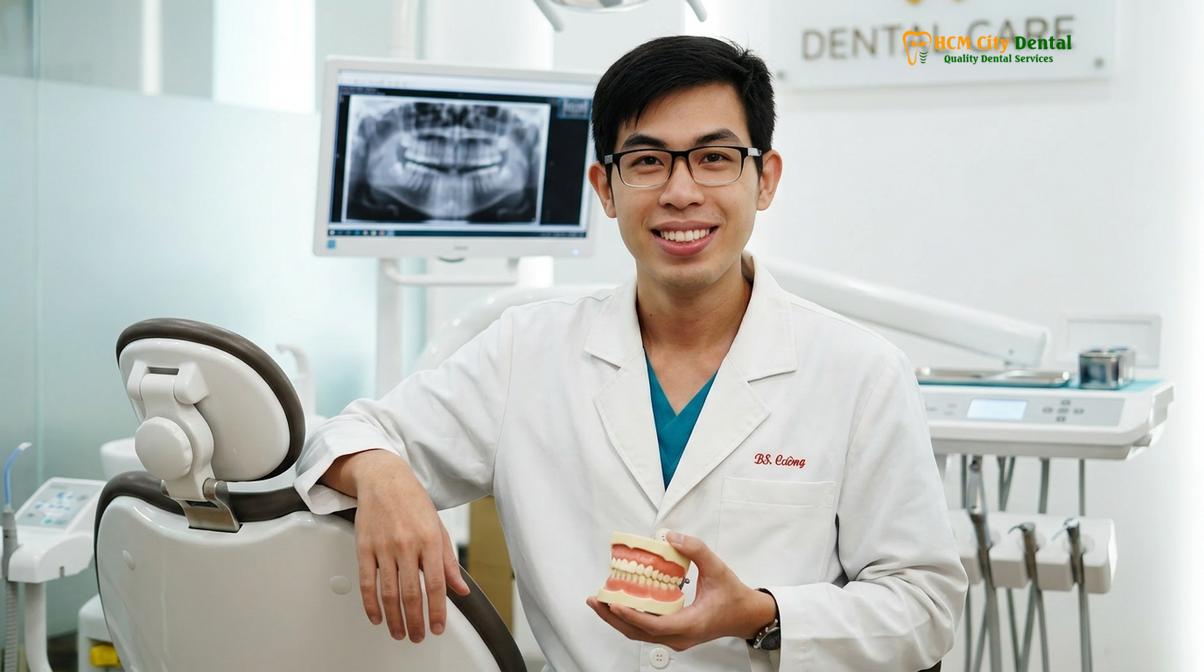
Dr. Nguyen Van Cuong, a leading specialist at HCMC Dental Clinic, emphasizes that adult orthodontics requires a comprehensive periodontal evaluation before initiating any tooth movement. Dr. Cuong utilizes advanced digital space mapping to ensure that the biomechanical forces applied will not compromise the patient’s bone levels or gingival health. In this specific case, the strategic extraction of two first premolars was prescribed. Over a period of 18 months using traditional fixed appliances, the extraction spaces were utilized entirely to unravel the crowding and bring the ectopic canine into proper alignment, resulting in a stable, functional occlusion and a harmonious facial profile.
“Every crowding case is a unique biomechanical puzzle. By leveraging digital diagnostics and understanding the biological limits of the periodontium, we can achieve predictable, aesthetic outcomes even in the most complex adult cases.”
When to See an Orthodontist
Early evaluation and timely intervention are critical for managing dental crowding effectively and minimizing the need for complex treatments later in life.
Recognizing the signs of dental crowding early can significantly improve treatment outcomes. The Vietnam Association of Orthodontists suggests that children should have their first orthodontic evaluation by age seven[6]. At this stage, the orthodontist can identify potential space deficiencies while the jaw is still growing, allowing for interceptive treatments like palatal expansion that can guide proper dental development.
For adults, it is never too late to seek a consultation. You should consider seeing an orthodontist if you experience difficulty cleaning between overlapping teeth, notice abnormal wear on your enamel, suffer from frequent jaw pain, or feel self-conscious about the alignment of your smile. Addressing crowding not only improves aesthetics but also plays a vital role in long-term oral health by making teeth easier to maintain and reducing the risk of periodontal disease.
References
- American Journal of Orthodontics and Dentofacial Orthopedics. Biomechanics of tooth movement and periodontal tissue response. (2021).
- Journal of Clinical Orthodontics. Space analysis and extraction protocols in severe crowding cases. (2020).
- European Journal of Orthodontics. Adult orthodontics: Periodontal considerations and bone remodeling. (2019).
- Angle Orthodontist. Comparative efficacy of clear aligners versus fixed appliances in crowding resolution. (2022).
- International Journal of Dentistry. Management of orthodontic pain and tension-related symptoms. (2018).
- Vietnam Association of Orthodontists (VAO). Clinical guidelines for malocclusion management and interceptive orthodontics. (2023).
If you are experiencing dental crowding and want to explore your treatment options, contact Orthodontics tại HCMC Dental Clinic in Ho Chi Minh City today. Our experienced clinical team is dedicated to providing comprehensive evaluations and personalized orthodontic solutions to help you achieve a healthy, properly aligned smile.