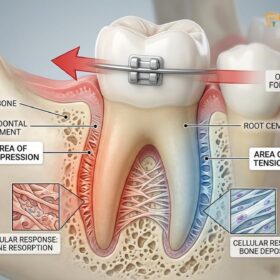
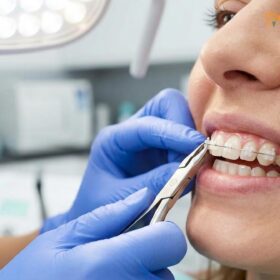
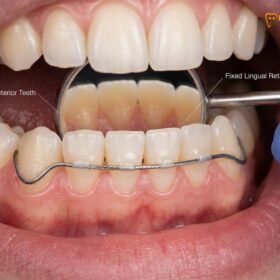
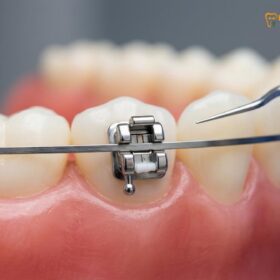
A dental kit for braces is a specialized collection of oral hygiene tools designed to clean around brackets and wires, preventing plaque buildup and enamel decalcification. Essential components include V-trim toothbrushes, interdental brushes, floss threaders, and orthodontic wax to ensure optimal periodontal health during treatment.
Clinical Summary:
Maintaining pristine oral hygiene during fixed orthodontic treatment requires significantly more effort than standard brushing. A comprehensive dental kit for braces provides targeted mechanical plaque removal around complex bracket architectures and archwires. Clinical evidence demonstrates that utilizing specialized tools—such as V-trim bristles, interproximal brushes, and floss threaders—drastically reduces the risk of white spot lesions, gingival inflammation, and periodontal complications. Dr. Nguyen Van Cuong emphasizes that patient compliance with a structured home-care kit is as critical to the final aesthetic and functional outcome as the biomechanical tooth movement itself. Proper daily maintenance ensures that the underlying enamel remains structurally sound throughout the duration of the orthodontic therapy.
Key Takeaways:
- A standard orthodontic kit must include a V-trim toothbrush, interdental brushes, floss threaders, and relief wax.
- Specialized orthodontic bristles are engineered to straddle brackets, cleaning both the tooth surface and the appliance simultaneously.
- Daily use of interproximal cleaning tools reduces interdental plaque accumulation by up to 40% compared to brushing alone.
- Orthodontic wax provides immediate palliative relief for mucosal irritation caused by protruding wires or sharp bracket edges.
- Advanced kits often incorporate water irrigators and disclosing tablets to verify and enhance plaque removal efficacy.
Essential Components of a Clinical-Grade Dental Kit for Braces
A clinical-grade orthodontic kit contains specialized mechanical tools, including V-trim toothbrushes, interdental brushes, and floss threaders, specifically engineered to navigate the complex architecture of brackets and archwires.
When a patient begins fixed orthodontic therapy, the introduction of brackets, bands, and archwires creates a highly retentive environment for dental plaque. The complex geometry of these appliances makes standard oral hygiene practices insufficient. To combat the rapid accumulation of biofilm, a specialized dental kit for braces is mandatory. The cornerstone of this kit is the orthodontic toothbrush, typically featuring a V-trim or U-trim bristle design. Unlike flat-bristled brushes, the V-trim architecture features shorter bristles in the center and longer bristles on the periphery. This allows the longer bristles to sweep the gingival margins and the exposed enamel, while the shorter central bristles scrub the face of the bracket without splaying excessively[1].
Beyond the primary toothbrush, interdental brushes (often called proxy brushes) are indispensable. These small, cylindrical, or conical brushes are designed to slide vertically beneath the archwire and between the brackets. The interproximal spaces and the areas directly adjacent to the bracket base are notorious for harboring Streptococcus mutans, the primary bacteria responsible for enamel demineralization. By mechanically disrupting this biofilm daily, patients can prevent the onset of decalcification. Just as a proper dentist sitting position ensures optimal visibility, ergonomics, and access during clinical adjustments in the dental chair, patients must learn to use these interdental tools at the correct angles in front of a mirror to access hidden plaque-retentive areas at home.
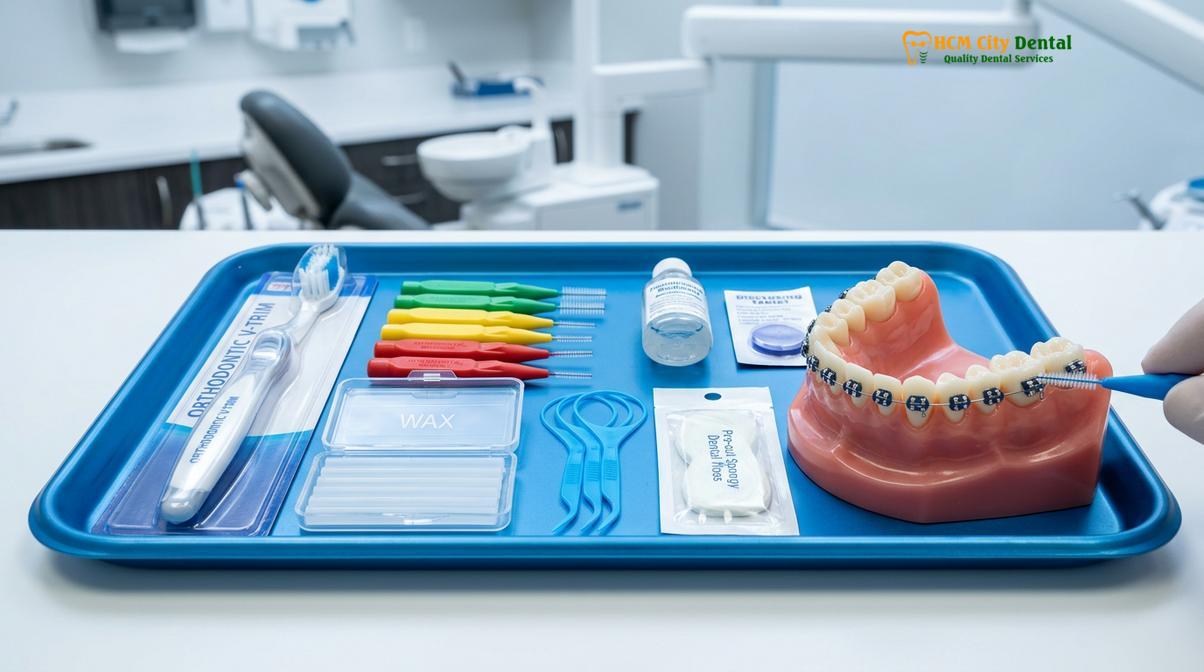
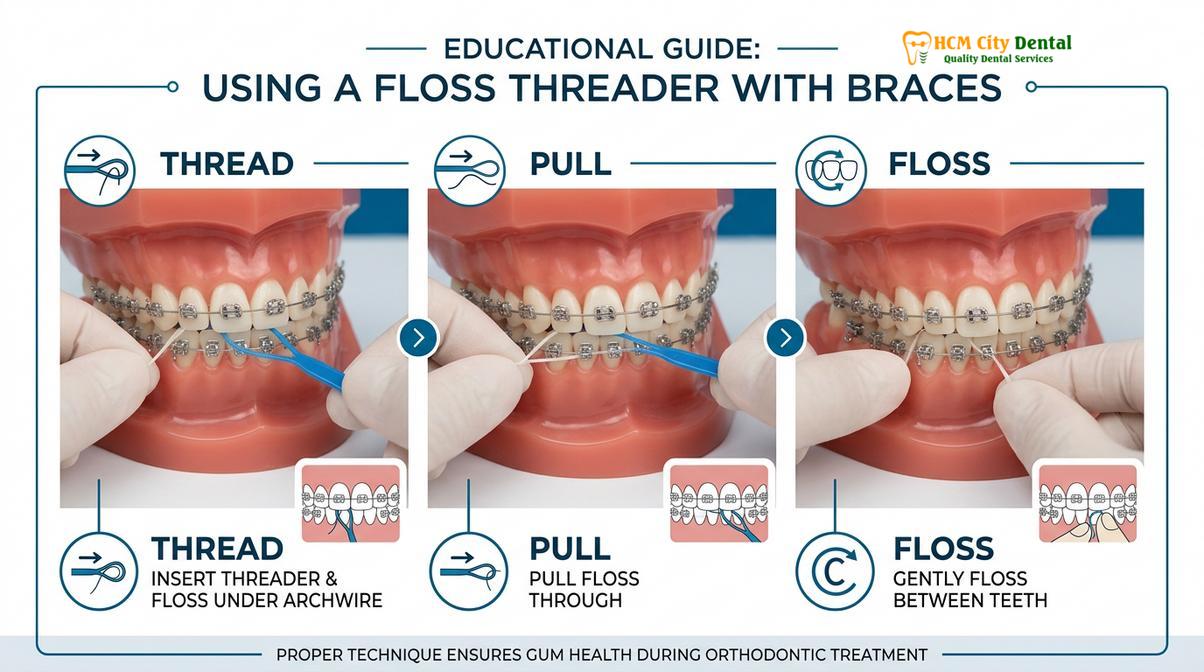
Flossing with braces presents a significant mechanical challenge because the archwire blocks traditional flossing techniques. Therefore, a comprehensive comprehensive orthodontic care guide always mandates the inclusion of floss threaders or pre-threaded orthodontic floss in the kit. A floss threader acts much like a needle carrying thread; it allows the patient to pull standard dental floss under the archwire, enabling them to clean the interproximal contact points and the gingival sulcus. Failure to floss during orthodontic treatment rapidly leads to interdental gingivitis and papillary hypertrophy.
Finally, no dental kit for braces is complete without orthodontic relief wax. During the initial phases of treatment, or following a wire adjustment, the oral mucosa (the inner lips and cheeks) often experiences friction from the metallic or ceramic hardware. Orthodontic wax is a biocompatible, malleable substance that patients can pinch off, roll into a small sphere, and press over the offending bracket or wire. This creates a smooth barrier, allowing the soft tissues to heal and adapt to the appliances without forming painful ulcerations.
Comparing Starter Kits vs. Advanced Orthodontic Care Kits
Starter kits provide the fundamental manual tools for daily maintenance, whereas advanced kits incorporate powered devices like water irrigators and chemical adjuncts for superior plaque control.
Orthodontic kits generally fall into two categories: basic starter kits provided by the clinic on bonding day, and advanced care kits that patients curate to optimize their hygiene routine. A starter kit is designed to cover the immediate, essential needs of the patient. It relies entirely on manual dexterity and mechanical friction to remove plaque. While effective when used with meticulous technique, manual cleaning around braces is time-consuming and heavily dependent on patient compliance.
Since the era of early dental pioneers—and long after the historical debates regarding who created braces in their modern fixed form—the challenge of maintaining hygiene around appliances has driven continuous innovation. Today, advanced orthodontic kits leverage technology to overcome the limitations of manual brushing. The most significant upgrade in an advanced kit is the inclusion of a water flosser (oral irrigator). Water flossers generate a pulsatile stream of pressurized water that creates hydrodynamic shear forces, effectively flushing out loose food debris and disrupting the unattached biofilm surrounding the brackets and beneath the gumline[2].
| Component Category | Basic Starter Kit | Advanced Care Kit | Clinical Purpose |
|---|---|---|---|
| Primary Brushing | Manual V-trim toothbrush | Sonic/Electric toothbrush with specialized Ortho brush head | Disrupts mature biofilm on brackets, wires, and exposed enamel surfaces. |
| Interproximal Cleaning | Standard manual proxy brushes | Assorted proxy sizes + Pulsating Water Flosser | Clears debris from beneath the archwire and stimulates gingival tissue. |
| Flossing Mechanism | Nylon floss threaders | Superfloss or Pre-threaded rigid-ended ortho floss | Mechanically scrapes the interproximal contact points to prevent interdental caries. |
| Adjuncts & Protection | Clear orthodontic wax | Disclosing tablets, Fluoride mouthrinse, Silicone wax | Highlights missed plaque, remineralizes enamel, and protects oral mucosa. |
Another critical component often found in advanced kits is the plaque disclosing tablet. These chewable tablets contain a harmless dye (usually erythrosine) that stains bacterial plaque bright pink or purple. For orthodontic patients, disclosing tablets are an invaluable educational tool. By chewing a tablet after their standard brushing routine, patients can visually identify the exact areas around the brackets where their technique is failing. This immediate visual feedback allows them to refine their brushing angles and ensures that no biofilm is left behind to cause decalcification.
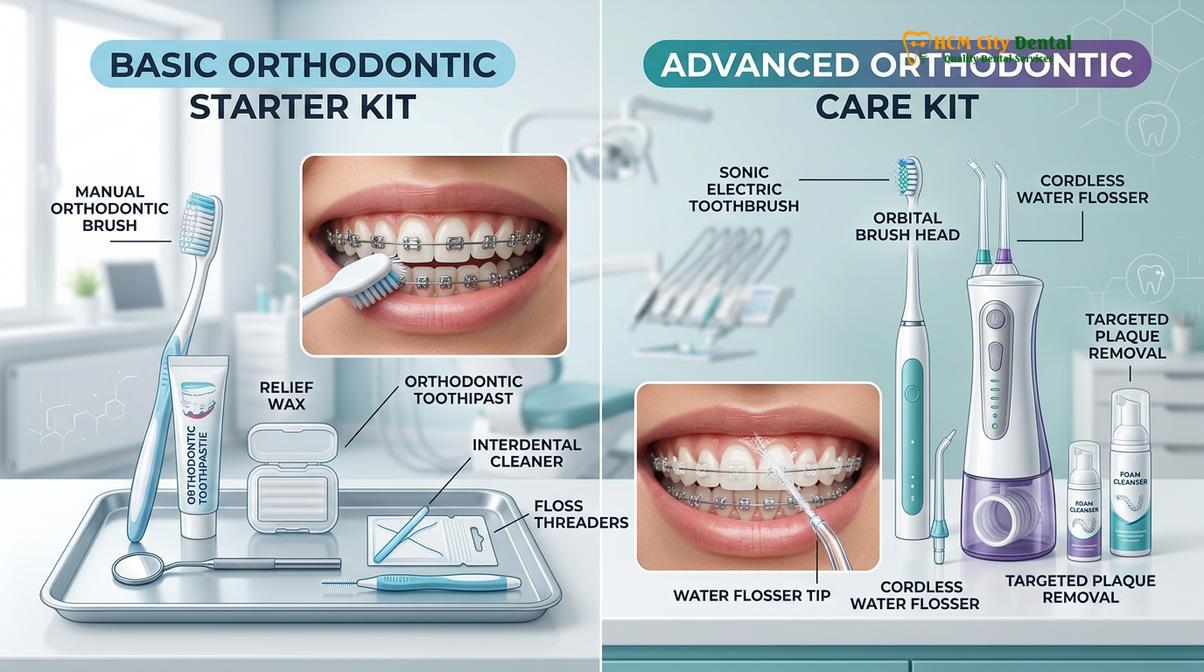
Advanced kits also frequently include specialized chemical adjuncts, such as a 0.05% sodium fluoride daily mouthrinse. Because the physical presence of brackets increases the risk of caries, supplementing mechanical cleaning with topical fluoride helps to continuously remineralize the enamel, strengthening it against bacterial acid attacks. Patients undergoing clear aligner therapy also utilize specialized kits, though their focus shifts from bracket cleaning to aligner sanitization and tray seating.
Managing Orthodontic Emergencies with Your Kit
Your dental kit serves as a first-aid resource for minor orthodontic complications, utilizing relief wax and blunt tools to manage soft tissue irritation until professional care is available.
Orthodontic treatment is a dynamic process involving continuous biomechanical forces. As teeth shift and align, the archwire may extend out of the terminal molar tubes, or a bracket may occasionally debond due to masticatory forces. A well-equipped dental kit for braces empowers the patient to manage these minor emergencies safely at home, preventing severe discomfort while awaiting a clinical appointment.
The most common minor emergency is a protruding wire. As crowded teeth unravel and align, the excess wire must go somewhere, often sliding backward and poking the buccal mucosa (the inside of the cheek). If you experience a braces wire bent out of position or extending too far, the immediate protocol is to dry the area thoroughly with a tissue or cotton roll, pinch off a pea-sized amount of orthodontic wax from your kit, roll it between your fingers to warm it, and press it firmly over the sharp wire end. The wax acts as a physical buffer, instantly eliminating the sharp contact and allowing the traumatized tissue to heal[3].
In cases where a ligature wire (the tiny wire tying the main archwire to the bracket) comes loose and pokes the lip, the blunt end of a toothbrush or a clean pencil eraser from your kit can be used to gently tuck the pigtail end of the wire back under the main archwire. This simple maneuver can resolve the irritation instantly. However, if a bracket completely detaches from the tooth (debonding), it will typically remain attached to the archwire, sliding back and forth. In this scenario, wax can be used to stabilize the loose bracket against the adjacent tooth to prevent it from flipping and causing irritation.
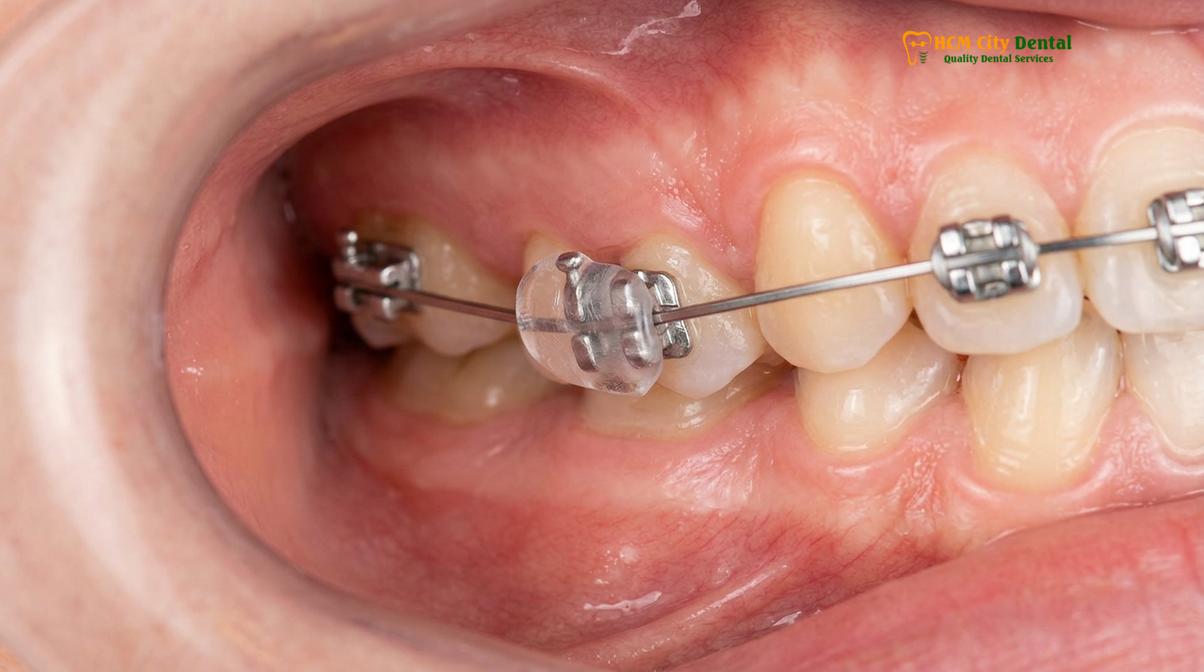
It is crucial to understand that these kit-based interventions are strictly palliative. They do not fix the underlying mechanical issue. A loose bracket means that the specific tooth is no longer receiving the prescribed orthodontic forces, which can delay the overall treatment timeline. Patients must contact their clinic promptly to schedule a repair, ensuring that their treatment remains on track. Proper maintenance of the appliances also plays a role in preventing yellow stains around braces brackets, which can occur if food debris is allowed to stagnate around compromised hardware.
The Impact of Proper Hygiene on Orthodontic Outcomes
Diligent use of a braces dental kit prevents irreversible enamel decalcification and gingival hypertrophy, ensuring that the final aesthetic result is both structurally sound and visually pleasing.
The ultimate goal of orthodontics is not merely straight teeth, but a healthy, functional, and aesthetically pleasing stomatognathic system. However, the presence of fixed appliances drastically alters the oral microbiome. If a patient neglects to use their dental kit for braces effectively, the resulting plaque accumulation can severely compromise the final outcome, leading to complications that persist long after the braces are removed.
The most devastating consequence of poor orthodontic hygiene is the development of White Spot Lesions (WSLs). These are areas of opaque, chalky enamel that form around the periphery of the brackets. WSLs represent the first clinical sign of enamel caries—areas where bacterial acids have leached calcium and phosphate minerals out of the tooth structure. Because the bracket protects the enamel directly beneath it, the demineralization occurs in a square or U-shape around the bracket base. When the braces are finally removed, the patient is left with straight teeth marred by permanent, unsightly white squares[4].
“The success of orthodontic biomechanics is fundamentally tethered to the patient’s periodontal health; moving teeth through inflamed, edematous tissue accelerates crestal bone loss and severely compromises the long-term stability of the orthodontic result.” – Clinical Orthodontic Principles
Furthermore, chronic plaque accumulation leads to gingival hyperplasia—a condition where the gum tissue becomes severely inflamed, swollen, and overgrows the brackets. This hypertrophic tissue bleeds easily, creates deep pseudo-pockets that harbor anaerobic bacteria, and can physically impede the movement of the teeth. Poor hygiene can lead to swollen gums that obscure the clinical crowns, complicating the aesthetic transition, particularly for patients who are closely tracking their gummy smile before and after braces. If the gingival overgrowth becomes severe enough, the orthodontist may be forced to halt treatment, remove the archwires, and refer the patient to a periodontist for a gingivectomy before treatment can resume.
By utilizing the tools in a comprehensive dental kit daily, patients maintain the integrity of their enamel and the health of their periodontium. This diligence ensures that when the debonding day arrives, the teeth are not only perfectly aligned but also brilliantly healthy, setting the ideal foundation for any subsequent cosmetic procedures, such as teeth whitening after braces removal.
Tailoring Your Kit for Travel and Daily Life
A compact, travel-friendly dental kit ensures continuous plaque control and appliance protection during work, school, or international transit, maintaining treatment momentum.
Orthodontic treatment requires a 24/7 commitment to oral hygiene. Because plaque begins to reform on the teeth within hours of brushing, patients cannot rely solely on their morning and evening routines. Eating meals away from home—whether at school, the office, or while traveling—necessitates a portable version of the dental kit for braces. A well-curated travel kit ensures that food debris is promptly removed before it can harden into calculus or initiate the demineralization process.
A standard travel kit should be housed in a ventilated, hard-shell case to prevent bacterial growth on damp bristles. The essential components include a travel-sized V-trim toothbrush (often with a folding handle to protect the bristles), a small tube of fluoride toothpaste, a few interdental brushes with protective caps, and a compact container of orthodontic wax. For patients who find flossing on the go cumbersome, carrying a few pre-threaded flossers designed specifically to slip under archwires can be a highly effective compromise.
“Consistency in mechanical plaque disruption is more critical than the specific brand of tools used; a travel kit ensures that the 12-hour biofilm maturation cycle is continuously interrupted, regardless of the patient’s location.” – Journal of Clinical Orthodontics
For individuals relocating or traveling extensively, such as expats seeking braces in Vietnam, having a robust travel kit is vital for managing hygiene during long flights or transit periods where access to a full bathroom may be limited. Furthermore, maintaining excellent hygiene prevents unexpected clinical emergencies, which is particularly beneficial for patients carefully managing braces costs and avoiding fees associated with emergency bracket replacements or periodontal interventions.
When to See a Doctor
While a dental kit for braces empowers patients to maintain excellent hygiene and manage minor irritations, it is not a substitute for professional clinical oversight. There are specific scenarios where home care is insufficient, and immediate evaluation by an orthodontist is required to prevent treatment delays or structural damage to the teeth.
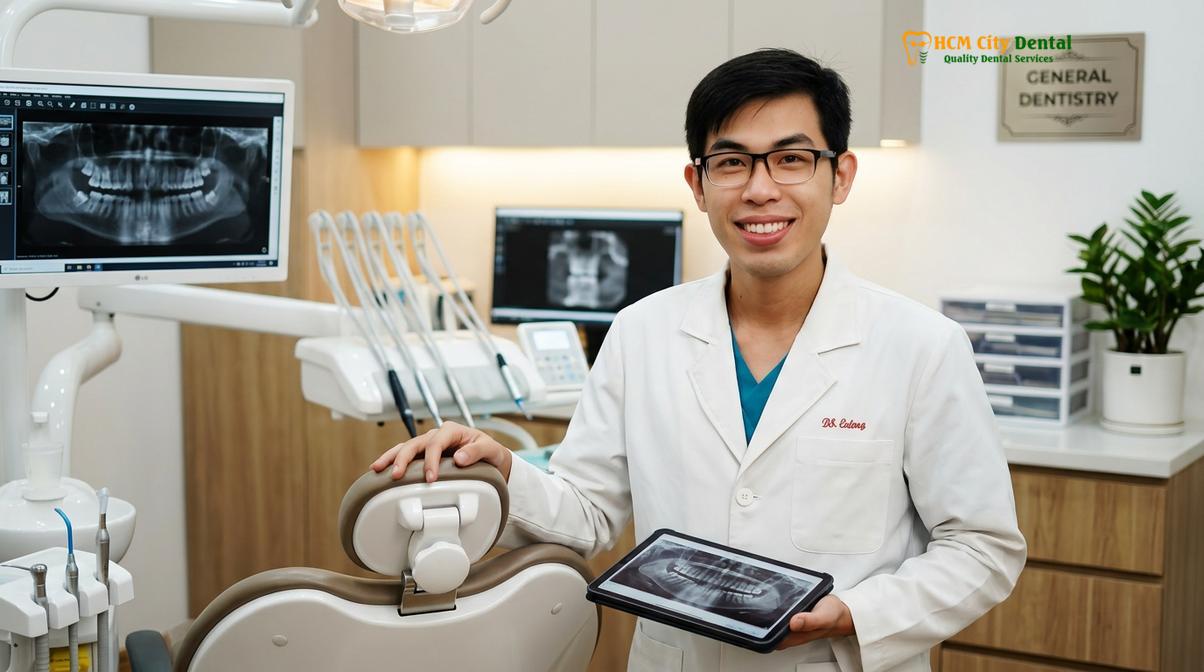
You should contact your orthodontic clinic immediately if you experience a completely debonded bracket. A bracket that has detached from the enamel but remains on the wire cannot be reattached at home; it requires professional cleaning of the enamel, re-etching, and precise rebonding with composite resin. Dr. Cuong advises that leaving a debonded bracket unaddressed for extended periods allows the specific tooth to drift out of alignment, potentially adding weeks or months to the overall treatment time.
Additionally, seek professional care if you experience severe, unremitting pain that is not alleviated by orthodontic wax or over-the-counter analgesics. While mild soreness is expected for a few days following an adjustment, sharp, localized pain could indicate an embedded wire, a failing restoration beneath a band, or an endodontic issue. Finally, if you notice the development of chalky white squares around your brackets (early white spot lesions) or if your gums become so swollen that they bleed spontaneously during brushing, schedule a consultation. Your orthodontist may need to prescribe high-concentration fluoride treatments or adjust your hygiene protocol to halt the progression of the disease[5].
Frequently Asked Questions
What is the most important tool in a dental kit for braces?
The most critical tool is the V-trim orthodontic toothbrush, designed specifically to clean around brackets. Its unique bristle architecture allows the outer bristles to clean the tooth surface while the shorter inner bristles scrub the orthodontic hardware. Without this specialized brush, plaque will inevitably accumulate at the bracket margins, leading to decalcification.
How often should I replace the interdental brushes in my kit?
Interdental brushes should be replaced every one to two weeks, or sooner if the wire core bends or the bristles become frayed. Using a worn interdental brush reduces plaque removal efficacy and can scratch the enamel or damage the gingival tissue. Always rinse them thoroughly and allow them to air dry after each use.
Can I use a regular toothbrush instead of an orthodontic V-trim brush?
While a regular soft-bristled toothbrush can be used, it is highly inefficient for orthodontic patients. Standard bristles splay rapidly against metal or ceramic brackets and fail to reach the critical junction between the bracket base and the enamel. If you must use a regular brush, you must angle it at 45 degrees above and below the brackets to simulate the V-trim effect.
Is a water flosser a complete replacement for floss threaders?
No, a water flosser is an excellent adjunct but does not completely replace mechanical flossing. Water irrigators flush out loose debris and disrupt biofilm, but physical floss is required to scrape the sticky plaque matrix from the interproximal contact points. For optimal health, both should be used in conjunction.
Does orthodontic wax expire or go bad in the kit?
Orthodontic wax generally does not expire, but it can degrade if exposed to extreme heat or contamination. It is best to keep the wax in its sealed container and replace it if it becomes discolored, brittle, or loses its malleability. Always wash your hands before handling the wax to prevent introducing bacteria to the oral mucosa.
References
- American Journal of Orthodontics and Dentofacial Orthopedics. Plaque retention and periodontal health during fixed appliance therapy. (2021).
- Journal of Clinical Periodontology. Efficacy of water irrigators versus manual interdental cleaning in orthodontic patients. (2020).
- International Journal of Dentistry. Management of minor orthodontic emergencies and soft tissue lesions. (2019).
- European Journal of Orthodontics. Incidence and prevention of white spot lesions during fixed orthodontic treatment. (2022).
- Journal of the American Dental Association. Guidelines for orthodontic patient home care and appliance maintenance. (2018).