Porcelain veneers are a highly effective, minimally invasive cosmetic treatment for closing gaps between teeth (diastema). By bonding custom-crafted ceramic shells to the front of your teeth, prosthodontists can instantly correct spacing issues, restore proportional symmetry, and deliver a natural, long-lasting smile without requiring months of orthodontic therapy.
Clinical Summary:
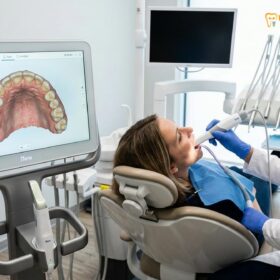
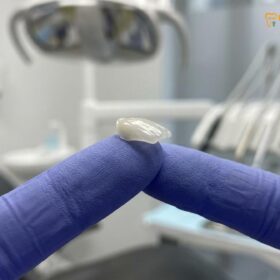
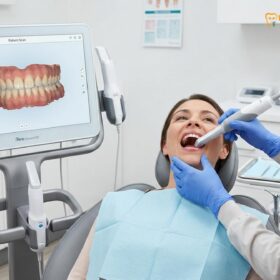
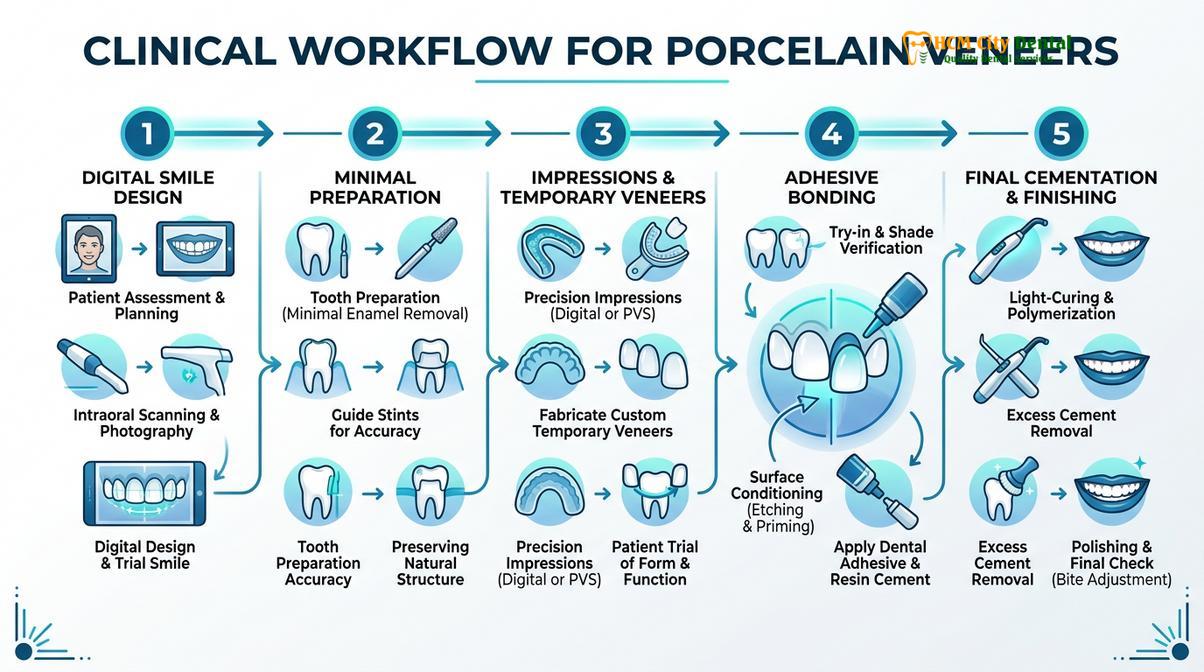
Closing a diastema requires precise spatial management to ensure the final teeth look naturally proportioned rather than overly wide. Utilizing advanced digital workflows, including intraoral scanners, clinicians can design custom ceramic restorations that seamlessly bridge interdental spaces. Materials like E.max (lithium disilicate) offer lifelike translucency, while Zirconia HT provides exceptional durability for high-stress areas. At HCMC Dental Clinic in Ho Chi Minh City, specialists employ Digital Smile Design (DSD) and minimally invasive preparation techniques to preserve healthy enamel. Through a direct laboratory partnership, international patients can achieve a complete, custom-shaded smile makeover in an express turnaround, supported by global warranties and remote follow-up care.
Key Takeaways:
- Instant Correction: Veneers provide an immediate aesthetic solution for interdental gaps, bypassing the lengthy timelines of traditional orthodontics.
- Proportional Design: Advanced 3D smile design prevents the “buck teeth” effect by carefully managing the height-to-width ratio of the new restorations.
- Material Excellence: Authentic E.max and Zirconia ceramics offer superior stain resistance, flexural strength, and optical properties compared to composite bonding.
- Minimally Invasive: Modern protocols require only 0.3mm to 0.7mm of enamel reduction, and in some cases, ultra-thin prep-less options are viable.
- Cost-Effective Tourism: Premium treatments in Vietnam offer significant savings, allowing patients to access world-class materials at accessible price points.
What Causes Diastema (Gap Between Front Teeth)?
A diastema is primarily caused by a discrepancy between jaw size and tooth width, an oversized labial frenum, or periodontal migration, requiring careful diagnostic evaluation before cosmetic closure.
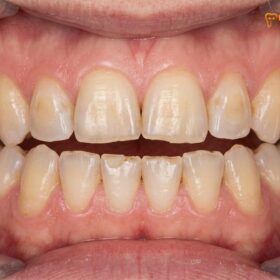
A diastema refers to a noticeable space or gap between two or more teeth, most commonly occurring between the two upper central incisors (maxillary midline diastema). While some individuals embrace this feature as a unique aspect of their smile, many seek cosmetic intervention to achieve a more uniform, continuous dental arch. Understanding the underlying etiology of these spaces is the critical first step in determining the most appropriate and stable treatment modality. If the root cause is not addressed or accounted for, restorative efforts may suffer from premature failure or aesthetic compromises.
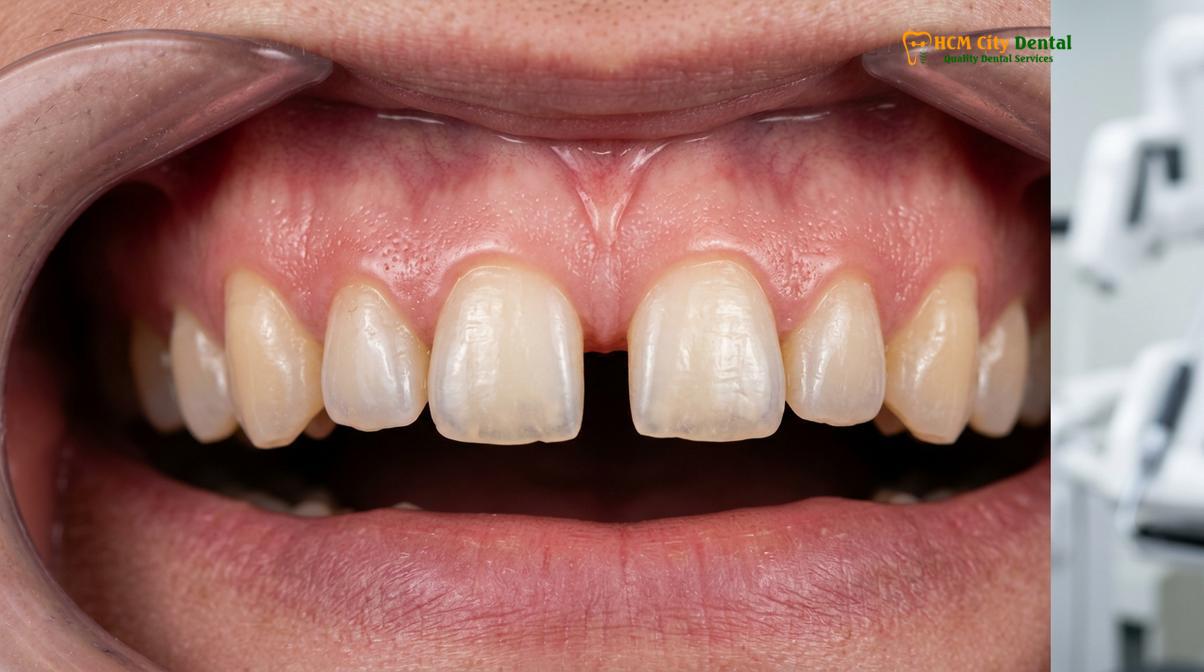
The development of a diastema is rarely attributed to a single factor; rather, it is often the result of a combination of genetic, anatomical, and behavioral influences. The most prevalent cause is a fundamental discrepancy between the size of the jawbone and the size of the teeth. If a patient inherits a relatively large dental arch but average or small-sized teeth (a condition known as microdontia), the teeth will naturally space out to fill the available bone volume. This is frequently observed in cases where the lateral incisors are either congenitally missing or peg-shaped, causing the central incisors to drift distally and create a midline gap[1].
Another significant anatomical factor is the presence of an oversized or low-attaching labial frenum. The frenum is the band of mucosal tissue that connects the inner aspect of the upper lip to the gingiva just above the two front teeth. In some individuals, this tissue is hypertrophic and attaches too low, extending between the central incisors and physically preventing them from coming together. When an oversized frenum is the primary culprit, a minor surgical procedure known as a frenectomy may be required prior to placing Porcelain Veneers to ensure long-term stability and prevent the tissue from pushing the teeth apart again[2].
Gap Closure Methods: Dental Bonding vs. Veneers vs. Invisalign
Treatment selection depends on the gap size, patient timeline, and aesthetic goals, ranging from immediate composite bonding to comprehensive orthodontic alignment or durable ceramic restorations.
When a patient presents with the goal of closing a diastema, modern dentistry offers three primary pathways: orthodontic movement, direct composite bonding, and indirect porcelain restorations. Each modality carries distinct clinical advantages, limitations, and timelines. The decision-making process must balance the patient’s desire for immediate results with the biological realities of their specific dental anatomy.
Invisalign and Clear Aligners: Orthodontic treatment is the most biologically conservative approach, as it involves physically moving the natural teeth through the alveolar bone to close the spaces. This method preserves the natural tooth structure, as no enamel reduction is required. However, orthodontics only changes the position of the teeth; it cannot alter their shape, size, or color. If a patient has a gap due to microdontia, moving them together may close the central gap but open up spaces elsewhere, or leave the smile looking disproportionate.
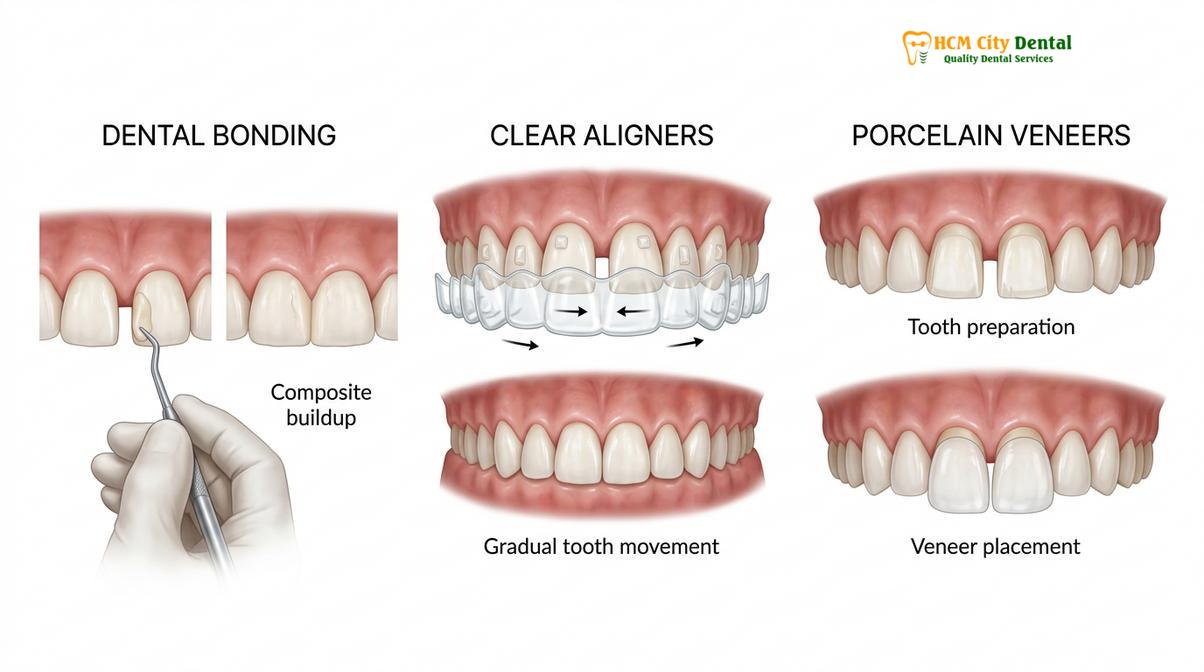
Direct Dental Bonding: For patients seeking an immediate, cost-effective solution, direct composite bonding is a popular choice. In this procedure, a tooth-colored composite resin is applied directly to the sides of the teeth, sculpted to close the gap, and hardened with a curing light. While highly conservative, composite resin is inherently porous, meaning it will absorb stains from coffee, tea, and red wine over time. It also lacks the flexural strength of ceramic, making it susceptible to chipping, especially if the patient has a heavy bite.
Porcelain Veneers: Ceramic veneers represent the gold standard for comprehensive smile makeovers and diastema closures. These ultra-thin, custom-milled shells of porcelain are permanently bonded to the facial surfaces of the teeth. Unlike orthodontics, veneers provide instant results. Unlike bonding, porcelain is non-porous, offering exceptional stain resistance and a lifelike translucency that perfectly mimics natural enamel. Veneers allow the prosthodontist to simultaneously correct the gap, enhance the tooth color, and redesign the tooth shape to achieve ideal proportions[3].
| Treatment Modality | Treatment Timeline | Aesthetic Control (Shape/Color) | Durability & Longevity | Stain Resistance |
|---|---|---|---|---|
| Invisalign (Orthodontics) | Months to Years | None (Moves existing teeth) | Permanent (Requires retainers) | N/A (Natural enamel) |
| Direct Composite Bonding | 1 Visit (Immediate) | Moderate | Moderate (Prone to chipping) | Low (Porous material) |
| Porcelain Veneers | Few Days (2 Visits) | Maximum (Complete redesign) | High (Long-term stability) | High (Non-porous ceramic) |
How Dr. Cuong Designs Wide-Veneer Proportions to Avoid “Buck Teeth”
Closing wide spaces requires meticulous digital smile design to manipulate the height-to-width ratio, ensuring the final restorations look naturally proportioned rather than overly bulky.
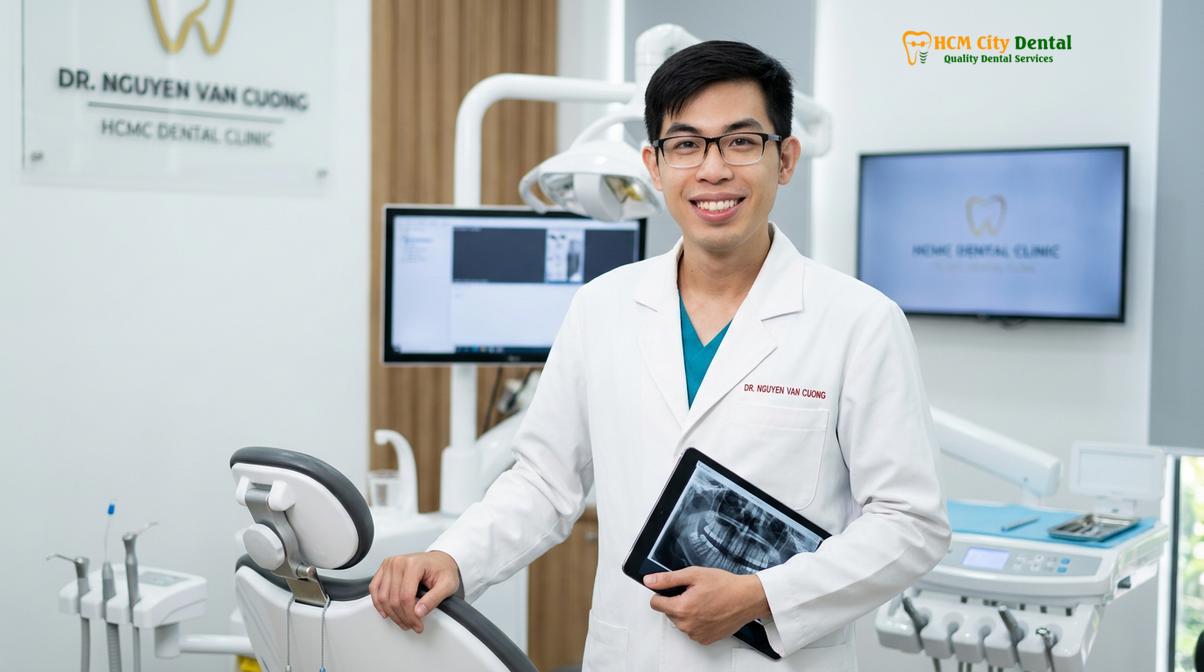
At HCMC Dental Clinic, Dr. Nguyen Van Cuong utilizes Digital Smile Design (DSD) software to meticulously calculate the ideal height-to-width ratio for every patient. Dr. Cuong emphasizes that comprehensive spatial planning is essential to prevent the teeth from looking artificially wide when closing a diastema. For more insights on restorative choices, patients often review his clinical guidance on Porcelain Veneers vs Porcelain Crowns to understand the best approach for their specific dental anatomy.
One of the most significant clinical challenges in closing a large diastema with restorative materials is managing the spatial proportions. If a dentist simply adds porcelain to the inner surfaces of the two central incisors to close a wide gap, the resulting teeth will become disproportionately wide. This creates an unnatural, square-like appearance. To prevent this aesthetic failure, advanced spatial planning and optical illusions must be employed.
To achieve the necessary length without violating the patient’s bite or making the teeth look too long at the incisal edge, clinicians often evaluate the gingival zenith—the highest point of the gum tissue surrounding the tooth. If a patient has a “gummy smile” or short clinical crowns, a diode laser can be used to perform a minimally invasive gingival contouring procedure. By gently raising the gumline, the clinician exposes more of the natural tooth structure. This increases the vertical height of the tooth, allowing the veneer to be made wider to close the gap while still maintaining a beautiful, natural rectangle shape rather than a stout square[4].
“The art of closing a diastema lies not just in filling the empty space, but in redistributing that space harmoniously across the anterior segment. By carefully managing the height-to-width ratios and utilizing digital smile design, we ensure that the final restorations look like they grew there naturally, rather than looking like artificial additions.”
— Clinical Aesthetic Guidelines, HCMC Dental Clinic
Clinical Advantages of Porcelain Over Bonding for Wide Gaps
Porcelain ceramics offer superior flexural strength, lifelike translucency, and long-term marginal integrity compared to porous composite resins, making them ideal for wide gap closures.
When addressing wide teeth proportions and significant interdental spacing, the choice of material is paramount to the long-term success of the case. While composite resin bonding is a valuable tool in the dental armamentarium, it possesses inherent physical limitations that make it less suitable for large structural additions. Porcelain ceramics, specifically lithium disilicate (E.max) and high-translucency zirconia, offer profound clinical advantages that justify their use in comprehensive smile makeovers.
The primary advantage of porcelain is its structural integrity and flexural strength. When a gap is closed, the restorative material is suspended in the interdental space, unsupported by underlying tooth structure. This creates an area of high tensile stress during biting and chewing. Composite resin has a relatively low flexural strength, making these unsupported extensions highly vulnerable to cohesive fractures and chipping. In contrast, authentic E.max porcelain boasts a high flexural strength that ensures the veneers can withstand the daily forces of mastication without fracturing, providing a durable, long-term solution.
Beyond strength, the optical properties of dental ceramics are unmatched. Natural tooth enamel is not a flat, opaque white; it is a complex, crystalline structure that absorbs, reflects, and transmits light. Modern dental ceramics are engineered to replicate this exact light-handling behavior. The material possesses a lifelike translucency that allows light to penetrate the surface and scatter within, creating a vibrant, vital appearance. Furthermore, porcelain is entirely non-porous. Unlike composite resin, which will inevitably absorb pigments from the diet and turn yellow or brown at the margins, a highly polished porcelain veneer will maintain its chosen shade indefinitely.
When to Consult a Prosthodontist for Gap Closure
Not all gaps can be safely closed with veneers alone; a professional evaluation is necessary to rule out active periodontal disease or severe bite misalignments before proceeding with cosmetic treatments.
Important Clinical Note: If a gap between your teeth has appeared suddenly or is actively widening, do not seek immediate cosmetic closure. This is often a sign of underlying periodontal disease or bone loss that requires urgent medical stabilization.
While Porcelain Veneers vs Composite Veneers is a common debate among patients, the first clinical priority must always be biological health. Patients should consult a qualified prosthodontist if they notice a gap suddenly appearing or widening over time, as this can be a primary indicator of underlying periodontal disease or bone loss. According to the Vietnam Odonto-Stomatology Association (VOSA) guidelines on aesthetic restorations, placing veneers over actively migrating teeth without stabilizing the periodontal foundation will inevitably lead to restorative failure and further tissue destruction[5].
Additionally, patients with severe malocclusion (bite issues) such as a deep overbite or edge-to-edge bite should seek a comprehensive evaluation. In these scenarios, the functional forces placed on the anterior teeth may be too extreme for ceramic restorations to withstand without prior orthodontic correction. A thorough clinical assessment, including 3D imaging and bite analysis, ensures that the chosen treatment modality will not only look beautiful but also function harmoniously within the patient’s stomatognathic system.
“Aesthetic dentistry must always be built upon a foundation of biological health and functional stability. Closing a gap is a straightforward procedure, but ensuring that the closure remains stable, healthy, and beautiful for decades requires a deep understanding of occlusion and periodontal health.”
— Prosthodontic Care Standards
Case Studies: Gaps Closed in 5 Days
A real-world clinical example demonstrates how digital smile design and premium ceramics can transform a smile while providing a seamless experience for international patients.
Patient Profile: 34-year-old international patient presenting with a prominent 3mm midline diastema and previous failed composite bonding.
Treatment Plan: Digital Smile Design, minor laser gingival contouring, and placement of 4 E.max porcelain veneers.
Outcome: Complete gap closure with ideal height-to-width proportions achieved in just two clinical visits over 5 days.
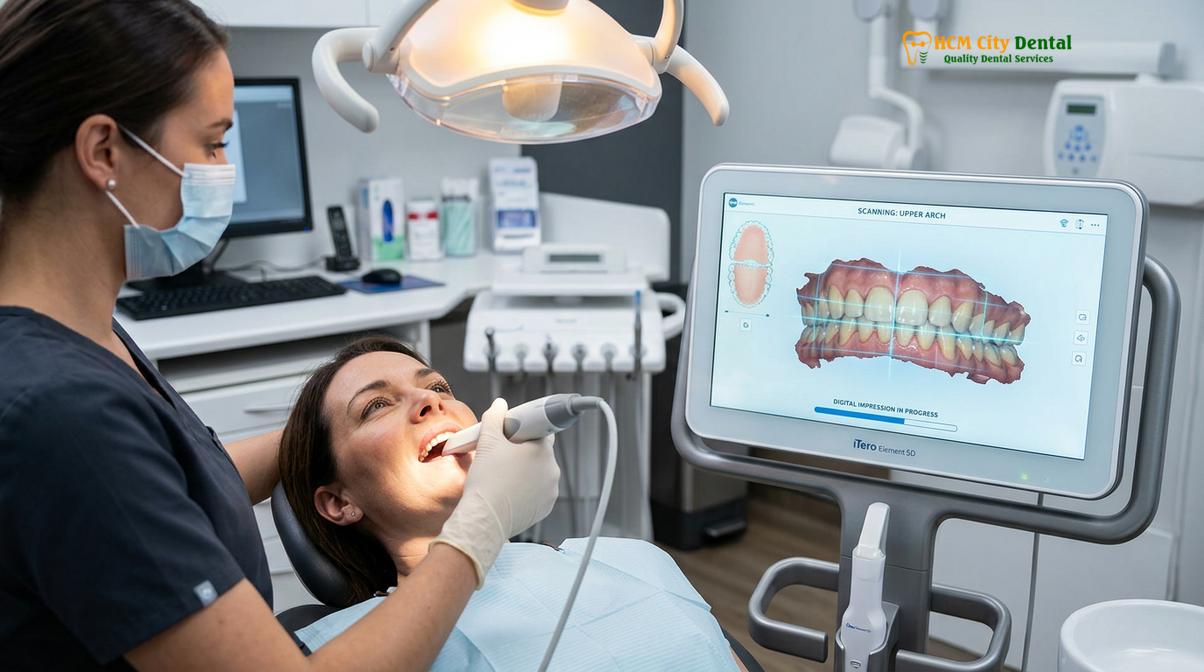
Consider the case of a patient who traveled to HCMC Dental Clinic in Ho Chi Minh City seeking a permanent solution for a prominent midline diastema. The patient had previously tried composite bonding, which had chipped repeatedly due to the unsupported width of the gap. During the initial consultation, the clinical team utilized an intraoral scanner to capture a digital impression and immediately generated a 3D smile simulation.
To avoid the “buck teeth” effect, the treatment plan included minor laser gingival contouring to increase the vertical height of the central incisors. Following a brief healing period, ultra-thin E.max veneers were fabricated. Because the patient was concerned about How Many Veneers Do I Need?, the team demonstrated through the digital mockup that treating the front four incisors would provide the most harmonious distribution of space. The final restorations were bonded using a moisture-controlled adhesive protocol, resulting in a perfectly proportioned, gap-free smile that completely revitalized the patient’s confidence.
References
- Journal of Esthetic and Restorative Dentistry. Translucency and optical properties of lithium disilicate. (2021).
- International Journal of Prosthodontics. Enamel preservation and long-term bond strength in veneer restorations. (2020).
- The Journal of Prosthetic Dentistry. Flexural strength and marginal adaptation of CAD/CAM porcelain restorations. (2019).
- Clinical Oral Investigations. Diode laser gingival sculpting parameters for aesthetic crown lengthening. (2022).
- Vietnam Odonto-Stomatology Association (VOSA). National Guidelines on Aesthetic Restorations and Periodontal Health. (2023).
Ready to transform your smile and close unwanted gaps permanently? Contact HCMC Dental Clinic in Ho Chi Minh City today to schedule your comprehensive digital smile consultation and discover the life-changing benefits of Porcelain Veneers.