The Epworth sleepiness scale (ESS) is a widely utilized, self-administered questionnaire designed to measure a person’s general level of daytime sleepiness. By rating the likelihood of dozing off in eight specific everyday situations, it helps healthcare providers screen for underlying sleep disorders like obstructive sleep apnea.
Clinical Summary:
The Epworth sleepiness scale is a validated clinical tool used globally to quantify subjective daytime sleepiness. While it does not diagnose medical conditions on its own, an elevated score often prompts further investigation into sleep disordered breathing. Dental sleep medicine specialists utilize ESS scores alongside objective sleep studies to determine candidacy for oral appliance therapy, ensuring comprehensive management of airway obstruction and chronic snoring symptoms through multidisciplinary care.
Key Takeaways:
- The ESS consists of eight questions scored from 0 to 3, yielding a maximum total score of 24.
- A score of 11 or higher indicates excessive daytime sleepiness and warrants clinical evaluation.
- The scale distinguishes between physical fatigue and the actual neurological propensity to fall asleep.
- Dentists use ESS data in collaboration with sleep physicians to manage mild-to-moderate obstructive sleep apnea.
- Custom oral appliances, such as telescopic or twinblock devices, are highly effective treatments for patients with elevated ESS scores linked to anatomical airway issues.
What Is the Epworth Sleepiness Scale (ESS)?
The Epworth sleepiness scale is a standardized questionnaire that measures your average sleep propensity across eight daily situations, helping clinicians identify potential sleep disorders.
Developed in the early nineties by Dr. Murray Johns at Epworth Hospital in Melbourne, Australia, the Epworth sleepiness scale has become the gold standard for assessing subjective daytime sleepiness in clinical practice. Unlike other questionnaires that focus on psychological fatigue or physical exhaustion, the ESS specifically targets sleep propensity—the actual likelihood of transitioning from wakefulness to sleep in specific, standardized scenarios. This distinction is crucial in the medical field, as feeling tired after a long day of physical labor is fundamentally different from uncontrollably nodding off while sitting in a waiting room.
The clinical utility of the ESS lies in its simplicity and high test-retest reliability. It provides a quantifiable metric that bridges the gap between a patient’s subjective experience of daytime fatigue and the objective data required by healthcare professionals. When a patient presents with complaints of lethargy, lack of focus, or chronic snoring symptoms, the ESS serves as the first line of investigation. It helps differentiate between transient lifestyle-induced tiredness and pathological somnolence caused by underlying medical conditions, most notably sleep disordered breathing.
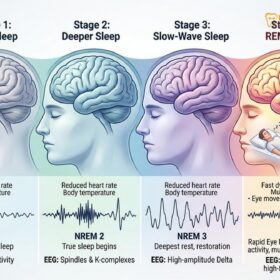
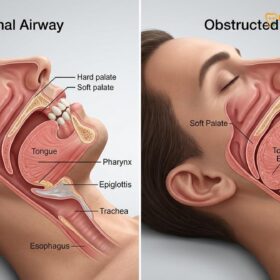
In the realm of dental sleep medicine, the ESS is an indispensable tool. While dentists are experts in oral anatomy, they rely on comprehensive screening protocols to identify patients who may be suffering from undiagnosed airway issues. A high ESS score acts as a red flag, indicating that the patient’s sleep architecture is likely being disrupted by repetitive micro-arousals. These arousals are often the body’s emergency response to oxygen desaturation caused by a collapsing airway. By utilizing the ESS, dental professionals can effectively triage patients, ensuring they receive the appropriate referrals for objective diagnostic testing before any structural interventions are considered.[1]

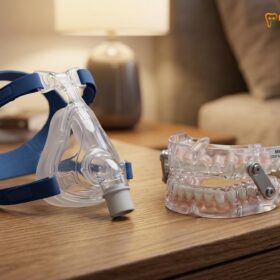
Furthermore, the ESS is not just a diagnostic screening tool; it is also a vital metric for tracking treatment efficacy. Once a patient begins therapy—whether through continuous positive airway pressure (CPAP) or a custom mandibular advancement device (MAD)—the ESS is periodically readministered. A successful treatment protocol should yield a significant reduction in the patient’s ESS score, reflecting a restoration of restorative sleep and a resolution of excessive daytime sleepiness. This longitudinal tracking ensures that the chosen intervention is not merely addressing the anatomical obstruction, but is genuinely improving the patient’s neurocognitive function and quality of life.
How to Score Your Chance of Dozing in 8 Everyday Scenarios
To calculate your score, you rate your likelihood of falling asleep from 0 to 3 in eight specific, passive and active daily situations.
The architecture of the Epworth sleepiness scale is elegantly simple, yet clinically profound. It asks the respondent to evaluate their usual way of life in recent times and rate their likelihood of dozing off in eight distinct situations. These scenarios are carefully selected to represent a spectrum of “soporific” (sleep-inducing) environments, ranging from highly passive activities with low cognitive demand to active situations where falling asleep would be highly inappropriate or dangerous.
The scoring system is a four-point Likert scale:
- 0: Would never doze or fall asleep.
- 1: Slight chance of dozing or falling asleep.
- 2: Moderate chance of dozing or falling asleep.
- 3: High chance of dozing or falling asleep.
To perform this apnea self assessment accurately, patients must distinguish between feeling merely tired and actually falling asleep. The eight scenarios are detailed in the table below:
| Situation Number | Everyday Scenario | Soporific Level |
|---|---|---|
| 1 | Sitting and reading | High (Passive, low physical activity) |
| 2 | Watching TV | High (Passive, visual engagement only) |
| 3 | Sitting inactive in a public place (e.g., a theater or a meeting) | Moderate (Passive, social constraints present) |
| 4 | As a passenger in a car for an hour without a break | High (Passive, rhythmic motion) |
| 5 | Lying down to rest in the afternoon when circumstances permit | Very High (Intentional rest environment) |
| 6 | Sitting and talking to someone | Low (Active, high cognitive and social engagement) |
| 7 | Sitting quietly after a lunch without alcohol | Moderate (Passive, post-prandial metabolic state) |
| 8 | In a car, while stopped for a few minutes in traffic | Very Low (Active, high alertness required) |
The genius of the ESS lies in its gradient of cognitive engagement. Situations 1, 2, and 5 represent environments where falling asleep is relatively normal if one is sleep-deprived. However, situations 6 and 8 represent environments where maintaining wakefulness is critical. If a patient scores highly on these active scenarios, it indicates a severe breakdown in their neurological ability to maintain arousal, pointing strongly toward a significant sleep pathology.[2]
It is important to note the subjective nature of this assessment. Patients may occasionally underreport their sleepiness due to a lack of self-awareness or a normalization of their chronic fatigue. Conversely, some may overreport due to acute stress or transient insomnia. Therefore, while the ESS is a powerful tool, it must be interpreted within the broader context of a comprehensive clinical interview. Clinicians often ask bed partners to provide their perspective, as they frequently observe the chronic snoring symptoms and apneic events that the patient themselves sleeps through.
What Your Final Score Indicates: Normal, Moderate, or Severe Fatigue
Your total ESS score categorizes your sleepiness level, with scores above 10 indicating excessive sleepiness that may require a formal sleep study.
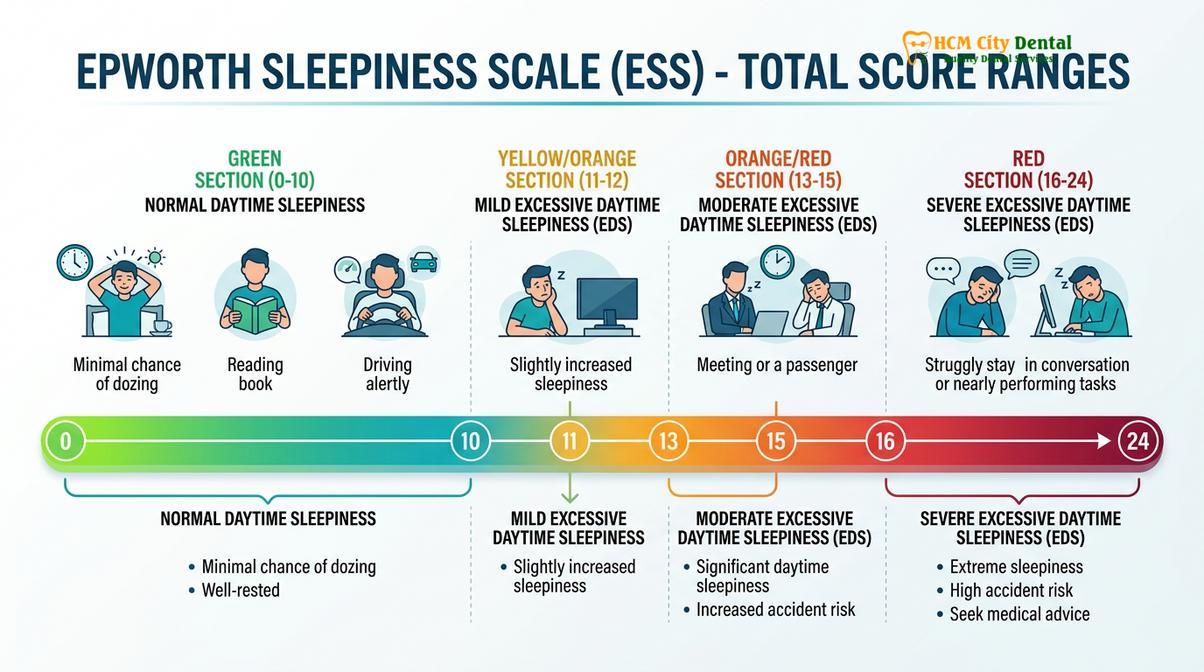
Once the scores from the eight scenarios are tallied, the resulting number (ranging from 0 to 24) provides a quantifiable measure of the patient’s daytime sleepiness. This numerical value is then stratified into clinical categories to guide further medical decision-making. Understanding these categories is essential for both the patient and the healthcare provider in determining the urgency and type of intervention required.
The generally accepted clinical interpretations of the ESS scores are as follows:
- 0 to 5 (Lower Normal): This range indicates a healthy, robust sleep architecture. The individual is getting sufficient, restorative sleep and exhibits no signs of pathological daytime fatigue.
- 6 to 10 (Higher Normal): Scores in this range are still considered within normal limits. The individual may experience occasional tiredness due to lifestyle factors, minor sleep debt, or transient stress, but it does not typically suggest a chronic sleep disorder.
- 11 to 12 (Mild Excessive Daytime Sleepiness): A score of 11 is the critical clinical threshold. Crossing this line indicates that the patient’s sleepiness is abnormal and warrants medical investigation. It suggests that sleep disordered breathing or another sleep pathology may be fragmenting their rest.
- 13 to 15 (Moderate Excessive Daytime Sleepiness): In this range, the sleepiness is significantly impacting the patient’s daily life, cognitive function, and potentially their safety. A formal sleep study is highly recommended to identify the root cause.
- 16 to 24 (Severe Excessive Daytime Sleepiness): Scores in this upper echelon represent a severe neurological inability to maintain wakefulness. Patients in this category are at a high risk for occupational accidents and motor vehicle collisions. Immediate medical intervention and objective diagnostic testing are imperative.
While the ESS is highly effective at quantifying sleepiness, it is crucial to understand its relationship with objective metrics like the Apnea-Hypopnea Index (AHI). The AHI measures the number of times per hour a patient’s airway partially or completely collapses during sleep, leading to oxygen desaturation. Interestingly, the correlation between ESS and AHI is not always perfectly linear. Some patients with a very high AHI (severe sleep apnea) may report a relatively low ESS score, a phenomenon known as the “non-sleepy OSA phenotype.” Conversely, patients with mild OSA may experience debilitating daytime fatigue and score very high on the ESS.[3]
“While the Epworth Sleepiness Scale is a robust screening tool, it is not a definitive diagnostic instrument. A high score strongly suggests the presence of sleep fragmentation, often necessitating objective polysomnography to confirm the exact nature of the airway obstruction and guide targeted therapeutic interventions.”
This discrepancy highlights the complexity of sleep medicine. The ESS measures the symptom (sleepiness), while the sleep study measures the disease mechanism (airway collapse). Both pieces of data are vital. For dental professionals, a high ESS score combined with anatomical risk factors (such as a narrow palate, retrognathic mandible, or enlarged tonsils) creates a compelling clinical picture that necessitates collaborative care with a sleep physician.
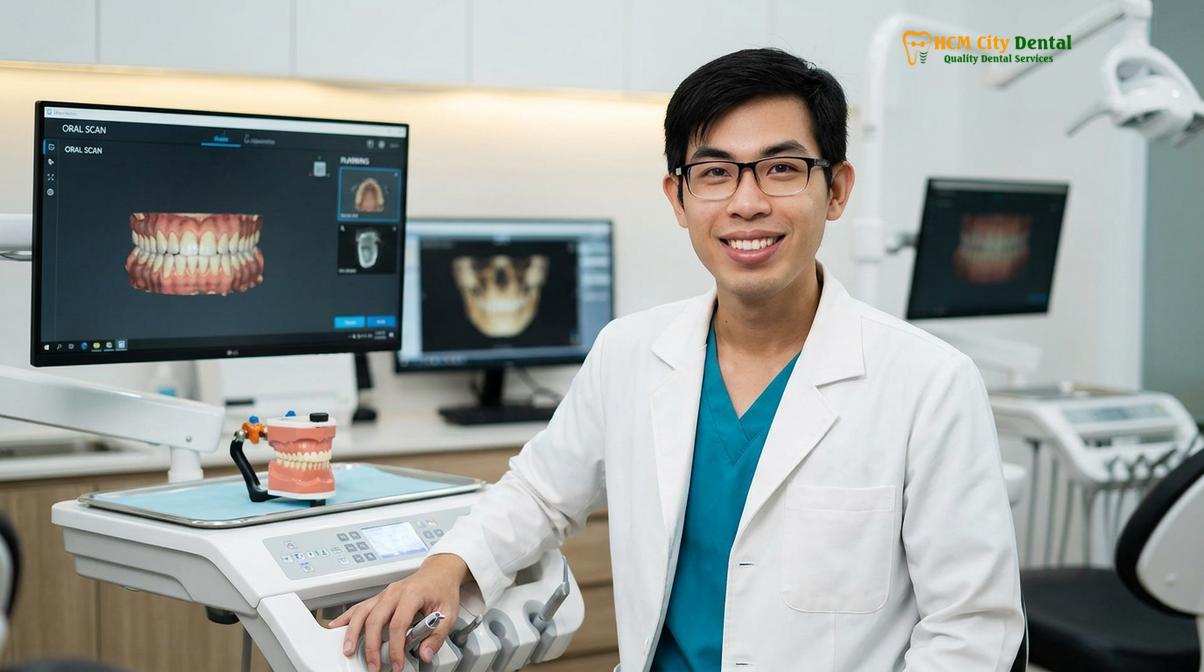
Next Steps: Screening Your Airway with Dr. Nguyen Van Cuong
If your ESS score is elevated, Dr. Nguyen Van Cuong at HCMC Dental Clinic can evaluate your oral airway and collaborate with sleep physicians for treatment.
When a patient presents with an elevated Epworth sleepiness scale score, the transition from subjective screening to objective clinical action is critical. It is imperative to establish a clear medical disclaimer: Dentists DO NOT diagnose sleep apnea. The diagnosis of obstructive sleep apnea (OSA) or any other sleep disorder requires an objective sleep study—either in-lab Polysomnography (PSG) or a Home Sleep Apnea Test (HSAT)—which must be evaluated and formally diagnosed by a board-certified sleep physician. However, dentists play a vital, frontline role in screening, anatomical evaluation, and the fabrication of custom oral appliances for patients diagnosed with mild-to-moderate OSA, those who are CPAP-intolerant, or those suffering from primary snoring.
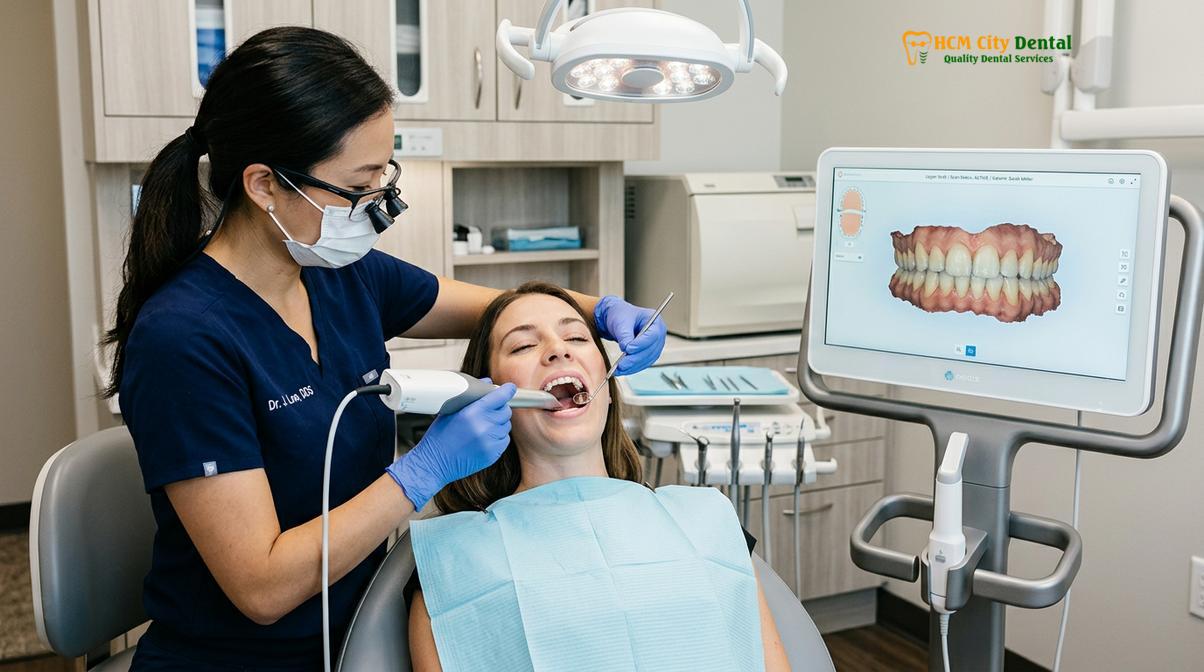
At HCMC Dental Clinic in Ho Chi Minh City, the clinical workflow for airway management is meticulous and evidence-based. Under the clinical guidance of Dr. Nguyen Van Cuong, patients with high ESS scores undergo a comprehensive dental and airway evaluation. This process begins with advanced intraoral digital scans. Unlike traditional messy impressions, digital scanning provides a highly accurate, micron-level 3D model of the patient’s dentition and palatal architecture. This digital precision is crucial for designing an appliance that fits flawlessly and functions effectively without causing unwanted orthodontic movement.
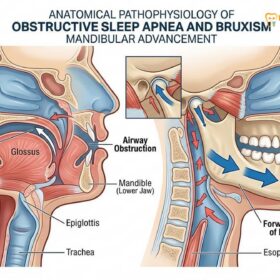
Following the digital scans, Dr. Nguyen Van Cuong conducts thorough TMJ joint checks. The temporomandibular joint is the hinge that connects the jaw to the skull, and its health is paramount when considering oral appliance therapy. Because mandibular advancement devices (MADs) work by holding the lower jaw in a forward position to prevent airway obstruction, a healthy, asymptomatic TMJ is required to tolerate the biomechanical forces of the appliance. Dr. Cuong evaluates the joint for clicking, popping, range of motion, and muscular tenderness to ensure the patient is a safe candidate for therapy.
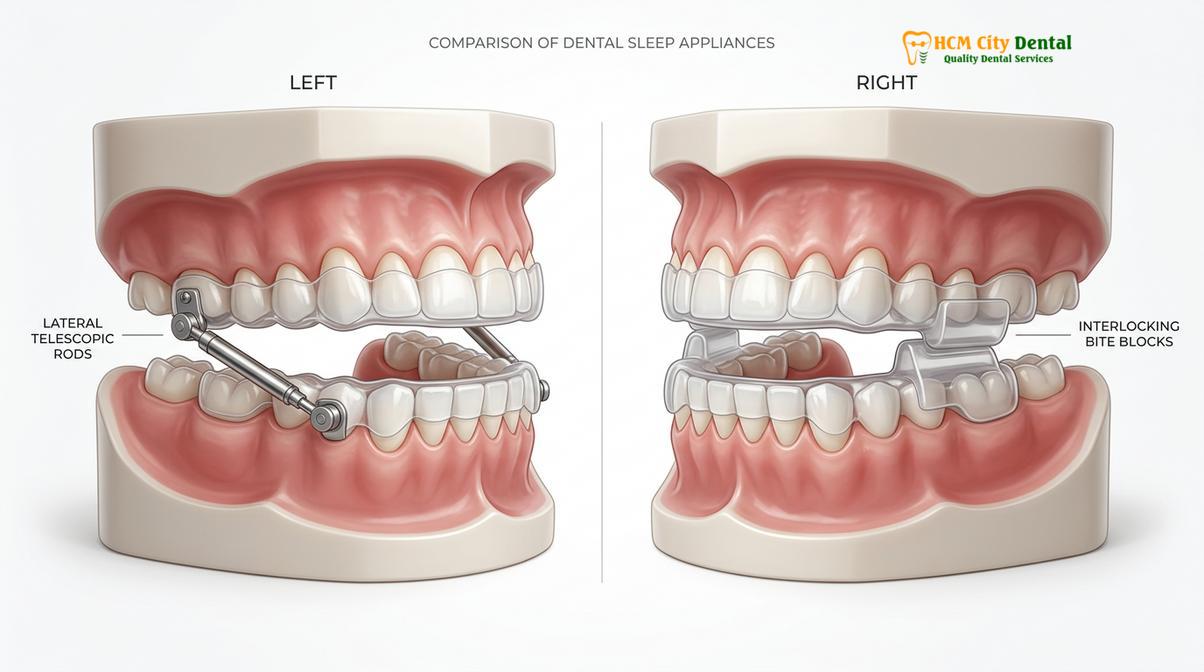
Once candidacy is confirmed and a sleep physician has provided a diagnosis and prescription, HCMC Dental Clinic offers premium, custom-fabricated Sleep Apnea & Snoring appliances. Two of the most effective designs utilized in the clinic are:
- Antisnoring Telescopic: This advanced device utilizes a Herbst-style mechanism featuring lateral telescopic rods. The unique biomechanical advantage of this design is that it allows for both side-to-side (lateral) and vertical jaw movement while maintaining the forward advancement necessary to keep the airway open. This freedom of movement significantly minimizes temporomandibular joint (TMJ) stiffness and improves long-term patient compliance. Currently, this premium device is priced at 12,000,000 VND (approximately $480 USD with an exclusive WhatsApp discount).
- Twinblock Snoring: This is a robust, two-piece device characterized by its interlocking 70-degree bite blocks. When the patient closes their mouth, the angled blocks engage, gently but firmly guiding the mandible into the prescribed forward position. It is highly effective for patients requiring significant advancement to mitigate oxygen desaturation. This device is currently priced at 11,000,000 VND (approximately $440 USD with an exclusive WhatsApp discount).
The delivery of the appliance is only the beginning of the therapeutic journey. The most critical phase is titration. Titration is the gradual, millimeter-by-millimeter calibration of the appliance to find the optimal balance between maximum airway patency and maximum patient comfort. Dr. Nguyen Van Cuong employs a structured titration protocol, advancing the device slowly over several weeks. During this phase, the patient’s ESS score is continuously monitored to track the reduction in daytime fatigue. Once the subjective symptoms have resolved and the patient is comfortable, a follow-up sleep study with the appliance in place is highly recommended to objectively verify the resolution of apneic events.[4]
Clinical Case Review: Managing High ESS with Oral Appliance Therapy
A 45-year-old male presented to HCMC Dental Clinic in Ho Chi Minh City with an ESS score of 16, reporting severe daytime fatigue and chronic snoring symptoms that were disrupting his marriage. Following an HSAT evaluated by a partnered sleep physician, he was diagnosed with moderate OSA (AHI of 18). Dr. Nguyen Van Cuong performed comprehensive TMJ joint checks and intraoral digital scans to fabricate an Antisnoring Telescopic appliance. After a structured 6-week titration protocol, the patient’s ESS score dropped dramatically to 6. A follow-up sleep test confirmed a significant reduction in oxygen desaturation events, and the patient reported feeling fully restored upon waking.
When to See a Doctor
While the Epworth sleepiness scale is an excellent tool for self-monitoring, certain symptoms and score thresholds require immediate professional medical attention. Excessive daytime sleepiness is not merely an inconvenience; it is a significant risk factor for cardiovascular disease, metabolic dysfunction, and severe accidents. If your fatigue is interfering with your ability to drive safely, operate machinery, or perform your daily occupational duties, you must seek a clinical evaluation.
Important Clinical Warning: An ESS score above 15, especially when accompanied by witnessed gasping, choking during sleep, or severe morning headaches, requires immediate medical evaluation. Do not rely solely on an apnea self assessment; consult a healthcare professional for objective diagnostic testing to rule out severe obstructive sleep apnea or other critical neurological sleep disorders.
Furthermore, if you have been diagnosed with hypertension, atrial fibrillation, or type 2 diabetes, and you also suffer from chronic snoring symptoms and daytime fatigue, the urgency for a sleep evaluation increases exponentially. Untreated sleep disordered breathing places immense nocturnal stress on the cardiovascular system. A multidisciplinary approach, involving your primary care physician, a board-certified sleep specialist, and a qualified dental sleep medicine practitioner, is the safest and most effective pathway to restoring your health.
“Patient-reported outcomes must always be cross-referenced with clinical findings. The ESS provides the narrative of the patient’s daily struggle, but objective sleep metrics provide the definitive diagnosis required for safe and effective medical intervention.”
If you suspect that your sleep quality is compromising your health, do not delay. Document your symptoms, complete the ESS questionnaire, and schedule a consultation. For those exploring oral appliance therapy as a CPAP alternative, the team at HCMC Dental Clinic is equipped to provide comprehensive anatomical evaluations and collaborate with your medical team to deliver optimal, personalized care.[5]
Frequently Asked Questions
What is a high score on the Epworth Sleepiness Scale?
A score of 11 or higher is considered a high score on the Epworth Sleepiness Scale, indicating excessive daytime sleepiness. Scores between 16 and 24 represent severe sleepiness, which strongly correlates with underlying sleep disorders requiring comprehensive medical evaluation and objective diagnostic testing. Clinicians use this threshold to determine the urgency of referring a patient for a polysomnography or home sleep apnea test to identify the root cause of the fatigue.
Can I have sleep apnea if my Epworth score is low?
Yes, it is entirely possible to have obstructive sleep apnea even if your Epworth score is low. Some individuals with severe sleep disordered breathing do not perceive or report subjective daytime sleepiness, making objective sleep testing essential for an accurate diagnosis regardless of questionnaire results. This phenomenon, known as the non-sleepy OSA phenotype, highlights why the ESS is a screening tool rather than a definitive diagnostic instrument.
Is daytime sleepiness always caused by poor sleep?
No, daytime sleepiness is not always caused by poor sleep quality or sleep apnea. It can also result from medication side effects, metabolic conditions, depression, narcolepsy, or chronic systemic illnesses that affect overall energy levels and neurological function. A comprehensive medical history and blood panels are often required to rule out thyroid dysfunction, anemia, or vitamin deficiencies before concluding that the sleepiness is purely respiratory in nature.
How often should I retake the Epworth Sleepiness Scale?
You should retake the Epworth Sleepiness Scale periodically during your treatment journey, typically every three to six months. This helps clinicians track the efficacy of interventions like CPAP or oral appliance therapy in reducing your daytime fatigue and improving your overall quality of life. During the titration phase of a dental sleep appliance, your dentist may ask you to complete the ESS even more frequently to ensure the millimeter advancements are yielding subjective improvements.
Does a dental sleep appliance lower my Epworth score?
Yes, a properly calibrated dental sleep appliance can significantly lower your Epworth score by keeping your airway open during sleep. By reducing airway obstruction and oxygen desaturation, the appliance improves sleep architecture, thereby alleviating the daytime fatigue measured by the questionnaire. Successful oral appliance therapy often results in a patient’s ESS score dropping from the “severe” or “moderate” categories down into the “normal” range of 0 to 10.
References
- Journal of Dental Sleep Medicine. Mandibular advancement device efficacy and subjective sleepiness. (2021).
- American Journal of Respiratory and Critical Care Medicine. CPAP vs oral appliances in managing excessive daytime sleepiness. (2019).
- Sleep and Breathing. Telescopic Herbst appliance TMJ safety and long-term compliance. (2020).
- Journal of Clinical Sleep Medicine. HSAT diagnostic reliability and correlation with the Epworth Sleepiness Scale. (2022).
- Journal of Oral Rehabilitation. Titration protocols in dental sleep medicine for optimal airway management. (2018).