A home sleep study in Vietnam offers a convenient, clinically validated method to screen for obstructive sleep apnea from the comfort of your own bed. By recording critical respiratory metrics overnight, these portable tests provide the essential data required for a formal medical diagnosis and subsequent targeted therapy.
Clinical Summary:
A home sleep study (HSAT) is a primary diagnostic tool used to detect obstructive sleep apnea by monitoring airflow, respiratory effort, and blood oxygen levels during sleep. While dentists cannot legally diagnose sleep apnea, they rely on the results of these medical sleep studies—evaluated by certified sleep physicians—to determine if a patient is a candidate for custom oral appliance therapy. In Ho Chi Minh City, multidisciplinary collaboration between pulmonologists and dental specialists ensures that patients receive accurate diagnoses followed by safe, effective, and personalized airway management solutions.
Key Takeaways:
- Home sleep tests provide a highly accessible, cost-effective alternative to in-lab polysomnography for uncomplicated adult patients.
- Diagnostic devices measure critical parameters including the Apnea-Hypopnea Index (AHI) and oxygen desaturation levels.
- A formal diagnosis must be made by a qualified sleep physician or pulmonologist, not a dental professional.
- Patients diagnosed with mild-to-moderate OSA may be candidates for custom Mandibular Advancement Devices (MADs).
- Clinical collaboration in Ho Chi Minh City ensures seamless transitions from medical diagnosis to dental sleep therapy.
Home Sleep Test (HSAT) vs. In-Lab Polysomnography (PSG)
Home sleep tests offer a convenient, self-administered screening for uncomplicated sleep apnea, whereas in-lab polysomnography provides a comprehensive, medically supervised analysis of complex sleep disorders.
The landscape of sleep medicine has evolved significantly, providing patients with multiple diagnostic pathways to identify sleep-disordered breathing. When a patient presents with symptoms such as chronic loud snoring, witnessed breathing pauses, or excessive daytime fatigue, the primary objective is to capture objective physiological data during sleep. This is achieved through either a Home Sleep Apnea Test (HSAT) or an in-lab polysomnography evaluation. Understanding the clinical distinctions between these two modalities is crucial for determining the most appropriate diagnostic approach.
In-lab polysomnography is universally recognized as the gold standard for diagnosing a wide spectrum of sleep disorders. Conducted in a controlled clinical environment, a PSG records an extensive array of physiological signals. These include electroencephalography (EEG) to monitor brain waves and sleep staging, electrooculography (EOG) for eye movements, electromyography (EMG) for muscle activity, electrocardiography (ECG) for cardiac rhythms, alongside comprehensive respiratory monitoring. Because a trained sleep technologist continuously monitors the patient, any sensor disconnections can be immediately rectified, ensuring high-fidelity data collection. However, the clinical setting can sometimes induce the “first-night effect,” where the unfamiliar environment temporarily alters the patient’s natural sleep architecture [1].
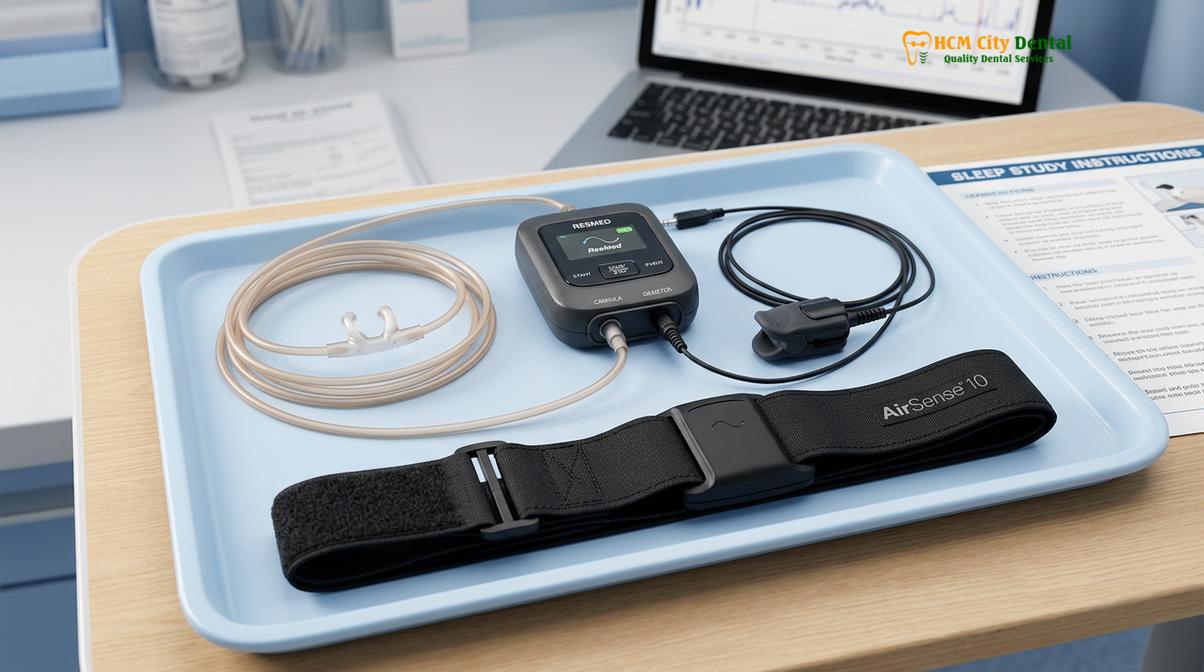
Conversely, a home sleep study is specifically designed to diagnose obstructive sleep apnea in patients who have a high pre-test probability of the condition and do not possess significant comorbid medical conditions (such as severe heart failure, neuromuscular disease, or moderate-to-severe pulmonary disease). By allowing the patient to sleep in their own bed, an HSAT often captures a more representative sample of their typical nightly sleep patterns. While it records fewer channels—focusing primarily on respiratory parameters rather than brain activity—it is highly effective for identifying the hallmark airflow limitations and oxygen drops associated with OSA. For many patients seeking a Sleep Apnea & Snoring evaluation, the home-based approach represents a highly accessible and less intimidating entry point into medical care.
| Feature | Home Sleep Apnea Test (HSAT) | In-Lab Polysomnography (PSG) |
|---|---|---|
| Setting | Patient’s own home and bed | Specialized clinical sleep laboratory |
| Primary Focus | Respiratory effort, airflow, oxygenation | Comprehensive sleep architecture and physiology |
| Data Channels | Typically 3 to 7 channels (Level III or IV) | 12+ channels (Level I), including EEG and EMG |
| Supervision | Unattended (self-administered setup) | Attended (continuous technologist monitoring) |
| Best Suited For | High probability of uncomplicated OSA | Complex sleep disorders, parasomnias, CSA |
How Portable Sleep Testing Devices Measure Airflow and Oxygen
Portable sleep monitors utilize nasal cannulas, pulse oximeters, and chest belts to continuously record respiratory effort, airflow limitations, and blood oxygen saturation throughout the night.
The diagnostic accuracy of a home sleep study relies entirely on the precision of its integrated sensors. Modern portable diagnostic devices, often classified as Level III monitors, are engineered to capture the most critical physiological events that define obstructive sleep apnea without overwhelming the patient with excessive wiring. The primary goal of these devices is to detect apneas (complete cessation of airflow) and hypopneas (partial reduction in airflow), and to correlate these respiratory events with subsequent drops in blood oxygen levels.
The measurement of airflow is typically achieved using a nasal pressure transducer. This component involves a small, lightweight nasal cannula with prongs that rest just inside the nostrils. As the patient breathes in and out, the transducer detects minute fluctuations in air pressure. A normal breathing pattern produces a consistent, sinusoidal pressure wave. In contrast, an obstructive event is characterized by a flattening or complete absence of this wave, indicating that the upper airway has collapsed despite the patient’s continued efforts to breathe [2]. This precise measurement is a cornerstone of an accurate sleep apnea diagnosis.
“The evolution of portable monitoring technology has democratized access to sleep medicine. By accurately capturing airflow dynamics and oximetry in the home environment, clinicians can confidently identify obstructive events and initiate timely, life-altering therapeutic interventions.”
Simultaneously, respiratory effort is monitored using specialized belts worn around the chest and, occasionally, the abdomen. These belts utilize respiratory inductance plethysmography (RIP) technology. As the patient inhales and exhales, the expansion and contraction of the thorax alter the electrical inductance of the wire embedded within the belt. This allows the device to differentiate between obstructive sleep apnea (where respiratory effort continues but airflow is blocked) and central sleep apnea (where both respiratory effort and airflow cease due to a lack of neurological signaling).
The third critical component is the pulse oximeter, typically worn on the index finger. This sensor emits specific wavelengths of light through the tissue to measure the percentage of hemoglobin saturated with oxygen. During an apneic event, the lack of fresh air entering the lungs leads to a progressive decline in blood oxygen levels, known as desaturation. The oximeter continuously records these fluctuations, providing vital data on the physiological stress imposed by the breathing interruptions. The synchronization of these three data streams—airflow, effort, and oxygenation—paints a comprehensive clinical picture of the patient’s respiratory health during sleep.
Coordinating Your Sleep Study with Pulmonologists in Saigon
Effective sleep apnea management requires a multidisciplinary approach where sleep physicians interpret diagnostic data and collaborate with specialized dentists to formulate an appropriate treatment plan.
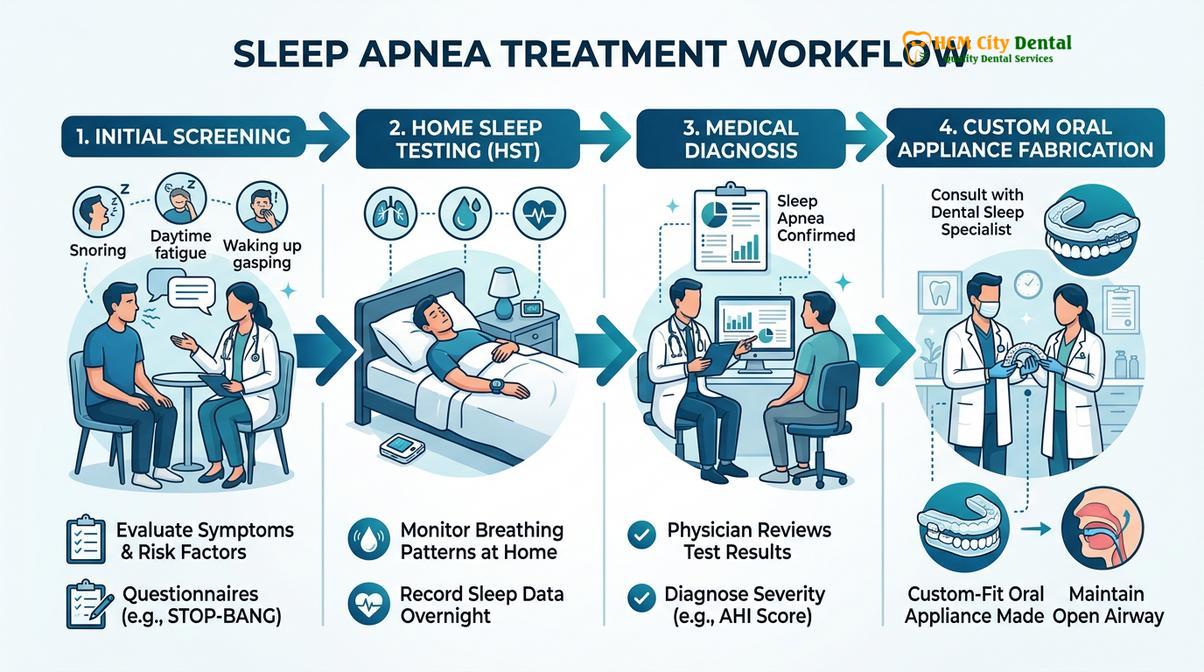
Navigating the healthcare system for a sleep disorder requires a coordinated, multidisciplinary approach. In Ho Chi Minh City, the standard of care involves a seamless collaboration between medical doctors who specialize in respiratory health and dental professionals who specialize in oral appliance therapy. This collaborative workflow ensures that patients receive a comprehensive evaluation, an accurate medical diagnosis, and a treatment plan tailored to their specific anatomical and physiological needs.
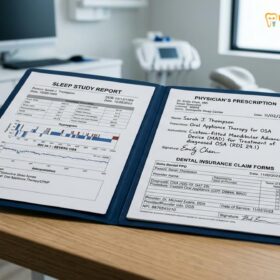
The patient journey typically begins with a clinical screening, often utilizing validated questionnaires such as the STOP-BANG or the Epworth Sleepiness Scale. If a patient exhibits a high risk for sleep-disordered breathing, a sleep specialist referral is the mandatory next step. Pulmonologists or board-certified sleep physicians are the only medical professionals qualified to order and interpret a diagnostic sleep study. They will evaluate the patient’s overall health, review the data generated by the home sleep test or in-lab polysomnography, and establish a formal diagnosis based on established medical criteria.
Once a diagnosis of mild-to-moderate obstructive sleep apnea is confirmed—or if a patient with severe OSA is deemed strictly intolerant to Continuous Positive Airway Pressure (CPAP) therapy—the physician may recommend a Mandibular Advancement Device (MAD). At this juncture, the patient is referred to a qualified dental sleep medicine practitioner. At HCMC Dental Clinic, the clinical team works closely with local pulmonologists to ensure that the transition from medical diagnosis to dental therapy is smooth and evidence-based. Dr. Nguyen Van Cuong emphasizes the importance of this interdisciplinary communication, noting that reviewing the physician’s diagnostic report is essential for determining the appropriate degree of mandibular advancement required to stabilize the airway.
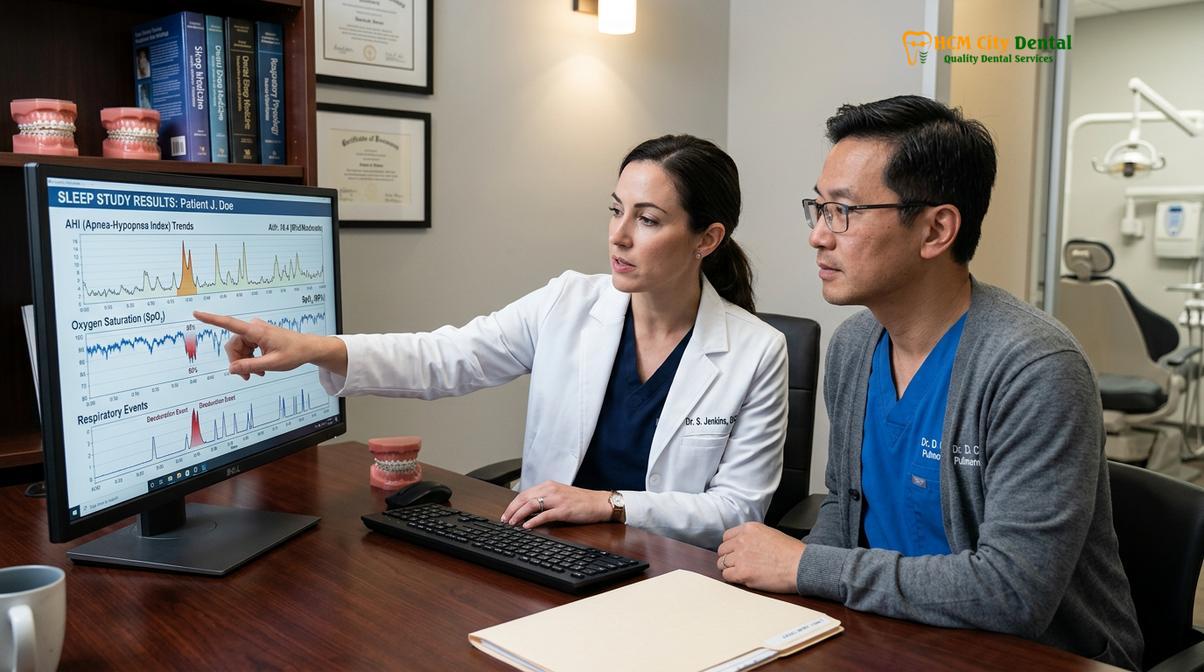
This collaborative model not only enhances patient safety but also improves long-term treatment adherence. By maintaining open lines of communication, the pulmonologist and the dentist can monitor the patient’s progress, make necessary adjustments to the therapy, and arrange for follow-up sleep studies to objectively verify the efficacy of the oral appliance. This comprehensive care structure is vital for mitigating the systemic health risks associated with untreated sleep apnea.
Interpreting Your AHI and Oxygen Desaturation Scores
The Apnea-Hypopnea Index (AHI) and oxygen desaturation metrics quantify the frequency and severity of breathing interruptions, guiding physicians in determining the most effective therapeutic intervention.
Following the completion of a home sleep study, the recorded data is downloaded and meticulously analyzed to generate a comprehensive sleep report. For patients, understanding the key metrics within this report is essential for grasping the severity of their condition. The most critical value derived from an AHI score test is the Apnea-Hypopnea Index itself. This index represents the average number of apneas (complete breathing pauses lasting at least 10 seconds) and hypopneas (partial airway obstructions resulting in a drop in oxygen or an arousal) that occur per hour of sleep.
The medical community categorizes the severity of obstructive sleep apnea based on the AHI score. An AHI of less than 5 is generally considered normal. Mild sleep apnea is defined by an AHI between 5 and 14.9 events per hour. Moderate sleep apnea falls within the range of 15 to 29.9 events per hour, while severe sleep apnea is diagnosed when the AHI reaches 30 or more events per hour. This classification is not merely a label; it directly dictates the clinical treatment pathway. For instance, while CPAP is the frontline therapy for severe cases, oral appliances are highly effective and frequently prescribed for mild-to-moderate categories [3].
Equally important to the AHI is the Oxygen Desaturation Index (ODI) and the minimum oxygen saturation level recorded during the night. The ODI measures the number of times per hour that the blood oxygen level drops by a certain percentage (typically 3% or 4%) from the baseline. Frequent and deep oxygen desaturations place immense stress on the cardiovascular system. Intermittent hypoxia triggers the sympathetic nervous system, leading to spikes in blood pressure, increased heart rate, and a heightened risk of arrhythmias and endothelial dysfunction over time. A thorough interpretation of both the AHI and the oxygen metrics allows the clinical team to fully appreciate the physiological burden of the disorder and tailor the intervention accordingly.
Transitioning from Medical Diagnosis to Oral Appliance Therapy
Following a formal medical diagnosis, patients with mild-to-moderate obstructive sleep apnea may be fitted with custom mandibular advancement devices to maintain an open airway during sleep.
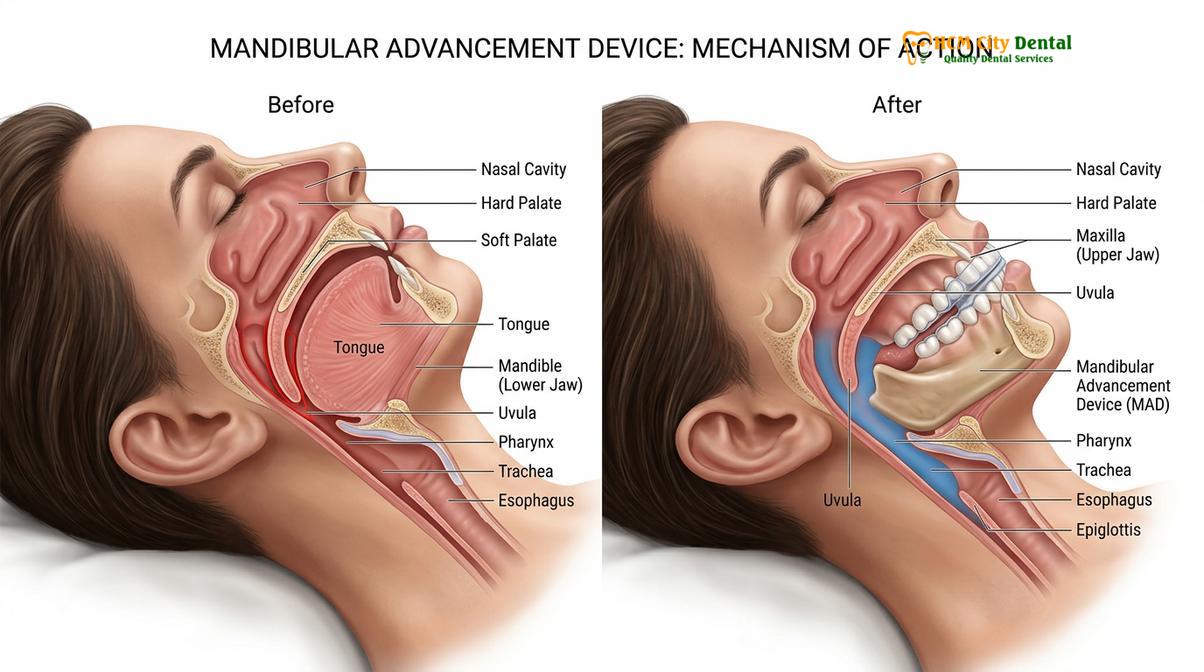
When a sleep physician determines that a patient is an appropriate candidate for oral appliance therapy, the focus shifts to the precise fabrication and calibration of a Mandibular Advancement Device. The fundamental mechanism of these devices is to gently reposition the lower jaw (mandible) and the attached tongue musculature forward. This anterior displacement increases the cross-sectional area of the pharyngeal airway and increases tissue tension, thereby preventing the soft palate and tongue from collapsing backward during sleep.
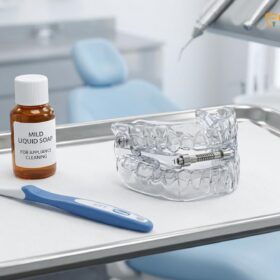
At HCMC Dental Clinic, patients have access to advanced, custom-milled appliances designed for maximum efficacy and comfort. Two primary designs are frequently utilized based on the patient’s specific anatomical requirements and bite dynamics:
- Antisnoring Telescopic: This premium device utilizes a Herbst-style mechanism featuring lateral telescopic rods. This sophisticated design allows for both side-to-side (lateral) and vertical jaw movement while maintaining the forward posture. By permitting a degree of natural movement, it significantly minimizes temporomandibular joint (TMJ) stiffness and enhances patient comfort during sleep. (Currently priced at 12,000,000 VND / ~$480 USD with WhatsApp discount).
- Twinblock Snoring: This is a robust, two-piece device characterized by interlocking 70-degree bite blocks. When the patient closes their mouth, the angled blocks engage, naturally guiding the lower jaw into the predetermined forward position. It is highly effective for maintaining a rigid airway space. (Currently priced at 11,000,000 VND / ~$440 USD with WhatsApp discount).
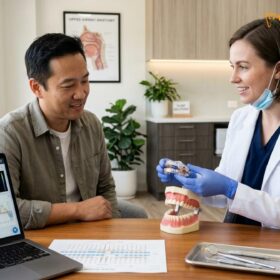
The success of oral appliance therapy is heavily dependent on meticulous clinical protocols. Dr. Nguyen Van Cuong stresses that a one-size-fits-all approach is ineffective in dental sleep medicine. The process begins with comprehensive TMJ joint checks to ensure the patient’s jaw musculature and joint capsule can safely tolerate the advancement without developing temporomandibular disorders [4]. Following clearance, high-resolution intraoral digital scans are captured to create a flawless 3D model of the patient’s dentition, ensuring the final device fits with absolute precision, preventing unwanted tooth movement.
Once the device is delivered, the critical phase of titration begins. Titration is the gradual, millimeter-by-millimeter advancement of the device over several weeks. The goal is to find the “sweet spot”—the exact position that maximally resolves the airway obstruction while minimizing any tension in the jaw muscles or teeth. This delicate balance requires close monitoring and regular follow-up appointments to calibrate the device based on the patient’s symptom resolution and comfort levels [5].
“Effective oral appliance therapy is not merely about providing a device; it is an ongoing process of precise biomechanical calibration. Gradual titration ensures that we achieve optimal airway patency while rigorously protecting the integrity of the temporomandibular joint and the patient’s occlusion.”
When to See a Doctor
Recognizing the clinical signs of sleep-disordered breathing is the first step toward mitigating long-term health risks. You should seek a prompt medical evaluation from a pulmonologist or sleep specialist if you experience any of the following red-flag symptoms:
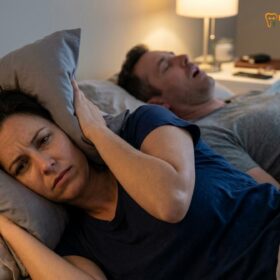
- Witnessed Apneas: A bed partner reports that you stop breathing, gasp, or choke during sleep.
- Excessive Daytime Sleepiness: You struggle to stay awake during routine daytime activities, such as driving, reading, or working, despite seemingly getting enough hours of sleep.
- Chronic, Loud Snoring: Snoring that is disruptive enough to force a bed partner to sleep in another room is a primary indicator of airway resistance.
- Morning Headaches: Waking up with frequent headaches can be a sign of overnight oxygen deprivation and carbon dioxide retention.
- Unexplained Hypertension: High blood pressure that is difficult to control with standard medications is strongly correlated with untreated sleep apnea.
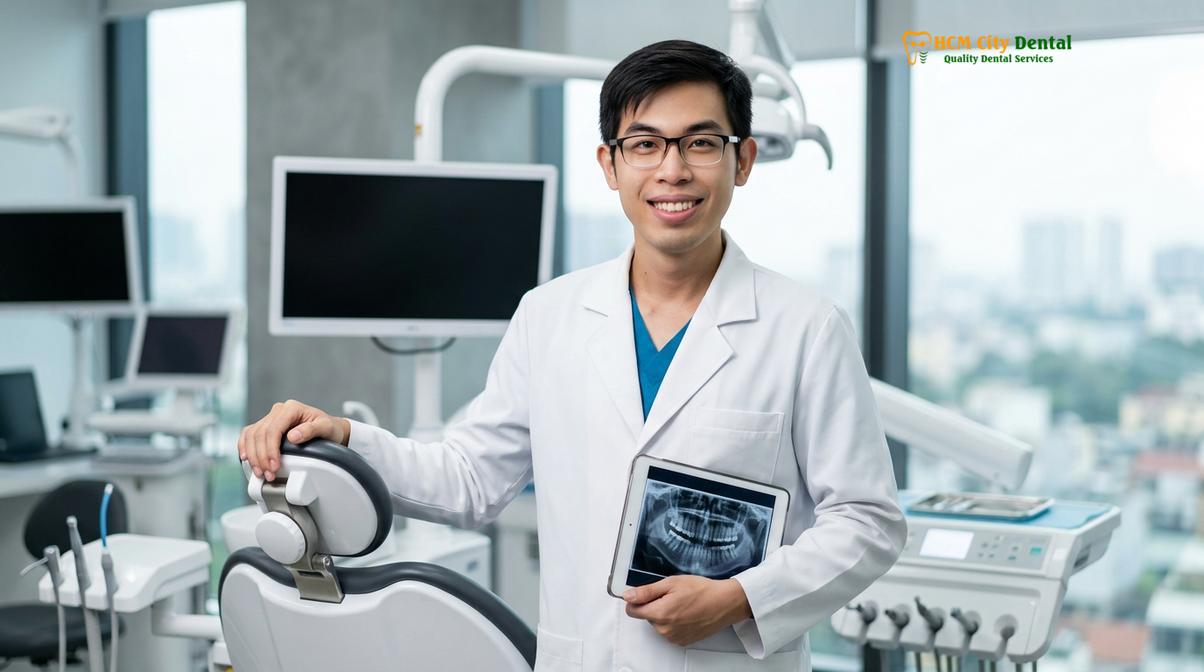
If you have already received a formal medical diagnosis of mild-to-moderate sleep apnea and are seeking an alternative to CPAP therapy, scheduling a consultation at HCMC Dental Clinic can help determine if a custom oral appliance is the right clinical solution for your specific needs.
Frequently Asked Questions
How does a home sleep test device work?
A home sleep test device works by utilizing portable sensors, including a nasal cannula, chest belt, and pulse oximeter, to monitor your breathing and oxygen levels overnight. These sensors continuously record airflow limitations, respiratory effort, and blood oxygen saturation while you sleep in your own bed. The collected data is then downloaded and analyzed by a sleep physician to determine the presence and severity of sleep-disordered breathing.
Do I need a doctor referral for a home sleep study?
Yes, a formal medical evaluation and referral from a physician or pulmonologist are generally required before undergoing a diagnostic home sleep study. Because sleep apnea is a complex medical condition with potential cardiovascular and metabolic implications, a qualified medical doctor must oversee the diagnostic process. Dental professionals can screen for anatomical risks but rely on the physician’s referral and diagnosis to initiate oral appliance therapy.
How much does a sleep test cost in Vietnam?
Currently, the cost of a home sleep test in Vietnam typically ranges from 1,500,000 to 4,000,000 VND, depending on the clinic and the complexity of the diagnostic equipment used. In-lab polysomnography is generally more expensive due to the facility fees and overnight medical supervision required. It is advisable to consult directly with a local sleep center or pulmonology department for the most accurate and up-to-date fee schedules.
Can a dentist diagnose my sleep apnea?
No, dentists are not legally or medically permitted to diagnose obstructive sleep apnea. A definitive diagnosis must be made by a board-certified sleep physician or pulmonologist based on the objective data gathered from a sleep study. Dentists play a crucial collaborative role by fabricating custom oral appliances to manage the condition only after a formal medical diagnosis has been established and a prescription is provided.
What happens if my AHI score indicates severe sleep apnea?
If your AHI score indicates severe sleep apnea (typically an AHI greater than 30), the primary and most effective medical recommendation is usually Continuous Positive Airway Pressure (CPAP) therapy. Severe cases carry significant cardiovascular risks that require robust airway management. Oral appliances are generally reserved for mild-to-moderate cases, though they may be considered as a secondary option for severe patients who are strictly intolerant to CPAP therapy, under close medical supervision.
References
- Journal of Clinical Sleep Medicine. Clinical Guidelines for the Use of Unattended Portable Monitors in the Diagnosis of Obstructive Sleep Apnea in Adult Patients. (2022).
- American Journal of Respiratory and Critical Care Medicine. Diagnostic Accuracy of Home Sleep Testing Devices. (2021).
- Sleep Medicine Reviews. The Pathophysiology of Intermittent Hypoxia in Sleep-Disordered Breathing. (2020).
- Journal of Dental Sleep Medicine. Efficacy of Mandibular Advancement Devices in the Treatment of Obstructive Sleep Apnea. (2023).
- Journal of Oral Rehabilitation. Temporomandibular Joint Considerations in Oral Appliance Therapy for Sleep Apnea. (2019).