When planning dental tourism, understanding dental clinic payment methods Vietnam ensures a stress-free clinical journey. Top facilities accept major credit cards (Visa/Mastercard), international bank transfers, and cash in USD or VND. Modern clinics also accommodate digital wallets and cryptocurrency, providing flexible options for international patients undergoing extensive restorative treatments.
Clinical Summary:
Navigating financial logistics is a critical component of international dental care. Patients traveling to Ho Chi Minh City for complex procedures, such as full-mouth implant rehabilitations, require secure and transparent transaction frameworks. Standard protocols include credit card processing, staged bank transfers aligned with clinical phases, and cash settlements. By coordinating payments efficiently, patients minimize administrative stress, allowing them to focus entirely on their clinical recovery and postoperative care. Transparent fee structures eliminate unexpected surcharges, ensuring that the prescribed treatment plan aligns perfectly with the patient’s financial expectations and clinical needs.
Key Takeaways:
- Major credit cards (Visa, Mastercard) are universally accepted for clinical procedures and diagnostics.
- Cash payments in both US Dollars (USD) and Vietnamese Dong (VND) offer flexibility for international travelers.
- High-value treatments often utilize staged international bank transfers aligned with specific surgical phases.
- Alternative digital methods, including PayPal and cryptocurrency, are increasingly supported for rapid settlement.
- Transparent billing ensures no hidden fees for advanced sterilization protocols or facility usage.
Standard Payment Methods for International Patients
International patients can securely pay for dental treatments using major credit cards, cash in USD or VND, and direct bank transfers. These standard methods ensure seamless transactions for both routine care and complex surgical phases.
When embarking on a medical journey abroad, the administrative aspects of care are just as vital as the clinical outcomes. For patients exploring Dental Tourism, establishing a clear financial protocol prior to arrival significantly reduces systemic stress. Elevated stress levels and cortisol production can negatively impact immune responses, which is counterproductive when undergoing surgical procedures such as bone grafting or implant placement[1]. Therefore, premium dental facilities prioritize streamlined, familiar payment gateways to ensure the patient’s primary focus remains on healing and recovery.
Credit and Debit Card Processing
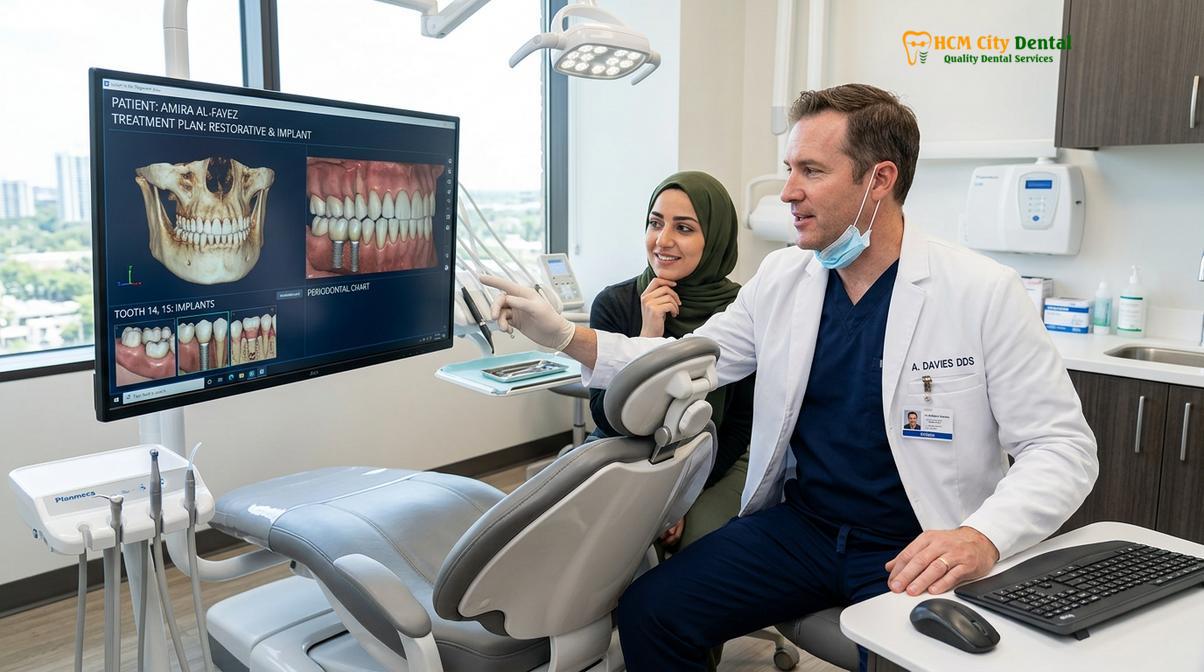
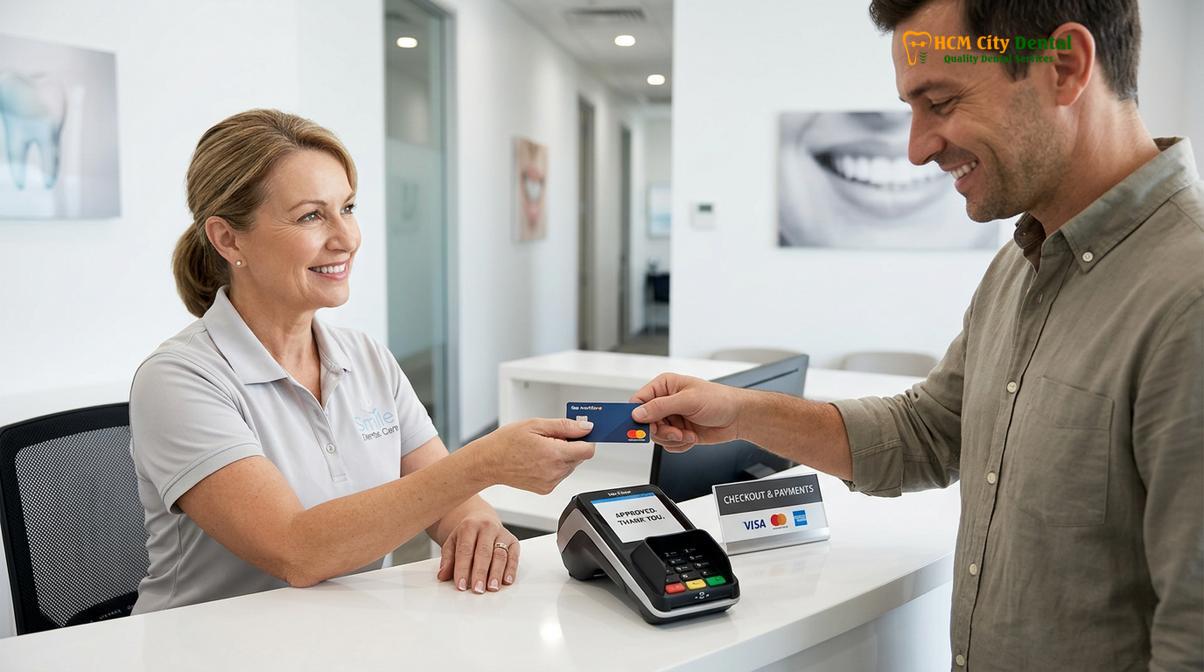
The most ubiquitous and highly recommended method for settling medical fees is the use of major international credit and debit cards. Visa and Mastercard are universally accepted across reputable healthcare facilities. When paying for dental work Saigon, patients benefit from the security protocols inherent in modern credit card networks, including fraud monitoring and dispute resolution mechanisms. Upon completion of the initial clinical examination, which typically involves 3D Cone Beam Computed Tomography (CBCT) imaging and intraoral scanning, the treatment coordinator will present a comprehensive, itemized treatment plan. Once the patient consents to the clinical pathway, payment for the immediate phase of treatment is processed via secure Point of Sale (POS) terminals.
It is a critical preparatory step for patients to contact their issuing bank prior to international travel. High-value transactions processed in a foreign country frequently trigger automated security algorithms, potentially resulting in temporary card suspension. By registering travel dates and anticipated medical expenses with the bank, patients ensure uninterrupted access to their funds, facilitating a smooth transition into the surgical suite without administrative delays.
Cash Settlements in Multiple Currencies
Despite the digital shift, dental clinic cash policies remain highly accommodating for international visitors. Facilities routinely accept cash payments in both Vietnamese Dong (VND) and US Dollars (USD). For patients opting to utilize USD, it is imperative that the banknotes are in pristine condition—free from tears, excessive creasing, or ink markings—as local banking regulations dictate strict acceptance criteria for foreign currency. Utilizing cash can sometimes bypass international transaction fees levied by credit card companies, making it a viable option for settling minor procedures, diagnostic fees, or purchasing postoperative medications.
However, carrying large sums of physical currency carries inherent security risks. Patients are advised to balance their payment methods, perhaps utilizing cash for initial consultations and minor restorative work (such as composite fillings or prophylaxis), while relying on secure electronic methods for major surgical interventions.
Alternative and Modern Digital Payments
To accommodate global patients, modern clinics now accept digital payment solutions including PayPal, various e-wallets, and major cryptocurrencies, offering instantaneous and secure cross-border transactions.
The landscape of international medical commerce is rapidly evolving, and progressive healthcare providers are adopting modern financial technologies to better serve a global demographic. Recognizing that traditional banking systems can sometimes impose restrictive transfer limits or extended clearing times, clinics have integrated alternative digital payment infrastructures. This modernization aligns with the broader goal of providing a frictionless patient experience, from the initial digital consultation to the final prosthetic delivery.
Digital Wallets and Cross-Border Platforms
Platforms such as PayPal have become increasingly popular for international patients. A paypal crypto dental payment offers a layer of financial abstraction, allowing patients to fund their treatments using linked bank accounts or secondary credit cards without directly exposing their primary financial data to international POS systems. This method is particularly advantageous for patients who wish to pre-pay for their diagnostic phase or secure their surgical appointments prior to boarding their flight. By utilizing digital wallets, the administrative burden upon arrival is minimized, allowing the clinical team to immediately commence with preoperative assessments and prophylactic protocols.
“Our primary objective is clinical excellence. By removing the friction of international financial logistics through modern payment gateways, we lower patient anxiety. A relaxed patient exhibits better vital signs, responds more predictably to local anesthesia, and ultimately experiences a smoother postoperative recovery.” — Dr. Nguyen Van Cuong
Cryptocurrency Transactions
In response to the growing adoption of decentralized finance, select forward-thinking dental facilities now facilitate payments via major cryptocurrencies, such as Bitcoin (BTC) or stablecoins like Tether (USDT). Cryptocurrency transactions offer near-instantaneous cross-border settlement, entirely bypassing traditional banking hours and international wire delays. For patients undergoing extensive, time-sensitive procedures—such as immediate-load dental implants—the ability to settle accounts rapidly ensures that laboratory fabrication of provisional prosthetics can commence without financial hold-ups. While the clinical efficacy of the treatment remains the paramount concern, the integration of blockchain payment methods represents a commitment to comprehensive patient convenience.
When planning your dental trip, discussing these alternative payment methods with the clinic’s international patient coordinator ensures that all financial logistics are aligned with your personal preferences and technological capabilities.
Managing Currency Exchange & Transaction Fees
Understanding dynamic currency conversion and bank transaction fees helps international patients optimize their budget, ensuring funds are efficiently allocated toward high-quality clinical care rather than administrative costs.
A critical aspect of managing medical expenses abroad involves navigating the nuances of currency exchange and international banking fees. While the cost of clinical care in Vietnam is highly competitive, poor financial planning regarding exchange rates can inadvertently inflate the total expenditure. Patients must be proactive in understanding how their home financial institutions process foreign transactions to maximize the value of their medical travel investment.
Dynamic Currency Conversion (DCC)
When utilizing a credit or debit card at an international POS terminal, patients are frequently presented with the option of Dynamic Currency Conversion (DCC). This feature allows the transaction to be billed in the patient’s home currency rather than the local currency (VND). While DCC offers immediate transparency regarding the exact charge in a familiar currency, it is almost universally accompanied by highly unfavorable exchange rates and hidden markup fees imposed by the merchant’s bank. From a financial optimization standpoint, it is strongly advised to always decline DCC and choose to be charged in the local currency. This allows the patient’s home bank to perform the conversion at the standard, typically much lower, wholesale market rate.
Important Travel Advisory: If you plan to carry cash to settle your medical bills, be aware of international customs regulations. Most countries, including Vietnam, require travelers to declare cash amounts exceeding $5,000 USD (or equivalent) upon entry. Failure to declare large sums can result in confiscation or severe legal penalties, causing immense stress and delaying your clinical treatment.
Minimizing Bank Surcharges
International transaction fees typically range from 1% to 3% of the total purchase amount, depending on the specific credit card agreement. For high-value clinical procedures, such as full-mouth rehabilitations utilizing premium titanium fixtures, these percentages can translate into significant sums. Patients are encouraged to utilize travel-specific credit cards that explicitly waive foreign transaction fees. Additionally, when considering how to pay dentist HCMC, patients should inquire if the clinic absorbs the local merchant processing fees or if they are passed on to the consumer. Transparent clinics will clearly outline any applicable processing fees in the initial treatment estimate, ensuring no surprises occur at the cashier’s desk.
For those seeking comprehensive guidance on selecting the right facility that aligns with both clinical and financial transparency, understanding how to find a trustworthy dentist is a crucial preliminary step in the medical tourism journey.
How to Coordinate High-Value Payments Safely
For extensive restorative procedures, payments are typically staged across distinct clinical milestones, allowing patients to manage finances securely while progressing through their surgical and prosthetic phases.
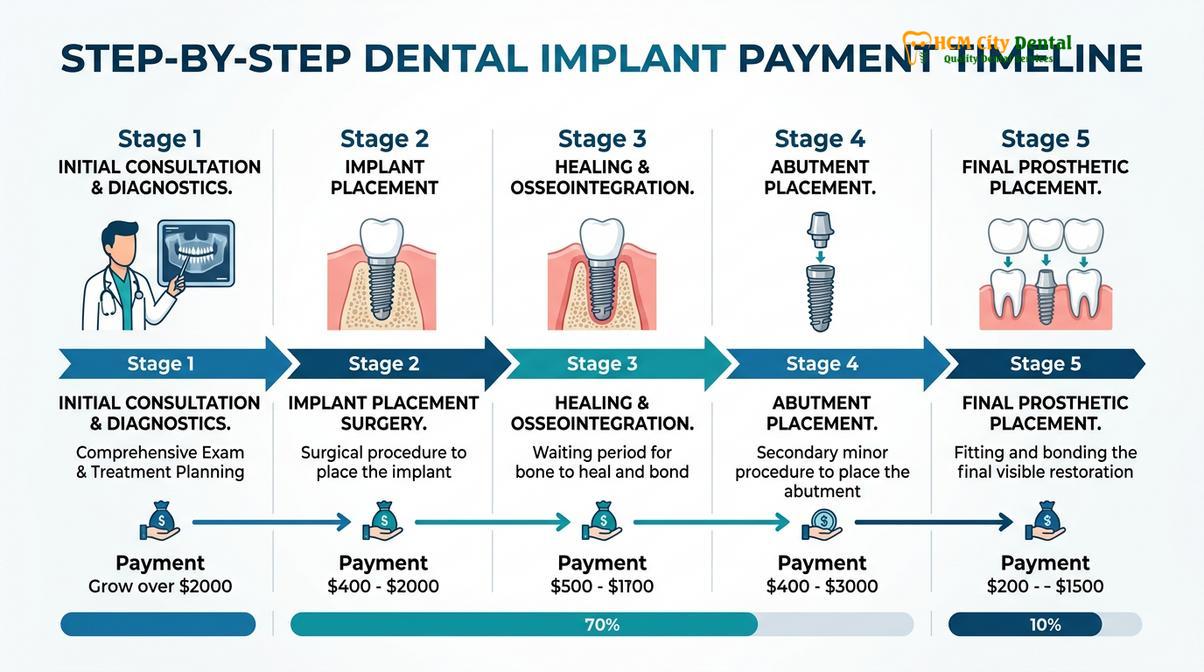
Complex dental rehabilitations, such as All-on-4 implant systems, sinus augmentations, and full-arch zirconia restorations, represent significant financial investments. These procedures are rarely completed in a single visit due to the biological requirements of tissue healing and osseointegration—the process by which the titanium implant fuses with the alveolar bone[2]. Because the clinical workflow is naturally divided into distinct phases, the financial structure is correspondingly staged, providing patients with a secure and manageable payment schedule.
Staged Payment Structures for Implantology
An international bank transfer dentist protocol is frequently utilized for these staged payments. The treatment is generally bifurcated into two primary phases: the Surgical Phase and the Prosthetic Phase. This division not only respects the biological healing timeline but also protects the patient financially, as they only pay for the services rendered during each specific visit.
| Clinical Phase | Procedures Included | Payment Timing | Typical Percentage of Total Cost |
|---|---|---|---|
| Phase 1: Surgical | CBCT Diagnostics, Extractions, Bone Grafting, Implant Placement, Provisional Prosthetics | Upon completion of the surgical visit | 60% – 70% |
| Healing Period | Osseointegration (3 to 6 months) | No payments required | 0% |
| Phase 2: Prosthetic | Digital Impressions, Custom Abutments, Final Zirconia/Porcelain Crown Delivery | Upon final fitting and cementation | 30% – 40% |
During Phase 1, the clinical focus is entirely on establishing a robust foundation. The surgical placement of implants requires meticulous precision and strict adherence to sterile protocols. Payment for this phase covers the surgical expertise, the premium implant fixtures, and the fabrication of temporary prosthetics that allow the patient to maintain aesthetics and basic function during the healing period. Once osseointegration is confirmed via follow-up radiographic imaging—typically 3 to 6 months later—the patient returns for Phase 2. The final payment is only executed when the permanent, custom-milled restorations are successfully delivered and the patient’s occlusion (bite) is perfectly balanced.
Clinical Case Example: Staged Financial Planning
A 58-year-old patient from Australia required a full-arch restoration. Due to severe bone resorption, bilateral sinus lifts were clinically indicated prior to implant placement. The treatment was structured over two visits. The patient utilized an international bank transfer to secure the surgical suite for Phase 1. Six months later, after successful osseointegration was confirmed, the patient returned for the final zirconia bridge delivery, settling the remaining balance via a travel-friendly credit card with zero foreign transaction fees. This staged approach alleviated financial pressure and aligned perfectly with the biological healing requirements.
For patients wondering about the logistical feasibility of combining a vacation with complex surgery, reviewing a practical guide on getting dental implants on holiday provides essential insights into balancing recovery time with travel itineraries. Furthermore, comparing regional healthcare standards, such as evaluating dental implants in Vietnam vs Thailand, can help patients make informed decisions regarding both clinical quality and financial value.
Zero Unexpected Surcharges at HCMC Dental Clinic
A commitment to ethical medical billing means patients receive comprehensive, transparent treatment plans with no hidden fees for essential clinical protocols like advanced sterilization or diagnostic imaging.
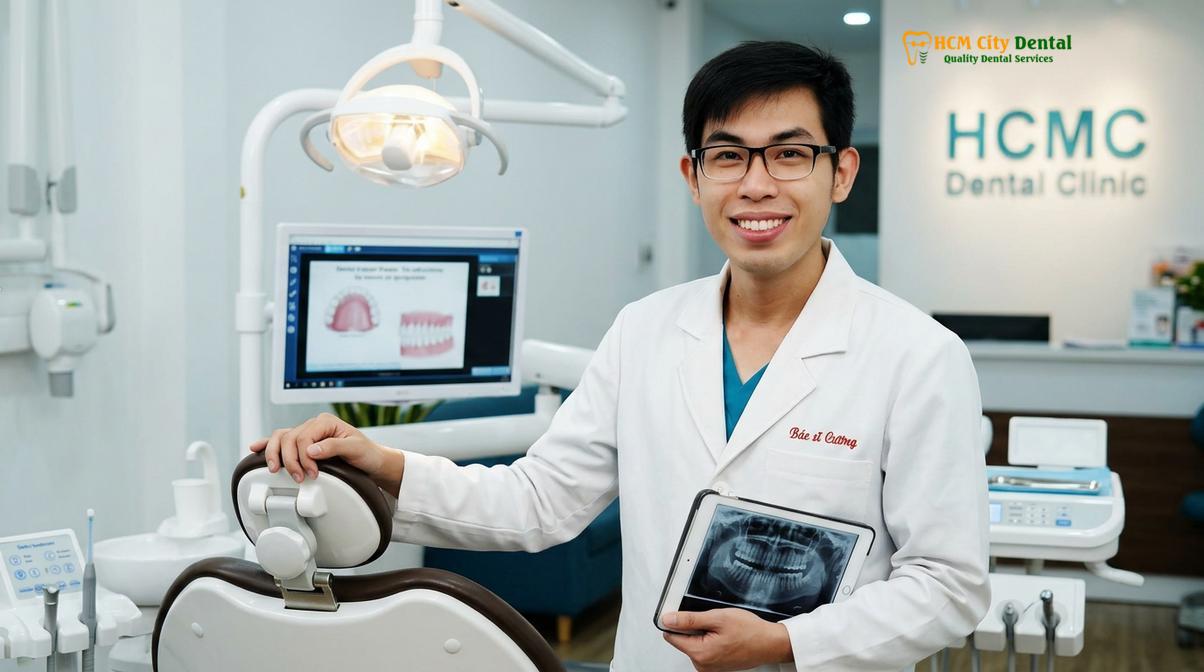
In the realm of international healthcare, financial transparency is a fundamental pillar of medical ethics. Patients traveling vast distances place immense trust in their chosen providers, and this trust must be honored through clear, unequivocal communication regarding costs. At HCMC Dental Clinic, the philosophy is simple: the treatment plan presented after the initial diagnostic workup is the final financial blueprint. There are no hidden surcharges for essential clinical necessities.
Comprehensive Inclusions in Treatment Plans
Many budget-tier clinics globally may advertise artificially low baseline prices, only to append exorbitant fees for necessary components such as local anesthesia, surgical sutures, or postoperative medications. Conversely, a premium facility ensures that all requisite elements of the procedure are bundled into a single, transparent fee. For instance, the utilization of the Class-B autoclave sterilization protocol—a European standard ensuring the absolute eradication of all microbial life from surgical instruments—is a non-negotiable standard of care, not an optional, billable upgrade[3]. Patient safety and infection control are intrinsic to the clinical workflow, reflecting the highest standards of global medical tourism[4].
“Ethical dentistry demands that clinical decisions are never compromised by hidden financial motives. When a patient reviews their treatment plan, they must have absolute confidence that every necessary diagnostic scan, sterile protocol, and surgical component is accounted for. Transparency is the foundation of the doctor-patient relationship.” — Dr. Nguyen Van Cuong
Enhancing the Patient Experience
Beyond clinical excellence, HCMC Dental Clinic is dedicated to optimizing the entire patient journey. To further assist international visitors, the clinic offers a 40% online booking discount for comprehensive treatment plans initiated prior to arrival. Patients can engage in a direct clinical consult with Dr. Cuong via WhatsApp, allowing for preliminary evaluations of dental records and X-rays before booking flights. Additionally, the patient coordination team provides tailored hotel recommendations in District 1 and arranges seamless airport pickup services, ensuring that the logistical aspects of the trip are as meticulously planned as the surgical procedures.
For those seeking a highly qualified English-speaking dentist, clear communication regarding both clinical expectations and payment structures is paramount to a successful outcome.
When to Consult Your Clinical Team About Treatment Phasing
While financial logistics are important, they must never dictate the clinical pathway. Patients should consult their doctor immediately if they experience any confusion regarding the timeline of their treatment. It is a critical medical consideration that biological healing cannot be rushed to accommodate a travel schedule or a preferred payment date. For example, if a patient requires extensive bone grafting, the alveolar ridge must achieve sufficient density before implants can be safely torqued into place[5]. Attempting to compress these phases into a single visit to save on travel costs or consolidate payments is a severe contraindication that dramatically increases the risk of implant failure.
Always prioritize clinical diagnostics over financial convenience. Your dental surgeon will provide a personalized examination and dictate the necessary healing intervals. The financial staging will naturally follow this evidence-based medical timeline, ensuring both your physical health and financial peace of mind are protected. For a comprehensive overview of planning your medical journey, refer to the complete guide for international patients.
Frequently Asked Questions
Can I pay for my dental treatment with major credit cards like Visa or Mastercard?
Yes, major credit cards including Visa and Mastercard are universally accepted at top dental facilities for all clinical procedures. Using a credit card provides a secure, traceable transaction method that often includes fraud protection from your home bank. Before traveling, it is highly recommended to notify your credit card issuer about your medical trip to prevent automated security blocks during high-value transactions for restorative work. This ensures your payment processes smoothly immediately following your clinical consultation.
Do you accept US Dollars (USD) or only Vietnamese Dong (VND)?
Premium dental clinics accept both US Dollars (USD) and Vietnamese Dong (VND) for cash settlements. When utilizing cash, notes must be clean, untorn, and free of markings to be accepted by local banking institutions. While USD is widely accepted for major procedures, having some VND is advisable for minor incidental expenses, medications, or local transportation during your postoperative recovery period. Always ensure you comply with international customs regulations regarding the transport of large sums of cash.
Can I pre-pay or deposit funds via international bank transfer before travel?
Yes, international bank transfers are a standard and highly secure method for depositing funds or pre-paying for extensive surgical phases. This method is particularly useful for securing surgical suite time for complex procedures like full-arch implant rehabilitations. Patients should initiate transfers several business days in advance to account for international clearing times, ensuring funds are verified prior to the commencement of clinical treatment. The clinic’s financial coordinator will provide secure SWIFT/BIC codes for the transaction.
Are there additional fees for using digital wallets or cryptocurrency?
Transaction fees for digital wallets or cryptocurrency depend entirely on the specific platform and the network conditions at the time of transfer. While the clinic does not typically impose hidden surcharges for accepting modern digital payments, patients should be aware of standard network gas fees or platform conversion rates. These modern methods offer rapid settlement, allowing patients to focus entirely on their clinical recovery rather than waiting for traditional banking clearances.
How are payments structured for multi-stage procedures like dental implants?
Payments for multi-stage procedures are divided according to specific clinical milestones, typically split between the surgical phase and the prosthetic phase. During the first visit, patients pay for diagnostics, extractions, bone grafting, and implant placement. After the necessary osseointegration healing period of several months, the remaining balance is settled during the second visit when the final custom abutments and porcelain crowns are permanently affixed. This staged approach aligns financial outlay with biological healing.
References
- Centers for Disease Control and Prevention (CDC). Health Information for Travelers to Vietnam. (2023).
- FDI World Dental Federation. Infection Control and Sterilization Standards in Dental Practice. (2022).
- International Dental Journal. Global trends in dental tourism and clinical standards. (2021).
- Medical Tourism Association (MTA). Global Medical Tourism Index and patient safety ratings. (2023).
- World Health Organization (WHO). Guidelines for Safe Surgery and infection prevention. (2020).