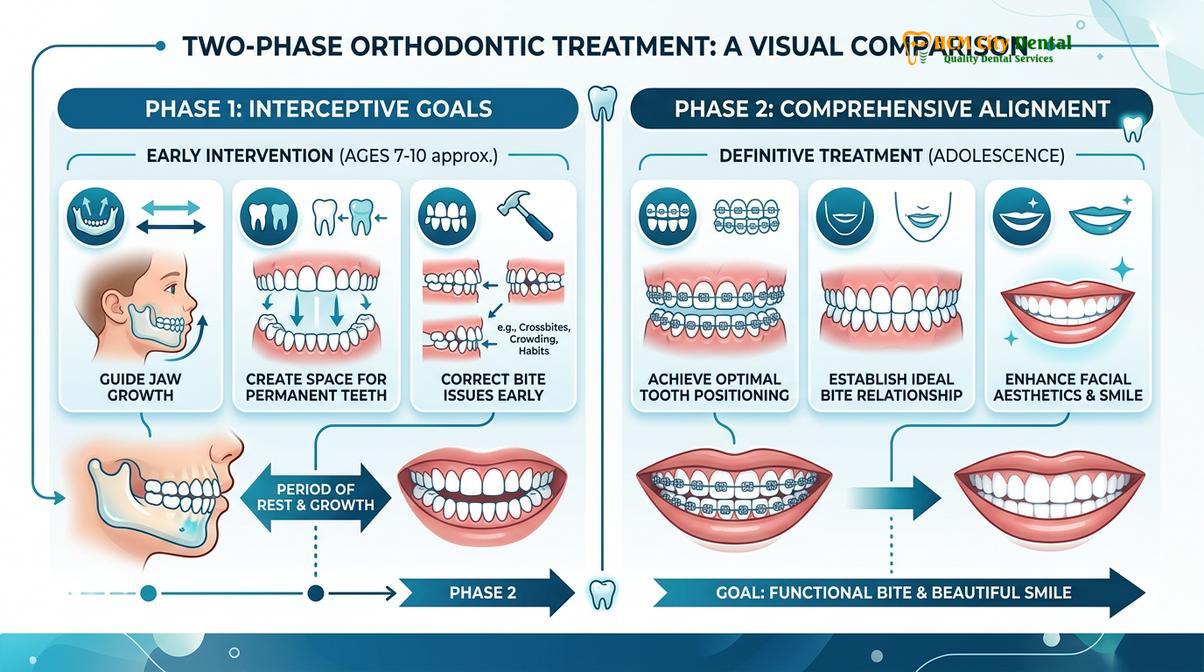
Phase 1 vs Phase 2 braces for children involves a strategic, two-step orthodontic approach. Phase 1 intercepts severe jaw and bite issues during early mixed dentition (ages 7-10), while Phase 2 aligns the permanent teeth during adolescence (ages 12-14), separated by a carefully monitored resting period.
Clinical Summary:
The two-phase orthodontic treatment model is a specialized clinical protocol designed to address complex dentofacial discrepancies that cannot be optimally resolved in a single adolescent phase. Phase 1 (interceptive orthodontics) capitalizes on the malleability of a child’s developing jawbones to correct skeletal imbalances, severe crossbites, and extreme crowding before the midpalatal suture fuses. Following a monitored resting period where primary teeth naturally exfoliate, Phase 2 (comprehensive orthodontics) utilizes fixed braces or clear aligners to detail the occlusion, align the newly erupted permanent dentition, and establish long-term functional harmony. While not required for every child, this proactive approach often prevents the need for future orthognathic surgery or permanent tooth extractions.
Key Takeaways:
- Phase 1 focuses on orthopedic jaw correction and creating space, typically initiated between ages 7 and 10.
- A resting period of 1 to 3 years separates the phases, allowing permanent teeth to erupt naturally.
- Phase 2 involves comprehensive detailing of the bite and alignment of all 28 permanent teeth.
- Early intervention can significantly reduce the risk of dental trauma and the need for invasive jaw surgeries.
- Only approximately 10 to 15 percent of pediatric patients present with clinical indications requiring a two-phase approach.
Understanding the Two-Phase Orthodontic Model
Two-phase orthodontic treatment is a proactive clinical protocol that separates jaw structural correction in early childhood from comprehensive dental alignment in adolescence.
The concept of a Phase 1 Phase 2 braces comparison often introduces a paradigm shift for parents who assume that orthodontic care only begins once all baby teeth have fallen out. In clinical practice, orthodontics is not merely about straightening crooked teeth; it is fundamentally about managing the complex interplay between craniofacial growth, neuromuscular function, and dental development. The two-phase model is predicated on the biological reality that certain skeletal and structural anomalies are best treated while the patient is actively growing. By dividing the treatment into two distinct stages, clinicians can leverage the natural growth spurts of childhood to achieve orthopedic changes that would be surgically invasive to correct in adulthood.[1]
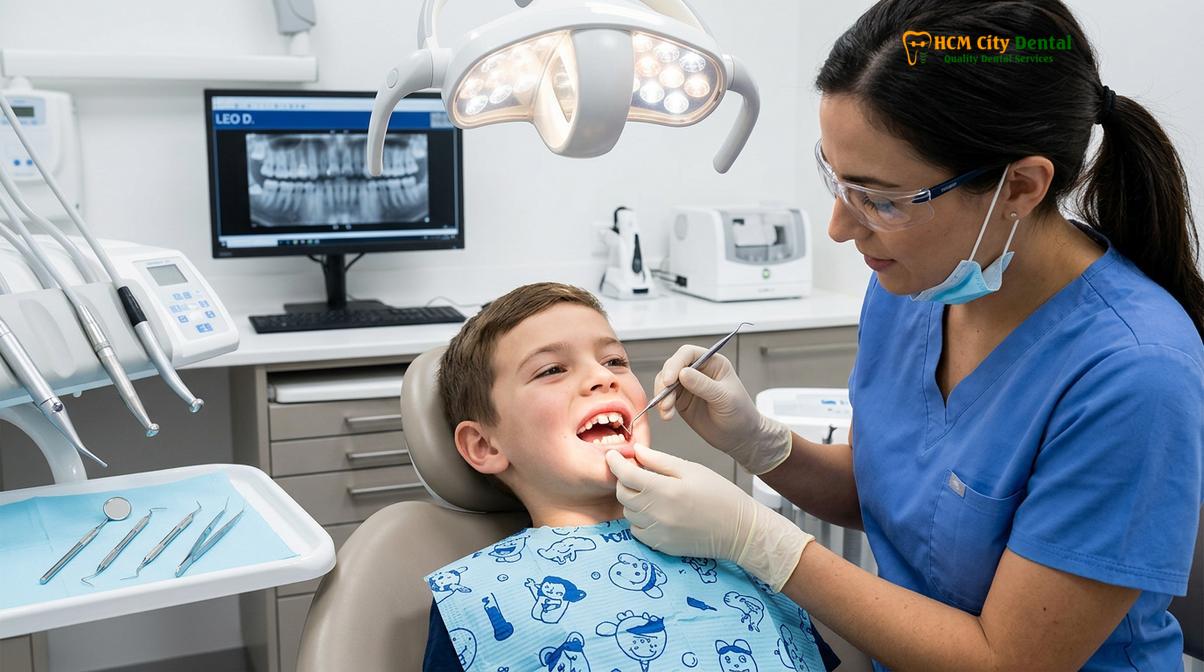
To fully grasp the necessity of this approach, one must understand the difference between a dental malocclusion and a skeletal malocclusion. A dental malocclusion involves teeth that are rotated, tipped, or crowded within a normally proportioned jawbone. These issues can typically wait until adolescence. Conversely, a skeletal malocclusion involves a discrepancy in the size, shape, or position of the maxilla (upper jaw) and mandible (lower jaw). For example, a maxilla that is too narrow can lead to a posterior crossbite, forcing the lower jaw to shift asymmetrically upon closure. If left untreated during the formative years, this functional shift can translate into permanent skeletal asymmetry. Therefore, early intervention aims to modify the skeletal foundation before the bones fully ossify.[2]
The Biological Window of Opportunity
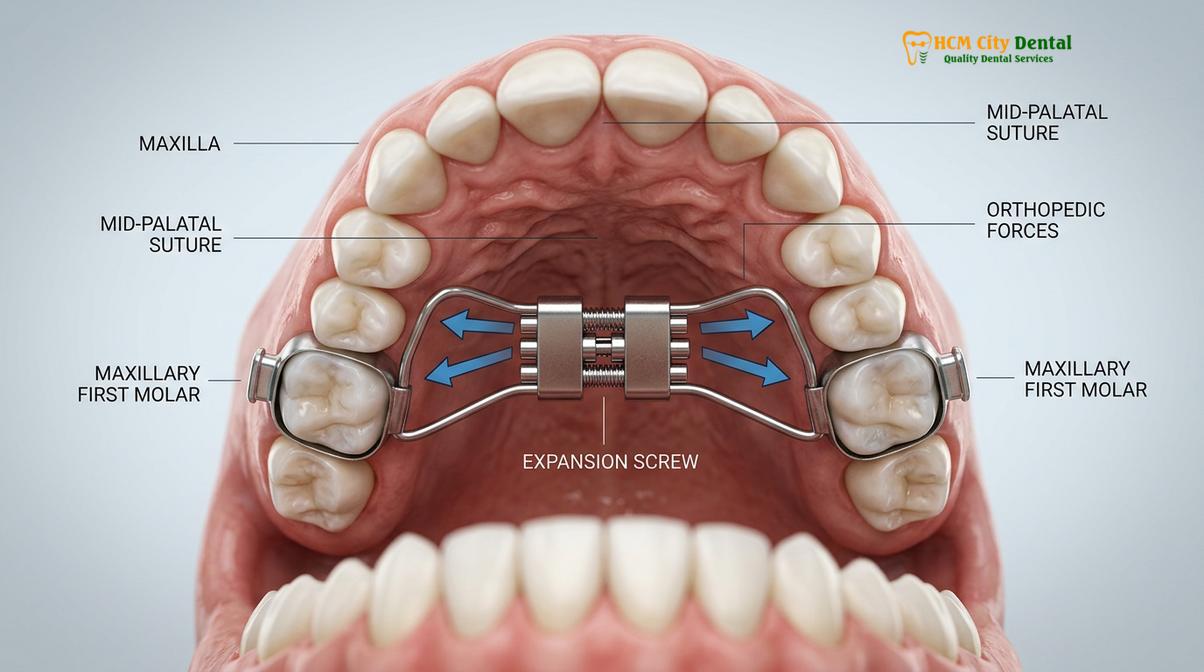
The primary justification for initiating a two phase orthodontic treatment child protocol lies in the anatomy of the midpalatal suture. In young children, the right and left halves of the upper jaw are joined by a fibrous suture that has not yet fused into solid bone. This presents a unique biological window. By applying gentle, sustained lateral forces using specialized appliances, an orthodontist can stimulate the production of new bone at the suture line, effectively widening the upper jaw. Once a patient reaches late adolescence or early adulthood, this suture interlocks and fuses, making non-surgical expansion highly unpredictable or impossible.
“Interceptive orthodontics is not about achieving aesthetic perfection in a seven-year-old; it is about establishing a harmonious skeletal foundation that allows the permanent dentition to erupt into a biologically stable and functionally sound environment.”
The American Association of Orthodontists recommends that all children receive their first comprehensive orthodontic evaluation no later than age seven. At this stage, the first permanent molars have typically erupted, establishing the posterior occlusion, and the permanent incisors are beginning to emerge. This mixed dentition phase provides the clinician with critical diagnostic information regarding the child’s transverse, vertical, and anteroposterior jaw relationships. Identifying issues early allows for a strategic roadmap, determining whether the child requires immediate interceptive care or can simply be monitored until adolescence.
Phase 1: Correcting Jaw Growth and Spacing Early (Ages 7-10)
Phase 1 orthodontics utilizes specialized appliances to guide developing jawbones, correct severe crossbites, and create adequate space for erupting permanent teeth.
Phase 1, often referred to as interceptive orthodontics, is a highly targeted intervention. It is not designed to align every tooth perfectly, as the child still possesses a significant number of primary (baby) teeth. Instead, the primary objective is jaw structural correction and the mitigation of developing problems that could cause irreversible damage to the dentition or periodontium. When discussing early child braces timing HCMC, clinicians focus on addressing specific functional and skeletal criteria rather than cosmetic concerns.
Clinical Indications for Phase 1 Intervention
Not every child requires early treatment. The clinical indications for Phase 1 are specific and typically involve severe discrepancies. One of the most urgent indications is an anterior crossbite (underbite), where the upper front teeth bite behind the lower front teeth. This condition can cause abnormal wear on the enamel, gingival recession on the lower incisors, and restricted forward growth of the upper jaw. Another critical indication is a severe posterior crossbite, which, as previously mentioned, can lead to asymmetric jaw growth. Furthermore, extreme crowding—where there is a glaring mathematical discrepancy between the size of the erupting permanent teeth and the available arch length—often necessitates early expansion to prevent the impaction of permanent canines or the need for future extractions.[3]
Dr. Nguyen Van Cuong, a leading specialist in craniofacial development, frequently emphasizes the preventative nature of this phase. “When we identify a severe skeletal discrepancy at age eight, we have the orthopedic leverage to guide growth favorably. Ignoring these signs until age thirteen often transforms a straightforward growth modification case into a complex surgical or extraction scenario,” notes Dr. Cuong. This philosophy underscores the importance of timely diagnostics in pediatric dental care.
Common Interceptive Appliances
The armamentarium used in Phase 1 is diverse and tailored to the specific anatomical needs of the patient. Some of the most frequently utilized appliances include:
- Rapid Palatal Expanders (RPE): Fixed devices attached to the upper molars that apply lateral pressure to widen the maxilla, correcting crossbites and creating space.
- Partial Braces (2×4 Appliance): Brackets placed only on the four permanent upper incisors and the two permanent first molars. This is used to correct severe rotations, close large diastemas (gaps), or advance upper teeth out of a crossbite.
- Space Maintainers: Passive appliances used when a primary tooth is lost prematurely due to decay or trauma. They hold the adjacent teeth in place, preventing them from drifting and blocking the eruption pathway of the underlying permanent tooth.
- Functional Appliances: Devices like the Twin Block or Herbst appliance, which posture the lower jaw forward to correct severe overjets (protruding upper teeth) and encourage favorable mandibular growth.
Clinical Case Study: Early Expansion
A 7-year-old patient presented at HCMC Dental Clinic in Ho Chi Minh City with a severe unilateral posterior crossbite and a functional mandibular shift. Diagnostic imaging revealed a constricted maxilla. Phase 1 treatment was initiated using a bonded rapid palatal expander. Over a period of 6 months, the maxilla was orthopedically widened by 8 millimeters. This not only corrected the crossbite and eliminated the jaw shift but also spontaneously improved the patient’s nasal airway volume, resolving chronic mouth-breathing habits. The patient then transitioned into the resting period with a stable skeletal foundation.
Beyond the structural benefits, Phase 1 treatment often yields significant functional improvements. Expanding a narrow upper jaw simultaneously widens the floor of the nasal cavity. For children who suffer from chronic mouth breathing, sleep-disordered breathing, or mild obstructive sleep apnea, this orthopedic expansion can dramatically improve nasal airflow and overall airway health.[4] Parents exploring orthodontic treatment options should consider these profound physiological benefits when evaluating the necessity of early intervention.
The Rest Period: Monitoring Dental Eruption (Ages 10-12)
The resting period allows remaining primary teeth to exfoliate naturally while clinicians monitor the eruption trajectory of permanent teeth without active force application.
Following the successful completion of Phase 1 objectives, the active appliances are removed, and the patient enters a critical phase known as the resting period. This is not a cessation of care, but rather a strategic pause. The human body requires time to adapt to the orthopedic changes achieved during Phase 1. More importantly, the remaining primary teeth must be allowed to fall out naturally, making way for the eruption of the premolars, permanent canines, and second molars.
The Dynamics of the Mixed Dentition
During this transitional phase, the mouth undergoes rapid and dynamic changes. The dentition is often in an “ugly duckling” stage, characterized by temporary spacing, flared incisors, and a mix of large permanent teeth and smaller baby teeth. This appearance is entirely normal and is a natural part of dental development. The orthodontist’s role during this period is observational and retentive. To ensure the jaw expansion and early alignment do not relapse, the patient is typically provided with a passive retainer—either a removable Hawley retainer or a fixed lingual wire.
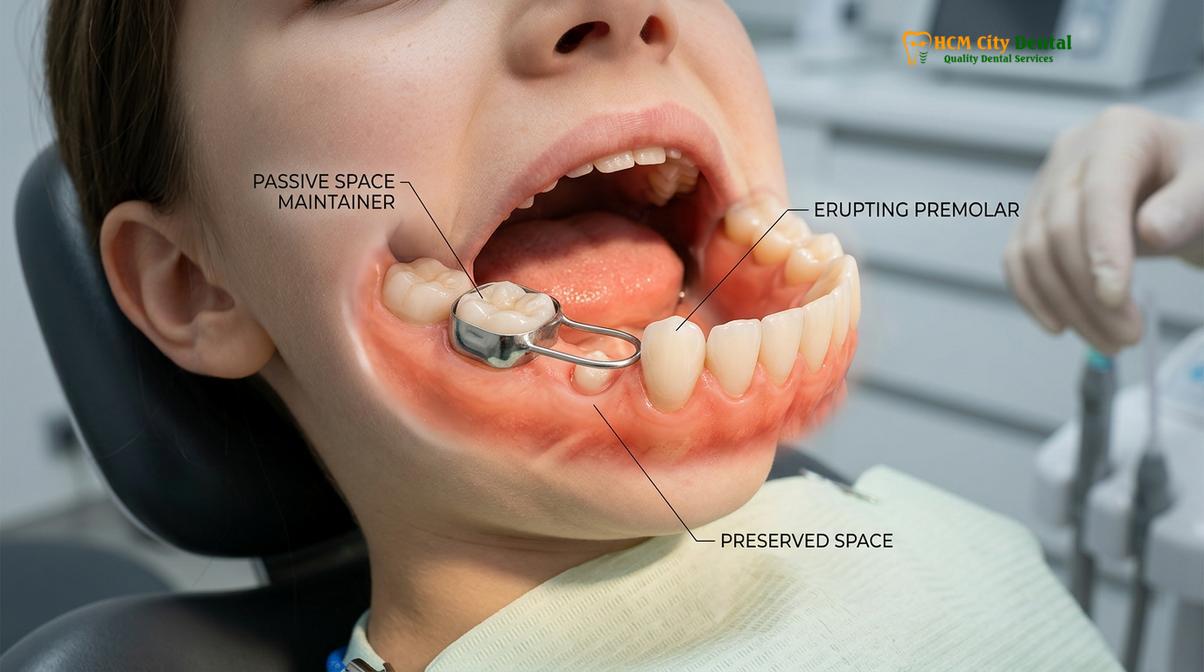
Continuous, uninterrupted orthodontic treatment from age 8 to 14 is clinically contraindicated. Prolonged application of orthodontic forces increases the risk of root resorption (shortening of the tooth roots), decalcification (white spot lesions on the enamel), and patient burnout. By implementing a resting period, the clinician protects the biological integrity of the teeth and ensures the patient remains cooperative for the final phase of treatment.
Clinical Warning: Do not skip observation appointments during the resting period. Even without active braces, the orthodontist must monitor the eruption path of the permanent canines. Ectopic (misplaced) canines can become impacted in the jawbone or resorb the roots of adjacent incisors if not detected early via panoramic radiography.
Observation appointments are typically scheduled every six months. During these visits, the clinician evaluates the stability of the Phase 1 corrections, monitors oral hygiene, and assesses the eruption sequence. If a primary tooth is over-retained and deflecting a permanent tooth off its proper course, the orthodontist may recommend selective extraction of the baby tooth to guide the permanent tooth into the arch naturally. This vigilant monitoring is a hallmark of comprehensive Saigon pediatric orthodontics, ensuring that the transition to the permanent dentition is as seamless as possible. Proper retention protocols during this phase are vital for preventing teeth from shifting back to their original malocclusion.
Phase 2: Aligning Permanent Teeth and Bite Harmony (Ages 12-14)
Phase 2 initiates comprehensive orthodontic mechanics to fine-tune the occlusion, align all permanent teeth, and establish long-term functional stability.
Once the majority of the permanent teeth have erupted—typically around age 12 to 14—the patient is ready to commence Phase 2. This is the comprehensive finishing stage of the two-phase protocol. While Phase 1 was about building a solid skeletal foundation, Phase 2 is about architectural detailing. The goal is to ensure that each of the 28 permanent teeth (excluding third molars) is positioned in its exact proper location, with optimal tip, torque, and rotational alignment.
Comprehensive Biomechanics and Detailing
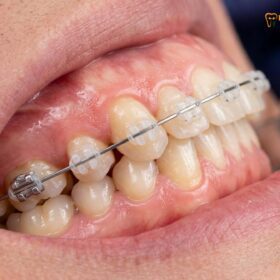
Adolescent Phase 2 braces involve full fixed appliances (traditional metal or ceramic brackets) on all erupted permanent teeth, or a comprehensive series of clear aligners. Because the major skeletal discrepancies and severe crowding issues were resolved during Phase 1, Phase 2 is generally more straightforward, highly efficient, and shorter in duration than it would have been if the patient had received no prior treatment. The orthodontist focuses on the micro-aesthetics of the smile arc and the macro-function of the occlusion (how the upper and lower teeth interlock).
Dr. Cuong highlights the precision required in this final stage: “In Phase 2, we are establishing the final occlusal scheme. We ensure that the canine guidance is correct, that there are no premature occlusal interferences, and that the roots of the teeth are perfectly parallel within the alveolar bone. This meticulous detailing is what guarantees the longevity and stability of the orthodontic result.”
| Clinical Parameter | Phase 1 (Interceptive) | Phase 2 (Comprehensive) |
|---|---|---|
| Target Age Range | 7 to 10 years (Mixed Dentition) | 12 to 14+ years (Permanent Dentition) |
| Primary Clinical Goal | Skeletal correction, arch expansion, space creation | Dental alignment, root paralleling, bite detailing |
| Common Appliances | Palatal expanders, partial braces, space maintainers | Full fixed braces (metal/ceramic), clear aligners |
| Average Duration | 9 to 12 months | 12 to 18 months |
| Biological Focus | Modifying jaw growth and sutural expansion | Periodontal remodeling and precise tooth movement |
During Phase 2, the biomechanics involve first-order (in-out), second-order (tip), and third-order (torque) movements. The archwires progress from light, flexible nickel-titanium wires that unravel crowding, to rigid stainless steel wires that express the final prescription of the brackets and stabilize the arch form. For patients utilizing modern clear aligner treatment protocols, the digital treatment plan (ClinCheck) is engineered to achieve these same complex movements through carefully designed attachments and sequential plastic forces.[5]
Cost and Timeline Analysis: Does Two-Phase Care Save Money?
While initiating two separate treatment phases requires an upfront investment, it often prevents the need for complex jaw surgeries or extensive extractions later in life.
A common concern among parents evaluating a two-phase treatment plan is the financial implication. It is a valid question: does paying for Phase 1 and Phase 2 separately cost more than waiting and doing a single phase of braces in adolescence? The answer requires a nuanced understanding of health economics and clinical risk management. In terms of raw appliance fees, a two-phase plan may have a slightly higher cumulative cost than a straightforward single-phase treatment. However, this comparison is often a false equivalency, because a patient who genuinely needs Phase 1 presents with a level of complexity that a single adolescent phase cannot easily resolve.
Long-Term Health Economics
If a severe skeletal crossbite or extreme crowding is left untreated until age 13, the midpalatal suture will have fused, and the permanent teeth may have erupted into highly compromised positions. Correcting these issues at an older age often requires surgical orthodontics (orthognathic surgery) to physically break and reposition the jawbones, or the extraction of multiple healthy permanent premolars to create space. The financial cost, biological toll, and recovery time associated with jaw surgery or surgical impaction exposure far exceed the cost of early interceptive expansion.
“Investing in Phase 1 orthodontics is akin to structural preventative medicine. By correcting the skeletal framework early, we bypass the biological and financial burdens of invasive surgical corrections in the future.”
At HCMC Dental Clinic, treatment fees are structured transparently. Some cases are billed as two distinct phases, while others are bundled into a comprehensive package that covers Phase 1, the resting period observation, and Phase 2. The exact structure depends on the anticipated duration and complexity of the individual case. Parents are encouraged to review their orthodontic insurance coverage, as many plans provide a lifetime maximum benefit that can be applied to both phases of treatment, significantly offsetting the out-of-pocket investment.
When to See a Doctor (Important Clinical Considerations)
Determining whether your child requires a two-phase orthodontic approach is not a decision that can be made at home. It requires a comprehensive clinical and radiographic evaluation by a qualified dental professional. You should schedule an orthodontic consultation if you observe any of the following signs in your child between the ages of 7 and 9:
- Early or late loss of primary (baby) teeth.
- Difficulty chewing, biting, or a tendency to shift the jaw to one side upon closure.
- Chronic mouth breathing, snoring, or signs of sleep-disordered breathing.
- Prolonged thumb-sucking or pacifier habits extending past age five.
- Teeth that meet abnormally (crossbites, severe underbites, or excessive overjets) or do not meet at all (open bites).
- Facial asymmetry or jaws that appear disproportionately too far forward or backward.
It is crucial to remember that early screening does not automatically equate to early treatment. In many cases, the orthodontist will simply establish a baseline and place the child in a complimentary observation program, monitoring their growth until the optimal time for a single phase of treatment arises. For families planning international relocations or extended holidays, discussing the treatment timeline is essential, especially regarding traveling after orthodontic adjustments during active phases.
If you have concerns about your child’s dental development, jaw growth, or the alignment of their erupting teeth, we invite you to schedule a comprehensive pediatric assessment at HCMC Dental Clinic in Ho Chi Minh City. Our expert team will utilize advanced 3D imaging and clinical diagnostics to determine the most biologically sound and effective treatment pathway for your child’s lifelong oral health.
Frequently Asked Questions
Does every child need a two-phase orthodontic treatment?
No, not every child requires a two-phase approach. Only about 10 to 15 percent of pediatric patients present with severe skeletal discrepancies, crossbites, or extreme crowding that necessitate early intervention. The majority of children can achieve optimal results with a single comprehensive phase of treatment during their adolescent years, once all permanent teeth have erupted.
What happens if I delay Phase 1 treatment?
Delaying Phase 1 treatment when clinically indicated can allow skeletal discrepancies to worsen as the jawbones fuse. This missed biological window may result in asymmetric facial growth, severe dental impactions, or the future need for invasive procedures such as permanent tooth extractions or corrective orthognathic jaw surgery to resolve issues that could have been managed orthopedically.
How much does Phase 2 braces cost at HCMC Dental?
The cost of Phase 2 braces depends on the complexity of the final alignment, the type of appliance chosen (traditional metal, ceramic, or clear aligners), and the duration of treatment. A personalized consultation at our clinic will provide a precise, transparent fee schedule based on your child’s specific clinical requirements and treatment goals.
Can clear aligners be used for Phase 1 treatment?
Yes, modern clear aligner systems are increasingly utilized for Phase 1 interceptive treatment. These specialized pediatric aligners are designed to accommodate erupting teeth and can effectively expand the dental arches, correct minor crossbites, and guide jaw growth, provided the child is highly compliant with wearing them for the required 20-22 hours per day.
How long does the resting period last between phases?
The resting period typically lasts between one to three years, depending on the child’s individual rate of dental development. During this time, the orthodontist monitors the natural exfoliation of the remaining primary teeth and the eruption of the permanent dentition, ensuring the foundation built in Phase 1 remains stable before initiating Phase 2.
References
- American Journal of Orthodontics and Dentofacial Orthopedics. Early treatment of Class II malocclusion and skeletal discrepancies. (2021).
- Journal of Clinical Orthodontics. Biomechanical effects of rapid maxillary expansion in mixed dentition. (2020).
- European Journal of Orthodontics. Long-term stability of two-phase orthodontic treatment outcomes. (2019).
- Pediatric Dentistry Journal. Interceptive orthodontics: managing space and eruption pathways. (2022).
- International Journal of Pediatric Otorhinolaryngology. Maxillary expansion and its effects on pediatric airway dimensions. (2018).
For professional children’s dental care, preventive sealants, or to schedule a check-up, visit our Children & Pediatric Dentistry service page at HCMC Dental Clinic in Ho Chi Minh City.