A poking braces wire is a common orthodontic issue caused by shifting teeth or chewing forces. To stop the discomfort immediately, clean the area, dry the wire thoroughly, and apply a pea-sized ball of orthodontic wax over the sharp end to protect your cheek from further lacerations.
Clinical Summary:
Archwire protrusion occurs naturally as teeth align and the wire extends past the terminal molar bracket. Immediate palliative care involves applying orthodontic wax or gently repositioning the wire with a clean pencil eraser. If mucosal ulceration occurs, warm saline rinses promote rapid healing. For severe protrusion, distal end cutters used by a professional are required. Patients should seek prompt clinical adjustment to prevent soft tissue infection, alleviate discomfort, and maintain optimal orthodontic progress without damaging the appliance.
Key Takeaways:
- Orthodontic wax provides the safest, most immediate relief for a poking archwire by creating a smooth physical barrier.
- Wires frequently shift due to natural tooth alignment, unraveling of crowding, or eating hard, sticky foods.
- Clean pencil erasers can gently tuck thin, flexible wires back into place without causing damage to the brackets.
- Cutting wires at home is a strict last resort and requires sterilized tools to prevent oral infections.
- Persistent mucosal cuts require professional adjustment to avoid deep oral ulcerations and secondary bacterial infections.
Why Braces Wires Shift and Poke Cheeks
Braces wires shift and poke the cheeks primarily because as teeth move into their correct alignment, the archwire straightens and extends past the final molar bracket.
Understanding the biomechanics of orthodontic treatments is essential for managing expectations and handling minor complications. When you first receive braces, your teeth are often crowded, rotated, or misaligned. The orthodontist places a flexible archwire—typically made of a shape-memory alloy like Nickel-Titanium (NiTi)—into the brackets attached to your teeth. Because the teeth are crooked, the wire must bend and weave to engage each bracket. As the shape-memory wire attempts to return to its original, ideal U-shape, it applies continuous, light forces that gradually move the teeth into proper alignment[1].
As the teeth unravel and straighten, the effective distance the wire needs to cover decreases. Consequently, the excess wire has nowhere to go but backward, extending past the terminal tube on your last molar. This distal protrusion is actually a positive clinical sign that your teeth are moving as planned; however, it inevitably leads to the wire poking the sensitive buccal mucosa (inner cheek)[2].
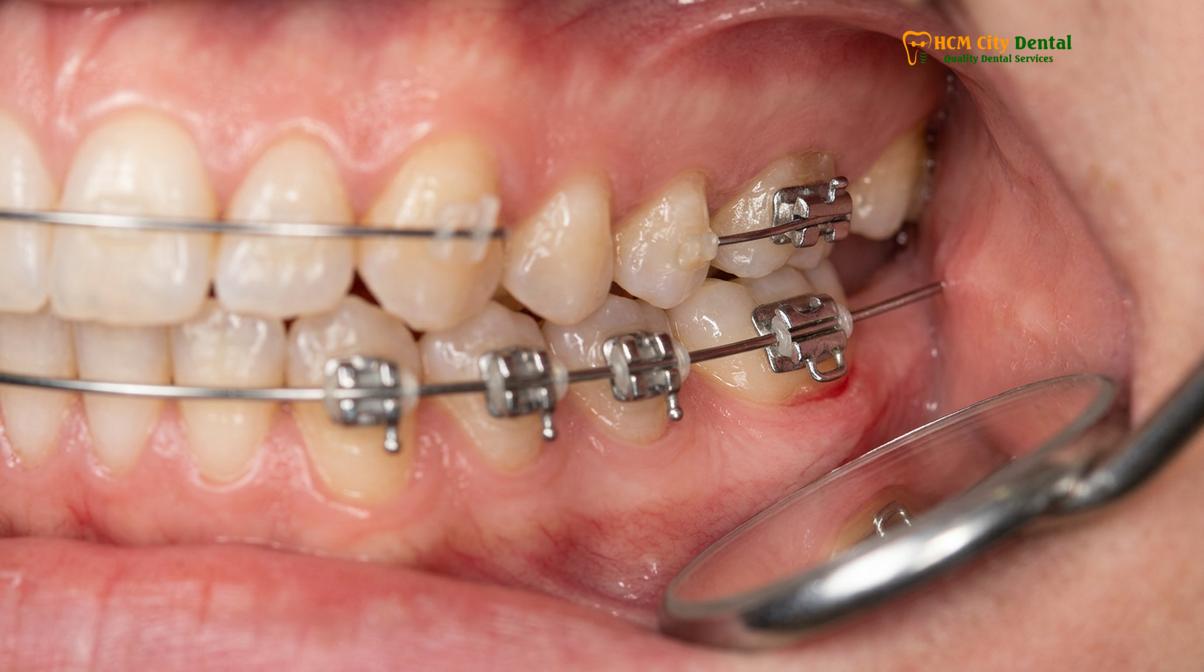
Beyond natural tooth movement, external forces play a significant role in wire displacement. Chewing hard, crunchy, or sticky foods can exert excessive occlusal forces on the orthodontic hardware. These forces can cause the wire to slide asymmetrically to one side, leaving it too short on the left and excessively long on the right. Additionally, aggressive brushing or accidental trauma during sports can dislodge the wire from the bracket slots entirely.
“Archwire protrusion is a natural byproduct of the leveling and aligning phase in orthodontics. While it indicates successful tooth movement, the resulting soft tissue trauma must be managed promptly to ensure patient comfort and compliance throughout the treatment journey.”
Dr. Nguyen Van Cuong frequently reminds patients that while a poking wire is a common occurrence, ignoring it can lead to unnecessary complications. The continuous friction of a sharp metal edge against the soft tissues of the mouth rapidly degrades the mucosal barrier, leading to traumatic ulcers. Therefore, understanding the mechanics behind the shift empowers patients to take immediate, appropriate action rather than enduring the pain.
How to Properly Apply Orthodontic Wax for Instant Comfort
Applying orthodontic wax involves rolling a small piece into a ball, drying the poking wire completely, and pressing the wax firmly over the sharp edge to create a smooth barrier.
When faced with a sharp wire lacerating your cheek, orthodontic wax application is the gold standard for immediate, safe, and effective relief. Dental wax is specifically formulated from natural waxes like paraffin, beeswax, or carnauba wax, making it non-toxic and safe if accidentally swallowed. Its thermoplastic properties allow it to soften slightly at body temperature, molding perfectly to the complex contours of brackets and wires[3].
To achieve maximum adhesion and comfort, the application technique must be precise. The oral cavity is a highly moist environment, and wax is inherently hydrophobic (water-repellent). If you attempt to apply wax to a wet bracket or wire, it will simply slide off and fail to provide protection. Follow this clinical protocol for optimal results:
- Sanitize: Wash your hands thoroughly with antibacterial soap to prevent introducing pathogens into any existing micro-abrasions in your mouth.
- Prepare the Wax: Pinch off a piece of wax roughly the size of a small pea. Roll it between your thumb and index finger. The ambient heat from your fingers will soften the wax, making it pliable and ready for application.
- Isolate and Dry: Retract your cheek using a clean finger or a spoon handle. Use a tissue, cotton swab, or a piece of sterile gauze to completely dry the poking wire and the adjacent bracket. This step is non-negotiable for successful adhesion.
- Apply and Mold: Press the softened ball of wax directly over the sharp end of the wire. Gently mold the edges of the wax around the bracket to lock it into place. The surface facing your cheek should be smooth and rounded.
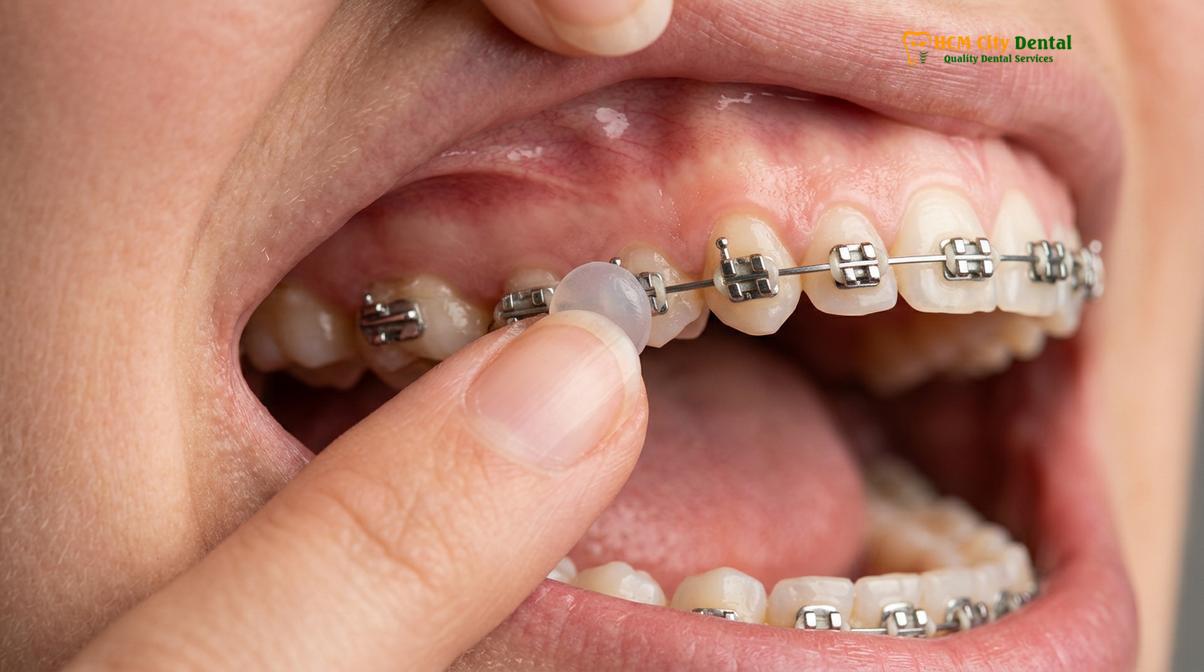
While traditional wax is highly effective, modern alternatives such as medical-grade silicone wax are also available. Silicone wax tends to last longer and resists degradation from saliva more effectively, though it requires an even drier surface for initial application. Regardless of the material used, the wax must be removed before brushing your teeth and reapplied afterward. It is also advisable to remove the wax before eating to prevent it from mixing with your food, though ingesting small amounts poses no medical risk.
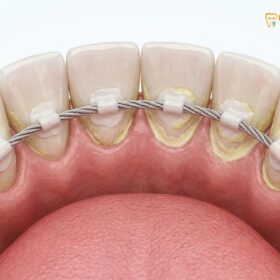
For patients undergoing complex restorative work, such as repairing broken fixed retainers, similar principles of soft tissue protection apply. Any sharp edge in the mouth, whether from active braces or a damaged retention appliance, requires immediate shielding to prevent mucosal trauma.
Safe At-Home Temporary Fixes: Using Nail Clippers or Erasers
You can temporarily fix a poking wire by gently pushing it under the arch with a clean pencil eraser or, as a strict last resort, carefully snipping the exposed end with sterilized nail clippers.
While orthodontic wax is the preferred method for managing a poking wire, there are situations where the wire protrusion is too severe for wax to hold, or the wax continually falls off during speech. In these scenarios, mechanical intervention at home may be necessary to bridge the gap until you can reach a dental professional. These methods require caution, adequate lighting, and a steady hand.
The Pencil Eraser Technique:
This method is highly effective for thin, flexible NiTi wires used during the initial stages of treatment. If the wire has slipped out of the terminal bracket or is poking outward, you can use the rubber eraser end of a standard pencil to manipulate it. Ensure the eraser is completely clean and has not been used. Gently press the eraser against the protruding wire and guide it back toward the tooth surface, tucking it under the main archwire or behind the bracket. The rubber provides excellent grip without scratching the metal or damaging the bracket bond[4].
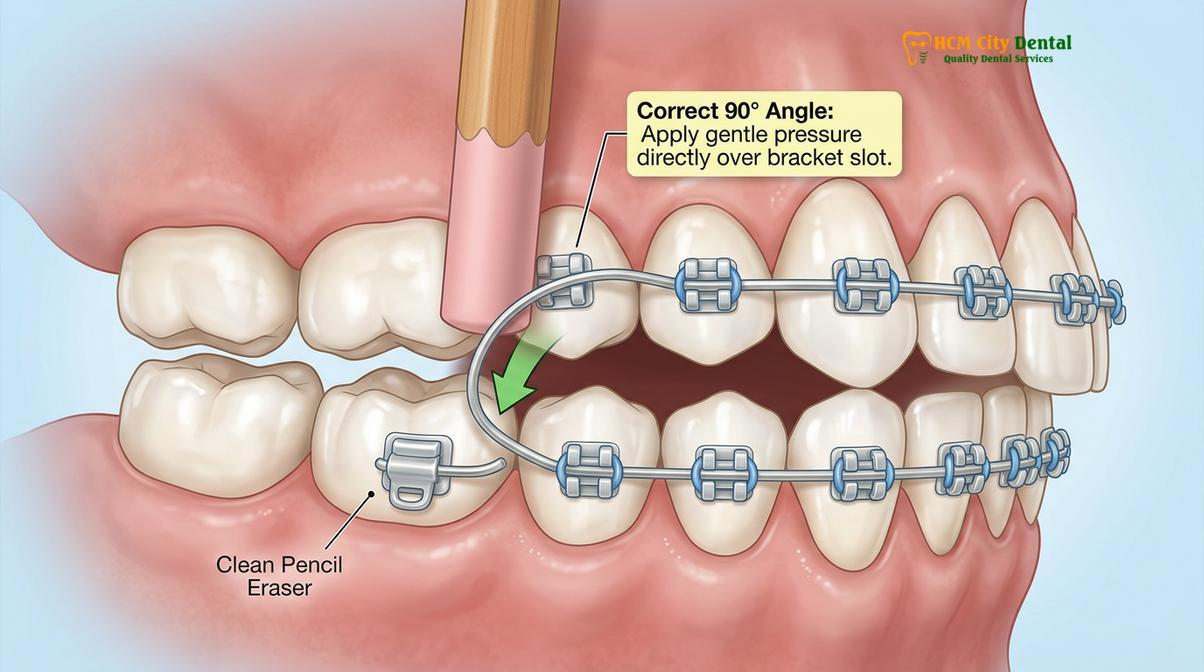
Clinical Warning: Never use excessive force when attempting to bend or tuck a wire. If the wire is thick (such as stainless steel used in later treatment phases) and resists gentle pressure, stop immediately. Forcing a rigid wire can debond brackets from the teeth, turning a minor irritation into a significant orthodontic repair.
The Wire Cutter Fix (Last Resort):
Performing a wire cutter braces fix at home is generally discouraged by dental professionals due to the risk of injury and the potential for swallowing wire fragments. However, if you are in severe pain, traveling, or unable to access an emergency dentist, cutting the wire may be the only viable option. If you must proceed, adhere strictly to the following safety protocols:
- Sterilization: Use small, sharp nail clippers or precision wire cutters. Sterilize the cutting edges thoroughly with rubbing alcohol (isopropyl alcohol) before use.
- Assistance: Do not attempt this alone. Have a family member or friend perform the cut while you hold your cheek retracted in a well-lit area.
- Fragment Control: This is the most critical step. Place a folded tissue, a cotton roll, or a piece of gauze directly behind the section of wire being cut. This barrier will catch the snipped fragment, preventing it from falling into the throat and causing a severe choking or aspiration hazard.
- Post-Cut Care: Once the wire is snipped as close to the bracket as possible, the remaining edge may still be slightly sharp. Apply orthodontic wax over the cut end immediately.
Dr. Cuong strongly advises that any at-home mechanical alteration of the braces should be followed by a professional evaluation as soon as possible. Altering the wire can change the force vectors applied to the teeth, potentially stalling your treatment progress.
Preventing Infection: Managing Cuts and Sores in Your Mouth
To prevent infection from cheek cuts caused by braces, rinse your mouth with warm salt water multiple times a day and maintain rigorous oral hygiene to promote rapid mucosal healing.
When a braces wire punctures or continuously scrapes the buccal mucosa, it creates a traumatic ulcer. The oral cavity is teeming with diverse bacterial flora. While the mouth has an incredible capacity for rapid healing due to its rich blood supply and high cellular turnover rate, an open wound combined with orthodontic hardware creates an ideal environment for localized bacterial infections[5].
Effective cheek cuts braces relief focuses on two primary objectives: reducing bacterial load and creating a favorable environment for tissue regeneration. The cornerstone of this management is the saline rinse. Dissolving half a teaspoon of non-iodized salt in eight ounces of warm water creates an isotonic solution that mimics the body’s natural fluids. Rinsing with this solution 3 to 4 times daily helps to gently debride the wound, reduce localized edema (swelling) through osmosis, and soothe irritated nerve endings.
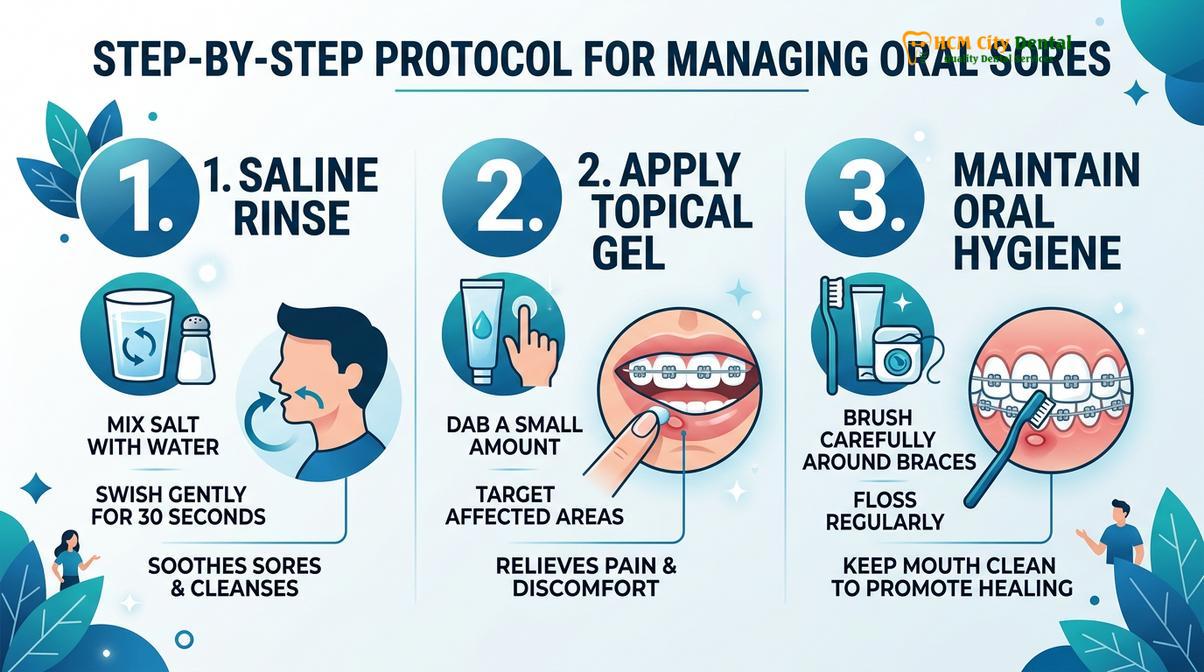
In addition to saline rinses, patients must maintain impeccable oral hygiene. Plaque accumulation around the brackets near the sore will exacerbate inflammation and delay healing. Continue to brush carefully using a soft-bristled toothbrush, angling the bristles to clean both above and below the brackets. Flossing with a floss threader or using an interdental brush is crucial to remove food debris that could harbor bacteria.
| Rinse Type | Mechanism of Action | Recommended Usage | Clinical Considerations |
|---|---|---|---|
| Warm Saline (Salt Water) | Osmotic reduction of swelling, mild antiseptic | 3-4 times daily | Highly safe, promotes natural healing, no risk of tooth staining. |
| Chlorhexidine Gluconate (0.12%) | Potent broad-spectrum antibacterial | Twice daily (prescribed) | Excellent for severe sores, but may cause temporary brown staining on teeth if used long-term. |
| Hydrogen Peroxide (1.5% diluted) | Oxygenating debridement of necrotic tissue | Once daily (short term) | Effective for cleaning deep cuts, but can delay cellular healing if overused. |
| Over-the-Counter Anesthetic Rinses | Topical numbing (e.g., Benzocaine) | As needed for pain | Provides temporary symptom relief but does not actively promote tissue healing. |
Dietary modifications are also necessary during the healing phase. Avoid highly acidic foods (like citrus fruits and tomatoes), spicy dishes, and rough, crunchy snacks that can mechanically traumatize the healing ulcer. If you are also dealing with other orthodontic appliances, such as replacing lost retainers, ensure that any new appliance fits smoothly without impinging on the healing mucosa.
“The oral mucosa heals remarkably fast when kept clean and free from continuous mechanical trauma. Removing the source of friction—the poking wire—and maintaining a low bacterial load are the definitive steps to resolving orthodontic sores.”
When to Visit HCMC Dental Clinic for an Archwire Adjustment
You should visit a professional dental clinic immediately if the poking wire causes severe pain, deep lacerations, or if a bracket has completely detached from the tooth surface.
While at-home remedies are excellent for temporary relief, they are not permanent solutions. A poking wire that is left unaddressed can alter the biomechanical forces of your braces, potentially delaying your treatment timeline. Recognizing when to transition from home care to professional intervention is crucial for your oral health.
You should seek an emergency dentist braces HCMC appointment if you experience any of the following red flags:
- The wire has pierced the cheek deeply and is embedded in the tissue.
- You experience severe, throbbing pain that is not alleviated by wax or over-the-counter analgesics.
- A bracket has debonded (become loose) and is sliding along the wire, causing instability.
- You notice signs of infection around the sore, such as purulent discharge (pus), excessive swelling, or a localized fever in the tissues.
At a premier Saigon orthodontic clinic like HCMC Dental Clinic, the workflow for managing a poking wire is swift and highly effective. When you arrive, the clinical team will assess the integrity of the entire archwire. Using specialized orthodontic instruments called distal end cutters, the dentist will cleanly snip the excess wire flush against the terminal bracket. These cutters are designed with a safety hold mechanism that grips the cut piece of wire, ensuring it cannot fall into the patient’s mouth.
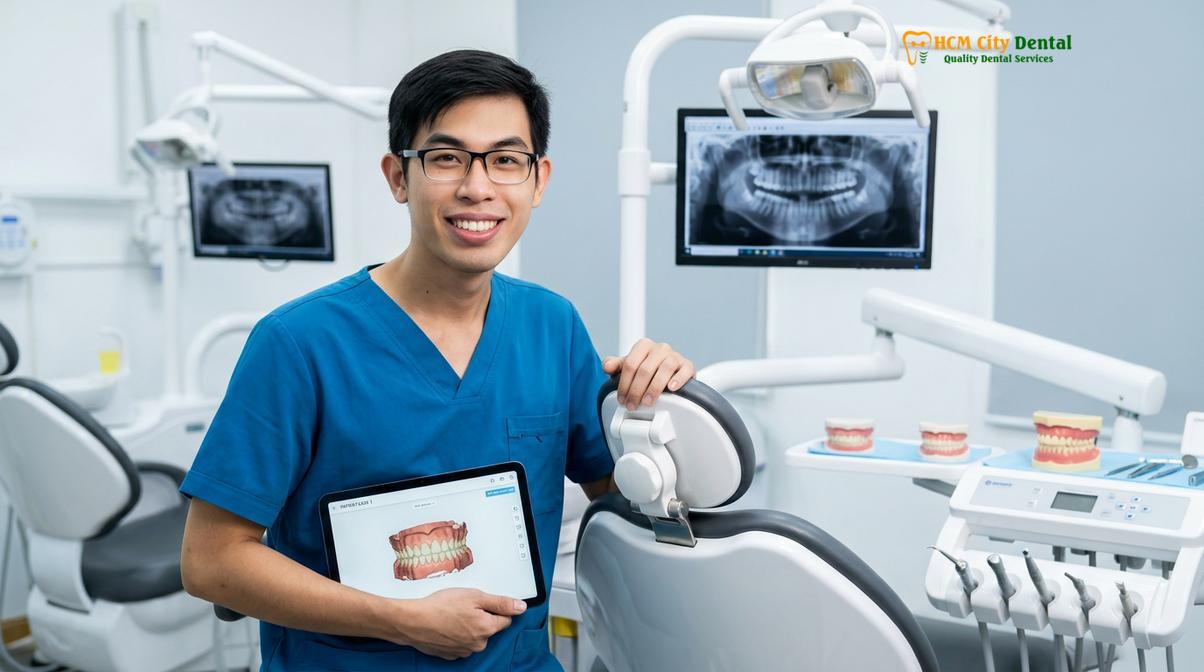
Clinical Case Example: A 22-year-old patient visited HCMC Dental Clinic in Ho Chi Minh City complaining of severe buccal ulceration caused by a protruding NiTi archwire. The patient had attempted to cut the wire at home with standard scissors, resulting in a jagged edge that worsened the laceration. Dr. Cuong utilized a high-speed handpiece with a fine diamond bur to smooth the jagged wire end, applied a soothing topical mucosal bandage, and reviewed proper wax application techniques. The ulcer resolved completely within 72 hours.
Beyond emergency adjustments, understanding the financial and warranty aspects of your orthodontic care is important. Currently, according to the latest clinic fee schedule, minor emergency wire clippings are often included at no extra charge for patients undergoing comprehensive orthodontic treatment at the clinic. For visiting patients or expats experiencing an emergency, standalone adjustment fees are highly competitive. When evaluating long-term orthodontic investments, patients often compare regional pricing, noting that orthodontic retention costs compared to Korea or retention appliances in Japan are significantly higher than the premium, yet accessible, care provided in Vietnam. Similarly, patients find that orthodontic maintenance costs in Canada far exceed the transparent pricing models available at HCMC Dental Clinic.
If you are struggling with a poking wire, do not endure the discomfort. Contact HCMC Dental Clinic today to schedule a prompt adjustment and keep your journey to a perfect smile on track, comfortably and safely.
Frequently Asked Questions
How do I stop my braces wire from scratching my cheek?
The fastest way to stop a braces wire from scratching your cheek is to apply a small, pea-sized ball of orthodontic wax directly over the sharp end. Ensure the wire is completely dry before application so the wax adheres properly. If wax is unavailable, a clean cotton swab or a piece of sugar-free gum can provide temporary relief until you can obtain proper dental wax or visit your orthodontist.
Can I cut a poking braces wire myself at home?
Cutting a braces wire at home should only be done as an absolute last resort if the pain is severe and you cannot reach a dentist. If you must proceed, use sterilized nail clippers or small wire cutters, and have another person assist you. Always place a tissue or cotton roll behind the wire to catch the clipped piece and prevent accidental swallowing or aspiration.
What if the wire has completely popped out of the last bracket?
If the flexible archwire has popped out of the terminal bracket, you can attempt to gently guide it back into the bracket slot using clean tweezers. If the wire is too stiff or you cannot maneuver it into place, cover the loose end with orthodontic wax and schedule an adjustment appointment. Do not apply excessive force, as this may dislodge additional brackets.
Is a poking braces wire considered a dental emergency?
A poking wire is generally classified as an urgent orthodontic issue rather than a true medical emergency, unless it causes severe bleeding, deep tissue laceration, or signs of infection. Most cases can be managed temporarily at home with wax or gentle repositioning. However, if the wire is embedded in your cheek or causing unbearable pain, immediate clinical intervention is required.
How long can I leave a poking wire untreated?
You should not leave a poking wire untreated for more than a few days, even if you are managing the discomfort with orthodontic wax. Prolonged friction against the oral mucosa can lead to deep traumatic ulcers, bacterial infection, and localized swelling. Contact your orthodontic clinic promptly to have the wire professionally trimmed or repositioned to ensure your treatment remains on track.
References
- American Journal of Orthodontics and Dentofacial Orthopedics. Management of orthodontic emergencies and soft tissue lesions. (2021).
- Journal of Clinical Orthodontics. Biomechanics of archwire displacement during the leveling and aligning phase. (2020).
- International Journal of Dentistry. Efficacy of orthodontic wax and topical barriers in preventing mucosal ulceration. (2019).
- British Dental Journal. Patient compliance and palliative care in fixed appliance therapy. (2022).
- Journal of Oral Pathology & Medicine. Healing dynamics of traumatic oral ulcers induced by orthodontic hardware. (2018).