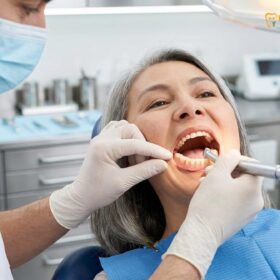
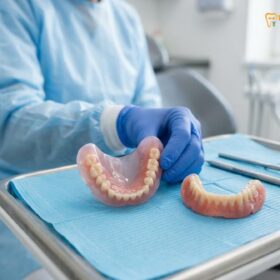
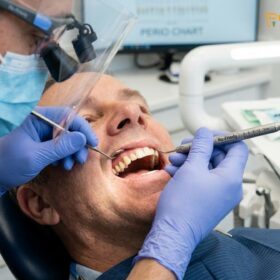
Speaking with new dentures requires a neuromuscular adjustment period as your tongue and facial muscles adapt to the acrylic base. Initially, you may experience a lisp or excess saliva, but with targeted phonetic exercises and proper prosthodontic fit, normal speech patterns typically return within a few weeks.
Clinical Summary:
Adapting to speaking with new dentures is a complex physiological process that involves retraining the oral musculature to accommodate artificial prosthodontic contours. When a patient receives a new removable prosthesis, the acrylic base alters the natural dimensions of the palate and alveolar ridges, temporarily disrupting the precise tongue-to-palate contacts required for clear articulation. The most common phonetic challenges involve sibilant sounds (like “S” and “Z”) and fricative sounds (like “F” and “V”). Overcoming these challenges requires a combination of targeted neuromuscular exercises, such as reading aloud and specific tongue placement adjustments, alongside clinical verification of the denture’s vertical dimension of occlusion. By understanding the biomechanics of speech and practicing consistently, patients can eliminate lisps, prevent clicking sounds, and fully restore their communicative confidence.
Key Takeaways:
- Speech alterations are a normal, temporary physiological response to the introduction of a prosthodontic appliance.
- Sibilant sounds (“S”, “Z”) are most affected due to the artificial thickness of the acrylic palatal base.
- Daily phonetic exercises, including reading aloud, rapidly accelerate the brain’s neuromuscular adaptation process.
- Audible clicking during speech often indicates an issue with the vertical dimension of occlusion, requiring clinical adjustment.
- Swallowing before speaking helps clear excess saliva and re-establishes the negative pressure seal of the denture base.
Why Gums Prosthesis Alters Your Phonetics (S and F Sounds)
A dental prosthesis introduces artificial bulk to the palate and alveolar ridges, temporarily disrupting the precise tongue-to-palate contacts required for articulating fricative and sibilant sounds like “S” and “F”.
The human speech mechanism is an incredibly precise and highly coordinated system. It relies on micro-millimeter interactions between the tongue, teeth, lips, and the hard palate. When you are fitted with a removable denture, you are introducing a foreign acrylic or metal structure into this finely tuned environment. The base of a maxillary (upper) denture covers the entire hard palate, while the mandibular (lower) denture rests on the alveolar ridge, occupying space previously utilized by the tongue and cheeks. This sudden alteration in oral volume and surface texture fundamentally changes the proprioceptive feedback your brain receives during speech articulation[1].
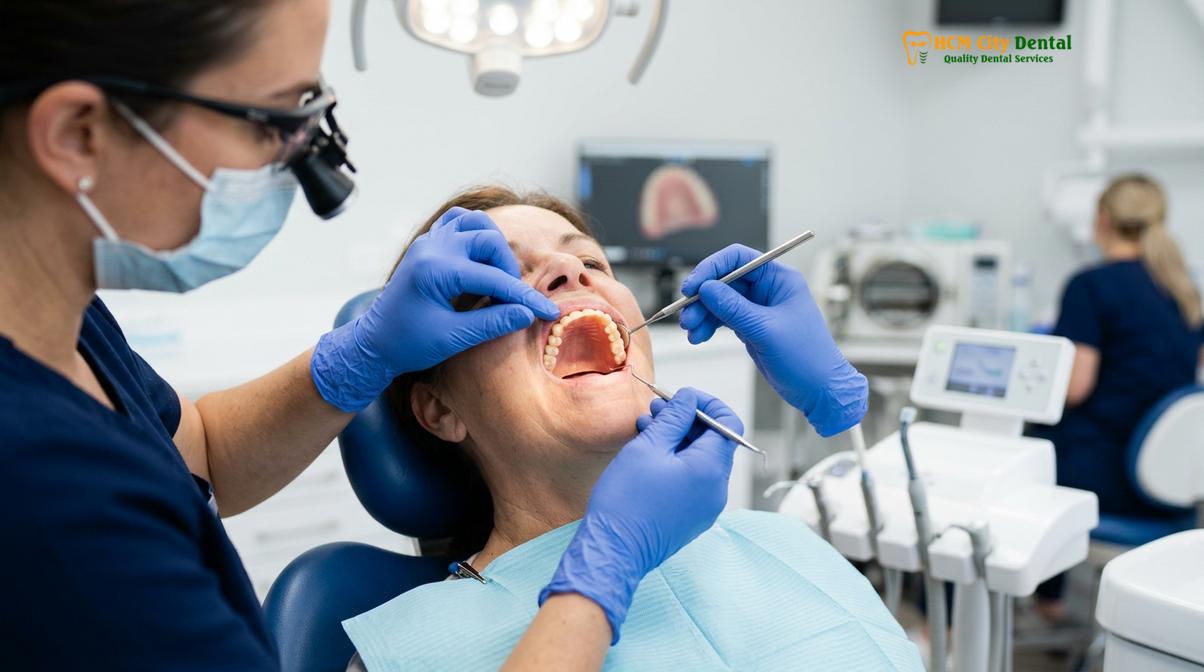
To understand why speaking with new dentures feels so foreign initially, we must examine the biomechanics of specific phonetic sounds. Fricative sounds, such as “F” and “V”, are produced when the lower lip lightly contacts the incisal edges of the upper anterior teeth. If the prosthodontist has positioned the artificial central incisors even a millimeter too far forward (labially) or too far backward (palatally), the lower lip will struggle to find the correct contact point, resulting in a muffled or indistinct sound. During the wax try-in phase of denture fabrication, dentists specifically ask patients to count from “fifty to fifty-nine” to evaluate this precise incisal edge position.
Sibilant sounds, such as “S”, “Z”, “Sh”, and “Ch”, present an even greater challenge for new denture wearers. To produce a clear “S” sound, the lateral borders of the tongue must seal against the posterior teeth and the lateral aspects of the palate, while the tip of the tongue forms a very narrow, precise channel just behind the upper front teeth (the rugae area). Air is forced through this narrow channel to create the characteristic hissing sound. Because a standard acrylic denture base is typically 1.5 to 2.0 millimeters thick, the space available for the tongue is reduced. The tongue, operating on muscle memory, presses against the palate expecting the natural tissue, but instead hits the acrylic base too early. This premature contact disrupts the airflow channel, leading to a noticeable lisp or a “whistling” sound[2].
Eliminating the Denture Lisp: Muscle Reprogramming Exercises
Correcting a denture lisp involves targeted neuromuscular exercises that retrain the tongue to find new contact points against the acrylic palate, restoring clear airflow for sibilant sounds.
The key to overcoming a lisp is not simply waiting for it to disappear, but actively engaging in denture lisp correction through deliberate muscle reprogramming. The tongue is a highly adaptable muscular hydrostat, capable of remarkable plasticity. By performing specific phonetic practice routines, you can accelerate the brain’s ability to map the new contours of your dental prosthesis.
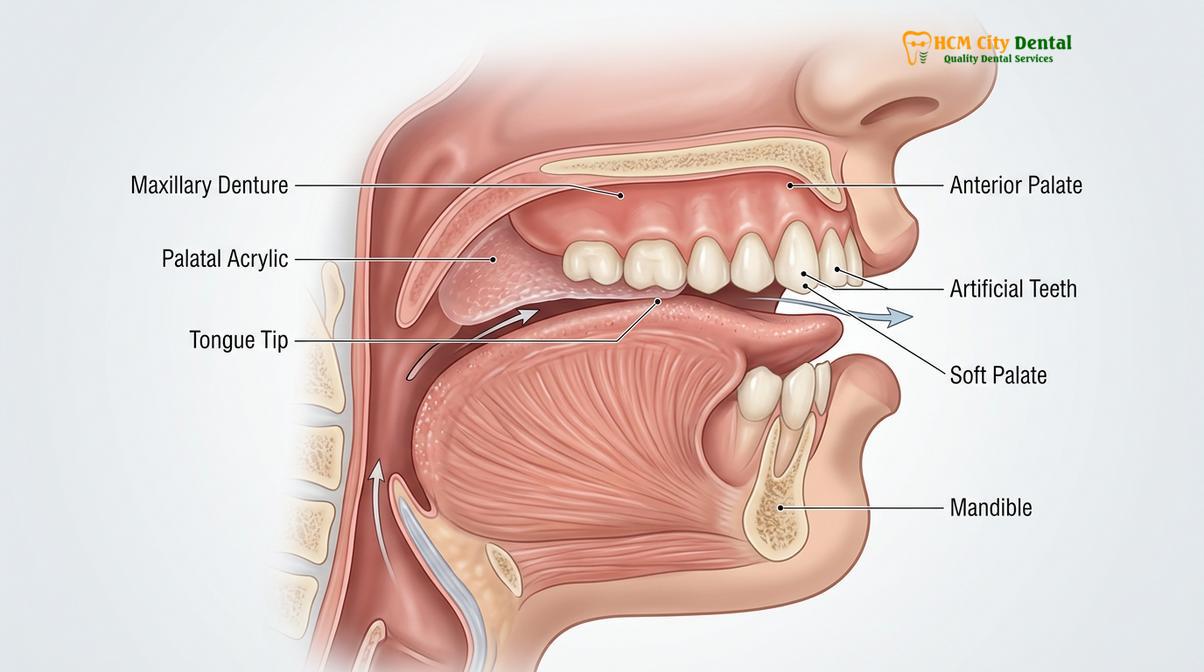
The first step in this reprogramming process involves conscious tongue placement adjustments. Because the acrylic palate is thicker than your natural tissue, you must train your tongue to drop slightly lower and pull slightly further back than it did with your natural teeth. This creates the necessary space for the narrow air channel required for “S” and “Z” sounds. To practice this, sit in a quiet room and slowly articulate the word “Mississippi.” Pay close attention to exactly where the tip of your tongue touches the roof of your mouth. If you hear a lisp, consciously pull the tongue tip back a fraction of a millimeter and try again. Repeat this micro-adjustment until the sound becomes sharp and clear.
To systematically address different phonetic challenges, prosthodontists recommend a structured approach to vocal exercises. The following table outlines specific problem sounds, the anatomical reason they are difficult with new dentures, and the targeted exercise to correct them:
| Phonetic Sound | Anatomical Challenge with Dentures | Targeted Reprogramming Exercise |
|---|---|---|
| “S” and “Z” (Sibilants) | Thickened palatal acrylic reduces the space for the tongue’s air channel, causing a lisp or whistle. | Count aloud from 60 to 70. Focus on dropping the tongue tip slightly lower and pulling it back from the front teeth. |
| “F” and “V” (Fricatives) | Altered position of the upper front teeth changes the contact point for the lower lip. | Count aloud from 50 to 59. Ensure the lower lip lightly brushes the very edge of the upper denture teeth, not the front surface. |
| “T” and “D” (Plosives) | The tongue strikes the anterior palatal acrylic too forcefully, causing a dull or heavy sound. | Repeat the words “Tango,” “Delta,” and “Today.” Practice using a lighter, quicker touch of the tongue against the palate. |
| “M”, “B”, and “P” | Altered vertical dimension may make it difficult to bring the lips together naturally. | Say the word “Emma” repeatedly. This helps establish the natural resting posture of the lips over the new prosthesis. |
Consistency is paramount when performing these exercises. The neuromuscular pathways in the brain require repetitive stimulation to form new, permanent motor patterns. Practicing these specific sounds for just five to ten minutes, three times a day, will yield significantly faster results than passive wear alone. It is also highly beneficial to practice in front of a mirror. Visual feedback allows you to observe your lip and jaw movements, ensuring that you are not overcompensating or developing unnatural facial expressions while trying to articulate difficult words[3].
How to Prevent Clicking and Clacking Sounds When Speaking
Clicking sounds occur when the vertical dimension of occlusion is slightly altered or when loose lower dentures lift during speech, causing the acrylic teeth to strike together prematurely.
One of the most distressing experiences for a new denture wearer is hearing an audible clicking or clacking sound while talking. This noise not only causes embarrassment but also indicates a biomechanical disruption in the oral cavity. To effectively eliminate click denture sounds, it is essential to understand the two primary clinical causes: a lack of retention (slippage) and an improper Vertical Dimension of Occlusion (VDO).
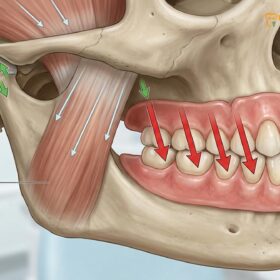
The Vertical Dimension of Occlusion refers to the spatial relationship between the upper and lower jaws when the teeth are fully intercuspated (biting together). However, during normal speech, the upper and lower teeth should never actually touch. There must be a small gap, known clinically as the “freeway space” or “Silverman’s closest speaking space,” which is typically 1 to 2 millimeters. When you pronounce sibilant sounds like “S” or “Ch,” the lower jaw moves upward and forward, bringing the teeth very close together to restrict airflow. If the prosthodontist has fabricated the dentures with a VDO that is too “open” (meaning the teeth are too tall), this freeway space is eliminated. Consequently, the lower acrylic teeth will crash into the upper acrylic teeth during speech, producing a sharp clicking sound[4].
“The establishment of an accurate closest speaking space is paramount in prosthodontic rehabilitation. Failure to provide adequate freeway space not only results in phonetic clicking but also leads to chronic masticatory muscle fatigue and accelerated ridge resorption.”
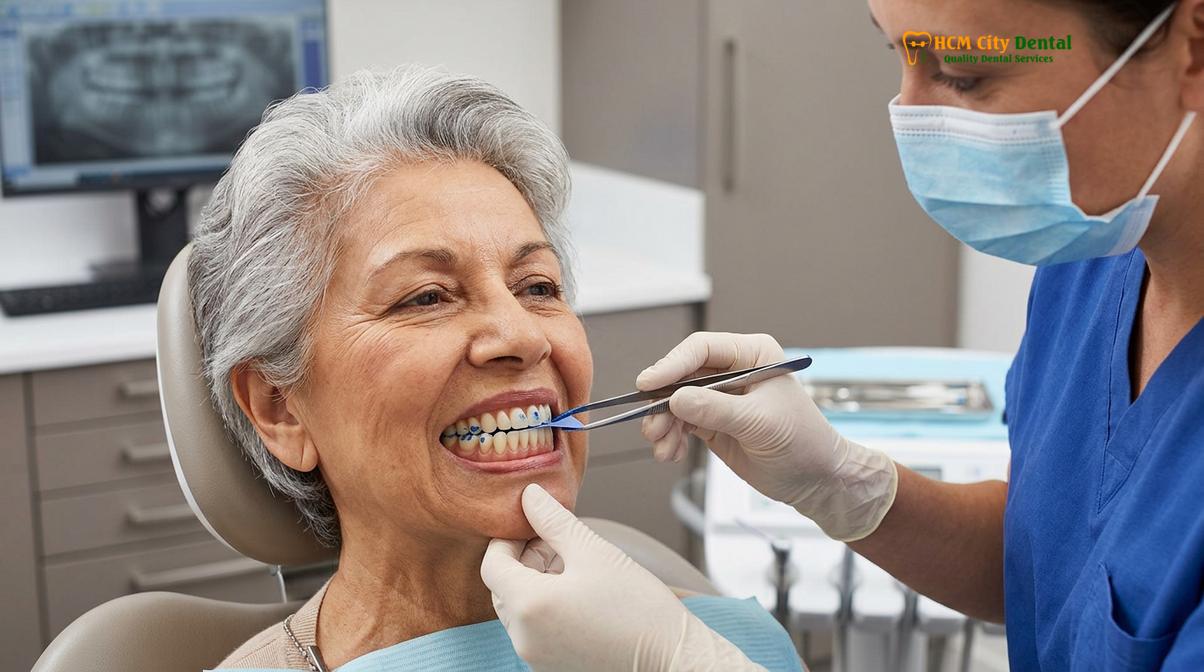
If the clicking is caused by an improper VDO, no amount of practice will resolve the issue; the prosthesis must be clinically adjusted. However, if the VDO is correct, clicking is usually the result of the lower denture lifting off the alveolar ridge during speech. The mandibular denture is inherently less stable than the maxillary denture because it lacks the broad surface area of the hard palate for suction, and it must constantly contend with the movement of the tongue and the floor of the mouth.
To prevent a loose lower denture from clicking, patients must learn to control the musculature of the cheeks and tongue to help stabilize the prosthesis. The lateral borders of the tongue should rest gently on the lingual flanges of the lower denture, effectively holding it down during articulation. Additionally, speaking more slowly and deliberately prevents the rapid, exaggerated jaw movements that tend to dislodge the appliance.
The Reading Aloud Strategy: Daily 15-Minute Vocals Training
Reading aloud daily forces your brain to rapidly process and execute complex phonetic sequences, accelerating the neuromuscular adaptation required for fluent speech with a new prosthesis.
While targeted exercises for specific sounds are crucial, they do not fully replicate the dynamic, continuous flow of natural conversation. To bridge the gap between isolated sound correction and fluent speech, prosthodontists highly recommend the reading aloud exercises strategy. This involves dedicating 15 minutes every day to reading a book, newspaper, or magazine out loud in a clear, projected voice.
Clinical Case Observation:
A 62-year-old patient presented to HCMC Dental Clinic in Ho Chi Minh City with severe speech anxiety following the placement of immediate complete dentures. Despite the prosthesis fitting perfectly, the patient exhibited a pronounced lisp and spoke in a hushed, hesitant tone. The clinical team prescribed a strict regimen of reading aloud for 15 minutes twice daily, focusing on exaggerated enunciation. Within 14 days, the patient’s neuromuscular control improved dramatically, the lisp was eliminated, and normal conversational volume and pacing were fully restored.
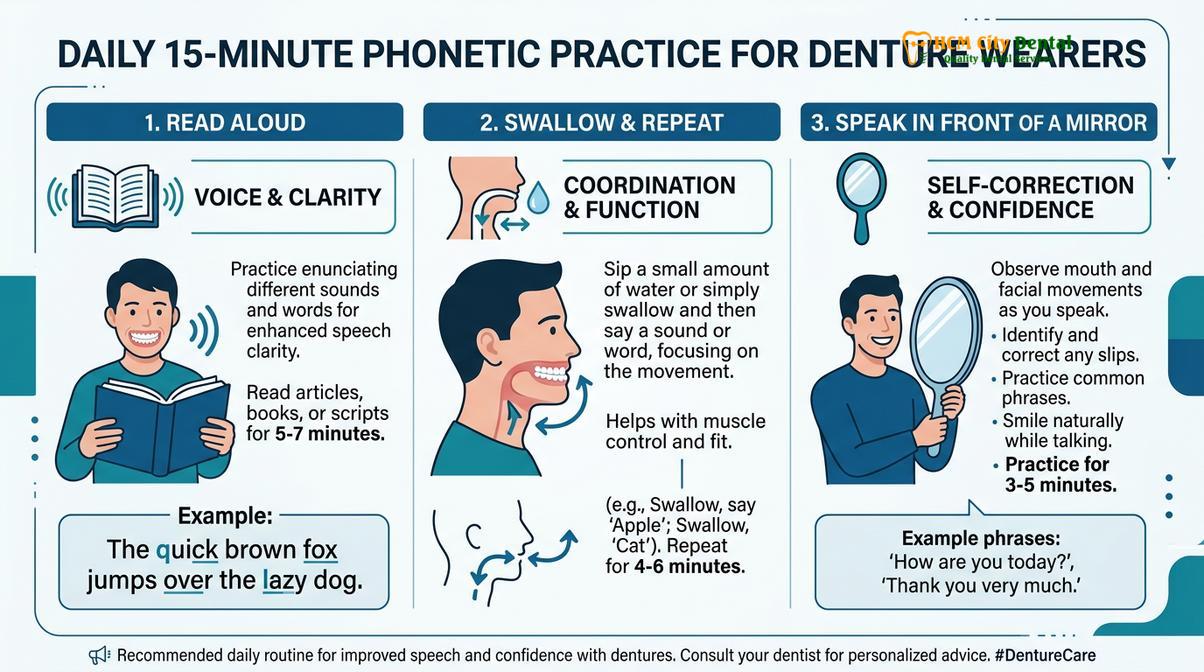
When beginning this vocal training, pacing is critical. Start by reading much slower than your normal speaking rate. Focus intensely on the enunciation of every single syllable, ensuring that your lips and tongue are making the correct contacts. If you stumble over a word or produce a muffled sound, stop, isolate the word, and repeat it three or four times until it is clear before moving on. As your muscle memory improves and the movements become more automatic, you can gradually increase your reading speed until you reach a natural conversational pace.
Volume control is another important aspect of this training. Because dentures alter the resonance chamber of the oral cavity and conduct sound differently through the skull bones, your own voice will sound unnaturally loud and distorted to you at first. This often causes patients to whisper or mumble. Reading aloud at a strong, confident volume helps your auditory system recalibrate to the new acoustic feedback of your voice, ensuring that you project clearly when speaking to others.
Managing Slippage: Swallowing to Reset Denture Suction
Swallowing before speaking clears excess saliva and creates a negative pressure vacuum that reseats the denture base against the gums, ensuring a stable foundation for articulation.
A stable foundation is an absolute prerequisite for clear speech. If a denture is shifting, sliding, or floating over the gums, the tongue cannot rely on fixed anatomical landmarks to articulate sounds accurately. One of the primary culprits of denture slippage during the initial adaptation phase is an overactive salivary response.
When a new prosthesis is placed in the mouth, the brain’s parasympathetic nervous system interprets the foreign object as food. In response, it signals the salivary glands to dramatically increase saliva production. This condition floods the oral cavity. While saliva is necessary to create the peripheral seal that holds a denture in place, an excessive volume of saliva acts as a lubricant, causing the acrylic base to hydroplane over the mucosal tissues. This breaks the suction, particularly the critical posterior palatal seal (post-dam) of the upper denture, leading to instability during speech[5].
To combat this, patients must master a simple but highly effective biomechanical technique: swallowing to reset the suction. Before initiating a sentence, especially if you feel the prosthesis beginning to loosen, take a moment to close your lips, bite down very gently to bring the upper and lower teeth into light contact, and swallow. The act of swallowing serves two vital functions. First, it clears the excess pooling saliva from the floor of the mouth and the palatal vault. Second, and more importantly, swallowing naturally forces the tongue upward against the palate, expelling trapped air from beneath the denture base and re-establishing the negative pressure vacuum required for retention. Over time, as the brain realizes the denture is not food, the salivary glands will downregulate their production, and this step will become less necessary.
Regaining Public Speaking Confidence: Social Interaction Tips
Transitioning from private practice to public speaking requires strategic pacing and psychological readiness to overcome the fear of phonetic slips in social settings.
The physical mechanics of speaking with new dentures represent only half of the adaptation journey; the psychological component is equally vital. Many patients experience heightened anxiety when speaking in public or engaging in social interactions, fearing that their prosthesis might slip or that a sudden lisp will cause embarrassment. This anxiety often leads to tense facial muscles, which ironically makes articulation more difficult and increases the likelihood of phonetic errors.
Dr. Nguyen Van Cuong, a leading prosthodontic specialist, emphasizes that psychological adaptation is just as critical as physical fit. Dr. Cuong advises patients to start with one-on-one conversations with close family members before addressing larger groups, allowing the neuromuscular system to build stamina without overwhelming anxiety. Gradually increasing the complexity of social interactions helps build confidence organically.
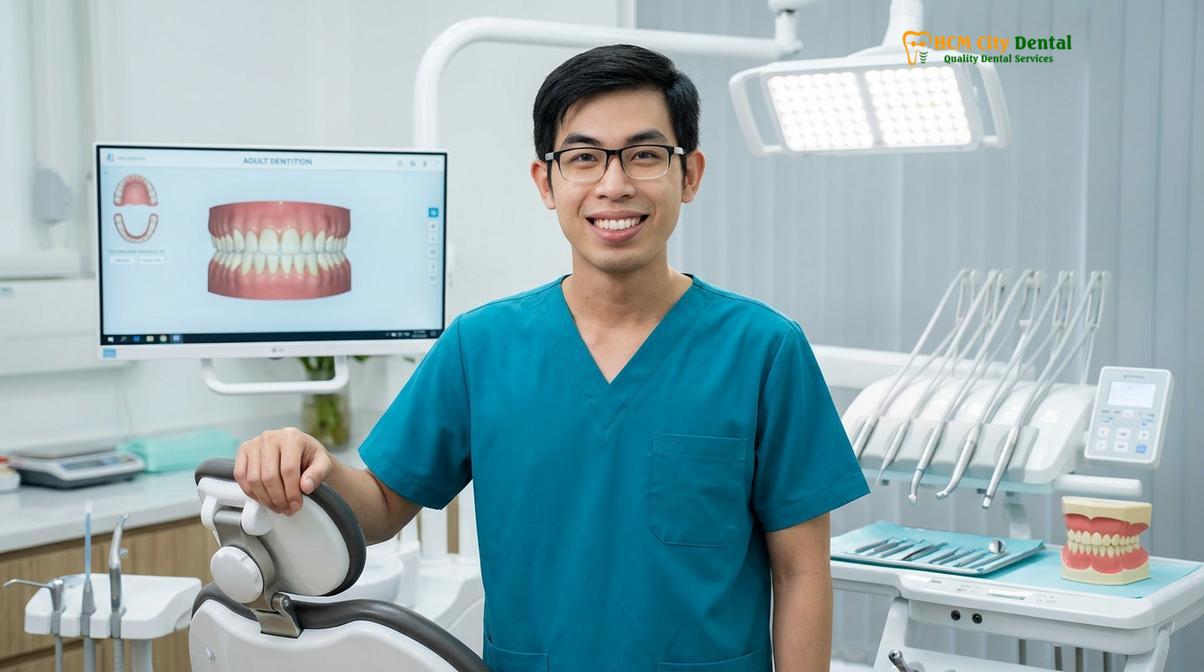
When engaging in public speaking or extended conversations, preparation is key. Always ensure your mouth is adequately hydrated, as a dry mouth can cause the acrylic base to lose its seal and create friction against the oral mucosa. Taking small sips of water frequently can help maintain optimal moisture levels. Additionally, consciously slowing down your speech rate gives your tongue the extra milliseconds it needs to navigate the acrylic contours accurately, significantly reducing the chance of stumbling over complex syllables.
When to Consult Your Prosthodontist (Important Clinical Signs)
While an initial adjustment period is expected, persistent speech impediments, chronic clicking, or oral discomfort require professional clinical evaluation to adjust the prosthesis.
It is crucial to differentiate between normal adaptation struggles and structural issues with the denture itself. According to guidelines established by the Vietnam Odonto-Stomatology Association (VOSA), patients should expect a gradual improvement in phonetics over the first two to four weeks. However, if a lisp remains severe after a month of dedicated daily practice, the palatal acrylic may be excessively thick and require professional thinning[6].
“Prolonged phonetic distortion that does not respond to neuromuscular retraining often indicates an error in the vertical dimension of occlusion or excessive palatal contouring, necessitating immediate clinical adjustment.”
Clinical Warning: If you experience severe pain, ulcerations, or if your speech does not improve after four weeks of consistent practice, do not attempt to adjust the acrylic base yourself. Seek professional evaluation immediately to prevent tissue damage and ensure proper prosthodontic function.
Similarly, if you experience chronic clicking sounds that do not resolve with slower speech and swallowing techniques, your dentist will need to evaluate the vertical dimension of occlusion. Adjusting the bite or relining the denture base can often resolve these mechanical interferences quickly, allowing you to speak clearly and comfortably.
References
- Journal of Prosthetic Dentistry. Neuromuscular adaptation and phonetic alterations in complete denture wearers. (2021).
- International Journal of Prosthodontics. Evaluation of Silverman’s closest speaking space in prosthodontic rehabilitation. (2020).
- British Dental Journal. The psychological impact of tooth loss and prosthodontic speech rehabilitation. (2019).
- Journal of Oral Rehabilitation. Salivary flow rates and retention of maxillary complete dentures during the initial adaptation phase. (2022).
- Clinical Oral Investigations. Thermoplastic flexible partial dentures: clinical suitability and phonetic outcomes. (2018).
- Vietnam Odonto-Stomatology Association (VOSA). National guidelines on prosthodontic rehabilitation and patient adaptation protocols. (2023).
If you are struggling with speech adaptation or require a comprehensive evaluation of your prosthesis, contact HCMC Dental Clinic in Ho Chi Minh City. Our team provides expert General Dentistry services to ensure your appliance fits perfectly and functions naturally, restoring both your smile and your communicative confidence.
For pricing, booking, and a free clinical assessment, visit our Dentures & Removable Prosthetics service page at HCMC Dental Clinic in Ho Chi Minh City.