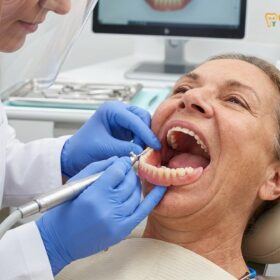
Proper denture cleaning guidelines require a daily combination of mechanical brushing with a non-abrasive cleanser and chemical soaking to eliminate biofilm. Because acrylic resin is porous and softer than natural enamel, avoiding abrasive toothpastes and hot water is critical to prevent microscopic scratches, warping, and fungal stomatitis.
Clinical Summary:
Maintaining removable dental prosthetics extends far beyond basic aesthetics; it is a fundamental requirement for preserving systemic health and oral mucosal integrity. Polymethyl methacrylate (PMMA), the primary material used in denture bases, possesses a microscopic porosity that easily harbors pathogenic biofilms, including Candida albicans and various anaerobic bacteria. Standard oral hygiene products, particularly conventional toothpastes, contain abrasive silicas that inflict micro-lacerations on the resin surface, exponentially increasing bacterial retention. A clinically sound maintenance protocol demands a synergistic approach: mechanical disruption using a specialized soft-bristled brush, chemical disinfection via effervescent soaking solutions, and adequate tissue rest. Furthermore, the avoidance of thermal shock (hot water) and harsh household chemicals (bleach) is imperative to prevent dimensional distortion and material degradation. Adhering to these evidence-based guidelines ensures the longevity of the prosthesis while safeguarding the patient against denture-induced stomatitis, halitosis, and accelerated alveolar bone resorption.
Key Takeaways:
- Conventional toothpastes are highly abrasive and will permanently scratch soft denture acrylic, creating breeding grounds for fungal infections.
- A daily regimen must include both mechanical brushing to remove loose debris and chemical soaking to neutralize microscopic pathogens.
- Hot or boiling water causes irreversible thermal warping of the prosthetic base, destroying its custom fit and requiring complete replacement.
- Overnight soaking is clinically recommended to give the oral mucosa a necessary resting period, preventing tissue inflammation and bone loss.
- Ultrasonic cleaning devices provide superior biofilm disruption through high-frequency cavitation, serving as an excellent adjunct to manual care.
Why Regular Toothpaste Scratches and Ruins Gums Resin
Regular toothpaste contains abrasive agents like silica that create microscopic scratches in soft denture acrylic. These abrasions harbor harmful bacteria and fungi, leading to severe oral infections and permanent resin discoloration.
To understand why conventional toothpaste is highly detrimental to removable prosthetics, one must examine the material science behind denture fabrication. The vast majority of modern complete and partial dentures are constructed from polymethyl methacrylate (PMMA), a type of acrylic resin chosen for its biocompatibility, moldability, and aesthetic resemblance to natural gingival tissue. However, PMMA is significantly softer than natural tooth enamel. On the Mohs scale of mineral hardness, natural enamel scores a robust 5, whereas denture acrylic barely registers a 2 or 3. This fundamental difference in material density means that products designed to clean natural teeth are inherently too aggressive for prosthetic surfaces [1].
Conventional toothpastes are formulated with abrasive compounds—such as hydrated silica, calcium carbonate, and aluminum oxide—designed to scrub away sticky dental plaque and surface stains from hard enamel. When these abrasives are applied to a denture, they act like microscopic sandpaper. With every brush stroke, the silica particles gouge microscopic trenches and scratches into the smooth, polished surface of the pink acrylic and the prosthetic teeth. Initially, this damage is invisible to the naked eye, but the cumulative effect over weeks and months is devastating to the integrity of the prosthesis.
These micro-scratches create a severe clinical problem: they become highly protected reservoirs for pathogenic microorganisms. The oral cavity is a complex microbiome, and when bacteria and fungi find their way into these microscopic crevices, they are shielded from the mechanical sweeping action of a toothbrush and the natural flushing action of saliva. Candida albicans, an opportunistic fungus naturally present in the mouth, thrives in these roughened environments. As the fungal colonies multiply within the scratched resin, they form a dense, impenetrable biofilm that directly contacts the palatal tissues, leading to a painful inflammatory condition known as denture stomatitis.

Furthermore, the roughened surface of a scratched denture acts as a magnet for chromogenic (stain-causing) molecules. Patients often notice that their dentures begin to look dull, yellowed, or heavily stained shortly after they start using regular toothpaste. Ironically, in an attempt to scrub the stains away, patients often brush harder with more toothpaste, exacerbating the scratches and accelerating the discoloration process. This vicious cycle ultimately ruins the aesthetic value of the prosthesis.
At HCMC Dental Clinic in Ho Chi Minh City, our prosthodontic team frequently encounters patients who have inadvertently destroyed their premium prosthetics through improper cleaning methods. Dr. Nguyen Van Cuong emphasizes that patient education regarding material vulnerability is just as important as the clinical fabrication of the denture itself. To preserve the high-gloss finish and hygienic integrity of the acrylic, patients must exclusively use a non-abrasive denture cleanser. These specialized cleansers, which come in the form of mild gels, pastes, or even simple liquid dish soap, rely on chemical surfactants rather than physical abrasives to lift debris, ensuring the resin remains smooth, hygienic, and visually pristine.
The Daily Cleansing Protocol: Rinsing, Brushing, and Soaking
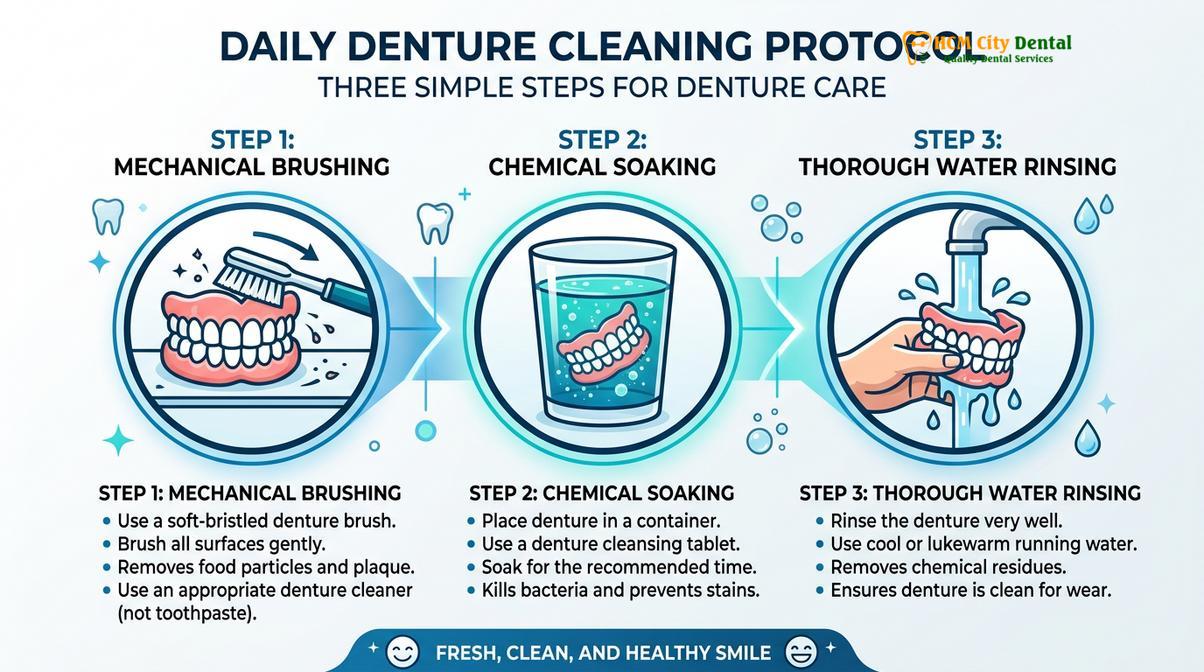
A clinically approved daily protocol involves rinsing away loose debris, gently brushing all surfaces with a specialized brush, and soaking the prosthesis overnight in a chemical solution to disinfect porous materials.
The foundation of prosthetic longevity and oral mucosal health lies in a rigorous, multi-step daily cleansing protocol. Unlike natural teeth, which benefit from the continuous immune defense and remineralization properties of saliva, a denture is an inert object that relies entirely on external intervention to remain hygienic. The clinical standard of care dictates a three-pronged approach: mechanical rinsing, targeted brushing, and chemical soaking. Skipping any of these steps allows biofilm to mature, calcify, and trigger localized tissue inflammation [2].
The first step in the protocol is immediate rinsing after every meal. Whenever the prosthesis is removed from the mouth, it should be thoroughly rinsed under a stream of lukewarm water. This simple mechanical action dislodges loose food particles, unattached plaque, and residual denture adhesives before they have an opportunity to dry and adhere firmly to the acrylic base. It is absolutely critical that the water temperature remains lukewarm or cool. Exposing PMMA acrylic to hot or boiling water induces thermal expansion, which warps the precise borders of the denture, destroying the suction seal and rendering the prosthesis unwearable.
The second step is meticulous mechanical brushing, which should be performed at least once a day, preferably in the evening. This requires the use of a soft-bristled denture brush. These specialized brushes are designed with two distinct heads: a wider, flat bristle array for cleaning the broad, smooth surfaces of the prosthetic teeth and the outer flanges, and a smaller, tapered tuft designed to reach into the complex, concave intaglio surface (the side that rests against the gums). When brushing, patients must apply gentle, even pressure. Aggressive scrubbing is unnecessary and counterproductive. To prevent catastrophic fractures in the event the slippery denture is dropped, brushing should always be performed over a sink filled with a few inches of water or a folded towel.
“The synergistic application of mechanical brushing to disrupt the extracellular polymeric substance of the biofilm, followed by chemical soaking to lyse the exposed microorganisms, remains the gold standard for preventing prosthetic-induced oral candidiasis.” – Journal of the American Dental Association
The final, and arguably most crucial, step is the overnight chemical disinfection using a dedicated denture soaking solution. While brushing removes the macroscopic debris and the outer layers of plaque, it cannot penetrate the microscopic pores inherent in the acrylic resin. Effervescent soaking tablets are formulated with a combination of oxidizing agents (such as sodium perborate or sodium persulfate), detergents, and enzymes. When dropped into water, these tablets create a dynamic chemical reaction. The effervescence provides a micro-mechanical lifting action, while the released nascent oxygen penetrates deep into the resin pores, destroying the cell walls of anaerobic bacteria and fungi.

Soaking the dentures overnight serves a dual medical purpose. Not only does it ensure complete chemical disinfection of the prosthesis, but it also provides the oral mucosa with a mandatory resting period. The tissues of the palate and the alveolar ridges are not biologically designed to bear continuous mechanical pressure. Removing the dentures for six to eight hours allows the mucosal tissues to oxygenate, recover from compressive forces, and maintain normal blood circulation, thereby drastically reducing the risk of bone resorption and chronic inflammation.
Removing Stubborn Stains: Coffee, Tea, and Tobacco Strategies
Eliminating deep-set chromogenic stains requires targeted oxygenating cleansers rather than harsh scrubbing. Chemical oxidation safely breaks down tannin and nicotine molecules without degrading the underlying acrylic matrix.
Despite rigorous daily cleaning, dentures are highly susceptible to discoloration over time, particularly for patients who frequently consume chromogenic beverages or use tobacco products. The microscopic porosity of the PMMA resin acts like a sponge, absorbing pigmented molecules from the oral environment. Understanding the chemical nature of these stains is essential for removing them safely without compromising the structural integrity of the prosthesis.
Coffee, tea, and red wine are notorious for causing deep, brown or grayish stains on both the prosthetic teeth and the pink acrylic base. These beverages contain high concentrations of tannins—complex polyphenolic compounds that bind aggressively to proteins and the pellicle layer that forms on the denture surface. Similarly, tobacco smoke contains tar and nicotine. While nicotine is colorless, it oxidizes into a stubborn, yellowish-brown residue when exposed to oxygen, deeply penetrating the resin matrix. Furthermore, certain prescription mouthwashes containing chlorhexidine gluconate can cause severe brown staining on prosthetics due to a chemical reaction with dietary chromogens.
When faced with stubborn stains, the instinct of many patients is to resort to aggressive measures, such as scrubbing with hard-bristled brushes, using highly abrasive baking soda pastes, or even soaking the denture in household bleach (sodium hypochlorite). These methods are clinically contraindicated. Bleach, in particular, is highly destructive. While it may temporarily whiten the stains, it also leaches the pink pigment out of the acrylic, leaving the denture base looking unnatural and blanched. More importantly, strong bleach degrades the polymer chains of the resin, making the denture brittle and highly susceptible to fracture [3].
The safe and effective strategy for stain removal relies on controlled chemical oxidation. High-quality commercial effervescent tablets contain sodium perborate, which releases hydrogen peroxide when dissolved in water. This gentle oxidizing agent breaks the double bonds of the chromogenic molecules, rendering them colorless, without attacking the acrylic polymer. For heavy, entrenched stains, patients should utilize a specialized overnight soaking regimen using a high-strength, non-abrasive denture cleanser formulated specifically for smokers or heavy tea drinkers.
| Stain Source | Chemical Composition | Safe Removal Strategy | Contraindicated Methods |
|---|---|---|---|
| Coffee / Black Tea | Tannins (Polyphenols) | Daily oxygenating effervescent soak | Abrasive whitening toothpastes |
| Tobacco (Smoking/Chewing) | Oxidized Nicotine & Tar | Extended overnight enzymatic soaking | Household bleach (Sodium Hypochlorite) |
| Chlorhexidine Mouthwash | Cationic bisbiguanide precipitation | Professional ultrasonic scaling at clinic | Aggressive scraping with metal tools |
| Iron Supplements | Ferrous oxidation | Mild acidic commercial cleansers | Baking soda (Sodium Bicarbonate) scrubbing |
If chemical soaking fails to remove the discoloration, the stains have likely penetrated too deeply into the resin or have become incorporated into hardened calculus deposits. In these instances, patients must bring the prosthesis to a dental professional. At the clinic, the denture can be safely treated in a professional-grade ultrasonic bath with specialized clinical solvents, followed by a mechanical repolishing of the acrylic surface using fine pumice and a dental lathe, restoring the prosthesis to its original luster without causing microscopic damage.
Dissolving Plaque and Tartar: Safe Soaking Formulations
Hardened calculus on dentures must be dissolved using specific acidic or enzymatic soaking formulations, as aggressive scraping will permanently damage the prosthetic base and alter its fit.
While soft bacterial plaque can be effectively managed through daily brushing and standard effervescent soaking, the oral environment presents a more formidable challenge: the formation of calculus, commonly known as tartar. Calculus is essentially dental plaque that has undergone mineralization. Saliva is supersaturated with calcium and phosphate ions, which are essential for remineralizing natural tooth enamel. However, when these minerals precipitate into the soft biofilm adhering to a denture, they crystallize, transforming the plaque into a rock-hard, porous deposit firmly bonded to the acrylic surface.
Calculus accumulation is particularly prevalent on the lingual (tongue-facing) surfaces of lower complete dentures and around the metal clasps of partial dentures, as these areas are in close proximity to the submandibular and sublingual salivary gland ducts. Once calculus has formed, it cannot be removed by standard mechanical brushing. The rough, porous surface of the tartar acts as a highly retentive scaffold for further bacterial colonization, accelerating the accumulation of more plaque and significantly increasing the risk of mucosal irritation and fungal infections.

Attempting to remove hardened tartar at home using sharp implements, such as knives, scissors, or metal dental picks purchased online, is highly dangerous. Scraping the acrylic base will inevitably result in deep gouges that destroy the smooth intaglio surface, compromising the suction seal and creating permanent bacterial traps. Furthermore, applying excessive localized pressure with a metal tool can easily snap a lower denture in half or permanently bend the precision-cast metal clasps of a partial denture, rendering it useless.
Safe calcium deposits removal requires chemical dissolution rather than mechanical force. Specialized tartar-removing denture soaking solutions utilize mild, controlled acids—such as citric acid or highly diluted acetic acid—combined with enzymatic agents to slowly break down the mineralized matrix of the calculus. These formulations are specifically balanced to dissolve the calcium phosphate crystals without degrading the PMMA resin or corroding the metal components.
Clinical Warning Regarding Persulfate Allergies: Many commercial effervescent denture cleansers contain persulfates, which act as powerful oxidizing and cleaning agents. While safe for the vast majority of the population, a small percentage of patients may develop a severe allergic reaction to persulfate residues left on the denture. Symptoms can include tissue irritation, gum tenderness, rash, and in rare cases, respiratory distress. It is imperative to rinse the denture copiously under running water for at least one full minute after soaking to remove all chemical traces before reinserting the prosthesis into the mouth.
For patients with heavy, intractable calculus buildup, home remedies are often insufficient. In such cases, a professional dental cleaning of the prosthesis is required. During a clinical visit, the dentist utilizes industrial-strength ultrasonic scalers and specialized tartar-dissolving solutions that are too potent for home use. Regular professional maintenance ensures that the denture remains free of mineralized deposits, preserving its precise fit and optimal hygienic state.
Preventing Bad Breath (Halitosis) Caused by Porous Acrylic
Halitosis in denture wearers stems from volatile sulfur compounds produced by anaerobic bacteria trapped within the microscopic pores of the acrylic resin. Consistent chemical disinfection is mandatory to neutralize these odors.
One of the most distressing complications reported by denture wearers is chronic halitosis, or bad breath. Unlike halitosis originating from natural dentition—which is often linked to periodontal disease or deep carious lesions—denture-induced malodor is a direct consequence of the material properties of the prosthesis and the specific microbial flora it harbors. The polymethyl methacrylate (PMMA) used in denture bases is not a perfectly solid material; at a microscopic level, it features a complex network of pores, micro-fissures, and polymerization shrinkage gaps [4].
These microscopic voids provide an ideal, oxygen-deprived environment for anaerobic bacteria, such as Fusobacterium nucleatum and Porphyromonas gingivalis. As these bacteria metabolize proteins from trapped food debris and exfoliated mucosal cells, they excrete Volatile Sulfur Compounds (VSCs), primarily hydrogen sulfide and methyl mercaptan. These gases are highly pungent and are the primary chemical culprits behind severe oral malodor. Because the bacteria are entrenched deep within the acrylic pores, superficial brushing with a soft-bristled denture brush is entirely ineffective at neutralizing the odor; the mechanical bristles simply cannot reach into the microscopic voids.
Effective bad breath prevention requires a chemical intervention capable of penetrating the resin matrix. This is why the daily use of an effervescent soaking solution is non-negotiable. The oxidizing agents in these cleansers release microscopic oxygen bubbles that permeate the porous acrylic. Because the odor-causing bacteria are strictly anaerobic (meaning they cannot survive in the presence of oxygen), this influx of oxygen rapidly lyses their cell walls and halts the production of VSCs. Furthermore, the chemical action neutralizes the existing sulfur compounds, effectively deodorizing the prosthesis.
“The management of prosthetic halitosis relies entirely on the daily disruption of the anaerobic biofilm. Mechanical cleaning removes the superficial nutrient source, while chemical oxidation penetrates the PMMA matrix to eradicate the volatile sulfur-producing colonies.” – Clinical Oral Investigations
Dr. Nguyen Van Cuong frequently advises patients at HCMC Dental Clinic that persistent bad breath, despite rigorous cleaning, is a major clinical red flag. It often indicates that the acrylic resin has degraded, become excessively scratched, or that a severe fungal infection (denture stomatitis) has taken hold on the palatal tissues. In such cases, masking the odor with mouthwashes is futile and potentially harmful, as alcohol-based rinses can further dry out the oral mucosa. A comprehensive clinical evaluation is required to determine if the prosthesis needs to be professionally repolished, relined, or entirely replaced to restore a hygienic oral environment.
Ultrasonic Cleaning Devices: Are They Worth the Investment?
Ultrasonic cleaners use high-frequency sound waves to create microscopic cavitation bubbles that safely dislodge biofilm and debris from microscopic crevices, offering a superior supplement to manual brushing.
As dental technology advances, many patients are exploring automated solutions to enhance their daily hygiene routines. The ultrasonic denture cleaner has emerged as a highly effective adjunct to traditional manual care. These compact, countertop devices operate on the principles of acoustic physics and fluid dynamics, offering a level of microscopic cleaning that cannot be achieved through manual brushing alone.
An ultrasonic cleaner contains a piezoelectric transducer that generates high-frequency sound waves, typically in the range of 35,000 to 45,000 Hertz (Hz). When these sound waves pass through the liquid cleaning solution in the device’s tank, they create alternating cycles of high and low pressure. During the low-pressure phase, millions of microscopic vacuum bubbles form in the liquid. During the high-pressure phase, these bubbles violently collapse or implode—a phenomenon known as cavitation. The implosion of these cavitation bubbles generates intense, localized shockwaves that act like microscopic scrubbing brushes, tearing biofilm, food debris, and early calculus formations away from the surface of the denture [5].
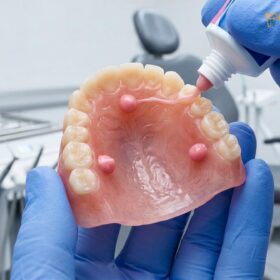
The primary advantage of ultrasonic cavitation is its ability to clean complex geometries and microscopic crevices. For patients with implant-supported overdentures, the nylon locator attachments and metal housings embedded in the acrylic base are notoriously difficult to clean with a standard brush. The cavitation bubbles effortlessly penetrate these intricate mechanisms, ensuring that the retentive components remain free of debris and function optimally. Furthermore, because the cleaning action is entirely fluid-based, there is zero risk of inflicting mechanical scratches on the soft PMMA resin, making it an exceptionally safe method for daily use.
Clinical Case Observation: A 68-year-old patient presented to HCMC Dental Clinic in Ho Chi Minh City with recurrent candidiasis and rapid degradation of the nylon retentive inserts in her lower implant overdenture. Clinical evaluation revealed heavy plaque accumulation within the attachment housings due to inadequate manual dexterity. Following the integration of a daily calcium deposits removal soaking solution combined with a home-use ultrasonic cleaner, the patient’s mucosal inflammation resolved entirely within three weeks, and the lifespan of her prosthetic attachments increased significantly.
While an ultrasonic device is a powerful tool, it is important to note that it does not replace the need for chemical disinfection. For optimal results, the ultrasonic bath should be filled with a properly diluted commercial denture cleanser rather than plain water. The combination of chemical oxidation and ultrasonic cavitation provides the highest standard of prosthetic hygiene available outside of a professional dental laboratory.
Important Clinical Considerations: When to See a Doctor
Even with impeccable daily hygiene, the oral cavity is a dynamic environment that undergoes continuous physiological changes. The alveolar bone that supports the denture naturally resorbs (shrinks) over time following tooth extraction. As the bone topography changes, a once perfectly fitting denture will gradually become loose and unstable. This instability causes the hard acrylic base to shift and rub against the delicate mucosal tissues during mastication and speech.
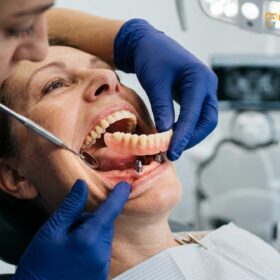
Patients must seek immediate clinical evaluation if they experience chronic sore spots, ulcerations, or localized inflammation beneath the denture base. Ignoring these symptoms can lead to the development of epulis fissuratum—a condition where hyperplastic, fibrous tissue grows around the borders of an ill-fitting denture, often requiring surgical excision. Additionally, the presence of persistent white plaques on the palate or painful, cracking fissures at the corners of the mouth (angular cheilitis) are strong indicators of a severe fungal infection that requires prescription antifungal therapy.

A loose denture cannot be fixed by applying excessive amounts of over-the-counter denture adhesive. Adhesives are designed to provide minor stabilization, not to compensate for significant anatomical discrepancies. If a patient finds themselves relying on adhesive to keep the prosthesis in place, it is a definitive sign that the denture requires a professional reline—a procedure where a new layer of acrylic is added to the intaglio surface to adapt to the current shape of the gums—or a complete replacement. Regular annual check-ups are vital to assess the fit, function, and hygienic state of the prosthesis, ensuring long-term comfort and oral health.
Frequently Asked Questions
Can I use vinegar or baking soda to clean my dentures?
While highly diluted white vinegar can occasionally help soften mild calculus, it is generally not recommended for daily use, especially on partial dentures, as its acidity can corrode metal clasps. Baking soda is too abrasive and can scratch the delicate acrylic resin over time. Always prioritize commercially formulated, non-abrasive denture cleansers designed specifically for prosthetic materials.
What happens if I soak my dentures in hot boiling water?
Soaking dentures in hot or boiling water will cause the polymethyl methacrylate (PMMA) acrylic resin to warp and permanently lose its shape. This thermal distortion alters the precise fit of the prosthesis, leading to severe gum irritation, ulcerations, and the need for a complete replacement. Always use lukewarm or room-temperature water for soaking and rinsing.
How often should I use effervescent denture cleaning tablets?
Clinical guidelines recommend using effervescent denture cleaning tablets once daily, typically during your overnight soaking routine. Daily chemical disinfection is essential to neutralize volatile sulfur compounds, lyse bacterial cell walls, and prevent the colonization of Candida albicans within the microscopic pores of the acrylic base.
Is it safe to sleep with my dentures in my mouth?
No, sleeping with dentures in your mouth is strongly discouraged by prosthodontists. The oral mucosa requires a resting period of at least six to eight hours daily to recover from the mechanical pressure of the prosthesis. Continuous wear significantly increases the risk of developing denture stomatitis, fungal infections, and accelerated alveolar bone resorption.
How do I clean the metal clasps on my partial denture without causing rust?
To clean metal clasps safely, use a soft-bristled brush and a mild, non-abrasive soap or a specialized partial denture cleanser. Avoid using bleach, harsh household acids, or prolonged soaking in strong vinegar, as these chemicals can oxidize and corrode the cobalt-chromium or stainless steel alloys, compromising the structural integrity and fit of the clasps.
References
- Journal of Prosthodontic Research. The effect of mechanical and chemical cleansing on the surface roughness of denture base acrylic resins. (2021).
- International Journal of Dentistry. Microbial colonization on polymethyl methacrylate (PMMA) and the efficacy of effervescent cleansers. (2020).
- Journal of the American Dental Association (JADA). Clinical guidelines for the care and maintenance of complete dentures. (2019).
- Clinical Oral Investigations. Halitosis in edentulous patients: the role of porous acrylic resins and volatile sulfur compounds. (2022).
- Journal of Oral Rehabilitation. Efficacy of ultrasonic cleaning devices in reducing biofilm on implant-supported overdentures. (2018).