A Waterpik, or oral irrigator, is a highly effective adjunctive tool for managing gum disease by utilizing pulsating water streams to disrupt subgingival biofilm, flush out periodontal pockets, and reduce gingival inflammation when combined with professional periodontal therapy and daily brushing.
Clinical Summary:
From a clinical perspective, the integration of a water flosser into a daily oral hygiene routine represents a significant advancement in the home-care management of periodontitis. Dr. Nguyen Van Cuong emphasizes that while oral irrigation does not replace the mechanical debridement achieved through professional scaling and root planing, its hydrokinetic action is unparalleled for flushing out unattached plaque, food debris, and inflammatory cytokines from deep periodontal pockets. By utilizing specialized subgingival tips and appropriate pressure settings, patients can safely deliver therapeutic rinses deep into the sulcus, altering the subgingival microflora and significantly reducing bleeding on probing. Consistent use is a cornerstone of long-term periodontal maintenance.
Key Takeaways:
- Oral irrigators use hydrokinetic energy to disrupt plaque biofilm and flush out pathogenic bacteria from areas toothbrushes cannot reach.
- Specialized subgingival tips can safely deliver water or antimicrobial rinses up to 90% of the depth of a 6mm periodontal pocket.
- Clinical evidence shows water flossing is highly effective at reducing gingival bleeding and inflammation compared to string floss alone.
- Water flossers are exceptionally beneficial for patients with complex dental work, including dental implants, crowns, and orthodontic braces.
- Patients with active gum disease must use low-pressure settings to avoid traumatizing inflamed, friable gingival tissues.
What is a Water Flosser (Oral Irrigator)?
A water flosser is a motorized dental device that emits a targeted, pulsating stream of water to remove plaque, food debris, and pathogenic bacteria from interdental spaces and the gingival sulcus.
A water flosser, widely recognized by the brand name Waterpik, is an advanced home-care dental device designed to enhance oral hygiene through the science of hydrokinetics. Unlike traditional brushing, which relies on the physical friction of bristles against the tooth surface, an oral irrigator utilizes a motorized pump to generate a pressurized, pulsating stream of water. This targeted fluid dynamic is specifically engineered to clean the interproximal spaces (the tight areas between teeth) and the gingival sulcus (the shallow crevice where the gum tissue meets the tooth)[1].
The core mechanism of a water flosser relies on two critical components: pulsation and pressure. The motor typically generates between 1,000 to 1,200 water pulses per minute. This rapid pulsation creates a compression and decompression phase within the fluid stream. The compression phase forcefully pushes water into the microscopic crevices of the teeth and gums, while the decompression phase creates a vacuum effect that pulls dislodged debris and bacteria out of those spaces. This dual action is what makes the device so effective at disrupting the structural matrix of dental plaque biofilm.
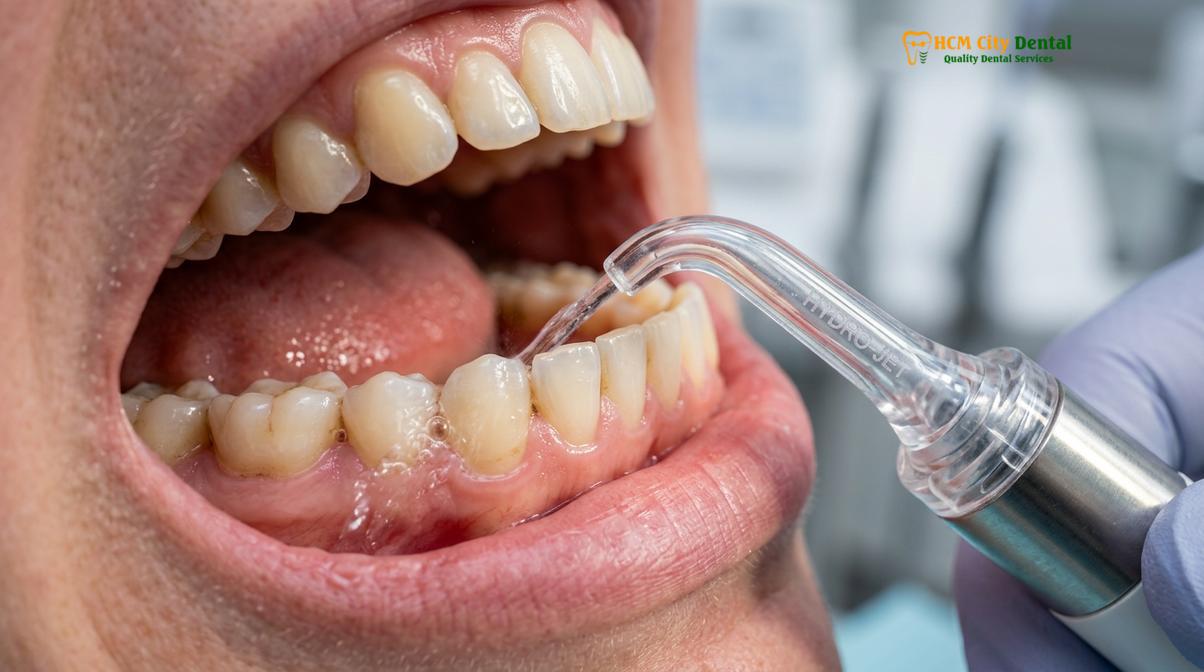
When evaluating the debate of water flosser vs string floss gums, it is essential to understand that these tools operate via different physical principles. String floss relies on mechanical scraping to shear adherent plaque off the smooth surfaces of the enamel and root cementum. In contrast, a water flosser relies on fluid shear stress. The high-velocity water stream physically tears apart the sticky extracellular matrix that holds bacterial colonies together, rendering them harmless and easily flushed away.
Modern oral irrigators come equipped with various specialized tips to address specific clinical needs. The standard jet tip is designed for general cleaning, while the orthodontic tip features a small brush to help clear debris from brackets and wires. For patients managing periodontal disease, the subgingival tip (often referred to as a Pik Pocket tip) is the most critical attachment. This tip is designed with a soft rubber end that allows for the gentle, low-pressure delivery of fluids directly into deep periodontal pockets, making it an indispensable tool for comprehensive gum treatment protocols.
How Water Flossing Cleans Below the Gumline
By generating a compression and decompression phase, water flossing creates shear forces that tear apart the structural matrix of subgingival plaque biofilm deep within periodontal pockets.
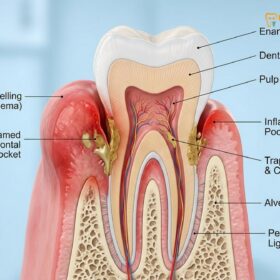
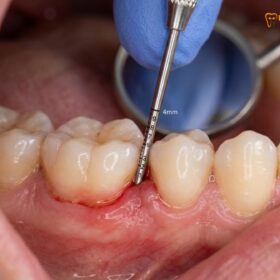
To understand the profound clinical benefits of oral irrigation, one must first understand the anatomy of periodontal disease. In a healthy mouth, the gingival sulcus—the natural space between the tooth and the gum tissue—is typically 1 to 3 millimeters deep. However, when pathogenic bacteria accumulate along the gumline, they trigger an inflammatory immune response. This inflammation causes the gum tissue to detach from the tooth root, deepening the sulcus and creating what is known as a periodontal pocket.
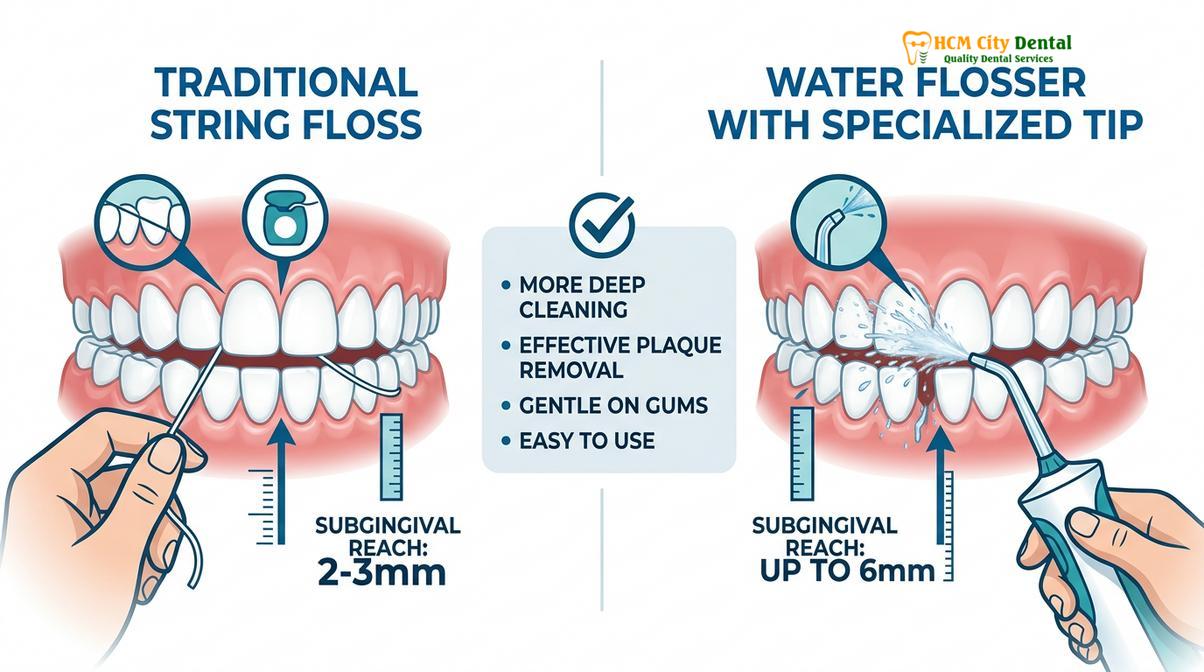
As these pockets deepen to 4, 5, or even 6 millimeters and beyond, they create an oxygen-deprived (anaerobic) environment. This is the ideal breeding ground for highly destructive, gram-negative anaerobic bacteria. These bacteria produce endotoxins and enzymes that break down the periodontal ligament and the surrounding alveolar bone. Traditional at-home cleaning methods are severely limited in their ability to reach these depths. A toothbrush can only penetrate about 1 to 2 millimeters below the gumline, and traditional string floss generally reaches only 2 to 3 millimeters into the sulcus before the tissue resistance prevents further access[2].
“The hydrokinetic activity generated by a motorized oral irrigator creates a fluid shear stress that is capable of penetrating deep into the periodontal pocket, effectively altering the subgingival microflora and flushing out the toxic byproducts of anaerobic bacteria.”
This is where the true clinical value of a water flosser becomes apparent. When patients ask how to use waterpik periodontal pocket attachments, the answer lies in the physics of fluid dynamics. A water flosser equipped with a specialized subgingival tip can safely deliver a therapeutic stream of water or antimicrobial rinse up to 90% of the depth of a 6-millimeter pocket. The pulsating action not only flushes out unattached, free-floating bacteria (planktonic bacteria) but also introduces oxygen into the deep pocket environment. Because the most destructive periodontal pathogens are strictly anaerobic, introducing oxygenated water is highly toxic to them, effectively suppressing their growth and virulence[3].
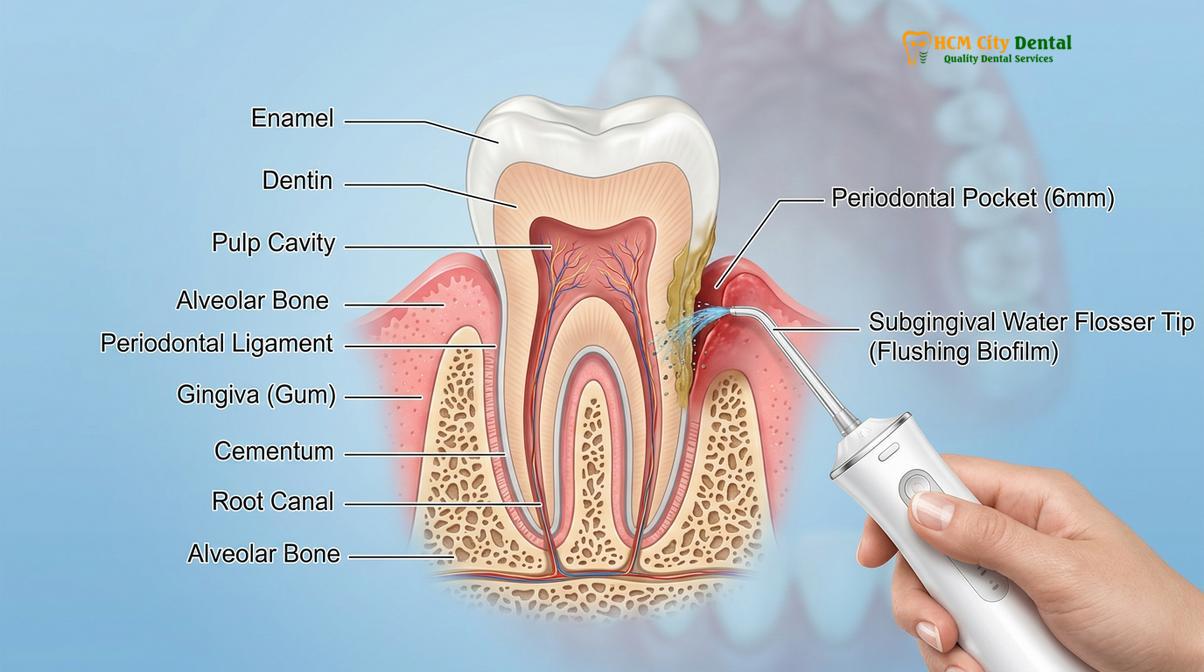
Furthermore, the flushing action removes the inflammatory cytokines and host-derived tissue breakdown products that accumulate within the pocket. By continuously clearing out this toxic “soup,” the water flosser helps to reduce the inflammatory burden on the gingival tissues, allowing them to heal, shrink, and reattach more firmly to the tooth root following professional interventions like deep cleaning teeth procedures.
Waterpik vs Traditional String Floss: What Studies Show
Clinical research consistently demonstrates that water flossing is significantly more effective than traditional string floss at reducing gingival bleeding and decreasing inflammatory markers in patients with periodontal disease.
The dental community has long debated the comparative efficacy of oral irrigators versus traditional string floss. For decades, string floss was considered the undisputed gold standard for interdental cleaning. However, an extensive body of modern clinical research has challenged this paradigm, particularly regarding the management of gingival inflammation and periodontal disease.
When reviewing waterpik plaque removal clinical studies, the data reveals a compelling narrative. While string floss is highly effective at physically scraping adherent plaque from the tight contact points between teeth, it has significant limitations. Flossing requires a high degree of manual dexterity to perform the correct “C-shape” technique. Furthermore, string floss is physically incapable of cleaning the concave anatomical depressions often found on the root surfaces of molars and premolars. When the gums recede due to periodontitis, these root concavities become exposed, and string floss simply bridges over the depression, leaving the bacterial biofilm untouched.
In contrast, the pressurized fluid stream of a water flosser conforms to the complex micro-anatomy of the tooth root, effectively flushing out bacteria from concavities, furcations (the areas where multi-rooted teeth divide), and deep pockets. Clinical trials measuring the Bleeding on Probing (BOP) index—a primary clinical indicator of active gum inflammation—consistently show that patients using a water flosser experience a significantly greater reduction in gingival bleeding compared to those using string floss alone[4].
| Feature / Modality | Traditional String Floss | Water Flosser (Oral Irrigator) |
|---|---|---|
| Mechanism of Action | Mechanical scraping and shearing | Hydrokinetic fluid shear stress and flushing |
| Subgingival Reach | Limited to 2-3mm depth | Can reach up to 6mm (with specialized tips) |
| Efficacy in Root Concavities | Poor (bridges over depressions) | Excellent (fluid conforms to anatomy) |
| Impact on Bleeding Gums | Moderate reduction in inflammation | Superior reduction in bleeding indices |
| Ease of Use / Dexterity | Requires high manual dexterity | Easier for patients with limited mobility |
It is crucial to understand that from a comprehensive General Dentistry perspective, these two modalities are not mutually exclusive; rather, they are synergistic. String floss is necessary to break the tight physical bonds of mature plaque at the contact points, while the water flosser excels at flushing away the loosened debris and managing the subgingival environment. For optimal periodontal health, utilizing both methods provides the most comprehensive home-care regimen.
Benefits of Water Flossing for Braces and Implants
The pulsating fluid dynamics of a water flosser safely navigate around complex orthodontic brackets and dental implant threads, preventing peri-implantitis and decalcification without scratching restorative surfaces.
Patients undergoing complex dental treatments face unique challenges in maintaining optimal oral hygiene. The presence of foreign materials in the mouth—such as titanium dental implants, porcelain crowns, and metal orthodontic brackets—creates numerous retention areas where plaque and food debris can easily accumulate. In these scenarios, the limitations of traditional brushing and flossing become glaringly apparent.
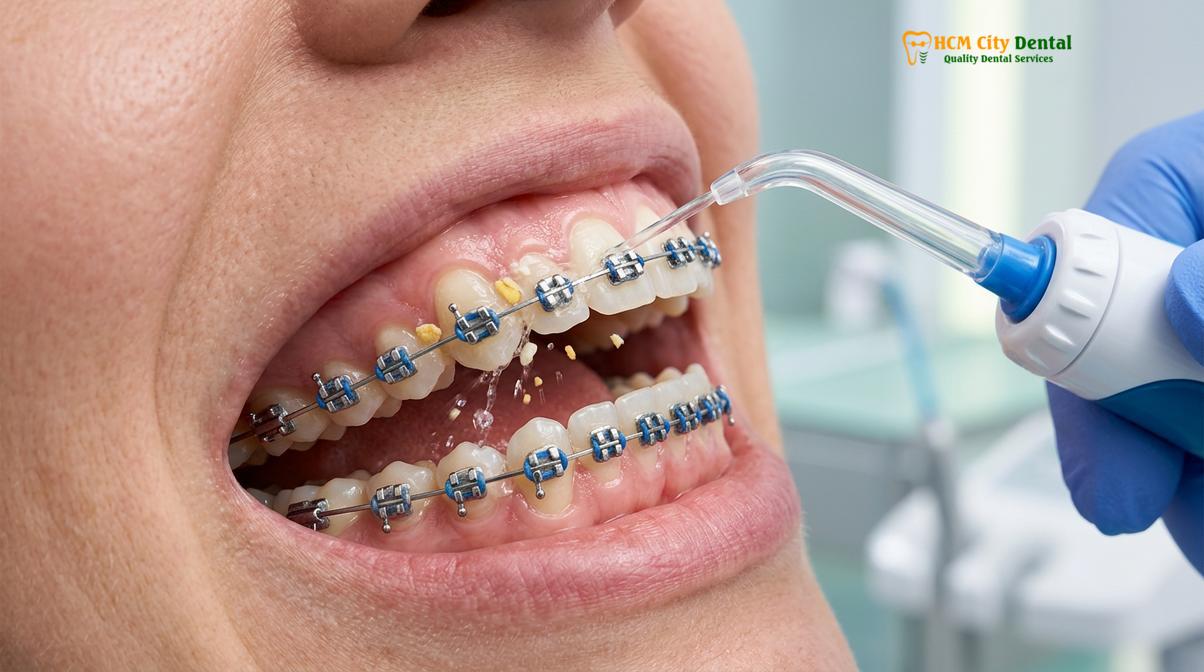
For orthodontic patients, navigating string floss under archwires and between brackets is a tedious and time-consuming process, leading to low patient compliance. Consequently, many orthodontic patients develop hyperplastic (overgrown) and bleeding gums due to chronic plaque accumulation. A water flosser equipped with an orthodontic tip utilizes a tapered brush combined with the pulsating water stream to effortlessly flush away debris from the intricate components of the braces. This significantly reduces the risk of gingival inflammation and prevents the formation of white spot lesions (decalcification) on the enamel surrounding the brackets.
The benefits are equally profound for patients with dental implants. Unlike natural teeth, which are suspended in the jawbone by a highly vascularized periodontal ligament, dental implants are directly fused to the bone (osseointegration). The mucosal seal around an implant is structurally weaker and has a lower blood supply than the gum tissue around a natural tooth. This makes implants highly susceptible to peri-implant mucositis (inflammation of the gums around the implant) and peri-implantitis (bone loss around the implant) if plaque is allowed to accumulate[5].
Attempting to use traditional string floss around an implant can sometimes be counterproductive. If the floss shreds on the micro-threads of the implant fixture, the retained fibers can trigger a foreign body reaction, leading to rapid bone loss. A water flosser eliminates this risk entirely. The gentle, pulsating stream safely flushes the peri-implant sulcus, removing destructive bacteria without the risk of leaving behind foreign materials or scratching the delicate titanium surface. This makes oral irrigation an essential component of long-term implant maintenance and the prevention of swollen gums around the tooth or implant site.
How to Use a Waterpik Safely with Gum Disease
To safely irrigate diseased gums, patients must utilize a low-pressure setting, angle the specialized tip at 45 degrees to the gingival margin, and systematically trace the gumline to prevent tissue trauma.
While oral irrigators are incredibly beneficial, they must be used correctly, especially by patients with active periodontal disease. Inflamed gingival tissues are highly friable, meaning they are delicate and prone to tearing and bleeding. Applying excessive water pressure to these compromised tissues can cause discomfort, induce trauma, and theoretically force bacteria deeper into the connective tissue, although clinical evidence shows this is highly unlikely when proper technique is employed.
When searching for the best water flosser for bleeding gums, patients should prioritize models that offer a wide range of adjustable pressure settings, allowing for precise control over the hydrokinetic force. The clinical workflow for safely using a water flosser with gum disease involves a systematic and gentle approach.
Clinical Warning: Never use the highest pressure setting on actively bleeding or severely inflamed gums. High-velocity water streams can traumatize friable periodontal tissues and delay the healing process. Always begin on the lowest pressure setting and only increase the force as the gingival tissues heal and become firmer.
Step-by-Step Clinical Workflow:
- Preparation: Fill the reservoir with lukewarm water. Cold water can trigger severe dentinal hypersensitivity, especially in patients with gum recession and exposed tooth roots.
- Select the Tip: For general cleaning, use the standard jet tip. For deep pockets, attach the specialized subgingival (Pik Pocket) tip.
- Adjust the Pressure: Turn the device on and set the pressure dial to the absolute lowest setting.
- Positioning: Lean over the sink to allow the water to flow freely from your mouth. Place the tip in your mouth before turning the water flow on to prevent splashing.
- Angulation: For the standard tip, aim the water stream at a 90-degree angle to the gumline. For the subgingival tip, place the soft rubber end at a 45-degree angle, gently resting it just slightly beneath the gingival margin.
- Systematic Irrigation: Start at the most posterior teeth (the back molars) and slowly trace the gumline. Pause briefly at the interproximal spaces (between the teeth) to allow the water to flush completely through the contact areas.
Clinical Case Review: Periodontal Maintenance
A 52-year-old patient presented to HCMC Dental Clinic in Ho Chi Minh City with generalized moderate periodontitis, characterized by 5-6mm pocket depths and heavy bleeding on probing. Following a comprehensive gum flap surgery performed by Dr. Nguyen Van Cuong to reduce the pocket depths, the patient was instructed to incorporate a water flosser with a subgingival tip into their daily routine. By utilizing a low-pressure setting and a diluted chlorhexidine rinse, the patient successfully maintained the surgical results. At the 6-month recall appointment, pocket depths had stabilized at 2-3mm, and bleeding indices were reduced to near zero, demonstrating the profound efficacy of adjunctive home irrigation.
Adding Mouthwash or Antimicrobial Rinses to the Water Reservoir
Diluting therapeutic antimicrobial rinses, such as chlorhexidine gluconate, into the water flosser reservoir allows for targeted, deep-pocket delivery of medicaments to suppress periodontal pathogens.
One of the most significant advantages of a water flosser over traditional string floss is its ability to act as a delivery system for therapeutic medicaments. While flushing with plain water is highly effective at mechanically disrupting biofilm, adding an antimicrobial agent to the reservoir provides a dual-action approach: mechanical debridement combined with chemical disinfection.
For patients with aggressive periodontitis or those recovering from periodontal surgery, dental professionals frequently prescribe Chlorhexidine Gluconate (CHX) 0.12% oral rinse. Chlorhexidine is considered the gold standard in chemical plaque control due to its high substantivity—its ability to bind to the oral mucosa and tooth surfaces, slowly releasing its antimicrobial properties over 8 to 12 hours. However, simply swishing with chlorhexidine only allows the liquid to penetrate 1 to 2 millimeters into the gingival sulcus.
“The targeted delivery of diluted chlorhexidine via a subgingival oral irrigator tip ensures that the antimicrobial agent reaches the base of the periodontal pocket, effectively neutralizing the anaerobic pathogens responsible for tissue destruction and malodor.”
By diluting the prescribed chlorhexidine into the water flosser reservoir (typically at a ratio of 1 part CHX to 5 or 10 parts water, as directed by your dentist), patients can deliver the medicament directly to the base of the deep pockets. This targeted delivery is highly effective in managing the bacteria responsible for bad breath and gum disease.
Other beneficial additions to the water reservoir include over-the-counter essential oil mouthwashes or a simple warm saline (saltwater) solution. Warm saline is particularly soothing for inflamed tissues and creates an osmotic gradient that helps draw out edema (swelling) from the gums. Regardless of the additive used, it is imperative to flush the water flosser unit with plain, warm water immediately after use. Failing to do so can allow salts or chemical agents to crystallize within the internal pump mechanism, leading to clogs and premature device failure.
When to See a Doctor for Periodontal Evaluation
While a water flosser is a powerful tool for maintaining oral hygiene, it is crucial to recognize that it is an adjunctive home-care device, not a substitute for professional periodontal diagnosis and treatment. Gum disease is a progressive, silent infection that often presents with minimal pain until it reaches advanced stages. If you are relying solely on a water flosser to manage persistent symptoms, you may be masking a severe underlying condition that requires clinical intervention.
You should schedule a comprehensive periodontal evaluation if you experience any of the following clinical warning signs:
- Persistent bleeding gums that do not resolve after two weeks of consistent brushing and water flossing.
- Gums that are visibly receding, making the teeth appear longer or exposing the yellowish root surfaces.
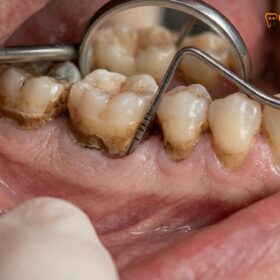
- The presence of hard, calcified deposits (tartar or calculus) along the gumline, which cannot be removed by any home-care device and require professional scaling.
- Teeth that feel loose, mobile, or have shifted in their alignment, indicating significant alveolar bone loss.
- Changes in the color of your gingival tissues, which may require evaluation for black gums causes and treatments.
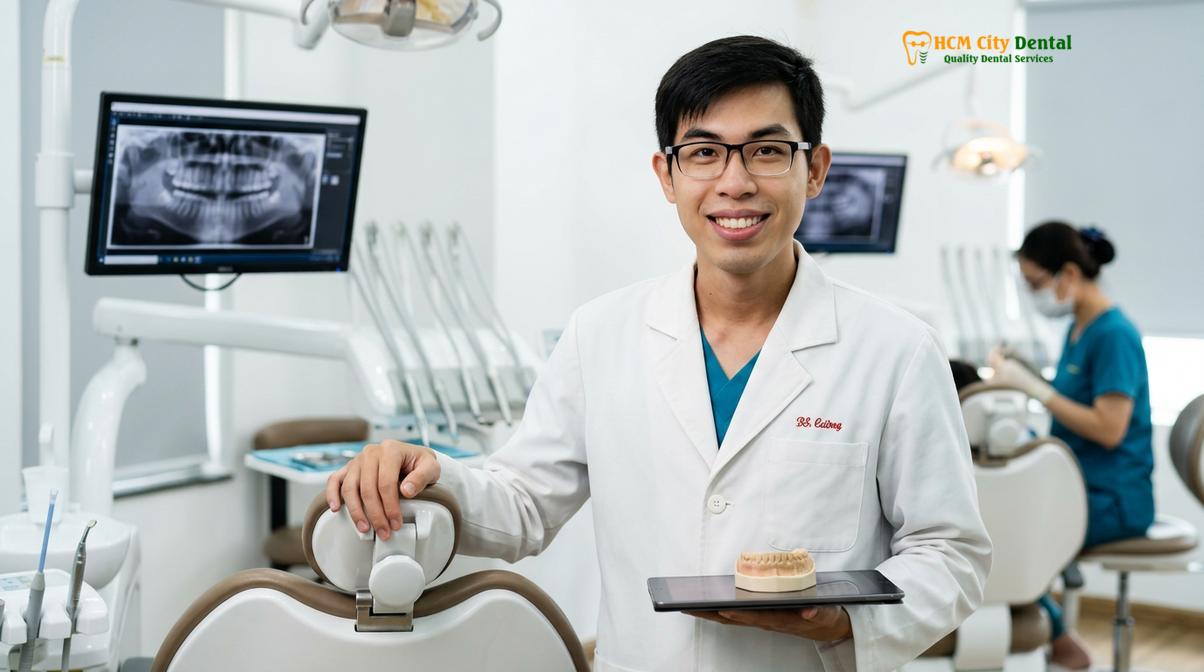
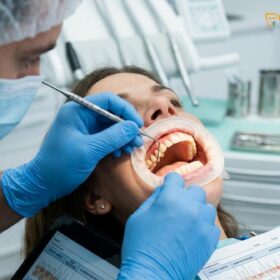
At HCMC Dental Clinic in Saigon, our periodontal specialists utilize advanced diagnostic imaging and precise pocket probing to determine the exact severity of your condition. Depending on the clinical findings, Dr. Cuong may recommend advanced interventions such as laser gum treatment to gently remove diseased tissue and promote reattachment. Following professional therapy, your dentist will provide personalized instructions on how to integrate oral irrigation into your specific maintenance protocol to ensure long-term periodontal stability.
Frequently Asked Questions
Can a Waterpik replace traditional flossing?
No, a Waterpik should not entirely replace traditional flossing. While highly effective at flushing out pockets and reducing gingival inflammation, traditional string floss remains necessary for physically scraping adherent plaque from the tight contact points between teeth. For optimal oral hygiene, dental professionals recommend using both modalities synergistically: string floss to break the physical bonds of plaque, followed by a water flosser to flush the debris away.
Can a Waterpik damage gums or push bacteria deeper?
When used correctly on a low to medium pressure setting, a Waterpik will not damage gums or push bacteria deeper. Clinical studies confirm that oral irrigators safely flush bacteria out of the pocket rather than forcing it into the tissue. However, using the highest pressure setting on severely inflamed, friable gums can cause minor tissue trauma, which is why starting on the lowest setting is always recommended.
Is a water flosser good for deep periodontal pockets?
Yes, a water flosser equipped with a specialized subgingival tip is excellent for deep periodontal pockets. It can safely deliver water or antimicrobial rinses up to 90% of the depth of a 6mm pocket, disrupting anaerobic bacteria. This deep penetration makes it an invaluable tool for patients managing moderate to advanced periodontitis who cannot reach these depths with traditional brushing or flossing.
How often should I use my Waterpik?
For optimal periodontal maintenance, dental professionals generally recommend using a Waterpik at least once daily. Patients undergoing active treatment for severe gum disease may be advised to use it twice daily with a prescribed antimicrobial rinse. Consistency is key; regular disruption of the bacterial biofilm prevents the plaque from maturing and calcifying into tartar.
What pressure setting should I use for bleeding gums?
You should always use the lowest pressure setting when dealing with bleeding or inflamed gums. Starting on the lowest setting prevents tissue trauma while still providing sufficient hydrokinetic force to disrupt loose biofilm and flush out debris. As your gums heal, become firmer, and stop bleeding over the course of a few weeks, you can gradually increase the pressure to a moderate, comfortable level.
References
- Journal of Periodontology. Efficacy of adjunctive oral irrigation in the management of periodontal disease. (2021).
- American Dental Association (ADA). Clinical guidelines on interdental cleaning and oral hygiene devices. (2020).
- International Journal of Dental Hygiene. Hydrokinetic activity of oral irrigators and subgingival biofilm disruption. (2019).
- Journal of Clinical Periodontology. Comparison of water flossing and string floss on gingival bleeding indices. (2022).
- Clinical Oral Implants Research. Maintenance of peri-implant health using motorized oral irrigators. (2018).