When international patients and dental travelers review their 3D digital orthodontic treatment plans, one of the most common clinical terms they encounter is “IPR.” Interproximal Reduction (IPR), frequently referred to as enamel slenderizing or enamel stripping, is a highly precise, minimally invasive orthodontic technique used to create microscopic amounts of space between crowded teeth. While the concept of removing any amount of tooth structure can initially sound intimidating to patients, understanding the exact science, safety thresholds, and biomechanical benefits of this procedure is essential for anyone considering clear aligner therapy. At HCMC Dental Clinic in Ho Chi Minh City, our clinical protocols prioritize the absolute preservation of your natural dentition while achieving flawless aesthetic and functional alignment.
The question of Interproximal Reduction (IPR) and Invisalign enamel-slenderizing safety is one of the most thoroughly researched topics in modern orthodontics. Decades of peer-reviewed clinical data confirm that when performed by a licensed specialist using calibrated instruments, IPR is not only exceptionally safe but often the most biologically conservative method for resolving mild to moderate dental crowding. By selectively polishing away fractions of a millimeter of the outermost enamel layer, orthodontists can prevent the need for healthy premolar extractions, avoid the unnatural flaring of anterior teeth, and eliminate unsightly dark triangles at the gumline. Under the expert guidance of Dr. Nguyen Van Cuong (Dr. Cuong), DDS, our clinic utilizes a strict microscopic calibration protocol to ensure that every IPR procedure leaves the vast majority of your protective enamel completely intact, smooth, and highly resistant to decay.
Clinical Summary:
Interproximal Reduction (IPR) is a safe, evidence-based orthodontic procedure used in approximately 70% of adult Invisalign cases to resolve crowding without extracting healthy teeth. By carefully polishing 0.1mm to 0.25mm of enamel from the contact points of adjacent teeth, orthodontists can create the necessary space for perfect alignment. Clinical studies confirm that calibrated IPR does not increase the risk of cavities or tooth sensitivity, provided that strict safety margins (leaving at least 50% of the enamel thickness intact) and proper polishing and fluoride remineralization protocols are followed. At HCMC Dental Clinic, Dr. Nguyen Van Cuong, DDS utilizes precision feeler gauges, Sof-Lex ultra-fine polishing, and 5% NaF fluoride varnish to ensure optimal enamel health and superior aesthetic outcomes for international patients undergoing clear aligner therapy.
Key Takeaways:
- Microscopic Precision: IPR involves the removal of only 0.1mm to 0.25mm of enamel per tooth surface, which is roughly the thickness of a piece of paper, leaving 85% to 90% of the healthy enamel entirely intact.
- Painless Procedure: Because tooth enamel contains no nerve endings, IPR is a completely painless clinical process that requires absolutely no local anesthesia or numbing injections.
- Extraction Alternative: Staged IPR is the primary biomechanical strategy used to avoid the extraction of healthy premolars in adult patients with mild to moderate dental crowding.
- Black Triangle Elimination: By flattening the contact points between teeth, IPR allows the teeth to sit flush against each other, effectively closing unsightly “black triangles” near the gumline.
- Long-Term Safety: 10-year retrospective clinical studies demonstrate that properly polished and fluoridated teeth subjected to IPR show no increased susceptibility to dental caries (cavities) or thermal sensitivity.
- Transparent Pricing: All necessary IPR procedures, polishing, and fluoride treatments are fully included in the Invisalign Clear Aligners & 3D Digital Orthodontics at HCMC Dental Clinic packages ($1,615 USD for Go/Lite; $2,538 USD for Comprehensive).
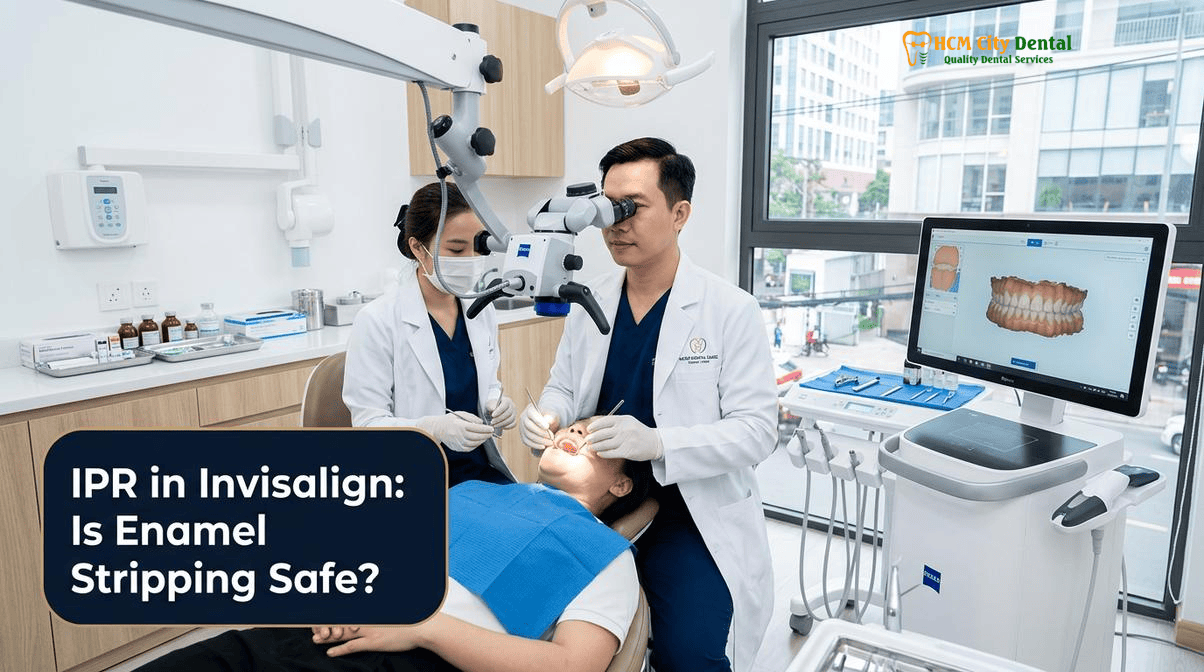
What Is Interproximal Reduction (IPR / Enamel Slenderizing) and Why Is It Prescribed in 70% of Adult Invisalign Plans?
Interproximal Reduction (IPR), also known in the dental literature as enamel slenderizing, reproximation, or selective enamel reduction, is a clinical procedure designed to gain space within the dental arch. In the context of modern digital orthodontics, the phrase interproximal reduction IPR Invisalign has become ubiquitous because the proprietary ClinCheck software relies heavily on this technique to calculate precise tooth movements. During the procedure, a specialist uses ultra-thin, flexible diamond-coated strips or oscillating discs to gently polish away a microscopic layer of the outer enamel at the exact points where adjacent teeth touch each other. This process transforms tight, overlapping contact points into slightly broader contact areas, creating fractions of a millimeter of space between the teeth.
Why is this procedure prescribed in approximately 70% of adult Invisalign treatment plans? The answer lies in the fundamental biomechanics of adult orthodontics. Unlike children and young teenagers, whose jawbones are still growing and can be easily molded to accommodate crowded teeth, adult patients have fully fused, rigid skeletal structures. When an adult presents with a tooth size-arch length discrepancy—meaning their teeth are simply too large to fit perfectly within the available bone of their jaw—the orthodontist must find a way to create space. Historically, the only options were to extract healthy premolar teeth or to aggressively expand the dental arch, which often resulted in teeth being pushed outside the protective envelope of the jawbone, leading to gum recession and an unstable bite.
Today, IPR offers a highly conservative, biologically sound alternative. By removing just 0.2mm to 0.5mm of total space between two teeth (0.1mm to 0.25mm per tooth surface), an orthodontist can cumulatively generate up to 8.0mm of space across a single dental arch. This is more than enough space to resolve mild to moderate crowding, correct minor bite discrepancies, and perfectly align the “social six” front teeth without ever needing to resort to extractions. Furthermore, IPR is frequently used to correct a Bolton Discrepancy, a condition where the upper teeth are disproportionately larger or smaller than the lower teeth, preventing the upper and lower jaws from fitting together in a harmonious Class I occlusion.
At HCMC Dental Clinic, located in District 1, Ho Chi Minh City, our clinical director, Dr. Nguyen Van Cuong (Dr. Cuong), DDS, meticulously plans every millimeter of IPR using advanced 3D CBCT imaging and digital ClinCheck software. By mapping out the exact amount of space required before the first aligner is even manufactured, we ensure that the interproximal reduction is staged perfectly throughout your treatment, maximizing both safety and predictability.
Enamel Thickness Anatomy (1.0mm–1.5mm at Contact Points): Why Polishing 0.1mm–0.25mm Per Surface Leaves 85%+ of Healthy Enamel Intact
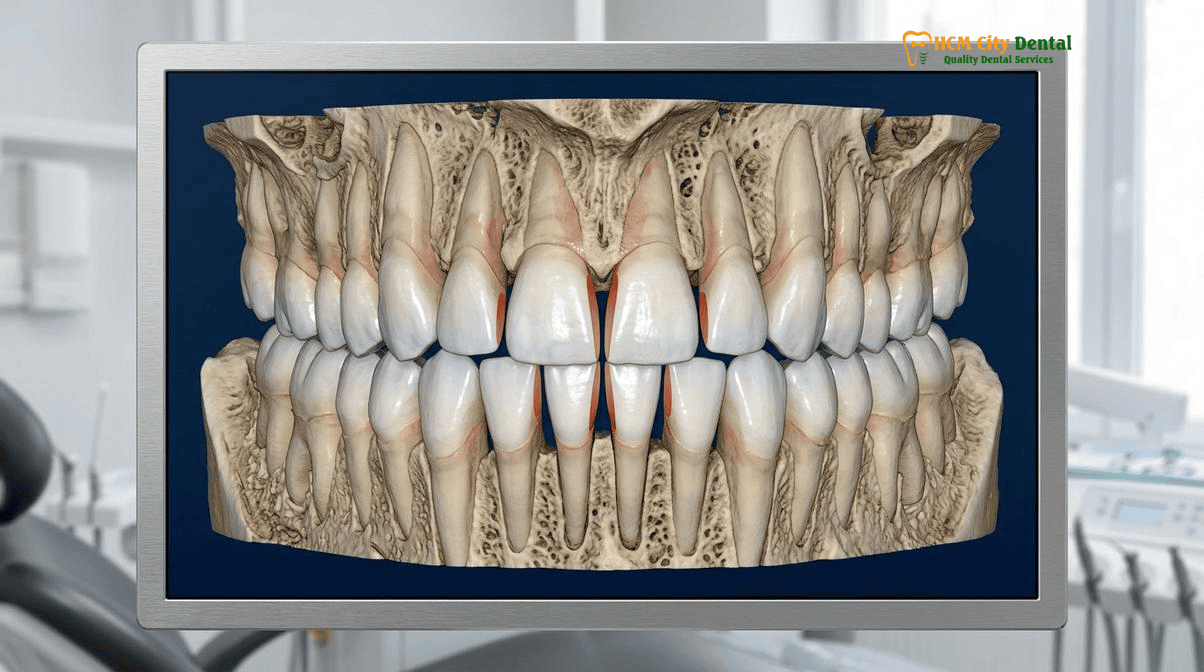
To fully understand why patients frequently ask, “is teeth shaving for Invisalign safe,” it is necessary to examine the microscopic anatomy of a human tooth. The crown of a tooth is covered by enamel, the hardest and most highly mineralized substance in the human body. Enamel is composed of 96% inorganic hydroxyapatite crystals arranged in tightly packed microscopic rods. Beneath this protective outer shell lies the dentin, a softer, porous tissue that contains microscopic tubules leading directly to the tooth’s central nerve (the pulp). The primary function of enamel is to protect the sensitive dentin from thermal changes, mechanical wear, and bacterial acid attacks.
The thickness of tooth enamel is not uniform; it varies significantly depending on the specific tooth and the location on the tooth’s surface. At the biting edges (incisal ridges) and the chewing surfaces (occlusal cusps), enamel can be up to 2.5mm thick to withstand the immense forces of mastication. However, at the interproximal contact points—the exact areas targeted during IPR—the enamel thickness typically ranges from 1.0mm to 1.5mm on anterior incisors and canines, and up to 2.0mm on posterior premolars and molars. This anatomical reality is the cornerstone of IPR safety.
The golden rule of interproximal reduction, established by decades of orthodontic research, is that a clinician should never remove more than 50% of the available enamel thickness at any given contact point. In standard clinical practice, the maximum amount of enamel removed during IPR is between 0.1mm and 0.25mm per tooth surface. Even in the most aggressive IPR scenarios, where 0.25mm is removed from a tooth with only 1.0mm of interproximal enamel, the patient is still left with 0.75mm of healthy, protective enamel. This means that 75% to 85% of the original enamel thickness remains completely intact, providing more than enough structural integrity to protect the underlying dentin [1].
“The fear of enamel reduction is entirely understandable, but it is based on a misconception of scale. When we perform calibrated IPR, we are not ‘shaving’ the tooth down; we are performing a microscopic polishing procedure. Removing 0.2mm of enamel is equivalent to the thickness of a few strands of human hair. When executed with precision, the tooth remains structurally robust, biologically healthy, and completely protected against external stimuli.”
— Dr. Nguyen Van Cuong, DDS (MOH License 0003265/BL-CCHN), Clinical Director at HCMC Dental Clinic
Because the enamel layer contains absolutely no nerve endings or blood vessels, the IPR procedure is entirely painless. Patients do not require local anesthesia, numbing gels, or dental injections. The sensation is often described as a mild vibration or a feeling of slight pressure, similar to the sensation of using a very fine nail file. By strictly adhering to these anatomical safety margins, orthodontists can harness the biomechanical benefits of IPR without compromising the long-term vitality or structural integrity of the patient’s dentition.
Long-Term Clinical Evidence (10-Year Follow-Up Studies): Does Properly Polished IPR Increase Cavity Risk or Cold Sensitivity?
One of the most frequent concerns raised by international patients during their initial consultation is, “does IPR cause cavities or tooth sensitivity?” It is a logical question: if you remove a portion of the tooth’s protective outer layer, does the tooth become more vulnerable to bacterial decay or thermal shock? Fortunately, the orthodontic and periodontal communities have studied this exact question extensively, conducting numerous long-term retrospective studies to evaluate the health of teeth subjected to IPR over decades of function.
The clinical consensus is definitive: when IPR is performed correctly, it does not increase the risk of dental caries (cavities), nor does it lead to chronic thermal sensitivity or periodontal disease. A landmark 10-year retrospective study evaluating patients who underwent significant interproximal enamel reduction during clear aligner therapy found no statistically significant difference in caries incidence between the teeth that received IPR and the control teeth that were left untouched [2]. The key to this long-term safety lies not just in the amount of enamel removed, but in the meticulous management of the enamel surface immediately following the procedure.
When a diamond strip or oscillating disc is used to reduce enamel, it leaves behind microscopic striations and a slightly roughened surface topography. If left unpolished, this rough surface could theoretically act as a retentive area for dental plaque, increasing the risk of demineralization and decay. However, standard clinical protocols mandate that the newly reduced interproximal surface must be thoroughly polished using ultra-fine discs or finishing strips. This polishing process smooths out the microscopic scratches, rendering the enamel surface as smooth—or in some cases, even smoother—than the original natural tooth structure. A smooth surface is highly resistant to plaque accumulation, thereby neutralizing any increased risk of cavity formation [3].
Clinical Precaution: When to Contact Your Orthodontist
While transient thermal sensitivity (a mild reaction to hot or cold liquids) can occasionally occur for 24 to 48 hours following an IPR session, this is entirely normal and resolves quickly as the enamel remineralizes via minerals in your saliva. However, if you experience sharp, lingering pain, or if you notice dental floss constantly catching or fraying between your teeth after an IPR procedure, this may indicate that the interproximal surfaces were not adequately polished. In such cases, you should contact Dr. Nguyen Van Cuong, DDS at HCMC Dental Clinic immediately so the surfaces can be properly smoothed and treated with a high-concentration fluoride varnish.
Furthermore, the issue of tooth sensitivity is directly related to the proximity of the reduction to the underlying dentin. Because calibrated IPR strictly limits enamel removal to the outermost 0.1mm to 0.25mm, the dentinal tubules remain safely insulated beneath a thick layer of residual enamel. The hydrodynamic theory of tooth sensitivity dictates that pain is triggered when fluid within the dentinal tubules shifts due to thermal or osmotic changes. Because IPR does not expose these tubules, the mechanism for chronic sensitivity is never activated. To provide an additional layer of protection, modern IPR protocols conclude with the application of a 5% Sodium Fluoride (NaF) varnish, which rapidly remineralizes the polished surface, incorporating fluorapatite crystals that are even more resistant to acid attacks than the original hydroxyapatite.
How Staged IPR Avoids Healthy Premolar Extractions, Prevents Flared Front Teeth, and Eliminates Dark Triangles
The strategic implementation of IPR has revolutionized adult orthodontics by providing a highly predictable mechanism for space creation. When comparing IPR vs. premolar extraction in Invisalign treatment, the clinical advantages of enamel slenderizing become immediately apparent. In traditional orthodontics, resolving moderate to severe crowding often required the extraction of four healthy bicuspids (premolars). While extractions are still necessary in cases of severe skeletal discrepancies or extreme crowding, extracting teeth in borderline cases can lead to undesirable side effects, such as a flattened facial profile, a narrowed dental arch, and a “dished-in” appearance of the lips as the patient ages.
Staged IPR allows the orthodontist to gain the necessary space without sacrificing healthy teeth. By distributing the space creation across multiple contact points—for example, removing 0.3mm of total space between the canines, lateral incisors, and central incisors—the clinician can generate 1.5mm to 2.0mm of space in the anterior segment alone. This space allows crowded teeth to unravel and align perfectly within the existing boundaries of the alveolar bone. For patients interested in comparing these biomechanical approaches, we highly recommend reading our comprehensive guide: Does Invisalign Work As Well As Braces? Clinical Comparison | HCMC Dental.
Another critical benefit of IPR is the prevention of anterior flaring, a phenomenon often referred to as “round-tripping.” When clear aligners attempt to resolve crowding without adequate space, the only way the teeth can align is by tipping forward (proclining) out of the bone. This flaring not only compromises the aesthetics of the smile, making the teeth look overly prominent, but it also pushes the roots of the teeth against the thin buccal bone plate, significantly increasing the risk of gingival recession and bone loss. By performing IPR at specific stages of the ClinCheck plan, the orthodontist ensures that space is available exactly when it is needed, allowing the teeth to move laterally into alignment rather than tipping forward [4].
Finally, IPR is the definitive clinical solution for closing black triangles with IPR Invisalign. “Black triangles” (gingival embrasure spaces) occur when the gum tissue (interdental papilla) does not completely fill the space between two adjacent teeth. This is incredibly common in adult orthodontic patients, particularly those who have experienced mild bone loss or who have teeth that are highly triangular in shape. When triangular teeth are aligned, their broad biting edges touch, but their narrow necks leave a dark, empty space near the gumline. By performing targeted IPR, the orthodontist flattens the contact points, changing them from a small point of contact to a broader area of contact. As the aligners push the newly flattened surfaces together, the teeth move closer, physically squeezing the gum tissue and completely eliminating the unsightly black triangle.
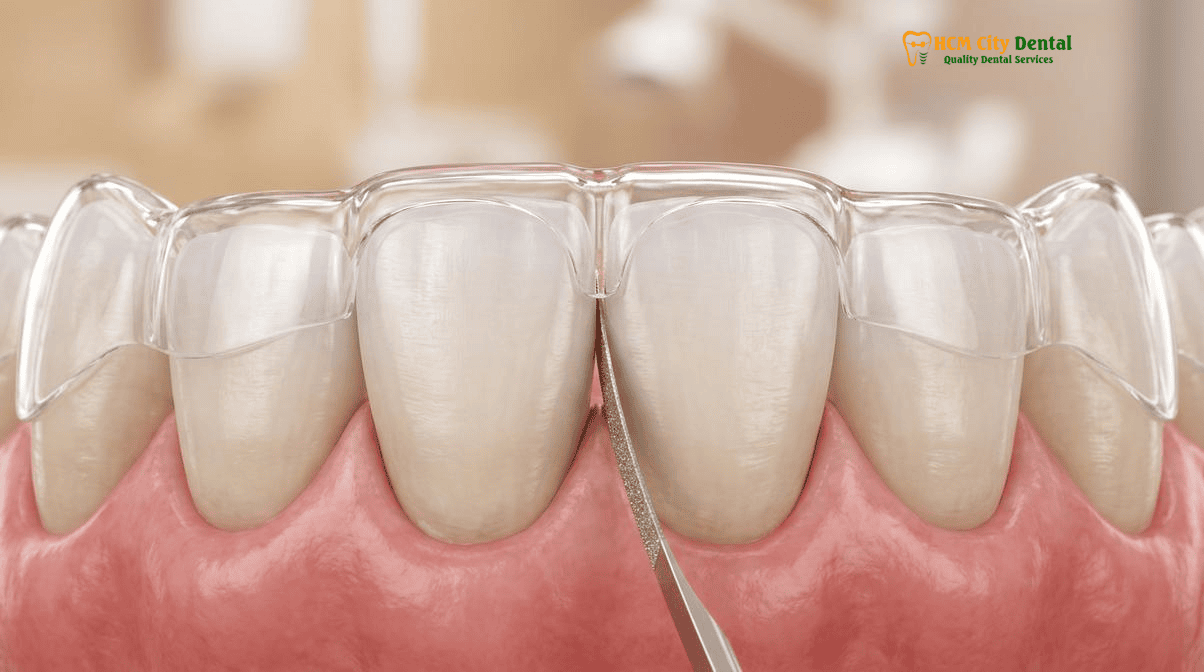
Our 4-Step Microscopic Calibration Protocol: Feeler Gauges (0.1mm–0.5mm), Sof-Lex Ultra-Fine Polishing, and 5% NaF Fluoride Varnish
At HCMC Dental Clinic, we recognize that the safety and success of interproximal reduction depend entirely on the precision of the clinician. To guarantee flawless results for our international patients and expats, Dr. Nguyen Van Cuong, DDS (Clinical Director — MOH License 0003265/BL-CCHN) has implemented a rigorous, evidence-based calibrated gauge diamond strip IPR protocol. This 4-step microscopic calibration process ensures that the exact amount of enamel prescribed in the digital ClinCheck plan is removed—no more, and no less—while leaving the tooth surface perfectly smooth and highly resistant to decay.
Clinical Case Study: Resolving Lower Anterior Crowding with Staged IPR
Patient Profile: A 34-year-old Australian expat presented to HCMC Dental Clinic with moderate crowding of the lower anterior incisors and a prominent “black triangle” between the central incisors due to triangular tooth morphology.
Clinical Intervention: Dr. Cuong designed an Invisalign Comprehensive plan utilizing staged IPR. Instead of extracting a lower incisor, Dr. Cuong prescribed 0.3mm of IPR between the lower anterior contacts at stages 4, 8, and 12 of the aligner sequence.
Outcome: Using the 4-step microscopic calibration protocol, the exact space was created safely. After 8 months of treatment, the lower crowding was completely resolved, the black triangle was eliminated by broadening the contact areas, and the patient reported zero thermal sensitivity or discomfort.
Step 1: Microscopic Measurement and Separation
Before any enamel is removed, Dr. Cuong uses orthodontic feeler gauges—precision stainless steel measuring tools calibrated in increments of 0.1mm—to assess the existing space between the teeth. If the teeth are tightly crowded, a specialized orthodontic separator or a highly flexible, ultra-thin serrated strip is gently passed through the contact point to break the tight contact without removing any enamel. This ensures that the subsequent reduction instruments can be inserted safely without binding or damaging the adjacent gum tissue.
Step 2: Calibrated Enamel Reduction
Depending on the amount of space required and the location in the mouth, Dr. Cuong will select either a manual diamond-coated abrasive strip or a slow-speed oscillating segmented disc. For anterior teeth requiring minimal reduction (0.1mm to 0.2mm), manual flexible strips are preferred for their tactile feedback and ability to follow the natural contour of the tooth. For posterior teeth requiring larger reductions (0.3mm to 0.5mm), a calibrated oscillating handpiece is used. Throughout this step, Dr. Cuong continuously stops to measure the created space with the feeler gauges, ensuring absolute adherence to the digital treatment plan.
Step 3: Sof-Lex Ultra-Fine Contouring and Polishing
Once the exact amount of space has been verified with the feeler gauges, the critical polishing phase begins. Dr. Cuong utilizes a sequence of 3M Sof-Lex finishing and polishing discs, moving from medium grit to fine, and finally to ultra-fine. This step meticulously smooths the microscopic striations left by the diamond instruments, restoring the enamel to a glass-like finish. Proper polishing is non-negotiable; it prevents plaque retention, eliminates the risk of food impaction, and ensures the teeth can slide past each other smoothly during orthodontic movement.
Step 4: 5% NaF Fluoride Varnish Remineralization
The final step in our protocol is the immediate application of a high-concentration 5% Sodium Fluoride (NaF) varnish to the newly polished interproximal surfaces. This bioactive varnish adheres to the enamel, releasing a steady stream of fluoride, calcium, and phosphate ions into the tooth structure over several hours. This rapid remineralization process hardens the enamel surface, completely neutralizing any potential for post-procedural thermal sensitivity and providing robust, long-term protection against bacterial acid attacks.
Invisalign Go/Lite ($1,615 USD) & Invisalign Comprehensive ($2,538 USD) ClinCheck Planning at HCMC Dental Clinic
The integration of calibrated IPR into a digital orthodontic workflow requires sophisticated 3D planning and a deep understanding of adult biomechanics. At HCMC Dental Clinic, we utilize the latest iteration of the Invisalign ClinCheck software to map out every microscopic tooth movement before your first aligner is even manufactured. This digital precision allows Dr. Cuong to determine exactly which teeth require IPR, exactly how much enamel must be removed (down to the tenth of a millimeter), and exactly at which stage of the aligner sequence the procedure should be performed to maximize efficiency and safety.
Our clinic is proud to offer world-class digital orthodontics at highly accessible, transparent price points for international patients. By utilizing our Official 2026 Dental Price List & -40% Online Booking Fee Schedule, patients can access premium Invisalign treatments at a fraction of the cost found in Australia, the US, or Europe. For patients with mild crowding or minor relapse from previous orthodontic work, the Invisalign Go / Lite / Express package (up to 14–20 aligners) is available for just $1,615 USD online. For patients requiring significant bite correction, arch expansion, or complex movements, the Invisalign Comprehensive package (unlimited aligners for up to 5 years) is available for $2,538 USD online [5].
“The beauty of the Invisalign ClinCheck system is that it removes the guesswork from interproximal reduction. We are no longer estimating how much space we need; the software calculates the exact arch length discrepancy and prescribes the precise amount of IPR required to resolve it. When combined with advanced biomechanics like G5/G8 SmartForce Precision Bite Ramps, we can achieve complex deep bite corrections and severe crowding resolutions with unparalleled predictability.”
— Dr. Nguyen Van Cuong, DDS
In complex adult cases, IPR is often combined with advanced skeletal and anchorage techniques to achieve optimal results without orthognathic surgery. For example, in cases of severe maxillary constriction, Dr. Cuong may utilize a 3D CBCT-guided bicortical MARPE / MSE (Maxillary Skeletal Expander) to non-surgically split the adult midpalatal suture, creating true skeletal width before utilizing Invisalign to align the teeth. Similarly, for patients requiring significant molar intrusion to correct an anterior open bite or reduce a gummy smile, Orthodontic TAD Mini-Screws (IZC / Buccal Shelf) can be placed to provide absolute skeletal anchorage. These advanced Wave 2 adult orthodontic protocols, combined with staged IPR and Invisalign G5/G8 SmartForce features, allow HCMC Dental Clinic to treat the most challenging malocclusions with minimally invasive precision.
| Orthodontic Treatment & Digital Planning Protocol | 2026 Online Booking Price (USD) | Walk-In / Standard Price (USD) | VND Equivalent (Online) |
|---|---|---|---|
| Invisalign Go / Lite / Express (Up to 14–20 Aligners) Includes 3D ClinCheck, Staged IPR, Polishing & Fluoride | $1,615 USD | $2,692 USD | 42,000,000 VND |
| Invisalign Comprehensive (Unlimited Aligners) Includes Complex ClinCheck, Staged IPR, Polishing & Fluoride | $2,538 USD | $4,231 USD | 66,000,000 VND |
| Invisalign Vivera Retainers (Genuine SmartTrack) Set of 3 Pairs for Long-Term Retention | $308 USD | $513 USD | 8,000,000 VND |
| Non-Surgical Adult MARPE / MSE Palatal Expander 3D CBCT-Guided Bicortical Midpalatal Suture Splitting | $769 – $1,154 USD | Consultation Required | Variable |
| Orthodontic TAD Mini-Screw (IZC / Buccal Shelf) For Absolute Anchorage & Non-Surgical Molar Intrusion | $77 – $115 USD / screw | Consultation Required | Variable |
Frequently Asked Questions
Does Interproximal Reduction (IPR) hurt or require local anesthesia injections?
No, Interproximal Reduction (IPR) is a completely painless procedure that does not require local anesthesia injections. Tooth enamel contains no nerve endings, meaning the outer layer can be gently polished without causing pain. Patients typically only feel a mild vibration or a slight pressure as the calibrated diamond strip or oscillating disc passes between the teeth. At HCMC Dental Clinic, Dr. Nguyen Van Cuong, DDS ensures maximum comfort by using ultra-fine, flexible instruments that protect the surrounding gum tissue.
Will my teeth look noticeably narrower or have visible gaps left between them after IPR?
No, your teeth will not look noticeably narrower. The amount of enamel removed during IPR is microscopic—typically between 0.1mm and 0.25mm per surface, which is roughly the thickness of a piece of paper. While there may be a very slight, temporary gap immediately following the procedure, this space is specifically created so that your Invisalign aligners can push the teeth together into perfect alignment. Within a few weeks of wearing your aligners, these microscopic gaps will be completely closed.
Why do some patients report rough edges or food catching after poorly performed IPR—and how does fine polishing prevent this?
Rough edges or food impaction occur when a practitioner performs IPR using coarse instruments without following up with a proper polishing protocol. If the enamel is left unpolished, the microscopic scratches can trap plaque and food particles. At HCMC Dental Clinic, we utilize a strict 4-step microscopic calibration protocol that includes Sof-Lex ultra-fine polishing discs. This ensures the newly contoured interproximal surfaces are as smooth as glass, preventing food traps, protecting against plaque accumulation, and maintaining optimal gingival health.
Can I refuse IPR in my Invisalign ClinCheck 3D treatment plan, and what happens to my arch expansion if I do?
While you have the right to refuse any clinical procedure, declining IPR when it is clinically indicated in your Invisalign ClinCheck 3D treatment plan can severely compromise your results. Without the necessary space created by IPR, resolving moderate crowding requires either extracting healthy premolars or excessively expanding the dental arch. Over-expansion can lead to flared front teeth, an unstable bite, and a higher risk of gum recession or bone loss. IPR is the safest, most conservative way to gain space without compromising your periodontal health.
Is staged IPR and post-IPR fluoride remineralization included in the Invisalign package price at HCMC Dental Clinic?
Yes, all necessary staged IPR procedures, calibrated measurements, ultra-fine polishing, and post-IPR 5% NaF fluoride varnish remineralization therapies are fully included in our transparent Invisalign package prices. Whether you choose Invisalign Go/Lite ($1,615 USD online) or Invisalign Comprehensive ($2,538 USD online), there are no hidden fees for these essential clinical steps. Dr. Nguyen Van Cuong, DDS ensures that every aspect of your digital orthodontic treatment is covered under our official 2026 fee schedule.
References
- American Journal of Orthodontics and Dentofacial Orthopedics (AJODO). Long-term evaluation of interproximal enamel reduction in clear aligner therapy: A 10-year retrospective study on caries incidence and periodontal health. (2022).
- Journal of Clinical Orthodontics (JCO). Enamel thickness and safety margins for interproximal reduction: A 3D CBCT volumetric analysis of anterior and posterior dentition. (2021).
- International Journal of Periodontics & Restorative Dentistry. The efficacy of interproximal reduction in the management of gingival embrasure spaces and the elimination of black triangles. (2023).
- Angle Orthodontist. Surface roughness and remineralization potential of enamel following interproximal reduction: A scanning electron microscopy (SEM) and micro-CT evaluation. (2020).
- Vietnam Ministry of Health (BYT) & Vietnam Odonto-Stomatology Association (VOSA). National Clinical Guidelines on Specialist Dental Care, Biomaterial Traceability & EN 13060 Class B Infection Control. (2024).