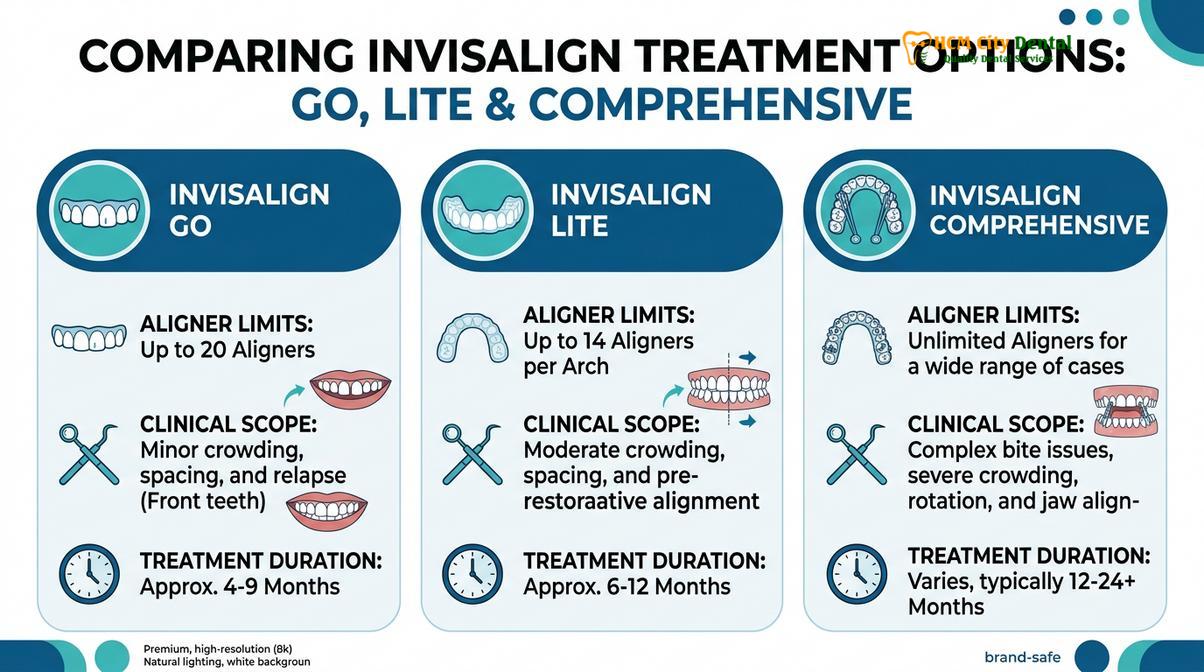
Choosing between Invisalign Go vs Lite vs Comprehensive depends entirely on your clinical diagnosis and the severity of your malocclusion. Go is designed for minor anterior crowding, Lite addresses moderate full-arch misalignments requiring up to 14 trays, while Comprehensive offers unlimited aligners for complex bite corrections.
Clinical Summary:
The Invisalign product portfolio offers tiered clear aligner solutions tailored to varying degrees of orthodontic complexity. Invisalign Go focuses strictly on aesthetic tooth alignment of the anterior teeth (premolar to premolar) with a strict aligner limit, making it ideal for minor cosmetic relapse. Invisalign Lite expands this scope to include mild to moderate full-arch corrections, typically capped at 14 stages. For complex malocclusions involving severe crowding, significant spacing, or anteroposterior bite discrepancies, Invisalign Comprehensive provides unlimited aligners and refinements. Clinical selection relies heavily on 3D digital diagnostics, root angulation requirements, and the necessity for complex biomechanical movements such as molar distalization or significant extrusions. Proper diagnosis by a qualified specialist is mandatory to prevent treatment failure and ensure long-term occlusal stability.
Key Takeaways:
- Invisalign Go is restricted to the front 20 teeth, making it ideal for minor cosmetic adjustments and orthodontic relapse.
- Invisalign Lite provides up to 14 aligners for moderate crowding or spacing issues across the full dental arch.
- Invisalign Comprehensive includes unlimited aligners and refinements for severe bite corrections and complex root movements.
- Treatment selection is dictated by clinical severity and biomechanical requirements, not simply patient preference.
- Post-treatment retention is biologically mandatory across all tiers to prevent teeth from shifting back to their original positions.
The Philips Invisalign Product Line Hierarchy
The clear aligner tiers are structured based on the maximum number of aligners provided and the specific clinical scope of tooth movement permitted by the manufacturer.
When patients begin researching Invisalign treatment packages, they are often presented with a tiered system. While sometimes colloquially searched alongside other dental brands, the authentic Invisalign system is engineered by Align Technology. The product line hierarchy is meticulously designed to match the specific biomechanical demands of varying malocclusions. Rather than offering a one-size-fits-all solution, the system categorizes treatments into distinct tiers—primarily Go, Lite, and Comprehensive—each defined by its clinical scope, aligner limits, and refinement policies[1].
At the core of all these tiers is the proprietary SmartTrack material, a highly elastic, multi-layer polyurethane polymer designed to deliver gentle, constant force to the teeth. Regardless of which tier is selected, the biological mechanism of tooth movement remains identical. Osteoclasts break down bone on the pressure side of the periodontal ligament, while osteoblasts build new bone on the tension side. The difference between the tiers lies not in the material itself, but in the complexity of the digital treatment plan (ClinCheck), the number of stages allowed, and the types of SmartForce attachments utilized to achieve specific root movements[2].
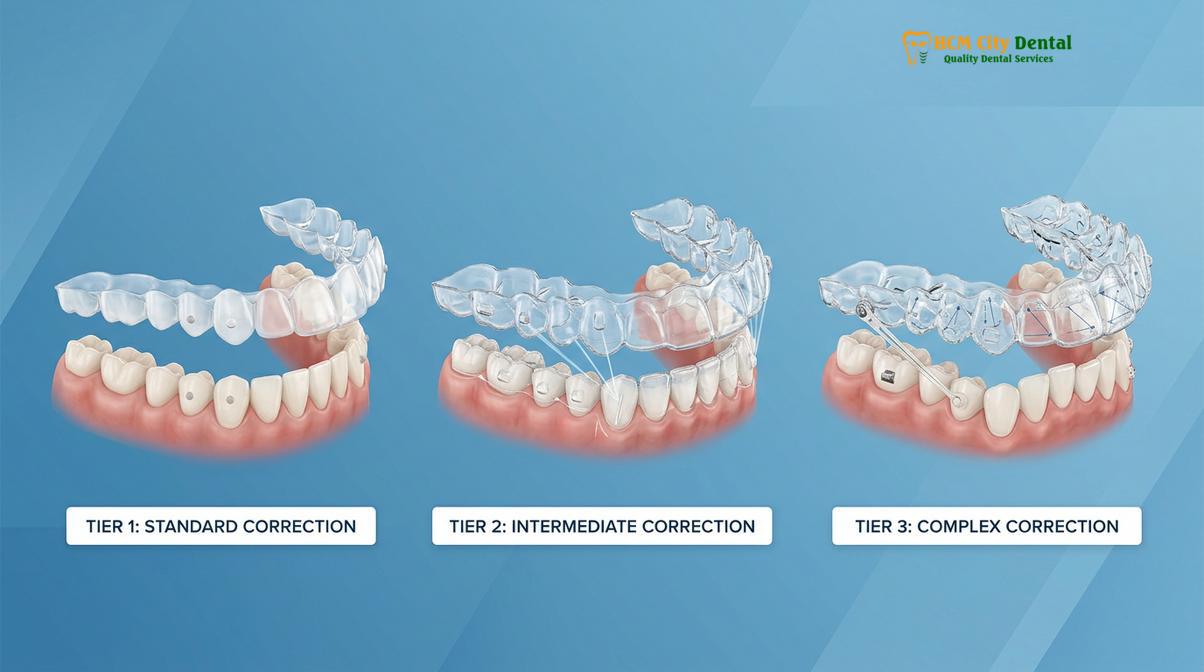
Understanding these clear aligner tiers is crucial for setting realistic clinical expectations. A common misconception among patients is that they can simply choose a lower, more affordable tier to save money, regardless of their dental anatomy. However, orthodontic treatment is a medical procedure. If a patient with a severe posterior crossbite attempts to use a limited tier designed only for anterior alignment, the treatment will inevitably fail, potentially causing occlusal trauma or worsening the bite relationship. Therefore, the hierarchy serves as a clinical guideline for orthodontists to prescribe the exact level of intervention required for predictable, safe results.
Invisalign Go: Quick Fixes for Mild Front Teeth Crowding
Invisalign Go is a streamlined system limited to moving teeth from the second premolar to the second premolar, utilizing up to 20 aligners for minor aesthetic corrections.
Invisalign Go represents the most conservative tier in the portfolio, specifically engineered for aesthetic tooth alignment rather than comprehensive bite correction. The defining characteristic of the Invisalign Go limit is its restricted clinical scope: it is programmed to only move the anterior teeth and premolars (teeth 15 to 25 in the upper arch, and 35 to 45 in the lower arch). The molars remain completely stationary, acting as absolute anchorage units to facilitate the movement of the front teeth[3].
This tier typically provides a maximum of 20 aligner stages. Depending on the prescribed wear schedule (usually 7 to 14 days per aligner), treatment can be completed in as little as three to six months. Invisalign Go is highly effective for specific, straightforward clinical scenarios. It is the treatment of choice for adults who previously wore braces in their youth but experienced minor orthodontic relapse due to neglecting their retainers. It is also suitable for patients requiring minor pre-restorative alignment—for example, slightly uprighting a tilted incisor before placing a porcelain veneer to ensure a conservative preparation.
Clinical Contraindication: Invisalign Go is strictly contraindicated for patients requiring anteroposterior (AP) corrections, such as fixing overjets, underbites, or posterior crossbites. Attempting to resolve complex skeletal discrepancies with an anterior-only system can lead to severe occlusal instability and temporomandibular joint (TMJ) dysfunction.
Because the molars are not moved, the biomechanical complexity is significantly reduced. The system primarily relies on tipping movements rather than complex bodily translations of the tooth roots. While SmartForce attachments can still be used to aid in rotation and extrusion of the anterior teeth, the overall force vectors are kept relatively simple. If a patient completes their Invisalign Go treatment and requires further minor adjustments, the system generally allows for one brief refinement phase, though this is subject to the specific terms of the provider’s laboratory agreement.
Invisalign Lite vs Comprehensive: Key Differences & Price
Invisalign Lite: Moderate Corrections for 10-14 Aligners
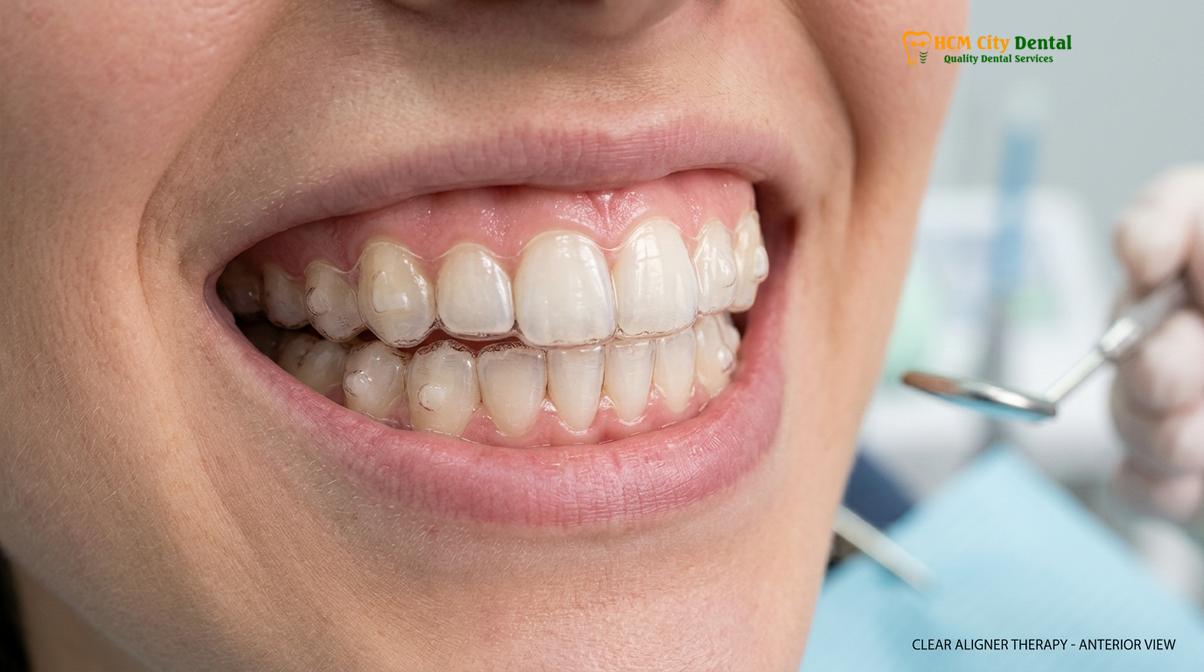
Designed for mild to moderate full-arch malocclusions, Invisalign Lite provides up to 14 aligners to correct minor crowding, spacing, and alignment issues without complex bite changes.
Bridging the gap between minor cosmetic fixes and extensive orthodontic overhauls is Invisalign Lite. Unlike the Go system, Invisalign Lite permits full-arch movement, meaning the orthodontist can actively move the molars to achieve a more harmonious arch form. This tier is specifically tailored for moderate orthodontic cases severity, where the patient requires more than just anterior alignment but does not possess the complex skeletal discrepancies that necessitate years of treatment[4].
The defining parameter of Invisalign Lite is its strict cap of 14 aligners. At a standard two-week wear interval, this translates to roughly seven months of active treatment. Clinically, 14 stages provide enough biomechanical runway to resolve mild Class I malocclusions, close small diastemas (gaps), and alleviate moderate crowding through a combination of arch expansion and Interproximal Reduction (IPR). IPR involves carefully polishing away microscopic amounts of enamel between adjacent teeth to create the necessary space for alignment without requiring tooth extractions.
“Invisalign Lite serves as an exceptional pre-restorative tool, allowing clinicians to optimize tooth position and gingival margins efficiently before committing to definitive prosthodontic work like crowns or implants.”
While Lite allows for molar movement, it is not designed for significant anteroposterior corrections. If a patient requires substantial molar distalization (pushing the molars backward into the jawbone) to correct a severe overbite, 14 aligners will simply not provide enough stages to achieve that movement predictably. Tooth movement must respect biological limits; moving a tooth too fast can result in root resorption or loss of vitality. Therefore, the ClinCheck software carefully calculates the velocity of movement, ensuring it does not exceed approximately 0.25mm per stage.
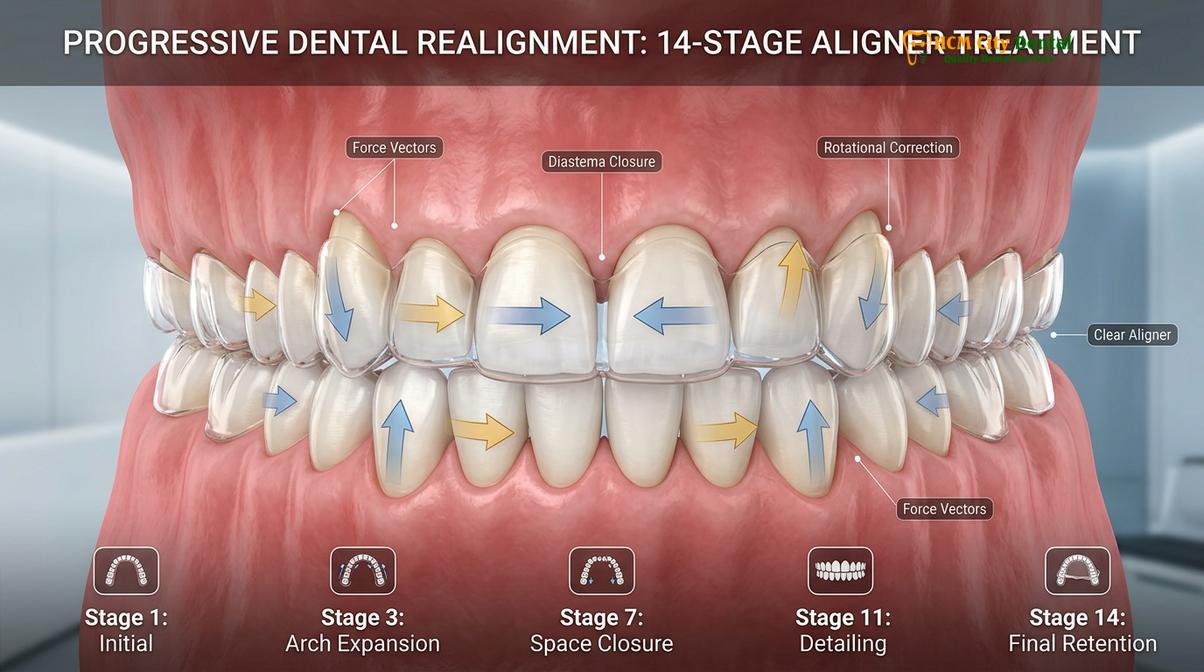
In terms of refinements, Invisalign Lite typically includes one set of additional aligners (often capped at another 14 stages) within a specific timeframe, usually one year from the start of treatment. This refinement phase is crucial for detailing the occlusion and ensuring the final bite is stable and functional.
Invisalign Comprehensive: Unlimited Aligners for Severe Bite Issues
Invisalign Comprehensive is the flagship tier offering unlimited aligners and refinements for up to five years, engineered to resolve severe malocclusions and complex skeletal discrepancies.
When dealing with severe crowding, complex bite relationships, or cases requiring tooth extractions, Invisalign Comprehensive is the mandatory standard of care. As the name implies, Comprehensive Invisalign features no strict limit on the number of aligners. The orthodontist has complete freedom to design a treatment plan that may span 40, 60, or even 80+ stages, utilizing the full spectrum of biomechanical tools available within the clear aligner system[5].
This tier is capable of addressing Class II (overbite) and Class III (underbite) malocclusions. It allows for advanced clinical protocols such as sequential molar distalization, where teeth are moved backward one by one to create space in the arch. It also supports the integration of precision cuts—small hooks built directly into the aligners that allow patients to wear intermaxillary elastics (rubber bands). These elastics provide the necessary force to correct the anteroposterior relationship between the upper and lower jaws.
| Feature | Invisalign Go | Invisalign Lite | Invisalign Comprehensive |
|---|---|---|---|
| Clinical Scope | Anterior teeth only (Premolar to Premolar) | Full arch (Includes Molars) | Full arch + Complex skeletal corrections |
| Aligner Limit | Up to 20 stages | Up to 14 stages | Unlimited stages |
| Treatment Duration | 3 – 6 months | 6 – 8 months | 12 – 36+ months |
| Refinement Policy | Limited (Usually 1 phase) | 1 phase included (within 1 year) | Unlimited phases (within 5 years) |
| Best Suited For | Minor cosmetic relapse, mild crowding | Moderate spacing, mild Class I issues | Severe crowding, bite correction, extractions |
Furthermore, the Comprehensive tier includes specialized features like bite ramps, which are small protrusions on the lingual (back) side of the upper aligners. These ramps are used to intrude the lower incisors and correct deep bites. For growing teenagers, the Comprehensive tier can also incorporate mandibular advancement features, which act similarly to functional appliances to guide the growth of the lower jaw forward.
The unlimited refinement policy, valid for up to five years, provides a critical safety net for complex cases. Orthodontic tooth movement is not always 100% predictable; teeth may occasionally “lag” behind the digital plan due to variations in bone density or patient compliance. The Comprehensive tier allows the orthodontist to rescan the patient and order new aligners as many times as necessary to achieve the perfect functional and aesthetic outcome.
How Dr. Cuong Decides the Right Package for Your Case
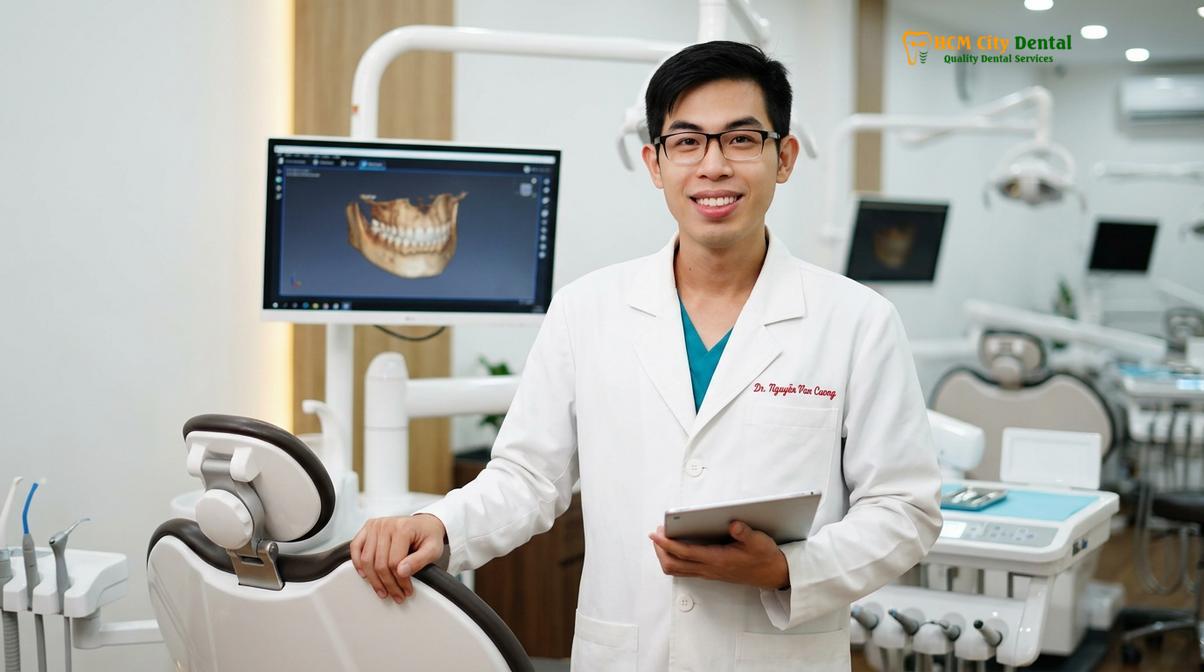
Dr. Nguyen Van Cuong utilizes advanced 3D intraoral scanning and ClinCheck software to evaluate root angulation, bite relationship, and required biomechanics before prescribing a specific tier.
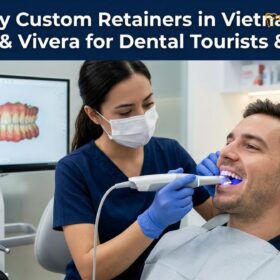
The decision between Go, Lite, and Comprehensive is never a matter of guesswork or budget-driven compromises. At HCMC Dental Clinic, the diagnostic process begins with a comprehensive clinical examination. Dr. Nguyen Van Cuong emphasizes that the foundation of successful clear aligner therapy lies in accurate data collection. This includes high-resolution panoramic and cephalometric X-rays to assess bone levels, root lengths, and skeletal relationships, alongside a digital 3D scan using an intraoral scanner.
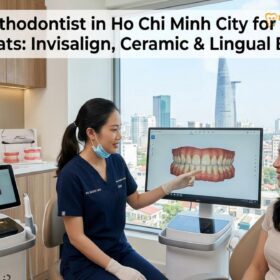
Once the digital impression is captured, Dr. Cuong imports the data into the ClinCheck software. This advanced algorithm allows the doctor to simulate the entire treatment process step-by-step. By analyzing the force vectors required to move the teeth into their ideal positions, Dr. Cuong can determine exactly how many stages are biologically necessary. If the software indicates that a patient’s moderate crowding can be resolved in 12 stages with predictable root control, Invisalign Lite will be prescribed. Conversely, if the simulation reveals that correcting a crossbite requires 45 stages and complex attachments, the Comprehensive tier becomes clinically mandatory.
Clinical Case Study: A 28-year-old patient visited HCMC Dental Clinic in Ho Chi Minh City requesting Invisalign Go to fix a slightly rotated front tooth. However, Dr. Cuong’s 3D assessment revealed an underlying posterior crossbite causing premature enamel wear. Treating only the front teeth would have exacerbated the bite trauma. The patient was educated on the necessity of Invisalign Comprehensive, which successfully expanded the upper arch and resolved both the cosmetic and functional issues over 18 months.
Patient compliance is another crucial factor discussed during the consultation. Clear aligners must be worn for 20 to 22 hours per day. If a patient struggles with compliance, a longer Comprehensive plan might experience significant delays, requiring multiple mid-course corrections. Post-treatment, Dr. Cuong meticulously plans the retention phase. Whether a patient finishes a short Go plan or a multi-year Comprehensive plan, the biological tendency for teeth to relapse is identical. Patients are often advised on options like repairing a broken fixed retainer promptly or replacing a lost retainer without delay to protect their orthodontic investment.
When to See an Orthodontic Specialist
You should consult an orthodontic specialist if you experience difficulty chewing, chronic jaw pain, or notice progressive shifting of your teeth that affects your bite stability.
While the internet provides vast resources on clear aligner tiers, patients cannot self-diagnose their orthodontic needs. Attempting to force a complex malocclusion into a limited tier like Invisalign Go can result in severe clinical complications, including root resorption, periodontal bone loss, and irreversible changes to your facial profile. It is imperative to seek a professional evaluation if you experience functional issues such as difficulty chewing, speech impediments caused by tooth positioning, or chronic temporomandibular joint (TMJ) discomfort.
“Orthodontics is not merely about straightening the visible crowns of the teeth; it is a complex orthopedic discipline that reshapes the underlying jawbone and establishes a stable, functional occlusion for life.”
Furthermore, if you have previously undergone orthodontic treatment and notice your teeth beginning to shift, early intervention is critical. Minor relapse can often be corrected swiftly with a lower-tier package, but delaying treatment may necessitate a return to comprehensive orthodontics. Understanding the long-term commitment to retention is also vital. Patients frequently inquire about retainer costs compared internationally or evaluate orthodontic retention investments to ensure they are prepared for the lifelong maintenance required after their aligner therapy concludes.
If you are considering clear aligner therapy and want to understand which tier aligns with your clinical needs, scheduling a comprehensive diagnostic scan is the first step. A thorough evaluation will provide you with a precise roadmap, detailing the required biomechanics, estimated timeline, and the most appropriate treatment package to achieve a healthy, stable smile.
Frequently Asked Questions
What is the main difference between Invisalign Go and Lite?
The primary difference lies in the clinical scope and aligner limit. Invisalign Go is restricted to moving the front 20 teeth with up to 20 aligners, whereas Invisalign Lite allows full-arch movement (including molars) using up to 14 aligners. Go is strictly for aesthetic anterior alignment, while Lite can address mild functional bite issues across the entire mouth.
Are refinements free in Invisalign Comprehensive?
Yes, Invisalign Comprehensive typically includes unlimited refinement stages for up to five years from the start date. This ensures complex bite issues can be fully resolved without incurring additional laboratory fees for extra aligners. However, clinic-specific chairside fees or retention costs may still apply depending on your provider’s policies.
How do aligner limits affect my total treatment cost?
Lower aligner limits reduce the laboratory fees charged by Align Technology, making tiers like Go and Lite more cost-effective. However, if your case requires more aligners than your tier allows, upgrading mid-treatment will increase the total cost. It is always more economical to start with the correct tier based on a precise clinical diagnosis.
Can I switch from Invisalign Lite to Comprehensive mid-treatment?
Yes, you can upgrade your treatment tier if clinical progress requires more aligners than initially planned. However, this upgrade involves additional laboratory fees and a revised clinical treatment plan from your orthodontist. Upgrading is usually necessary if teeth do not track predictably or if the patient desires further functional improvements.
Will I need to wear a retainer after completing my Invisalign package?
Absolutely. Regardless of whether you complete the Go, Lite, or Comprehensive tier, wearing a retainer is biologically mandatory to prevent your teeth from shifting back to their original misaligned positions. Bone remodeling takes time to stabilize, and lifelong nighttime retention is the only way to guarantee your results, which is why long-term retention planning is discussed before treatment even begins.
Invisalign Lite vs Comprehensive: Tray Limits and Clinical Scope
Understanding the differences between Invisalign Lite vs Comprehensive is essential for choosing the right package. Invisalign Lite is designed for mild to moderate misalignment, limited to a maximum of 14 aligner trays (plus one refinement cycle of 14 trays). It is highly efficient for minor cosmetic adjustments. Invisalign Comprehensive (formerly Invisalign Full), however, is the unlimited package. It allows for as many aligner trays and refinement cycles as necessary to achieve the desired clinical outcome, making it the mandatory choice for complex bite corrections and severe crowding.
References
- American Journal of Orthodontics and Dentofacial Orthopedics. Biomechanical principles of clear aligner therapy and SmartTrack material efficacy. (2021).
- Journal of Clinical Orthodontics. Clinical limitations and scope of anterior alignment systems versus comprehensive orthodontics. (2020).
- European Journal of Orthodontics. Predictability of orthodontic tooth movement with Invisalign clear aligners. (2022).
- Angle Orthodontist. The role of SmartForce attachments in complex malocclusion resolution. (2019).
- International Journal of Dentistry. Post-orthodontic retention protocols and relapse prevention strategies. (2023).