Managing Invisalign remotely as a dental tourist in Vietnam involves a highly structured hybrid care model. By completing the initial diagnostics, 3D scanning, and attachment bonding in-clinic, patients can then return to their home countries while their orthodontist tracks tooth movement virtually, ensuring clinical precision across borders.
Clinical Summary:
The hybrid Invisalign protocol allows international patients to undergo comprehensive orthodontic treatment with minimal physical visits. By leveraging advanced intraoral 3D scanning, proprietary digital planning software, and AI-driven remote monitoring applications, orthodontists can accurately track tooth movement, verify aligner seating, and manage treatment progression remotely. This model requires strict patient compliance, a robust digital communication protocol, and careful case selection to ensure predictable, safe, and highly effective clinical outcomes for dental tourists.
Key Takeaways:
- Initial clinical setup requires a brief stay in Vietnam for comprehensive scanning, aligner fabrication, and physical fitting.
- Remote monitoring utilizes AI-powered smartphone applications to track tooth movement and gingival health weekly.
- Patients receive multiple sets of aligners to progress through their treatment phases independently at home.
- Physical return visits are typically only required for mid-course refinements, attachment removal, or final retainer fitting.
- Strict compliance of 20 to 22 hours of daily aligner wear is mandatory for the success of remote orthodontic therapy.
The Hybrid Care Model: Balancing Travel and Invisalign
The hybrid care model combines in-person clinical setup in Vietnam with remote digital monitoring, allowing international patients to safely complete orthodontic treatment from their home country.
The traditional approach to orthodontic treatment requires patients to visit their clinician every four to six weeks for adjustments, progress checks, and the delivery of new active appliances. For international patients seeking high-quality care abroad, this frequent travel schedule is logistically impossible. To bridge this gap, modern clinics have developed a hybrid Invisalign care protocol. This methodology leverages the predictable, pre-programmed biomechanical forces of clear aligners alongside advanced teledentistry platforms, creating a seamless bridge between the dental chair in Vietnam and the patient’s home environment.
Unlike fixed metal braces, which require manual wire bending and bracket repositioning by a clinician, clear aligners are manufactured as a complete series of incremental movements. Each tray is engineered to move specific teeth by approximately 0.25 millimeters. Because the physical force is built into the plastic rather than applied manually during a clinic visit, the physical presence of the doctor is not required for the active movement phase, provided the aligner is seating correctly. This inherent characteristic of clear aligner therapy makes dental tourist aligners a clinically viable and highly popular option.
However, the success of this model hinges entirely on the quality of the initial diagnostic data and the rigorousness of the remote oversight. Clinical studies evaluating teledentistry in orthodontics demonstrate that remote monitoring can achieve outcomes comparable to traditional in-office visits, provided the patient is highly compliant and the digital tracking software is utilized consistently [1]. Dr. Nguyen Van Cuong emphasizes that the hybrid model is not a compromise in clinical standards; rather, it is a shift in how clinical oversight is delivered, moving from tactile, in-person checks to high-frequency, AI-assisted visual diagnostics.
“The success of remote orthodontic treatment relies heavily on meticulous initial digital planning and the patient’s unwavering commitment to the prescribed wear schedule. Technology bridges the geographic gap, but patient compliance drives the biological result.”
For patients considering this route, understanding the balance of responsibilities is crucial. The clinical team in Vietnam is responsible for the biomechanical design, the staging of tooth movements, and the continuous virtual analysis of progress. The patient assumes responsibility for strict wear-time adherence, excellent oral hygiene, and the timely submission of high-quality intraoral scans through their smartphone. When both parties fulfill their roles, the hybrid model offers an exceptionally efficient pathway to a corrected bite and an aesthetic smile.
Initial Fitment: Your 3D Scan and First Aligner Sets in HCMC
Your treatment begins with a comprehensive physical visit to Vietnam for intraoral 3D scanning, digital treatment planning, and the precise bonding of composite attachments.
The foundation of successful remote orthodontic monitoring is established during the patient’s initial visit to the clinic. This phase cannot be outsourced or performed virtually, as it requires highly accurate physical data capture and the application of active biomechanical components to the teeth. Patients engaging in Saigon orthodontic tourism typically need to plan a stay of 10 to 14 days to complete this critical initial phase.
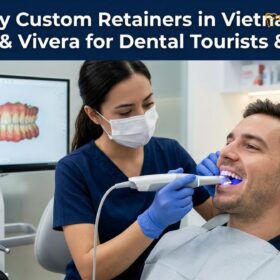
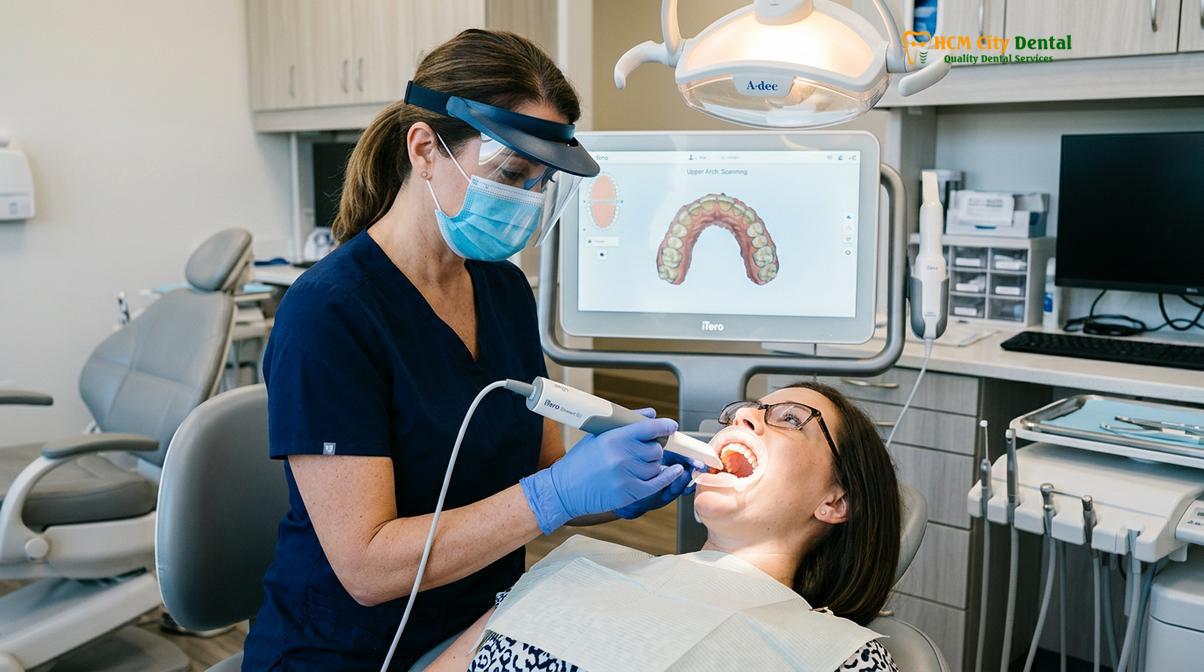
The clinical workflow begins with a comprehensive orthodontic assessment, including panoramic and cephalometric radiographs, to evaluate root angulation, bone levels, and skeletal relationships. Following this, the clinician utilizes an intraoral 3D scanner to capture a highly precise digital replica of the dental arches. This digital impression is instantly uploaded to the proprietary treatment planning software, where the doctor designs the exact sequence of tooth movements.
Once the digital plan is finalized and the aligners are manufactured, the patient returns to the clinic for the fitment appointment. During this session, the dentist will bond small, tooth-colored composite resin bumps—known as attachments—onto specific teeth. These attachments act as anchors, allowing the smooth plastic aligners to grip the teeth and apply the necessary directional forces for complex movements such as rotation, extrusion, or root torque. If the treatment plan requires Interproximal Reduction (IPR) to create space for crowded teeth, it is also performed during this visit.
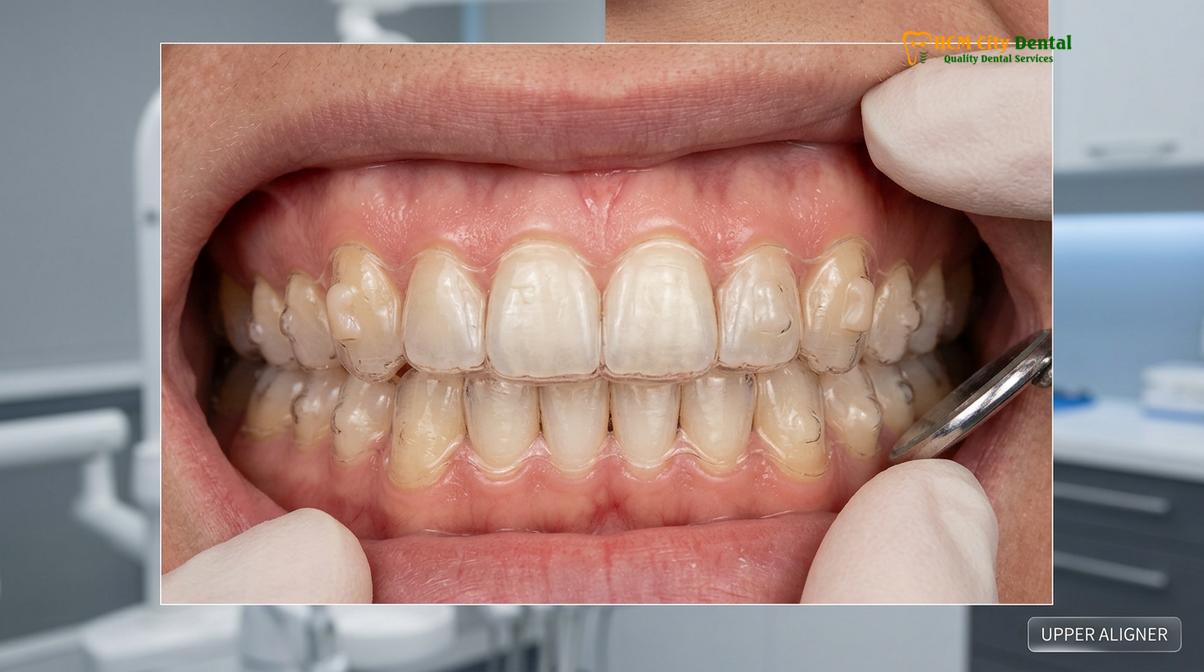
Before the patient departs, the clinical team will ensure the first set of aligners seats perfectly, verify that the attachments are secure, and provide comprehensive training on insertion, removal, and maintenance. The patient is then supplied with a carefully calculated batch of aligners to take home. For those exploring Orthodontics abroad, this initial setup at HCMC Dental Clinic in Ho Chi Minh City ensures that all active clinical interventions are completed under direct expert supervision before the remote phase begins.
| Day | Clinical Procedure | Patient Requirement |
|---|---|---|
| Day 1 | Comprehensive exam, X-rays, and intraoral 3D scanning. | In-clinic consultation and diagnostic data collection. |
| Days 2-5 | Digital treatment plan design and biomechanical staging. | Virtual or in-person review and approval of the digital plan. |
| Days 6-12 | Expedited manufacturing and shipping of custom aligners. | Free time for travel and tourism activities. |
| Day 13-14 | Attachment bonding, IPR (if needed), and aligner delivery. | In-clinic fitment, app training, and collection of aligner sets. |
Understanding the financial logistics of this initial phase is also important for international patients. Many choose to compare international fees, such as evaluating the Retainer Cost Vietnam vs Korea, to understand the long-term value of completing their active treatment and retention phases through a hybrid model.
Remote Tracking: Monitoring Progress with Smart Apps
Orthodontists utilize AI-driven smartphone applications and virtual consultations to evaluate aligner fit, track tooth movement, and guide patients through their tray changes remotely.
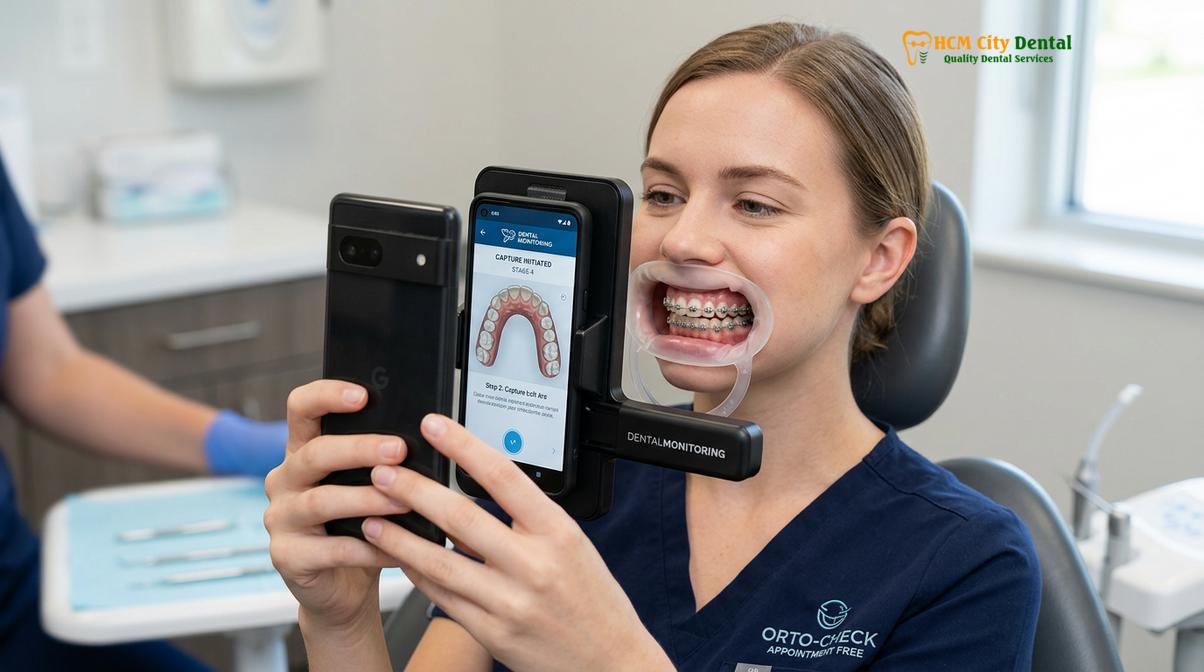
Once the patient returns to their home country, the active phase of remote orthodontic monitoring begins. The cornerstone of this phase is the use of specialized teledentistry applications. Patients are provided with a scan box and cheek retractors that attach to their smartphone. On a weekly or bi-weekly basis, the app prompts the patient to take a series of guided intraoral photographs and videos, capturing the teeth from multiple angles both with and without the aligners in place.
These images are uploaded to a secure clinical portal where artificial intelligence algorithms analyze the data. The AI is trained to detect minute discrepancies, such as a 0.1-millimeter gap between the incisal edge of the tooth and the aligner plastic—a condition known as “unseating” or “loss of tracking.” The software also evaluates gingival health, looking for signs of inflammation, recession, or poor oral hygiene [2].
Following the AI analysis, the clinical team reviews the scans to make a definitive clinical judgment. If the teeth are tracking perfectly according to the digital plan, the doctor sends a message through the app authorizing the patient to move on to the next aligner in the sequence. If a tooth is lagging behind, the doctor may instruct the patient to wear the current aligner for an additional few days or use chewies (small silicone cylinders) to help seat the tray more firmly.
Clinical Case Example: Remote Monitoring Success
A 32-year-old patient from Australia sought an Invisalign travel package to correct moderate anterior crowding and a mild deep bite. After the initial 12-day setup at HCMC Dental Clinic in Ho Chi Minh City, the patient returned home with 24 sets of aligners. Utilizing a remote monitoring app, the patient submitted weekly intraoral scans. At week 14, the AI detected a slight unseating on the upper right lateral incisor. The clinical team intervened virtually, instructing the patient to extend wear time for that specific tray by four days and increase the use of seating chewies. The tooth successfully caught up to the programmed movement, preventing a major tracking failure and allowing the patient to complete the 11-month treatment with only one required return visit for final retainers.
This continuous feedback loop is what makes teeth straightening abroad safe and predictable. It eliminates the guesswork for the patient and ensures that any deviations from the treatment plan are caught and corrected immediately, rather than waiting months for an in-person appointment.
Scheduling Returns: When You Must Physically Visit the Clinic
While most of the treatment is managed remotely, patients must plan return trips for mid-course refinements, attachment removal, and the fabrication of final retention appliances.
Despite the precision of digital planning and the vigilance of remote tracking, human biology is not entirely predictable. Variations in bone density, root morphology, and cellular response can cause teeth to move slightly differently than the software simulated. Consequently, the vast majority of comprehensive orthodontic cases require at least one refinement phase. A refinement involves taking a new 3D scan of the teeth in their current position and ordering a short series of additional aligners to perfect the final bite and alignment.
For the dental tourist, this means scheduling a return visit to Vietnam. Dr. Cuong advises international patients to anticipate at least one mid-treatment visit, usually around the 6 to 9-month mark, depending on the complexity of the case. During this visit, the clinician will evaluate the occlusion, perform any necessary adjustments to the attachments, and capture the new digital impressions required for the refinement trays [3].
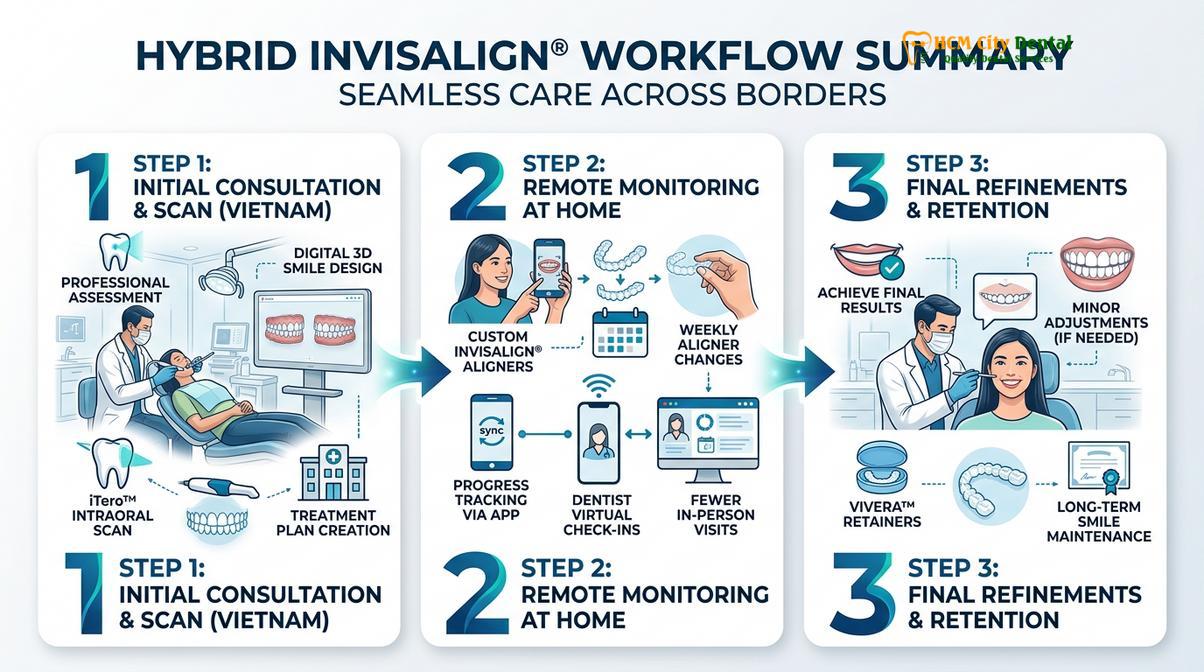
The final required visit occurs at the conclusion of active treatment. Once the teeth have reached their optimal positions, the composite attachments must be professionally polished off the enamel. Furthermore, the patient must be fitted for retainers to prevent orthodontic relapse. Retention is a lifelong commitment, and the fabrication of high-quality retainers is a critical final step. Patients often coordinate this final visit to ensure their retention strategy is secure, sometimes researching options like Broken Fixed Retainer Repair Vietnam or Lost Retainer Replacement in Saigon to understand how to manage their retainers long-term.
In highly specific, co-managed cases, it may be possible to have a local dentist in the patient’s home country perform the refinement scan or remove the attachments, forwarding the data to the primary orthodontist in Vietnam. However, this requires seamless professional collaboration and is generally less common than the patient simply planning a short return holiday to complete their care.
Emergency Protocols for Long-Distance Aligner Patients
Structured emergency protocols ensure that lost aligners, debonded attachments, or tracking deviations are managed swiftly through virtual triage and modified wear schedules.
Undergoing medical treatment across international borders naturally raises concerns about how emergencies are handled. Fortunately, true orthodontic emergencies with clear aligners are exceedingly rare compared to traditional braces, which can involve broken wires or sharp metal brackets lacerating the cheek. However, minor issues such as lost trays or debonded attachments do occur and require a clear protocol for long-distance management.
If a patient loses or breaks an aligner while abroad, the standard protocol is to immediately contact the clinical team via the monitoring app. Depending on how many days the lost aligner was worn, the doctor will typically advise the patient to either step back into the previous aligner to hold the teeth in place or advance early to the next aligner in the sequence, wearing it for an extended period to ensure the biological movement catches up safely [4].
Clinical Warning:
Never attempt to force an ill-fitting aligner onto the teeth, and do not attempt to re-glue a lost attachment yourself using over-the-counter adhesives. Applying incorrect or excessive force can lead to severe root resorption, irreversible periodontal damage, or unpredictable tooth movements that will derail the entire treatment plan.
If a composite attachment falls off, it is rarely a critical emergency. The patient should document the loss with an intraoral photo and submit it for review. In many cases, the treatment can continue progressing without the attachment until the patient’s next scheduled visit to Vietnam. If the lost attachment was crucial for a difficult movement (such as extruding a lateral incisor), the doctor may pause the progression and advise the patient to seek a local dentist to temporarily rebond the attachment based on a digital template provided by the clinic.
When to See a Doctor (Important Clinical Considerations)
Not all orthodontic conditions are suitable for remote management; severe skeletal discrepancies or persistent pain require immediate, in-person clinical evaluation.
While the hybrid model is highly effective for mild to moderate malocclusions, it is vital to recognize its clinical limitations. Remote monitoring is an exceptional tool for tracking planned movements, but it cannot replace the tactile diagnostic capabilities of a dentist when unexpected biological complications arise. Patients must be aware of the signs that necessitate an immediate, in-person visit to a local dental professional in their home country.
If a patient experiences severe, unremitting pain that extends beyond the normal 48-hour discomfort of a new aligner, it may indicate an endodontic issue or excessive localized force. Similarly, if the aligners begin to cause significant gingival recession, bleeding, or if the patient notices increased tooth mobility, active treatment must be paused. These symptoms require physical palpation, vitality testing, and potentially new periapical radiographs to diagnose accurately [5].
“Remote monitoring is a tool for convenience, not a substitute for clinical oversight; any persistent pain, severe aligner unseating, or sudden bite changes must be evaluated by a local dental professional immediately to prevent iatrogenic harm.”
Furthermore, patients with active periodontal disease, severe temporomandibular joint (TMJ) disorders, or those requiring complex orthognathic surgery are generally contraindicated for remote dental tourist aligners. These cases demand frequent, multidisciplinary in-person management. Before committing to treatment abroad, patients should undergo a thorough local examination to ensure their baseline oral health is stable. Understanding the scope of international care, including comparing long-term maintenance costs like Retainer Cost Vietnam vs Japan or Retainer Cost Vietnam vs Canada, helps patients make informed, medically sound decisions regarding their orthodontic journey.
Frequently Asked Questions
Can I get Invisalign if I only visit Vietnam for two weeks?
Yes, a two-week visit is generally sufficient for the initial phase. During this time, the clinical team performs 3D scanning, designs the digital treatment plan, bonds necessary attachments, and delivers your first series of aligners before you return home. This timeframe allows for the expedited manufacturing and shipping of the custom trays to the clinic for your final fitting.
How does the doctor monitor my teeth movement from abroad?
Orthodontists monitor your progress using specialized smartphone applications and a scan box. You will take weekly intraoral photos, which AI software and your doctor analyze to ensure the aligners are seating correctly and teeth are tracking as planned. If any deviations are detected, the clinical team will message you with modified wear instructions.
What if I need refinement trays while in my home country?
If refinements are required, you will typically need to schedule a brief return trip to Vietnam for a new 3D scan. In some co-managed cases, a local dentist can take the scan and forward the digital file to your primary orthodontist, but returning to your primary provider ensures the highest level of continuity and precision.
Are the clear aligners provided in Vietnam the exact same quality?
Yes, all authentic Invisalign aligners are manufactured centrally by Align Technology using their patented SmartTrack material. The trays you receive in Vietnam are identical in material, engineering, and quality to those provided by certified providers in the US, Australia, or Europe.
What happens if an attachment falls off while I am overseas?
If an attachment debonds, you must notify your orthodontist via the monitoring app immediately. Often, treatment can continue safely without it until your next scheduled visit, but in critical cases, you may be directed to a local dentist for rebonding using a digital template provided by your primary clinic.
References
- American Journal of Orthodontics and Dentofacial Orthopedics. Efficacy of remote monitoring in clear aligner therapy. (2021).
- Journal of Clinical Orthodontics. Artificial intelligence in teledentistry and orthodontic tracking. (2022).
- European Journal of Orthodontics. Mid-course corrections and refinement rates in clear aligner treatment. (2020).
- Angle Orthodontist. Management of orthodontic emergencies in remote and hybrid care models. (2019).
- Journal of the American Dental Association. Clinical limitations and contraindications of direct-to-consumer aligners vs doctor-monitored therapy. (2023).